Home > Career > Question
Need Expert Advice?Our Gurus Can Help
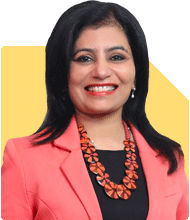
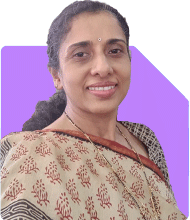
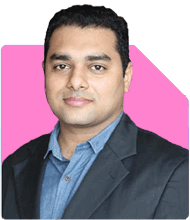
Archana

Archana Deshpande  | Answer  |Ask -

Image Coach, Soft Skills Trainer - Answered on May 14, 2025

Archana Deshpande, the founder of TransformMe Life Skills Coaching, is an image consultant, soft skills trainer and life coach.
She has been working with individuals and corporate organisations for more than 10 years during which she has helped professionals and students improve their soft skills, build confidence and enhance self-esteem.
An engineer from the PDA College of Engineering, Gulbarga, Archana had a successful career at Reliance Communications. But she has always been interested in teaching and training people. So she pursued a postgraduate diploma in teacher’s training at Pune’s Symbiosis Institute of Management Studies followed by teaching assignments in schools at Visakhapatnam and Mumbai.
Archana also holds an international certificate in image consulting and soft skills training from the Image Consulting Business Institute, Mumbai.... more
Asked by Anonymous - May 07, 2025
Career

I am working with a US-based client which involves co-ordinating with a remote team across the continent. I rarely get check-ins or team bonding moments. I sometimes feel like I am working in isolation, which affects my energy and sense of purpose. How can I be more productive?

Ans: Hi!!

I totally understand what it means to be working remotely and the sense of isolation you are feeling. I am guessing you are a people's person and you like to interact with human beings on a day to day basis in your work environment. I just completed a 03 month long training assignment for a US based client and I totally empathize with you.

In the past COVID times, working remotely and in isolation is the new norm. So , do not base your sense of purpose based on just your work.
Find ways and means of finding your need for 'people connect' by asking for team meetings where everyone is on camera.
See if you can play instrumental music while working ... have fixed routine for work, take mini breaks to be more productive.
Indulge in physical activity to keep your energy levels up...meditate in order connect with yourself. Since you work remotely and not much interaction happens with people, just get out of the house after work to connect with real people. Spend time in nature, it's therapeutic.

All the best!!
Career

You may like to see similar questions and answers below

Archana

Archana Deshpande  | Answer  |Ask -

Image Coach, Soft Skills Trainer - Answered on Dec 07, 2024

Listen
Career
Hi, I have been an introvert guy for my whole life, but somehow I always got good colleagues which became great friends. But from last 5 years I am in a office where very few people works and that too they are not connected to me. Hence, I get a very little exposer with them. Feels so much lonely in office as there is not a lot of workload also. Most of my day goes watching reels on social media. Sometimes i forgot when last i smiled/laughed at office place where I spends 9 hours of my day (I do talk to my family over phone, but can't help my loneliness). what can I do....worried... A very lonely 45 year male.....
Ans: Dear Sunil,

No one is clear cut introvert or an extrovert, look at yourself closely too... in some circumstances you behave like an extrovert and some areas you behave like an introvert.

Be brave and say "hi" to people around you in the office, you be the first one to greet, this itself can be a starting point to making new friends. A smile and a pleasant "hi" is all it takes.
Look for opportunities to connect with ppl in the office, instead of sending mails or reminders to ppl electronically, just walk up to them and speak to them or call them up to say you have sent a mail/reminder. This way you can establish a human connect.
Also check if you can go to the dining area to eat lunch and during breaks.. do not sit at your desk and have lunch.
Social media and watching reels is a "big no" if you are yearning for human connections. I am glad you talk to your family...outside the office, join book clubs, singing clubs, drama clubs or anywhere your interest lies...you can join a classroom to learn and develop a new skill....

Also check if you are getting enough sleep, exercise, fresh air , sunshine during the day....focus on your diet too!!

Hope this helps... take care of yourself!

..Read more

Anu

Anu Krishna  |1762 Answers  |Ask -

Relationships Expert, Mind Coach - Answered on Mar 24, 2025

Asked by Anonymous - Mar 18, 2025Hindi
Listen
Relationship
Dear Madam, I am 42 years old and have accumulated over 15 years of experience across various roles, including operations, report writing, quality management, and business development. Before the onset of COVID-19, I worked in an office environment and had a job that required travel, which I thoroughly enjoyed as it allowed me to engage face-to-face with people and discover new places. Since the pandemic, I have transitioned to working from home, where I have been compensated well. This arrangement has allowed me to spend quality time with my family, enjoy flexibility in my work schedule, and significantly reduce my commute. However, over the past 4-5 years, I have found myself increasingly disliking remote meetings. I often experience anxiety before these meetings, even when I am not directly participating. I feel a sense of relief when meetings are canceled or on days when I have none scheduled. I understand that remote work and virtual meetings are likely to be a lasting trend, and I would appreciate your guidance on how to overcome my disinterest in attending these remote team meetings. Thank you for your support.
Ans: Dear Anonymous,
Many people have disliked the 'work from home' option that involves a lot of virtual interface. But do remind yourself: What is the need of the hour? There are a lot of things that you may dislike as eating options but you do anyway knowing that they are good for health, right?
When you start obsessing over something that you don't want, it makes it bigger in your mind to tolerate and that can cause you a lot of struggle. So, why not instead find ways of dealing with the inevitable?
How can you make things better for yourself when you have virtual meets and presentations? What are the advantages/perks of doing these virtually? When you start to look at the brighter side of things, the disinterest kind of starts to fade away and it makes it easier for you to be a part of what your work demands.

All the best!
Anu Krishna
Mind Coach|NLP Trainer|Author
Drop in: www.unfear.io
Reach me: Facebook: anukrish07/ AND LinkedIn: anukrishna-joyofserving/
..Read more

Latest Questions
Ramalingam

Ramalingam Kalirajan  |10975 Answers  |Ask -

Mutual Funds, Financial Planning Expert - Answered on Jan 20, 2026

Money
Hello Sir, I am 41 years old and have been investing in mutual funds and stocks for the past one and a half years. I am currently making monthly SIPs of ₹1500 each in SBI Large & Midcap Fund Direct Plan and Quant Small Cap Fund Direct Plan Growth. In addition, I also made a lump-sum investment of ₹1,50,000 in Quant Small Cap Fund Direct Plan Growth in January 2025. However, my current investment in Quant Small Cap Fund Direct Plan Growth is showing a negative return of ₹12,000. Sir, please review my portfolio and provide appropriate guidance. Sincerely, Surya Prakash Bhatnagar, Awaiting your reply. Thank you.
Ans: You have shown good intent by starting investments early and by asking for guidance at the right time. Many investors wait until losses increase before reviewing. Your awareness at this stage itself protects long-term wealth. Temporary negatives are part of equity investing, but structure and discipline decide future results.

» Your age, time horizon, and investing phase
– At 41 years, you are still in a strong accumulation phase.
– You have enough time to recover from short-term volatility.
– Equity is suitable, but risk must be controlled.
– Your investing experience is still new at one and a half years.
– Early guidance matters more than product selection.

» Understanding your current SIP structure
– You are investing Rs.1500 each in two equity funds.
– One fund focuses on large and mid-sized companies.
– The other is fully into small-cap companies.
– SIP amount is modest, but discipline is good.
– Fund mix shows growth intent but high volatility exposure.

» Review of your lump sum investment decision
– You invested Rs.1.50 lakh lump sum into a small-cap oriented fund.
– Lump sum into small caps increases timing risk.
– Small caps move sharply up and down in short periods.
– January 2025 entry exposed you to market correction risk.
– The current negative of Rs.12,000 is not unusual.

» Why small-cap funds show quick negatives
– Small-cap stocks react strongly to market sentiment.
– When markets correct, small caps fall faster than large caps.
– Recovery also takes time and tests patience.
– Short-term returns are not a measure of fund quality.
– Five to seven years is the minimum horizon for such exposure.

» Emotional impact of seeing losses early
– Seeing negative returns creates doubt and fear.
– This is common for new investors.
– Panic actions at this stage can lock losses permanently.
– Staying invested with clarity is more important now.
– Behaviour decides outcome more than returns.

» Portfolio concentration risk
– Your portfolio is heavily tilted towards one high-risk category.
– Both SIP and lump sum are into the same small-cap style.
– This creates concentration risk.
– Diversification across strategies is limited.
– Balance is needed for smoother experience.

» Large and mid-cap exposure assessment
– Large and mid-cap funds offer relative stability.
– They reduce volatility compared to pure small caps.
– This exposure is good for core portfolio.
– However, allocation size is still small.
– Core should always be stronger than satellite bets.

» Direct plans – important concern you must know
– You are investing through direct plans.
– Direct plans do not provide guidance, review, or emotional support.
– When markets fall, investors feel lost and confused.
– Wrong exits usually happen in direct plans.
– Regular plans through an MFD guided by a CFP help discipline.

» Why regular plans add long-term value
– Regular plans include professional monitoring.
– Portfolio reviews happen during market changes.
– Rebalancing guidance reduces risk.
– Emotional decision-making is controlled.
– The cost difference is small compared to mistakes avoided.

» SIP versus lump sum in volatile funds
– SIP works well in volatile categories like small caps.
– Lump sum increases regret if timing is wrong.
– Your SIP approach is better than your lump sum choice.
– Future investments should focus on systematic discipline.
– Lump sum should be used cautiously and staggered.

» Tax awareness at an early stage
– Equity mutual fund gains above Rs.1.25 lakh attract 12.5% LTCG tax.
– Short-term gains attract 20% tax.
– Early exits increase tax impact.
– Holding patiently improves post-tax outcome.
– Tax should not drive panic decisions.

» What you should do with the current negative investment
– Do not exit based on short-term loss.
– Loss is not permanent until you sell.
– The fund needs time to recover.
– Review horizon, not recent return.
– Emotional patience is required.

» Corrections are part of wealth creation
– Every long-term investor sees temporary losses.
– Markets test conviction before rewarding patience.
– One and a half years is too short to judge equity.
– Equity rewards time, not speed.
– Staying invested builds maturity.

» How to improve portfolio quality going forward
– Reduce overdependence on small-cap exposure.
– Strengthen core diversified equity allocation.
– Keep high-risk funds limited.
– Increase SIP amount gradually as income grows.
– Align investments with goals, not market noise.

» Importance of goal-based planning
– Investments should have purpose like retirement or education.
– Goal clarity improves discipline.
– Random investing increases anxiety.
– Time horizon should guide fund choice.
– Planning reduces regret.

» Emergency and safety awareness
– Ensure emergency fund is in place outside equity.
– Avoid forced withdrawals during market falls.
– Job stability cannot be assumed always.
– Liquidity safety protects long-term investments.
– Peace of mind improves decisions.

» Role of periodic review
– Portfolio should be reviewed at least once a year.
– Review is different from reacting.
– Adjustments should be data-driven.
– Professional review avoids bias.
– This is where CFP guidance helps.

» Finally
– Your negative return is a normal market phase, not a failure.
– Your SIP habit is good and should continue.
– Small-cap exposure needs patience and balance.
– Avoid panic exits and emotional decisions.
– Shift towards guided, structured investing through a CFP-led MFD.
– With discipline, time, and proper allocation, your investments can grow steadily.

Best Regards,

K. Ramalingam, MBA, CFP,

Chief Financial Planner,

www.holisticinvestment.in

https://www.youtube.com/@HolisticInvestment

...Read more

DISCLAIMER: The content of this post by the expert is the personal view of the rediffGURU. Investment in securities market are subject to market risks. Read all the related document carefully before investing. The securities quoted are for illustration only and are not recommendatory. Users are advised to pursue the information provided by the rediffGURU only as a source of information and as a point of reference and to rely on their own judgement when making a decision. RediffGURUS is an intermediary as per India's Information Technology Act.

Close  

You haven't logged in yet. To ask a question, Please Log in below
Login

A verification OTP will be sent to this
Mobile Number / Email

Enter OTP
A 6 digit code has been sent to

Resend OTP in120seconds

Dear User, You have not registered yet. Please register by filling the fields below to get expert answers from our Gurus
Sign up

By signing up, you agree to our
Terms & Conditions and Privacy Policy

Already have an account?

Enter OTP
A 6 digit code has been sent to Mobile

Resend OTP in120seconds

x