Home > Money > Question
Need Expert Advice?Our Gurus Can Help
Reetika

Reetika Sharma  |417 Answers  |Ask -

Financial Planner, MF and Insurance Expert - Answered on Oct 10, 2025

Reetika Sharma is a certified financial planner and CEO of F-Secure Solutions.
She advises clients about investments, insurance, tax and estate planning and manages high net-worth individual’s portfolios.
Reetika has an MBA in finance from the Institute of Chartered Financial Analysts of India (ICFAI) and an engineer degree from NIT, Jalandhar.
She also holds certifications from the Financial Planning Standards Board India (FPSB), Association of Mutual Funds in India (AMFI) and Insurance Regulatory and Development Authority of India (IRDAI).... more

nachiket Question by nachiket on Oct 05, 2025Hindi

Money

i have payday loans worth 15 lakhs and not sure how to get out of this. I have a monthly salary of 2.10 lakhs after taxes but these loans eat most of my salaries. Multiple enquiries to financial institutions and banks not hit my credit score which is 765 but it has lead to rejections everywhere in getting fresh low to pay off all these payday loans. I am thinking of going to a cooperative bank and taking fresh loan to pay off these pay day loan guys

Ans: Hi Nachiket,

Despite of earning a very good amount, you are trapped in a debt cycle badly. Share more details for me to help you better by closing one loan at a time. You can book a call.

Let me know if you need more help.

Best Regards,
Reetika Sharma, Certified Financial Planner
https://www.instagram.com/cfpreetika/
DISCLAIMER: The content of this post by the expert is the personal view of the rediffGURU. Users are advised to pursue the information provided by the rediffGURU only as a source of information to be as a point of reference and to rely on their own judgement when making a decision.
Money

You may like to see similar questions and answers below

Ramalingam

Ramalingam Kalirajan  |10874 Answers  |Ask -

Mutual Funds, Financial Planning Expert - Answered on Jul 11, 2024
Asked by Anonymous - Jun 01, 2024Hindi
Money
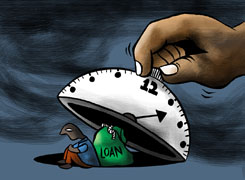
Hi, i am now 31 and i am seriously in debt trap. My salary is only 60k but i am kind of messed up in payday loans which are not offering more than 30 days. So due to which i have to repay by taking loan against a loan. In this way i could see my repayment has become 3X of my monthly salary. Please suggest me what to do. I am feeling embarassed, as my family members doesnt know this. I need help and suggestions on how to overcome this. Even if i apply for debt consolidation, everytime i am getting rejected due to high obligations.
Ans: I totally understand how overwhelming this must be for you. Financial challenges can be tough, but with the right plan, you can overcome them. Let’s break this down step-by-step and get you on a path to financial stability.

Assessing Your Current Financial Situation
First, let’s assess where you stand. Your salary is Rs. 60,000 per month, but payday loans are eating up your income. Your repayment is 3X your salary, meaning you’re paying around Rs. 1,80,000 monthly. That’s a huge strain on your finances.

Understanding Payday Loans and Their Impact
Payday loans are short-term, high-interest loans. They can quickly spiral out of control if not managed properly. Because you’re taking new loans to repay old ones, you’re stuck in a debt cycle. It’s essential to break this cycle.

Immediate Steps to Take
1. Create a Budget

List all your income and expenses. Identify necessary expenses like rent, utilities, groceries, and transport. This helps you see where your money goes and where you can cut back.

2. Prioritize Your Debts

List all your debts with interest rates and due dates. Focus on high-interest debts first. This will save you more money in the long run.

3. Avoid New Loans

Stop taking new loans to repay old ones. This only deepens your debt. Focus on managing the existing ones.

Exploring Debt Relief Options
1. Contact Your Lenders

Explain your situation to your lenders. Sometimes, they can offer extended payment plans or reduced interest rates. They might be willing to help if they know you’re struggling.

2. Consider a Debt Management Plan

A debt management plan involves working with a Certified Financial Planner (CFP). They can negotiate with your creditors for better terms. This can help reduce your monthly payments and interest rates.

Increasing Your Income
1. Side Hustles

Consider taking up a side job or freelance work. Every extra rupee can help reduce your debt faster.

2. Sell Unnecessary Assets

If you have items you no longer need, sell them. This can provide a quick cash infusion to pay down debt.

Building a Financial Safety Net
1. Emergency Fund

Once your immediate debt crisis is under control, start building an emergency fund. This prevents future reliance on payday loans.

2. Savings Plan

Develop a habit of saving, even if it’s a small amount each month. This helps build financial security over time.

Seeking Professional Help
1. Certified Financial Planner (CFP)

A CFP can provide personalized advice and create a tailored plan to get you out of debt. They can also help you develop a long-term financial strategy.

2. Credit Counselling

Credit counselling services can provide support and advice on managing your debt. They can also negotiate with creditors on your behalf.

Emotional Well-being
1. Talk to Someone

Don’t bottle up your feelings. Talk to a trusted friend or family member. Sharing your burden can provide emotional relief.

2. Stay Positive

Remember, financial setbacks are temporary. With determination and the right approach, you can overcome this.

Educating Yourself on Financial Management
1. Financial Literacy

Learn about budgeting, saving, and investing. There are many resources online that can help improve your financial knowledge.

2. Avoid Future Debt Traps

Understand the pitfalls of payday loans and high-interest debts. Knowledge helps you make better financial decisions in the future.

Strategic Debt Repayment
1. Debt Snowball Method

Start by paying off the smallest debt first while making minimum payments on others. Once the smallest debt is paid off, move to the next smallest. This gives a psychological boost and keeps you motivated.

2. Debt Avalanche Method

Focus on paying off the debt with the highest interest rate first while making minimum payments on others. This saves more money on interest over time.

Long-term Financial Planning
1. Retirement Planning

Even though you’re in debt now, start thinking about your future. Investing in mutual funds can be a good way to build a retirement corpus.

2. Children’s Education

Plan for your children’s education early. This reduces the need for high-interest loans in the future.

Benefits of Mutual Funds
1. Diversification

Mutual funds pool money from many investors to buy a diversified portfolio of stocks and bonds. This reduces risk.

2. Professional Management

They are managed by professional fund managers who make investment decisions based on research and analysis.

3. Power of Compounding

Investing in mutual funds over the long term can significantly grow your wealth due to the power of compounding. Reinvesting earnings leads to exponential growth.

4. Liquidity

Mutual funds offer liquidity. You can redeem your investment anytime, subject to exit load and taxes.

5. Flexibility

Mutual funds offer various schemes to suit different financial goals and risk appetites. You can choose from equity, debt, hybrid, and more.

Risk Assessment in Mutual Funds
1. Market Risks

Mutual funds are subject to market risks. The value of investments can fluctuate based on market conditions.

2. Interest Rate Risks

Changes in interest rates can affect the value of debt mutual funds. Higher rates may decrease bond prices and vice versa.

3. Credit Risks

Debt funds face credit risks if the issuer of a security defaults on payments.

Categories of Mutual Funds
1. Equity Funds

Invest primarily in stocks. Suitable for long-term growth. They come with higher risk but offer higher returns.

2. Debt Funds

Invest in fixed-income securities like bonds. Suitable for conservative investors looking for stable returns.

3. Hybrid Funds

Invest in a mix of equities and debts. Offer balanced risk and returns. Ideal for moderate risk-takers.

4. Sector Funds

Invest in specific sectors like technology or healthcare. Higher risk due to lack of diversification but can offer high returns.

Active vs. Direct Mutual Funds
1. Actively Managed Funds

Managed by professionals who actively buy and sell securities. They aim to outperform the market.

2. Direct Funds

Invest directly without a distributor. Lower expense ratio but requires more research and knowledge.

3. Benefits of Regular Funds

Investing through a CFP ensures professional guidance. They help in selecting funds that align with your financial goals.

Final Insights
Dealing with debt can be daunting, but you can overcome it with the right approach. Assess your situation, create a budget, and prioritize your debts. Explore debt relief options and consider increasing your income through side jobs or selling assets.

Seek professional help from a CFP for personalized advice. Educate yourself on financial management to avoid future debt traps. Once your immediate crisis is managed, plan for long-term goals like retirement and children’s education.

Investing in mutual funds can help build wealth over time. They offer diversification, professional management, and the power of compounding. Understand the risks and choose the right category of funds based on your goals and risk appetite.

Remember, financial setbacks are temporary. With determination and a well-structured plan, you can achieve financial stability and peace of mind.

Best Regards,

K. Ramalingam, MBA, CFP,

Chief Financial Planner,

www.holisticinvestment.in

..Read more

Ramalingam

Ramalingam Kalirajan  |10874 Answers  |Ask -

Mutual Funds, Financial Planning Expert - Answered on Jan 30, 2025

Asked by Anonymous - Jan 30, 2025Hindi
Listen
Money
Debt trap I am 29F and have 37lacs unsecured loans as followed Muthoot 12lacs Kotak 6lacs Fullerton 9lacs Truebalance 29630 Lenditt 83000 with 27000 emi Kreditbee 2lacs with 15k emi Instamoney 25000 with 12k emi Kissht 15150 with 7170 emi Phocket 15347 with 7252 emi rupeeredee 14420 with 7753 emi Ramfincorp payday loan 42880 Rupee 112 payday loan 45850 Fibe 50000 emi 9077 MoneyView 62712 emi 3484 Flexsalary 63233 emi interest 4000 I had resorted to the application loans as was scared of not being able to repay my current emis and fell into this huge debt trap.. Now am unable to keep up and really have been pleading banks to give me time so that I can resolve the payday loans first.. Am super lost don't know how to approach this Have no assets whatsoever and make like 50k a month with no support... How can I proceed and stop this? This was the first month when I defaulted on all of these loans and am still not able to find a way out.. I had spoken to lawerpanel guys but they wanted me to pay them 30k for 6 months to help with settlement and asked me to default these and I was like I don't have money for this.. pls help!
Ans: Understanding Your Situation
You have Rs. 37 lakhs in unsecured loans.

Your monthly salary is Rs. 50,000.

You have defaulted on all EMIs for the first time.

You took payday loans to manage past EMIs but fell into a deeper debt trap.

You approached a settlement agency but couldn't afford their fees.

You have no assets or external financial support.

Immediate Actions to Stop the Crisis
1. Stop Taking New Loans
Do not take another loan to pay existing EMIs.

Avoid payday loans, as their high interest worsens your situation.

2. Prioritise Loan Payments
List your loans in two categories:

High EMI & Payday Loans: (e.g., Kreditbee, Instamoney, Kissht, Phocket, Rupeeredee, Ramfincorp)
Other Personal Loans: (e.g., Muthoot, Kotak, Fullerton)
Focus on repaying payday loans first, as they have extreme interest rates.

3. Negotiate with Lenders
Contact all lenders and explain your financial situation.

Request a moratorium or restructuring to reduce EMIs.

Many lenders prefer lower EMIs over defaults.

Request waiver or reduction of penalties.

4. Avoid Settlement Agencies
Agencies demand high upfront fees, worsening your financial stress.

You can negotiate with lenders directly for better terms.

5. Increase Monthly Income
Find a side job, freelancing, or gig work for extra income.

If possible, request overtime or salary advance from your employer.

Consider renting a room or shared living to reduce expenses.

Strategic Debt Repayment Plan
1. Minimum Payments for Essential Loans
Pay minimum dues on loans that cannot be negotiated.

Keep essential personal loans active to avoid legal issues.

2. Close Payday Loans First
These have high penalties and should be cleared first.

Negotiate one-time settlements if possible.

3. Debt Snowball or Avalanche Method
Snowball: Pay the smallest loan first for quick wins.

Avalanche: Pay the highest interest loan first to save money.

Choose what suits you best.

Legal Considerations
Loan defaults affect your credit score but do not lead to jail.

Lenders may pressure you, but harassment is illegal.

File a complaint if you face threats from recovery agents.

Seek legal help if you face extreme pressure. Some lawyers help for free.

Lifestyle Adjustments to Free Up Cash
Reduce unnecessary expenses like dining out, subscriptions, and shopping.

Move to a cheaper living space if possible.

Cook meals at home instead of ordering food.

Use public transport instead of cabs or bikes.

Final Insights
Your situation is difficult, but it can be fixed with discipline.

Avoid taking new loans at any cost.

Negotiate with lenders for lower EMIs.

Close payday loans quickly to escape their high interest.

Find additional income sources to speed up repayment.

Stay mentally strong and seek free legal aid if needed.

Best Regards,

K. Ramalingam, MBA, CFP,

Chief Financial Planner,

www.holisticinvestment.in
https://www.youtube.com/@HolisticInvestment

..Read more

Janak

Janak Patel  |71 Answers  |Ask -

MF, PF Expert - Answered on Feb 13, 2025

Money
In early 2018, I had faced some financial problems (monthly Rs. 10,000 deficit) as I was working with a public sector enterprise. At that time, I was searching for a loan and got an agency that can provide Rs. 10,000 as Payday loan (monthly basis maximum 35 days) and rate of interest was 1% per day. These loan products were from NBFCs. I took this loan and this was the starting point. Due to my financial problems, I started taking these type loans from various agencies and rate of interest 0.7%-1% per day. In 2022, I had almost 15 payday loans amounting Rs. 10 lakhs. After that, I have been applying for a loan from almost all banks and NBFCs to close these paydays, but nobody is able to provide a loan due all payday loans have been shown in CIBIL as well as few bounces of my personal loan I had already with Kotak Bank. Now the situation is like that I have more than 25 payday loans amounting to more than Rs. 15 lakhs. Last 2 years I have been applying for a personal loan to close these but no banks and NBFCs are not providing. Every month I am giving and taking payday loans and the interest amount is too high. I have a Tata AIA pension policy as well as PF, both cannot be surrendered at this moment. Now, the major issue is how to overcome this financial mess I did. I don't have any options left at this moment. So I would request you if anybody can provide me assistance through your sources / channels to solve my financial problem. I can return the amount on a monthly installment basis and give my Tata AIA pension policy as well as PF documents for security. I have been working in an engineering consultancy firm and monthly income is almost Rs. 2 lakhs
Ans: HI Jitu,

In summary, you have 15 lakhs loans at 1% per day interest (= 365% per annum). No options to borrow from any other organized sources like Bank/NBFC. So monthly Interest is 4.5 lakhs.
Monthly Income is 2 lakhs.

This is called a Debt Trap, where your income is less than your outflow (debt), so you are in a negative balance always and keep borrowing to fill the gap. No point in going into the history of the situation but I hope this has been a big life lesson for you.

Borrowing against you Pension policy can be considered but depends on the company and note that this will be at a high interest rate.
Borrowing from PF funds is only under certain situations (e.g. illness, education, marriage) and so even that is ruled out.
I assume you have already considered all/any asset you may own to repay.

The solution cannot be a very simple one. But I can recommend a couple of options which you can see if they help. You plan should simple -
1. Find a source of funds to repay your current loans
2. Stay with bare minimum requirement for next few years and repay maximum amount towards new loan
3. Do not take any new loans and stay on track for next few years, no matter what.

With a salary of 2 Lakhs, you should take a hard look at your living expenses and cut out all except the basic necessities. At least on paper come up with a number that you can discuss with prospective lenders mentioned below. Give them confidence of your ability to pay back every month with a realistic number e.g. over 1 lakh per month. Make this as high as you can make it. Make compromises everywhere possible and evaluate each expense to see what you can eliminate for the next couple of years, except food and absolutely basic needs, compromise on everything else. And ensure you make this work no matter what. You will have to be strong willed to achieve this and make it work.

Check with any close friends/family members/relatives who will trust you and provide you with some loan and provide you with time to repay. Offer to pay them interest which is higher than FD but reasonable for you and you can go as high as 20% per annum. At 20% you can pay back 55~60K per month for 3 years and payback the loan with interest.

Assuming you have a bank account for direct salary deposit, approach the bank and explain your situation truthfully to them and request an overdraft/loan and offer them to recover an agreed amount at an agreed interest rate from your account directly as soon as your salary is deposited. Again the interest rate will be high but if this works, you will be on your way to recovery. Even if they offer an interest rate of 30%~40% per annum and recover in 3 years, your EMI will be around 62K~70K per month.

Approach your employer and discuss if a loan can be provided to you at a reasonable rate of interest and recovered from your salary each month. If you have been employed with them for over a year or longer, and if they consider to extend a loan this may be the best solution you can get. You can offer to sign a contract for this (stay with employer for a period or until loan is paid up).

Is there any other source of funds you can approach with a similar proposal then do so, as long as you can get a chance to payoff your current set of loans and have a manageable EMI amount to pay back over the next few years, just take the best option and keep every desire aside and stay focused on getting back on track.

Please note that borrowing from an alternate source is not going to work if you take a loan and relax after that. You have already impacted your CIBIL score which makes lenders stay away. Now your top priority will be to find a source of funds at reasonably high interest rate between 20% to 40% resulting in an EMI of 55K to 70K for 3 years, and ensure you do not default the payments and clear this ASAP. If you can pay higher amount each month, then do that and get out of these loans as quickly as possible.

With honesty and sincerity if you continue to stay on track, you can eventually start coming back to normal life where you can plan your expenses and save and invest too. But do remember to live within your means and save as much as possible. Over time build back your CIBIL score for future requirements.

Hope this is helpful in some way.

Thanks & Regards
Janak Patel
Certified Financial Planner.

..Read more

Ramalingam

Ramalingam Kalirajan  |10874 Answers  |Ask -

Mutual Funds, Financial Planning Expert - Answered on Jun 20, 2025

Money
Hy i am 35 year old and I have two loans , business loan and personal loan but my monthly salary is only Rs11000, So how I free from these loans please help.
Ans: You are 35 years old. You have two loans—business and personal. Your monthly income is Rs. 11,000. You are struggling to clear these loans. This is a tough stage, but not impossible to solve. With discipline and a step-by-step plan, you can come out of this burden.

Let’s go deeper into your situation. We’ll look at every angle—income, expenses, debt, and opportunity. A clear 360-degree financial plan is important now.

Understanding Your Current Financial Pressure
Let’s begin with clarity about where you stand.

You earn Rs. 11,000 monthly

You are repaying business and personal loans

Your fixed income is very low

No other income sources are mentioned

Expenses are likely eating most of your income

It is not possible to repay high EMI amounts with this income. The first goal is not to panic. The second goal is to fix the leak.

Your position is tough. But not hopeless. With strong steps, change is possible.

Review and Reduce Your Monthly Expenses
When income is limited, expenses must be checked strictly.
Take a notebook. Write down your monthly spending.
Be honest. Check for waste. Remove non-essential items.

Here is how to start:

List all food, travel, and personal costs

Stop online shopping and unnecessary subscriptions

Reduce electricity and mobile bills

Delay purchases that are not urgent

Eat home-cooked food

Use public transport if possible

Even saving Rs. 1,000–Rs. 2,000 monthly can help.
That amount can go towards extra loan payment.

List Down Both Loans Clearly
Next, you need to know your loans properly. Write on paper:

Loan type (business or personal)

Name of lender (bank, NBFC, private lender)

Total loan outstanding

Interest rate for each loan

Monthly EMI

Number of EMIs left

You must have a clear idea. Without this, no action can be taken.

Identify Which Loan Is Hurting More
Usually, personal loans charge higher interest.
Business loans may have longer tenure.

You must choose which loan to finish first.

This is how to decide:

If one loan has very high interest, target that first

If one loan is small in size, finish it to reduce pressure

Check if any loan has late payment charges

By focusing on one loan at a time, progress will be faster.

This method is called "loan snowball" strategy. It builds confidence.

Talk to Your Lender and Ask for Restructuring
Please don’t hide from your lenders. It makes things worse.

Instead, go and speak to them honestly.

Say that income is low and you want to repay fully, but need help.

Ask them:

Can EMIs be reduced by increasing tenure?

Can interest rate be lowered in any way?

Can you get a pause of few months (moratorium)?

Many banks support honest customers. They may give a relief option.

If you default silently, they may take legal action. So communication is very important.

Explore Small Extra Income Sources
Your salary is Rs. 11,000. That is too low for your age.

Can you try adding Rs. 3,000–Rs. 5,000 more?

Here are possible ideas:

Part-time tuition classes

Food delivery or driving

Data entry work from home

Helping a shop or local business

Selling any handmade item online

Extra income may seem small, but helps in debt closure.

Every rupee matters at this stage.

Consider Consolidating Loans
Sometimes, combining two loans into one can help.

If you have two lenders, and one charges less interest, ask for balance transfer.

This is what you can explore:

Combine loans into one personal loan with lower EMI

Choose longer tenure but lesser monthly EMI

Repay that single EMI with discipline

But this should be done only with guidance. Wrong lender may increase your pain. Take help from a Certified Financial Planner before doing this.

Avoid Taking More Loans Now
This is very important. Please do not take a new loan to pay old loan.

That is like falling into a trap.

Even if someone offers you quick money, avoid it.

It only increases your burden. Especially from private lenders or app-based loan companies.

Stay away from such offers.

Sell Unused Items to Raise Cash
This step may feel hard, but is very useful.

Check your home for:

Old gold ornaments

Spare mobile phones or electronic items

Furniture or cycles not in use

Any vehicle you can sell for cash

Use that money only to reduce loans. Not for any other use.

Even Rs. 10,000–Rs. 20,000 can reduce pressure.

You must get lean and focus only on becoming debt-free.

Ask Support from Trusted Family or Friends
Do not borrow from friends or relatives unless it is last option.

But if someone trustworthy can give you a small interest-free loan, it can help close one loan.

Take only what you can repay. Set written terms.

Do not spoil relationships for money. Keep everything transparent.

Set a 2-Year Debt Freedom Goal
Debt freedom will not happen in one month. But you can plan for 24 months.

Make a clear plan like this:

Step 1: Lower expenses

Step 2: Earn more from side work

Step 3: Target one loan first

Step 4: Avoid new loans

Step 5: Talk to lenders

Step 6: Track progress monthly

Keep a small diary. Update loan balance every 30 days.

When you see the balance reducing, your confidence grows.

If You Have Any Insurance Plans, Review Them
Check if you have old LIC, ULIP, or money-back policies.

If they are not giving good returns, and you’ve crossed 5–6 years, you may consider surrendering.

Surrender value can be used to clear a loan.

But this must be done with expert review. Do not stop any policy blindly.

If these are insurance + investment plans, and giving only 4–5% returns, it is better to exit.

Pure term insurance is cheaper and better for future protection.

Reinvest savings through mutual funds via a Certified Financial Planner.

What Not to Do in This Situation
Please avoid the following mistakes:

Don’t take gold loan or private loan to repay other loans

Don’t stop paying EMIs suddenly

Don’t ignore lender calls or notices

Don’t use credit cards or payday loans now

Don’t borrow from unverified online apps

These steps increase your problem. Focus only on recovery.

Once Loans Are Cleared – Plan for Future
You are now 35. Once loans are over, don’t stay without a plan.

Here’s how to rebuild:

Start saving at least Rs. 500 monthly

Open SIP in mutual funds through Certified Financial Planner

Build emergency fund of 3 months’ income

Get term life cover and health insurance

Slowly increase SIP as income grows

Avoid all unnecessary debt going forward

Debt freedom is not just about today. It’s about future discipline.

Finally
You are facing a hard time today. But this can change.

Take small steps. Reduce costs. Increase income. Target one loan at a time.

Talk to lenders. Sell unused items. Seek support where safe.

Avoid shortcuts. Don’t borrow again. Make debt freedom your only goal.

Track monthly progress. Write it down. Motivate yourself daily.

Once loans are cleared, don’t fall in trap again. Learn from today.

You will rebuild. You will recover. Stay focused. You can become debt free.

Best Regards,
K. Ramalingam, MBA, CFP,
Chief Financial Planner,
www.holisticinvestment.in
https://www.youtube.com/@HolisticInvestment

..Read more

Naveenn

Naveenn Kummar  |233 Answers  |Ask -

Financial Planner, MF, Insurance Expert - Answered on Nov 12, 2025

Asked by Anonymous - Nov 10, 2025Hindi
Money
I’m a 27-year-old working professional. Around 10 months ago, due to an urgent medical emergency, I had to take a payday loan. Since then, things have gone downhill — I ended up borrowing from multiple lenders to manage repayments, and now the total outstanding amount has grown to around ₹8 lakhs. My monthly salary is ₹55,000. I’ve already exhausted all my savings, have no assets to sell, and borrowing from friends or family isn’t an option. I even tried applying for a debt consolidation loan, but that didn’t work out either. The lenders are now calling me constantly — even reaching out to my references — and they aren’t willing to negotiate or offer any settlement plan. I’ve already cut down my living expenses to the bare minimum, but I still can’t keep up with the EMIs. I know I made a mistake and have learned my lesson the hard way, but right now, I feel completely stuck. Can someone please guide me on how to get out of this payday loan debt trap? What practical steps can I take to manage or resolve this situation? Any advice would be deeply appreciated.
Ans: You are in a tough situation — but please know that you can recover from this. Many people who fall into payday or app-loan debt traps eventually manage to come out, provided they take disciplined, structured steps. The key now is to stop the bleeding, regain control, and rebuild systematically.

Let’s go step-by-step, calmly and practically.

1. Stop borrowing further

This is the most important step.
Every new short-term loan or “quick fix” will only deepen the hole.
Even if you miss payments now, do not take another app loan or credit advance to repay existing ones. You must stop the debt spiral.

2. List all your debts clearly

Write down every lender, outstanding balance, interest rate, and due date.
Prioritize them in three categories:

High-interest / payday apps (these can have 24–100% annual rates or hidden fees)

Personal loans / credit cards (moderate interest, regulated lenders)

Friends / informal borrowings (zero or low interest, but moral pressure)

Knowing exactly what you owe helps you plan repayment logically, not emotionally.

3. Prioritize survival, not perfection

Right now, your focus should be on keeping your job, maintaining mental stability, and avoiding harassment.
You are earning ?55,000/month — protect that income. Keep aside your essential expenses (rent, food, commute) first.
Whatever remains after necessities will form your debt repayment pool.

If, say, ?15,000–?20,000/month is what you can afford to repay, that’s your realistic capacity — not what lenders demand.

4. Communicate only in writing

Many payday lenders and app-based collectors use illegal intimidation — calling references, shaming borrowers, or using fake legal threats.
These tactics violate RBI guidelines. You have rights.

Do not argue over phone calls.

Ask for all communication in writing or email.

If they harass your references, you can file a written complaint with the local Cyber Crime Cell or email RBI Ombudsman (if it’s a registered NBFC).

Save all screenshots and call logs.

If a lender isn’t RBI-registered, it is an illegal app lender — and you owe them only what was actually disbursed, not inflated fees or harassment penalties.

5. Seek formal credit counselling

You can get free or low-cost help through registered credit counselling agencies:

DebtDoctor, DEBT CLINIK, ICICI Foundation’s Disha Financial Counselling, Abhay Credit Counselling (by RBI).

You can also contact CreditMantri, Paytm CreditMate, or your local bank’s grievance desk.

A counsellor will assess your situation and may help you design a repayment plan or even negotiate with legitimate lenders for rescheduling.

6. Try structured negotiation

Once you know your true monthly repayment ability, contact each legitimate lender (banks/NBFCs) with a written request like this:

“I’m facing temporary financial hardship due to medical expenses and job-related constraints. I intend to repay fully, but request a repayment restructuring or a reduced EMI plan for the next 6–12 months. Kindly treat this as a genuine request and allow time to regularize payments.”

Banks and registered NBFCs sometimes allow restructuring or moratoriums for genuine hardship.
App-based payday lenders often don’t — but even then, if they are illegal, you can stop engaging and report them.

7. Repair credit over time

Your credit score will dip temporarily, but it’s recoverable.
Once you stabilize your cash flow, start with a secured credit product (like a credit card against FD) to rebuild your record.
It may take 1–2 years, but it’s achievable.

8. Emotional and mental health check

Constant calls and pressure can cause anxiety and burnout.
Take this seriously. Talk to someone you trust, or seek online counselling support (e.g., MindPeers, YourDOST, Manas helpline).
Staying mentally steady is essential to executing your recovery plan.

9. Concrete monthly action plan

Here’s how to proceed starting this month:

Month 1–2:

Stop all new borrowing.

Prepare full debt list.

Inform each lender of your financial hardship.

File complaints if harassed.

Open a new clean salary account (avoid auto-debits).

Month 3–6:

Start paying small, regular amounts to the most aggressive or legal lenders.

Keep proof of each payment.

Negotiate settlements only with written confirmation.

Month 7–12:

Continue repayments systematically.

Begin rebuilding an emergency fund of even ?1,000–?2,000/month.

10. Long-term perspective

You are 27. You have decades ahead to rebuild your financial life.
Yes, this phase is painful — but it will pass. Once you clear these debts and recover stability, build these habits:

Never borrow for consumption or short-term gaps.

Maintain 6 months’ emergency savings.

Use credit only within your repayment capacity.

Track your net worth monthly.

hope atleast now taken health insurance

Disclaimer / Guidance:
The above analysis is generic in nature and based on limited data shared. For accurate projections — including inflation, tax implications, pension structure, and education cost escalation — it is strongly advised to consult a qualified QPFP/CFP or Mutual Fund Distributor (MFD). They can help prepare a comprehensive retirement and goal-based cash flow plan tailored to your unique situation.
Financial planning is not only about returns; it’s about ensuring peace of mind and aligning your money with life goals. A professional planner can help you design a safe, efficient, and realistic roadmap toward your ideal retirement.

Best regards,
Naveenn Kummar, BE, MBA, QPFP
Chief Financial Planner | AMFI Registered MFD
https://members.networkfp.com/member/naveenkumarreddy-vadula-chennai

..Read more

Latest Questions
Anu

Anu Krishna  |1746 Answers  |Ask -

Relationships Expert, Mind Coach - Answered on Dec 08, 2025

Ramalingam

Ramalingam Kalirajan  |10874 Answers  |Ask -

Mutual Funds, Financial Planning Expert - Answered on Dec 08, 2025

Asked by Anonymous - Dec 08, 2025Hindi
Money
Hi i am 40M. would request your help to understand what should be the corpus required for retirement as i want to get retired in next 3-5yrs. currently my take home is 2.3L monthly & my wife also works but leaving the job in next 2-3 months. we have a daughter 10yrs, currently i stay on rent and total monthly expense is 1.1L month. once i will retire we will shift in our own parental flat, where hopefully there will be no rent. current Investments 1. 50L in REC bonds getting matured in 2029 2. 42L in stocks 3. 17L in MF 4. 16L FD 5. 15L in PPF 6. 1.3L SIP monthly i do My Wife Investments 1. 30L corpus 2. flat with current value 40L and we get rental of 10K monthly. Please guide what should be the retirement corpus required combined to retire, assuming i need 75L for my daughter post grad and marriage and we would be requiring 75K monthly for our expenses after retiring
Ans: You have explained your income, goals, current assets, and future plans with great clarity. Your early planning spirit is strong. This gives a very good base. You can reach a peaceful retirement with smart steps in the next few years.

» Your Current Position

You are 40 years old. You plan to retire in 3 to 5 years. You earn Rs 2.3 lakh per month. Your wife also works but will stop working soon. You have one daughter aged 10. Your current monthly cost is around Rs 1.1 lakh. This cost will reduce after retirement because you will shift to your parental flat.

Your investment base is already good. You have saved in bonds, stocks, mutual funds, PPF, FD, and SIP. Your wife also has her own savings and rental income from a flat. All these create a good starting point.

This early base helps you plan stronger. It also gives room for more shaping. You are on the right road.

» Your Family Goals

You need Rs 75 lakh for your daughter’s higher education and marriage.

You want Rs 75,000 per month for family living after retirement.

You want to retire in 3 to 5 years.

You will shift to your parental flat after retirement.

You will have rental income of Rs 10,000 from your wife’s flat.

These goals are clear. They give direction. They allow a strong plan.

» Your Present Investments

Your investments include:

Rs 50 lakh in REC bonds maturing in 2029.

Rs 42 lakh in stocks.

Rs 17 lakh in mutual funds.

Rs 16 lakh in fixed deposits.

Rs 15 lakh in PPF.

Rs 1.3 lakh as monthly SIP.

Your wife holds:

Rs 30 lakh corpus.

A flat worth Rs 40 lakh with rent of Rs 10,000 each month.

Your combined net worth is healthy. This gives good power to build your retirement fund in the coming years.

» Understanding Your Expense Need After Retirement

You expect Rs 75,000 per month after retirement. This includes all basic needs. You will not have rent. That reduces cost. This assumption looks fair today.

Your cost will rise with inflation. So you must plan for rising needs. A strong retirement corpus must support rising cost for 40 to 45 years because you are retiring early.

An early retirement needs a large buffer. So you need safety along with growth. Your plan must include growth assets and safety assets.

» How Much Monthly Income You Will Need Later

Rs 75,000 per month is Rs 9 lakh per year. In future years, this cost can rise. If we assume steady rise, your future cost will be much higher.

So the retirement corpus must be designed to:

Give monthly income.

Beat inflation.

Support you for 40 to 45 years.

Protect your family even in market down cycles.

Allow flexibility if your needs change.

A strong retirement fund must support both safety and long-term growth.

» How Much Corpus You Should Target

A safe target is a large and flexible corpus that can support long years without running out of money. For early retirement, the usual thumb rule suggests a very high number. This is because you need income for many decades.

You need a corpus big enough to produce rising income. You also need a cushion for unexpected health costs, lifestyle shocks, and inflation changes.

Your target retirement corpus should be in a strong range. For your needs of Rs 75,000 per month and for goals like daughter’s education and marriage, you should aim for a combined retirement readiness corpus in the higher bracket.

A safe range for your family would be a very large number crossing multiple crores. This large range gives you:

Income safety.

Inflation protection.

Peace during market cycles.

Comfort in long life.

Room for daughter’s future.

Strong backup for health.

You are already on the way due to your existing assets. You will reach close to this range with systematic building over the next 3 to 5 years.

» Why You Need This Larger Corpus

You will retire early. That means more years of living from your corpus. Your corpus must not fall early. It must grow even after retirement. It must give monthly income and long-term family protection.

This is only possible when the corpus is strong and well-structured. A weak corpus creates stress. A strong corpus creates freedom.

Also, your daughter’s future cost must be kept aside. This must be parked in a separate fund. This must not touch your retirement money.

A strong corpus makes these two worlds separate and safe.

» Your Existing Assets and Their Strength

You already have good diversification:

Bonds give safety.

Stocks give growth.

Mutual funds give managed growth.

FD gives stability.

PPF gives tax-free long-term savings.

This blend is already a good start. But you need to make the blend more structured for early retirement.

Your Rs 1.3 lakh monthly SIP is also strong. It builds your future fast. You should continue.

Your wife’s rental income is small but steady. This adds strength.

Your combined financial base can reach your retirement target if you refine your allocation now.

» Your Daughter’s Future Fund Need

You need Rs 75 lakh for your daughter’s education and marriage. You should keep this goal separate from your retirement goal.

Your current SIP and future allocations should create a dedicated fund for this goal. A long-term fund can grow well when managed actively.

Do not mix this fund with your retirement needs. Mixing leads to shortage in old age. Always keep this corpus ring-fenced.

» A Strong Asset Mix For Your Retirement Path

A balanced mix is needed. You need growth assets to beat inflation. You also need stable assets for income.

You must avoid index funds because they do not give flexibility. Index funds follow a fixed index. They cannot make active changes in different markets. They cannot move to better stocks when markets change. They force you to stay in weak sectors for long. They also do not help you in down cycles because they cannot protect you by shifting to safer options. This can hurt retirement planning.

Actively managed funds are better because:

They give active asset selection.

They give scope for better returns.

They give flexibility to change sectors.

They give downside management.

They give access to a skilled fund manager.

They support long-term planning more safely.

Direct plans also carry risk. Direct plans do not give guidance. They do not give behavioural support. They do not give market timing help. They do not give portfolio shaping. They leave all the judgement to you. One mistake can cost years of wealth.

Regular plans with guidance from a Certified Financial Planner help you shape decisions. They help you remain disciplined. They help you avoid panic. They help you decide allocation changes at the right time. This saves wealth in long-term.

» How Your Investment Journey Should Grow in the Next 3–5 Years

Continue your SIP.

Increase SIP when your income rises.

Shift part of your stock holding into planned long-term mutual funds to reduce concentration risk.

Build a defined daughter’s education fund.

Keep a part of your REC bond maturity amount for long-term.

Avoid locking too much into fixed deposits for long periods.

Build a safety fund for one year of expenses.

This will create a full structure.

» Your Rental Income Role

Your rental income of Rs 10,000 per month is small but steady. Over time it will rise. This income will support your monthly cash flow after retirement.

You can use this for utilities or health insurance premiums. This gives a cushion.

» Your Emergency Buffer

You should keep at least one year of essential cost in a safe place. This can be in a liquid account or short-term fund. This protects you in shocks.

Since you plan early retirement, a strong buffer is important. It gives peace even in low months.

» A Structured Retirement Approach

A complete retirement plan for you should include:

A clear monthly income plan after retirement.

A corpus that can grow and protect.

A rising income system that matches inflation.

A separate daughter’s future fund.

A health cover plan for your family.

A tax-efficient withdrawal plan.

A market cycle plan to protect you in tough times.

This holistic approach keeps your family strong for decades.

» What You Should Build by Retirement Year

Your aim should be to reach a strong multi-crore range in investments before retirement. You already hold a large amount. You will add more in the next 3 to 5 years through SIP, stock growth, bond maturity, and disciplined saving.

Once you reach your target range, you can start the shifting process:

Move a part to stable assets.

Keep a part in long-term growth assets.

Create a monthly income strategy.

Keep a reserve bucket.

Keep a child future bucket.

Keep a long-term growth bucket.

This structure protects you in all market conditions.

» Final Insights

Your financial journey is already strong. You have a good income. You have saved well. You have multiple asset types. You have a clear timeline. And you have clear goals. This foundation is solid.

In the next 3 to 5 years, your focus should be on growing your combined corpus to a strong multi-crore range, keeping a separate fund for your daughter, reducing risk in unplanned assets, and building a stable long-term structure.

With the present path and a disciplined structure, you can retire peacefully and support your family with confidence for many decades.

Best Regards,

K. Ramalingam, MBA, CFP,
Chief Financial Planner,
www.holisticinvestment.in

https://www.youtube.com/@HolisticInvestment

...Read more

Samraat

Samraat Jadhav  |2499 Answers  |Ask -

Stock Market Expert - Answered on Dec 08, 2025

Ramalingam

Ramalingam Kalirajan  |10874 Answers  |Ask -

Mutual Funds, Financial Planning Expert - Answered on Dec 08, 2025

Money
Hello my name is saket, I monthly salary is 43k and my saving is zero. My Rent is 15 k and 10 k i send to my parents. How can i save money and investments.
Ans: 1. Your Current Monthly Numbers

Salary: Rs 43,000

Rent: Rs 15,000

Support to parents: Rs 10,000

Left with: Rs 18,000 for food, travel, bills, and savings

You have very little room, but saving is still possible if done smartly.

2. First Step: Build a Small Emergency Buffer

You must build Rs 10,000 to Rs 20,000 emergency money.
This protects you from taking loans for small issues.

How to build it:

Save Rs 3,000 to Rs 5,000 every month in a simple bank savings account

Do this for the next few months

Don’t touch it unless truly needed

3. Create a Mini Budget (Very Simple One)

Try this split from the remaining Rs 18,000:

Daily living (food + transport): Rs 10,000 – 11,000

Personal expenses (phone, internet, basics): Rs 3,000 – 4,000

Savings + investments: Rs 3,000 – 5,000

If this feels difficult, reduce food/transport costs by small adjustments.

4. Where to Invest Once You Have Emergency Money

(For minors: This is general education. For actual investing, get guidance from a trusted adult or family member.)

After you build emergency money, start small monthly investing.

You can begin with:

Rs 1,000 to Rs 2,000 SIP in a simple, diversified equity fund

Increase the SIP whenever salary increases or expenses reduce

Avoid complicated products.
Keep it simple.
Focus on consistency.

5. Easy Practical Ways to Increase Saving

These small moves help a lot:

Avoid food delivery

Use public transport as much as possible

Reduce subscriptions you don’t use

Fix a daily expense limit

Keep a separate bank account only for savings

Even Rs 200 saved daily = Rs 6,000 monthly.

6. Increase Income Slowly

Try small income boosters:

Weekend tutoring

Freelancing

Part-time projects

Selling old gadgets

Learning new skills for future salary growth

Even Rs 3,000 extra income changes your savings life.

7. Build the Habit First

The amount doesn’t matter in the beginning.
The habit matters more.

Even saving Rs 500 every month is better than zero.
Once salary grows, you will already know how to save.

Best Regards,

K. Ramalingam, MBA, CFP,

Chief Financial Planner,

www.holisticinvestment.in

https://www.youtube.com/@HolisticInvestment

...Read more

Nayagam P

Nayagam P P  |10852 Answers  |Ask -

Career Counsellor - Answered on Dec 07, 2025

Career
Hello, I’m a student who recently joined the Integrated M.Sc Physics program at Amrita University. I’m aiming for a strong academic foundation and a clear career path. Could you please guide me on the following: How good is this course for research careers or higher studies (IISc, IITs, abroad)? What are the placement prospects after Integrated M.Sc Physics at Amrita? Does the program help in preparing for alternate options like UPSC, CDS/AFCAT, or technical roles? What skills (coding, research projects, certifications) should I start early to make the most of this degree?
Ans: Sree, Program Overview and Academic Foundation: Congratulations on joining the Integrated M.Sc Physics program at Amrita University. This five-year integrated program represents a rigorous pathway designed to equip you with advanced theoretical and experimental physics knowledge combined with cutting-edge scientific computing skills. The curriculum uniquely integrates a minor in Scientific Computing, which adds substantial computational capability to your profile—a critical advantage in today's research and professional landscape. The program incorporates comprehensive coursework spanning classical mechanics, electromagnetism, quantum mechanics, statistical physics, advanced laboratory work, and specialized topics in materials physics, optoelectronics, and computational methods, positioning you excellently for both research and professional careers.
Research Career Prospects: IISc, IITs, and Beyond: For research-oriented careers, the Integrated M.Sc Physics program at Amrita provides an exceptional foundation. Amrita's curriculum specifically aligns with GATE and UGC-NET examination syllabi, and the institution emphasizes early research engagement. The faculty at Amrita actively publish research in Scopus-indexed journals, with over 60 publications in international venues within the past five years, exposing you to active research environments.
To pursue research at premier institutions like IISc, you would typically follow the PhD pathway. IISc accepts M.Sc graduates through their Integrated PhD programs, and with your Amrita M.Sc, you're eligible to apply. You'll need to qualify the relevant entrance examinations, and your integrated program's emphasis on research fundamentals provides strong preparation. The final year of your Integrated M.Sc is intentionally structured to be nearly free of classroom commitments, enabling engagement with research projects at institutes like IISc, IITs, and National Labs. According to Amrita's data, over 80% of M.Sc Physics students secured internship offers from reputed institutions during academic year 2019-20, directly facilitating research career transitions.
Placement and Direct Employment Opportunities: Amrita University boasts a comprehensive placement ecosystem with strong corporate and government sector connections. According to NIRF placement data for the Amrita Integrated M.Sc program (5-year), the median salary in 2023-24 stood at ?7.2 LPA with approximately 57% placement rate. However, these figures reflect general placement trends; physics graduates often secure higher packages in specialized technical roles. Many graduates join software companies like Infosys (with early offers), Google, and PayPal, where their strong analytical and computational skills command competitive compensation packages ranging from ?8-15 LPA for entry-level positions.
The Department of Corporate and Industrial Relations at Amrita provides intensive three-semester life skills training covering linguistic competence, data interpretation, group discussions, and interview techniques. This structured placement support significantly enhances your employability in both government and private sectors.
Government Sector Opportunities: UPSC, BARC, DRDO, and ISRO: Your M.Sc Physics degree opens multiple avenues for prestigious government employment. UPSC Geophysicist examinations explicitly list M.Sc Physics or Applied Physics as qualifying degrees, enabling you to compete for Group A positions in the Geological Survey of India and Central Ground Water Board. The age limit for geophysicist positions is 32 years (with relaxation for reserved categories), and the exam comprises preliminary, main, and interview stages.
BARC (Bhabha Atomic Research Centre) actively recruits M.Sc Physics graduates as Scientific Officers and Research Fellows. Recruitment occurs through the BARC Online Test or GATE scores, with positions in nuclear science, radiation protection, and atomic research. BARC Summer Internship programs are available, offering ?5,000-?10,000 monthly stipends with opportunity for future scientist recruitment.
DRDO (Defense Research and Development Organization) recruits M.Sc Physics graduates through CEPTAM examinations or GATE scores for roles involving defense technology, weapon systems, and laser physics research. ISRO (Indian Space Research Organisation) regularly advertises scientist/engineer positions through competitive recruitment for candidates with strong physics backgrounds, offering opportunities in satellite technology and space science applications.
Other significant employers include the Indian Meteorological Department (IMD) recruiting as scientific officers, and NPCIL (Nuclear Power Corporation of India Limited), offering stable government service with competitive compensation packages exceeding ?8-12 LPA for scientists.
Alternate Career Pathways: UPSC, CDS, and AFCAT: UPSC Civil Services (IFS - Indian Forest Service): M.Sc Physics graduates qualify for UPSC Civil Services examinations, with the forest service offering opportunities for science-based administrative roles with potential to reach senior government positions.
CDS/AFCAT (Armed Forces): While AFCAT meteorology branches specifically require "B.Sc with Maths & Physics with 60% minimum marks," the technical branches (Aeronautical Engineering and Ground Duty Technical roles) require graduation/integrated postgraduation in Engineering/Technology. An M.Sc Physics integrates well with technical qualifications, though you would need engineering background for direct officer entry. However, you remain eligible for specialized technical interviews if applying through alternate defence channels.
UGC-NET Examination: This pathway leads to Assistant Professor positions in central universities and colleges across India. NET-qualified candidates receive scholarships of ?31,000/month for 2-year JRF positions with PhD pursuit, transitioning to Assistant Professor salaries of ?41,000/month in government institutions. This route provides long-term academic career security with research opportunities.
Private Sector Technical Roles
M.Sc Physics graduates are increasingly valued in data science, software engineering, and technical consulting. Companies actively recruit physics graduates for software development, where strong problem-solving and logical reasoning translate to competitive packages of ?10-20 LPA. Specialized domains including quantum computing development, financial modeling, and scientific computing offer premium compensation. Your minor in Scientific Computing makes you particularly attractive to technology companies requiring computational expertise.
International Opportunities and Higher Studies Abroad
An M.Sc from Amrita facilitates admission to PhD programs at international institutions. German universities offer tuition-free or low-fee MSc Physics programs (2 years) with scholarships like DAAD providing €850+ monthly stipends. US universities accept M.Sc graduates directly for PhD positions with full funding (tuition coverage + stipend). These pathways require GRE scores and strong Statement of Purpose articulating research interests. Research collaboration opportunities exist with Max Planck Institute (Germany) and CalTech Summer Research Program (USA), both welcoming Indian M.Sc students.
Essential Skills and Certifications to Develop Immediately: Programming Languages: Start learning Python immediately—it's universally used in research and industry. Dedicate 2-3 hours weekly to data analysis, scientific computing libraries (NumPy, SciPy, Pandas), and machine learning fundamentals. MATLAB is equally critical for physics applications, particularly numerical simulations and data visualization. Aim to complete MATLAB certification courses within your first year.
Research Tools: Learn Git/version control, LaTeX for scientific documentation, and data analysis frameworks. These skills are indispensable for publishing research papers and collaborating on projects.
Certifications Worth Pursuing: (1) MATLAB Certification (DIYguru or MathWorks official courses) (2) Python for Data Science (complete certificate programs from platforms like Coursera) (3) Machine Learning Fundamentals (for expanding technical versatility) & (4) Scientific Communication and Technical Writing (develop through departmental workshops)
Strategic Internship Planning: Leverage Amrita's research connections systematically. In your third year, apply to BARC Summer Internship, IISER Internships, TIFR Summer Fellowships, and IIT Internship programs (like IIT Kanpur SURGE). These expose you to frontier research while establishing connections for future PhD or scientist recruitment. Target 2-3 research internships across different specializations to develop versatility.

TO SUM UP, Your Integrated M.Sc Physics degree from Amrita positions you exceptionally well for competitive research careers at IISc/IITs, prestigious government scientist roles at BARC/DRDO/ISRO, and international PhD opportunities. The program's scientific computing emphasis differentiates you in the job market. Immediate priorities: (1) Master Python and MATLAB within the first two years; (2) Engage in research projects starting year 2-3; (3) Target internships at premiere research institutions; (4) Prepare GATE while completing your degree for maximum flexibility in recruitment; (5) Consider UGC-NET for long-term academic stability. Your career trajectory will ultimately depend on developing strong research fundamentals, demonstrating consistent excellence in specialization areas, and strategically selecting internship and research opportunities. The rigorous Amrita program combined with disciplined skill development positions you for exceptional career success across multiple sectors. Choose the most suitable option for you out of the various options available mentioned above. All the BEST for Your Prosperous Future!

Follow RediffGURUS to Know More on 'Careers | Money | Health | Relationships'.
Asked on - Dec 07, 2025 | Answered on Dec 07, 2025
Thankyou
Ans: Welcome Sree.

...Read more

DISCLAIMER: The content of this post by the expert is the personal view of the rediffGURU. Investment in securities market are subject to market risks. Read all the related document carefully before investing. The securities quoted are for illustration only and are not recommendatory. Users are advised to pursue the information provided by the rediffGURU only as a source of information and as a point of reference and to rely on their own judgement when making a decision. RediffGURUS is an intermediary as per India's Information Technology Act.

Close  

You haven't logged in yet. To ask a question, Please Log in below
Login

A verification OTP will be sent to this
Mobile Number / Email

Enter OTP
A 6 digit code has been sent to

Resend OTP in120seconds

Dear User, You have not registered yet. Please register by filling the fields below to get expert answers from our Gurus
Sign up

By signing up, you agree to our
Terms & Conditions and Privacy Policy

Already have an account?

Enter OTP
A 6 digit code has been sent to Mobile

Resend OTP in120seconds

x