Home > Money > Question
Need Expert Advice?Our Gurus Can Help
Reetika

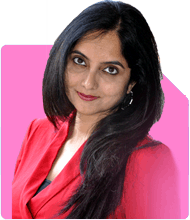
Reetika Sharma  |417 Answers  |Ask -

Financial Planner, MF and Insurance Expert - Answered on Nov 26, 2025

Reetika Sharma is a certified financial planner and CEO of F-Secure Solutions.
She advises clients about investments, insurance, tax and estate planning and manages high net-worth individual’s portfolios.
Reetika has an MBA in finance from the Institute of Chartered Financial Analysts of India (ICFAI) and an engineer degree from NIT, Jalandhar.
She also holds certifications from the Financial Planning Standards Board India (FPSB), Association of Mutual Funds in India (AMFI) and Insurance Regulatory and Development Authority of India (IRDAI).... more

Goutam Question by Goutam on Nov 18, 2025Hindi

Money

Dear Mam, I will go for Large cap fund as advised by you. Is it a wise investment in Gold ETF for him at present condition ? Plz suggest, with rgds,

Ans: Hi Goutam,

Yes. It is never a bad time to buy gold etf. Start with a monthly SIP of, let us say, 1000 rupees. Buy etf for 1000 every month. This way averaging will keep on happening for a long time. do not invest any lumpsum amount in it.
And make sure to keep your monthly investment as maximum 10% of overall monthly investments in gold etf.

Let me know if you need more help.

Best Regards,
Reetika Sharma, Certified Financial Planner
https://www.instagram.com/cfpreetika/
DISCLAIMER: The content of this post by the expert is the personal view of the rediffGURU. Users are advised to pursue the information provided by the rediffGURU only as a source of information to be as a point of reference and to rely on their own judgement when making a decision.
Money

You may like to see similar questions and answers below
Ramalingam

Ramalingam Kalirajan  |10870 Answers  |Ask -

Mutual Funds, Financial Planning Expert - Answered on Jun 03, 2024

Money
Dear Sir, I find your suggestions very effective. This is for my son who is 31 years old and works as a Manager in a leading IT Company. His CTC is approx. Rs. 35 lakhs per annum . His wife is also working. At present they have no kids. We are a joint family and live in our own flat . He is having EMI of only Rs 13,000/- till 2025 December and want to invest about 50,000/- ( fifty thousand )per month in Mutual Fund for a long term period of 15-20 years. Can you kindly advice so that a good corpus is created by 20 years. At present they have some investment in Gold EFT & stocks. ( around 5 lakhs). Best Regards, UKM
Ans: Dear UKM,

Thank you for sharing details about your son’s financial situation. Your son’s proactive approach to investing is commendable. Creating a long-term investment strategy will help him build a substantial corpus over the next 15-20 years.

With a monthly investment of Rs 50,000, a disciplined approach will ensure he achieves his financial goals. Let’s explore the best way to allocate his investments in mutual funds for maximum growth and stability.

Evaluating Current Financial Position
Your son has a stable job with a CTC of Rs 35 lakhs per annum. His wife is also employed, and they have no children at present. They live in a joint family-owned flat, which reduces housing costs. The EMI of Rs 13,000 till December 2025 is manageable.

His current investments in Gold ETFs and stocks amount to Rs 5 lakhs. These provide some diversification and a good start.

Benefits of Mutual Fund Investments
Investing in mutual funds offers several advantages:

Professional Management: Fund managers use their expertise to select and manage a diversified portfolio.

Diversification: Mutual funds spread investments across various assets, reducing risk.

Liquidity: Mutual funds can be easily converted to cash.

Flexibility: Investors can choose from a wide range of funds to suit their risk appetite.

Disadvantages of Index Funds
Index funds track market indices and lack active management. They mirror the market’s performance, which can be limiting. Active fund managers strive to outperform the market, providing the potential for higher returns. This adaptability is particularly beneficial in volatile markets.

Benefits of Actively Managed Funds
Actively managed funds offer:

Expertise: Fund managers actively select and manage investments to outperform the market.

Risk Management: Active funds can adjust holdings based on market conditions, potentially reducing risk.

Higher Returns: With skilled management, actively managed funds often aim for superior returns.

Direct vs. Regular Mutual Funds
Direct mutual funds have lower expense ratios but require investor expertise. Regular mutual funds, managed through a Certified Financial Planner (CFP), provide professional guidance. The additional cost of regular funds is justified by the expertise and peace of mind they offer.

Creating a Balanced Portfolio
To build a robust corpus over 15-20 years, a balanced portfolio with equity and debt mutual funds is recommended. Equity funds offer growth potential, while debt funds provide stability and reduce overall risk.

Systematic Investment Plan (SIP)
A SIP in mutual funds helps in rupee cost averaging and disciplined investing. Investing Rs 50,000 per month through SIPs in diversified equity mutual funds can leverage the power of compounding.

Suggested Asset Allocation
Based on your son’s risk profile and investment horizon, the following allocation is advisable:

70% in Equity Mutual Funds: For growth potential over the long term.

30% in Debt Mutual Funds: For stability and risk mitigation.

Equity Mutual Funds
Equity mutual funds can be further diversified into:

Large-Cap Funds: Invest in well-established companies with stable returns.

Mid-Cap Funds: Offer higher growth potential but with increased volatility.

Small-Cap Funds: High growth potential with higher risk.

Sectoral/Thematic Funds: Focus on specific sectors or themes with potential for high returns.

Debt Mutual Funds
Debt mutual funds can be diversified into:

Short-Term Debt Funds: Provide liquidity and lower interest rate risk.

Corporate Bond Funds: Invest in high-rated corporate bonds for stable returns.

Government Bond Funds: Offer safety and moderate returns.

Monitoring and Rebalancing
Regular monitoring and rebalancing of the portfolio are crucial. This ensures the investments align with your son’s financial goals and risk tolerance. A CFP can provide valuable insights and make necessary adjustments.

Tax Planning
Mutual funds offer tax-efficient investment options. Equity funds held for more than one year qualify for long-term capital gains tax at 10% on gains exceeding Rs 1 lakh. Debt funds held for more than three years qualify for long-term capital gains tax at 20% with indexation benefits.

Emergency Fund
An emergency fund equivalent to six months’ expenses should be maintained. This ensures financial stability during unforeseen circumstances and prevents the need to liquidate long-term investments.

Insurance Coverage
Adequate life and health insurance coverage are essential. This protects against financial risks and ensures peace of mind.

Additional Considerations
Your son’s EMI will end in December 2025. Post-EMI, this amount can be redirected towards investments, increasing the monthly SIP amount. Regular increments in income can also be partially allocated to SIPs, accelerating corpus growth.

Summary of Action Plan
Invest Rs 50,000 per month in mutual funds via SIPs.

Allocate 70% to equity mutual funds for growth.

Allocate 30% to debt mutual funds for stability.

Regularly monitor and rebalance the portfolio with a CFP’s guidance.

Maintain an emergency fund for financial stability.

Ensure adequate insurance coverage.

By following this plan, your son can build a substantial corpus over 15-20 years, ensuring financial security and growth.

Best Regards,

K. Ramalingam, MBA, CFP

Chief Financial Planner,

www.holisticinvestment.in

..Read more

Ramalingam

Ramalingam Kalirajan  |10870 Answers  |Ask -

Mutual Funds, Financial Planning Expert - Answered on Jun 24, 2025

Asked by Anonymous - Jun 24, 2025Hindi
Money
Hi Sir, I am a 40 year old woman. I am a mother of 2 daughters. I have a montly income of 70,000. I have invested in parag parikh flexi cap :: 7k, aditya birla sunlife digital india fund::2k, quant small cap:: 1k. I also invest montly 1k into SSS and 1k into PPF. Household expenses take upto 10k per month and try saving monthly 5k as cash for emergency fund which i have just started and approx 4lakhs towards kids education. I want to invest in good gold ETF scheme. Kindly chk my investment portfolio and suggest changes on the existing fud and any better funds to go for. My family of 4 is currently dependent on my income.
Ans: You are doing a great job managing your responsibilities as a mother and sole earner. Taking care of your family, while also investing for the future, is truly admirable. Let us now assess your overall financial situation from a 360-degree perspective.

Income and Expense Review

Your monthly income is Rs. 70,000.

Household expenses are limited to Rs. 10,000. That is very good control.

You are saving Rs. 5,000 monthly in cash for emergencies. This is a positive start.

You have Rs. 4 lakhs earmarked for children’s education. Very thoughtful planning.

Total committed monthly investments are Rs. 12,000.

You have struck a fair balance between expenses and savings.

Let us evaluate your investments and suggest improvements.

Review of Current Mutual Fund Investments

You are investing in 3 mutual fund schemes:

A flexi-cap fund (Rs. 7,000)

A sectoral tech fund (Rs. 2,000)

A small-cap fund (Rs. 1,000)

Here is the assessment:

1. Flexi Cap Fund (Rs. 7,000)

This category gives fund manager freedom to invest across large, mid and small caps.

You have chosen a well-diversified fund type. This is suitable for medium to long term.

Continue with this fund. Keep monitoring annually for performance.

2. Sectoral Tech Fund (Rs. 2,000)

Sector funds are high-risk. They lack diversification.

They perform only in specific market cycles. Not suitable for long-term goals alone.

Suggest you stop SIP here gradually. Shift this amount to diversified equity fund.

3. Small Cap Fund (Rs. 1,000)

Small caps can give high returns but with high volatility.

It is good you have kept the exposure small.

Retain it if your risk appetite allows. Avoid increasing it further.

Retirement and Long-Term Security Planning

As the sole breadwinner, your financial safety is very important.
You are 40 now. Planning for retirement should be given high priority.

Suggestions:

Start a separate SIP for retirement purpose.

Choose a diversified multi-cap or large-cap biased fund.

Invest at least Rs. 3,000 monthly if possible.

This can grow into a strong retirement base over 15-20 years.

Do not depend on EPF or PPF alone.

Children’s Education Fund Planning

You have already saved Rs. 4 lakhs. That is a good start.
But children’s education needs can be higher in future.

Suggestions:

Continue SIP in a good diversified equity mutual fund.

Allocate Rs. 3,000 monthly just for this goal.

Stick to funds that focus on large and mid-cap segments.

Avoid thematic or sector funds for this purpose.

Review portfolio annually to switch if performance drops.

Emergency Fund Planning

You have just started building this. That is great.

Suggestions:

Target 6 to 12 months of expenses as emergency fund.

Since your expenses are Rs. 10,000, aim for Rs. 60,000 to Rs. 1.2 lakhs first.

Store in liquid mutual fund or bank RD or savings account.

Avoid using this fund unless true emergency arises.

Gold Investment Strategy

You asked about gold ETF investments.

Let’s understand the points first.

Disadvantages of Index Funds and ETFs:

ETFs and index funds are passively managed.

They just copy an index or a commodity. No fund manager decisions.

No flexibility to exit underperforming stocks.

These funds underperform in sideways or bear markets.

Gold ETFs have no income generation ability.

They carry expense ratios but no compounding benefits like equity funds.

Gold prices stay flat for years sometimes.

Better Alternative – Actively Managed Gold Mutual Funds:

Choose gold mutual funds with active management.

SIP route reduces gold volatility risk.

You can invest Rs. 1,000 monthly for asset allocation purpose.

Limit gold investment to 5-10% of total portfolio.

Use gold as a hedge, not wealth creation.

SSS and PPF Contribution Review

You are investing Rs. 1,000 monthly in each.

These are safe and government-backed. Good for capital protection.

But returns are lower than equity mutual funds.

Consider this portion more for safety than wealth growth.

Continue if you want low-risk component in your plan.

Do not increase these amounts unless tax benefit is needed.

Cash Flow and Budgeting Evaluation

Monthly investments: Rs. 12,000 (Mutual funds + PPF + SSS)

Monthly saving in cash: Rs. 5,000

Monthly fixed expense: Rs. 10,000

That leaves you with nearly Rs. 43,000 monthly for flexible use.
If possible, increase mutual fund SIPs by Rs. 2,000-3,000 every 6 months.
This will build long-term wealth faster.

Insurance and Risk Coverage (Assuming You Have None)

As you did not mention life or health insurance, this needs urgent attention.

Life Insurance:

You are the only earning member.

Buy a term plan of at least Rs. 50 lakhs to Rs. 1 crore.

This will protect your family if anything happens to you.

Only choose pure term insurance. No investment-linked policy.

Health Insurance:

Cover the entire family under one floater policy.

Go for Rs. 10 lakh coverage at minimum.

Avoid relying only on employer health cover (if any).

Accident Cover:

Low premium personal accident policy is also helpful.

Helps in case of temporary or permanent disability.

Tax Saving Suggestions

PPF and SSS qualify under 80C.

Life insurance premiums also help.

Equity Linked Savings Schemes (ELSS) offer better returns and tax benefits.

You can allocate Rs. 1,000 to Rs. 2,000 per month to ELSS.

Keep it locked for 3 years and review after that.

Discipline and Investment Strategy Tips

Stick to SIPs even when market is down.

Do not stop or switch funds too frequently.

Rebalance your portfolio once a year.

Increase SIPs gradually with income rise.

Keep asset mix – equity, debt, gold – in balance.

Always keep investment and insurance separate.

Avoid Direct Mutual Funds Route

Many people invest in direct mutual funds.
But this is risky without expert guidance.

Why Avoid Direct Funds:

You lose the support of a Certified Financial Planner.

No one tracks performance for you.

No help for rebalancing or goal tracking.

A regular plan through a Certified Financial Planner gives full service.

It helps you make decisions without emotional errors.

Finally

You are already doing better than many people with your planning.

Continue with your flexi-cap and small-cap funds.

Stop the sectoral tech fund and switch to a diversified equity fund.

Avoid gold ETFs. Choose an actively managed gold mutual fund instead.

Start a SIP for retirement and children's higher education.

Protect your family with term and health insurance urgently.

Slowly build your emergency fund to reach Rs. 1 lakh minimum.

Increase SIPs every year as your income rises.

Don’t mix insurance and investment.

Work with a Certified Financial Planner to review annually.

You are on the right path. Just a few small corrections will give you big results over time.

Best Regards,
K. Ramalingam, MBA, CFP,
Chief Financial Planner,
www.holisticinvestment.in
https://www.youtube.com/@HolisticInvestment

..Read more

Latest Questions
Ravi

Ravi Mittal  |676 Answers  |Ask -

Dating, Relationships Expert - Answered on Dec 04, 2025

Asked by Anonymous - Dec 02, 2025Hindi
Relationship
My married ex still texts me for comfort. Because of him, I am unable to move on. He makes me feel guilty by saying he got married out of family pressure. His dad is a cardiac patient and mom is being treated for cancer. He comforts me by saying he will get separated soon and we will get married because he only loves me. We have been in a relationship for 14 years and despite everything we tried, his parents refused to accept me, so he chose to get married to someone who understands our situation. I don't know when he will separate from his wife. She knows about us too but she comes from a traditional family. She also confirmed there is no physical intimacy between them. I trust him, but is it worth losing my youth for him? Honestly, I am worried and very confused.
Ans: Dear Anonymous,
I understand how difficult it is to let go of a relationship you have built from scratch, but is it really how you want to continue? It really seems to be going nowhere. His parents are already in bad health and he married someone else for their happiness. Does it seem like he will be able to leave her? So many people’s happiness and lives depend on this one decision. I think it’s about time you and your BF have a clear conversation about the same. If he can’t give a proper timeline, please try to understand his situation. But also make sure he understands yours and maybe rethink this equation. It really isn’t healthy. You deserve a love you can have wholly, and not just in pieces, and in the shadows.

Hope this helps

...Read more

DISCLAIMER: The content of this post by the expert is the personal view of the rediffGURU. Investment in securities market are subject to market risks. Read all the related document carefully before investing. The securities quoted are for illustration only and are not recommendatory. Users are advised to pursue the information provided by the rediffGURU only as a source of information and as a point of reference and to rely on their own judgement when making a decision. RediffGURUS is an intermediary as per India's Information Technology Act.

Close  

You haven't logged in yet. To ask a question, Please Log in below
Login

A verification OTP will be sent to this
Mobile Number / Email

Enter OTP
A 6 digit code has been sent to

Resend OTP in120seconds

Dear User, You have not registered yet. Please register by filling the fields below to get expert answers from our Gurus
Sign up

By signing up, you agree to our
Terms & Conditions and Privacy Policy

Already have an account?

Enter OTP
A 6 digit code has been sent to Mobile

Resend OTP in120seconds

x