Home > Relationship > Question
Need Expert Advice?Our Gurus Can Help

Can't Avoid Past Trauma: Overthinking and Doubt in New Relationship
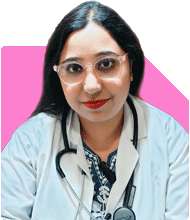
Dr Upneet

Dr Upneet Kaur  |77 Answers  |Ask -

Marriage counsellor - Answered on Apr 16, 2025

Dr Upneet Kaur is a medical professional and therapist based out of Amritsar.
After completing her bachelor’s degree in Ayurvedic medicine and surgery from the SKSS Ayurvedic College and Hospital, Sarabha, Punjab, in 2008, she worked as a medical officer at various multi-specialty hospitals in Punjab, handling both physical and mental patient care and clinical decision-making. She spent the next decade leading multidisciplinary teams at various levels.
Since 2022, she has been practising as a clinical psychologist and marriage counsellor.
Dr Upneet also holds an MBA in hospital management from Alagappa University, Tamil Nadu, and an MA in psychology from the Indira Gandhi National Open University.... more
Asked by Anonymous - Apr 07, 2025Hindi

Listen
Relationship

I was in a controlling relationship a few years ago. Even though my current partner is nothing like that, I find myself overthinking, doubting, and sometimes pulling away when they get too close. How do I stop sabotaging something good because of what I went through before?

Ans: Hello mam, I understand that you are having overthinking regarding your present relationship coz of your past. But we need to learn to let go of past, otherwise our present will be ruined coz of overthinking and insecurities. Think positive and try to engage yourself in some positive activities like Book reading, yoga, meditation etc. You can also take some sessions from counselor. Practice mindfulness. I hope it solves your problem.
Take care!
Regards
Dr Upneet kaur
Reach me : https://www.instagram.com/dr_upneet

You may like to see similar questions and answers below
Kanchan

Kanchan Rai  |649 Answers  |Ask -

Relationships Expert, Mind Coach - Answered on Dec 07, 2024

Asked by Anonymous - Dec 04, 2024Hindi
Listen
Relationship
I’ve been holding onto a grudge against a friend who hurt me years ago. While I’ve tried to move on, the memories keep coming back, and I feel like it’s stopping me from fully trusting others. How can I let go of this resentment and stop it from affecting my present relationships?
Ans: Letting go of resentment begins with understanding that it’s not about forgetting what happened or excusing the other person’s actions. It’s about freeing yourself from the grip that pain has on your emotions and your ability to trust. Start by creating space to process the hurt. Reflect on what exactly about the situation caused the deepest wound—was it a betrayal, unmet expectations, or feeling disregarded? Sometimes clarity about the source of the pain makes it easier to start releasing it.

You might also want to examine the story you’ve been telling yourself about this hurt. Often, we replay painful memories as if to protect ourselves from being hurt again, but in doing so, we allow the past to shape how we approach the present. Try reframing the narrative, focusing not on what you lost but on how you’ve grown. You’ve survived this hurt, and it’s a testament to your resilience.

Forgiveness can also play a key role, not necessarily as an act for the other person, but as a gift to yourself. Forgiveness doesn’t mean rekindling the friendship or even directly addressing the person—it’s a way of releasing the hold they have on your emotions. You can write a letter to your friend expressing all your feelings and then decide whether to send it or simply let it be a personal act of closure.

When it comes to trusting others, remind yourself that the actions of one person don’t define everyone. Trust grows in small, consistent steps. Start by recognizing the people in your life now who have shown care and consistency, and allow yourself to open up gradually.

Healing isn’t a straight path, and memories might still surface from time to time. When they do, instead of resisting them, acknowledge them and remind yourself that they no longer have power over you. With patience and self-compassion, you can move forward, lighter and more open to the connections that await you. You deserve the freedom to trust and to live fully in the present.

..Read more

Kanchan

Kanchan Rai  |649 Answers  |Ask -

Relationships Expert, Mind Coach - Answered on Dec 16, 2024

Asked by Anonymous - Dec 16, 2024Hindi
Listen
Relationship
I am 35, I had a major break up with my long-term girlfriend 7 years ago. Although it's been so long, I still find myself replaying all the moments where I think I might have gone wrong. I feel like I let myself and the other person down, and it’s hard to stop blaming myself. How do I move past this cycle of self-criticism and start fresh?
Ans: Forgiving yourself might feel like a tall order right now, but think of it as an act of self-compassion rather than erasing the past. You don’t have to pretend nothing went wrong, but you do deserve to free yourself from the narrative that you were entirely to blame. Sometimes, when we feel stuck in the past, it’s because we haven’t fully acknowledged our emotions or allowed ourselves to grieve—not just for the relationship, but for the version of ourselves we wish we’d been. It’s okay to feel sadness or anger or regret. Letting yourself sit with those feelings—without judgment—can help loosen their grip over time.

A fresh start begins with allowing yourself to be imperfect and to acknowledge your growth. Seven years is a long time, and you are not the same person you were back then. The lessons you’ve learned from this heartbreak have likely shaped you in ways you don’t even realize. If you can, try focusing on who you want to become rather than on who you were. What kind of relationships do you want to create in the future? What kind of kindness can you extend to yourself right now?

You’re not letting anyone down by wanting to heal. In fact, letting go of that guilt might be the greatest way to honor both yourself and the love you shared back then. You deserve happiness and connection, not in spite of your past, but because of it—it’s part of your journey, not the end of it.

..Read more

Anu

Anu Krishna  |1762 Answers  |Ask -

Relationships Expert, Mind Coach - Answered on Jan 07, 2025

Asked by Anonymous - Jan 06, 2025Hindi
Listen
Relationship
Hi, I’m a 28-year-old woman who has been single for almost three years now. I’ve recently started dating again. I met some great people, but I can’t seem to stop overthinking every little thing. Like, did I text too much? Was I too quiet during the date? Why did he take 5 hours to reply? Honestly, it’s exhausting, and it’s making me feel like I’m self-sabotaging potential connections. I know I’m a good person and have a lot to offer, but my mind just won’t stop analysing. How can I stop overthinking every interaction and just enjoy the dating process without this constant mental chatter?
Ans: Dear Anonymous,
You can keep thinking and still won't get a satisfactory answer to your whats and whys.
The key to stop overthinking is to actually STOP it. The 3 year gap and a possible fact of seeing your age group women already having settled down may have put you on an alert mode that tells you: Make sure that you don't goof it up!

When you tell yourself not to goof it up, invariable you will focus on what can and might go wrong and that's enough to exhaust you. Instead enjoy the dating process and go with that flow; things may go fine or not; just be in that moment...be aware of what's important to you and where you will draw boundaries. This check point will make sure that you put yourself out there and yet will keep you reined in without ruining your peace of mind. Enjoy the process...

All the best!
Anu Krishna
Mind Coach|NLP Trainer|Author
Drop in: www.unfear.io
Reach me: Facebook: anukrish07/ AND LinkedIn: anukrishna-joyofserving/

..Read more

Latest Questions
Reetika

Reetika Sharma  |514 Answers  |Ask -

Financial Planner, MF and Insurance Expert - Answered on Jan 28, 2026

Asked by Anonymous - Jan 25, 2026Hindi
Money
Hello, I have been investing in mutual funds using regular plans. Recently couple of my friends have been pushing me to stop SIPs and investments for Regular plans and go in with Direct plans. While I understand that the commissions that I pay to the financial advisor is considerable, I want to understand typically what how much am I losing by not investing in Direct plans. I read in a Sample report of an RIA that I will be losing around 15% due to regular plans. Is it a real thing? any thoughts about it? The inputs provided by my mutual fund distributor are good, but I do feel that I can also invest in flexi funds and achieve the same results. Kindly share your inputs.
Ans: Hi,

Yes there is a difference between regular and direct plans.
Direct plans are for people who have a very good understanding and can manage their portfolio. But even those people need an advisor at some point once their portfolio grows into lakhs and crores.
Hence it is always better to go for regular plans from the start as an early guidance helps you achieve your goals in a more planned way.

Choosing a wrong direct plan can adversely affect the portfolio and instead of saving 1% on commissions, one may end up losing upto 10% on an yearly basis.
Also choosing some random plans such as flexicap along with your regular portfolio is not a good idea. An advisor critically measures your profile and work accordingly.
It is always better to listen to your advisor.

Let me know if you need more help.

Best Regards,
Reetika Sharma, Certified Financial Planner
https://www.instagram.com/cfpreetika/

...Read more

Reetika

Reetika Sharma  |514 Answers  |Ask -

Financial Planner, MF and Insurance Expert - Answered on Jan 28, 2026

Asked by Anonymous - Jan 22, 2026Hindi
Money
I am 41 yrs old working as a Senior Manager in PSB, living with my wife and no children. Due to work pressure, Stress, Transfer posting , etc. i am planning for semi-retirement at the middle of this year. Kindly advice is it too risky or fine to retire with my Asset & Liabilities as below ASSETS 1. NPS: 32.00 lakhs 2.Mutual Fund & Stock: 25.00 lakhs 3. FD: 16 Lakhs 4. Land: 40.00 lakhs 5. PPF: 3.5 lakhs LIABILITIES Car loan: 3.5 lakhs,EMI:7000/- After retirement I am planning for Banking & Financial consultancy business and DSA with Bank (Earning: Unpredictable). My current monthly expanses is Rs.50000/- per month. Living in Urban area.
Ans: Hi,

Your current assets are not sufficient for you to leave your job currently.
However, setup the business along with your job and then check the status after 6 months. If you are able to earn more than your expenses, you can consider getting retirement.
But make sure to have enough savings for other financial goals such as travel , health, other major liabilities etc.

You need atleast assets worth 1.1 crores in mutual funds for you to retire to fund your retirement forever (assuming xirr 11% pa.)

Hence try setting up a business side by side. And increase your investments in mutual funds substantially with help of a professional to get it aligned with your plans.

Consider consulting a professional Certified Financial Planner - a CFP who can guide you with exact funds to invest in keeping in mind your age, requirements, financial goals and risk profile. A CFP periodically reviews your portfolio and suggest any amendments to be made, if required.

Let me know if you need more help.

Best Regards,
Reetika Sharma, Certified Financial Planner
https://www.instagram.com/cfpreetika/

...Read more

Reetika

Reetika Sharma  |514 Answers  |Ask -

Financial Planner, MF and Insurance Expert - Answered on Jan 28, 2026

Money
Hi Guru, I'm 43 Yrs old and investing in SIPs since last 4 years in the following - 1. SBI Small Cap Regular plan Growth - 5,000 2. ICICI Prudential Value Fund - 10,000 3. Motilal Oswal mid Cap fund - 5,000 4. Kotak Flexicap fund Regular Plan growth - 10,000 I also have the following policies - 1. ICICI Prudential Smartlife RP (ULIP) - 10,000 Per Month 2. Kotak Assured Savings Plan - 13,433 Per Month. Please check and let me know if everything is ok or else help me with any other SIPs or Policies. Many Thanks in Advance ..! Suresh G
Ans: Hi Suresh,

It is good that you have built a discipline for investing over the past 4 years.

The SIP funds you mentioned are good for long term, but selection can be improved more to generate better returns in alignment to your long term goals. You can try including large cap fund and make changes accordignly. Or choose to connect with a professional who will help you in improving fund selection.

The policies mentioned are not recommended to continue. Policies like this have a cagd of 5-6% annually when calculated accurately which is even less than FD. Hence you may choose to surrender and close these and redirect the investments into mutual funds for better returns and performance.

Hence do consult a professional Certified Financial Planner - a CFP who can guide you with exact funds to invest in keeping in mind your age, requirements, financial goals and risk profile. A CFP periodically reviews your portfolio and suggest any amendments to be made, if required.

Let me know if you need more help.

Best Regards,
Reetika Sharma, Certified Financial Planner
https://www.instagram.com/cfpreetika/

...Read more

Ramalingam

Ramalingam Kalirajan  |10998 Answers  |Ask -

Mutual Funds, Financial Planning Expert - Answered on Jan 28, 2026

Money
Considering current and future economic and situations, between fixed or floating home loan, which is better ? I'm going to take home loan from HDFC Bank for around 40 to 45 lakhs for 15 yrs. Pls suggest me also tell me what terms needs to be checked in loan agreement before signing
Ans: Appreciate your intent to choose the right loan structure with clear thinking. Choosing between fixed and floating rate for a home loan of around Rs 40–45 lakhs for 15 years is a big financial decision. It can impact your monthly cash flow, overall cost, and peace of mind.

» Difference between fixed and floating interest rates
– Fixed rate means your interest rate stays the same throughout the chosen fixed period. Your monthly EMI does not change during that period.
– Floating rate means the interest can go up or down with market benchmarks like the repo rate or bank’s internal benchmarks. Your EMI or loan tenure may adjust when rates change.

» What current and future economic conditions mean
– Interest rates globally and domestically have seen rises due to inflationary pressure, central bank policy tightening, and costlier funds for banks.
– In a rising rate scenario, fixed rates protect you from future rate hikes.
– In a falling or stable rate scenario, floating rates may cost less over time.

» Why floating rate usually works well for 15-year loans
– Floating rate typically starts lower than fixed rate, giving you initial cost advantage.
– Over long horizons, banks may adjust rates downward when economic pressure eases.
– You retain flexibility to prepay or refinance when rates soften.
– Many borrowers pay lower total interest with floating when rates stabilise.

» When fixed rate can be appropriate
– If you prioritise certainty of EMI and peace of mind even if rates rise in future.
– If you are not comfortable with EMI changes in your monthly budgeting.
– If your income is tight and you prefer predictable cash flows.

» Practical view for your case
– With a 15-year term and current rate cycle, floating rate is generally more suitable.
– It gives you lower initial cost and flexibility to refinance or prepay when rates soften.
– Fixed rate may feel secure but often costs more in long term if rates do not rise significantly.

» Key terms to check in loan agreement before signing
– Interest rate type and reset clause – How often the floating rate can change and by what benchmark.
– Processing fees and other charges – Upfront cost that adds to your total cost of borrowing.
– Prepayment and part-prepayment terms – Whether prepayment is allowed without penalty and how often you can prepay.
– Conversion options – Whether you can switch from floating to fixed (or vice versa) and at what cost.
– Penal interest – Charges if you delay EMI payments and how they are calculated.
– Loan disbursement schedule – Especially for under-construction properties, how and when funds are released.
– Foreclosure charges – Fees if you fully close the loan before term ends.
– Interest computation method – Whether interest is calculated on a reducing balance basis.

» How to structure your loan for comfort and cost efficiency
– Choose floating rate with a short initial lock-in if you prefer lower cost.
– Keep prepayment and part-payment flexibility open so you can reduce outstanding principal with surplus funds.
– Monitor rate environment annually to decide if converting to fixed or refinancing makes sense.
– Keep an emergency buffer so you are not pressured if floating rates tick up temporarily.

» Final Insights
– Floating rate home loan typically suits you better over 15 years in current economic context.
– Fixed rate gives peace but often costs more if rates do not rise sharply.
– Focus on key loan terms before signing so no surprises later.
– With careful planning and periodic review, your housing finance cost can be controlled well.

Best Regards,

K. Ramalingam, MBA, CFP,

Chief Financial Planner,

www.holisticinvestment.in

https://www.youtube.com/@HolisticInvestment

...Read more

Nayagam P

Nayagam P P  |10898 Answers  |Ask -

Career Counsellor - Answered on Jan 27, 2026

Career
Sir Please suggest some good course for PCB student appearing for 12 th exam thru CBSE in Feb 2026 having good prospect and placement opportunity . apart from Biotechnology, Microbiology, life science, genetics Regards Shailesh kr
Ans: Shailesh, before addressing your question, I strongly recommend completing a comprehensive psychometric assessment to identify the most suitable career options aligned with your aptitude, interest inventory, personality characteristics, and professional orientation style preferences. However, here are alternative options beyond Biotechnology, Microbiology, Life Science, and Genetics: (1) Environmental Science/Environmental Engineering, (2) B.Pharmacy, (3) Forensic Science, (4) Food Technology/Food Engineering, and (5) Agricultural Science/Agricultural Engineering/Horticulture. Please note that according to an article published in The Times of India's Republic Day Supplementary Special Edition yesterday, "India's food processing sector is experiencing significant growth, with processed food exports now representing 20.4% of agri-food exports, an increase from 13.7% in 2014-15. The market, valued at USD 354.5 billion, is expanding rapidly as startups innovate in ready-to-eat and nutrient-fortified products. Growing consumer demand for convenient, health-oriented foods creates substantial entrepreneurial opportunities and diverse career pathways." All the BEST for a Prosperous Future!

Follow RediffGURUS to Know More on 'Careers | Money | Health | Relationships'.

...Read more

DISCLAIMER: The content of this post by the expert is the personal view of the rediffGURU. Investment in securities market are subject to market risks. Read all the related document carefully before investing. The securities quoted are for illustration only and are not recommendatory. Users are advised to pursue the information provided by the rediffGURU only as a source of information and as a point of reference and to rely on their own judgement when making a decision. RediffGURUS is an intermediary as per India's Information Technology Act.

Close  

You haven't logged in yet. To ask a question, Please Log in below
Login

A verification OTP will be sent to this
Mobile Number / Email

Enter OTP
A 6 digit code has been sent to

Resend OTP in120seconds

Dear User, You have not registered yet. Please register by filling the fields below to get expert answers from our Gurus
Sign up

By signing up, you agree to our
Terms & Conditions and Privacy Policy

Already have an account?

Enter OTP
A 6 digit code has been sent to Mobile

Resend OTP in120seconds

x