Home > Money > Question
Need Expert Advice?Our Gurus Can Help

Nikunj

Nikunj Saraf  | Answer  |Ask -

Mutual Funds Expert - Answered on May 23, 2023

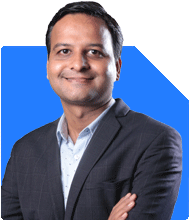
Nikunj Saraf has more than five years of experience in financial markets and offers advice about mutual funds. He is vice president at Choice Wealth, a financial institution that offers broking, insurance, loans and government advisory services. Saraf, who is a member of the Institute Of Chartered Accountants of India, has a strong base in financial markets and wealth management.... more

Satya Question by Satya on May 11, 2023Hindi
Listen
Money

I am writing to ask for your advice to invest in MF. My name is satya age 38 years old. I work in a software company. I have two children, ages 3 and 1 Years old. I am new to MF and wanted to invest an amount of 12K per month for a long term of nearly 15 years. My priorities: a. Children's education. b. Retirement. Please suggest to me which are the best SIPs to invest for 15 years.

Ans: Hello Satya . With multiple goal align in next 15 yrs. I would suggest to consider Large cap, small cap , midcap , and flexicap categories for your portfolio.
DISCLAIMER: The content of this post by the expert is the personal view of the rediffGURU. Users are advised to pursue the information provided by the rediffGURU only as a source of information to be as a point of reference and to rely on their own judgement when making a decision.
Money

You may like to see similar questions and answers below
Ramalingam

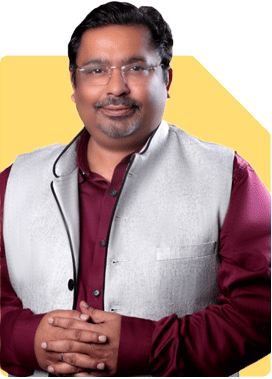
Ramalingam Kalirajan  |10958 Answers  |Ask -

Mutual Funds, Financial Planning Expert - Answered on Apr 08, 2024

Asked by Anonymous - Apr 07, 2024Hindi
Listen
Money
Hello Sir, I want to invest 25k monthly in SIP with retirement and child education as investment goal . I am also planning to step up the SIP amount every year after I get the increment. Could you please tell me in which MF fund should I invest and how much should I increase the SIP amount very year. Target corpus ( investment horizon - 15 years) Retirement (least amount ) - 4-5 Cr Child Education - 4-5 Cr My wife is also working and can invest 15k more in addition to above amount.
Ans: Given your investment goals and time horizon, here's a suggested investment plan:

Retirement Corpus:

Allocate a significant portion of your SIP amount to large-cap, multi-cap, and diversified equity funds.
Large-cap funds offer stability, while multi-cap and diversified equity funds provide growth potential.
Gradually increase SIP amounts annually to keep pace with inflation and salary increments.
Child Education Corpus:

Diversify your SIPs across large-cap, multi-cap, balanced, and thematic funds.
Large-cap funds offer stability, while multi-cap and balanced funds provide growth potential with lower volatility.
Thematic funds can be considered for specific sectors or themes with growth potential, but exercise caution due to higher risk.
Combined SIP Allocation:

Allocate SIP investments based on your risk tolerance, investment horizon, and financial goals.
Balance the allocation between retirement and child education based on priority and time horizon.
Gradually increase SIP amounts annually to align with your financial goals and growing expenses.
Review and Monitoring:

Regularly review the performance of your SIP investments and adjust asset allocation if necessary.
Seek advice from a financial advisor to periodically assess your progress and make any required adjustments to stay on track with your goals.
By following a diversified investment approach and gradually increasing your SIP amounts over time, you can work towards building a substantial corpus for both your retirement and your child's education.

..Read more

Ramalingam

Ramalingam Kalirajan  |10958 Answers  |Ask -

Mutual Funds, Financial Planning Expert - Answered on May 21, 2024

Listen
Money
Sir, i am 33yrs old and new to investment. I am planning to do SIP for long term next 15 to 20 years. What are the best MF for me to invest? Kindly help sir.
Ans: Starting Your Investment Journey
It's fantastic that you're starting your investment journey at 33. Investing in SIPs for the long term is a smart and disciplined approach.

Benefits of SIPs
Systematic Investment Plans (SIPs) help inculcate a habit of regular investing. They provide the advantage of rupee cost averaging and the power of compounding. Over 15 to 20 years, these benefits can significantly grow your wealth.

Importance of Actively Managed Funds
Actively managed funds have professional managers who make strategic decisions to maximize returns. Unlike index funds, which simply track market indices, actively managed funds adapt to market conditions. This can result in better performance and higher returns.

Disadvantages of Index Funds
Index funds have lower costs but lack flexibility. They often underperform during volatile market conditions. Actively managed funds, on the other hand, can adjust their strategies to navigate market fluctuations effectively.

Benefits of Investing Through a Certified Financial Planner
Investing through a Certified Financial Planner (CFP) provides expert guidance. They can help select the right funds based on your financial goals and risk tolerance. Regular funds invested through a CFP offer professional management and strategic oversight.

Diversifying Your Portfolio
Diversification is key to managing risk and optimizing returns. A well-diversified portfolio includes a mix of equity, debt, and balanced funds. This spread reduces the impact of market volatility on your overall investment.

Equity Funds for Growth
Equity funds invest in stocks and are suitable for long-term growth. They tend to offer higher returns compared to other funds but come with higher risk. Investing in a mix of large-cap, mid-cap, and small-cap funds can provide balanced growth.

Debt Funds for Stability
Debt funds invest in fixed-income securities like bonds and government securities. They offer stability and lower risk compared to equity funds. Including debt funds in your portfolio ensures a steady return and reduces overall risk.

Balanced Funds for Moderate Growth
Balanced funds, or hybrid funds, invest in both equity and debt. They provide a balance of growth and stability. These funds are suitable for investors looking for moderate returns with controlled risk.

Regular Portfolio Review
Regularly reviewing your portfolio is crucial. Market conditions and your financial goals can change over time. A CFP can help you rebalance your portfolio to ensure it remains aligned with your objectives.

Increasing SIP Contributions
As your income grows, consider increasing your SIP contributions. Even small incremental increases can significantly boost your investment corpus over time. The power of compounding will amplify these contributions, leading to substantial growth.

Avoiding Common Investment Pitfalls
Avoid making emotional investment decisions. Stick to your long-term plan and avoid reacting to short-term market fluctuations. Regular consultation with a CFP ensures you stay on track towards your financial goals.

Building an Emergency Fund
Maintain an emergency fund covering 6-12 months of expenses. This fund provides financial security and prevents the need to withdraw investments during emergencies.

Conclusion: A Balanced Approach
Your decision to invest in SIPs for the long term is wise. Focus on actively managed funds for better returns. Diversify your portfolio with a mix of equity, debt, and balanced funds. Regularly review and increase your SIP contributions, and maintain an emergency fund. Consulting with a CFP ensures professional guidance and helps you achieve your financial goals.

Best Regards,

K. Ramalingam, MBA, CFP,

Chief Financial Planner,

www.holisticinvestment.in

..Read more

Latest Questions
Naveenn

Naveenn Kummar  |241 Answers  |Ask -

Financial Planner, MF, Insurance Expert - Answered on Jan 15, 2026

Money
Hi, I am 55 years of age, an NRI working in Dubai and my company has a medical insurance policy that covers all medical expenses for me and my wife all over the world. In 5 years time, upon retirement, I will relocate back to India. Will I be able to take a medical insurance policy for myself and my wife at the age of 60 years ? If I take a medical insurance policy now, would it help in reducing the insurance premium ? Kindly advice.
Ans: Hi Girish

You are 55, working in Dubai, and currently covered under your company’s medical insurance worldwide. That cover is excellent, but please remember one important thing: it ends the day your employment ends. Health insurance planning has to look beyond employment.

Can you take a health insurance policy in India at age 60?
Yes, you can. Most insurers in India do allow entry at 60 years and even later.
However, at that age:

Premiums are significantly higher

Medical tests and scrutiny are much stricter

Any lifestyle condition or past medical history can lead to waiting periods, exclusions, or higher premiums

So while it is possible, it is not ideal to start fresh at 60.

Will taking a policy now help reduce premium later?
The bigger benefit is not just premium, but certainty and continuity.

If you take a policy now at 55:

You enter at a lower age slab

Mandatory waiting periods (usually 2–4 years) get completed well before retirement

By the time you are 60, the policy becomes mature and far more useful

Underwriting happens when you are younger and healthier

Premiums will still rise with age, but you avoid the sharp jump and uncertainty of entering as a new senior citizen.

But since you already have full medical cover, is this necessary?
Think of this Indian policy as a retirement safety net, not a replacement for your employer cover.

You do not need to actively use it now.
You just need it to run in the background, so that when you return to India, you are not forced to buy insurance at the worst possible time.

Many NRIs make the mistake of postponing this decision and then struggle at 60 when options become limited.

What kind of policy should you consider?
Keep it straightforward:

A family floater for you and your wife

Decent coverage, not the bare minimum

Focus on hospitalisation benefits

Buy it with the intention of continuing it for life

Avoid over engineering the policy. Simplicity works best in health insurance.

Final advice
Health insurance is one area where early action quietly pays off later.
You may never thank yourself at 60 for buying a policy at 55, but you will definitely regret not doing it if a medical issue arises.

Most obvious question how can I take the family floater insurance most insurance will issue when you are visiting India

Few insurance will issue incase your are not able to visit Indian the cost of medical test in your abroad hospital or clinic will cost you heavy on pockets

Naveenn Kummar
Chief Financial Planner | AMFI Registered MFD
https://members.networkfp.com/member/naveenkumarreddy-vadula-chennai

...Read more

Komal

Komal Jethmalani  |445 Answers  |Ask -

Dietician, Diabetes Expert - Answered on Jan 15, 2026

Komal

Komal Jethmalani  |445 Answers  |Ask -

Dietician, Diabetes Expert - Answered on Jan 15, 2026

Komal

Komal Jethmalani  |445 Answers  |Ask -

Dietician, Diabetes Expert - Answered on Jan 15, 2026

Asked by Anonymous - Dec 03, 2025Hindi
Health
I recently entered menopause, and I’ve noticed my weight going up no matter what I eat or how careful I try to be. Earlier, if I skipped sweets for a week or reduced portions, I could see a small difference, but now it feels like nothing works. My metabolism seems to have completely slowed down, and I also experience sudden mood swings, bloating, and fatigue. It’s quite frustrating because I’m eating mostly home food — chapati, sabzi, dal, very little oil — and I even try to go for walks regularly. Still, my clothes have become tighter and I feel more irritable than before. Some friends say it’s just hormonal and can’t be helped, while others suggest cutting carbs or going on a high-protein diet. But I’m not sure what’s safe or sustainable at this stage. Is there a specific kind of diet that can help women during menopause manage their weight, energy levels, and mood swings without feeling constantly hungry or deprived?
Ans: During menopause, weight gain and fatigue are common due to hormonal changes and a slower metabolism, but the right diet can help. A balanced approach is beneficial, such as a Mediterranean-style diet or a modified high-protein plan that emphasizes whole grains, lean protein, healthy fats, and plenty of vegetables. This supports weight management, stabilizes mood, and boosts energy without leaving you hungry. Pairing this with strength training, good sleep, and stress management can help you manage weight, energy, and mood swings sustainably.

...Read more

DISCLAIMER: The content of this post by the expert is the personal view of the rediffGURU. Investment in securities market are subject to market risks. Read all the related document carefully before investing. The securities quoted are for illustration only and are not recommendatory. Users are advised to pursue the information provided by the rediffGURU only as a source of information and as a point of reference and to rely on their own judgement when making a decision. RediffGURUS is an intermediary as per India's Information Technology Act.

Close  

You haven't logged in yet. To ask a question, Please Log in below
Login

A verification OTP will be sent to this
Mobile Number / Email

Enter OTP
A 6 digit code has been sent to

Resend OTP in120seconds

Dear User, You have not registered yet. Please register by filling the fields below to get expert answers from our Gurus
Sign up

By signing up, you agree to our
Terms & Conditions and Privacy Policy

Already have an account?

Enter OTP
A 6 digit code has been sent to Mobile

Resend OTP in120seconds

x