Home > Money > Question
Need Expert Advice?Our Gurus Can Help
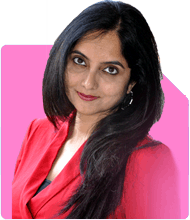
Reetika

Reetika Sharma  |417 Answers  |Ask -

Financial Planner, MF and Insurance Expert - Answered on Sep 10, 2025

Reetika Sharma is a certified financial planner and CEO of F-Secure Solutions.
She advises clients about investments, insurance, tax and estate planning and manages high net-worth individual’s portfolios.
Reetika has an MBA in finance from the Institute of Chartered Financial Analysts of India (ICFAI) and an engineer degree from NIT, Jalandhar.
She also holds certifications from the Financial Planning Standards Board India (FPSB), Association of Mutual Funds in India (AMFI) and Insurance Regulatory and Development Authority of India (IRDAI).... more

Ashish Question by Ashish on Aug 12, 2025Hindi

Money

Presently, I have 2 SIPs running, one with DSP Regular Fund Direct Growth (Rs. 1000/ month) and another one with Nippon India Small Cap Fund Direct Growth (Rs. 1500/ month). Now, I would like to start another SIP along with the abovesaid SIPs, can you kindly guide me about the mutual fund (company name), which will be beneficial for me in a long run.

Ans: Hi Ashish,

It is good that you are willing to increase your investments in mutual funds.
But first make sure you have sufficient amount as your emergency fund for any kind of situation. Ideally this fund should be equivalent to 3 to 6 months of your monthly expenses.
Next you should have a proper life and health insurance because even a small medical emergency can wipe your entire savings.

Regarding a new SIP and the existing SIPs, it would be great for you if you consult a Certified Financial Planner for detailed analysis. a professional can guide you with a tailored approach keeping in mind your age, goals and risk profile.
Avoid investing in any instrument just based on random video or article as no investment can be right for everyone.


Best Regards,
Reetika Sharma, Certified Financial Planner
https://www.instagram.com/cfpreetika
DISCLAIMER: The content of this post by the expert is the personal view of the rediffGURU. Users are advised to pursue the information provided by the rediffGURU only as a source of information to be as a point of reference and to rely on their own judgement when making a decision.
Money

You may like to see similar questions and answers below

Ramalingam

Ramalingam Kalirajan  |10870 Answers  |Ask -

Mutual Funds, Financial Planning Expert - Answered on May 15, 2024

Asked by Anonymous - May 06, 2024Hindi
Listen
Money
I am 43 years old and Started SIP in 2018. Kindly suggest about the funds. Following are my current mutual fund investments: AXIS Blue Chip fund Monthly SIP of Rs 3500 Mirae Large and Mid Cap fund Monthly SIP of Rs 2000/- Invesco India contra fund Monthly SIP of Rs 6000/- Axis Small Cap Fund Monthly SIP of Rs 5000/- Kotek flexicap fund Monthly SIP of RS 4000/- Sbi Banking & Financial Services fund Monthly SIP Rs.3500 Franklin India Prima fund monthly SIP Rs.1000.
Ans: Your current mutual fund portfolio reflects a thoughtful approach to wealth accumulation through systematic investment plans (SIPs). Let's delve into each aspect of your portfolio and assess its performance and potential.

Diversification Analysis
Your portfolio comprises a mix of large-cap, mid-cap, small-cap, and flexi-cap funds, offering diversification across market segments. This diversification mitigates risk and enhances the potential for returns.

Performance Assessment
Each fund has its unique investment strategy and objectives. Analyzing their historical performance against benchmarks and peers provides insights into their efficacy in delivering returns.

Fund Selection Rationale
Your selection of funds appears to be well-researched, considering factors such as fund manager expertise, consistency in performance, and alignment with your risk tolerance and financial goals.

Active vs. Passive Management
Your focus on actively managed funds suggests a preference for capitalizing on the expertise of fund managers to navigate market fluctuations and exploit growth opportunities. This approach contrasts with passive strategies like index funds, which lack the agility and discretion of active management.

SIP vs. Lump Sum Investment
SIPs offer the advantage of rupee cost averaging, enabling you to buy more units when prices are low and fewer when prices are high. This disciplined approach to investing smoothens market volatility and fosters long-term wealth creation.

Regular Funds vs. Direct Funds
By investing through a Certified Financial Planner, you benefit from professional guidance and portfolio monitoring. Regular funds, though they may have slightly higher expense ratios compared to direct funds, offer value through expert advice, ensuring optimal fund selection and allocation.

Future Considerations
Regularly reviewing your portfolio's performance and aligning it with evolving financial goals is crucial. Periodic rebalancing may be necessary to maintain the desired asset allocation and adapt to changing market dynamics.

Conclusion
Your mutual fund portfolio reflects a prudent approach to wealth management, characterized by diversification, active management, and systematic investment. As a Certified Financial Planner, I commend your diligence and commitment to long-term financial well-being.

Best Regards,

K. Ramalingam, MBA, CFP,

Chief Financial Planner,

www.holisticinvestment.in

..Read more

Ramalingam

Ramalingam Kalirajan  |10870 Answers  |Ask -

Mutual Funds, Financial Planning Expert - Answered on Aug 28, 2025

Money
Presently, I have 2 SIPs running, one with DSP Regular Fund Direct Growth (Rs. 1000/ month) and another one with Nippon India Small Cap Fund Direct Growth (Rs. 1500/ month). Now, I would like to start another SIP along with the abovesaid SIPs, can you kindly guide me about the mutual fund (company name), which will be beneficial for me in a long run.
Ans: You have shown a very good discipline by continuing SIPs. Many investors start and stop. You are already running two SIPs. That itself shows your patience and trust in long term investing. SIP is like planting trees. You water them monthly. Later you enjoy the shade and fruits. Your Rs.1000 in DSP regular and Rs.1500 in Nippon India small cap are already helping you build wealth slowly.

Now, let us assess the third SIP option from different angles.

» Importance of balance in portfolio
You already have exposure to small cap through Nippon India. You also have some exposure to diversified category through DSP. This is good but still tilted towards high risk. Small cap is volatile. It can give high return but also deep fall in short term. To balance, you need one fund that brings stability. This stability protects during market falls. Stability plus growth creates sustainable wealth.

» Regular fund versus direct fund
You are now using direct plan funds. On paper, direct plan looks cheaper. Many investors think lesser expense ratio means higher return. But in real life, it is not always true. Direct funds expect you to track, review, and rebalance alone. This takes skill and time. Many investors fail to review at right time. They either stay too long or exit too soon. Mistakes in allocation cost more than saved expenses.

In regular plans, you invest through a Mutual Fund Distributor who holds Certified Financial Planner credential. They monitor portfolio. They alert you when changes are required. They bring discipline in asset allocation. Their continuous advice helps you avoid emotional decisions. This advice often adds more value than small difference in expense ratio. Over 10–15 years, disciplined allocation with CFP-backed guidance beats direct investing.

» Choosing category for third SIP
Since you already have mid and small cap exposure, the next SIP can go into:

– A large cap oriented fund. This gives stability, smoother growth, and steady compounding.
– Or a flexi cap fund. This allows the fund manager to move across large, mid, small. It creates balance automatically.

This approach makes your portfolio a mix of growth and safety. A Certified Financial Planner will recommend not to load too much on small caps. Stability matters in wealth creation journey.

» Risk assessment and tolerance
You must check how much risk you are comfortable with. You are already comfortable with SIPs. That itself is very good. If you have long horizon, you can tolerate volatility. But still, too much exposure in small cap creates stress. So balancing with large cap or flexi cap reduces sleepless nights.

» Asset allocation importance
Asset allocation is the real driver of returns. It is not fund selection alone. A Certified Financial Planner will suggest mix of equity, debt, and gold. Your current portfolio is 100% equity. This is fine if horizon is above 10 years. Still, a small allocation to debt fund can give cushion. Debt funds also help when you need money in short notice.

» SIP as a habit
Your SIP journey is already consistent. Increasing SIP amount or adding new SIP is like step-up in fitness training. Each step builds more strength. The key is not stopping. SIP works only when continued across market ups and downs.

» Taxation aspects
In equity mutual funds, long term capital gains above Rs.1.25 lakh are taxed at 12.5%. Short term gains are taxed at 20%. This new rule means holding long term is more beneficial. Frequent switching will cost higher. Regular plans with advisor’s monitoring reduce unnecessary switches. Thus, taxation also favours long term disciplined SIP.

Debt mutual funds are taxed as per income tax slab. That means they are not tax free. But their role is stability, not tax saving. Hence, a small allocation to debt can still be useful.

» Behavioural benefit of regular plan
Direct plan investors often panic in market fall. They sell early. Or they buy when markets are high. This behaviour kills return. With a regular plan, you get handholding by an expert. A Certified Financial Planner ensures you do not act on fear or greed. This behavioural advantage alone can add big value over decades.

» Insurance and protection
If you have dependents, you must ensure proper term insurance. Do not mix investment with insurance. ULIP and endowment policies give poor returns. Pure term plan is cheaper and safer. Along with SIP, term plan gives complete protection. If you already hold ULIP or LIC investment-cum-insurance policies, better to surrender and reinvest in mutual funds. That improves wealth creation.

» Emergency fund
Before investing more, check if you have 6 months of expenses as emergency fund. This can be in savings account or liquid fund. Emergency fund saves you from breaking SIP during crisis. Without emergency cushion, SIP discipline may suffer.

» Financial goals clarity
Your SIPs must be linked to goals. Retirement, children education, house purchase – each needs different horizon. Equity SIPs suit long term goals above 7 years. Debt SIPs suit short term goals. So, decide the new SIP purpose. Then select fund category accordingly. If for retirement, equity is good. If for medium-term goal, balanced or hybrid funds are better.

» Monitoring and review
Every SIP needs yearly review. Not every quarter, not daily. Once in a year with Certified Financial Planner is enough. They check whether fund is performing compared to peers and benchmark. If fund is lagging continuously, they suggest switch. You don’t need to worry day-to-day.

» Long term wealth compounding
Power of compounding is like magic. Rs.2500 monthly becomes huge in 15–20 years. By adding one more SIP, you are accelerating wealth creation. Compounding works best with time and discipline. That is why staying invested matters more than timing market.

» Behavioural discipline and patience
Patience is rare in investing. Many quit after few years seeing no big growth. But real wealth comes after 10–15 years. You already showed patience. Continue it. The new SIP must be set and forgotten. Just review once in a year.

» Why avoid index funds
Some investors get attracted to index funds. They think passive is better. But in India, markets are still less efficient. Skilled managers beat index over long term. Actively managed funds adapt better in falling markets. Index funds just mirror market fall. That creates larger drawdowns. For Indian investors, actively managed funds by reputed houses are better for wealth creation.

» Role of diversification
You should not keep all SIPs in same style. Diversification across categories reduces risk. Large cap, mid cap, small cap, flexi cap – a mix creates balance. Adding debt and gold at right time adds further balance. This way, one category falls, another supports. That reduces overall shock.

» Long term mindset
The real power of SIP comes only with long term mindset. Small amounts today become large wealth later. By adding another SIP, you are stepping into stronger financial future. Long term mindset avoids distraction of short term noise.

» Psychological advantage of SIP
SIP brings habit of saving regularly. It makes you investor automatically. You don’t need to time market. Even in bad markets, SIP buys cheaper. This rupee cost averaging is silent but powerful. Over years, it reduces risk and enhances return.

» Family financial security
Wealth building is not only for self. It creates security for family. SIPs ensure you can meet big expenses without debt. This avoids financial stress. With proper planning, you can retire peacefully and support children’s education comfortably.

» Building step-up strategy
As your income grows, increase SIP. A step-up SIP ensures wealth grows faster than inflation. Even Rs.500 increase every year creates big difference later. That is more effective than one-time large lump sum.

» Final Insights
You are already on good path with SIPs. Adding a third SIP will further strengthen portfolio. Choose a fund that brings stability. Prefer regular plans through a Certified Financial Planner for guidance and discipline. Link SIPs to goals. Keep patience. Review yearly. Avoid ULIPs and endowment policies. Build emergency fund. Protect family with term insurance. Increase SIP gradually as income rises. With these steps, your wealth creation journey will be strong and worry free.

Best Regards,

K. Ramalingam, MBA, CFP,

Chief Financial Planner,

www.holisticinvestment.in

https://www.youtube.com/@HolisticInvestment

..Read more

Latest Questions
Dr Dipankar

Dr Dipankar Dutta  |1837 Answers  |Ask -

Tech Careers and Skill Development Expert - Answered on Dec 05, 2025

Career
Dear Sir, I did my BTech from a normal engineering college not very famous. The teaching was not great and hence i did not study well. I tried my best to learn coding including all the technologies like html,css,javascript,react js,dba,php because i wanted to be a web developer But nothing seem to enter my head except html and css. I don't understand a language which has more complexities. Is it because of my lack of experience or not devoting enough time. I am not sure. I did many courses online and tried to do diplomas also abroad which i passed somehow. I recently joined android development course because i like apps but the teaching was so fast that i could not memorize anything. There was no time to even take notes down. During the course i did assignments and understood the code because i have to pass but after the course is over i tend to forget everything. I attempted a lot of interviews. Some of them i even got but could not perform well so they let me go. Now due to the AI booming and job markets in a bad shape i am re-thinking whether to keep studying or whether its just time waste. Since 3 years i am doing labour type of jobs which does not yield anything to me for survival and to pay my expenses. I have the quest to learn everything but as soon as i sit in front of the computer i listen to music or read something else. What should i do to stay more focused? What should i do to make myself believe confident. Is there still scope of IT in todays world? Kindly advise.
Ans: Your story does not show failure.
It shows persistence, effort, and desire to improve.

Most people give up.
You didn’t.
That means you will succeed — but with the right method, not the old one.

...Read more

Ravi

Ravi Mittal  |676 Answers  |Ask -

Dating, Relationships Expert - Answered on Dec 04, 2025

Asked by Anonymous - Dec 02, 2025Hindi
Relationship
My married ex still texts me for comfort. Because of him, I am unable to move on. He makes me feel guilty by saying he got married out of family pressure. His dad is a cardiac patient and mom is being treated for cancer. He comforts me by saying he will get separated soon and we will get married because he only loves me. We have been in a relationship for 14 years and despite everything we tried, his parents refused to accept me, so he chose to get married to someone who understands our situation. I don't know when he will separate from his wife. She knows about us too but she comes from a traditional family. She also confirmed there is no physical intimacy between them. I trust him, but is it worth losing my youth for him? Honestly, I am worried and very confused.
Ans: Dear Anonymous,
I understand how difficult it is to let go of a relationship you have built from scratch, but is it really how you want to continue? It really seems to be going nowhere. His parents are already in bad health and he married someone else for their happiness. Does it seem like he will be able to leave her? So many people’s happiness and lives depend on this one decision. I think it’s about time you and your BF have a clear conversation about the same. If he can’t give a proper timeline, please try to understand his situation. But also make sure he understands yours and maybe rethink this equation. It really isn’t healthy. You deserve a love you can have wholly, and not just in pieces, and in the shadows.

Hope this helps

...Read more

DISCLAIMER: The content of this post by the expert is the personal view of the rediffGURU. Investment in securities market are subject to market risks. Read all the related document carefully before investing. The securities quoted are for illustration only and are not recommendatory. Users are advised to pursue the information provided by the rediffGURU only as a source of information and as a point of reference and to rely on their own judgement when making a decision. RediffGURUS is an intermediary as per India's Information Technology Act.

Close  

You haven't logged in yet. To ask a question, Please Log in below
Login

A verification OTP will be sent to this
Mobile Number / Email

Enter OTP
A 6 digit code has been sent to

Resend OTP in120seconds

Dear User, You have not registered yet. Please register by filling the fields below to get expert answers from our Gurus
Sign up

By signing up, you agree to our
Terms & Conditions and Privacy Policy

Already have an account?

Enter OTP
A 6 digit code has been sent to Mobile

Resend OTP in120seconds

x