Home > Money > Question
Need Expert Advice?Our Gurus Can Help
Reetika

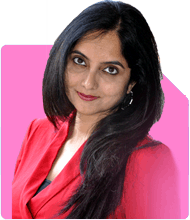
Reetika Sharma  |417 Answers  |Ask -

Financial Planner, MF and Insurance Expert - Answered on Sep 19, 2025

Reetika Sharma is a certified financial planner and CEO of F-Secure Solutions.
She advises clients about investments, insurance, tax and estate planning and manages high net-worth individual’s portfolios.
Reetika has an MBA in finance from the Institute of Chartered Financial Analysts of India (ICFAI) and an engineer degree from NIT, Jalandhar.
She also holds certifications from the Financial Planning Standards Board India (FPSB), Association of Mutual Funds in India (AMFI) and Insurance Regulatory and Development Authority of India (IRDAI).... more

kk Question by kk on Aug 25, 2025Hindi
Money

present my age is 49 years and my salary 90 k, how i can save money for old age

Ans: Hi KK,

It is good to start saving money now than later. Kindly share more details such as your income-expenses, assets-liabilities, any other responsibilities, goals etc for me to help you manage your monthly salary of Rs. 90,000.

Or you can consult a professional Certified Financial Planner - a CFP who can guide you with exact funds to invest in keeping in mind your age, requirements, financial goals and risk profile.

Best Regards,
Reetika Sharma, Certified Financial Planner
https://www.instagram.com/cfpreetika/
DISCLAIMER: The content of this post by the expert is the personal view of the rediffGURU. Users are advised to pursue the information provided by the rediffGURU only as a source of information to be as a point of reference and to rely on their own judgement when making a decision.
Money

You may like to see similar questions and answers below

Ramalingam

Ramalingam Kalirajan  |10870 Answers  |Ask -

Mutual Funds, Financial Planning Expert - Answered on May 18, 2024

Listen
Money
Age is 55 Y. Salary is 30K. No saving at present. What to do for saving for oldage .
Ans: Given your age of 55 and current salary of ?30,000 with no savings, it's important to take proactive steps to build a financial cushion for your retirement years. Here's a tailored plan to kickstart your savings journey:

Assess Expenses and Budgeting
Track Expenses
Begin by tracking your monthly expenses to understand where your money is going. Identify areas where you can cut back or reduce spending.

Create a Budget
Based on your expenses, create a realistic monthly budget that allocates a portion of your income towards savings and investments.

Emergency Fund
Start Small
Begin by setting aside a small portion of your salary each month towards building an emergency fund. Aim to gradually increase this fund to cover at least 3-6 months' worth of living expenses.

High-Yield Savings Account
Park your emergency fund in a high-yield savings account or a liquid fund for easy access in case of unexpected expenses.

Retirement Savings
Invest in Retirement Plans
Consider investing in retirement plans such as the National Pension System (NPS) or Public Provident Fund (PPF). These offer tax benefits and provide a stable avenue for long-term savings.

Systematic Investment Plans (SIPs)
Start SIPs in mutual funds that align with your risk tolerance and investment goals. Choose funds with a track record of consistent performance and diversify across asset classes for optimal returns.

Additional Income
Explore Part-Time Work
Consider taking up part-time work or freelance opportunities to supplement your income. This can provide additional funds for savings and investments.

Downsize Expenses
Evaluate your lifestyle and consider downsizing expenses where possible. This could include cutting back on discretionary spending or exploring cheaper alternatives for essential expenses.

Seek Professional Advice
Consult a Financial Advisor
Seek guidance from a certified financial planner who can assess your financial situation and recommend personalized strategies to meet your retirement goals.

Retirement Planning
Work with a financial advisor to create a comprehensive retirement plan that accounts for your current financial situation, future income needs, and investment objectives.

Stay Committed
Consistent Savings
Commit to a disciplined savings routine, setting aside a portion of your income each month towards your financial goals.

Monitor Progress
Regularly review your savings and investment portfolio to track progress towards your retirement goals. Adjust your strategy as needed to stay on track.

Conclusion
By implementing these steps, you can begin building a solid foundation for your retirement savings, even at age 55. It's never too late to start saving, and with dedication and careful planning, you can secure a comfortable retirement.

Best Regards,

K. Ramalingam, MBA, CFP,

Chief Financial Planner,

www.holisticinvestment.in

..Read more

Ramalingam

Ramalingam Kalirajan  |10870 Answers  |Ask -

Mutual Funds, Financial Planning Expert - Answered on May 25, 2024
Asked by Anonymous - May 24, 2024Hindi
Listen
Money
Hello Sir I'm a salaried employee having a gross salary of 55000 per month. I have about 9 lakhs in FD and ancestral property of 20 lakhs. I have my parents and my wife as dependants. How can I save and invest money so that I can have a comfortable life after age of 45 years
Ans: It's great to see your dedication to planning for a comfortable future. With a gross salary of Rs 55,000 per month and current investments, you have a good starting point. Let’s explore how to save and invest for a secure life after the age of 45.

Assessing Your Current Assets
Fixed Deposits: You have Rs 9 lakhs in FD. FDs offer safety but low returns.

Ancestral Property: Valued at Rs 20 lakhs, it adds to your net worth.

Identifying Your Financial Goals
Your primary goal is to secure a comfortable life post-45 years. This involves building a retirement corpus, managing current expenses, and planning for dependents.

Creating a Budget and Savings Plan
Monthly Income and Expenses: Start by tracking your monthly income and expenses. Ensure you save a portion of your income regularly.

Emergency Fund: Build an emergency fund covering 6-12 months of expenses. This fund should be easily accessible for unforeseen circumstances.

Diversifying Your Investments
Mutual Funds: Consider investing in actively managed mutual funds. They offer potential for higher returns compared to index funds, which only match market performance. Actively managed funds, guided by professional managers, aim to outperform the market.

Equity Mutual Funds: Invest in a mix of large-cap, mid-cap, and small-cap funds to balance risk and reward. Large-cap funds offer stability, while mid-cap and small-cap funds offer growth potential.

Debt Funds: Include debt funds for stability and regular income. They are less risky than equity funds and provide steady returns.

Balanced Funds: Balanced funds invest in both equity and debt, offering a balance of risk and return. They provide moderate growth with reduced volatility.

Tax-Efficient Investments
Equity-Linked Savings Scheme (ELSS): ELSS funds provide tax benefits under Section 80C and offer growth potential. Investing in ELSS helps in saving taxes while building wealth.

Public Provident Fund (PPF): PPF is a safe, long-term investment with tax benefits. It ensures guaranteed returns and helps in building a retirement corpus.

Retirement Planning
Retirement Fund: Start a dedicated retirement fund. Consistently invest a portion of your income to ensure a comfortable retirement. Consider consulting with a Certified Financial Planner to tailor a retirement plan.

Provident Fund: Continue contributing to your EPF (Employee Provident Fund) if applicable. It provides a safe and guaranteed return for your retirement.

Regular Reviews and Rebalancing
Review Investments: Regularly review your investments to ensure they align with your financial goals. Market conditions change, and periodic reviews help in adjusting your investment strategy.

Rebalancing Portfolio: Rebalance your portfolio periodically to maintain the desired asset allocation. This ensures your portfolio remains aligned with your risk tolerance and goals.

Importance of Professional Guidance
Investing through a Mutual Fund Distributor (MFD) with a CFP credential ensures expert guidance. They help in selecting the right funds, monitoring performance, and making adjustments as needed.

Avoiding Common Pitfalls
Over-Reliance on Fixed Deposits: While FDs are safe, they offer low returns. Diversify your investments to achieve better growth.

High Exposure to Sector Funds: Avoid over-investing in sector-specific funds. They can be volatile and increase risk. Maintain a balanced portfolio.

Direct Fund Investments: Direct funds have lower fees but lack professional advice. Investing through an MFD with a CFP credential ensures informed decisions.

Insurance Planning
Health Insurance: Ensure you have adequate health insurance coverage for yourself and dependents. It protects against unexpected medical expenses.

Life Insurance: Adequate life insurance ensures financial security for your dependents in case of unforeseen events.

Conclusion
By diversifying your investments, focusing on tax-efficient options, and regularly reviewing your portfolio, you can build a secure financial future. Consulting with a Certified Financial Planner can provide personalized advice to optimize your investment strategy and ensure you achieve your financial goals.

Best Regards,

K. Ramalingam, MBA, CFP,

Chief Financial Planner,

www.holisticinvestment.in

..Read more

Ramalingam

Ramalingam Kalirajan  |10870 Answers  |Ask -

Mutual Funds, Financial Planning Expert - Answered on May 26, 2024

Asked by Anonymous - May 25, 2024Hindi
Listen
Money
I am 40 and my husband is 44yrs old together we earn 2lakh per month, we have housing loan for 80 lakh and 18lakh respectively, I have a 13yr old daughter how can I save money for our retirement and child higher education, please guide
Ans: Planning for Retirement and Child's Higher Education
Your combined monthly income of Rs 2 lakh is a solid base to build on. Managing housing loans while planning for retirement and your child's education requires a strategic approach. Let’s break it down step by step.

Understanding Your Financial Situation
You have an Rs 80 lakh housing loan and another Rs 18 lakh housing loan. Balancing these loans with your income and future goals is key. Your daughter is 13, so you have a few years to save for her higher education.

Setting Clear Financial Goals
1. Retirement Planning

You and your husband need a comfortable retirement plan. Think about the lifestyle you want post-retirement and estimate your expenses.

2. Child’s Higher Education

Higher education can be costly. Estimate the amount needed for her college fees, living expenses, and other related costs.

Creating a Budget
A well-structured budget helps manage expenses and savings efficiently. Allocate portions of your income to different needs:

Housing loan EMIs
Household expenses
Emergency fund
Investments for retirement
Savings for child’s education
Reducing Debt
Prioritise Debt Repayment

Focus on repaying the higher interest loan first. This reduces your financial burden faster and frees up money for savings and investments.

Consider Refinancing

Explore refinancing options to lower your EMIs. This can give you more disposable income to allocate towards your goals.

Building an Emergency Fund
An emergency fund should cover 6-12 months of living expenses. This protects you from financial shocks and prevents dipping into retirement or education savings.

Investing for Retirement
Diversified Portfolio

Invest in a mix of equity, debt, and hybrid funds. This balances risk and returns, ensuring steady growth over time.

Equity Funds

Given your risk appetite and time horizon, equity funds can offer higher returns. They are suitable for long-term investments.

Debt Funds

Debt funds provide stability and are less volatile. They help preserve capital and provide steady income.

Hybrid Funds

Hybrid funds invest in both equity and debt, balancing growth and safety. They are ideal for medium to long-term goals.

Saving for Child’s Higher Education
Systematic Investment Plan (SIP)

Start a SIP in equity mutual funds dedicated to your daughter’s education. This ensures disciplined savings and benefits from rupee cost averaging.

Education-specific Plans

Consider child education plans offered by mutual funds. These are tailored for education needs and provide a mix of growth and safety.

Regular Monitoring and Rebalancing
Track Your Investments

Regularly review your investment portfolio. This ensures your investments are performing well and aligned with your goals.

Rebalance Annually

Rebalance your portfolio annually to maintain the desired asset allocation. This keeps your investments on track to meet your objectives.

Consulting a Certified Financial Planner
A Certified Financial Planner (CFP) can provide personalised advice. They help you create a tailored investment strategy and navigate financial challenges.

Tax Planning
Utilise Tax Benefits

Make use of tax-saving instruments under Section 80C and 80D. This reduces your taxable income and increases your savings.

Tax-efficient Investments

Invest in tax-efficient funds that offer better post-tax returns. Consult with your CFP for suitable options.

Insurance Coverage
Life Insurance

Ensure adequate life insurance coverage for both you and your husband. This secures your family's financial future in case of any unfortunate event.

Health Insurance

A comprehensive health insurance plan protects you from high medical costs. It preserves your savings for retirement and education.

Final Thoughts
Your dedication to securing your financial future is admirable. By following these steps, you can effectively manage your loans, save for your daughter’s education, and plan for a comfortable retirement. Stay disciplined and periodically review your financial plan to ensure you are on track.

Best Regards,

K. Ramalingam, MBA, CFP,

Chief Financial Planner,

www.holisticinvestment.in

..Read more

Ramalingam

Ramalingam Kalirajan  |10870 Answers  |Ask -

Mutual Funds, Financial Planning Expert - Answered on Jan 02, 2025

Money
my monthly income is 1,80,000 suggest me how to manage and invest money to retire early
Ans: Retiring early requires disciplined savings, wise investments, and a clear financial strategy. Below is a comprehensive plan tailored for your monthly income and goal to retire early.

Understanding Your Current Position
Income and Expenses

You earn Rs 1,80,000 monthly, a strong and consistent income.
First, calculate your monthly essential and discretionary expenses.
Savings Potential

Dedicate at least 50% of your income towards savings and investments.
Higher savings now will lead to an earlier retirement.
Financial Goals

Define your retirement lifestyle and expenses.
Consider inflation and healthcare costs in your plan.
Structuring Your Investments
Emergency Fund

Keep 6–12 months of expenses in a high-liquidity account.
This ensures financial safety during unexpected situations.
Debt Reduction

If you have loans, prioritise clearing high-interest debt.
Avoid taking new loans to sustain your financial independence goal.
Equity Investments

Focus on equity mutual funds for higher long-term growth.
Actively managed funds perform better than index funds.
Regular Funds vs Direct Funds

Direct funds may save costs but lack expert guidance.
Investing through a Certified Financial Planner ensures better planning and reviews.
Diversified Portfolio

Combine equity, debt, and hybrid funds to balance growth and stability.
Avoid overexposure to a single asset class.
Gold Investments

Invest a small portion in digital or sovereign gold bonds.
Limit gold exposure to 10% of your portfolio.
Crypto Caution

Crypto assets are highly volatile.
Restrict allocation to less than 5% of your portfolio.
Monthly Budget Allocation
50% - Essentials: Rent, utilities, food, and transportation.
30% - Savings: Mutual funds, PPF, and SIPs.
20% - Discretionary: Entertainment, vacations, and luxury purchases.
Tax Planning
Utilise Deductions

Maximise tax-saving investments under Section 80C and 80D.
Include contributions to PPF, health insurance, and NPS.
Capital Gains Tax Management

Long-term capital gains above Rs 1.25 lakh are taxed at 12.5%.
Plan equity fund withdrawals strategically to minimise tax.
Building Your Retirement Corpus
Target Corpus

Calculate the corpus required to generate post-retirement monthly income.
Include inflation-adjusted costs for at least 25–30 years.
Investment Growth Strategy

Focus on equity during the accumulation phase for growth.
Shift to debt and balanced funds closer to retirement.
Sustainable Withdrawals

Withdraw only 4–5% annually post-retirement.
This ensures your corpus lasts throughout retirement.
Lifestyle Adjustments
Minimise lifestyle inflation while your income grows.
Review and cut unnecessary discretionary expenses.
Build skills for part-time work to sustain active income post-retirement.
Tracking and Reviewing
Regularly review your investment portfolio.
Adjust allocations based on market conditions and personal goals.
Seek advice from a Certified Financial Planner for ongoing planning.
Final Insights
Early retirement is achievable with disciplined savings, strategic investments, and a balanced lifestyle. Focus on high-growth investments now, while securing your financial future with adequate liquidity and risk management. A structured plan with consistent effort will ensure you achieve your dream of financial independence.

Best Regards,

K. Ramalingam, MBA, CFP,

Chief Financial Planner,

www.holisticinvestment.in
https://www.youtube.com/@HolisticInvestment

..Read more

Latest Questions
Dr Dipankar

Dr Dipankar Dutta  |1837 Answers  |Ask -

Tech Careers and Skill Development Expert - Answered on Dec 05, 2025

Career
Dear Sir, I did my BTech from a normal engineering college not very famous. The teaching was not great and hence i did not study well. I tried my best to learn coding including all the technologies like html,css,javascript,react js,dba,php because i wanted to be a web developer But nothing seem to enter my head except html and css. I don't understand a language which has more complexities. Is it because of my lack of experience or not devoting enough time. I am not sure. I did many courses online and tried to do diplomas also abroad which i passed somehow. I recently joined android development course because i like apps but the teaching was so fast that i could not memorize anything. There was no time to even take notes down. During the course i did assignments and understood the code because i have to pass but after the course is over i tend to forget everything. I attempted a lot of interviews. Some of them i even got but could not perform well so they let me go. Now due to the AI booming and job markets in a bad shape i am re-thinking whether to keep studying or whether its just time waste. Since 3 years i am doing labour type of jobs which does not yield anything to me for survival and to pay my expenses. I have the quest to learn everything but as soon as i sit in front of the computer i listen to music or read something else. What should i do to stay more focused? What should i do to make myself believe confident. Is there still scope of IT in todays world? Kindly advise.
Ans: Your story does not show failure.
It shows persistence, effort, and desire to improve.

Most people give up.
You didn’t.
That means you will succeed — but with the right method, not the old one.

...Read more

Ravi

Ravi Mittal  |676 Answers  |Ask -

Dating, Relationships Expert - Answered on Dec 04, 2025

Asked by Anonymous - Dec 02, 2025Hindi
Relationship
My married ex still texts me for comfort. Because of him, I am unable to move on. He makes me feel guilty by saying he got married out of family pressure. His dad is a cardiac patient and mom is being treated for cancer. He comforts me by saying he will get separated soon and we will get married because he only loves me. We have been in a relationship for 14 years and despite everything we tried, his parents refused to accept me, so he chose to get married to someone who understands our situation. I don't know when he will separate from his wife. She knows about us too but she comes from a traditional family. She also confirmed there is no physical intimacy between them. I trust him, but is it worth losing my youth for him? Honestly, I am worried and very confused.
Ans: Dear Anonymous,
I understand how difficult it is to let go of a relationship you have built from scratch, but is it really how you want to continue? It really seems to be going nowhere. His parents are already in bad health and he married someone else for their happiness. Does it seem like he will be able to leave her? So many people’s happiness and lives depend on this one decision. I think it’s about time you and your BF have a clear conversation about the same. If he can’t give a proper timeline, please try to understand his situation. But also make sure he understands yours and maybe rethink this equation. It really isn’t healthy. You deserve a love you can have wholly, and not just in pieces, and in the shadows.

Hope this helps

...Read more

DISCLAIMER: The content of this post by the expert is the personal view of the rediffGURU. Investment in securities market are subject to market risks. Read all the related document carefully before investing. The securities quoted are for illustration only and are not recommendatory. Users are advised to pursue the information provided by the rediffGURU only as a source of information and as a point of reference and to rely on their own judgement when making a decision. RediffGURUS is an intermediary as per India's Information Technology Act.

Close  

You haven't logged in yet. To ask a question, Please Log in below
Login

A verification OTP will be sent to this
Mobile Number / Email

Enter OTP
A 6 digit code has been sent to

Resend OTP in120seconds

Dear User, You have not registered yet. Please register by filling the fields below to get expert answers from our Gurus
Sign up

By signing up, you agree to our
Terms & Conditions and Privacy Policy

Already have an account?

Enter OTP
A 6 digit code has been sent to Mobile

Resend OTP in120seconds

x