Need Expert Advice?Our Gurus Can Help
Reetika

Reetika Sharma  |642 Answers  |Ask -

Financial Planner, MF and Insurance Expert - Answered on Nov 19, 2025

Reetika Sharma is a certified financial planner and CEO of F-Secure Solutions.
She advises clients about investments, insurance, tax and estate planning and manages high net-worth individual’s portfolios.
Reetika has an MBA in finance from the Institute of Chartered Financial Analysts of India (ICFAI) and an engineer degree from NIT, Jalandhar.
She also holds certifications from the Financial Planning Standards Board India (FPSB), Association of Mutual Funds in India (AMFI) and Insurance Regulatory and Development Authority of India (IRDAI).... more

rudolf Question by rudolf on Nov 09, 2025Hindi

Money

Dear Sir I hope you are doing well. I am seeking your independent opinion on a proposed switch of my existing Bajaj Allianz Goal Assure funds into the Nifty 500 Multicap Momentum Quality 50 Index Fund. My insurance advisor has recommended moving my entire current corpus (~₹10.3 lakh) into this fund gradually at ₹2 lakh per year. For your reference, here are the details of my current portfolio and SIP plans: Current Portfolio (as of latest statement): Fund Name Current Value (₹) Bond Fund 83,226.67 Equity Growth Fund - 2 1,88,982.12 Accelerator Mid Cap Fund - 2 36,080.50 Pure Stock Fund II 6,45,281.48 Small Cap Fund 51,194.39 Midcap Index Fund 29,979.86 Total Portfolio Value: ₹10,34,745.02 Current SIP Allocation (₹10,000/month): Accelerator Mid Cap Fund II: 2,700 Equity Growth Fund - 2: 3,000 Pure Stock Fund II: 2,300 Small Cap Fund: 2,000 Given my long-term investment goal (2035), I would like your expert advice on the following: The impact on portfolio diversification and risk if I move my entire corpus gradually into the Nifty 500 Momentum Fund. How this switch could affect the return of charges feature in my Goal Assure plan. Whether you would recommend a full switch as suggested, or a partial allocation, and why. Expected volatility and downside risk, especially considering the last 1-year market performance. Any hidden conditions or costs associated with this switch. I would greatly appreciate your independent and detailed guidance to help me make an informed decision. Thank you for your time and expertise.

Ans: Hi Rudolf,

Your current holding funds are not that great keeping in mind your time horizon and funds performance. If you keep investing in these funds, much return cannot be expected. Hence switch is necessary into good performing funds which can easily give you a return of 14-15% on an yearly basis.

The entire shift will definitely come with additional cost and taxes for you to pay but it will be better to shift now and move to better performing funds than keep invested in funds like these.

Funds like Assure Funds comes with very high hidden costs and commissions and there are much much better funds out there for loong term investment. One should never consider investing in funds like these.

However, it would be wise not to consult an Insurance Advisor for your investments. An insurance advisor is completely different from Investment Advisors. You should seek the help of a good professional who can help in choosing funds for your long term portfolio. A Certified Financial Planner (CFP) can help you with this regard.

Hence do consult a professional Certified Financial Planner - a CFP who can guide you with exact funds to invest in keeping in mind your age, requirements, financial goals and risk profile. A CFP periodically reviews your portfolio and suggest any amendments to be made, if required.

Let me know if you need more help.

Best Regards,
Reetika Sharma, Certified Financial Planner
https://www.instagram.com/cfpreetika/
DISCLAIMER: The content of this post by the expert is the personal view of the rediffGURU. Users are advised to pursue the information provided by the rediffGURU only as a source of information to be as a point of reference and to rely on their own judgement when making a decision.
Money

You may like to see similar questions and answers below

Ramalingam

Ramalingam Kalirajan  |11374 Answers  |Ask -

Mutual Funds, Financial Planning Expert - Answered on Sep 18, 2024
Asked by Anonymous - Sep 17, 2024Hindi
Money
Dear Sir, I have another question: I have been investing in the Bajaj Allianz Life Goal Assurance Plan for the past five years, which is a combination of insurance and investment. The total premium payment duration is 10 years, with a SIP of ?10,000 per month, followed by a lock-in period of an additional 5 years So far, my monthly contributions of ?10,000 have grown to ?9.40 lakhs, with an approximate CAGR of 16%, although the insurance coverage remains at ?12 lakhs. Initially, I did not have much knowledge but continued investing due to the plan’s market-linked structure. For the first five years, my funds were allocated to Pure Stock II and Equity Growth funds basically large-cap. Recently, mid-cap and small-cap index funds were also added to their portfolio. Now that I’ve completed 5 years of investing in large-cap components, I am considering allocating the remaining 5 years to mid-cap and small-cap funds, without increasing the SIP. This would be done through a fund switch from large-cap to mid-cap and small-cap or by dividing the allocation equally—25% each across pure-stock, equity growth, mid-cap, and small-cap funds. Would you recommend this strategy while allowing the large-cap corpurs from the first 5 years to grow at their own pace and remaining 5 years switched into mid-cap/small-cap. Since the policy will mature in 2034, this gives me ample time for the investment to grow, allowing the corpus to build significantly over the remaining years
Ans: It’s great to see you’ve stayed consistent with your investments over the past five years. Your current strategy has already delivered an impressive CAGR of around 16%. This indicates that your investment in large-cap components has performed well.

Your decision to consider diversifying into mid-cap and small-cap funds shows good insight, especially since the policy matures in 2034. This gives you ample time to ride out market fluctuations and benefit from potential growth.

Let’s assess your plan step by step.

Maintaining Large-Cap Investments
Steady Growth Potential: Large-cap funds are known for stability and relatively lower risk. Since your large-cap investments have done well, letting them grow further without switching out entirely is a wise move. Large-caps often provide steady growth over time, even in volatile markets.

Balanced Risk: As you’ve already allocated five years to large-cap funds, you have a solid base that carries lower risk compared to mid-cap or small-cap funds.

Mid-Cap and Small-Cap Fund Allocation
Potential for Higher Growth: Mid-cap and small-cap funds generally offer higher growth potential but come with increased volatility. Given that you have another 10 years for the policy to mature, adding these funds now could give you enough time to capture the potential upside of these categories.

Diversification Across Market Segments: By allocating the remaining five years to mid-cap and small-cap funds, you’re essentially diversifying across different market segments. This could help in balancing your overall risk, while providing higher growth opportunities compared to sticking only with large-cap funds.

Fund Switching Strategy: Switching some of your existing large-cap corpus into mid-cap and small-cap might reduce the stability of your portfolio. Instead, continuing with the large-cap corpus and allocating future premiums to mid-cap and small-cap funds may provide a more balanced approach.

Suggested Allocation Strategy
Divide Equally Across Funds: Splitting your contributions equally among large-cap, mid-cap, and small-cap funds seems like a balanced approach. You’ve mentioned an allocation of 25% each across pure-stock, equity growth, mid-cap, and small-cap funds. This could help in spreading out your risk while still allowing for growth opportunities.

Stay Consistent: Continuing with a steady SIP of Rs. 10,000 without increasing the amount for now is a good plan. Since you are already seeing good returns, consistency over time will be key to building your corpus further.

Evaluating Your Insurance Component
Insurance Coverage: Your current insurance coverage stands at Rs. 12 lakhs. Considering the policy is a combination of investment and insurance, it’s essential to evaluate if the coverage is adequate for your needs. Life insurance should primarily serve to protect your family, and if this amount falls short of your requirements, consider supplementing it with a term insurance plan.

Lock-in Period: Since there is an additional lock-in period of five years post the premium payment term, switching funds now and letting them grow for the next decade could be beneficial. You have ample time to ride out any short-term market volatility in the mid-cap and small-cap space.

Reviewing Your Fund Choices
Actively Managed Funds vs Index Funds: You’ve mentioned that your funds are market-linked, with some exposure to index funds. While index funds are often lower-cost options, actively managed funds can outperform them over time, especially in mid-cap and small-cap categories. Actively managed funds benefit from professional fund managers who can make strategic choices in response to market conditions, unlike passive index funds that simply track the market.

Switching to Actively Managed Funds: If a portion of your investments is in index funds, consider switching to actively managed mid-cap and small-cap funds. This will provide you with the advantage of professional management, especially in more volatile sectors like mid-caps and small-caps.

Final Insights
Long-Term Horizon: Your 10-year remaining investment window provides a good time horizon to take on the moderate risk associated with mid-cap and small-cap funds. However, always review your portfolio performance periodically to ensure it aligns with your long-term financial goals.

Balance Risk and Reward: By keeping your existing large-cap investments and diversifying into mid-cap and small-cap funds, you are effectively balancing risk with the potential for higher returns.

Insurance vs Investment: Review your insurance needs separately from your investment strategy. If the Rs. 12 lakh insurance coverage is insufficient, it’s advisable to take additional term insurance that provides higher coverage at a low cost.

It’s important to continue monitoring the performance of each fund and adjust the allocation if needed.

Best Regards,

K. Ramalingam, MBA, CFP,

Chief Financial Planner,

www.holisticinvestment.in

..Read more

Reetika

Reetika Sharma  |642 Answers  |Ask -

Financial Planner, MF and Insurance Expert - Answered on Nov 19, 2025

Money
Dear Sir I hope you are doing well. I am seeking your independent opinion on a proposed switch of my existing Bajaj Allianz Goal Assure funds into the Nifty 500 Multicap Momentum Quality 50 Index Fund. My insurance advisor has recommended moving my entire current corpus (~₹10.3 lakh) into this fund gradually at ₹2 lakh per year. For your reference, here are the details of my current portfolio and SIP plans: Current Portfolio (as of latest statement): Fund Name Current Value (₹) Bond Fund 83,226.67 Equity Growth Fund - 2 1,88,982.12 Accelerator Mid Cap Fund - 2 36,080.50 Pure Stock Fund II 6,45,281.48 Small Cap Fund 51,194.39 Midcap Index Fund 29,979.86 Total Portfolio Value: ₹10,34,745.02 Current SIP Allocation (₹10,000/month): Accelerator Mid Cap Fund II: 2,700 Equity Growth Fund - 2: 3,000 Pure Stock Fund II: 2,300 Small Cap Fund: 2,000 Given my long-term investment goal (2035), I would like your expert advice on the following: The impact on portfolio diversification and risk if I move my entire corpus gradually into the Nifty 500 Momentum Fund. How this switch could affect the return of charges feature in my Goal Assure plan. Whether you would recommend a full switch as suggested, or a partial allocation, and why. Expected volatility and downside risk, especially considering the last 1-year market performance. Any hidden conditions or costs associated with this switch. I would greatly appreciate your independent and detailed guidance to help me make an informed decision. Thank you for your time and expertise.
Ans: Hi Rudolf,

Your current holding funds are not that great keeping in mind your time horizon and funds performance. If you keep investing in these funds, much return cannot be expected. Hence switch is necessary into good performing funds which can easily give you a return of 14-15% on an yearly basis.

The entire shift will definitely come with additional cost and taxes for you to pay but it will be better to shift now and move to better performing funds than keep invested in funds like these.

Funds like Assure Funds comes with very high hidden costs and commissions and there are much much better funds out there for loong term investment. One should never consider investing in funds like these.

However, it would be wise not to consult an Insurance Advisor for your investments. An insurance advisor is completely different from Investment Advisors. You should seek the help of a good professional who can help in choosing funds for your long term portfolio. A Certified Financial Planner (CFP) can help you with this regard.

Hence do consult a professional Certified Financial Planner - a CFP who can guide you with exact funds to invest in keeping in mind your age, requirements, financial goals and risk profile. A CFP periodically reviews your portfolio and suggest any amendments to be made, if required.

Let me know if you need more help.

Best Regards,
Reetika Sharma, Certified Financial Planner
https://www.instagram.com/cfpreetika/

..Read more

Reetika

Reetika Sharma  |642 Answers  |Ask -

Financial Planner, MF and Insurance Expert - Answered on Nov 19, 2025

Money
Dear Sir I hope you are doing well. I am seeking your independent opinion on a proposed switch of my existing Bajaj Allianz Goal Assure funds into the Nifty 500 Multicap Momentum Quality 50 Index Fund. My insurance advisor has recommended moving my entire current corpus (~₹10.3 lakh) into this fund gradually at ₹2 lakh per year. For your reference, here are the details of my current portfolio and SIP plans: Current Portfolio (as of latest statement): Fund Name Current Value (₹) Bond Fund 83,226.67 Equity Growth Fund - 2 1,88,982.12 Accelerator Mid Cap Fund - 2 36,080.50 Pure Stock Fund II 6,45,281.48 Small Cap Fund 51,194.39 Midcap Index Fund 29,979.86 Total Portfolio Value: ₹10,34,745.02 Current SIP Allocation (₹10,000/month): Accelerator Mid Cap Fund II: 2,700 Equity Growth Fund - 2: 3,000 Pure Stock Fund II: 2,300 Small Cap Fund: 2,000 Given my long-term investment goal (2035), I would like your expert advice on the following: The impact on portfolio diversification and risk if I move my entire corpus gradually into the Nifty 500 Momentum Fund. How this switch could affect the return of charges feature in my Goal Assure plan. Whether you would recommend a full switch as suggested, or a partial allocation, and why. Expected volatility and downside risk, especially considering the last 1-year market performance. Any hidden conditions or costs associated with this switch. I would greatly appreciate your independent and detailed guidance to help me make an informed decision. Thank you for your time and expertise
Ans: Hi Rudolf,

Your current holding funds are not that great keeping in mind your time horizon and funds performance. If you keep investing in these funds, much return cannot be expected. Hence switch is necessary into good performing funds which can easily give you a return of 14-15% on an yearly basis.

The entire shift will definitely come with additional cost and taxes for you to pay but it will be better to shift now and move to better performing funds than keep invested in funds like these.

Funds like Assure Funds comes with very high hidden costs and commissions and there are much much better funds out there for loong term investment. One should never consider investing in funds like these.

However, it would be wise not to consult an Insurance Advisor for your investments. An insurance advisor is completely different from Investment Advisors. You should seek the help of a good professional who can help in choosing funds for your long term portfolio. A Certified Financial Planner (CFP) can help you with this regard.

Hence do consult a professional Certified Financial Planner - a CFP who can guide you with exact funds to invest in keeping in mind your age, requirements, financial goals and risk profile. A CFP periodically reviews your portfolio and suggest any amendments to be made, if required.

Let me know if you need more help.

Best Regards,
Reetika Sharma, Certified Financial Planner
https://www.instagram.com/cfpreetika/

..Read more

Reetika

Reetika Sharma  |642 Answers  |Ask -

Financial Planner, MF and Insurance Expert - Answered on Jul 10, 2026

Money
I'm an investor in India, 30% tax bracket under the new tax regime, with high risk tolerance. I am investing from 2017, invested amount is 22 lakhs, market value 25 lakhs. I have two financial goals — child's education (~7-year horizon) and retirement (~18-year horizon). Current SIP Portfolio I run a 5-fund core portfolio with a total SIP of ₹53,000/month. For the education goal, I have HDFC Nifty 50 Index Fund (₹5,000/month) and Parag Parikh Flexi Cap (₹15,000/month). For retirement, I have ICICI Nifty Next 50 Index (₹8,000/month), Motilal Oswal Midcap (₹15,000/month), and Nippon India Small Cap (₹10,000/month). Each fund is from a different AMC, which is a deliberate diversification choice. Other Investments I have a PPF account (opened 2015, ~₹10L corpus) maturing around 2030. I also hold NPS Tier 1 corpus which I plan to keep untouched until age 60 — I've stopped fresh NPS contributions since there's no additional deduction benefit under the new tax regime. What I'm Looking for advice on Is my current portfolio good for the long term and shall I continue the same Shall I take international exposure through navi nasdaq 100 FOF (Not taking due to tax complication) Shall I invest in gold for hedge Shall I stop my NPS Tier 1 SIP and reallocate 7k to my current portfolio, if yes then which funds I have two specific worries. First, Motilal Oswal Midcap had a fund manager change in July 2025 and runs a fairly concentrated portfolio at an elevated PE — I'm not sure if I should continue, reduce the SIP, or switch to another midcap fund. Second, Nippon India Small Cap has been closed for lumpsum investments since July 2023 due to its large AUM — I've been considering switching to Invesco India Small Cap (ranked #2/18 in the category, AUM ~₹9,700 Cr) but haven't acted on it yet. I'd like views on whether this switch makes sense and whether the timing matters or shall I continue in the same funds and folio Thanks.
Ans: Hi Ankit,

You have built a highly aggressive, structurally sound portfolio.

Let us analyse things in detail:
>> For education goal - continue current SIPs
>> For retirement goal - can be continued as well

>> International Diversification is not mandatory. Parag Parikh Fund already has some exposure towards that sector. So avoid any new International investment from your end due to its complicated structure.

>> Gold - for diversification pupose, can start a gold SIP in gold etf - 5000 per month.

>> Continue NPS as that will go to your retirment corpus and you don't have to worry much to put that money in use.

>> Motilal Oswal's new fund manager has not changed any core allocations of the fund. So continue this current SIP.
>> As there are no new investments in Nippon SmallCap, can consider starting a fresh SIP in Axis SmallCap fund. Also make sure not to redeem anything from Nippon small cap fund so as to get the maximum benefit.

Your PPF (~?10 Lakhs) matures in 2030 which perfectly lines up with the final 2-year runway for your child's education goal (2033). When it matures, do not extend it.
Keep that cash ready to act as a safe, tax-free debt buffer to pay for college semesters so you don't have to break your equity mutual funds if the stock market crashes in 2031-2033.

Good Luck!

Let me know if you need more help.

Best Regards,
Reetika Sharma, Certified Financial Planner
https://www.instagram.com/cfpreetika/

..Read more

Ramalingam

Ramalingam Kalirajan  |11374 Answers  |Ask -

Mutual Funds, Financial Planning Expert - Answered on Apr 20, 2026

Money
I'm an investor in India, 30% tax bracket under the new tax regime, with high risk tolerance. I am investing from 2017, invested amount is 22 lakhs, market value 25 lakhs. I have two financial goals — child's education (~7-year horizon) and retirement (~18-year horizon). Current SIP Portfolio I run a 5-fund core portfolio with a total SIP of ₹53,000/month. For the education goal, I have HDFC Nifty 50 Index Fund (₹5,000/month) and Parag Parikh Flexi Cap (₹15,000/month). For retirement, I have ICICI Nifty Next 50 Index (₹8,000/month), Motilal Oswal Midcap (₹15,000/month), and Nippon India Small Cap (₹10,000/month). Each fund is from a different AMC, which is a deliberate diversification choice. Other Investments I have a PPF account (opened 2015, ~₹10L corpus) maturing around 2030. I also hold NPS Tier 1 corpus which I plan to keep untouched until age 60 — I've stopped fresh NPS contributions since there's no additional deduction benefit under the new tax regime. What I'm Looking for advice on Is my current portfolio good for the long term and shall I continue the same Shall I take international exposure through navi nasdaq 100 FOF (Not taking due to tax complication) Shall I invest in gold for hedge Shall I stop my NPS Tier 1 SIP and reallocate 7k to my current portfolio, if yes then which funds I have two specific worries. First, Motilal Oswal Midcap had a fund manager change in July 2025 and runs a fairly concentrated portfolio at an elevated PE — I'm not sure if I should continue, reduce the SIP, or switch to another midcap fund. Second, Nippon India Small Cap has been closed for lumpsum investments since July 2023 due to its large AUM — I've been considering switching to Invesco India Small Cap (ranked #2/18 in the category, AUM ~₹9,700 Cr) but haven't acted on it yet. I'd like views on whether this switch makes sense and whether the timing matters or shall I continue in the same funds and folio. Would like the community's take on the above folio. Thanks.
Ans: You have built a thoughtful and disciplined portfolio since 2017. Managing two separate long-term goals with category allocation and SIP consistency shows strong planning maturity. Your SIP size, time horizon clarity, and asset diversification already place you ahead of many investors.

Let us review each part of your portfolio carefully and improve where required.

» Overall portfolio structure suitability for your two goals

Your goals:

– Child education (7-year horizon)
– Retirement (18-year horizon)

Your current structure separates these goals logically. This is a very good practice.

However one improvement is required.

Index category exposure is currently forming a meaningful portion of your education goal allocation. For a 7-year horizon, actively managed equity allocation generally works better than passive exposure because:

– index funds only mirror market returns
– they cannot reduce downside risk
– they cannot shift sectors when valuations are high
– they cannot select emerging growth companies early
– they cannot generate alpha during active market cycles

For a goal that is only 7 years away, downside protection and active allocation flexibility are important.

So replacing index category exposure gradually with flexi cap or large & midcap category exposure improves goal reliability.

» Suitability of your retirement portfolio allocation

Your retirement horizon is 18 years. This is ideal for:

– midcap category exposure
– small cap category exposure
– flexi cap category exposure

Your allocation toward growth categories supports wealth creation strongly.

So the structure for retirement is appropriate and can be continued with small refinements.

» Whether international exposure should be added

International diversification is useful but not mandatory.

Benefits:

– reduces India-only market risk
– provides exposure to global innovation sectors
– improves currency diversification

However concerns like taxation complexity and portfolio simplicity are valid.

Since your horizon is already supported by strong domestic diversification across market caps, international exposure may be added later gradually but is not essential immediately.

Priority should remain strengthening domestic active allocation first.

» Whether gold allocation should be added

Gold works as a stabiliser, not a return generator.

Gold helps:

– during equity corrections
– during inflation phases
– during global uncertainty periods

For long-term investors like you, allocation of 5% to 10% is sufficient.

It should not replace equity allocation but support it as a hedge layer.

» Whether stopping NPS Tier 1 SIP is a good decision

You mentioned no additional deduction benefit under new tax regime.

Still NPS Tier 1 has advantages:

– retirement discipline lock-in
– low-cost structure
– asset allocation flexibility
– additional pension-layer diversification

If retirement planning is already strong through mutual funds, redirecting the monthly amount into equity categories can improve flexibility.

If you reallocate that amount, better destinations are:

– flexi cap category fund
– large & midcap category fund

These improve balance inside your retirement bucket.

» Concern about midcap category fund manager change and concentration

Your observation is very practical and shows strong monitoring discipline.

Midcap category funds sometimes run concentrated portfolios. After a fund manager change:

– strategy continuity becomes uncertain
– stock selection pattern may change
– risk profile may shift temporarily

Instead of exiting immediately:

Better approach:

– continue SIP for now
– monitor performance for 6 to 12 months
– review portfolio churn pattern
– check consistency versus category average

Switch only if performance divergence becomes visible.

Immediate switching after manager change is usually not necessary.

» Concern about small cap category fund closure for lump sum investment

Closure for lump sum investment normally happens because:

– fund size becomes large
– liquidity management becomes difficult
– protection of existing investors becomes priority

This is not a negative signal.

It is actually a protection step taken by the fund house.

Switching to another small cap category fund only because of closure is not required.

However diversification across two small cap funds is sometimes useful if allocation size is high.

If small cap allocation already exceeds 10% to 15% of total portfolio, then avoid increasing exposure further.

Timing small cap switches rarely improves results.

Consistency matters more.

» Suggested refinements to improve goal achievement probability

Education goal bucket:

– gradually reduce index exposure
– increase flexi cap allocation
– add large & midcap category exposure
– shift partially toward hybrid allocation after 4 years remaining period

Retirement goal bucket:

– continue midcap allocation
– continue small cap allocation within limits
– increase flexi cap allocation gradually
– consider small gold allocation for hedge

NPS allocation decision:

– continue if discipline advantage required
or
– redirect toward flexi cap category fund if flexibility preferred

» Finally

Your portfolio structure is already strong and goal-aligned.

Only these improvements can increase success probability further:

– reduce index exposure in education goal bucket
– continue midcap exposure but monitor post manager-change consistency
– do not switch small cap fund only due to lump sum closure
– add small gold allocation as hedge
– optionally redirect NPS contribution into flexi cap or large & midcap category allocation for flexibility

With these refinements, your education and retirement goals remain well supported for long-term success.

Best Regards,

K. Ramalingam, MBA, CFP,

Chief Financial Planner,

www.holisticinvestment.in

https://www.linkedin.com/in/ramalingamcfp/

..Read more

Latest Questions
Komal

Komal Jethmalani  |484 Answers  |Ask -

Dietician, Diabetes Expert - Answered on Aug 10, 2026

Ramalingam

Ramalingam Kalirajan  |11374 Answers  |Ask -

Mutual Funds, Financial Planning Expert - Answered on Aug 10, 2026

Money
Regarding For Health Insurance And Term Insurance Me Age 31 Wife Age 24 Son Age 3 Mom AGE 50 DAD Age 55 Please Suggust Good Health Insurance Please Suggust Term Insurance Also For me Thanks Please Sugg
Ans: You are starting insurance planning at the right age. At 31, term insurance is usually much cheaper than later.

» Health Insurance

I would not put everyone into one common policy.

A practical structure would be:

– You, wife and son: family floater policy.
– Mother and father: separate senior-age health policies.
– Avoid mixing parents with your young family.
– Consider a strong base cover with a suitable super top-up.
– Check room-rent limits, co-payment and disease waiting periods.
– Check the insurer network near your residence.
– Check claim settlement process and policy exclusions.

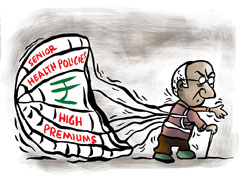
For your parents, premiums can be much higher at ages 50 and 55.
So compare plans carefully before selecting one.

» Your Term Insurance

At age 31, term insurance is important because your wife and son depend on your income.

The required cover should consider:

– Your current income.
– Outstanding loans, if any.
– Child education.
– Family living expenses.
– Future financial responsibilities.

As a broad starting point, a Rs.1.5 crore to Rs.2 crore cover can be evaluated.

The policy should ideally continue until your major financial responsibilities reduce.

Choose pure term insurance only.

Avoid combining insurance with investment products.

» Important Point

Health insurance and term insurance serve different purposes.

Health insurance protects your savings from medical expenses.

Term insurance protects your family from loss of income.

Both should be treated as protection, not investment.

» Before Choosing Any Policy

Please compare:

– Claim settlement terms
– Waiting periods
– Permanent exclusions
– Co-payment conditions
– Room-rent restrictions
– Restoration benefits
– Lifetime renewal
– Network hospitals
– Premium increases
– Policy wording

Do not select only because the premium is lowest.

» Final Insights

Your young family needs a good health cover and adequate term cover.

Keep your parents separately insured.

For you, evaluate Rs.1.5 crore to Rs.2 crore term cover.

For health insurance, the exact recommendation needs your city and budget.

Also, disclose all existing medical conditions honestly while purchasing.

Best Regards,

K. Ramalingam, MBA, CFP,

AMFI-Registered MFD – ARN 4188

www.holisticinvestment.in

https://www.linkedin.com/in/ramalingamcfp/

...Read more

Ramalingam

Ramalingam Kalirajan  |11374 Answers  |Ask -

Mutual Funds, Financial Planning Expert - Answered on Aug 10, 2026

Money
Hi Sir, i am a Accountant, i am married , i have one kid with age of 3, now i am planing to Reshape my Mutual Fund Protfolio, could you advice is this correct. Now My AGE 31 I am planing until my Age 40 and After 5 Year 1 Start to SWP From That Funds 1 . parag parik flexicap fund - Monthly 6K 2 . zerodha nifty large & Mid 250 elss fund - Monthly 4K 3 . Motilal Oswal Mid cap - Monthly 3K 4. Banthan Small Cap - Monthly 2K 5 . Nippon India Gold Saving Fund - 2 K NOTE : Every Year 10% Increse SIP Amount total 10 Year Horizon and i need money from after 5 Year I start SWP can i go long term this funds or need to rebalance
Ans: You have started quite early, which is a big advantage. At age 31, your long-term compounding period is strong. Your 10% annual SIP increase is also a very good habit.

» Your Present Strategy

Your total monthly SIP is Rs.17,000.

The broad allocation is:

– Flexi-cap: Rs.6,000
– Large and mid-cap index: Rs.4,000
– Mid-cap: Rs.3,000
– Small-cap: Rs.2,000
– Gold: Rs.2,000

The allocation is reasonably diversified.

But one important issue needs attention.

You want to start SWP after only 5 years.

Five years is not a very long period for an equity-heavy portfolio.

» Main Concern With The Five-Year SWP

If you definitely need money after five years, do not keep the entire corpus in equity.

Markets can fall sharply around your SWP starting date.

This can force you to sell units at low prices.

A better approach is goal-based investing.

– Years 1 to 3: Equity can have a larger role.
– Around year 4: Start reducing risk for the required amount.
– By year 5: Keep the next few years SWP requirement in safer assets.
– Let the remaining long-term money stay invested for growth.

This can make your SWP much more comfortable.

» About The Large And Mid-Cap Index Fund

This is the part I would reconsider.

An index fund simply follows its chosen index.

It does not actively select companies based on changing business conditions.

It also cannot avoid a company merely because its future outlook has weakened.

An actively managed fund gives the fund manager flexibility.

The manager can change stocks based on valuations, earnings and business quality.

Since you are planning long-term wealth creation, active management can be useful.

I would therefore review this allocation and consider an actively managed diversified category instead.

» Mid-Cap And Small-Cap Exposure

Having both mid-cap and small-cap exposure can help long-term growth.

But these categories can fluctuate heavily.

Since you want money after five years, do not increase these allocations aggressively.

Your 10% annual SIP increase is good.

But future increases should not automatically go into small-cap funds.

» Gold Allocation

Your Rs.2,000 monthly gold allocation is reasonable.

Gold can provide diversification.

It can also help during periods of equity market stress.

I would keep gold as a supporting allocation, not the main growth component.

» Should You Continue These Funds For Ten Years?

The investment horizon and withdrawal horizon are different.

You can continue investing for 10 years.

But if money is required from year 5, that portion needs separate planning.

Do not assume that every fund must be held unchanged for ten years.

Review the portfolio once every year.

Fund selection, allocation and your financial goals can change over time.

» How I Would Reshape It

I would keep the portfolio simpler.

– One strong diversified equity fund as the core.
– One mid-cap allocation for additional growth.
– Limited small-cap exposure.
– A modest gold allocation.
– Avoid unnecessary duplication.
– Replace the index allocation with a suitable actively managed category.
– Create a separate safer bucket for the five-year requirement.

You do not need many funds to build wealth.

» Your 10% SIP Increase

Please continue this habit.

It can become more important than selecting the perfect fund.

Whenever your salary increases:

– Increase SIPs first.
– Maintain your emergency fund.
– Increase investments towards your childs future.
– Avoid increasing lifestyle expenses at the same speed.

Your child is only 3 years old.

You have a very good time horizon for that goal.

» SWP Planning

Do not start SWP merely because five years are completed.

Start SWP when the money is actually required.

Before starting SWP:

– Identify the required monthly amount.
– Keep near-term withdrawals in safer assets.
– Keep long-term money invested for growth.
– Review the withdrawal rate every year.
– Rebalance when equity exposure becomes too high.

This approach can protect the portfolio from unnecessary selling during market falls.

» Regular Funds Through MFD

Since you are planning a long-term portfolio, consider investing through an AMFI-registered MFD.

Regular funds can provide ongoing portfolio support.

You also get help with reviews, rebalancing and goal planning.

Direct investing can work for disciplined investors who manage everything themselves.

But many investors change funds based on recent performance.

An MFD can help maintain discipline through market cycles.

» Final Insights

Your basic portfolio structure is good.

The main correction is your five-year SWP plan.

Do not keep the entire portfolio equity-oriented until the SWP starts.

Also review the index allocation.

I would prefer a simpler actively managed portfolio with clear roles.

Continue the 10% annual SIP increase.

Most importantly, separate your five-year requirement from your long-term wealth.

With 10+ years of disciplined investing, you have a strong opportunity to build meaningful wealth.

Best Regards,

K. Ramalingam, MBA, CFP,

AMFI-Registered MFD – ARN 4188

www.holisticinvestment.in

https://www.linkedin.com/in/ramalingamcfp/

...Read more

Ramalingam

Ramalingam Kalirajan  |11374 Answers  |Ask -

Mutual Funds, Financial Planning Expert - Answered on Aug 09, 2026

Money
Sir I have nearly 35 MF scheme. I have 4 Manu facturing fund. Axis mau facturing fund.. Canara Robecco Manu. fund G(SIP2000) Invesco Manufacturing fund G(SIP 2000 PM ). ICICI Manufacturing fund G Advise how to cut down or exit and invest in other fund continuing only one preferably ICICI. Then I have following non performing Funds Axis consumption fund G regular Hdfc Multcap Fund G regular Hdfc Multcap 50/25/25Index fund Direct Hdfc Tech. Fund D Growth Hsbc India Export Indis export Opp. D Growth ICICI opp. Fund D Growth SUNDARAM mutiasst allocation fund R . G SIP TATA NIFTY AUTO INDEX FUNDNIFTY G DIR. TATA NIFTY IND. TOURISM INDEX FUND G DIR. Above mentioned funds not performing. Your advise whether to and reinvest in an alternative fund. Overlaping funds ICICI prudential energy opportunities fund D SIP GROWTH SBI ENERGY OPP. FUND D. GROWTH 2) FRANKLIN IND. FLEXI CAP FUND R G. 20 UNIT HDFC FLEXICAP FUND R. G. 25 UNIT ICICI PRUDENTIAL FLEXI CAP R. G 3000 Unit TATA mid cap fund R. G. 175 unit UTI MID CAP FUND R. G. 200 Unit HDFC MID CAP FUND R G 250 UNIT Request detailed scrutiny and how to minimise. Besides l have following funds performing well Aditya Birla Sun Life focused fund HDFC Defence fund HDFC PHARMA FUND HDFC TRANSPORTATION FUND HSBC VALUE FUND HSBC ELSS FUND ICICI PRU.PHRMA & HEALTHCARE FUND UTI NIFTY 500 VALUE INDEX FUND I am 82 years old. No liability . Other investments like PPF BANK FD GOLD ANCESTRAL LAND PM ANNUITY PLAN RENT 15 LAKH health insurance. Equities of 5 lakhs Expenses very basic. Would like to re invest. for better returns. Waiting for your early reply. Your 's sincerely ..... ... V. G. Nadig
Ans: You have built substantial financial assets and, importantly, you have no liabilities. At age 82, the priority should now be simplicity, safety, liquidity and reasonable growth. Having nearly 35 mutual fund schemes is unnecessarily high.

» First Priority

– Reduce the MF portfolio substantially.
– Avoid managing many sector and thematic funds.
– Avoid keeping funds only because they performed well recently.
– Keep a smaller number of diversified funds.
– Keep sufficient money in safer assets for your regular needs.

At your age, chasing maximum returns is not necessary.

» Manufacturing Funds

You currently have four manufacturing funds:

– Axis Manufacturing
– Canara Robeco Manufacturing
– Invesco Manufacturing
– ICICI Prudential Manufacturing

There is considerable overlap in this allocation.

I would not keep four manufacturing funds.

If you have a strong preference for the ICICI Prudential Manufacturing Fund, keeping one manufacturing fund can be considered.

The other three can be reviewed for exit and consolidation.

However, do not switch all four on one day blindly. Check capital gains and exit loads first.

» Funds You Mentioned As Non-Performing

You mentioned:

– Axis Consumption
– HDFC Multicap
– HDFC Multicap 50/25/25 Index
– HDFC Technology
– HSBC India Export Opportunities
– ICICI Prudential Opportunities
– Sundaram Multi Asset Allocation
– Tata Nifty Auto Index
– Tata Nifty India Tourism Index

I would not judge these funds only by recent returns.

Some are sector, thematic or index-oriented funds.

They can have long periods of underperformance.

For an 82-year-old investor, I would reduce such complexity.

The index-oriented funds especially do not need to be retained simply for diversification.

» Energy Fund Overlap

You have exposure to:

– ICICI Prudential Energy Opportunities
– SBI Energy Opportunities

There is no strong need to hold two funds in the same sector.

Keep only one if you want sector exposure.

But given your age, even this allocation should remain limited.

» Flexi Cap Overlap

You currently have:

– Franklin India Flexi Cap
– HDFC Flexi Cap
– ICICI Prudential Flexi Cap

This is another clear area for consolidation.

Three flexi-cap funds are unnecessary.

You can retain one suitable flexi-cap fund.

The remaining two can gradually be consolidated after checking taxation and exit loads.

» Mid Cap Overlap

You have:

– Tata Mid Cap
– UTI Mid Cap
– HDFC Mid Cap

Again, three funds are not required.

Keep one suitable mid-cap fund if your overall portfolio needs this exposure.

However, at age 82, I would not maintain a large mid-cap allocation.

This money can be more useful in diversified and relatively stable investments.

» Funds Performing Well

You mentioned:

– Aditya Birla Sun Life Focused
– HDFC Defence
– HDFC Pharma
– HDFC Transportation
– HSBC Value
– HSBC ELSS
– ICICI Prudential Pharma & Healthcare
– UTI Nifty 500 Value Index

Good past performance alone should not decide whether you retain them.

You have multiple sector and thematic exposures here too.

For example, you already have two healthcare-oriented funds.

Defence and transportation are also thematic exposures.

I would reduce the number of such specialised funds.

» A Better Portfolio Structure

Your portfolio can be simplified into a few clear roles:

– Core diversified equity allocation
– Limited mid-cap allocation
– Limited thematic allocation, if required
– Suitable conservative allocation
– Adequate cash and fixed-income allocation

You do not need 35 schemes to achieve diversification.

Around 5 to 7 carefully selected funds can be more than sufficient.

» Very Important At Age 82

Your investment objective should now be different from that of a 40-year-old investor.

Capital preservation is important.

Liquidity is also very important.

You should have enough safe money for several years of expenses.

Equity should mainly serve the purpose of long-term inflation protection.

Do not put money required for near-term expenses into equity.

» About Reinvesting After Exit

I would not immediately reinvest every redemption into another equity fund.

First identify how much money you need for:

– Regular expenses
– Medical requirements
– Family support
– Emergency needs
– Future personal requirements

The remaining long-term surplus can then be invested.

This approach will make your portfolio much safer and easier to manage.

» Your Other Assets

Your FD, PPF, gold, ancestral land, annuity income and rental income provide additional diversification.

Your basic expenses are also low.

This is a positive position.

Therefore, there is no need to take excessive equity risk for higher returns.

» How I Would Approach The 35 Funds

Do it in three stages.

First, identify sector and thematic duplication.

Second, identify overlapping diversified categories.

Third, consolidate the portfolio gradually.

Do not sell everything together.

Review taxation and exit loads before each redemption.

The money released should then be allocated according to your income and liquidity requirements.

» Final Insights

You have done well in building a large and diversified investment base.

The main issue now is not lack of diversification.

It is excessive diversification.

35 schemes can make monitoring difficult and may create hidden overlap.

I would aim for a much simpler portfolio.

Your manufacturing, energy, flexi-cap and mid-cap holdings are the first areas I would consolidate.

I would also reduce excessive thematic exposure.

At 82, stability and peace of mind should come before chasing the highest possible return.

A detailed scheme-wise review would be useful before redeeming anything. It should consider current value, purchase value, gains, taxation, SIP status and exit load for every scheme.

Best Regards,

K. Ramalingam, MBA, CFP,

AMFI-Registered MFD – ARN 4188

www.holisticinvestment.in

https://www.linkedin.com/in/ramalingamcfp/

...Read more

DISCLAIMER: The content of this post by the expert is the personal view of the rediffGURU. Investment in securities market are subject to market risks. Read all the related document carefully before investing. The securities quoted are for illustration only and are not recommendatory. Users are advised to pursue the information provided by the rediffGURU only as a source of information and as a point of reference and to rely on their own judgement when making a decision. RediffGURUS is an intermediary as per India's Information Technology Act.

Close  

You haven't logged in yet. To ask a question, Please Log in below
Login

A verification OTP will be sent to this
Mobile Number / Email

Enter OTP
A 6 digit code has been sent to

Resend OTP in120seconds

Dear User, You have not registered yet. Please register by filling the fields below to get expert answers from our Gurus
Sign up

By signing up, you agree to our
Terms & Conditions and Privacy Policy

Already have an account?

Enter OTP
A 6 digit code has been sent to Mobile

Resend OTP in120seconds

x