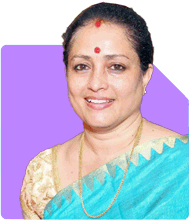
Need Expert Advice?Our Gurus Can Help
Dr Hemalata

Dr Hemalata Arora  | Answer  |Ask -

General Physician - Answered on Jun 07, 2023

Dr Hemalata Arora is a senior consultant who practises internal medicine at Mumbai’s Nanavati Max Super Speciality Hospital.
In a career spanning over 24 years, she has focused on managing infectious diseases, critical illnesses and lifestyle disorders.
Dr Arora completed her MBBS and MD from the King Edward Memorial Hospital and Seth Gordhandas Sunderdas Medical College in Mumbai.
She is ECFMG certified, accredited by the American Board of Internal Medicine, Diplomate of the National Board and a DNB faculty.
She was honoured with the Paul Bunn award for her promising performance in the field of infectious diseases at SUNY Upstate Medical University, New York.... more
Rajiv Question by Rajiv on Jun 04, 2023Hindi
Listen
Health

Can a chronic pancreatitis patient with stent placement in pancrease use stevia as alternative for sugar. If use which form (Powder/ Pills/ Liquid) and which brand?

Ans: Hello. Stevia can be used, any brand is fine, even the plain leaves are ok to use. There is some research to suggest that stevia does actually increase the production of insulin to a small extent.
DISCLAIMER: The answer provided by rediffGURUS is for informational and general awareness purposes only. It is not a substitute for professional medical diagnosis or treatment.
Health

You may like to see similar questions and answers below

Latest Questions
Ramalingam

Ramalingam Kalirajan  |11472 Answers  |Ask -

Mutual Funds, Financial Planning Expert - Answered on Sep 22, 2026

Asked by Anonymous - Sep 20, 2026
Money
Aditya Birla Sun Life Flexi Cap Fund (G) 5000 Kotak Emerging Equity Scheme - Regular Plan (G) 3000 Mirae Asset Large & Midcap Fund - Growth 10000 Nippon India Small Cap Fund (G) 3000 Bandhan Small Cap - Direct 3000 Parag Parikh Flexi Cap Fund - Direct - 5000 HDFC Balance Advantage Fund - Direct 10000 ICICI Prudential Nifty IT Index Fund - Direct 1000 total sip is 40K per month, current portfolio is 13L, target 2cr in 10-12 years, plz review my portfolio and suggess
Ans: You have already built a good base with around Rs.13 lakh and a Rs.40,000 monthly SIP. A 10–12 year horizon gives you enough time to work towards a Rs.2 crore goal, but the portfolio needs some simplification and better diversification.

» Your present portfolio

Your Rs.40,000 monthly SIP is spread across:

– Flexi-cap category: Rs.10,000

– Large & mid-cap category: Rs.10,000

– Small-cap category: Rs.6,000

– Balanced Advantage category: Rs.10,000

– IT sector index category: Rs.1,000

– Another flexi-cap allocation: Rs.3,000

This is not a bad collection of categories, but there is some duplication.

You have two flexi-cap funds, two small-cap funds and separate IT sector exposure. For a Rs.13 lakh portfolio, having too many funds can make monitoring difficult.

» The main issue I see

Your portfolio has a strong equity orientation, which can be suitable for a 10–12 year goal.

However, the portfolio is slightly complicated for the amount invested.

The objective should not be to own many funds. The objective should be to create a portfolio where every fund has a clear role.

Your portfolio can be made much cleaner with:

– One core flexi-cap allocation.

– One large & mid-cap allocation.

– One small-cap allocation.

– One balanced/hybrid allocation.

That can be enough for the core portfolio.

» Small-cap allocation

Your small-cap SIP is Rs.6,000 out of Rs.40,000.

That is around 15% of the monthly SIP.

This is a reasonable range for a long-term investor if you can tolerate sharp temporary falls.

But you already have mid-cap exposure through the large & mid-cap allocation. So there is no need to increase small-cap exposure aggressively.

Small-cap funds can experience deep corrections. Keep this allocation only if you can continue the SIP during bad markets.

» IT sector exposure

The Rs.1,000 monthly IT sector allocation is small, so it will not dominate the portfolio.

Still, I would not make a sector-specific index fund a core part of a Rs.2 crore retirement/wealth goal.

A sector index simply follows the selected sector. It does not have the flexibility of an actively managed fund to reduce exposure when valuations or business conditions become unattractive.

For a long-term wealth goal, diversified actively managed funds can provide wider sector diversification and the fund manager can change the portfolio based on changing business conditions.

If you like IT as a satellite exposure, keep it small. But it should not become a major part of your overall portfolio.

» Direct and regular plans

You are currently holding both direct and regular plans.

The important point is not to select direct plans only because the expense ratio is lower.

Direct plans can work for investors who are comfortable doing their own fund selection, monitoring, rebalancing, taxation and goal-based asset allocation.

Regular plans through an AMFI-registered MFD have an additional distribution cost, but you get ongoing service, portfolio monitoring and help with rebalancing and goal alignment.

Since your objective is Rs.2 crore and the portfolio has multiple categories, having a proper review process can be more important than simply looking at the lower expense ratio.

Do not switch from regular to direct or vice versa purely based on recent returns.

» Can Rs.2 crore be achieved?

Your present Rs.13 lakh corpus is a useful starting point.

Your Rs.40,000 monthly SIP is also meaningful.

But for a Rs.2 crore target in 10–12 years, the SIP should not remain fixed at Rs.40,000 for the entire period.

Your plan to increase investments with income growth will be very important.

I would strongly suggest an annual SIP step-up.

Instead of trying to predict the exact return required, focus on:

– Increasing SIP every year.

– Staying invested through market corrections.

– Avoiding unnecessary fund switching.

– Keeping the portfolio diversified.

– Reviewing the asset allocation once or twice a year.

This gives you a much better chance of reaching the target.

» How I would structure the portfolio

Without using specific scheme names, I would keep the core portfolio around four categories:

– Diversified flexi-cap: core equity allocation.

– Large & mid-cap: additional growth exposure.

– Small-cap: limited satellite allocation.

– Balanced Advantage: stability and some dynamic asset allocation.

The exact percentage should depend on your age, income stability, other investments and whether Rs.2 crore is a compulsory goal or an aspirational target.

I would remove unnecessary duplication rather than keep adding more funds.

» What to do with the existing Rs.13 lakh

Do not redeem everything and restart the portfolio.

That can create unnecessary taxation and transaction issues.

Instead:

– Stop fresh SIPs in categories that are duplicated.

– Gradually redirect new SIP money towards the chosen core categories.

– Review existing holdings before deciding whether any switch is required.

– Avoid switching merely because one fund has performed better recently.

This can make the transition smoother.

» The 10–12 year goal needs stages

There is another important point.

If Rs.2 crore is required at the end of 10–12 years, you should not remain fully aggressive right up to the target date.

Around 3–5 years before the goal, gradually start moving the money required for the goal towards relatively stable assets.

Otherwise, a major equity correction just before the goal can disturb the entire plan.

» Tax planning

When you eventually redeem equity mutual funds, current rules need to be considered.

Equity mutual fund LTCG above Rs.1.25 lakh in a financial year is taxed at 12.5%.

STCG is currently taxed at 20%.

Therefore, future withdrawals should also be planned in a tax-efficient manner rather than redeeming a large amount without planning.

» Final Insights

Your portfolio is not fundamentally bad. The bigger issue is that it has more moving parts than necessary.

With Rs.13 lakh already accumulated, Rs.40,000 monthly SIP and 10–12 years available, you have a good base to build on.

My focus would be:

– Simplify the number of funds.

– Keep one core flexi-cap allocation instead of unnecessary duplication.

– Keep small-cap exposure controlled.

– Keep IT sector exposure small.

– Use diversified actively managed funds as the core.

– Increase the SIP every year.

– Review asset allocation regularly.

– Start protecting the corpus gradually as the Rs.2 crore goal approaches.

The most important missing information is your age, present income, existing EPF/PPF/NPS/FD investments and whether Rs.2 crore is needed for a specific goal. These details can materially change the ideal allocation.

Best Regards,

K. Ramalingam, MBA, CFP,

AMFI-Registered MFD – ARN 4188

www.holisticinvestment.in/

https://www.linkedin.com/in/ramalingamcfp/

...Read more

Ramalingam

Ramalingam Kalirajan  |11472 Answers  |Ask -

Mutual Funds, Financial Planning Expert - Answered on Sep 22, 2026

Asked by Anonymous - Sep 21, 2026
Money
Hello Sir I am a 43 year old pvt sector employee. I currently am investing 55k pm via sip in large/mid/small/ defence index/nifty 50 and next 50 and hold an aggregate MF portfolio of around 46 lakhs of which around 7 lakhs is in Debt, Money Market and Arbitrage funds. I plan to increase the said allocation by min 15% every year. I also invest 15k pm in Gold in a reputed jewellery chain. My monthly investment in NPS is 9k which would be increased next year. Annual Ppf works out to 60-75k. My EPF accumulated balance is 50 lakhs. I currently have an outstanding home loan of around 150 lakhs and since its at subsidised rate i plan to run it till retirement age 58. Me and my wife hold mediclaims of 20 lakhs plus 20 lakhs top.up and she has 50 lalkhs cover. We dont plan any kids. Is the allocation good for a happy and peaceful retirement or i should change some allocations?
Ans: You have already built a strong base at age 43. The Rs.46 lakh MF portfolio, Rs.50 lakh EPF, NPS, PPF and regular SIPs show good discipline. With around 15 years until age 58, you have a useful time period to improve the structure further.

» Your present position

Your financial assets are broadly spread across:

– Mutual funds: around Rs.46 lakh.

– EPF: around Rs.50 lakh.

– NPS: Rs.9,000 monthly.

– PPF: Rs.60,000–75,000 yearly.

– Gold: Rs.15,000 monthly.

– Home loan: around Rs.1.50 crore outstanding.

You also have health insurance and top-up protection. Since you do not plan to have children, your retirement planning can remain focused mainly on your own and your wife's future lifestyle and healthcare needs.

Overall, the foundation looks good. The main area for review is not your savings discipline. It is the asset allocation and concentration within your equity investments.

» Your mutual fund allocation

A Rs.46 lakh portfolio with around Rs.7 lakh in debt, money-market and arbitrage categories means a large part is in equity-oriented investments.

That can be suitable at age 43 if you have the ability to tolerate market falls and your retirement is around 15 years away.

But your equity allocation appears to have several market segments:

– Large-cap exposure.

– Large and mid-cap exposure.

– Small-cap exposure.

– Nifty 50 exposure.

– Next 50 exposure.

– Defence index exposure.

This needs some simplification.

You do not necessarily need many different categories to create diversification. Several of these can overlap in their underlying holdings.

» The defence index allocation needs attention

You mentioned a defence index allocation.

I would be careful about allowing a sector-specific allocation to become a major part of your retirement portfolio.

A sector can perform very strongly for a period and then go through a long period of weak performance.

For retirement planning, your core portfolio should not depend heavily on one sector.

A diversified actively managed equity allocation can spread the portfolio across different sectors and companies. The fund manager can also change the portfolio when business conditions change.

So, I would keep any sector-specific allocation as a small satellite portion rather than treating it as a core retirement investment.

» Your 15% annual increase is a good habit

Increasing your SIP every year is one of the strongest parts of your plan.

Your income may also increase over the coming years. If you can maintain a 10–15% annual increase without affecting your cash flow, it can materially improve your retirement corpus.

But there is one condition.

Do not increase equity SIPs blindly every year.

As you move towards age 53–55, gradually increase the safer portion of the retirement portfolio. The objective is not maximum equity exposure until age 58.

The objective is to reach retirement with a corpus that can withstand market volatility.

» Gold investment needs a separate review

Your Rs.15,000 monthly investment in gold through a jewellery chain needs clarification.

If this is jewellery purchase, I would not consider it equivalent to a financial investment.

Making charges, resale value and the purpose of the purchase can affect the outcome.

If the purpose is wealth diversification, financial gold instruments can be evaluated separately.

Also, you already have substantial exposure to financial assets. There is no need to keep increasing gold indefinitely.

A defined allocation is better than buying gold simply because it has performed well recently.

» EPF is an important retirement asset

Your Rs.50 lakh EPF balance is a major strength.

It gives your retirement portfolio a relatively stable component alongside equity investments.

Continue EPF as per your employment structure and applicable rules.

Since you have another 15 years, you do not need to shift the entire MF portfolio towards conservative assets today.

The better approach is gradual de-risking as retirement approaches.

» NPS and PPF

Your NPS contribution of Rs.9,000 per month adds another retirement-oriented asset.

Increasing it next year can be useful, provided your overall retirement allocation remains balanced.

Your PPF contribution is also useful as a conservative component.

You already have EPF + PPF + debt/money-market/arbitrage exposure. Therefore, there is no need to aggressively increase every debt component just for the sake of safety.

Your entire portfolio should be looked at together.

» The Rs.1.50 crore home loan

This is the biggest liability in your balance sheet.

Your decision to continue the loan because of the subsidised interest rate can be reasonable, provided the rate remains attractive and the EMI comfortably fits your cash flow.

But there is one important retirement point.

You plan to retire around age 58. Ideally, you should not enter retirement with a large outstanding home loan unless you have a very clear plan for servicing it.

You therefore have around 15 years to gradually reduce this liability.

Do not automatically stop all investments and prepay the loan today. Instead, compare:

– Effective home-loan cost.

– Expected long-term investment return.

– Tax benefits, if applicable.

– Your retirement corpus requirement.

– The outstanding loan expected at age 58.

This should be reviewed every few years.

» Your health insurance position

Your health cover appears reasonably structured from the information given.

You have:

– Rs.20 lakh base medical cover.

– Rs.20 lakh top-up.

– Additional cover for your wife.

However, retirement planning should not assume that today's insurance arrangement will remain sufficient forever.

Review the policies periodically for:

– Room-rent conditions.

– Co-payment.

– Waiting periods.

– Renewal terms.

– Restoration benefits.

– Top-up deductible.

– Coverage after retirement.

Healthcare expenses can become one of the largest retirement risks, so this part deserves regular review.

» Your retirement portfolio should change with age

At 43, you can still maintain meaningful equity exposure.

But I would broadly think of the journey in stages.

– Age 43–48: Continue growth-oriented investing while maintaining a meaningful debt allocation.

– Age 48–53: Start increasing the retirement safety bucket gradually.

– Age 53–58: Focus more on protecting the corpus already created and reduce dependence on equity market conditions.

– At retirement: Keep several years of expected expenses in relatively stable assets and use equity mainly for long-term inflation protection.

This gives you a better chance of handling a major market correction close to retirement.

» One important missing number

The most important number missing from your question is your expected retirement expense.

For a peaceful retirement, corpus size alone is not enough.

You should estimate:

– Present monthly household expenses.

– Expected expenses at age 58.

– Home-loan balance at age 58.

– Medical and insurance costs.

– Travel and lifestyle expenses.

– Expected income from EPF, NPS and other assets.

– Whether you want to leave a legacy or spend most of the corpus during your lifetime.

Without these numbers, nobody can confidently say that Rs.46 lakh + Rs.50 lakh + NPS + PPF is sufficient for retirement.

» A few changes I would consider

– Keep increasing SIPs annually as long as cash flow permits.

– Reduce unnecessary overlap between large-cap, Nifty 50 and other broad-market exposures.

– Keep small-cap exposure within a level you can tolerate during a major correction.

– Keep the defence allocation limited because it is sector-focused.

– Maintain a meaningful debt allocation and gradually increase it closer to retirement.

– Review whether jewellery purchases are actually serving an investment purpose.

– Track the expected home-loan balance at age 58.

– Review health insurance every year.

– Build a separate retirement corpus tracker covering MF + EPF + PPF + NPS + other financial assets.

» Tax planning during retirement

Tax should also be considered while creating the retirement withdrawal strategy.

For equity mutual funds, LTCG above Rs.1.25 lakh in a financial year is currently taxed at 12.5%, while STCG is taxed at 20%.

For debt mutual funds, taxation can depend on the applicable rules and your income-tax slab.

Therefore, the retirement withdrawal strategy should not simply be "withdraw X amount every month". Different assets can be used at different stages to manage both risk and taxation.

» Final Insights

You have built a good retirement foundation by age 43. The next stage is less about adding more and more products and more about improving the structure.

Your biggest areas to work on are:

– Simplify the equity portfolio.

– Control sector concentration.

– Continue the annual SIP increase.

– Maintain adequate debt allocation.

– Plan the home-loan position before age 58.

– Build a clear retirement expense target.

– Gradually reduce equity risk during the final 5–7 years.

With 15 years still available, there is enough time to strengthen the plan substantially. Your disciplined savings rate is a major positive. The focus now should be on making the portfolio simpler, balanced and retirement-ready.

Best Regards,

K. Ramalingam, MBA, CFP,

AMFI-Registered MFD – ARN 4188

www.holisticinvestment.in/

https://www.linkedin.com/in/ramalingamcfp/

...Read more

Ramalingam

Ramalingam Kalirajan  |11472 Answers  |Ask -

Mutual Funds, Financial Planning Expert - Answered on Sep 22, 2026

Money
Dear Sir, My company got into NCLT 2 years ago and it is expected that we'll get our PF & VPF dues from EPFO in next month i.e. AUG'2026. I want to ask you where to put this amount of around 25 lacs, should I keep it parked with EPFO for another 3 years (I heard it would be tax-free in EPFO under my UAN for 3 years) or should I withdraw and put it in SWP (plz suggest top 3 swp scheme names) or should I keep it in some FD's. I'm presently doing a decent job overseas and donot need to withdraw it immediately for any another 3-4 years I hope. My son would be going to college in about 4-5 years so need to keep money aside for his college fees. I do have emergency funds for 8-10 months and i do have my insurance policies to cover for any untoward incidents. I need your help & guidance in planning, so if you have any other suggestion, plz do suggest. Also, advise me my tax liabilities on this amount. Thanks & regards, from AK Chaudhary
Ans: » Your Rs.25 lakh has three different jobs

You have provided the important details clearly. The fact that you already have 8–10 months of emergency funds and insurance is a strong starting point. Since your son needs the money in about 4–5 years, the Rs.25 lakh should be handled with both safety and growth in mind.

– Money required for your son's college in about 4–5 years.

– Money which may be required for other family needs.

– Money which can remain invested for 7–10 years or longer.

The first two portions should not be exposed to unnecessary equity risk. The third portion can have a higher growth component.

» First, a correction about keeping money in EPFO

I would not keep the Rs.25 lakh in EPFO merely because you heard that it will remain tax-free for three years.

There is no general rule that says EPF becomes tax-free simply because you keep it for another three years after leaving employment.

The tax treatment of your final PF withdrawal depends mainly on your total eligible service, the nature of the withdrawal and the applicable PF rules.

Therefore, do not make the investment decision based on the "3-year tax-free" information.

» Should you withdraw or leave it with EPFO?

If the Rs.25 lakh is genuinely credited to your EPFO account and you are eligible to retain it there, EPFO provides a relatively conservative retirement-oriented environment.

However, there is another important point.

You are presently working overseas and may have a different income-tax and residential status. Your Indian tax treatment can therefore depend on whether you are Resident, NRI or otherwise treated under the applicable rules.

Also, your PF service history matters.

If you have completed the required continuous service period, final PF withdrawal is generally treated much more favourably for tax purposes.

Therefore, before withdrawing, check your total PF service period and your residential status for the relevant financial year.

» I would not put the entire Rs.25 lakh into an SWP

This is an important point.

SWP is not an investment product.

SWP simply means withdrawing a fixed amount periodically from an existing mutual fund investment.

You first invest a lump sum in a suitable mutual fund portfolio and later withdraw a fixed amount through SWP.

If the underlying fund is equity-oriented, the value can fluctuate significantly. That can become uncomfortable when your son's college requirement is approaching.

So, I would not recommend taking Rs.25 lakh and immediately starting an SWP from an aggressive equity portfolio.

» What about FD?

FD can play an important role here.

Since your son's education requirement is around 4–5 years away, a portion of the money can be kept in bank deposits or other suitable fixed-income instruments.

This gives you:

– Better visibility of the money available.

– Lower market volatility.

– Easier planning for the education goal.

– No need to depend completely on equity market conditions when the college payment becomes due.

However, putting the entire Rs.25 lakh into FD may also reduce long-term growth potential, particularly if your actual requirement is 7–10 years away.

» A more balanced approach

Considering the information provided, I would think about the Rs.25 lakh in three buckets.

– Education bucket: Keep the amount expected to be required for your son's college relatively safe.

– Medium-term bucket: Invest in suitable fixed-income and conservative hybrid categories depending on your time horizon.

– Long-term growth bucket: If some money is not required for at least 7–10 years, a portion can be allocated to diversified actively managed equity mutual funds.

The exact allocation should depend on the expected college cost and your existing overseas savings.

» About the "top 3 SWP schemes"

I would not select three schemes merely because they are popular for SWP.

That approach can create another problem.

The correct question is:

"What portfolio should hold my Rs.25 lakh, and how much should I withdraw when required?"

Not:

"Which three schemes give the highest SWP?"

A suitable SWP portfolio should be selected based on risk, time horizon, asset allocation, taxation, liquidity and the amount required each year.

» Your overseas employment changes the planning

This is particularly important in your case.

Since you are working overseas, we need to know:

– Your present country of employment.

– Whether you are currently NRI under Indian tax rules.

– Whether the Rs.25 lakh will be credited to an existing EPF account.

– Your total PF service period in India.

– Whether you intend to return to India before your son's college education.

– Your existing investments in India and overseas.

These details can materially change the tax and investment decision.

» Tax treatment of the Rs.25 lakh

Do not assume that the entire Rs.25 lakh becomes taxable simply because you withdraw it.

The tax treatment depends on the nature of the PF withdrawal and your service history.

If the relevant conditions for tax-exempt PF withdrawal are satisfied, the accumulated PF amount can receive favourable tax treatment.

If your service period is below the required period, the position can be different. TDS and final income-tax liability are also not always the same thing.

Because your employer went through NCLT and the PF payment was delayed, I would also keep all PF statements, employer/NCLT records and EPFO correspondence safely. They may be useful if the source or period of the contribution needs to be established later.

» Do not forget the education goal

Your son's college is the most important factor in deciding the asset allocation.

Suppose the education requirement is due in only 4 years. You should not wait until the fourth year to shift the money from equity to safer investments.

The risk should gradually reduce as the goal approaches.

If the requirement is 5 years away, the strategy can be slightly different.

If some portion is needed only after 8–10 years, that portion can take more growth exposure.

» My overall assessment

I would not rush to withdraw the Rs.25 lakh just to start an SWP.

I would also not keep the entire amount in EPFO for three years based on the tax-free assumption.

A better approach is:

– First establish the exact tax treatment of your PF withdrawal.

– Confirm your Indian residential status.

– Confirm your total PF service period.

– Estimate your son's education requirement separately.

– Keep the near-term education requirement in safer assets.

– Use diversified actively managed equity mutual funds only for the portion having a sufficiently long horizon.

– Use SWP later as a withdrawal facility, not as an investment strategy.

Your existing emergency fund and insurance give you a good base. This Rs.25 lakh can then be planned specifically for your son's education and long-term family wealth, instead of treating the entire amount as one investment.

» Final Insights

Your situation does not require a choice between "EPFO or FD or SWP" for the entire Rs.25 lakh.

A combination can be much more suitable.

Most importantly, do not take an investment decision based on the belief that keeping the PF untouched for three years automatically makes the entire amount tax-free.

Since you are overseas and have a 4–5 year education goal, your residential status, PF service period and expected college requirement should be checked before the final allocation.

Best Regards,

K. Ramalingam, MBA, CFP,

AMFI-Registered MFD – ARN 4188

www.holisticinvestment.in

https://www.linkedin.com/in/ramalingamcfp/
...Read more

Ramalingam

Ramalingam Kalirajan  |11472 Answers  |Ask -

Mutual Funds, Financial Planning Expert - Answered on Sep 22, 2026

Money
I have started a Mutual fund 2 years before and till now invested nearly 4 lakh, I invested in ICICI prudential business cycle fund , icici prudential manufacturing fund and SBI contra fund. The overall Absolute return of my portfolio is 1.52% and XIRR is 1.23%. Have I invested correct? When I ask my agent, they say that market has been down for last two years i should hold for next two year more atleast to see growth. This is the first time i invested in mutual fund, but i have lost trust. Am i stuck in wrong funds? Please advise.
Ans: You have started with a meaningful investment of nearly Rs.4 lakh, and the concern is understandable, especially when this is your first mutual fund experience. A low return after two years does not by itself mean that you selected wrong funds.

» What your current return tells you

– An absolute return of 1.52% and XIRR of 1.23% after around two years is certainly disappointing.

– However, judging an equity mutual fund portfolio only after two years can give a misleading picture.

– Equity investments can go through long periods of weak returns. The important question is not only what happened in the last two years, but whether the portfolio is suitable for your goal and investment horizon.

– So, I would not suggest exiting all your investments only because the current return is low.

» The bigger issue in your portfolio

Your three investments are not three completely different types of exposure.

– Business-cycle and manufacturing-oriented funds can have a strong sector or theme bias.

– A contra-oriented fund follows a different investment approach, but it is still an equity-oriented portfolio.

– Therefore, your Rs.4 lakh portfolio has meaningful dependence on particular investment styles and economic sectors.

This is more important than the fact that the return is currently low.

For a first-time mutual fund investor, I would generally prefer a well-diversified core portfolio rather than having a large portion concentrated in thematic or strategy-oriented categories.

» Should you hold for another two years?

Your agent is partly right that equity mutual funds should normally be given a longer horizon.

But simply saying "market was down, so wait two more years" is not enough.

The portfolio should be reviewed for:

– Your investment objective.

– Your total investment horizon.

– Your monthly SIP amount.

– Equity allocation required for your goals.

– Category diversification.

– Portfolio overlap.

– Risk level you can actually tolerate.

– Performance compared with the appropriate category and benchmark over a suitable period.

If these factors are satisfactory, continuing can make sense. If the portfolio structure itself is unsuitable, waiting another two years will not solve the underlying problem.

» Are you stuck in wrong funds?

I would not call them "wrong funds" merely because they have given low returns over two years.

The more relevant concern is whether they are the right categories for your overall financial plan.

A thematic or strategy-based fund can perform very differently from the broader equity market. Sometimes the theme works very well. Sometimes it can remain weak for a considerable period.

For a first-time investor, this can also create a psychological problem. When the portfolio does not perform, confidence falls quickly.

So, your loss of trust is understandable. But avoid making a second mistake by stopping equity investing completely because of a two-year experience.

» What I would do now

– Do not redeem everything immediately.

– Do not add fresh money blindly just because NAV has fallen or returns are low.

– Review the three holdings together as one portfolio.

– Identify how much of your total investment is concentrated in business-cycle and manufacturing themes.

– Build a stronger diversified core if your investment horizon is 7-10 years or more.

– Keep thematic exposure limited rather than allowing it to dominate the portfolio.

– Continue SIPs only after the overall asset allocation is reviewed.

– Keep money required within the next 3-5 years away from aggressive equity investments.

» Your first mutual fund experience

One important point here.

You have invested nearly Rs.4 lakh in two years. That is a good beginning towards creating long-term wealth.

Do not judge your entire mutual fund journey based on the first two years.

The real benefit of mutual funds comes from disciplined investing over a long period, proper diversification and staying aligned with your goals.

At the same time, "stay invested for the long term" should never become an excuse for not reviewing the portfolio.

A good investment professional should be able to explain why each category is being held, what role it has in your portfolio and what action should be taken if the investment does not perform as expected.

» What information is needed for a proper review

For a 360-degree assessment, I would need:

– Your age.

– Monthly income and monthly expenses.

– Current SIP amount in each fund.

– Present value of each investment.

– Your investment objective.

– When you need this money.

– Existing EPF, PPF, FD and other investments.

– Emergency fund availability.

– Insurance protection.

– Whether you have any loans.

With this information, the portfolio can be assessed as a complete financial plan rather than simply judging the present XIRR.

» Final Insights

Your current 1.23% XIRR is not a reason by itself to conclude that you are stuck in bad investments.

The bigger lesson is that your first portfolio appears to have meaningful thematic exposure. It deserves a proper category and asset-allocation review before you decide whether to continue, reduce or restructure.

Do not lose trust in mutual funds because of two weak years. But also do not continue blindly for two more years without understanding what you own and why you own it.

Best Regards,

K. Ramalingam, MBA, CFP,

AMFI-Registered MFD – ARN 4188

www.holisticinvestment.in

https://www.linkedin.com/in/ramalingamcfp/

...Read more

DISCLAIMER: The content of this post by the expert is the personal view of the rediffGURU. Investment in securities market are subject to market risks. Read all the related document carefully before investing. The securities quoted are for illustration only and are not recommendatory. Users are advised to pursue the information provided by the rediffGURU only as a source of information and as a point of reference and to rely on their own judgement when making a decision. RediffGURUS is an intermediary as per India's Information Technology Act.

Close  

You haven't logged in yet. To ask a question, Please Log in below
Login

A verification OTP will be sent to this
Mobile Number / Email

Enter OTP
A 6 digit code has been sent to

Resend OTP in120seconds

Dear User, You have not registered yet. Please register by filling the fields below to get expert answers from our Gurus
Sign up

By signing up, you agree to our
Terms & Conditions and Privacy Policy

Already have an account?

Enter OTP
A 6 digit code has been sent to Mobile

Resend OTP in120seconds

x