Need Expert Advice?Our Gurus Can Help

Manager Harassment: Should I Quit?

Krishna

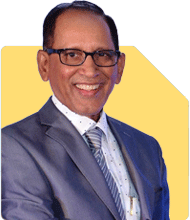
Krishna Kumar  |411 Answers  |Ask -

Workplace Expert - Answered on Oct 04, 2024

Krishna Kumar is the founder and CEO of GoMoTech, a company that provides strategic consulting in B2B sales, performance management and digital transformation.
Before branching out on his own, he worked with companies like Microsoft, Rediff, Flipkart and InMobi.
With over 25 years of experience under his belt, KK is a regular speaker at industry events and academic intuitions, both in India as well as abroad.
KK completed his MBA in marketing from the Sri Sathya Sai Institute of Higher Learning in Andhra Pradesh and his management development programme from XLRI, Jamshedpur.
He has also completed his LLB from Nagpur University and diploma in PR from Bhavan’s College of Management, Nagpur, where he was awarded a gold medal.... more
Naveen Question by Naveen on Sep 17, 2024Hindi
Listen
Career

My manager is harassing me and want me to resign from my post as she want another candidate which aligned for same role

Ans: Hello Mr.Naveen

I am sorry to hear your situation.

There is not much you can do accept talk to your manager in an amicable way and resolve it.

All the Best

Warm Regards
KK
Career

You may like to see similar questions and answers below

Archana

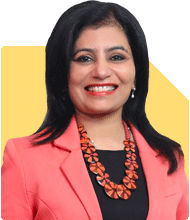
Archana Deshpande  |131 Answers  |Ask -

Image Coach, Soft Skills Trainer - Answered on Nov 18, 2024

Asked by Anonymous - Oct 16, 2024Hindi
Listen
Career
My manager is constantly manipulating his boss about me. Everyone in my team is aware that she is increasingly insecure about my success and feels threatened by me. She often gives incorrect and incomplete feedback due to which my manager feels that my manager is more efficient than I am. In the past, 4 people have quit or been foced to resign due to these politics. Should I also quit and move to another company or should I talk to the manager about this? Pls help
Ans: Hi!!

When I was working in the corporate world, the oft repeated quote was, "people don't leave the company ,they leave bad bosses".
Your manager's boss is your super boss, rt? Can't you go and speak to him directly and put your concerns across?
I am sure the HR must have noticed that people are quitting and might have explored the reasons why they are doing so too, do check with them.
I fail to understand why women should not cooperate with each other. You can also explore the option of talking directly to the manager and telling her if your actions in any way have caused some misunderstanding and if she says yes then you are willing to clear them. Also tell her that you are not eyeing her post and you are just trying to do your job well. I did the same with one of my bosses, it worked for me, we became the best of friends, we are still in touch. You need to think which is your best option and choose one from all the possible solutions I have mentioned. You can always quit, that's the last option I feel..

Hoping you choose wisely..All the very best!!

..Read more

Latest Questions
Ramalingam

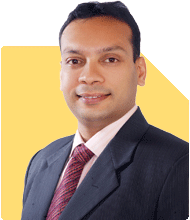
Ramalingam Kalirajan  |11454 Answers  |Ask -

Mutual Funds, Financial Planning Expert - Answered on Sep 03, 2026

Money
HI I am 47 years old with Monthly expenses of Rs 40000 , i would like to know how much retirement corpus would i require at age of 60 so that it lasts till age 85 also the opening Retirement corpus at 60 and closing Corpus at 85 should almost be same , as i would like to transfer it yo me daughter, i would like to know should i factor 8% food inflation as that will be major expense factor also factor 6% intrest on investment. Whats is the inflation rate should i assume , in which mutual fund should i invest for Rs 50000 monthly investment. How much money should i park for medical expenses or emergency
Ans: You have started this planning at a good age. With 13 years left, you have useful time to build the corpus.

» Your retirement target

– You are currently 47 years old.

– Your present monthly expense is Rs.40,000.

– You plan to retire at age 60.

– You want the corpus to support you until age 85.

– You also want the corpus to remain almost intact.

– This is a higher target than normal retirement planning.

– Your aim is also to pass the corpus to your daughter.

» Inflation assumption

– I would not use 8% food inflation for the entire retirement budget.

– Food is only one part of your total expenses.

– Medical, housing, travel and other costs behave differently.

– For long-term planning, 6% overall inflation is a reasonable assumption.

– However, medical inflation can be higher than general inflation.

– So, keep a separate medical reserve.

» Your expense at age 60

– Your present Rs.40,000 monthly expense will rise substantially by age 60.

– At 6% inflation, it can become roughly Rs.85,000 monthly.

– This should be your starting retirement expense.

– You should review this estimate again around age 58.

» Retirement corpus required

– You have given an important condition.

– You want the corpus at 85 to remain almost equal.

– Therefore, a normal retirement corpus calculation is not enough.

– Assuming only 6% investment return creates a difficult situation.

– Your withdrawal also rises with inflation.

– If return and inflation are both around 6%, preservation becomes difficult.

– Under those assumptions, I would target around Rs.3.15 crore at age 60.

– This is an approximate planning figure.

– It is not a guaranteed required amount.

– A higher return assumption can reduce the required starting corpus.

– But I would not depend on high returns for retirement planning.

» Why Rs.3.15 crore is a safer target

– Your first retirement-year expense could be around Rs.85,000 monthly.

– Expenses would then rise every year.

– You also want money remaining at age 85.

– Therefore, the corpus must support withdrawals and continue growing.

– Rs.3.15 crore gives you a better starting target.

– Still, market returns will not come evenly every year.

– Hence, actual results can differ materially.

» Your Rs.50,000 monthly investment

– Rs.50,000 monthly is a good starting contribution.

– However, it may not be enough by itself for Rs.3.15 crore.

– You have 13 years before retirement.

– Therefore, annual increases in your investment are very important.

– Try increasing the monthly investment whenever your income rises.

– Even a gradual increase can make a major difference.

– Existing savings, PF, gratuity and other retirement benefits can also help.

» Mutual fund strategy

– Do not put the entire Rs.50,000 into one mutual fund.

– At your age, you still have a long investment period.

– A diversified actively managed equity portfolio can be considered.

– You can use large-cap oriented funds for the core portion.

– A flexi-cap oriented fund can provide wider diversification.

– A limited mid-cap allocation can add growth potential.

– Avoid excessive small-cap exposure for retirement money.

– Your portfolio should gradually become safer after age 55.

» Suggested structure for Rs.50,000 monthly

– Rs.20,000 in a diversified flexi-cap oriented fund.

– Rs.15,000 in a large-cap oriented actively managed fund.

– Rs.10,000 in a mid-cap oriented fund.

– Rs.5,000 in a balanced or equity-oriented hybrid fund.

– This is only a starting structure.

– Your existing investments should be checked before finalising this allocation.

» Why actively managed funds can help

– Active fund managers can change portfolios based on market conditions.

– They can reduce exposure to weaker companies.

– They can also identify changing business opportunities.

– This flexibility can be useful over a 13-year period.

– However, fund selection and monitoring remain important.

– Past performance alone should never decide fund selection.

» Emergency fund

– Keep at least 9 to 12 months of household expenses separately.

– For you, I would initially target around Rs.5 lakh.

– Keep this money in highly liquid and low-risk avenues.

– Do not count your equity mutual funds as emergency money.

– This reserve should not be used for routine investing.

» Medical reserve

– Medical expenses need separate planning.

– Do not depend only on your normal retirement corpus.

– Build a dedicated medical reserve before retirement.

– I would initially target Rs.10-15 lakh as a separate reserve.

– This should be reviewed closer to age 60.

– Your health insurance coverage should also be reviewed regularly.

– Medical inflation can be much higher than normal inflation.

» Protecting the corpus after age 60

– This is perhaps the most important part of your plan.

– Do not keep the entire retirement corpus in equity.

– Keep several years of expenses in safer investments.

– Keep the remaining portion invested for long-term growth.

– This can reduce the need to sell equity during market falls.

– Rebalance the portfolio periodically.

» Your daughter and inheritance goal

– Your objective is very clear.

– You want to enjoy retirement and still leave money behind.

– This requires controlled withdrawals.

– Avoid treating the entire corpus as spending money.

– Maintain a separate inheritance mindset.

– Estate planning should also be completed before retirement.

– Nominees should be updated across investments and accounts.

– A proper Will can make the transfer much easier.

» One important improvement

– Do not wait until age 60 to reach the target.

– Start building the retirement corpus aggressively now.

– Increase your Rs.50,000 SIP every year.

– Any bonus or additional income can partly go towards retirement.

– At around age 55, reassess the entire retirement plan.

– At age 58, prepare the final retirement-income strategy.

» Final Insights

– Your Rs.3.15 crore target at age 60 is a useful planning benchmark.

– This assumes around 6% return and 6% inflation.

– It also considers your wish to retain the corpus at 85.

– I would not use 8% food inflation for all expenses.

– Use 6% general inflation for initial planning.

– Keep medical expenses separately because they can rise faster.

– Rs.50,000 monthly investing is a good beginning.

– Increasing this SIP every year is more important.

– Your investment strategy should become safer near retirement.

– The goal is not just Rs.3.15 crore.

– The real goal is sustainable income plus a meaningful inheritance.

Best Regards,

K. Ramalingam, MBA, CFP,

AMFI-Registered MFD – ARN 4188

www.holisticinvestment.in

https://www.linkedin.com/in/ramalingamcfp/
...Read more

Ramalingam

Ramalingam Kalirajan  |11454 Answers  |Ask -

Mutual Funds, Financial Planning Expert - Answered on Sep 03, 2026

Money
Ant thing we can purchase from market by knowing the rate even for safety pin. You can purchase from anywhere in indie online the noted prices for share. Why the MF units are not possible to buy by seeing the prize or why it should not be online varying price for day. Not showing the price, Asset management can cheat the customer. SEBI is ineffective for controlling this cheating
Ans: Your question is very practical. The difference comes from how shares and mutual funds are structured.

» Why share prices are visible instantly

– A share is traded directly between buyers and sellers on a stock exchange.

– The exchange matches buy and sell orders continuously.

– Therefore, you can see the latest traded price.

– You can place an order at that displayed market price.

– The price can change many times during the day.

» Why mutual funds work differently

– A mutual fund unit is not traded like an ordinary share.

– You buy or redeem units from the mutual fund.

– The fund collects money from many investors.

– It then invests that money in securities.

– The value of all those investments changes during the day.

– The fund calculates its Net Asset Value, called NAV.

– NAV represents the value of one mutual fund unit.

– NAV is normally calculated after the market closes.

– Therefore, there is no continuously traded MF unit price.

» This does not mean the price is hidden

– Mutual fund NAVs are publicly available.

– The NAV is disclosed for every business day.

– Your transaction also receives units based on applicable NAV rules.

– The applicable NAV depends on transaction timing and fund realisation rules.

– Therefore, the NAV is not controlled by an individual agent.

» Why you cannot buy at the displayed NAV

– Suppose today's NAV is Rs.100.

– You cannot simply place an order at Rs.100.

– The final applicable NAV depends on the transaction rules.

– The fund must also receive the required money.

– This prevents investors from knowing the exact NAV beforehand.

– It also ensures fair treatment among all investors.

» Can an AMC cheat by changing NAV?

– An AMC cannot simply choose an arbitrary NAV.

– NAV is based on the value of underlying investments.

– Listed securities generally use market-based prices for valuation.

– Other securities follow prescribed valuation methods.

– Fund accounting and valuation processes are subject to regulatory requirements.

– There are also audits, trustees and regulatory oversight.

– So, the system has several checks.

» Your concern about transparency is still important

– Investors should clearly see the NAV and transaction details.

– They should also receive confirmation of their units.

– You can independently check the NAV against official disclosures.

– Your account statement should show units, NAV and transaction dates.

– Any unexplained difference should be questioned immediately.

» Where investors sometimes get confused

– The NAV seen on an app is not always your transaction NAV.

– The displayed NAV may belong to the previous business day.

– Your purchase may receive the next applicable NAV.

– This depends on transaction timing and applicable rules.

– Bank realisation can also affect the applicable NAV.

– This can make the transaction appear different from your expectation.

» Why a share and MF cannot have identical pricing

– A share represents ownership in one company.

– An MF unit represents a proportionate interest in a portfolio.

– The portfolio may contain hundreds of securities.

– Its value must first be calculated.

– The unit NAV is then determined.

– Hence, MF pricing naturally works differently from stock exchange pricing.

» What would improve your confidence

– Always check the official NAV after the business day.

– Compare it with your transaction statement.

– Check the number of units allotted.

– Check the transaction date and applicable NAV date.

– Keep your account statements safely.

– Raise a written complaint if figures do not match.

– Escalate the matter if the AMC does not resolve it.

» Final Insights

– Your demand for better transparency is quite reasonable.

– However, absence of intraday MF pricing does not itself mean cheating.

– Shares and mutual funds have fundamentally different transaction mechanisms.

– Mutual fund NAV is calculated from the underlying portfolio value.

– The important point is whether the disclosed NAV is correctly calculated.

– If you find a specific mismatch, preserve the transaction evidence.

– Then the issue can be examined much more precisely.

Best Regards,

K. Ramalingam, MBA, CFP,

AMFI-Registered MFD – ARN 4188

www.holisticinvestment.in

https://www.linkedin.com/in/ramalingamcfp/

...Read more

Ramalingam

Ramalingam Kalirajan  |11454 Answers  |Ask -

Mutual Funds, Financial Planning Expert - Answered on Sep 03, 2026

Money
Hi, I am presently working in CPSU and having 2.5 years remaining in my supperannuation. I have a in hand salary of Rs.1.3 Lac per month (after deduction of necessary contribution in PF, VPF and deduction of tentative monthly income tax). In addition to this, I had invested a sum of Rs.1.4 Cr in a HUDA property in Faridabad which is now around 6 Cr. I am alos getting a monthly pension ofRs. 21000/- (without D.A. component) per month from my parent department as I had submitted Technical Resignation from Govt. Service (MoR) and took permanent absorption in CPSU. I am also getting monthly rental income from a flat @Rs.20000/- per month. I have invested Rs. 60000 in mutual funds and Rs.5.5 Lacs in shares. My wife was also a Haryana Govt. Educationist (govt. job) and just superannuated from her job on 31.08.2026. She will be getting a monthly pension of Rs.75000/- per month in addition to her other retirement benefits. She also earns a monthly rental income from our parental house @8000/- per month. We both are covered under medical schemes of Haryana Govt. and me from MoR. My question is I want to purchase or built a house in GGN on around 200 sq. yd. (approx) plot and live there. Kindly guide me about our future on my email which is alredy provided please.
Ans: You have built a very strong financial base. Your retirement income also looks encouraging. The main decision is how much to spend on the Gurugram house.

» Your present financial position

– You have around 2.5 years of employment remaining.

– Your present take-home salary is around Rs.1.30 lakh monthly.

– You receive pension income of around Rs.21,000 monthly.

– You receive rental income of around Rs.20,000 monthly.

– Your wife has recently retired from Haryana Government service.

– Her expected pension is around Rs.75,000 monthly.

– She also receives rental income of around Rs.8,000 monthly.

– Your Faridabad property has appreciated substantially.

– Its present value is around Rs.6 crore.

– You also have mutual funds and shares.

– Your medical coverage through government schemes is another positive.

Overall, your retirement cash flow appears quite comfortable.

» The Gurugram house decision

– Buying or constructing your own house can be reasonable.

– This is different from buying property purely as an investment.

– You want to actually live there after retirement.

– Therefore, emotional and lifestyle factors are also important.

– Gurugram can provide good connectivity and healthcare facilities.

– However, avoid using the entire Rs.6 crore property value for construction.

– Your retirement security should remain the first priority.

» Set a maximum house budget

– Decide the total budget before selecting the plot.

– Include plot cost, construction cost and registration expenses.

– Also include interiors, furniture and other initial expenses.

– Keep a separate amount for future maintenance.

– I would avoid stretching the budget simply for a larger house.

– A comfortable house is enough for retirement years.

– Your retirement corpus should continue growing alongside the house purchase.

» How to fund the house

– Your employment income continues for another 2.5 years.

– Your wife's pension has already started.

– Your own pension also provides continuing cash flow.

– Rental income gives another stable monthly support.

– This reduces pressure on your investment portfolio.

– Ideally, use available surplus income for part of construction.

– Avoid selling the entire Faridabad property only for convenience.

– Also avoid taking a large loan close to retirement.

» What about the Faridabad property?

– This requires a separate strategic decision.

– You have created significant wealth through this property.

– However, it now represents a very large asset concentration.

– After retirement, this concentration deserves careful review.

– You may eventually consider monetising part of this asset.

– Any sale decision must consider capital gains and taxation.

– The money can then support retirement investments.

– Do not sell merely because Gurugram property prices look attractive.

» Retirement income planning

– Your combined monthly pension income should form the core income.

– Rental income provides an additional income stream.

– Your retirement corpus should ideally remain partly invested for growth.

– Keep a separate reserve for several years of regular expenses.

– This avoids selling investments during a market correction.

– Your post-retirement portfolio should become more balanced.

– Equity exposure can continue, but should match your risk capacity.

» Your mutual funds and shares

– Your equity investments currently appear relatively small.

– This is not necessarily a problem.

– Your property exposure is already quite substantial.

– Therefore, future financial investments can improve diversification.

– Consider gradually building a diversified mutual fund portfolio.

– Prefer actively managed funds suitable for your risk profile.

– Avoid investing large amounts suddenly after retirement.

– Review the portfolio at least once every year.

» Medical and emergency planning

– Your government medical coverage is a major support.

– Still, maintain a separate medical emergency reserve.

– Government coverage may have certain rules and limitations.

– Keep adequate liquidity for expenses not covered by the schemes.

– Also review whether your existing medical benefits continue after retirement.

– This should be confirmed before your retirement date.

» Before buying the 200 sq. yard plot

– Check the title and ownership documents carefully.

– Verify the approved land use and building permissions.

– Check road width and access to the property.

– Verify electricity, water and sewerage availability.

– Check local development and construction restrictions.

– Take independent legal verification before paying a major amount.

– For construction, obtain a realistic detailed cost estimate.

» A better retirement structure

– Keep your retirement house budget within a comfortable limit.

– Keep sufficient financial assets outside the property.

– Maintain adequate emergency liquidity.

– Continue some equity exposure for long-term inflation protection.

– Maintain suitable fixed-income investments for near-term requirements.

– Keep your pension and rental income for regular expenses.

– Use investment withdrawals only when genuinely required.

» One important point

– Your property wealth is excellent, but it is not regular income.

– Retirement planning should therefore focus on cash-flow sustainability.

– The new house will also become an illiquid asset.

– Hence, avoid having most of your wealth in properties.

– You already have a strong starting position for retirement.

– The next 2.5 years can be used very effectively.

– This period should focus on strengthening liquidity and retirement investments.

» Final Insights

– Yes, purchasing a Gurugram house can be financially possible for you.

– I would not reject the idea merely because retirement is near.

– But the house should be planned around your retirement finances.

– Do not allow the house to consume your retirement security.

– Your pensions and rental income provide a strong recurring income base.

– Your Faridabad property provides substantial financial flexibility.

– Your next step should be a complete retirement cash-flow plan.

– That plan should decide the maximum safe house budget first.

– Then decide whether to buy the plot or construct the house.

– With proper planning, you can enjoy the new home without financial stress.

Best Regards,

K. Ramalingam, MBA, CFP,

AMFI-Registered MFD – ARN 4188

www.holisticinvestment.in

https://www.linkedin.com/in/ramalingamcfp/

...Read more

Ramalingam

Ramalingam Kalirajan  |11454 Answers  |Ask -

Mutual Funds, Financial Planning Expert - Answered on Sep 03, 2026

Asked by Anonymous - Sep 03, 2026
Money
From the Past 10 Years ,I am Holding the REGULAR MF -Frankline ELSS,ICICI Value Discovery Fund,HDFC Mid cap .Since this fund are perfoming well but my Concernt is my Return is Regulary Eaten away by the Commision by MF Agest since its a Regular.I feel in long term for next 10-15 years , I am Unnecassary Dimising my Return due to Commision. What can i Do Now to save the Commision, what best strategy can i use to Switch the Fund from R to Direct type.
Ans: » Your concern is valid

You have already held these investments for around 10 years.
Long-term discipline is a major strength in your portfolio.
Your concern about regular-plan costs is also reasonable.
However, switching blindly to direct plans may not improve your outcome.

» First, understand the commission

Regular plans include distribution expenses within their expense ratio.
This cost indirectly reduces the returns earned by investors.
The cost continues as long as you remain invested.
Direct plans have lower expenses because distribution costs are absent.
Therefore, direct plans can have a cost advantage over long periods.

» But regular plans provide useful services

A good MFD provides portfolio monitoring and transaction support.
They can help during market corrections and difficult periods.
They can also help maintain proper asset allocation.
Tax-related transaction planning can also be supported.
Behavioural mistakes can be reduced through proper guidance.
These services can be valuable during a 10-15 year journey.
So, the commission should be viewed against services received.

» Direct plan has some disadvantages

You must monitor the portfolio yourself.
You must decide when to rebalance your investments.
You must assess fund performance independently.
You must handle purchase, redemption and switch decisions.
Tax implications also need your attention.
Most importantly, you must avoid emotional decisions during market falls.
Lower cost alone does not guarantee better investor returns.

» Do not switch immediately

Your existing funds have already created substantial long-term capital gains.
Moving from regular to direct is not always a simple switch.
A switch is generally treated as a redemption and fresh purchase.
This can create capital gains tax consequences.
Exit loads may also apply in some situations.
Therefore, first calculate the tax and transaction impact.
Then compare that cost with future expense savings.

» A better strategy for you

Keep the existing investments under review first.
Check the current value and purchase cost of each holding.
Check the unrealised capital gains before making any switch.
Review whether each fund still suits your financial goals.
Avoid changing a good fund merely because it is regular.
Fund quality should come before expense ratio.

» For future investments

You can consider direct plans if you can manage everything yourself.
But do this only after understanding the responsibilities involved.
Alternatively, continue with regular plans through a good MFD.
The right choice depends on the service you actually receive.
Do not select direct plans only because the expense is lower.

» A possible transition approach

Do not convert the entire portfolio in one transaction.
First identify funds where the future cost saving is meaningful.
Check the capital gains and applicable taxation.
Consider future investments separately from existing holdings.
Existing units can be reviewed based on tax efficiency.
New investments can follow your chosen investment structure.
This gives you flexibility without disturbing the entire portfolio.

» Important point about your three funds

Since you have held them for around 10 years, review is essential.
Do not judge them only by their past performance.
Check consistency across different market cycles.
Check portfolio concentration and investment style.
Check whether the funds still fit your goals.
Also review whether you have too much exposure to mid-cap stocks.
Your overall asset allocation matters more than one fund.

» Tax point while switching

Equity mutual fund taxation must be considered before switching.
LTCG above Rs.1.25 lakh is currently taxed at 12.5%.
STCG on equity mutual funds is currently taxed at 20%.
A switch can therefore trigger taxable capital gains.
The tax cost should be compared with future expense savings.
This is especially important after a 10-year holding period.

» My preferred approach

First, prepare a complete portfolio statement.
Include purchase dates, purchase values and present values.
Identify the capital gains in each holding.
Review the portfolio allocation and fund suitability.
Then compare regular and direct versions of suitable funds.
After that, decide which holdings need action.
Avoid making a blanket switch simply to save commission.

» Final Insights

Your concern about long-term costs is financially sensible.
But cost saving should not be the only decision factor.
A good regular-plan relationship can provide meaningful value.
Direct plans can work well for disciplined and knowledgeable investors.
The best choice depends on your ability to manage the portfolio.
With a 10-15 year horizon, proper portfolio review is more important.
A phased approach can reduce unnecessary tax and investment disruption.
Your existing 10-year discipline gives you a strong base for the future.

Best Regards,

K. Ramalingam, MBA, CFP,
AMFI-Registered MFD – ARN 4188

www.holisticinvestment.in

https://www.linkedin.com/in/ramalingamcfp/

...Read more

Archana

Archana Deshpande  |131 Answers  |Ask -

Image Coach, Soft Skills Trainer - Answered on Sep 02, 2026

Asked by Anonymous - Jul 21, 2026
Career
My mother-in-law is constantly creating misunderstandings between my husband and me. She often says or does things that lead to arguments, but then pretends to be innocent, making it difficult for my husband to see what is happening. She is emotionally manipulating my husband and son against me. This has started affecting our relationship and my peace of mind. How can I deal with this situation without creating more conflict in my marriage?
Ans: Hi!!

Being a wife and a daughter-in-law is not an easy job. Over and above that, having a difficult or manipulative mother-in-law can sometimes feel like too much to handle.

She is your husband’s mother, and therefore, she deserves your respect, regardless of how she behaves.

The relationship between a husband and wife is sacred. It has to be built on mutual love, respect and trust. If your relationship is built on these principles, whatever your mother-in-law may do to create misunderstandings between you and your husband, it will not be easy for her to break the bond you share. I am very sure of this.

But first, check yourself. Be truthful, honest, loving and respectful towards your husband and towards everyone around you. You really have to practise these qualities and believe in their strength. When you know that you have been genuine in your relationship, you will have the inner strength and confidence to deal with difficult situations.

Most importantly, value your happiness and peace at all costs. Learn to let go of the small things for the sake of the bigger picture. Not every situation needs a reaction. Choose your battles wisely and, in this situation, be the smarter one.

And most importantly, have a heart-to-heart conversation with your husband. Choose the right time—a time when both of you are calm, emotionally receptive and in the right frame of mind to discuss the situation as true partners.

Do not approach the conversation as “your mother versus me.” Approach it as “we are a team, and we need to protect our relationship.”

Remember, you and your husband are on the same team. When there is love, trust, respect and open communication between the two of you, outside influences have far less power over your marriage.

That, I believe, is the way forward—without creating more conflict, and while protecting both your marriage and your peace of mind.

...Read more

Archana

Archana Deshpande  |131 Answers  |Ask -

Image Coach, Soft Skills Trainer - Answered on Sep 02, 2026

Asked by Anonymous - Jul 03, 2026
Career
I am a single mother, and at times not able to spend more time with my 11-year-old daughter due to work commitments. Lately, she has become quieter and more withdrawn. How do I explain my situation to her, so she understands without feeling neglected or unimportant? What are some ways I can reassure her of my love and support while balancing the demands of work?
Ans: Hi!!

You and your daughter are a team! You share a connection that goes beyond human comprehension—it is a soul connection. So, trust yourself and trust your daughter.

She is eleven and soon to be a teenager. Her body and mind are going to undergo many changes, and that preparation has already begun. Her silence and withdrawal may not necessarily be entirely because of you.

Children are remarkably resilient. They understand very well what is happening around them and are often more willing to cooperate than we give them credit for. So, talk to her without guilt. You are doing a great job—you are working, providing for her, and taking care of your child. You really have to believe this yourself.

Being a mother is not an easy job, and you are a working single mother. Give yourself some credit for managing all of this. Be proud of yourself. That positivity and confidence will naturally rub off on your daughter.

I am going to focus on the solutions here.

You want to assure her that you love her and that you are always there for her. So, how do you go about doing this?

Just as you would sit across the table and discuss a problem at the office, I want you to create a similar ritual with your daughter. Every Sunday, sit together and plan the week ahead. Make it something you both look forward to.

Then, try to do something fun together each day. It could be as simple as taking a walk after dinner, playing a game together, reading together, or just sitting and talking. It does not have to be an elaborate activity. Even 20 minutes of meaningful, undivided time every day can make a difference.

You propose the activity and let her choose. Introduce this slowly, until it becomes a natural ritual between the two of you.

Children really don’t need anything expensive or fancy from you. They need your time, your attention, your presence—and those hugs.

One more very important aspect is giving her your undivided attention when she wants to talk to you. Stop whatever you are doing, face her, make eye contact, and listen to her. Let her feel that, at that moment, she has your complete attention.

And finally, try to leave the stress of office work outside the door of your home. When you are home, be completely involved in your home and with your daughter. Talk to her about your day, so that she feels comfortable talking to you about hers.

Have conversations—not just instructions and questions. Create a space where she knows that she can come to you with anything.

These are some simple, everyday ways of reconnecting with your daughter and, more importantly, reassuring her that she is loved, she is important, and you are always there for her.

Happy parenting! Wishing you the very best....

...Read more

DISCLAIMER: The content of this post by the expert is the personal view of the rediffGURU. Investment in securities market are subject to market risks. Read all the related document carefully before investing. The securities quoted are for illustration only and are not recommendatory. Users are advised to pursue the information provided by the rediffGURU only as a source of information and as a point of reference and to rely on their own judgement when making a decision. RediffGURUS is an intermediary as per India's Information Technology Act.

Close  

You haven't logged in yet. To ask a question, Please Log in below
Login

A verification OTP will be sent to this
Mobile Number / Email

Enter OTP
A 6 digit code has been sent to

Resend OTP in120seconds

Dear User, You have not registered yet. Please register by filling the fields below to get expert answers from our Gurus
Sign up

By signing up, you agree to our
Terms & Conditions and Privacy Policy

Already have an account?

Enter OTP
A 6 digit code has been sent to Mobile

Resend OTP in120seconds

x