Home > Relationship > Question
Need Expert Advice?Our Gurus Can Help
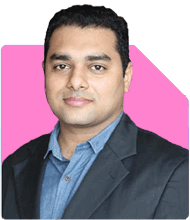
Ravi

Ravi Mittal  |674 Answers  |Ask -

Dating, Relationships Expert - Answered on Oct 16, 2025

Ravi Mittal is an expert on dating and relationships.
He founded QuackQuack, an online dating platform, in 2010 with just two people. Today, it has over 20 million users in India.... more
Asked by Anonymous - Oct 15, 2025Hindi

Relationship

I am a 58 year old widower my wife passed away 18 months back. I have 2 sons aged 28 years and 20 years. I am constantly approached by a 43 years old lady who is a divorcee and have 18 year old son with marriage proposal. We are known to each other for several years. Before her proposal I have never thought of remarriage. She is a very good human being and very attractive and now I am unsure how to handle the proposal. Requesting you help that how should I handle this.

Ans: Dear Anonymous,
I understand you are going through a tough time. It isn’t uncommon or even immoral to want to remarry after losing your partner. But it is definitely important to ensure that you are ready for it and your children are comfortable with it. 18 months might seem like a long time but in terms of losing a spouse it is nothing, isn’t it? If, even for a moment, you feel that you are not prepared to move on, or you need more time to grieve, please allow yourself that time. Not be pressured into taking a big step merely because someone else thinks it’s a good idea or a good match.

First step is identifying if you feel ready. Second and one of the most important steps is to speak to your sons. Their comfort and emotions are equally important. They have lost a mother; nothing should make them feel that they will lose their father too. Be gentle and kind with them when you bring up the topic.

Hope this helps.
Asked on - Oct 19, 2025 | Not Answered yet
Thanks a lot.

You may like to see similar questions and answers below

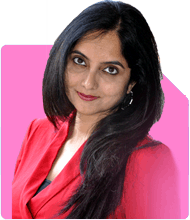
Kanchan

Kanchan Rai  |644 Answers  |Ask -

Relationships Expert, Mind Coach - Answered on Dec 01, 2024
Asked by Anonymous - Dec 01, 2024Hindi
Listen
Relationship
Hello Ma'am, My name is [Anonymous]. I am 42 years old, divorced, and currently working abroad. I have a 7-year-old son who doesn't live with me, and I am looking to move on in life. I have a former colleague who is 38 years old. We worked together for six years, and she is also divorced. She is very professional and respects me a lot, always calling me "Sirji." We never discussed our personal lives while working together, but when I was leaving the company and serving my notice period, we started talking more about our personal lives. She was shocked to learn about my divorce, and I was equally surprised to find out about hers. Over the past six months, we’ve been talking regularly, and I have been helping her with her professional growth. Recently, we have been discussing moving on in life. I suggested that she find someone and settle down, but she shared with me that even her family doesn't talk about her personal life, though she appreciates my concern. She told me that she wants to marry someone from her community and religion, as she is vegetarian, but she is having trouble finding a suitable match. I suggested that she could consider someone from a different community, but she is afraid it wouldn't work out, and she would struggle to adjust. She has also encouraged me to find someone and move on in life. Sometimes, she jokes and tells me to find someone for her, but I believe she is a very good woman, and I have started developing feelings for her. However, I am afraid that if I ask her to consider me for marriage and she refuses, I could lose her as a good friend, and I really enjoy our conversations. Could you please offer me some advice on what I should do? ????
Ans: Before making a decision, reflect on your intentions and the nature of your feelings. Are they grounded in a strong foundation of mutual understanding and compatibility, or are they influenced by loneliness or a desire to move on from your past? Understanding this will help you approach the situation with clarity and confidence.

If you decide that your feelings are genuine and you’d like to explore the possibility of a deeper relationship, it’s important to communicate thoughtfully. Begin by affirming your respect for her and the friendship you share. You could say something like, "I value our friendship deeply and truly enjoy the conversations we have. Over time, I’ve found myself thinking about the possibility of something more between us. I understand and respect your preferences and your journey, but I wanted to share my feelings because I value honesty and openness in our connection."

This approach ensures that your feelings are expressed without putting pressure on her, and it allows her to consider the idea without feeling cornered. If she doesn’t feel the same way, you can express your understanding and emphasize that you would like to maintain the friendship.

It’s also worth considering her concerns about cultural compatibility. If this is a significant factor for her, you could discuss how you envision addressing potential challenges if the relationship were to progress. Showing empathy for her concerns and a willingness to navigate differences together might help her feel more secure.

Remember, vulnerability is a risk, but it’s also the foundation for meaningful connections. Whether or not she feels the same, being honest about your feelings allows you to move forward with clarity and authenticity. And regardless of her response, the friendship you’ve built is rooted in mutual respect, which provides a solid foundation for either outcome.

..Read more

Ravi

Ravi Mittal  |674 Answers  |Ask -

Dating, Relationships Expert - Answered on Oct 07, 2025

Asked by Anonymous - Oct 04, 2025Hindi

Relationship
I am a 49 year old widower,have 2 daughters, and looking for my remarriage.Six months back i contacted one lady, through one matrimonial site ,divorcee,47 yrs old from Mumbai who faced Domestic violence in her first marriage and has one son.since then we have been chatting on whatsapp daily,talked few times on phone and met once 4 months back she is good looking and i have expressed my feelings for her.she says she has no such feelings for me but needs time as she is talking with other proposals at the same time and asked me too to do the same.one problem with me ,as she says ,is i am too tall for her height as the height difference is almost 10 inches and other problem is i am well placed job wise but in a good city in other state.she has very good other proposals also but chats with me dailly everyday for last 6 months where we had talked casually and friendly too .i am confused now and apprehensive also about what final decision she would take a about me.
Ans: Dear Anonymous,
I understand your concern, but if she wants to speak to some more people and weigh her options, there’s nothing much you can do here. I suggest you might want to do the same. You are speaking to her and building a connection and that’s great. But it’s also okay if you want to talk to some more people and see if you find someone more compatible for you. Since she has already expressed a few problems and also there’s the distance, it would be practical to look a little more instead of tying yourself down to one person, especially since she is not showing interest in committing right away.

About what her final decision for you would be, it is difficult to tell. Sometimes people speak regularly and still don’t end up together and sometimes people interact with many others, and still end up with each other. If it’s meant to be, it will. It won’t hurt if you also speak to a few more people. You deserve the best and so does she.

Hope this helps.

..Read more

Latest Questions
Nayagam P

Nayagam P P  |10841 Answers  |Ask -

Career Counsellor - Answered on Nov 16, 2025

Asked by Anonymous - Nov 16, 2025Hindi
Career
Sir i am from ews category preparing for jee main 2026 about how much marks I needed to get cse in mid tier nit or iiit
Ans: For an EWS category student targeting Computer Science Engineering (CSE) in mid-tier NITs and IIITs through JEE Main 2026, the expected cutoff metrics based on the last two years' data (2024-2025) demonstrate realistic benchmarks for strategic preparation. The JEE Main 2025 qualifying cutoff for the EWS category established at 80.3830119 percentile (approximately 80 marks minimum) creates the foundational threshold, while actual NIT/IIIT admission cutoffs for EWS CSE range significantly higher. Mid-tier NIT CSE admissions for EWS candidates typically close between ranks 8,000-15,000, translating to approximately 155-170 marks out of 300, representing 85-90 percentile range. For mid-tier IIITs like IIIT Gwalior, IIIT Kalyani, IIIT Allahabad, and IIIT Lucknow, EWS CSE cutoffs historically close around ranks 3,500-5,600, requiring approximately 150-165 marks (corresponding to the 82-88 percentile). IIIT Kalyani Round 6 (2025) data shows EWS CSE closing at rank 5,640 (approximately 165 marks); IIIT Gwalior EWS CSE closing around rank 8,200 (approximately 155 marks). Specific institution trends: NIT Warangal EWS CSE closing rank approximately 13,847, requiring ~165 marks; NIT Jaipur closing around rank 11,000, requiring ~160 marks; NIT Surathkal EWS CSE approximately rank 8,000-9,000, requiring ~160-165 marks. The 2024-2025 data consistently demonstrates EWS candidates securing mid-tier NIT/IIIT CSE seats with scores spanning 150-170 marks (82-90 percentile), suggesting a realistic target for 2026 preparation aligns with achieving 155-170 marks minimum (85-90 percentile equivalent). Competition intensity remains moderate-to-high for CSE branch; achieving marks above 170 provides a comfortable margin for premium mid-tier seat acquisition, while 150-155 marks offer realistic prospects in lower mid-tier institutions, with the EWS reservation advantage substantially improving admission probability compared to general category candidates requiring 20-30 additional marks for identical institution admission.? Important Disclaimer: The admission probability assessments provided are estimates based on historical data and should be considered indicative only. Opening and closing ranks experience annual fluctuations due to multiple dynamic factors including exam difficulty variations, candidate participation rates, performance distributions, institutional seat matrix adjustments, policy modifications in reservation criteria, evolving student preferences across disciplines, shifting institutional rankings, historical cutoff influences, economic trends affecting branch demand, increase/decrease in students' intake, and multi-round counselling processes.

Strategic Recommendation: Include as many institute-branch combinations as possible in JoSAA Counselling Process, beginning with your preferred options first. Also, to optimize your admission prospects, we strongly encourage maintaining a diversified application portfolio by preparing/appearing for 4-5 additional engineering entrance examinations for private institutions alongside JEE/JoSAA. This comprehensive approach ensures multiple pathways to quality engineering education beyond the highly competitive IIT/NIT/IIIT/GFTI ecosystem. All the BEST for Your JEE 2026 & for Your Prosperous Future!

Follow RediffGURUS to Know More on 'Careers | Money | Health | Relationships'.

...Read more

Nayagam P

Nayagam P P  |10841 Answers  |Ask -

Career Counsellor - Answered on Nov 16, 2025

Career
Dear sir/ma'am I want to know about top colleges in kolkata for ba/bsc psychology which is rci approved and their entrance exams with lower fees gov/public as i can't afford private college And
Ans: Ayushi, It appears your question is incomplete, as it ends with the word "and," suggesting you intended to ask something further. However, regarding the first part of your question, please note the following: Government psychology education in Kolkata offers exceptional value through merit-based admission systems and negligible fees ranging from INR 1,400-12,000 annually for entire undergraduate duration, making quality psychology education genuinely accessible for economically vulnerable students. Kolkata University system provides the predominant platform for psychology honors programs, with admission determined entirely by 10+2 aggregate marks without entrance examinations for most government colleges, creating transparent, merit-driven selection processes. The typical eligibility requirement mandates minimum 50-60% marks in Class 12 with English as compulsory subject; aggregate score calculation uses best four subjects (excluding environmental education), establishing realistic yet competitive cutoffs ranging 85-95% for psychology specialization in premier government institutions. Calcutta University entrance examination exists as alternative pathway for select programs, though most undergraduate psychology admissions remain purely merit-based. Competition intensity remains moderate-to-high compared to premium private institutions, with government colleges attracting serious, academically-focused students seeking career development over prestige. Average placement outcomes demonstrate solid career prospects, with psychology graduates securing positions in clinical services, education, corporate HR, research, and government departments at approximately INR 2.9-4 LPA entry-level packages. Notably, government colleges do not formally advertise RCI approval for undergraduate BA/BSc Psychology programs—RCI recognition primarily applies to postgraduate clinical psychology credentials (M.A., M.Phil in Clinical Psychology). However, government colleges maintain standardized psychology curricula aligned with university guidelines ensuring quality foundation education. Top 5 Government Psychology Colleges in Kolkata: (1) Bethune College, Kolkata (NIRF #156, established 1873)—Prestigious women's college offering BA Psychology Honours with merit-based admission, 10+2 minimum 60% with English 60%, annual fees approximately INR 1,181-5,000, excellent faculty, placement rate INR 2.2-3 LPA; (2) Asutosh College (Calcutta University affiliated)—Historic government college, BA Psychology honours, merit-based 50% 12th marks, fees INR 2,400-7,200, strong academics reputation; (3) Surendranath College (Calcutta University affiliated, Government)—Located Sealdah, BA Psychology, merit-based admission 50% 12th aggregate, fees approximately INR 3,000-5,000, average placement INR 2.9 LPA; (4) Basanti Devi College (Government affiliated)—Offers BA Psychology, merit-based admission, extremely affordable fees INR 1,400-3,000, dedicated faculty; (5) Sarojini Naidu College for Women (Government)—BA Psychology specialization, merit-based selection, very affordable fees, comprehensive curriculum.?
Summing up, pursue psychology at government colleges like Bethune, Asutosh, or Surendranath College offering exceptional affordability (INR 1,500-7,200 annually) with merit-based 10+2 admission (minimum 50-60%). While direct RCI approval applies to postgraduate programs, government colleges provide standardized psychology education with solid placement prospects (INR 2.9-4 LPA) and transparent, competition-free, merit-based selection systems. All the BEST for Your Prosperous Future!

Follow RediffGURUS to Know More on 'Careers | Money | Health | Relationships'.

...Read more

Nayagam P

Nayagam P P  |10841 Answers  |Ask -

Career Counsellor - Answered on Nov 16, 2025

Career
son is preparing for JEE. He wants to pursue Mathematics in the future.Just wanted to know, which are the acclaimed universities which are good for research in the field of Maths , which he can aim for?, and can resaerch also be a career option in our country?. Thank you.
Ans: Mithun Sir, Mathematics research represents a genuine and viable career path in India, particularly through premier institutions like IISc Bangalore (NIRF #1), TIFR Mumbai, and Chennai Mathematical Institute, each offering exceptional research infrastructure, distinguished faculty, and proven track records of producing internationally recognized mathematicians. The Indian research ecosystem provides multiple pathways: doctoral programs typically spanning 5-6 years following undergraduate studies, followed by postdoctoral fellowships lasting 2-3 years, ultimately leading to permanent faculty or research scientist positions. Entry-level PhD researchers earn INR 3-5 lakhs annually, with mid-career researchers (4-9 years experience) averaging INR 8-12 lakhs, and senior researchers commanding INR 12-30 lakhs depending on institutional affiliation and seniority. CSIR-Nehru Science Postdoctoral Fellowship represents India's most competitive opportunity, offering INR 80,000 monthly stipend, annual contingency grants, and over 100 fellowships awarded nationally, enabling transition from mentored to independent research. The mathematical research sector demonstrates strong job growth—employment projected to increase 23% with approximately 3,000 new positions generated annually across academic institutions, government laboratories (CSIR, DRDO), and emerging fintech-AI sectors. Mathematics PhD holders experience unemployment rates below 1%, compared to 7% national average, reflecting consistent demand for analytical expertise. Research positions increasingly intersect with applied domains: data science teams earn INR 20+ lakhs (50% of ISI graduates), while pure mathematicians contribute to cryptography, artificial intelligence, financial modeling, and quantum computing applications. The typical pathway—4 years undergraduate → 5 years graduate school → 2-3 postdoc years → permanent position—requires sustained commitment of approximately 11-13 years before achieving independence, reflecting mathematics' theoretical depth requirements. Three Critical Advantages: (1) Intellectual gratification through fundamental discovery creating lasting contributions to human knowledge; (2) Global academic mobility enabling international collaborations and positions; (3) Multiple exit options allowing transitions into academia, research institutions, finance, or technology sectors. Three Significant Challenges: (1) Extended training timeline (11-13 years) with no guaranteed tenured position; (2) Intense competition for limited permanent faculty roles at premier institutions, requiring consistent high-impact publications; (3) Limited immediate financial returns during PhD/postdoc phases (INR 3-5 lakhs initially) compared to technology industry peers earning INR 15-25 lakhs, potentially creating financial strain during formative career years.? Summing up, for your son pursuing mathematics post-JEE, research offers a legitimate, rewarding career path if he possesses genuine passion for theoretical discovery rather than immediate financial gains. Pursuing admission to IISc Bangalore, TIFR Mumbai, or CMI Chennai through competitive entrance exams (GATE, JAM, or direct selection) positions him optimally within India's premier research ecosystem. The mathematical research sector demonstrates robust long-term demand, particularly in AI, cryptography, and quantum computing, where specialized expertise commands premium opportunities globally. Success requires accepting 11-13 year training investment, demonstrating persistent publication record, and developing independent research vision. If your son prioritizes intellectual contribution over immediate wealth, mathematics research represents an excellent, sustainable career leveraging India's strengthening research infrastructure and growing international recognition in mathematical sciences. All the BEST for a Prosperous Future!

Follow RediffGURUS to Know More on 'Careers | Money | Health | Relationships'.

...Read more

Nayagam P

Nayagam P P  |10841 Answers  |Ask -

Career Counsellor - Answered on Nov 16, 2025

Career
My son is preparing for JEE. He wants to pursue Mathematics in the future.Just wanted to know, which are the acclaimed universities which are good for research in the field of Maths , which he can aim for?, and can research also be a career option in our country?. Thank you.
Ans: Mithun Sir, Mathematics research represents a genuine and viable career path in India, particularly through premier institutions like IISc Bangalore (NIRF #1), TIFR Mumbai, and Chennai Mathematical Institute, each offering exceptional research infrastructure, distinguished faculty, and proven track records of producing internationally recognized mathematicians. The Indian research ecosystem provides multiple pathways: doctoral programs typically spanning 5-6 years following undergraduate studies, followed by postdoctoral fellowships lasting 2-3 years, ultimately leading to permanent faculty or research scientist positions. Entry-level PhD researchers earn INR 3-5 lakhs annually, with mid-career researchers (4-9 years experience) averaging INR 8-12 lakhs, and senior researchers commanding INR 12-30 lakhs depending on institutional affiliation and seniority. CSIR-Nehru Science Postdoctoral Fellowship represents India's most competitive opportunity, offering INR 80,000 monthly stipend, annual contingency grants, and over 100 fellowships awarded nationally, enabling transition from mentored to independent research. The mathematical research sector demonstrates strong job growth—employment projected to increase 23% with approximately 3,000 new positions generated annually across academic institutions, government laboratories (CSIR, DRDO), and emerging fintech-AI sectors. Mathematics PhD holders experience unemployment rates below 1%, compared to 7% national average, reflecting consistent demand for analytical expertise. Research positions increasingly intersect with applied domains: data science teams earn INR 20+ lakhs (50% of ISI graduates), while pure mathematicians contribute to cryptography, artificial intelligence, financial modeling, and quantum computing applications. The typical pathway—4 years undergraduate → 5 years graduate school → 2-3 postdoc years → permanent position—requires sustained commitment of approximately 11-13 years before achieving independence, reflecting mathematics' theoretical depth requirements. Three Critical Advantages: (1) Intellectual gratification through fundamental discovery creating lasting contributions to human knowledge; (2) Global academic mobility enabling international collaborations and positions; (3) Multiple exit options allowing transitions into academia, research institutions, finance, or technology sectors. Three Significant Challenges: (1) Extended training timeline (11-13 years) with no guaranteed tenured position; (2) Intense competition for limited permanent faculty roles at premier institutions, requiring consistent high-impact publications; (3) Limited immediate financial returns during PhD/postdoc phases (INR 3-5 lakhs initially) compared to technology industry peers earning INR 15-25 lakhs, potentially creating financial strain during formative career years.? Summing up, for your son pursuing mathematics post-JEE, research offers a legitimate, rewarding career path if he possesses genuine passion for theoretical discovery rather than immediate financial gains. Pursuing admission to IISc Bangalore, TIFR Mumbai, or CMI Chennai through competitive entrance exams (GATE, JAM, or direct selection) positions him optimally within India's premier research ecosystem. The mathematical research sector demonstrates robust long-term demand, particularly in AI, cryptography, and quantum computing, where specialized expertise commands premium opportunities globally. Success requires accepting 11-13 year training investment, demonstrating persistent publication record, and developing independent research vision. If your son prioritizes intellectual contribution over immediate wealth, mathematics research represents an excellent, sustainable career leveraging India's strengthening research infrastructure and growing international recognition in mathematical sciences. All the BEST for a Prosperous Future!

Follow RediffGURUS to Know More on 'Careers | Money | Health | Relationships'.

...Read more

Ramalingam

Ramalingam Kalirajan  |10845 Answers  |Ask -

Mutual Funds, Financial Planning Expert - Answered on Nov 15, 2025

Money
Hello Sir, i have a PPF account which is matured and have almost 20 lac of money. Kindly let me know how i should invest this money and in what instruments so that it should have a better liquidity with maximum returns.
Ans: Your patience and discipline in completing a full PPF cycle is wonderful. Many investors never stay committed for 15 years. You have done that with care. This shows strong financial behaviour. It also gives you a safe Rs 20 lakh corpus now. You want better liquidity and higher returns. This is a very fair goal. I appreciate your clarity.

Below is a detailed and simple plan. I will cover liquidity, risk, taxes, time horizon, and overall fit in your life. I will also explain the steps in an easy style. Each point stays short for easy reading.

Let us now move through each part in a gentle and structured manner.

» Purpose and clarity
Your money needs direction. Every rupee should have a job.
– First, you need to see if this Rs 20 lakh has a set goal.
– If the goal is near, then safety is key.
– If the goal is far, you can aim for better growth.
– Liquidity is fine, but it must not reduce long-term return.
– You need a mix of safety and growth.
– This mix must suit your age, income, and risk view.

» Why not keep all money in pure safe assets
Safe assets give peace. But they grow slow.
– Bank FD gives fixed return. But it reduces liquidity.
– Interest from FD is taxed as per your slab.
– This lowers your real return.
– You want better liquidity and more growth.
– So FD alone will not support that.
– You need a higher-growth space in your plan.

» Role of debt instruments for stability
Debt instruments can support liquidity.
– Debt mutual funds give better liquidity than FD.
– No lock-in period in most debt funds.
– You can redeem any day.
– Returns are steadier than equity, but still modest.
– They help you park emergency money.
– They help you manage short-term goals.
– Taxation is simple. You pay tax based on your tax slab.
– So debt funds give ease, but not high growth.
– Still they are a must in your mix.

» Role of hybrid instruments
Hybrid instruments can help balance your growth and stability.
– They put part of money in equity.
– They put part in debt.
– This keeps volatility lower than pure equity.
– They can help long-term investors who want stable growth.
– Liquidity is good because you can redeem any time.
– They fit well for medium-term goals.
– They act as a stepping stone between safety and growth.

» Why not depend on index funds
Some people feel index funds give simple growth.
But index funds have limits.
– They copy a market index.
– They cannot change strategy for bad market cycles.
– They cannot reduce risk when markets fall.
– They cannot increase exposure when markets rise.
– They cannot manage sector imbalance.
– They cannot avoid risky stocks inside the index.
– They cannot control concentration risk.
– They also cannot select high-quality active calls.
– In markets with strong cycles, index funds may lag well-run active funds.
– Active funds, when managed well, use research, risk control, and rebalancing.
– Active funds can shift sectors as per conditions.
– This gives scope for better long-term outcomes.

You asked for maximum returns with liquidity.
Index funds cannot fine-tune risk.
So active funds suit you better.

» Why regular funds via an MFD who is also a CFP
Many people try direct plans.
But direct funds have limits.
– Direct funds remove guidance.
– You get no behavioural support.
– You get no portfolio review support.
– You get no risk control support.
– You manage everything alone.
– This leads to emotional decisions.
– Many investors change schemes often.
– Many exit at wrong times.
– Many enter during market peaks.
– Wrong timing reduces return.
– Regular funds taken through an MFD with a CFP background give structure.
– You get discipline.
– You get suitability checks.
– You get goal alignment.
– You get timely review.
– This builds strong long-term results.
– The small extra cost often brings far higher net benefit.

» Liquidity assessment
You want liquidity.
– Liquidity comes from open-ended mutual funds.
– You can redeem any day.
– Money reaches your bank in one to two days.
– You also get steady growth.
– So mutual funds match your need.
– Debt funds and hybrid funds give strong liquidity.
– Equity funds also give good liquidity.
– You must create a liquidity ladder inside funds.
– This gives quick access without disturbing long-term plans.

» Time horizon thinking
Your horizon shapes your plan.
– If you need some part of money in 1 to 3 years, keep it in debt funds.
– If you need some in 3 to 7 years, hybrid funds can fit well.
– If you have a horizon of 7 years or more, equity funds can deliver better growth.
– Time horizon protects you from market noise.
– Longer horizons reduce risk in equity.
– So map your Rs 20 lakh across these buckets.

» Risk assessment
Your risk level is key.
– You want maximum return, but risk must stay controlled.
– Pure equity will give higher growth, but more volatility.
– A balanced mix reduces fear during falls.
– You must avoid sudden big moves.
– You must avoid chasing high returns.
– A steady plan builds wealth quietly.

» Suggested allocation structure
Below is a broad structure.
It keeps liquidity high.
It keeps risk balanced.
It supports growth.

– Keep about 30% in short-term debt funds.
– Keep about 20% in hybrid funds.
– Keep about 50% in well-managed active equity funds.

This is not a scheme list.
This is just a high-level structure.

» Why this structure works
This mix supports you from all sides.
– Debt funds give safety and quick access.
– Hybrid funds give smoother returns.
– Equity funds give long-term wealth.
– The mix fights inflation.
– The mix keeps liquidity strong.
– The mix reduces fear during market swings.

» Tax awareness
You must know tax effects.
– Equity fund gains over Rs 1.25 lakh per year are taxed at 12.5% for LTCG.
– Equity short-term gains are taxed at 20%.
– Debt fund gains are taxed as per your slab.
– This helps long-term planning.
– Use long holding periods for tax efficiency.
– Avoid frequent reshuffling.

» Emergency use clarity
Always keep some quick-access money ready.
– You can keep a part of debt fund money for emergency use.
– This avoids panic selling of equity.
– This gives comfort.
– This gives liquidity at any time.

» Improving return behaviour
Your behaviour plays a big role.
– Stay invested for long.
– Do not react to news.
– Do not change schemes often.
– Stick to your plan.
– Review once or twice a year.
– This improves long-term outcome.

» Why not hold all in PPF again
PPF is safe.
But it lacks liquidity.
– It has long lock-in.
– You cannot access money fast.
– The returns look steady.
– But they are not enough for long-term wealth.
– You already used PPF well.
– Now you need a more flexible mix.

» How reinvestment should be done
Move money step by step.
– Do not invest the full amount in equity in one shot.
– Use staggered entries for the equity portion.
– Put debt and hybrid parts in one go.
– Spread the equity part over few months.
– This reduces timing risk.

» Aligning investment with life goals
Money without goals risks wrong use.
– Identify the needs of next 3 to 10 years.
– Match investments to those periods.
– Keep long-term money in long-term assets.
– Keep near-term money in low-risk assets.
– This brings clarity to you and your family.

» Behavioural discipline
This part is as important as the products.
– You must stay calm in volatility.
– You must avoid excitement during market peaks.
– You must avoid fear during corrections.
– You must avoid listening to random advice.
– You must follow your plan.
– This gives stability to your family wealth.

» Rebalancing
You must rebalance your mix regularly.
– Markets shift.
– Your portfolio may become unbalanced.
– Equity portion may grow too much.
– Debt portion may shrink.
– Rebalancing keeps risk controlled.
– Do it once a year.
– This small step improves returns.

» Liquidity planning for 360-degree comfort
Liquidity is not just quick access.
It is about smart access.
– Keep debt funds for fast needs.
– Keep hybrid funds for mid-term needs.
– Keep equity for long-term creation.
– This creates a 360-degree system.
– It supports all stages of your life.
– You will not feel stuck.
– You will not feel unsafe.
– You will not lose long-term growth.

» Understanding market cycles in simple words
Markets move in cycles.
– There are good periods.
– There are slow periods.
– Equity needs patience.
– Debt needs discipline.
– Hybrid needs time.
– Your mix will ride all cycles in a smoother way.

» Role of income
Your monthly income gives peace.
– Because you have income, you can take moderate equity exposure.
– You can allow long-term money to grow.
– Your salary supports your liquidity too.
– So this Rs 20 lakh can work with balance.

» Reduced emotional pressure
A structured plan removes emotional stress.
– You know where money lies.
– You know why it lies there.
– You know when you can access it.
– You know how it will grow.
– You feel more confident.
– Your family feels more secure.

» Why you should avoid extreme risk
Some people chase high-return ideas.
– But high risk can destroy savings.
– Slow and steady planning builds wealth better.
– Each rupee must be placed with care.
– Safety and growth must stay equal partners.

» Cash flow support
Your portfolio can support future cash needs.
– If you need funds later, take from debt first.
– Do not disturb long-term equity early.
– This keeps compounding on track.
– This helps you enjoy liquidity with stability.

» Inflation awareness
Inflation reduces value of money.
– So pure safe assets cannot beat inflation.
– Equity can beat inflation.
– Hybrid can moderate inflation risk.
– Debt can support short-term needs.
– Together they fight inflation across time.

» Mistakes to avoid
Please avoid these common errors.
– Do not invest all money in one type.
– Do not keep all in PPF again.
– Do not chase index funds.
– Do not choose direct funds without guidance.
– Do not invest full amount in equity at once.
– Do not check returns daily.
– Do not react to rumours.
– Do not skip annual review.

» How to get the best long-term value
You get best results by small consistent steps.
– Focus on goals.
– Focus on discipline.
– Focus on patience.
– Focus on asset mix.
– Focus on review.
– Focus on behaviour.

» Your journey ahead
You have done great work till now.
Your next phase can be even stronger.
Your Rs 20 lakh is a strong base.
You now need a balanced and liquid plan.
This plan can support your family across many years.

» Finally
Your PPF journey shows your strength.
Now your next step needs a mix of safety and growth.
A steady allocation between debt, hybrid, and equity gives this.
Active funds through a regular mode with CFP-led guidance give better strategy and smoother results.
Index funds and direct funds look simple.
But they lack flexibility and professional support.
A balanced structure with regular reviews will serve you well.
Each part of your money will have purpose, peace, and progress.
This 360-degree plan gives liquidity, growth, and discipline.

Best Regards,
K. Ramalingam, MBA, CFP,
Chief Financial Planner,
www.holisticinvestment.in

https://www.youtube.com/@HolisticInvestment

...Read more

DISCLAIMER: The content of this post by the expert is the personal view of the rediffGURU. Investment in securities market are subject to market risks. Read all the related document carefully before investing. The securities quoted are for illustration only and are not recommendatory. Users are advised to pursue the information provided by the rediffGURU only as a source of information and as a point of reference and to rely on their own judgement when making a decision. RediffGURUS is an intermediary as per India's Information Technology Act.

Close  

You haven't logged in yet. To ask a question, Please Log in below
Login

A verification OTP will be sent to this
Mobile Number / Email

Enter OTP
A 6 digit code has been sent to

Resend OTP in120seconds

Dear User, You have not registered yet. Please register by filling the fields below to get expert answers from our Gurus
Sign up

By signing up, you agree to our
Terms & Conditions and Privacy Policy

Already have an account?

Enter OTP
A 6 digit code has been sent to Mobile

Resend OTP in120seconds

x