Need Expert Advice?Our Gurus Can Help

Ramalingam Kalirajan |11000 Answers |Ask -Follow
Mutual Funds, Financial Planning Expert - Answered on Jul 30, 2025
Ramalingam Kalirajan has over 23 years of experience in mutual funds and financial planning.
He has an MBA in finance from the University of Madras and is a certified financial planner.
He is the director and chief financial planner at Holistic Investment, a Chennai-based firm that offers financial planning and wealth management advice.... more
He has an MBA in finance from the University of Madras and is a certified financial planner.
He is the director and chief financial planner at Holistic Investment, a Chennai-based firm that offers financial planning and wealth management advice.... more
Asked by Anonymous - Jul 16, 2025Hindi
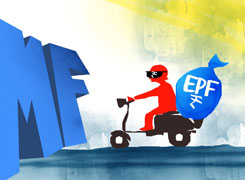
I worked with American Express for 17 years . I want to know about EPFO . Is it different from PF or both are same ?? I did withdraw my PF but if EPFO is different from PF ... I want to know the process to withdraw the funds from EPFO and how we calculate and how much it be approximately
Ans: It’s great that you are thinking about your EPF and retirement savings.
Many working professionals get confused between PF and EPFO.
Let’s clear this step-by-step and cover everything you need to know.
? EPF and EPFO: What is the difference?
– EPF stands for Employees’ Provident Fund.
– EPFO stands for Employees’ Provident Fund Organisation.
– EPF is the actual retirement fund.
– EPFO is the government body that manages this fund.
– Think of EPF as your money.
– EPFO is the platform where it is held and managed.
– So both are connected but not the same thing.
– EPFO is like the bank, EPF is your savings in it.
? Is PF and EPF the same?
– Yes, in common use, PF and EPF usually mean the same thing.
– PF is a general term. EPF is the specific name under EPFO rules.
– If you had an EPF account, it was managed by EPFO.
– Some companies maintain PF privately, called exempted trusts.
– In such cases, EPFO does not directly manage your money.
– But if you were in a regular EPF account, it was with EPFO.
? You withdrew your PF: What does that mean?
– If you withdrew your full PF, then EPFO balance would be nil.
– Unless you worked in another company later and started new EPF.
– You can check EPFO passbook online to confirm balance.
– Visit: www.epfindia.gov.in and log in with your UAN.
– If passbook shows zero balance, no money is left.
– But if you had multiple EPF accounts, some balance may remain.
– Many people forget to merge old EPF accounts during job change.
? What if you suspect there’s still EPF balance left?
– Use your UAN (Universal Account Number) to check all EPF records.
– Login to: https://passbook.epfindia.gov.in/MemberPassBook/Login.jsp
– Use UAN and password (linked to your Aadhaar and mobile).
– You’ll see a list of all employers linked to your EPF.
– If balance shows in any account, you can withdraw it.
– If all balances are zero, withdrawal has already happened.
? How to withdraw EPF amount, if still available?
– You can apply online at www.epfindia.gov.in
– First, link your Aadhaar, PAN, and bank with UAN.
– Make sure KYC is complete. Mobile number should be active.
– Go to ‘Online Services’ → ‘Claim (Form-31, 19, 10C)’
– Select reason for withdrawal. Example: retirement, unemployment.
– Fill bank details, upload passbook copy.
– Verify through Aadhaar OTP and submit.
– Usually, amount is credited in 7–15 working days.
? How is the amount calculated?
– Your EPF balance has two parts: employee share and employer share.
– You contribute 12% of basic salary every month.
– Employer also contributes 12%, but some part goes to pension.
– Interest is added every year. Current EPF interest rate is 8.25%.
– The balance keeps growing with compounding interest.
– On withdrawal, you get full employee contribution with interest.
– You also get employer’s share (EPF part only), with interest.
– EPS (pension part) may not be withdrawn if you worked over 10 years.
? What if I worked over 10 years?
– You become eligible for pension under EPS.
– You can’t withdraw EPS corpus, but you can get monthly pension.
– To claim pension after 58, submit Form 10D via employer or EPFO.
? What if you worked less than 10 years?
– Then you can withdraw full EPF and EPS both.
– EPS withdrawal is lower as it earns no interest after exit.
– Use Form 10C to claim EPS amount if eligible.
? How much can I expect approximately?
– If you already withdrew full PF, balance will be zero.
– If not, check the EPF passbook to see the latest balance.
– Amount depends on your basic salary, years of service, and interest.
– For example, if monthly PF was Rs. 5,000 and you worked 10 years,
then rough EPF balance could be Rs. 9–10 lakhs or more, including interest.
– This is just indicative. Check passbook for real value.
? If passbook shows balance but claim fails?
– First, check if your KYC is updated.
– Bank account must be active and in your name.
– Aadhaar, PAN must be linked and verified.
– If UAN is not active, activate it using mobile OTP.
– For errors, raise grievance at: https://epfigms.gov.in/
– You can also visit local EPFO office with Aadhaar and UAN.
– Take employer’s help if claim is not processing.
? Keep these points in mind for EPFO claims
– PAN is needed to avoid higher TDS on early withdrawal.
– If service was less than 5 years, tax may apply on interest.
– After 5 years, withdrawal is fully tax-free.
– Don’t try to withdraw small balances multiple times.
– Instead, merge EPF accounts using UAN during job change.
? If you had multiple PF accounts in past
– Use UAN to link all old EPF numbers.
– Submit transfer request online through EPFO portal.
– This will combine balances in one account.
– Helps in getting correct final corpus and pension eligibility.
? For NRIs or people settled abroad
– You can still withdraw EPF fully.
– Update NRI bank account and KYC.
– Use OTP sent to Aadhaar-linked mobile in India.
– Or give power of attorney to someone in India.
– If mobile is not active, update through Aadhaar service center.
? Do not invest EPF withdrawals into insurance products
– Many people shift this money into traditional insurance plans.
– Avoid ULIPs or endowment policies promising returns and insurance.
– These offer poor liquidity and low post-tax returns.
– If you already invested in LIC or ULIP, consider surrendering.
– Reinvest proceeds in mutual funds through MFD with CFP credential.
– It helps track portfolio and get advice for long-term goals.
? Direct mutual funds may look cheaper but may hurt long term
– You miss professional guidance and risk assessment.
– Mistakes in fund choice, exit timing, or review can cost more.
– Regular plans through CFP-backed MFDs offer ongoing review.
– You get help in rebalancing, fund switch, tax planning.
– This support helps you grow corpus safely and steadily.
– Fees in direct funds may save 0.5–1%,
but wrong decisions can wipe 10–15% easily.
? Index funds are often marketed as easy tools
– But they lack active risk management.
– You ride the full market cycle up and down.
– No exit when valuations are stretched.
– No strategy for smallcap or sector allocation.
– Actively managed funds offer better downside protection.
– Skilled fund managers add value through smart allocation.
– Long term SIPs in quality active funds give more comfort and growth.
? Finally
– If you already withdrew PF, no need to worry.
– If not, check EPFO portal and initiate withdrawal.
– Consolidate all old accounts under one UAN.
– Ensure Aadhaar, PAN, bank and mobile are linked.
– If EPS pension is applicable, plan to claim it post 58.
– Avoid locking EPF money in poor-return products.
– Work with Certified Financial Planner through MFD route for better investing.
– Focus on long term wealth creation, not short-term returns.
Best Regards,
K. Ramalingam, MBA, CFP,
Chief Financial Planner,
www.holisticinvestment.in
https://www.youtube.com/@HolisticInvestment
Many working professionals get confused between PF and EPFO.
Let’s clear this step-by-step and cover everything you need to know.
? EPF and EPFO: What is the difference?
– EPF stands for Employees’ Provident Fund.
– EPFO stands for Employees’ Provident Fund Organisation.
– EPF is the actual retirement fund.
– EPFO is the government body that manages this fund.
– Think of EPF as your money.
– EPFO is the platform where it is held and managed.
– So both are connected but not the same thing.
– EPFO is like the bank, EPF is your savings in it.
? Is PF and EPF the same?
– Yes, in common use, PF and EPF usually mean the same thing.
– PF is a general term. EPF is the specific name under EPFO rules.
– If you had an EPF account, it was managed by EPFO.
– Some companies maintain PF privately, called exempted trusts.
– In such cases, EPFO does not directly manage your money.
– But if you were in a regular EPF account, it was with EPFO.
? You withdrew your PF: What does that mean?
– If you withdrew your full PF, then EPFO balance would be nil.
– Unless you worked in another company later and started new EPF.
– You can check EPFO passbook online to confirm balance.
– Visit: www.epfindia.gov.in and log in with your UAN.
– If passbook shows zero balance, no money is left.
– But if you had multiple EPF accounts, some balance may remain.
– Many people forget to merge old EPF accounts during job change.
? What if you suspect there’s still EPF balance left?
– Use your UAN (Universal Account Number) to check all EPF records.
– Login to: https://passbook.epfindia.gov.in/MemberPassBook/Login.jsp
– Use UAN and password (linked to your Aadhaar and mobile).
– You’ll see a list of all employers linked to your EPF.
– If balance shows in any account, you can withdraw it.
– If all balances are zero, withdrawal has already happened.
? How to withdraw EPF amount, if still available?
– You can apply online at www.epfindia.gov.in
– First, link your Aadhaar, PAN, and bank with UAN.
– Make sure KYC is complete. Mobile number should be active.
– Go to ‘Online Services’ → ‘Claim (Form-31, 19, 10C)’
– Select reason for withdrawal. Example: retirement, unemployment.
– Fill bank details, upload passbook copy.
– Verify through Aadhaar OTP and submit.
– Usually, amount is credited in 7–15 working days.
? How is the amount calculated?
– Your EPF balance has two parts: employee share and employer share.
– You contribute 12% of basic salary every month.
– Employer also contributes 12%, but some part goes to pension.
– Interest is added every year. Current EPF interest rate is 8.25%.
– The balance keeps growing with compounding interest.
– On withdrawal, you get full employee contribution with interest.
– You also get employer’s share (EPF part only), with interest.
– EPS (pension part) may not be withdrawn if you worked over 10 years.
? What if I worked over 10 years?
– You become eligible for pension under EPS.
– You can’t withdraw EPS corpus, but you can get monthly pension.
– To claim pension after 58, submit Form 10D via employer or EPFO.
? What if you worked less than 10 years?
– Then you can withdraw full EPF and EPS both.
– EPS withdrawal is lower as it earns no interest after exit.
– Use Form 10C to claim EPS amount if eligible.
? How much can I expect approximately?
– If you already withdrew full PF, balance will be zero.
– If not, check the EPF passbook to see the latest balance.
– Amount depends on your basic salary, years of service, and interest.
– For example, if monthly PF was Rs. 5,000 and you worked 10 years,
then rough EPF balance could be Rs. 9–10 lakhs or more, including interest.
– This is just indicative. Check passbook for real value.
? If passbook shows balance but claim fails?
– First, check if your KYC is updated.
– Bank account must be active and in your name.
– Aadhaar, PAN must be linked and verified.
– If UAN is not active, activate it using mobile OTP.
– For errors, raise grievance at: https://epfigms.gov.in/
– You can also visit local EPFO office with Aadhaar and UAN.
– Take employer’s help if claim is not processing.
? Keep these points in mind for EPFO claims
– PAN is needed to avoid higher TDS on early withdrawal.
– If service was less than 5 years, tax may apply on interest.
– After 5 years, withdrawal is fully tax-free.
– Don’t try to withdraw small balances multiple times.
– Instead, merge EPF accounts using UAN during job change.
? If you had multiple PF accounts in past
– Use UAN to link all old EPF numbers.
– Submit transfer request online through EPFO portal.
– This will combine balances in one account.
– Helps in getting correct final corpus and pension eligibility.
? For NRIs or people settled abroad
– You can still withdraw EPF fully.
– Update NRI bank account and KYC.
– Use OTP sent to Aadhaar-linked mobile in India.
– Or give power of attorney to someone in India.
– If mobile is not active, update through Aadhaar service center.
? Do not invest EPF withdrawals into insurance products
– Many people shift this money into traditional insurance plans.
– Avoid ULIPs or endowment policies promising returns and insurance.
– These offer poor liquidity and low post-tax returns.
– If you already invested in LIC or ULIP, consider surrendering.
– Reinvest proceeds in mutual funds through MFD with CFP credential.
– It helps track portfolio and get advice for long-term goals.
? Direct mutual funds may look cheaper but may hurt long term
– You miss professional guidance and risk assessment.
– Mistakes in fund choice, exit timing, or review can cost more.
– Regular plans through CFP-backed MFDs offer ongoing review.
– You get help in rebalancing, fund switch, tax planning.
– This support helps you grow corpus safely and steadily.
– Fees in direct funds may save 0.5–1%,
but wrong decisions can wipe 10–15% easily.
? Index funds are often marketed as easy tools
– But they lack active risk management.
– You ride the full market cycle up and down.
– No exit when valuations are stretched.
– No strategy for smallcap or sector allocation.
– Actively managed funds offer better downside protection.
– Skilled fund managers add value through smart allocation.
– Long term SIPs in quality active funds give more comfort and growth.
? Finally
– If you already withdrew PF, no need to worry.
– If not, check EPFO portal and initiate withdrawal.
– Consolidate all old accounts under one UAN.
– Ensure Aadhaar, PAN, bank and mobile are linked.
– If EPS pension is applicable, plan to claim it post 58.
– Avoid locking EPF money in poor-return products.
– Work with Certified Financial Planner through MFD route for better investing.
– Focus on long term wealth creation, not short-term returns.
Best Regards,
K. Ramalingam, MBA, CFP,
Chief Financial Planner,
www.holisticinvestment.in
https://www.youtube.com/@HolisticInvestment
DISCLAIMER: The content of this post by the expert is the personal view of the rediffGURU. Users are advised to pursue the information provided by the rediffGURU only as a source of information to be as a point of reference and to rely on their own judgement when making a decision.
MoneyReply


You may like to see similar questions and answers below

Sanjeev Govila | Answer |Ask -Follow
Financial Planner - Answered on Nov 15, 2023


Milind Vadjikar | Answer |Ask -Follow
Insurance, Stocks, MF, PF Expert - Answered on Oct 06, 2024

Ramalingam Kalirajan |11000 Answers |Ask -Follow
Mutual Funds, Financial Planning Expert - Answered on Jun 03, 2024
Ramalingam Kalirajan |11000 Answers |Ask -Follow
Mutual Funds, Financial Planning Expert - Answered on Jul 17, 2024

Latest Questions

Reetika Sharma |518 Answers |Ask -Follow
Financial Planner, MF and Insurance Expert - Answered on Jan 31, 2026
Asked by Anonymous - Jan 25, 2026Hindi
.jpg "investments-o (2).jpg")
Reetika Sharma |518 Answers |Ask -Follow
Financial Planner, MF and Insurance Expert - Answered on Jan 31, 2026

Reetika Sharma |518 Answers |Ask -Follow
Financial Planner, MF and Insurance Expert - Answered on Jan 31, 2026



Radheshyam Zanwar |6792 Answers |Ask -Follow
MHT-CET, IIT-JEE, NEET-UG Expert - Answered on Jan 31, 2026


Ramalingam Kalirajan |11000 Answers |Ask -Follow
Mutual Funds, Financial Planning Expert - Answered on Jan 30, 2026



Mihir Tanna |1094 Answers |Ask -Follow
Tax Expert - Answered on Jan 30, 2026


Dr Nagarajan J S K |2601 Answers |Ask -Follow
NEET, Medical, Pharmacy Careers - Answered on Jan 30, 2026



Patrick Dsouza |1441 Answers |Ask -Follow
CAT, XAT, CMAT, CET Expert - Answered on Jan 30, 2026


Patrick Dsouza |1441 Answers |Ask -Follow
CAT, XAT, CMAT, CET Expert - Answered on Jan 30, 2026


Dr Nagarajan J S K |2601 Answers |Ask -Follow
NEET, Medical, Pharmacy Careers - Answered on Jan 30, 2026