Home > Money > Question
Need Expert Advice?Our Gurus Can Help
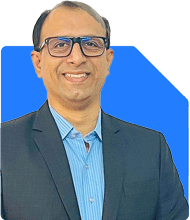
Mahesh

Mahesh Padmanabhan  | Answer  |Ask -

Tax Expert - Answered on Apr 06, 2023

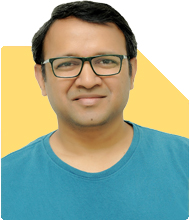
Mahesh Padmanabhan has specialised in payroll, personal and corporate taxation for more than two and a half decades, enabling him to provide practical, realistic and correct advice to his clients.
He is a member of The Institute of Chartered Accountants of India and has a degree in cost accounting from the Institute of Cost Accountants of India.
He is also a qualified information systems auditor. ... more

Rajeev Question by Rajeev on Apr 05, 2023Hindi

Listen
Money

Sir I am in a temperory govt job and recieving a salary around 75k per month..since 5 months i didn't recieve salary due to some technical problem and now they are planning to pay me whole amount in financial year 2024..due to this my slab will change from 20%to 30% and i need to pay more tax without any salary hike..can you suggest some solution for that..

Ans: Hi Rajeev
Salary is taxable on receipt or due basis, whichever is earlier. Hence technically you are liable to be taxed for the salary in the year it was due to be received regardless of the fact that it was not actually paid to you.

In case you do not have any other source of income, this 5 months salary would not attract any tax under either of the tax regimes so you could go ahead disclose this income in the current year and not in 2024
DISCLAIMER: The content of this post by the expert is the personal view of the rediffGURU. Users are advised to pursue the information provided by the rediffGURU only as a source of information to be as a point of reference and to rely on their own judgement when making a decision.
Money

You may like to see similar questions and answers below
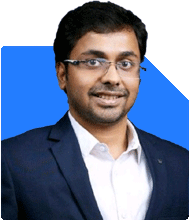
Ramalingam

Ramalingam Kalirajan  |10894 Answers  |Ask -

Mutual Funds, Financial Planning Expert - Answered on Aug 14, 2024

Money
Good morning Anil sir, I am a salaried person having a gross salary of Rs. 11,15,652 per annum. I am to ask you for a better tax regime for the financial year 2024-25. How much am I supposed to pay tax? Also sir, my service period is only 6 years left. I have invested some money in LICs and FDs aggregating almost of Rs. 15,00,000. I am also running with a PO Recurring deposit of Rs. 8,500 per month for 5 years tenure. In case I want a regular income of Rs. 25,000 after my retirement, what additional amount am I supposed to invest and in what areas? Please suggest.
Ans: Your gross salary of Rs 11,15,652 per annum puts you in a comfortable financial position. With only six years left until retirement, planning for both tax efficiency and post-retirement income is crucial. You have already invested Rs 15 lakhs in LIC policies and FDs, along with a PO Recurring Deposit of Rs 8,500 per month. These are conservative investment options, which provide stability but may not be enough to meet your post-retirement income needs.

Evaluating Tax Regimes for 2024-25
Choosing between the old and new tax regimes depends on your existing deductions and exemptions. The old regime allows for deductions under Section 80C, 80D, and others, which can lower your taxable income. The new regime offers lower tax rates but eliminates most deductions.

Points to Consider:

Old Tax Regime: If you claim significant deductions like HRA, 80C (up to Rs 1.5 lakhs), and 80D (health insurance premiums), the old regime may be beneficial.

New Tax Regime: If you don’t have substantial deductions or prefer a simplified process, the new regime with lower rates could be advantageous.

Estimating Your Tax Liability
Without specific details on your deductions, a rough estimate of your tax liability under both regimes can be considered. Here's a basic idea:

Old Tax Regime:

Income after Standard Deduction: Rs 10,65,652 (assuming Rs 50,000 standard deduction)
Deductions: If you claim Rs 1.5 lakhs under 80C, your taxable income would be Rs 9,15,652.
New Tax Regime:

Taxable Income: Rs 10,65,652 without additional deductions.
Given these estimates, it’s essential to calculate the exact tax based on your actual deductions.

Post-Retirement Income Planning
You aim to have a regular income of Rs 25,000 per month after retirement. To achieve this, you need to consider both the amount required and the investment avenues that will help you reach your goal.

Current Investments:

LIC and FDs: These are safe but offer lower returns. While they provide security, they may not be sufficient to generate Rs 25,000 per month.
PO Recurring Deposit: A good disciplined saving habit, but again, the returns are limited.
Creating a Retirement Corpus
To generate Rs 25,000 per month, you’ll need a substantial corpus. Assuming a conservative withdrawal rate of 4% per annum, the required corpus would be approximately Rs 75 lakhs.

Steps to Take:

Increase Equity Exposure: Since your current investments are conservative, consider adding equity mutual funds to your portfolio. Equity can provide higher returns, which are crucial for building a larger retirement corpus.

Systematic Investment Plans (SIPs): Start SIPs in diversified equity mutual funds. This will allow you to benefit from rupee cost averaging and compounding over the next six years.

Balanced Approach: Consider a mix of equity and debt funds. While equity will drive growth, debt funds will add stability to your portfolio.

Disadvantages of Direct and Index Funds
When considering mutual funds, it’s important to understand the drawbacks of direct and index funds.

Direct Funds:

No Professional Guidance: Investing directly without a Certified Financial Planner's guidance can be risky. Regular funds offer professional management and support.

Complex Decision Making: Selecting the right funds, rebalancing, and timely switches require expertise.

Index Funds:

Limited Growth Potential: Index funds simply replicate the market. They don’t offer the opportunity to outperform, which is vital for long-term growth.

No Active Management: In changing market conditions, index funds can’t adapt, leading to missed opportunities.

Investing for Regular Post-Retirement Income
To achieve your goal of Rs 25,000 per month, you need to strategically invest the additional amount required.

Options to Consider:

Systematic Withdrawal Plan (SWP): Invest in a balanced fund and opt for an SWP. This will allow you to withdraw a fixed amount regularly while the remaining investment continues to grow.

Dividend-Paying Funds: Consider funds that provide regular dividends. Though not guaranteed, they can be a source of regular income.

Debt Funds: Allocate a portion to debt funds for stability. These funds can provide steady returns, adding a cushion to your income stream.

Final Insights
With six years left before retirement, focusing on building a balanced and growth-oriented portfolio is key. Increase your equity exposure through SIPs, consider the advantages of regular mutual funds over direct and index funds, and strategically plan for a regular income stream post-retirement. By carefully choosing your tax regime and aligning your investments with your retirement goals, you can achieve financial security in your golden years.

Best Regards,

K. Ramalingam, MBA, CFP

Chief Financial Planner

www.holisticinvestment.in

..Read more

Latest Questions
Nayagam P

Nayagam P P  |10858 Answers  |Ask -

Career Counsellor - Answered on Dec 16, 2025

Asked by Anonymous - Dec 13, 2025Hindi
Career
Hello sir I have literally confused between which university to pick if not good marks in mht cet Like sit Pune or srm college or rvce or Bennett as I am planning to study here bachelors and masters in abroad so is it better to choose a government college which coep and them if I get them my home college which Kolhapur institute of technology what should I choose a good university? If yes than which
Ans: Based on my extensive research of official college websites, NIRF rankings, international recognition metrics, placement data, and masters abroad admission requirements, your choice between COEP Pune, RVCE Bangalore, SRM Chennai, Bennett University Delhi, and Kolhapur Institute of Technology (KIT) fundamentally depends on five critical institutional aspects essential for successful masters admission abroad: global research output and international collaborations, CGPA-based competitiveness (minimum 7.5-8.0 required for top international programs), faculty expertise in emerging technologies, international student exchange partnerships, and proven alumni track records at globally-ranked universities. COEP Pune ranks nationally at NIRF #90 Engineering with India Today #14 Government Category ranking, offering robust infrastructure and 11 academic departments with research centers in AI and renewable energy, though international research collaborations are moderate compared to IITs. RVCE Bangalore demonstrates strong national standing with consistent COMEDK admissions competitiveness, excellent placements averaging Rs.35 LPA with highest at Rs.92 LPA, and established international collaborations through Karnataka PGCET-based MTech programs, providing solid foundations for masters applications. SRM Chennai maintains extensive research partnerships with 100+ companies visiting campus, highest packages reaching Rs.65 LPA, and documented international research linkages through sponsored programs like Newton Bhaba funded projects, significantly strengthening masters abroad candidacy through diverse research exposure. Bennett University Delhi distinctly outperforms others in international institutional alignment, recording highest placements at Rs.137 LPA with average Rs.11.10 LPA, explicit academic collaborations with University of British Columbia Canada, Florida International University USA, University of Nebraska Omaha, University of Essex England, and King's University College Canada—these partnerships directly facilitate seamless masters transitions abroad and represent unparalleled institutional bridges to international graduate programs. KIT Kolhapur records respectable placements at Rs.41 LPA highest with average Rs.6.5 LPA, NAAC A+ accreditation, autonomous institutional status under Shivaji University, and 90%+ placement consistency across technical streams, though international research visibility and foreign university partnerships remain comparatively limited. For international masters admission success, universities globally prioritize bachelors institution reputation, minimum CGPA 7.5-8.0 (Bennett and SRM facilitate this through curriculum rigor), GRE/GATE scores (minimum 90 percentile), English proficiency (TOEFL ≥75 or IELTS ≥6.5), research output documentation, and faculty recommendation quality reflecting institution's research culture—criteria most strongly supported by Bennett's explicit international collaborations, SRM's documented research partnerships, and COEP's autonomous departmental research centers. Bennett simultaneously offers global pathway programs reducing masters abroad costs through articulation agreements and provides curriculum aligned internationally with partner institution standards, representing optimal intermediate bridge structure versus direct masters application. The cost-effectiveness and structured transition support through international partnerships, combined with demonstrated placement success and faculty research visibility, position these institutions distinctly above KIT Kolhapur for masters abroad aspirations. For your specific objective of pursuing masters abroad, prioritize Bennett University Delhi first—its explicit international university partnerships with Canadian, American, and European institutions, highest placement packages (Rs.137 LPA), and structured global pathway programs create seamless masters transitions with reduced costs. Second choice: SRM Chennai, offering extensive research collaborations, documented international linkages, and competitive placements (Rs.65 LPA highest) strengthening masters applications. Third: COEP Pune, delivering strong national standing and autonomous research infrastructure. Avoid RVCE and KIT due to limited international visibility and explicit foreign university partnerships compared to the above three institutions. All the BEST for a Prosperous Future!

Follow RediffGURUS to Know More on 'Careers | Money | Health | Relationships'.

...Read more

DISCLAIMER: The content of this post by the expert is the personal view of the rediffGURU. Investment in securities market are subject to market risks. Read all the related document carefully before investing. The securities quoted are for illustration only and are not recommendatory. Users are advised to pursue the information provided by the rediffGURU only as a source of information and as a point of reference and to rely on their own judgement when making a decision. RediffGURUS is an intermediary as per India's Information Technology Act.

Close  

You haven't logged in yet. To ask a question, Please Log in below
Login

A verification OTP will be sent to this
Mobile Number / Email

Enter OTP
A 6 digit code has been sent to

Resend OTP in120seconds

Dear User, You have not registered yet. Please register by filling the fields below to get expert answers from our Gurus
Sign up

By signing up, you agree to our
Terms & Conditions and Privacy Policy

Already have an account?

Enter OTP
A 6 digit code has been sent to Mobile

Resend OTP in120seconds

x