Home > Money > Question
Need Expert Advice?Our Gurus Can Help

Sanjeev

Sanjeev Govila  | Answer  |Ask -

Financial Planner - Answered on Mar 28, 2024

Colonel Sanjeev Govila (retd) is the founder of Hum Fauji Initiatives, a financial planning company dedicated to the armed forces personnel and their families.
He has over 12 years of experience in financial planning and is a SEBI certified registered investment advisor; he is also accredited with AMFI and IRDA.... more

Sumeet Question by Sumeet on Mar 14, 2024Hindi

Listen
Money

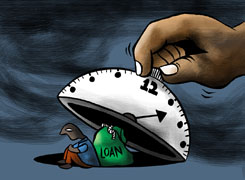
I was running a bussiness from last seven year with my brother we had dispute and due to financial crisis i was unable to pay my credit card bill and loan amount. Due to this from last 2 years i am unable to file IT return and this year its the 3rd, what should i do

Ans: If you're facing legal issues related to your business dispute, it may be helpful to consult with a lawyer who specializes in business or financial law. They can provide guidance on your rights and options.
Prioritize your debts based on factors such as interest rates and consequences of non-payment. Focus on paying off high-interest debts first while making minimum payments on others.

It is important to file your tax returns. Failing to file can result in penalties and interest charges. It is advisable to seek guidance from an income tax professional who can provide you a personal solution.
DISCLAIMER: The content of this post by the expert is the personal view of the rediffGURU. Users are advised to pursue the information provided by the rediffGURU only as a source of information to be as a point of reference and to rely on their own judgement when making a decision.
Money

You may like to see similar questions and answers below

Ramalingam

Ramalingam Kalirajan  |10881 Answers  |Ask -

Mutual Funds, Financial Planning Expert - Answered on Oct 23, 2024

Money
I took a flat last year and at that time my business was running nicely but soon i ran into losses and forcefully i closed my busines and from april 2024 i have no work and very less capital,i have to pay emi and my kids school fees and other expenses which is amounting to 1lakh every month idk how should i come out of this
Ans: You’re facing a challenging situation right now, with no income, high monthly expenses, and financial commitments like EMI and your children’s education. Let’s break down possible steps you can take to regain control of your finances.

Prioritize Your Expenses
EMI and Essential Bills: Your home loan EMI and your children's school fees are non-negotiable expenses. These should be your top priority.

Other Monthly Expenses: Review your household spending. Identify any discretionary expenses that can be cut down. Reducing non-essential spending temporarily can free up some money for necessary payments.

Family Support: If possible, consider seeking short-term financial support from family members. This can help you bridge the gap during this critical period.

Utilize Your Existing Assets
1. Liquidate a Portion of Your Fixed Deposits
You have Rs. 1.5 crore in fixed deposits. This is a significant sum. You could consider breaking a portion of these FDs to meet your immediate needs. While breaking an FD may result in a loss of interest, it will provide the liquidity needed to manage your expenses.

Action Step: Break only the amount you need for 6 months to a year of expenses. This will give you breathing space and reduce financial stress while you find new sources of income.
2. Leverage Your Mutual Fund Investments
You have Rs. 40 lakhs in mutual funds. You might consider redeeming a portion of this to create a cash buffer.

Action Step: Withdraw from the mutual funds that have performed well and where you can incur the least loss due to market conditions. Ensure you leave some investments intact for long-term growth.
3. Emergency Loan Against Investments
Instead of redeeming your mutual funds or fixed deposits, you can explore taking a loan against them. Many banks offer loans against mutual funds or fixed deposits at reasonable interest rates.

Action Step: Taking a loan against your investments will allow you to get liquidity without selling your assets. This can help manage the cash crunch without disturbing long-term savings.
Plan for Income Generation
1. Temporary or Freelance Work
While you may be facing difficulty with your business, consider temporary or freelance work that matches your skillset. Look into short-term projects or consultancy opportunities that can provide you with an immediate source of income.

Action Step: Update your network and look for opportunities that match your expertise, even if they are not as lucrative as your business used to be. A steady income will help you meet your EMI and household expenses.
2. Rent Out Part of Your Flat
If your flat is large or you have extra space, consider renting out a part of it. This can provide a steady stream of income.

Action Step: Explore if there is a demand for rental housing in your area. This could help generate monthly cash flow without you needing to sell any assets.
EMI Restructuring
1. Negotiate with Your Bank
Given your current financial hardship, you can approach your bank for EMI restructuring or loan moratorium. Many banks offer relief in terms of reducing the EMI amount or extending the loan tenure for customers facing financial difficulties.

Action Step: Speak to your bank about your situation. Ask for a moratorium on EMI payments for a few months or request a temporary reduction in EMI amounts.
2. Consider Refinancing Your Home Loan
Another option is to explore home loan refinancing. Refinancing could reduce your EMI burden by securing a lower interest rate.

Action Step: Contact your bank or other financial institutions to explore whether you can refinance the loan at a lower rate.
Education Fee Management
1. Request for School Fee Payment Flexibility
If paying the school fees in one go is challenging, approach your children’s school and explain your situation. Many schools are open to payment plans where fees can be paid in installments.

Action Step: Talk to the school administration about the possibility of extending fee payments or reducing the amount temporarily based on your financial situation.
Focus on Emotional Well-being
This period can be emotionally draining, especially with the pressure of meeting financial obligations. It’s important to stay positive and seek support from family and friends during this tough time. Sometimes sharing the burden with trusted people can help you think more clearly.

Final Insights
You have several options to manage this financial crunch:

Use existing assets: Liquidate or borrow against your fixed deposits and mutual funds.

Look for income: Explore temporary work or renting out part of your property for additional income.

Reduce EMI burden: Negotiate with your bank for EMI relief, and consider refinancing your home loan.

Communicate with the school: Request flexibility in fee payments.

Stay focused and take it step by step. With the right approach, you will be able to manage these challenges and regain financial stability.

Best Regards,
K. Ramalingam, MBA, CFP,
Chief Financial Planner,
www.holisticinvestment.in
https://www.youtube.com/@HolisticInvestment

..Read more

Ramalingam

Ramalingam Kalirajan  |10881 Answers  |Ask -

Mutual Funds, Financial Planning Expert - Answered on Jul 10, 2025

Asked by Anonymous - Jul 04, 2025Hindi
Money
Hi I am 33 years old have a kid 2 year old. Me and my brother are in the same business. Its a seasonal business of stoles and kurtis. We mostly do job work. Turnover is around 1.25Cr and emis are 1.5L per month. We both arent able to save any money. We are always broke. If we check on paper we are making prifit but we dont where the money is going. Been doing business for 10 years now. Things were smooth till covid but after that its been downhill. I have orders. But no return. What should I do?
Ans: Running a family business with seasonal income is tough.
You’re 33, have a 2-year-old child, and handle business with your brother.
Turnover is Rs 1.25 crore yearly, but you’re still struggling with cash.
EMIs are Rs 1.5 lakh monthly, but you feel broke every month.
Though you’re making profit on paper, there’s no visible cash return.

This is a common problem in many small businesses.
Let’s now understand and restructure it with a 360-degree approach.

Know the Real Problem First
Your business shows profit but no cash.
This is a cash flow issue, not just profit issue.

Possible reasons:

Customers not paying on time

Too much money stuck in inventory

High credit to customers

Low margin despite high turnover

High fixed costs and personal withdrawals

EMI outflows not synced with income

You need to separate profit from cash flow.
And build control over every rupee.

First Fix: Separate Personal and Business Money
You and your brother must stop mixing accounts.

Have separate bank accounts

One for business, one for personal

Pay yourself a fixed salary monthly

Avoid direct personal spending from business

This step brings clarity.
You’ll see clearly how much money the business truly keeps.

Second Fix: Create a Business Budget
Don’t run operations without numbers.

List fixed monthly expenses: rent, salaries, EMI, utilities

Mark out seasonal expenses like fabric or transport

Track peak and lean months

Allocate money month by month

Break your Rs 1.25 crore into monthly inflow plan

This helps avoid surprises.
Also helps plan purchase and credit well.

Understand Where the Money Is Going
Do a 12-month cash flow audit.

You’ll see:

Where cash comes in

Where it goes out

How much is stuck in stocks

How much is with customers

What EMIs or interest is eating your profit

Most likely, your profit is going into inventory and credit.

Set Strict Customer Payment Rules
In seasonal business, timely customer payments matter most.

Don’t give credit without timeline

Offer small discounts for early payments

Keep payment follow-up strict and regular

Use digital tools to track pending invoices

If customers pay late, your entire cycle collapses.
Your money is in their hands, not yours.

Review Your EMI and Loan Structure
Rs 1.5 lakh monthly EMI is very heavy.
Ask these questions:

Can you refinance to longer term?

Can you get working capital loan instead?

Are you using EMI money for capital asset or daily expense?

Are you servicing loans from personal savings?

Many times, business loans taken emotionally create long-term stress.
Structure them clearly with a planner.

Inventory Is Silent Enemy
Clothes, fabrics, stoles, and kurtis pile up fast.

Too much stock locks up cash

You see profits in books, but cash is stuck in goods

Unsold stock hurts margins

Do an inventory health check:

What sells fast?

What sits for months?

Which items give real profit?

What designs are dead stock?

Don’t buy new stock unless old one sells.
Work on a lean inventory model.
Move from stock-based to order-based model if possible.

Take Salary Like an Employee
You and your brother must draw regular salary.

Fix monthly salary for each

It brings discipline and fairness

Avoids emotional withdrawals

Ensures business pays you—not drains you

Any bonus or profit should be once a year. Not random.

Cut Personal Lifestyle Leakage
If personal expenses are high, business suffers.

List all personal outflows

Reduce wasteful lifestyle habits

Live like a salaried person

Don’t increase lifestyle when sales go up

Also avoid using business credit for personal gadgets, trips, or loans.

Work on Increasing Margins, Not Just Sales
Turnover is Rs 1.25 crore. That sounds big.
But if margins are thin, you get no benefit.

Focus on:

Higher margin products

Value-added work (like custom orders)

Bulk orders that pay upfront

Lowering costs through better suppliers

Don’t run after more orders blindly.
Run after profitable and paid orders only.

Introduce a Basic Accounting System
If not using one, adopt digital books.

Tally, Zoho Books, QuickBooks, or Marg software

Track income, expenses, stock, and customer dues

Reconcile bank accounts every month

Even better, hire a part-time bookkeeper.
Let numbers guide you—not gut feeling.

Create a Business Emergency Fund
Businesses also need a buffer. Like personal savings.

Try to build Rs 3–5 lakh in business reserve

It should sit in separate account

Don’t touch it for stock or expenses

Use only in real emergency

This gives peace and protects business during slow months.

Engage with a Certified Financial Planner
You’re in business.
But personal finances matter too.

A Certified Financial Planner helps with salary planning

Helps set up your SIPs, retirement, kid’s education fund

Can also structure loans better

Gives you a business-personal plan

Your future needs a balance between business and personal wealth.

Don’t Use Index Funds or Direct Funds Now
If you’re thinking of investing:

Avoid index funds – no protection during crash

Avoid direct mutual funds – no advisor support

You’re already busy with business

You need a regular plan via a CFP-backed MFD

That brings discipline and guidance

Right now, clearing business mess is priority.
Then start small SIPs through professional support.

Simple Steps to Start From This Week
Open separate business and personal accounts

Track all money in and out for next 30 days

Speak to CA about EMI or loan restructuring

Do stock check – list what’s moving, what’s not

Start Rs 5,000 monthly SIP with planner, if possible

Fix personal salary for both you and brother

Build Rs 1 lakh cash reserve in 6 months

Start with action. Not emotion.

Finally
You’re not alone. Many small business owners are in the same trap.
You’ve been working for 10 years. That shows strength.
Now it’s time to bring structure. Discipline. Clarity.

With small changes and a monthly plan, things can improve.

Remember: turnover means nothing without cash in hand.
Run your business with control. Live your personal life with goals.
Keep them separate. And give your family a future of freedom.

Best Regards,
K. Ramalingam, MBA, CFP,
Chief Financial Planner,
www.holisticinvestment.in
https://www.youtube.com/@HolisticInvestment

..Read more

Latest Questions
Nayagam P

Nayagam P P  |10854 Answers  |Ask -

Career Counsellor - Answered on Dec 14, 2025

Asked by Anonymous - Dec 12, 2025Hindi
Career
Hello, I am currently in Class 12 and preparing for JEE. I have not yet completed even 50% of the syllabus properly, but I aim to score around '110' marks. Could you suggest an effective strategy to achieve this? I know the target is relatively low, but I have category reservation, so it should be sufficient.
Ans: With category reservation (SC/ST/OBC), a score of 110 marks is absolutely achievable and realistic. Based on 2025 data, SC candidates qualified with approximately 60-65 percentile, and ST candidates with 45-55 percentile. Your target requires scoring just 37-40% marks, which is significantly lower than general category standards. This gives you a genuine advantage. Immediate Action Plan (December 2025 - January 2026): 4-5 Weeks. Week 1-2: High-Weightage Chapter Focus. Stop trying to complete the entire syllabus. Instead, focus exclusively on high-scoring chapters that carry maximum weightage: Physics (Modern Physics, Current Electricity, Work-Power-Energy, Rotation, Magnetism), Chemistry (Chemical Bonding, Thermodynamics, Coordination Compounds, Electrochemistry), and Maths (Integration, Differentiation, Vectors, 3D Geometry, Probability). These chapters alone can yield 80-100+ marks if practiced properly. Ignore topics you haven't studied yet. Week 2-3: Previous Year Questions (PYQs). Solve JEE Main PYQs from the last 10 years (2015-2025) for chapters you're studying. PYQs reveal question patterns and difficulty levels. Focus on understanding why answers are correct, not memorizing solutions. Week 3-4: Mock Tests & Error Analysis. Take 2-3 full-length mock tests weekly under timed conditions. This is crucial because mock tests build exam confidence, reveal time management weaknesses, and error analysis prevents repeated mistakes. Maintain an error notebook documenting every mistake—this becomes your revision guide. Week 4-5: Revision & Formula Consolidation. Create concise formula sheets for each subject. Spend 30 minutes daily reviewing formulas and key concepts. Avoid learning new topics entirely at this stage. Study Schedule (Daily): 7-8 Hours. Morning (5:00-7:30 AM): Physics concepts + 30 PYQs. Break (7:30-8:30 AM): Breakfast & rest. Mid-morning (8:30-11:00): Chemistry concepts + 20 PYQs. Lunch (11:00-1:00 PM): Full break. Afternoon (1:00-3:30 PM): Maths concepts + 30 PYQs. Evening (3:30-5:00 PM): Mock test or error review. Night (7:00-9:00 PM): Formula revision & weak area focus. Strategic Approach for 110 Marks: Attempt only confident questions and avoid negative marking by skipping difficult questions. Do easy questions first—in the exam, attempt all basic-level questions before attempting medium or hard ones. Focus on quality over quantity as 30 well-practiced questions beat 100 random questions. Master NCERT concepts as most JEE questions test NCERT concepts applied smartly. April 2026 Session Advantage. If January doesn't deliver desired results, April gives you a second chance with 3+ months to prepare. Use January as a practice attempt to identify weak areas, then focus intensively on those in February-March. Realistic Timeline: January 2026 target is 95-110 marks (achievable with focused 50% syllabus), while April 2026 target is 120-130 marks (with complete syllabus + experience). Your reservation benefit means you need only approximately 90-105 marks to qualify and secure admission to quality engineering colleges. Stop comparing yourself to general category cutoffs. Most Importantly: Consistency beats perfection. Study 6 focused hours daily rather than 12 distracted hours. Your 110-mark target is realistic—execute this plan with discipline. All the BEST for Your JEE 2026!

Follow RediffGURUS to Know More on 'Careers | Money | Health | Relationships'.

...Read more

Dr Dipankar

Dr Dipankar Dutta  |1840 Answers  |Ask -

Tech Careers and Skill Development Expert - Answered on Dec 13, 2025

Asked by Anonymous - Dec 12, 2025
Career
Dear Sir/Madam, I am currently a 1st year UG student studying engineering in Sairam Engineering College, But there the lack of exposure and strict academics feels so rigid and I don't like it that. It's like they don't gaf about skills but just wants us to memorize things and score a good CGPA, the only skill they want is you to memorize things and pass, there's even special class for students who don't perform well in academics and it is compulsory for them to attend or else the student and his/her parents needs to face authorities who lashes out. My question is when did engineering became something that requires good academics instead of actual learning and skill set. In sairam they provides us a coding platform in which we need to gain the required points for each semester which is ridiculous cuz most of the students here just look at the solution to code instead of actual debugging. I am passionate about engineering so I want to learn and experiment things instead of just memorizing, so I actually consider dropping out and I want to give jee a try and maybe viteee , srmjeee But i heard some people say SRM may provide exposure but not that good in placements. I may not be excellent at studies but my marks are decent. So gimme some insights about SRM and recommend me other colleges/universities which are good at exposure
Ans: First — your frustration is valid

What you are experiencing at Sairam is not engineering, it is rote-based credential production.

“When did engineering become memorizing instead of learning?”

Sadly, this shift happened decades ago in most Tier-3 private colleges in India.

About “coding platforms & points” – your observation is sharp

You are absolutely right:

Mandatory coding points → students copy solutions

Copying ≠ learning

Debugging & thinking are missing

This is pseudo-skill education — it looks modern but produces shallow engineers.

The fact that you noticed this in 1st year already puts you ahead of 80% students.

Should you DROP OUT and prepare for JEE / VITEEE / SRMJEEE?

Although VIT/SRM is better than Sairam Engineering College, but you may face the same problem. You will not face this type of problem only in some top IITs, but getting seat in those IITs will be difficult.
Instead of dropping immediately, consider:

???? Strategy:

Stay enrolled (degree security)

Reduce emotional investment in college rules

Use:

GitHub

Open-source projects

Hackathons

Internships (remote)

Hardware / software self-projects

This way:

College = formality

Learning = self-driven

Risk = minimal

...Read more

DISCLAIMER: The content of this post by the expert is the personal view of the rediffGURU. Investment in securities market are subject to market risks. Read all the related document carefully before investing. The securities quoted are for illustration only and are not recommendatory. Users are advised to pursue the information provided by the rediffGURU only as a source of information and as a point of reference and to rely on their own judgement when making a decision. RediffGURUS is an intermediary as per India's Information Technology Act.

Close  

You haven't logged in yet. To ask a question, Please Log in below
Login

A verification OTP will be sent to this
Mobile Number / Email

Enter OTP
A 6 digit code has been sent to

Resend OTP in120seconds

Dear User, You have not registered yet. Please register by filling the fields below to get expert answers from our Gurus
Sign up

By signing up, you agree to our
Terms & Conditions and Privacy Policy

Already have an account?

Enter OTP
A 6 digit code has been sent to Mobile

Resend OTP in120seconds

x