Home > Money > Question
Need Expert Advice?Our Gurus Can Help
Reetika

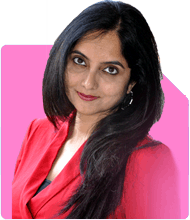
Reetika Sharma  |626 Answers  |Ask -

Financial Planner, MF and Insurance Expert - Answered on Sep 10, 2025

Reetika Sharma is a certified financial planner and CEO of F-Secure Solutions.
She advises clients about investments, insurance, tax and estate planning and manages high net-worth individual’s portfolios.
Reetika has an MBA in finance from the Institute of Chartered Financial Analysts of India (ICFAI) and an engineer degree from NIT, Jalandhar.
She also holds certifications from the Financial Planning Standards Board India (FPSB), Association of Mutual Funds in India (AMFI) and Insurance Regulatory and Development Authority of India (IRDAI).... more

deepa Question by deepa on Aug 06, 2025Hindi
Money

Dear Patel Sir, I am 60 yrs old and just retired with no EMI, no commitment and no pension also. I have per month expense of 200,000 INR/month which needs to planeed wtih te following corpus : a) MF and Shares of value 96,00,000 as on date. I take 20 K per month from this on SWP B) FDs in banks of value 200,000,00 INR and take quarterly interest payout @ 7% C) Have PPF of 17,00,000 where no action d) ULIP of 18,00,000 where I am not taking anything e) Gets 18000 per month from rent out property f) PF of 84,00,000 so far and not taking interest out. I do still lack the target 200,000 INR per month. Please advise where the best place is to withdraw.

Ans: Hi,

Congratulations on your retirement. You have saved quite a good amount over different products.
It does look very scattered to me and needs a thorough study.

I can tell you that your monthly requirement of Rs. 2 lakhs can be easily taken care of from all these if used judiciously.
And it can all last for lifetime and your kids can also get a great inheritance.

Kindly get in touch with a Certified Financial Planner - a CFP who can guide you with exact instruments to keep your funds in to meet your monthly requirements keeping in mind your goals and risk profile.

Best Regards,
Reetika Sharma, Certified Financial Planner
https://www.instagram.com/cfpreetika/
DISCLAIMER: The content of this post by the expert is the personal view of the rediffGURU. Users are advised to pursue the information provided by the rediffGURU only as a source of information to be as a point of reference and to rely on their own judgement when making a decision.
Money

You may like to see similar questions and answers below

Ramalingam

Ramalingam Kalirajan  |11135 Answers  |Ask -

Mutual Funds, Financial Planning Expert - Answered on Aug 28, 2025

Money
Dear Sir I have just retired and have no EMI or loan liability. I have an investment of SIP @ 60,000 INR/month which has accumulated to 80,00,000 where XIRR of total portfolio is 16% I have PPF accumulated to 15,00,000 and PF of around 8300,000 INR. Further I have FDs of 2,50,00,000 INR in various banks on quartely payout mode. I have an Health insurance of 10,00,000 INR I have 16,00,000 INR in RBI Bonds. Please do advise how can I get 200,000 per month for my living expenses. Please suggest if SWP can be done @ 15% or else. Look forward your advice
Ans: Your retirement planning is impressive. You have built a strong base. You are debt-free. That gives you flexibility. You also have multiple assets like mutual funds, PPF, PF, FDs, and RBI Bonds. This provides stability and diversification. Many retirees struggle, but you have managed well.

» Understanding Your Income Requirement
You need Rs. 2,00,000 per month for living expenses. That equals Rs. 24 lakh per year. Your total investments are close to Rs. 4.4 crore. This includes mutual funds (Rs. 80 lakh), PPF (Rs. 15 lakh), PF (Rs. 83 lakh), FDs (Rs. 2.5 crore), and RBI Bonds (Rs. 16 lakh). The requirement is around 5.4% of your corpus yearly. This is reasonable if planned well.

» Assessing Current Income Streams
Your FDs already generate quarterly payouts. At a 6.5% average rate, Rs. 2.5 crore in FDs will give around Rs. 16.25 lakh annually. That means around Rs. 1.35 lakh per month. RBI Bonds may give 7.75% interest, adding about Rs. 1.2 lakh yearly. That is Rs. 10,000 monthly. So, from FDs and Bonds, you already get about Rs. 1.45 lakh monthly. That covers 72% of your requirement. You need an extra Rs. 55,000 monthly. This gap can be filled without disturbing capital aggressively.

» Can SWP at 15% Work?
A 15% SWP from mutual funds is very risky. It will erode capital fast. Your mutual funds currently are Rs. 80 lakh. A 15% withdrawal means Rs. 12 lakh annually. That is unsustainable. In 8–9 years, your equity portfolio may vanish if markets underperform. So, 15% SWP is not suitable. Instead, target 6% to 7% yearly withdrawal from equity. That keeps growth and avoids fast depletion.

» Why Conservative Withdrawal is Wise
Markets move in cycles. In retirement, you cannot depend on high-risk withdrawal. A 15% draw is almost double the safe rate. You need long-term stability. A 6% withdrawal gives space for growth and inflation adjustment. So, use mutual funds wisely, not aggressively.

» Allocation Strategy for Regular Income
You should create a structured withdrawal plan. Do not depend on one source. Spread across fixed income and equity. Here’s a practical method:

Maintain emergency fund in savings or liquid fund for one year expenses (Rs. 24 lakh).

Use FD interest and RBI Bonds as primary income sources.

Set up SWP from mutual funds only for the shortfall (Rs. 55,000 monthly).

Keep PPF and PF intact for now. They are safe reserves.

Review FD maturities and renew smartly to higher rates when possible.

» Role of Mutual Funds in Your Plan
Mutual funds can provide inflation-beating returns. Use them for gap funding. Do not withdraw aggressively. Set SWP from hybrid or balanced funds, not pure equity. This will give stability. You may withdraw Rs. 50,000 to Rs. 60,000 monthly from this segment safely. At Rs. 80 lakh, even a 7% withdrawal equals Rs. 5.6 lakh yearly. Combined with interest, this works.

» Inflation Management
Inflation is a silent risk. Your expenses will rise over time. Current FDs and RBI Bonds give fixed payouts. So, in the long run, their value drops. Mutual funds can counter inflation. Keep at least 25% in equity-oriented funds. This keeps your money growing for the next 20 years.

» Tax Efficiency Considerations
SWP from equity funds after one year attracts LTCG at 12.5% beyond Rs. 1.25 lakh per year. That is lower than FD interest taxed at your slab rate. So, equity SWP is more tax-efficient. You can plan withdrawals to minimise tax.

» Why Not Index Funds or Direct Funds
Many think index funds are safe. But index funds only copy the market. They do not protect during crashes. Actively managed funds can beat the market and offer better downside control. Direct funds may seem to save expense ratio. But they lack personal guidance. Regular plans through a Certified Financial Planner with MFD ensure advice and rebalancing. This guidance avoids costly mistakes in retirement.

» Liquidity Planning and Emergency Buffer
Always keep at least one year of expenses liquid. This avoids panic during market falls. Liquid funds or short-term FDs are good. This buffer is crucial before committing to SWP.

» PPF and PF Role
Your PF and PPF are long-term reserves. They are safe and tax-free. Do not withdraw unless needed. They act as your security layer for advanced age.

» Insurance Adequacy
You have Rs. 10 lakh health cover. At retirement age, this may be less. Medical costs rise fast. Explore a top-up health policy. This avoids dipping into investments for hospitalisation.

» How to Achieve Rs. 2 Lakh Monthly Safely
Follow this multi-source strategy:

FD interest + RBI Bonds = Rs. 1.45 lakh per month.

SWP from mutual funds = Rs. 55,000 per month.
This adds to Rs. 2 lakh monthly. Do not touch PF or PPF now. They remain your safety net.

» Risk Management for Next 20 Years
Do not invest everything in debt. Inflation will eat into fixed returns. Keep at least 20–25% in equity funds for growth. Rebalance yearly with the help of a Certified Financial Planner. This ensures your plan stays on track even after 15 years.

» Finally
You are in a very strong position. Your existing assets can easily meet Rs. 2 lakh monthly. You only need careful structuring. Avoid 15% SWP. Stick to 6–7%. Combine FD payouts, RBI Bonds, and equity SWP. Maintain emergency buffer and health cover. Review plan annually for inflation and returns. This will give peace of mind for the next 20 years.

Best Regards,

K. Ramalingam, MBA, CFP,

Chief Financial Planner,

www.holisticinvestment.in

https://www.youtube.com/@HolisticInvestment

..Read more

Ramalingam

Ramalingam Kalirajan  |11135 Answers  |Ask -

Mutual Funds, Financial Planning Expert - Answered on Sep 08, 2025

Money
Dear Hemant Sir, I am 60 yrs old and just retired with no EMI, no commitment and no pension also. I have per month expense of 200,000 INR/month which needs to planeed wtih te following corpus : a) MF and Shares of value 96,00,000 as on date. I take 20 K per month from this on SWP B) FDs in banks of value 200,000,00 INR and take quarterly interest payout @ 7% C) Have PPF of 17,00,000 where no action d) ULIP of 18,00,000 where I am not taking anything e) Gets 18000 per month from rent out property f) PF of 84,00,000 so far and not taking interest out. I do still lack the target 200,000 INR per month. Please advise where the best place is to withdraw.
Ans: You have managed your wealth carefully. Your savings across assets are good. Many retirees of your age face loan burden. You are free from EMI. This is a strong position. Now the task is to make your Rs.2,00,000 monthly need secure and sustainable. Let me explain step by step from a 360-degree view.

» Understanding your monthly shortfall

Your monthly need is Rs.2,00,000.

You already draw Rs.20,000 from mutual fund SWP.

You get Rs.18,000 from rent.

You also earn quarterly interest from fixed deposits.

You are not touching PF interest, PPF or ULIP now.

Still, there is a shortfall compared to your Rs.2,00,000 need.

The goal is to bridge this gap without harming long-term wealth.

» Assessing your mutual funds and shares

You hold Rs.96 lakhs in mutual funds and shares.

SWP of Rs.20,000 monthly is already set up.

This is about 2.5% annual draw, which is safe.

Actively managed funds are better than index funds.

Index funds lack flexibility and research-based risk control.

In retirement, stability is more important than passive tracking.

You may increase SWP carefully, but not too aggressively.

It is better to use mutual fund growth potential for inflation beating.

» Assessing your fixed deposits

Rs.2 crores in FDs with 7% payout is significant.

This alone gives you Rs.35 lakhs yearly, about Rs.8.75 lakhs quarterly.

That equals around Rs.2.9 lakhs per month on average.

This is more than your monthly need of Rs.2 lakhs.

However, FD interest is fully taxable.

So actual post-tax income will reduce.

Hence, FDs can cover a big part of your expenses, but tax impact must be planned.

» Assessing your PPF

Rs.17 lakhs in PPF is good.

PPF is safe, tax-free, and long-term.

You may keep it untouched for later.

It can act as a reserve in case of medical or family need.

» Assessing your ULIP

Rs.18 lakhs in ULIP is less efficient now.

ULIPs carry high costs and low flexibility.

They also don’t provide strong returns after charges.

It is wise to consider surrender of ULIP.

The maturity value or surrender value can be reinvested in mutual funds.

Mutual funds offer transparency, better performance, and more liquidity.

» Assessing your rental income

You receive Rs.18,000 monthly rent.

Rental yield is low compared to capital value of property.

Still, it is a stable and reliable income stream.

Keep it as supplementary income.

» Assessing your PF

Rs.84 lakhs in PF is a strong corpus.

Currently, you are not withdrawing from it.

PF earns interest, usually tax-free till maturity.

You may delay withdrawals to keep it growing.

Use this as a secondary reserve for later retirement years.

» Balancing your withdrawals

First layer: FD interest payout.

Second layer: Rent of Rs.18,000 per month.

Third layer: SWP of Rs.20,000 per month.

With these, you already cover a large portion.

If FD interest after tax is still short, then draw from mutual funds.

Avoid early withdrawals from PF or PPF.

Keep PF for future inflation years when expenses rise.

» Inflation adjustment strategy

Your expenses of Rs.2,00,000 today will rise in future.

FD interest will remain flat or reduce after renewal.

Mutual funds will help offset inflation with growth.

Hence, avoid over-relying on FDs alone.

Slowly shift some FD maturity into mutual funds.

This balances safety and growth.

» Tax efficiency planning

FD interest is fully taxable.

Rent is also taxable after deductions.

Mutual fund SWP is more tax-efficient.

New tax rule: equity mutual fund LTCG above Rs.1.25 lakh taxed at 12.5%.

STCG taxed at 20%.

Debt mutual fund gains taxed at your slab rate.

Still, compared to FD interest, equity MF SWP is better for taxes.

Hence, withdraw strategically between FD and MF.

Use FD interest for fixed expenses.

Use MF SWP for lifestyle expenses.

» Priority order for withdrawals

Continue FD interest as main income.

Add rent income without change.

Maintain current SWP but increase only if required.

Do not touch PF and PPF for now.

Exit ULIP and move money to mutual funds.

This new mutual fund amount can provide additional SWP later.

» Emergency and reserve planning

Keep at least Rs.15-20 lakhs as liquid reserve.

This should be in short-term debt funds or liquid FDs.

Use this only in emergencies like health or family need.

Avoid touching long-term PF or PPF for sudden needs.

» Medical and health protection

At age 60, health costs will rise.

You need health insurance if not covered.

Use FD interest surplus to pay premiums.

Build a separate medical buffer fund of Rs.10-15 lakhs.

This prevents breaking other investments during medical need.

» Family and legacy perspective

If your family depends on your income, plan with them in mind.

ULIP surrender proceeds into mutual funds will create better legacy value.

PF corpus should be preserved as long as possible.

This ensures both income security and inheritance benefit.

» Common mistakes to avoid

Do not redeem PF early for monthly needs.

Do not depend fully on FDs because of tax burden.

Do not increase mutual fund SWP too high.

Do not keep money locked in ULIP with poor returns.

Avoid index funds, as they lack research support in volatile markets.

Regular mutual funds through a CFP give active management.

» Finally
Your base income from FD, rent, and MF SWP already covers most of your need. The gap can be filled by restructuring ULIP and balancing tax-efficient withdrawals. PF and PPF can be left untouched now for future years when inflation pushes expenses higher. With careful planning, your Rs.2,00,000 monthly need is achievable without stress.

Best Regards,

K. Ramalingam, MBA, CFP,

Chief Financial Planner,

www.holisticinvestment.in

https://www.youtube.com/@HolisticInvestment

..Read more

Naveenn

Naveenn Kummar  |265 Answers  |Ask -

Financial Planner, MF, Insurance Expert - Answered on Apr 10, 2026

Money
Dear Naveenn, I am just retired at the age of 60 yrs with no liability of EMI and ofcousre no pension as well. I have requirement of around 200,000 INR/month and wish to seek your opinion on the same. a) I have corpus in MF/Shares/RBI bond of around 1,15,00,000. I am planning to seek 20K/month as SWP from here b) FD in bank is around 2,25,00,00 on quarterly pay-out of interest c) PPF of around 21,00,000....so far no action on this. d) ULIP and others 20,00,000.... so far no action on this So far quarterly payout and SWP donot bring to the level of 200,000 INR/month Let me seek your opinion and way forward best regards,
Ans: Dear madam,

Now that you have entered retirement, this is an important phase where your financial decisions need to be approached in a holistic and well-structured manner.

At this stage, the focus should not only be on generating monthly income, but also on ensuring long-term sustainability, capital protection, and peace of mind.

As advised, it would be beneficial to consult a Certified Retirement Advisor who can study your complete financial situation in detail and guide you with a structured plan suited to your needs.

This would include understanding your family situation, their financial independence, your post-retirement goals such as travel, lifestyle or charitable interests, your preferred place of settlement, and how you would like to plan legacy transfer over time.

Health insurance also plays a very important role at this stage. It is essential to review whether you and your family members are adequately covered, so that any medical contingency does not disturb your financial stability.

A detailed analysis would also cover maintaining an adequate emergency fund, aligning investments to your requirements and risk appetite, and incorporating your personal wishes into the plan. This would include creating a Will and ensuring proper succession planning for your family.

From an investment perspective, a few key actions can be considered.

On maturity of your PPF, you may look at deploying the funds into the Senior Citizens Savings Scheme, which can provide stable and predictable income.

If you are currently invested in ULIPs, it would be advisable to continue them till maturity and then exit. Fresh investments into ULIPs may be avoided. If life cover is still required and eligibility permits, a plain term insurance plan would be a more suitable and cost-effective option.

If you are planning systematic withdrawals from mutual funds, the schemes and withdrawal rate need to be carefully evaluated so that your income needs are met without gradually eroding your principal.

Also, since a significant portion of your funds is parked in fixed deposits, please review whether the exposure in each bank is within the DICGC insurance limit of ?5 lakh per bank, including joint holdings. If required, spreading deposits across banks can help reduce risk.

At the same time, it is important to take into account the financial position of your family members and any additional needs or contingencies that may arise over time including will and sucession planning

The overall objective is simple… to create a structure where your income is steady, your capital is protected, and your financial life remains stress-free.

Warm regards,

Naveenn Kummar
AMFI Registered Mutual Fund Distributer Arn -284662| Qualified personal Financial Professional |Certified Retirement Advisor
https://members.networkfp.com/member/naveenkumarreddy-vadula-chennai

..Read more

Latest Questions
DISCLAIMER: The content of this post by the expert is the personal view of the rediffGURU. Investment in securities market are subject to market risks. Read all the related document carefully before investing. The securities quoted are for illustration only and are not recommendatory. Users are advised to pursue the information provided by the rediffGURU only as a source of information and as a point of reference and to rely on their own judgement when making a decision. RediffGURUS is an intermediary as per India's Information Technology Act.

Close  

You haven't logged in yet. To ask a question, Please Log in below
Login

A verification OTP will be sent to this
Mobile Number / Email

Enter OTP
A 6 digit code has been sent to

Resend OTP in120seconds

Dear User, You have not registered yet. Please register by filling the fields below to get expert answers from our Gurus
Sign up

By signing up, you agree to our
Terms & Conditions and Privacy Policy

Already have an account?

Enter OTP
A 6 digit code has been sent to Mobile

Resend OTP in120seconds

x