Home > Money > Question
Need Expert Advice?Our Gurus Can Help

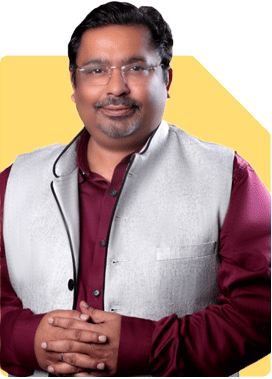
Ramalingam

Ramalingam Kalirajan  |10881 Answers  |Ask -

Mutual Funds, Financial Planning Expert - Answered on May 06, 2024

Ramalingam Kalirajan has over 23 years of experience in mutual funds and financial planning.
He has an MBA in finance from the University of Madras and is a certified financial planner.
He is the director and chief financial planner at Holistic Investment, a Chennai-based firm that offers financial planning and wealth management advice.... more
Asked by Anonymous - Apr 19, 2024Hindi

Listen
Money

Parag Parikh Flexi cap Fund

Ans: Parag Parikh Flexi Cap Fund is a well-regarded fund in the mutual fund industry. It's known for its unique approach to investing across various market segments.

The fund follows a flexible investment strategy, allowing it to invest in stocks across market capitalizations, including large-cap, mid-cap, and small-cap companies.

One of the standout features of Parag Parikh Flexi Cap Fund is its global diversification approach. The fund has the flexibility to invest a portion of its corpus in international equities, providing investors exposure to global markets and opportunities.

Additionally, the fund's focus on quality companies with sustainable business models and strong management teams is commendable. This approach aims to mitigate downside risk and generate consistent returns over the long term.

Parag Parikh Flexi Cap Fund has a track record of delivering competitive returns compared to its peers and benchmark indices. However, investors should note that past performance is not indicative of future results.

As with any investment, it's essential to assess your risk tolerance, investment objectives, and time horizon before investing in Parag Parikh Flexi Cap Fund or any mutual fund.

Consulting with a Certified Financial Planner can provide personalized advice and guidance tailored to your financial situation and goals.

Overall, Parag Parikh Flexi Cap Fund is a reputable option for investors seeking diversification, global exposure, and potential long-term growth in their investment portfolio.
DISCLAIMER: The content of this post by the expert is the personal view of the rediffGURU. Users are advised to pursue the information provided by the rediffGURU only as a source of information to be as a point of reference and to rely on their own judgement when making a decision.
Money

You may like to see similar questions and answers below
Ramalingam

Ramalingam Kalirajan  |10881 Answers  |Ask -

Mutual Funds, Financial Planning Expert - Answered on Aug 12, 2024

Asked by Anonymous - Jul 13, 2024Hindi
Money
Hi Nikunj ji , I am 64 years old retired employee with monthly expenses of 30K living in town. Thru pension and FD's i am getting 28K per month and I have plan to invest 40L lumpsum amount in Parag Parekh Flexi cap fund with SWP of 20K per month. Is it good choice ? Need your advice.
Ans: At 64 years old, you are wisely planning for your retirement. Your monthly expenses are Rs 30,000. Your pension and fixed deposits (FDs) provide you with Rs 28,000 per month. This leaves a small shortfall of Rs 2,000, which is manageable. However, you are considering investing Rs 40 lakhs in a flexi-cap mutual fund with a Systematic Withdrawal Plan (SWP) of Rs 20,000 per month.

This approach requires careful consideration. You want to ensure that this investment not only covers your current shortfall but also provides a stable income for your retirement years.

Flexi-Cap Mutual Fund: An Overview
A flexi-cap mutual fund invests across large-cap, mid-cap, and small-cap stocks. This allows the fund manager to move freely between different market segments. It offers the potential for growth, but it also carries certain risks due to its exposure to different market segments.

Growth Potential: Flexi-cap funds can provide good growth over the long term. They benefit from investing in a variety of companies, which helps in capturing the market's growth.

Market Risk: However, these funds are also exposed to market volatility. Since they invest in mid-cap and small-cap stocks, which can be more volatile, there is a risk of capital erosion, especially in the short term.

Systematic Withdrawal Plan (SWP) Considerations
An SWP allows you to withdraw a fixed amount from your mutual fund investment at regular intervals. In your case, you plan to withdraw Rs 20,000 per month.

Monthly Income: An SWP is a good strategy for generating regular income. It allows you to manage your cash flow in retirement.

Capital Preservation: The challenge with an SWP in a flexi-cap fund is the potential erosion of your capital during market downturns. If the market declines significantly, your withdrawals could start eating into your principal.

Assessing Your Investment Strategy
1. Investment in Flexi-Cap Fund
Your choice of a flexi-cap fund is interesting because of its growth potential. However, considering your age and financial situation, there are a few points to ponder.

Volatility Concerns: Given that you are relying on this investment for monthly income, the volatility of a flexi-cap fund could be a concern. If the market performs poorly, your capital may reduce faster than expected.

Risk vs. Reward: Flexi-cap funds are more suitable for those who can afford to take risks and have a longer investment horizon. At 64, capital preservation should be a priority, along with generating income.

2. SWP of Rs 20,000 per Month
Your plan to withdraw Rs 20,000 per month through an SWP is a well-thought-out strategy. However, there are a few important factors to consider:

Market Conditions: The amount you withdraw each month remains fixed, but the fund's value will fluctuate with the market. In a prolonged market downturn, the Rs 20,000 withdrawals may reduce your principal significantly.

Alternative Funds: A more conservative fund, such as a balanced or hybrid fund, might be a better choice. These funds offer a mix of equity and debt, providing both growth and stability. They are less volatile and better suited for regular withdrawals.

Alternative Investment Options
1. Balanced or Hybrid Funds
A balanced or hybrid fund offers a combination of equity and debt investments. This can provide more stability than a pure equity fund like a flexi-cap fund.

Stability: These funds are less volatile than equity funds because of their debt component. They provide a stable income while still offering growth potential.

SWP Suitability: Balanced funds are better suited for SWPs because they are less likely to experience sharp declines, ensuring that your monthly withdrawals do not erode your capital quickly.

2. Debt-Oriented Funds
Debt-oriented funds primarily invest in fixed-income securities like bonds and government securities. They provide lower returns than equity funds but are much safer.

Capital Protection: These funds are ideal for those who prioritize capital preservation. They offer steady returns with minimal risk.

Income Generation: While the returns may be lower, they provide a stable income, which can be ideal for someone in retirement.

Final Insights
Your plan to invest Rs 40 lakhs in a flexi-cap mutual fund with a Rs 20,000 SWP is well-intentioned but carries risks. Flexi-cap funds are volatile and may not be the best choice for generating a stable retirement income.

Consider Balanced Funds: A balanced or hybrid fund may offer a better balance between growth and stability. They are more suited to generating a regular income while preserving capital.

Review Debt Funds: If your primary goal is capital preservation with steady income, debt-oriented funds should also be considered. They offer safety and stability, which is crucial at your stage in life.

Regular Review: Whatever fund you choose, it’s important to review your investment regularly. Market conditions change, and your financial needs may evolve over time. Regular reviews with a Certified Financial Planner will help ensure that your investments stay aligned with your goals.

By choosing a more stable investment, you can secure your retirement income and enjoy peace of mind. It's important to strike the right balance between growth and security, ensuring that your hard-earned money works effectively for you.

Best Regards,

K. Ramalingam, MBA, CFP,

Chief Financial Planner,

www.holisticinvestment.in

..Read more

Latest Questions
Nayagam P

Nayagam P P  |10854 Answers  |Ask -

Career Counsellor - Answered on Dec 14, 2025

Asked by Anonymous - Dec 12, 2025Hindi
Career
Hello, I am currently in Class 12 and preparing for JEE. I have not yet completed even 50% of the syllabus properly, but I aim to score around '110' marks. Could you suggest an effective strategy to achieve this? I know the target is relatively low, but I have category reservation, so it should be sufficient.
Ans: With category reservation (SC/ST/OBC), a score of 110 marks is absolutely achievable and realistic. Based on 2025 data, SC candidates qualified with approximately 60-65 percentile, and ST candidates with 45-55 percentile. Your target requires scoring just 37-40% marks, which is significantly lower than general category standards. This gives you a genuine advantage. Immediate Action Plan (December 2025 - January 2026): 4-5 Weeks. Week 1-2: High-Weightage Chapter Focus. Stop trying to complete the entire syllabus. Instead, focus exclusively on high-scoring chapters that carry maximum weightage: Physics (Modern Physics, Current Electricity, Work-Power-Energy, Rotation, Magnetism), Chemistry (Chemical Bonding, Thermodynamics, Coordination Compounds, Electrochemistry), and Maths (Integration, Differentiation, Vectors, 3D Geometry, Probability). These chapters alone can yield 80-100+ marks if practiced properly. Ignore topics you haven't studied yet. Week 2-3: Previous Year Questions (PYQs). Solve JEE Main PYQs from the last 10 years (2015-2025) for chapters you're studying. PYQs reveal question patterns and difficulty levels. Focus on understanding why answers are correct, not memorizing solutions. Week 3-4: Mock Tests & Error Analysis. Take 2-3 full-length mock tests weekly under timed conditions. This is crucial because mock tests build exam confidence, reveal time management weaknesses, and error analysis prevents repeated mistakes. Maintain an error notebook documenting every mistake—this becomes your revision guide. Week 4-5: Revision & Formula Consolidation. Create concise formula sheets for each subject. Spend 30 minutes daily reviewing formulas and key concepts. Avoid learning new topics entirely at this stage. Study Schedule (Daily): 7-8 Hours. Morning (5:00-7:30 AM): Physics concepts + 30 PYQs. Break (7:30-8:30 AM): Breakfast & rest. Mid-morning (8:30-11:00): Chemistry concepts + 20 PYQs. Lunch (11:00-1:00 PM): Full break. Afternoon (1:00-3:30 PM): Maths concepts + 30 PYQs. Evening (3:30-5:00 PM): Mock test or error review. Night (7:00-9:00 PM): Formula revision & weak area focus. Strategic Approach for 110 Marks: Attempt only confident questions and avoid negative marking by skipping difficult questions. Do easy questions first—in the exam, attempt all basic-level questions before attempting medium or hard ones. Focus on quality over quantity as 30 well-practiced questions beat 100 random questions. Master NCERT concepts as most JEE questions test NCERT concepts applied smartly. April 2026 Session Advantage. If January doesn't deliver desired results, April gives you a second chance with 3+ months to prepare. Use January as a practice attempt to identify weak areas, then focus intensively on those in February-March. Realistic Timeline: January 2026 target is 95-110 marks (achievable with focused 50% syllabus), while April 2026 target is 120-130 marks (with complete syllabus + experience). Your reservation benefit means you need only approximately 90-105 marks to qualify and secure admission to quality engineering colleges. Stop comparing yourself to general category cutoffs. Most Importantly: Consistency beats perfection. Study 6 focused hours daily rather than 12 distracted hours. Your 110-mark target is realistic—execute this plan with discipline. All the BEST for Your JEE 2026!

Follow RediffGURUS to Know More on 'Careers | Money | Health | Relationships'.

...Read more

Dr Dipankar

Dr Dipankar Dutta  |1840 Answers  |Ask -

Tech Careers and Skill Development Expert - Answered on Dec 13, 2025

Asked by Anonymous - Dec 12, 2025
Career
Dear Sir/Madam, I am currently a 1st year UG student studying engineering in Sairam Engineering College, But there the lack of exposure and strict academics feels so rigid and I don't like it that. It's like they don't gaf about skills but just wants us to memorize things and score a good CGPA, the only skill they want is you to memorize things and pass, there's even special class for students who don't perform well in academics and it is compulsory for them to attend or else the student and his/her parents needs to face authorities who lashes out. My question is when did engineering became something that requires good academics instead of actual learning and skill set. In sairam they provides us a coding platform in which we need to gain the required points for each semester which is ridiculous cuz most of the students here just look at the solution to code instead of actual debugging. I am passionate about engineering so I want to learn and experiment things instead of just memorizing, so I actually consider dropping out and I want to give jee a try and maybe viteee , srmjeee But i heard some people say SRM may provide exposure but not that good in placements. I may not be excellent at studies but my marks are decent. So gimme some insights about SRM and recommend me other colleges/universities which are good at exposure
Ans: First — your frustration is valid

What you are experiencing at Sairam is not engineering, it is rote-based credential production.

“When did engineering become memorizing instead of learning?”

Sadly, this shift happened decades ago in most Tier-3 private colleges in India.

About “coding platforms & points” – your observation is sharp

You are absolutely right:

Mandatory coding points → students copy solutions

Copying ≠ learning

Debugging & thinking are missing

This is pseudo-skill education — it looks modern but produces shallow engineers.

The fact that you noticed this in 1st year already puts you ahead of 80% students.

Should you DROP OUT and prepare for JEE / VITEEE / SRMJEEE?

Although VIT/SRM is better than Sairam Engineering College, but you may face the same problem. You will not face this type of problem only in some top IITs, but getting seat in those IITs will be difficult.
Instead of dropping immediately, consider:

???? Strategy:

Stay enrolled (degree security)

Reduce emotional investment in college rules

Use:

GitHub

Open-source projects

Hackathons

Internships (remote)

Hardware / software self-projects

This way:

College = formality

Learning = self-driven

Risk = minimal

...Read more

DISCLAIMER: The content of this post by the expert is the personal view of the rediffGURU. Investment in securities market are subject to market risks. Read all the related document carefully before investing. The securities quoted are for illustration only and are not recommendatory. Users are advised to pursue the information provided by the rediffGURU only as a source of information and as a point of reference and to rely on their own judgement when making a decision. RediffGURUS is an intermediary as per India's Information Technology Act.

Close  

You haven't logged in yet. To ask a question, Please Log in below
Login

A verification OTP will be sent to this
Mobile Number / Email

Enter OTP
A 6 digit code has been sent to

Resend OTP in120seconds

Dear User, You have not registered yet. Please register by filling the fields below to get expert answers from our Gurus
Sign up

By signing up, you agree to our
Terms & Conditions and Privacy Policy

Already have an account?

Enter OTP
A 6 digit code has been sent to Mobile

Resend OTP in120seconds

x