Home > Money > Question
Need Expert Advice?Our Gurus Can Help
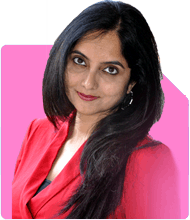
Naveenn

Naveenn Kummar  |233 Answers  |Ask -

Financial Planner, MF, Insurance Expert - Answered on Sep 15, 2025

Naveenn Kummar has over 16 years of experience in banking and financial services.
He is an Association of Mutual Funds in India (AMFI)-registered mutual fund distributor, an Insurance Regulatory and Development Authority of India (IRDAI)-licensed insurance advisor and a qualified personal finance professional (QPFP) certified by Network FP.
An engineering graduate with an MBA in management, he leads Alenova Financial Services under Vadula Consultancy Services, offering solutions in mutual funds, insurance, retirement planning and wealth management.... more
Asked by Anonymous - Sep 08, 2025Hindi

Money

I have monthly SIPs in following funds and investing since 2019 with increasing in SIP amount and presently SIPs are as under. SBI Small Cap: 8000 (XIRR: 20.12%). SBI Focussed Equity: 5000 ( XIRR: 17.36). SBI Large and Mid Cap: 3000 (XIRR: 17.45) SBI Contra Fund: 4000 (XIRR: 20.46) SBI ELSS Tax saver: 3000 ( XIRR: 20.50) ICICI Large Cap: 3000 ( XIRR: 19.34) Parag Parikh Flexi: 3000 ( XIRR: 18.56) Motilal Oswal Mid Cap: 3000 ( XIRR: 21.20) I am getting good returns from these funds. When I am having some additional funds I also do lumpsum. Total Present Corpus: 55 lacs. I want to continue the SIPs for next 10 years. Please inform if I should continue SIPs in these funds or should change some funds. My Average NAVs in all these funds is almost half of present NAV and I think it is helping me accumulating good wealth.

Ans: Dear sir ,
Your MF journey is already on a strong track. You started in 2019, stayed disciplined, and today you sit on ?55 lakh corpus with XIRRs in the range of 17–21% — far ahead of index average. This shows your strategy is working.

But here’s the deeper truth:

Too many funds from one AMC (SBI). It creates stock overlap. Diversify across fund houses.

Too many categories (contra, focused, mid, small, ELSS, flexi). This looks good when market is rising, but in a fall, the downside will be heavy. Better to consolidate into 5–6 high-quality funds.

Your average NAVs are half of current NAVs — that is the power of staying invested long-term. Don’t break the compounding machine.

My Straight Suggestion:

Keep SBI Small Cap, ICICI Large Cap, PPFAS Flexi, Motilal Mid Cap.

Keep one tax saver ELSS.

Choose either Contra OR Focused, not both.

Slowly, after corpus crosses ?1 Cr, shift 10–15% into debt/hybrid for safety.
If you continue ?32k SIP for next 10 years, you are staring at ?1.2–1.5 Cr corpus depending on markets. That’s wealth creation.

Rule: Don’t run after new funds, don’t panic in corrections. Let compounding do its job.

Best regards,
Naveenn Kummar, BE, MBA, QPFP
Chief Financial Planner | AMFI Registered MFD
https://members.networkfp.com/member/naveenkumarreddy-vadula-chennai
DISCLAIMER: The content of this post by the expert is the personal view of the rediffGURU. Users are advised to pursue the information provided by the rediffGURU only as a source of information to be as a point of reference and to rely on their own judgement when making a decision.
Money

You may like to see similar questions and answers below

Ramalingam

Ramalingam Kalirajan  |10870 Answers  |Ask -

Mutual Funds, Financial Planning Expert - Answered on May 29, 2024

Listen
Money
I am investing in following funds through SIP 1. HDFC top 200 Regular Growth since 2010 Rs. 3000 2. ICICI PRUDENTIAL LARGE & MIDCAP FUND GROWTH SINCE 2014 Rs. 2000 3. BANDHAN FLEXICAP FUND-GROWTH SINCE 2011 Rs. 2000 4. BSL FRONTLINE EQUITY FUND - GROWTH SINCE 2010 Rs. 3000 (STOPPED SIP IN 2020) 5. MIRAE ASSET BLUECHIP FUND - GROWTH SINCE 2021 Rs. 2500 6. HDFC FLEXI CAP - GROWTH SINCE 2022 Rs. 5500 PLEASE ADVICE ME WHETHER I SHOULD CONTINUE WITH THESE FUNDS OR EXIT. I FURTHER WANT TO INVEST Rs. 15000 MORE. PLEASE SUGGEST WHETHER I SHOULD INCREASE SIP AMOUNT IN THESE FUNDS OR START SIP IN NEW FUND
Ans: Assessing Your Mutual Fund Investments and Planning for the Future

Your portfolio demonstrates a disciplined approach to mutual fund investing over the years. Let's evaluate your current holdings and chart a course for future investments.

Analyzing Existing SIPs

HDFC Top 200, ICICI Prudential Large & Midcap, and Bandhan Flexicap Funds have been part of your investment journey for several years. These funds offer exposure to different market segments, providing diversification benefits.

BSL Frontline Equity Fund, while stopped in 2020, has a long track record of performance. It's essential to review the reasons for discontinuing this SIP and assess whether it aligns with your current investment strategy.

Mirae Asset Bluechip Fund and HDFC Flexi Cap Fund, initiated more recently, contribute to diversification and may offer growth potential.

Evaluating Performance and Suitability

Review the performance of each fund relative to its benchmark and peer group. Assess whether the fund manager's investment approach and strategy align with your risk tolerance and investment objectives.

Consider the consistency of returns, risk-adjusted performance, and fund management quality. Additionally, evaluate the fund's expense ratio and turnover ratio to ensure cost-effectiveness.

Deciding Whether to Continue or Exit

Continue SIPs in funds with consistent performance, robust fundamentals, and alignment with your investment goals.

Consider exiting funds that consistently underperform their benchmarks or peers, have experienced significant changes in fund management, or deviate from your risk profile.

Planning Additional Investments

Given your intention to invest an additional Rs. 15,000, consider the following options:

Increase SIP amounts in existing funds with proven track records and growth potential. This approach maintains continuity and capitalizes on the strengths of your current portfolio.

Explore new funds that complement your existing holdings and provide exposure to underrepresented sectors or asset classes. Conduct thorough research and seek professional advice to identify suitable options.

Seeking Professional Guidance

As a Certified Financial Planner, I recommend conducting a comprehensive portfolio review to ensure alignment with your financial goals and risk tolerance. Regular monitoring and periodic adjustments are essential to optimize your investment outcomes.

Best Regards,

K. Ramalingam, MBA, CFP,

Chief Financial Planner,

www.holisticinvestment.in

..Read more

Ramalingam

Ramalingam Kalirajan  |10870 Answers  |Ask -

Mutual Funds, Financial Planning Expert - Answered on Apr 23, 2024

Asked by Anonymous - Apr 23, 2024Hindi
Listen
Money
Sir, I am 35, following are my SIPs per month: I have just started investment 1. Canara Robeco ELSS Tax Saver- Rs. 1000/- 2. HDFC Large and Mid Cap Fund Regular Growth- Rs. 1000/- 3.HDFC Flexicap Fund Regular Plan Growth- 1000/- 4. HDFC Retirement Saving Fund- Regular Plan Growth-1000/- 5. HDFC Balanced Advantage Fund - Regular Plan Growth- 1000/-. 6. Icici prudential Balanced Advantage Fund Regular-1000 7. Icici prudential Dividend Yield Fund-1000 8. Icici prudential Equity and Debt fund-1000 9. Icici prudential Value and Discovery fund-1000 10. Nippon small and multi cap-1000 Please suggest whether if any changes needed or should I continue investing on above mf
Ans: You've set a strong foundation with a diverse range of funds, showing a proactive approach to investing. However, there are a few considerations to keep in mind to optimize your portfolio:

Diversification: While diversifying across fund types is good, ensure you're not over-diversifying within similar categories. Consolidating similar funds can simplify your portfolio.
Consistency: Regular review is essential. Keep an eye on fund performance, and if a fund consistently underperforms its benchmark or peers, consider replacing it.
Goals Alignment: Ensure your investment choices align with your financial goals. For example, ELSS for tax-saving should ideally be held for the long term, while balanced funds can offer a mix of growth and stability.
Risk Tolerance: Understand your risk tolerance. Some funds like small and mid-cap or value discovery can be more volatile but offer higher growth potential. Ensure your portfolio aligns with your risk appetite.
Costs: Keep an eye on the expense ratio. Lower expense ratios can improve your returns over the long term.
Considering these factors, you might consider:

Consolidating funds with similar objectives.
Reviewing the performance of Icici prudential Dividend Yield Fund and Nippon small and multi-cap, as these categories can be volatile.
Rebalancing your portfolio periodically to ensure alignment with your goals and risk tolerance.
Remember, while it's essential to stay invested for the long term, regular reviews and adjustments can help optimize your returns and keep your portfolio aligned with your financial goals. Consult with a financial advisor for personalized advice tailored to your needs.

..Read more

Ramalingam

Ramalingam Kalirajan  |10870 Answers  |Ask -

Mutual Funds, Financial Planning Expert - Answered on May 20, 2024

Listen
Money
I am having following 6 regular SIPs in mutual funds 1. SBI Contra Fund Rs 2,000/- 2. SBI Small Cap Fund ,000/- 3. SBI Retirement Benefit Fund Aggressive Growth Rs 2,000/- 4. SBI PSU Fund lumpsum Rs 11000/- 5. Quant Small Cap Fund Rs 1000/- 6. ICICI Prudential Infrastructure Growth Fund 500/- Please advise whether I should continue with these funds or exit. Aloke
Ans: Review and Recommendations for Your Mutual Fund Portfolio
Overview of Your Current Investments
You have a diversified portfolio with the following SIPs and a lump sum investment:

SBI Contra Fund: ?2,000/- per month
SBI Small Cap Fund: ?2,000/- per month
SBI Retirement Benefit Fund Aggressive Growth: ?2,000/- per month
SBI PSU Fund: Lump sum ?11,000/-
Quant Small Cap Fund: ?1,000/- per month
ICICI Prudential Infrastructure Growth Fund: ?500/- per month
Compliments on Your Investment Strategy
Your disciplined approach to investing through regular SIPs is commendable. Investing in a variety of funds shows your understanding of diversification. This strategy helps mitigate risks and enhances the potential for growth.

Analytical Review of Your Portfolio
SBI Contra Fund:

Contra funds invest in undervalued stocks, anticipating future growth.
These funds can offer high returns but come with increased risk.
Consider if this aligns with your risk tolerance and investment horizon.
SBI Small Cap Fund:

Small cap funds can generate significant growth over time but are highly volatile.
Ensure this fund aligns with your risk appetite and long-term goals.
SBI Retirement Benefit Fund Aggressive Growth:

This fund focuses on long-term growth for retirement.
It's a good choice for aggressive investors aiming for high returns over time.
SBI PSU Fund:

Investing in Public Sector Units can be beneficial but is sector-specific and carries concentration risk.
Regularly review this fund's performance and the overall sector outlook.
Quant Small Cap Fund:

Like the SBI Small Cap Fund, this fund offers high growth potential with high risk.
Diversifying within the small cap segment might not be necessary.
ICICI Prudential Infrastructure Growth Fund:

Infrastructure funds invest in infrastructure-related companies.
These funds can provide good returns during economic growth periods but are sector-specific and volatile.
Recommendations for Portfolio Improvement
Diversify Across Market Caps and Sectors:

Your portfolio has a significant focus on small cap and sector-specific funds.
Consider adding a large cap or a diversified equity fund to balance risk and stability.
Consolidate Small Cap Investments:

Holding multiple small cap funds may not be necessary.
You can consolidate into one fund to avoid overlap and simplify management.
Review Sector-Specific Funds:

Sector-specific funds like PSU and Infrastructure can be volatile.
Regularly monitor their performance and consider switching to more diversified funds if needed.
Consider Professional Management:

Direct funds have lower expenses but require active monitoring.
Investing through a certified financial planner can provide professional management and potentially better returns.
Steps for Continued Success
Regular Portfolio Reviews:

Periodically review your portfolio to ensure it aligns with your goals and market conditions.
Make adjustments as needed to stay on track.
Increase SIP Amounts Gradually:

As your income grows, consider increasing your SIP amounts.
This will help you build a larger corpus over time.
Maintain an Emergency Fund:

Ensure you have an emergency fund to cover unexpected expenses.
This prevents the need to withdraw from your investments prematurely.
Stay Informed and Educated:

Stay updated on market trends and financial news.
Continuous learning will help you make informed investment decisions.
Conclusion
Your current portfolio is well-diversified but has a significant focus on small cap and sector-specific funds. Consider balancing it with more stable large cap or diversified equity funds. Regularly review and adjust your investments to align with your goals and risk tolerance. Your disciplined investment strategy and thoughtful planning are commendable. With consistent efforts and regular reviews, you are well on your way to achieving your financial goals.

Best Regards,

K. Ramalingam, MBA, CFP,

Chief Financial Planner,

www.holisticinvestment.in

..Read more

Ramalingam

Ramalingam Kalirajan  |10870 Answers  |Ask -

Mutual Funds, Financial Planning Expert - Answered on Nov 01, 2024

Asked by Anonymous - Oct 31, 2024Hindi
Money
I started monthly sip since oct 2022 in the following funds. Mirae asset midcap fund regular growth (2000) Parag parikh flexi cap regular (2000) Sbi midcap reg(2000) Sbi magnum global reg(2000)(stopped investing since Aug 2024, but not redeemed) Pgim mid cap reg(2000) (stopped investing since feb 2024, but not redeemed) From jan 2024 Nippon small cap fund (500 ,gradually increased to 6500 from july 2024) Quant small cap direct (2000) from July 2024 Also hsbc mid cap reg (3000) from may 2024 Sbi contra fund reg(3000) from may 2024 Quant mid cap reg (3000) from may2024 Please advice , whether l am investing in the right funds and suggest if any corrections or rectification to be done. Your advice will be of great help Should I increase/alter or continue for another 5/7 years with the same funds Please advice Regards
Ans: You’ve structured a diversified portfolio of mid-cap, small-cap, flexi-cap, and contra funds, which shows a well-considered approach. Let's take a closer look to evaluate each aspect.

1. Portfolio Structure and Goals Alignment

Investing in mid-cap and small-cap funds provides growth opportunities. However, these funds also come with higher risk and volatility.

Including a flexi-cap fund like Parag Parikh is a wise choice. Flexi-cap funds bring stability by dynamically investing across large, mid, and small caps. This adds a level of risk management.

Adding contra funds such as the SBI Contra Fund brings diversification and the potential to benefit from out-of-favor sectors. This is a good balance against mid-cap and small-cap funds.

Your portfolio choices display strategic thought, but it may need a few adjustments to maximize returns and minimize risk.

2. Insights on Fund Selection: Regular vs. Direct

You’ve wisely chosen regular plans for most funds. Investing through a Certified Financial Planner (CFP) can offer ongoing insights and proactive management, especially when markets fluctuate. This adds significant value for long-term investors, as MFDs with CFP credentials offer experienced guidance and assistance with changes in tax laws, like the recent CG taxation updates.

Direct funds might have lower fees, but they can lack the support and expertise that a CFP-backed plan offers. Regular plans ensure the added advantage of advisory support, making it easier to align investments with your goals.

3. Re-evaluating Sector and Market Cap Allocation

Mid-Cap Allocation: With multiple mid-cap funds (Mirae, SBI, HSBC, and Quant), your exposure here is relatively high. While mid-cap funds can yield higher returns, they are susceptible to volatility. It might be wise to reduce the number of mid-cap funds and focus on the most consistent performer among them. For example, continuing with one or two robust mid-cap funds rather than four can bring simplicity and reduce overlapping.

Small-Cap Allocation: Small caps add substantial growth potential but come with high volatility. Starting with a lower SIP amount in the Nippon Small Cap fund and gradually increasing it reflects a balanced approach. Ensure you’re comfortable with small-cap risks, as these funds tend to have longer recovery periods after market corrections.

Flexi-Cap and Contra Funds: The inclusion of Parag Parikh Flexi Cap and SBI Contra Fund introduces both flexibility and contrarian strategies into your portfolio. Retaining these is recommended, as they provide a counterbalance to the mid- and small-cap funds, improving portfolio stability.

4. Evaluating the Role of Fund Overlap and Rationalizing Choices

Having multiple funds in the same category, especially within mid-cap and small-cap funds, can lead to overlapping holdings. Overlap means you may own similar stocks across different funds, which could limit diversification and increase risk without added benefits.

Consider streamlining your investments by selecting the most reliable performers in each category. This approach optimizes your portfolio, making it easier to track and manage.

5. Suggestions for Portfolio Refinement and Long-Term Growth

To maintain simplicity while achieving growth, here are some suggestions:

Reduce the Number of Mid-Cap Funds: Retain the top-performing mid-cap fund that aligns with your goals. For instance, focusing on Mirae or Quant Mid Cap may bring optimal returns without the need for multiple funds in this category.

Small-Cap Funds: Continue with the gradual increase in your SIP in Nippon Small Cap if the fund performance and your risk tolerance remain aligned. Quant Small Cap can complement Nippon Small Cap, but monitor its performance over the next year to decide if it remains suitable for your portfolio.

Avoid Frequent Changes: SIPs work best when maintained over long periods. Continue with your SIPs in chosen funds consistently for at least 5–7 years to allow compounding and market cycles to benefit your investments.

6. Should You Increase Your Investment Amount?

Assessing Contribution Levels: If you have the capacity to increase your SIP, consider doing so in funds with balanced exposure like flexi-cap or balanced advantage funds. These funds are typically better suited for conservative increases as they manage volatility effectively.

Long-Term Perspective: Given your 5–7 year timeframe, additional contributions in mid-cap or flexi-cap funds may offer solid returns. Avoid increasing allocation to small-cap funds too aggressively due to their higher risk.

7. Understanding the Disadvantages of Index Funds in Your Portfolio

While index funds offer passive growth, they lack the active management needed to outperform the market. Actively managed funds, like those in your portfolio, are better suited to deliver returns above the index through stock selection and sector rotation. These funds aim to maximize gains during bullish markets and minimize losses during downturns, which is critical for achieving your financial goals.

8. Tax Implications on Future Gains

The recent changes in Capital Gains (CG) taxation should be considered:

Equity Funds (like mid-cap, small-cap, flexi-cap): Long-term capital gains (LTCG) above Rs 1.25 lakh are taxed at 12.5%. Short-term gains are taxed at 20%.

Debt Funds (if considered in the future): Gains are taxed as per your income tax slab, regardless of holding duration.

Understanding these implications allows you to plan redemptions and adjust investments efficiently.

Finally

Your current portfolio reflects strategic and goal-oriented thinking. With a few refinements—such as consolidating funds, monitoring performance, and potentially increasing SIPs in stable fund categories—you can optimize growth while managing risk effectively.

For best results, consider annual reviews with your Certified Financial Planner to keep your investments aligned with any changes in goals or market conditions.

Best Regards,
K. Ramalingam, MBA, CFP
Chief Financial Planner,
www.holisticinvestment.in
https://www.youtube.com/@HolisticInvestment

..Read more

Latest Questions
Dr Dipankar

Dr Dipankar Dutta  |1837 Answers  |Ask -

Tech Careers and Skill Development Expert - Answered on Dec 05, 2025

Career
Dear Sir, I did my BTech from a normal engineering college not very famous. The teaching was not great and hence i did not study well. I tried my best to learn coding including all the technologies like html,css,javascript,react js,dba,php because i wanted to be a web developer But nothing seem to enter my head except html and css. I don't understand a language which has more complexities. Is it because of my lack of experience or not devoting enough time. I am not sure. I did many courses online and tried to do diplomas also abroad which i passed somehow. I recently joined android development course because i like apps but the teaching was so fast that i could not memorize anything. There was no time to even take notes down. During the course i did assignments and understood the code because i have to pass but after the course is over i tend to forget everything. I attempted a lot of interviews. Some of them i even got but could not perform well so they let me go. Now due to the AI booming and job markets in a bad shape i am re-thinking whether to keep studying or whether its just time waste. Since 3 years i am doing labour type of jobs which does not yield anything to me for survival and to pay my expenses. I have the quest to learn everything but as soon as i sit in front of the computer i listen to music or read something else. What should i do to stay more focused? What should i do to make myself believe confident. Is there still scope of IT in todays world? Kindly advise.
Ans: Your story does not show failure.
It shows persistence, effort, and desire to improve.

Most people give up.
You didn’t.
That means you will succeed — but with the right method, not the old one.

...Read more

Ravi

Ravi Mittal  |676 Answers  |Ask -

Dating, Relationships Expert - Answered on Dec 04, 2025

Asked by Anonymous - Dec 02, 2025Hindi
Relationship
My married ex still texts me for comfort. Because of him, I am unable to move on. He makes me feel guilty by saying he got married out of family pressure. His dad is a cardiac patient and mom is being treated for cancer. He comforts me by saying he will get separated soon and we will get married because he only loves me. We have been in a relationship for 14 years and despite everything we tried, his parents refused to accept me, so he chose to get married to someone who understands our situation. I don't know when he will separate from his wife. She knows about us too but she comes from a traditional family. She also confirmed there is no physical intimacy between them. I trust him, but is it worth losing my youth for him? Honestly, I am worried and very confused.
Ans: Dear Anonymous,
I understand how difficult it is to let go of a relationship you have built from scratch, but is it really how you want to continue? It really seems to be going nowhere. His parents are already in bad health and he married someone else for their happiness. Does it seem like he will be able to leave her? So many people’s happiness and lives depend on this one decision. I think it’s about time you and your BF have a clear conversation about the same. If he can’t give a proper timeline, please try to understand his situation. But also make sure he understands yours and maybe rethink this equation. It really isn’t healthy. You deserve a love you can have wholly, and not just in pieces, and in the shadows.

Hope this helps

...Read more

DISCLAIMER: The content of this post by the expert is the personal view of the rediffGURU. Investment in securities market are subject to market risks. Read all the related document carefully before investing. The securities quoted are for illustration only and are not recommendatory. Users are advised to pursue the information provided by the rediffGURU only as a source of information and as a point of reference and to rely on their own judgement when making a decision. RediffGURUS is an intermediary as per India's Information Technology Act.

Close  

You haven't logged in yet. To ask a question, Please Log in below
Login

A verification OTP will be sent to this
Mobile Number / Email

Enter OTP
A 6 digit code has been sent to

Resend OTP in120seconds

Dear User, You have not registered yet. Please register by filling the fields below to get expert answers from our Gurus
Sign up

By signing up, you agree to our
Terms & Conditions and Privacy Policy

Already have an account?

Enter OTP
A 6 digit code has been sent to Mobile

Resend OTP in120seconds

x