Home > Money > Question
Need Expert Advice?Our Gurus Can Help

Ramalingam

Ramalingam Kalirajan  |10878 Answers  |Ask -

Mutual Funds, Financial Planning Expert - Answered on Jul 11, 2025

Ramalingam Kalirajan has over 23 years of experience in mutual funds and financial planning.
He has an MBA in finance from the University of Madras and is a certified financial planner.
He is the director and chief financial planner at Holistic Investment, a Chennai-based firm that offers financial planning and wealth management advice.... more

P Question by P on Jul 11, 2025Hindi
Money

I Lost my job suring covid locksown. I have been taking personal loans from people and now it has totally amounted to nealy 60 lakhs.. they have given loan to me to get more interest... i am taking loans and paying interest to old lenders.. What should i do? There seams to bd only one option i dont know whether to take it up..

Ans: ? Understanding Your Current Situation

You lost your job during the Covid lockdown.
You took loans from people to survive.
Those loans have now added up to nearly Rs.60 lakhs.
You borrowed to pay interest to earlier lenders.
This is a classic debt trap.

First of all, thank you for sharing openly.
It is not easy to talk about debt.
But you have taken the first brave step.

This is a very serious situation.
But it is not hopeless.
You must take action now.

You may feel only one option is left.
But let us assess all sides.
Let’s explore your options carefully.

? Debt Trap: What It Really Means

A debt trap is when debt creates more debt.
You borrow to repay past dues.
This never-ending loop increases stress.

Interest keeps growing month after month.
Soon, even paying interest becomes hard.
This leads to mental, financial, and emotional stress.

It can feel like you’re drowning in loans.
But remember: this trap can be broken.

You must pause and not borrow again.
Stop the borrowing cycle immediately.

This may sound tough, but it is needed.

? Assessing the Type of Loans

These seem like informal loans.
Private lenders often charge very high interest.
This is sometimes unregulated and risky.

Unlike banks, these loans don’t follow RBI rules.
So they may use pressure or threats.

First step is to list each loan.
Write name of lender, amount, date, and interest.
Know exactly how much is owed and to whom.

This written clarity will help with planning.
You need a strategy now.

? Mental Clarity and Acceptance

Debt causes anxiety and panic.
But staying calm is very important now.

Understand that you are not alone.
Many people struggled post-Covid.

Your intention was never wrong.
You borrowed hoping to recover.

So don't feel guilty about the past.
Now it's time to fix the future.

Accept your current status with courage.
This mindset shift is very important.

? Don’t Rely on Borrowing Again

You may feel tempted to borrow again.
But that will only delay the problem.

New loans won’t solve old loans.
They will only increase total interest outflow.

Focus on solution, not on temporary relief.

Say a strict NO to new borrowing.

? Stop Paying Just Interest

If you keep paying only interest,
then principal never reduces at all.

Many private lenders prefer this situation.
They earn high returns forever.

So pause and think differently now.
You need to start reducing principal.
But before that, understand the full picture.

? Analyse All Your Income Options

You lost your job during Covid.
Can you start working again now?
Even a small earning can help.

Explore full-time or part-time jobs.
Use your skills for freelance work.

Can you teach online?
Can you drive or deliver?
Can you join a startup?

All income sources matter now.
Even Rs.5000 per month helps.

Don’t reject any work due to pride.
This is just a temporary phase.

Any income will increase your confidence.

? Lifestyle Audit and Expenses Check

Make a list of all your expenses.
Cut all non-essential spending immediately.

No eating out, no online shopping.
No premium OTT, no gadgets, no gold.

Use public transport wherever possible.

Reduce your mobile and internet bills.
Buy only essentials and basic food.

Start living very simply.

This sacrifice is temporary but necessary.

? Legal Way Out If Things Are Too Deep

If all lenders demand full repayment,
and you don’t have income,
then you can consider debt resolution legally.

There are legal options available in India.
You can approach an Insolvency Resolution Professional.
Under Indian law, individuals can declare insolvency.

It is not shameful.
It is a legal tool to rebuild.

But this should be a last option.
You must try negotiation first.

You may also consider a one-time settlement.
That means paying partial amount to close loan.

Many private lenders agree to this.
They recover part and write off rest.

But document everything with proof.

No verbal deals. Only written agreements.

? Try Personal Negotiation First

Talk to each lender personally.
Tell them your true situation.

Say you will repay in parts.
Show them a payment plan.

Say clearly that no new loans will be taken.
Assure them you want to repay.

Ask for interest reduction or waiver.

Most people appreciate honesty.
They may agree to small EMIs.

? Take Help from Certified Financial Planner

A Certified Financial Planner can guide you.
They have experience with debt cases.

They will not judge you.
They will plan repayment step by step.

They can help in budgeting and planning.

Avoid going to unregulated agents.
Only work with professionals with CFP credentials.

A planner can also help negotiate better.
They can help you track your goals again.

? Don’t Try to Recover Money by Investing Now

Many try to invest to cover loans.
That is a very dangerous idea.

No investment gives overnight returns.
Don’t fall for fake schemes or tips.

Avoid trading, crypto, lottery, or risky business.

Right now, your focus is reducing debt.

Don’t try to earn more from stock markets.
You may end up losing more money.

Investing can come later, not now.

? Mutual Funds Can Be Used Only Later

Once your debt is closed or manageable,
then you can begin investing slowly.

But never invest before clearing loans.

Avoid direct funds as they offer no guidance.

Direct funds may seem to save money.
But without expert help, mistakes happen.

Also, emotional decisions cause wrong fund choices.

Investing through regular funds via CFP-led MFD
gives guidance, support, and correction over time.

Regular funds are better for long-term goals.

They provide accountability, rebalancing, and behavioural coaching.

That is critical for someone recovering financially.

? Avoid Index Funds Right Now

Index funds may look low-cost.
But they are unmanaged and passive.

They mirror the market fully.
So, in downturns, they fall deeply.

They have no active protection or exit.
They don’t change based on market conditions.

Actively managed funds are safer for you.
They have fund managers taking decisions.

They give better support in volatile times.

? Don’t Depend on Friends for Help Again

Avoid taking loans from friends or relatives now.
That can spoil relationships and create pressure.

You may lose peace of mind.
Even if they offer help, say no.

This recovery has to be from within.

Relying on others again repeats old pattern.

? If You Hold Investment-Cum-Insurance Products

If you have any traditional policies or ULIPs,
then surrendering might help right now.

These plans give low return and high lock-in.

You can take the surrender value.
Use it to pay off urgent debt.

Later, switch to pure-term insurance
and invest in mutual funds via CFP-MFD route.

? Build Emergency Fund After Debt Is Cleared

Once your loans are over,
build a small emergency fund.

It should cover 3-6 months of needs.
Keep it in a liquid fund.

So, you don’t borrow again in crisis.

This small step avoids future debt trap.

? Emotional Strength and Family Support

You need inner strength right now.
Speak to family openly about everything.

Don’t hide anything from spouse or parents.
Ask for their mental support and patience.

Even emotional help makes a big difference.

Stay strong and stay grounded.

? Monitor and Track Every Month

Track your debt repayment monthly.
Write down each amount paid.

This creates hope and gives clarity.

Small progress gives mental peace.

Celebrate every loan closed, no matter how small.

Keep a simple spreadsheet or notebook.

? Finally

This situation looks hard right now.
But you have the power to overcome it.

Act fast and act clearly.

Don’t delay decisions due to fear.

No more borrowing.
No more interest payments blindly.

Focus on income, expenses, and planning.

Debt freedom is not far,
if you take steady action with support.

There is always a way forward.

Take the first step today.

Best Regards,
K. Ramalingam, MBA, CFP,
Chief Financial Planner,
www.holisticinvestment.in
https://www.youtube.com/@HolisticInvestment
Asked on - Aug 01, 2025 | Answered on Aug 01, 2025
Is there a way that government funds people like us? This happened due to covid... and lot many people are like me. What ever you said works well with government employees private employee looses his job he has no more carrier. Every thing comes to a stop
Ans: Yes, your concern is real—many private employees suffered post-Covid. While there's no direct government loan waiver for personal debt, some state governments offer skill-based livelihood schemes, startup support, or relief through MSME programs. You can check with your district collector’s office, local MLA, or visit mygov.in for latest updates. NGOs and financial counsellors may also help. Don’t lose hope—focus on income rebuilding and reach out to official welfare programs actively.

Best Regards,
K. Ramalingam, MBA, CFP,
Chief Financial Planner,
www.holisticinvestment.in
https://www.youtube.com/@HolisticInvestment
DISCLAIMER: The content of this post by the expert is the personal view of the rediffGURU. Users are advised to pursue the information provided by the rediffGURU only as a source of information to be as a point of reference and to rely on their own judgement when making a decision.
Money

You may like to see similar questions and answers below
Ramalingam

Ramalingam Kalirajan  |10878 Answers  |Ask -

Mutual Funds, Financial Planning Expert - Answered on Jan 20, 2025

Asked by Anonymous - Jan 19, 2025Hindi
Listen
Money
What should I do when I have to much loan. At the moment am not working.
Ans: Having too much loan and no current income is challenging but not unmanageable. By following a structured approach, you can regain financial stability. Below is a detailed step-by-step plan to address this situation.

Assess Your Loan Situation
List All Loans
Write down all loans with outstanding amounts.

Include home loans, personal loans, car loans, and credit card debts.

Note the interest rates and EMI amounts for each loan.

Prioritise Debts
Prioritise high-interest loans like credit card debts and personal loans.

Low-interest loans can be managed later.

Check Loan Tenure
Understand the remaining tenure of each loan.

This will help in planning repayments effectively.

Create a Temporary Budget
Analyse Monthly Expenses
List essential expenses like food, utilities, and rent.

Avoid unnecessary spending like dining out or online shopping.

Cut Costs
Reduce discretionary expenses to free up cash flow.

Look for cheaper alternatives in daily living.

Allocate for Loan Repayment
Use any available funds to cover immediate EMIs.

Ensure timely payments to avoid penalties.

Explore Alternative Income Sources
Leverage Skills
Identify skills that can help you earn part-time income.

Freelancing, tutoring, or consulting can bring immediate cash flow.

Sell Unused Assets
Sell assets like gold, gadgets, or a second vehicle.

Use the proceeds to repay high-interest loans.

Liquidate Non-Essential Investments
Check for liquid investments like FDs or mutual funds.

Use these funds to reduce your debt burden.

Restructure Loans
Request Loan Moratorium
Approach your bank for a temporary moratorium on EMIs.

This provides breathing space for a few months.

Consolidate Loans
Combine high-interest loans into a single low-interest loan.

This simplifies repayment and reduces monthly outflows.

Extend Loan Tenure
Request lenders to increase the loan tenure.

This lowers EMIs but increases total interest.

Negotiate with Lenders
Request Reduced EMIs
Speak with lenders about lowering EMI amounts temporarily.

They may agree based on your repayment history.

Waive Penalties
Request lenders to waive penalties for delayed payments.

Many lenders are flexible during financial hardships.

Avoid Common Mistakes
Do Not Ignore Payments
Skipping payments will increase penalties and impact your credit score.
Avoid New Loans
Do not take additional loans to repay existing ones.

This creates a debt trap.

Avoid Loan Sharks
Do not borrow from informal sources with exorbitant interest rates.
Seek Professional Guidance
Certified Financial Planner Support
Work with a Certified Financial Planner to create a structured debt repayment plan.

They will help you balance short-term and long-term needs.

Debt Counsellors
Consider debt counselling services for expert negotiation with lenders.

They provide tailored solutions to manage your debt.

Emergency Measures
Borrow from Family or Friends
Request a short-term loan from family or friends without interest.

Use this only as a last resort and repay promptly.

Tap into Savings
Use savings cautiously for essential loan repayments.

Do not exhaust emergency funds completely.

Final Insights
Managing high loans without income requires careful planning and action.

Prioritise high-interest loans and negotiate with lenders for relief.

Explore alternative income sources to create cash flow.

A Certified Financial Planner can help you achieve long-term stability.

Stay disciplined, and avoid impulsive financial decisions.

Best Regards,

K. Ramalingam, MBA, CFP,

Chief Financial Planner,

www.holisticinvestment.in
https://www.youtube.com/@HolisticInvestment

..Read more

Ramalingam

Ramalingam Kalirajan  |10878 Answers  |Ask -

Mutual Funds, Financial Planning Expert - Answered on Jun 04, 2025

Asked by Anonymous - Jun 01, 2025Hindi
Money
Hii sir I have a personal loan of 1 lakh and i have borrowed 70k from friends and family my salary is only 35000 in which i am paying 7k room rent and 8k EMI, I have a family to feed what should i do
Ans: You are strong to face your situation and ask for help.

Let us guide you with care, clarity, and practical steps.

We will review your income, loans, spending, and give a 360-degree solution.

Your Current Situation – Income and Obligations

Monthly salary is Rs 35,000.

Paying Rs 8,000 as EMI for Rs 1 lakh personal loan.

Room rent is Rs 7,000 per month.

You borrowed Rs 70,000 from friends and family.

You are supporting your family with limited income.

You are responsible and trying hard. That effort matters a lot.

Fixed Costs vs Available Income

Rent + EMI = Rs 15,000

Balance income = Rs 20,000

This Rs 20,000 must cover food, family needs, transport, school (if any), and savings.

This is tight, but not hopeless. It just needs strong decisions.

Immediate Action Plan – First 3 Months

Stop all non-essential expenses. Every rupee must count now.

Talk to your family openly. Let them support emotionally.

Reduce mobile bills, subscriptions, and luxury food spends.

Cook at home. Avoid travel and outings for now.

Postpone buying clothes, gadgets, or festival gifts.

Your goal is to build a Rs 5,000 surplus monthly.

Clear the Informal Loans First

Friends and family loans don’t charge interest.

But they affect relationships if delayed.

Use your surplus to repay Rs 5,000–7,000 monthly to them.

Target clearing this Rs 70,000 in 10–12 months.

Be honest with them and explain your plan.

Avoid taking more informal loans. That worsens things.

Negotiate Your Personal Loan EMI

Visit the bank or NBFC. Explain your hardship clearly.

Ask for tenure extension or lower EMI restructuring.

Even a Rs 2,000 EMI drop helps you breathe.

Avoid skipping EMIs without informing them. That affects credit badly.

If EMI becomes unmanageable, ask for temporary pause.

Banks do consider genuine cases, especially for salaried borrowers.

Increase Income — Even Small Addition Matters

Look for part-time jobs on weekends.

Consider teaching tuition if you are good at any subject.

If your spouse or sibling can work part-time, encourage them.

Try freelance or delivery work outside office hours.

Rs 5,000 extra monthly income changes your position a lot.

Even if temporary, it gives you breathing space.

Debt Traps to Avoid Right Now

Do not take new personal loans.

Avoid payday loan apps. They trap you in high-interest cycles.

Don’t swipe credit cards for cash or bills.

Don’t convert spends to EMI unless emergency.

If you have a credit card, repay in full always.

High-interest debt destroys your progress. Stay away for now.

Saving While in Debt – Smart and Realistic

Keep Rs 1,000–2,000 monthly in a separate savings account.

This acts as emergency buffer. Don’t touch it unless urgent.

Once you clear informal loan, increase this savings slowly.

Aim to build Rs 10,000–15,000 savings in a year.

Do not invest in mutual funds or gold until debt is cleared.

Safety comes before growth at this stage.

Health and Risk Protection – Do This Right Away

If your employer offers health insurance, ensure your family is covered.

If not, buy a Rs 5 lakh health cover for family.

Use a basic family floater. Keep premium below Rs 500/month.

Do not buy LIC or ULIPs now. They reduce cash flow badly.

Do not mix insurance with savings.

If you already have LIC or ULIP, surrender them and use to repay loans.

Mindset and Family Communication

You are doing your best. Be proud of your honesty.

Sit with your family and explain. They will adjust.

Avoid guilt or shame. This is a phase. Not permanent.

Stay calm and focused. Stress kills clarity.

Build the habit of noting every expense. Even Rs 10.

Awareness alone reduces monthly spending by 10–20%.

After 12 Months – Next Phase Planning

Aim to repay Rs 70,000 personal borrowings in one year.

Continue paying EMI consistently. Try prepayment if bonus comes.

Once clear, build Rs 30,000–50,000 emergency savings in next 6 months.

Then start SIP of Rs 1,000–2,000 monthly through Certified Financial Planner.

Use only regular plans with MFD guidance. Direct funds can confuse first-timers.

Don’t use index funds. They don’t protect capital during market fall.

Actively managed funds handle risk better and give consistent growth.

Step by step, you can move from debt to savings to investment.

If You Receive Bonus or Lump Sum

First clear all dues to friends and family.

Then repay some portion of personal loan.

Keep at least Rs 10,000 aside as emergency fund.

Only after this, think of small fixed deposit or SIP.

Don’t put in gold or property. Liquidity is key now.

Every decision must help you move forward, not sideways.

What Not to Do in This Situation

Don’t feel pressure to match others' lifestyle.

Don’t hide your struggle from family.

Don’t invest blindly because someone said “double in 3 years”.

Don’t use chit funds, MLM, or money chain schemes.

Don’t stop tracking your spending even if things improve.

Your biggest strength is your discipline and clarity.

Finally

You are not alone. Many go through this phase silently.

You are facing it head-on. That is strength.

Start with expense control. Build Rs 5,000 surplus monthly.

Repay friends and family on priority. Then personal loan.

Build Rs 15,000–30,000 savings in 12–18 months.

After that, start SIPs via Certified Financial Planner.

Avoid index funds, direct funds, and insurance-linked investments.

Health insurance is a must. Avoid real estate investments for now.

Track your spending. Review monthly. Appreciate progress.

You can stand again. You can move forward. One step at a time.

Best Regards,
K. Ramalingam, MBA, CFP,
Chief Financial Planner,
www.holisticinvestment.in
https://www.youtube.com/@HolisticInvestment

..Read more

Ramalingam

Ramalingam Kalirajan  |10878 Answers  |Ask -

Mutual Funds, Financial Planning Expert - Answered on Jun 05, 2025
Asked by Anonymous - Jun 01, 2025
Money
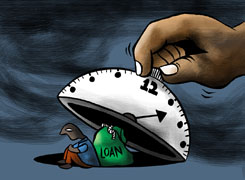
Hii sir I have a personal loan of 1 lakh and i have borrowed 70k from friends and family my salary is only 35000 in which i am paying 7k room rent and 8k EMI, I have a family to feed what should i do
Ans: You are in a tight situation. Still, it is not impossible.

Many people have come out of such a position with right steps.

You must now follow a simple but strict financial plan.

Let us go step by step.

Face Your Situation Honestly, Without Panic
You are earning Rs. 35,000 per month

Rent is Rs. 7,000

Personal loan EMI is Rs. 8,000

Total fixed outgoing is already Rs. 15,000

You also need to feed your family

Plus, you have Rs. 70,000 informal debt to friends and family

This is serious, but not hopeless

First Target: Stop Any Further Borrowing
Do not take any more loans

Don’t swipe credit cards for monthly expenses

Avoid BNPL apps or payday loans — they are dangerous traps

If possible, stop using credit completely until situation improves

Any new borrowing will sink you deeper

Speak to Lender and Restructure EMI
Talk to your bank about your Rs. 1 lakh loan

Request for EMI reduction or tenure extension

You can also ask for 3-month relief or restructuring

Many lenders offer hardship support if you request with documents

Lower EMI gives you breathing space for 6–12 months

Use this wisely to repay informal loans

Inform Friends and Family About Repayment Plan
Be honest and humble to those who helped you

Don’t go silent. It spoils relationships forever

Say clearly that you need 6–12 months to repay

Commit to a monthly repayment plan of Rs. 4,000 or Rs. 5,000

Even if slow, show that you are serious and consistent

Trust grows when they see you try your best

Family Must Support with Simple Living
Share the real picture with your spouse or elders

Reduce every avoidable cost from today

Stop outside food, cab rides, OTT subscriptions, online shopping

Choose budget groceries, public transport, and home-cooked meals

Use every leftover rupee to clear loans step by step

This phase is temporary — if all cooperate

Start a Monthly Repayment Budget Immediately
Let’s build a basic plan from your Rs. 35,000 salary:

Rs. 7,000 for rent

Rs. 8,000 (or restructured EMI of Rs. 5,000)

Rs. 12,000 for food and home running (strictly budgeted)

Rs. 5,000 repayment to family/friends

Rs. 3,000 as buffer/emergency money

This is tight — but you can survive and repay

Create a Side Income or Temporary Gig
You must try to earn an extra Rs. 5,000 to Rs. 10,000 monthly

Many options exist, even in part-time or online mode:

Weekend delivery work (Zomato, Swiggy)

Data entry, basic design, or social media work from home

Tuition to school kids or help for local shops

Evening freelance work from your own skills (Excel, writing, customer service)

Even 2 hours a day can add Rs. 5,000–Rs. 7,000 monthly

Use this extra only for loan repayment or emergency

Don’t Start SIPs or Investments Now
This is not the time to invest

Every rupee must go to debt clearing

Investment can wait — clearing debt is higher priority

Once you are debt-free, SIP can start later

If any LIC or ULIP policy exists, stop paying premium

Investment-cum-insurance is useless when you are in debt

Surrender it and use the value to reduce debt

Only pure term insurance must continue — no other product

Health and Emergency Protection Must Be Reviewed
If your employer gives health cover, confirm its details

If not, check if your spouse or parents have health policy that includes you

If no insurance exists, keep Rs. 3,000 buffer each month for health needs

Sudden medical bills can break your entire plan

Protect this buffer — don’t spend it on shopping

If needed, buy Rs. 5 lakh family floater later — not now

Right now, focus only on survival and stability

One Family, One Goal, One Plan
All family members must support your efforts

Avoid blame, fights or stress — work together

Make this financial stress your shared project

Keep a notebook or Excel sheet to track every rupee spent

Celebrate small wins — like clearing Rs. 10,000 debt in one month

Every small repayment brings mental peace

Avoid These Mistakes
Don’t take gold loan to repay personal loan

Don’t sell essential things like phone, scooter or ration card

Don’t get lured by chit funds or income-doubling apps

Don’t trust anyone who says “give Rs. 10,000 now to earn Rs. 1 lakh”

Don’t quit job suddenly — even if salary feels low

Focus on increasing income slowly — not chasing shortcuts

Use Free Government and NGO Support
Many government schemes can help people in tight situations

Free ration cards (check if you’re eligible)

Midday meal or nutrition support for small children

School fee help in some private schools (talk directly to principal)

Free or low-cost medical treatment in government hospitals

If you look around, help is available — ask without shame

This phase is not failure — it is just a passing storm

Personal Mindset Is the Biggest Tool Now
You must believe you can come out of this mess

It will not happen in one or two months

But it will happen within 12 to 18 months

If you stay consistent, reduce expenses, earn extra, and repay steadily

Millions have done it — you can too

Don’t hide your stress. Talk to 1 trusted person

Even 1 call from a friend or mentor helps you think clearly

Sample 6-Month Plan (For Action)
Month 1 to 3:

Request EMI reduction or relief from bank

Start Rs. 5,000 repayment to friends

Earn extra Rs. 3,000–Rs. 5,000 from weekend work

Cut home cost to Rs. 12,000 with family support

Maintain Rs. 2,000 emergency buffer

No new loans, no new spending

Month 4 to 6:

Use all extra income for Rs. 70,000 repayment

Try to clear informal debt first

Continue Rs. 5,000–Rs. 8,000 bank EMI

Rebuild family trust with consistent payments

Track your progress every 7 days

This will change your mental energy and financial reality

You will feel in control again

Finally
You’re in a financially weak place now, but not defeated.

You still have a job, courage, and support from family and friends.

Start one small action today — everything else will follow.

Avoid shortcuts. Stay honest, focused, and consistent.

After 12 months, your life will look completely different.

Best Regards,
K. Ramalingam, MBA, CFP,
Chief Financial Planner,
www.holisticinvestment.in
https://www.youtube.com/@HolisticInvestment

..Read more

Latest Questions
Dr Nagarajan J S K

Dr Nagarajan J S K   |2577 Answers  |Ask -

NEET, Medical, Pharmacy Careers - Answered on Dec 10, 2025

Asked by Anonymous - Dec 10, 2025Hindi
Ramalingam

Ramalingam Kalirajan  |10878 Answers  |Ask -

Mutual Funds, Financial Planning Expert - Answered on Dec 10, 2025

Asked by Anonymous - Dec 10, 2025Hindi
Money
I am 47 years old. I have started investing in mutual fund (SIP) only since last one year due to some financial obligations. Currently I am investing Rs.33K per month in various SIPS. The details are: Kotak Mahindra Market Growth (Rs. 1500), Aditya BSL Low Duration Growth (Rs. 1400), HDFC Mid-cap Growth (Rs. 12000), Nippon India Large Cap Growth (Rs. 3000), Bandhan small cap (Rs. 5000), Motilal Oswal Flexicap Growth (Rs. 5000), ICICI Pru Flexicap growth (Rs. 5000). I have also started to invest Rs. 1,50,000 per year in PPF since last year. Can I sustain if I retire by the age of 62?
Ans: I can help you with your retirement planning.
You have given a very detailed picture of your investments.
You have also shown strong intent to build wealth at 47.
This itself is a big positive start.

Your Current Efforts

– You started late due to obligations.
– That is understandable.
– You still took charge.
– You now invest Rs.33K every month.
– You also invest Rs.1,50,000 a year in PPF.
– You follow discipline.
– You follow consistency.
– These habits matter the most.
– These habits will help your retirement.
– You deserve appreciation for this foundation.

» Your Current Investment Mix

– You invest in various equity funds.
– You also invest in one low duration debt fund.
– You invest across mid cap, large cap, flexi cap, and small cap.
– This gives you some spread.
– You also invest in PPF.
– PPF gives safety.
– PPF gives steady growth.
– This mix creates balance.

– Please note one point.
– You hold direct plans.
– Direct plans look cheaper outside.
– But they are not always helpful for long-term investors.
– Many investors pick wrong funds.
– Many investors track markets wrongly.
– Many investors redeem at wrong times.
– This affects returns more than the saved expense ratio.
– Regular plans through a MFD with CFP support give guidance.
– Regular plans also help you stay on track.
– Behaviour gap is a major cost in direct funds.
– Thus regular plans with CFP support work better for long-term investors.
– They can correct mistakes.
– They can help with asset mix.
– They can help you stay steady during market drops.
– This gives higher final wealth than direct funds in most cases.

» Your Retirement Age Goal

– You plan to retire at 62.
– You are 47 now.
– You have 15 years left.
– Fifteen years is still a strong time line.
– You can allow compounding to work well.
– Your corpus can grow meaningfully by 62.
– You can also improve your savings rate during this time.

» Assessing If Your Current Plan Supports Retirement

– There are many parts to assess.
– You need to look at your saving rate.
– You need to look at your growth rate.
– You need to look at your future lifestyle cost.
– You need to look at inflation.
– You need to look at post-retirement income need.
– You need to see if your present plan matches this.

– Right now, your total yearly investment is:
– Rs.33K per month in SIP.
– That is Rs.3,96,000 per year.
– Plus Rs.1,50,000 in PPF each year.
– So your total yearly investment is Rs.5,46,000.
– This is a good number.
– This can help your retirement journey.

» Understanding Equity Funds in Your Mix

– You invest in mid cap.
– Mid cap can give good growth.
– Mid cap also carries higher swings.
– You invest in small cap.
– Small cap is the most volatile.
– It can give high returns if held for long.
– But it needs patience.
– You invest in large cap exposure.
– Large cap gives stability.
– You invest in flexi cap.
– Flexi cap funds adjust strategy.
– Flexi cap funds give managers more control.
– Active management is useful in Indian markets.
– Fund managers can shift between market caps.
– They can pick good sectors.
– This improves return potential.
– This is a benefit that index funds do not have.
– Index funds just copy the index.
– Index funds do not avoid weak companies.
– Index funds cannot take smart calls.
– Index funds also rise in cost whenever the index churns.
– Active funds can protect downside.
– Active funds can find better opportunities.
– This is helpful for long-term wealth building.
– So your move towards active funds is fine.

» Understanding PPF in Your Mix

– Your PPF adds stability.
– It gives assured growth.
– It also gives tax benefits.
– It builds a stable part of your retirement base.
– It reduces overall risk in your portfolio.
– It works well over long years.
– You have also chosen a steady long-term asset.
– This is beneficial for retirement.

» Gaps That Need Attention

– Your funds are scattered.
– You hold too many schemes.
– Each additional scheme overlaps with others.
– This reduces impact.
– It also becomes hard to track.
– You can reduce your scheme count.
– A more focused mix can give smoother progress.
– Rebalancing becomes easier.
– You can keep fewer funds but maintain asset spread.
– You can also map each fund to a purpose.

– You also need clarity about your retirement income need.
– Many investors skip this.
– You must know how much money you need per month at 62.
– You must add inflation.
– You must add health needs.
– You must also add lifestyle goals.

» Your Future Lifestyle Cost

– Your cost will rise with inflation.
– Inflation affects food, transport, medical needs.
– Medical inflation is higher than normal inflation.
– Retirement planning must consider this.
– You also need to consider family responsibilities.
– You must consider emergencies.
– You must also consider rising cost of daily life.
– This helps estimate the required retirement corpus.

» Your Future Corpus From Current Savings

– Without giving strict numbers, you can expect growth.
– You invest steadily.
– You invest for 15 years.
– Your equity portion can grow better over long time.
– Your PPF gives predictable growth.
– Your mix can create a decent retirement base.
– But you will need to increase your SIP over time.
– You can raise your SIP by 5% to 10% each year.
– Even small increases help.
– This builds a stronger corpus.
– Your final retirement amount becomes much higher.

» Need for Periodic Review

– Markets change.
– Life situations change.
– Your goals may shift.
– Your income may rise.
– Your responsibilities may change.
– Review every year.
– Adjust as needed.
– A Certified Financial Planner can help.
– This gives clarity.
– This gives structure.
– This gives confidence.
– You can reduce mistakes.
– You can follow proper asset allocation.

» Asset Allocation Approach for Smooth Growth

– You must decide your ideal equity percentage.
– You must decide your ideal debt percentage.
– If you take too much equity, risk increases.
– If you take too little equity, growth reduces.
– You must keep balance.
– It must match your risk comfort.
– It must support your retirement goal.
– Right allocation brings discipline.
– Rebalancing once a year helps.
– Rebalancing controls emotion.
– Rebalancing increases long-term returns.
– Rebalancing keeps your portfolio healthy.

» Importance of Staying Invested During Market Swings

– Markets move up and down.
– Swings are normal.
– Equity grows over long time.
– Equity needs patience.
– People often fear drops.
– They exit at wrong time.
– This hurts long-term wealth.
– You must stay steady.
– You must trust your long-term plan.
– You must follow guidance.
– This improves retirement success.

» Avoiding Common Mistakes

– Many investors pick funds based on recent returns.
– This is risky.
– Fund selection needs deeper view.
– Fund must match your risk.
– Fund must match your time horizon.
– Fund must have consistent process.
– Fund must show reliable pattern.
– Avoid sudden changes.
– Avoid chasing trends.
– Stay with a disciplined plan.
– This ensures better results.

– You must avoid mixing too many categories.
– Focused mix works better.
– Smaller set makes control easy.
– This reduces confusion.

– Do not rely on direct funds for long-term goals.
– Direct funds lack guided support.
– Behavioral mistakes cost more than the lower expense ratio.
– Regular plans help you stay invested.
– They help avoid panic.
– They help during reviews.
– They help create proper asset allocation.
– They help you use the fund in the right way.
– Investment discipline is more important than low cost.
– Regular plans with CFP support deliver this discipline.

» Inflation Protection Through Growth Assets

– Equity protects from inflation.
– PPF adds safety.
– Balanced mix protects your purchasing power.
– Retirement needs this balance.
– Long-term equity portion helps create a healthy corpus.
– This allows you to meet rising living cost.

» How to Strengthen Your Retirement Plan From Now

– Increase SIP every year.
– Even slight hikes help.
– Be consistent.
– Avoid stopping during market drops.
– Do a yearly check-up.
– Reduce scheme count.
– Keep a clear structure.
– Assign each fund a purpose.
– Build an emergency fund.
– This will protect your SIP flow.
– Continue PPF.
– It gives stability.
– It protects your long-term needs.

» Possibility of Sustaining Life After Retirement

– Yes, you can sustain.
– But it depends on three things:
– Your future living cost.
– Your total corpus at retirement.
– Your discipline during retirement.

– If you continue your present saving, your base will grow.
– If you raise your SIP each year, your base will grow faster.
– If you keep a proper asset mix, your base will grow safely.
– If you avoid emotional mistakes, your base will stay strong.
– If you review yearly, your plan will stay on track.

– So sustaining life after retirement is possible.
– You just need stronger structure.
– You also need steady guidance.
– This ensures confidence.

» Retirement Income Planning After Age 62

– Your retirement income must come from a mix.
– Part from equity.
– Part from debt.
– Part from stable instruments.
– Do not depend on one source.
– Plan your withdrawal pattern.
– Take small and stable withdrawals.
– Keep some equity even after retirement.
– This helps your corpus last longer.
– Do not shift everything to debt at retirement.
– That reduces growth too much.
– Balanced approach keeps your money alive.
– This supports your life for long years.

» Health and Emergency Preparedness

– Health costs rise fast.
– You must plan for it.
– Keep health insurance active.
– Keep top-up if needed.
– Keep separate emergency money.
– Do not depend on your investments during emergencies.
– Emergency fund protects your retirement portfolio.
– This keeps compounding intact.
– You can handle shocks with ease.

» Tax Awareness

– Be aware of mutual fund tax rules.
– Equity long-term gains above Rs.1.25 lakh per year are taxed at 12.5%.
– Equity short-term gains are taxed at 20%.
– Debt funds are taxed as per your slab.
– Plan redemptions wisely.
– Do not redeem often.
– Keep long-term horizon.
– This reduces tax impact.
– This helps wealth building.

» Summary of Your Retirement Possibility

– You have a good start.
– You have a workable time frame.
– You have a steady contribution.
– You must refine your portfolio.
– You must increase SIP yearly.
– You must reduce scheme count.
– You must follow asset allocation.
– You must stay disciplined.
– You must get yearly review from a CFP.
– If you follow these, you can reach a healthy retirement base.

» Final Insights

– You are on the right path.
– You have taken the key step by starting.
– You can still create a strong retirement corpus even at 47.
– Fifteen years is enough if you stay consistent.
– Your mix of equity and PPF is good.
– With discipline and structure, your future can stay secure.
– With yearly guidance, you can avoid mistakes.
– With increased SIP, you can boost your corpus.
– You can aim for a peaceful and confident retirement at 62.

Best Regards,
K. Ramalingam, MBA, CFP,
Chief Financial Planner,
www.holisticinvestment.in

https://www.youtube.com/@HolisticInvestment

...Read more

Ramalingam

Ramalingam Kalirajan  |10878 Answers  |Ask -

Mutual Funds, Financial Planning Expert - Answered on Dec 10, 2025

Money
I am 43 yrs old, have sip in Nifty 50 - 3500 Nifty next 50 - 3000 Nippon large cap - 3500 Hdfc midcap - 2500 Parag Flexicap - 3000 Tata small cap - 1300 Gold sip - 500 Hdfc debt fund - 700, lumsum of 10000 in motilal midcap and 20k in quant small cap. accumulated around 2.30 lakhs, started from June, 2024. But overall xirr is very less 3.11. Should I continue the above sips or which sips should be stopped?
Ans: You have started early in 2024, and you already built Rs 2.30 lakhs. This shows discipline. This shows patience. This gives you a good base for your future wealth.

Your XIRR looks low now. This is normal. You started only a few months back. SIPs show low return in the start. Markets move up and down. Early numbers look flat. They look small. They look discouraging. But they improve with time. They improve with longer SIP flow. So please stay calm. The start is always slow. The finish is always strong.

Your effort is strong. Your SIP list is wide. Your savings habit is good. You started at 43 years, but you still have good time to grow your wealth. Every disciplined month builds confidence. Your choices show that you want growth. You want stability. You want balance. This is a good sign.

» Current Portfolio Snapshot
You invest in many groups.

– You invest in Nifty 50.
– You invest in Nifty Next 50.
– You invest in a large cap fund.
– You invest in a midcap fund.
– You invest in a flexicap fund.
– You invest in a small cap fund.
– You invest in gold.
– You invest in a debt fund.
– You put lumpsum in a midcap and small cap fund.

This looks wide. But wide does not mean effective. You hold too many funds in similar areas. That gives duplication. That reduces clarity. That reduces control. You need sharper structure. You need cleaner lines.

» Why Your XIRR Is Low
Your XIRR is only 3.11%. This is normal. Here is why.

– SIP started in June 2024. Very new.
– SIP amount spread across many funds.
– Market volatility in 2024 made early returns look low.
– SIP returns always look weak in early days. They grow with time.

Low short-term return is not a sign of failure. It is not a sign to stop. It is only a sign of market timing. SIP is for long periods. Not for few months.

» Problem of Index Funds in Your Portfolio
You invest in Nifty 50 and Nifty Next 50. Both are index funds. Index funds follow a fixed rule. They copy the index. They do not use research. They do not use fund manager skill. They do not adjust during bad markets. They do not protect much in down cycles. They lock you into index ups and downs.

In India, active fund managers add value. They find better stocks. They exit weak stocks faster. They manage risk better. They use research teams. They use market cycles well. They often beat index returns over long periods.

Index funds look simple. But they lack decision power. They lack flexibility. They lack protection. They give average results. They track the market exactly. They cannot outperform it.

So index funds are not the best choice for your long-term goal. Active funds give more control and more upside over long years.

» Problem of Too Many Funds
You hold too many funds across the same categories. This creates overlap. Two different schemes may hold same stocks. You think you diversify. But you repeat exposure. This weakens your plan.

Too many funds also keep your attention scattered. It reduces discipline. You waste time comparing each fund. You feel lost. You feel uncertain.

Better to keep fewer funds but stronger funds.

» Problem of Direct Funds
If any of your funds are in direct plans, please take note. Direct plans look cheaper because they have lower expense ratio. But they do not give guidance. They do not give personalised strategy. They do not give support during market falls. They do not give behavioural guidance.

Many investors make wrong moves in market dips. They stop SIPs. They redeem at the wrong time. They switch funds too often. They chase returns. This reduces wealth.

Regular plans through a Certified Financial Planner keep you disciplined. They give structure. They give long-term guidance. They reduce errors. They reduce behaviour risk. This helps more than small cost savings.

Regular plans also offer better hand-holding for asset mix, review and goal clarity. This adds real value.

» Fund-by-Fund Assessment
Let me now look at each SIP.

Nifty 50 – This is an index fund. It is passive. It is rigid. Active large-cap funds do better in many years. You may stop this over time.

Nifty Next 50 – Another index fund. Very volatile. Very narrow. You may stop this too.

Nippon large cap – This is active. This is fine. It can stay.

HDFC midcap – This is active. Good long-term category. You can keep this.

Parag flexicap – Flexicap is versatile. Useful for long-term. You can keep this.

Tata small cap – Small caps can grow well. But they need patience. They also need limited allocation. You can keep, but maintain control.

Gold SIP – Small gold SIP is okay for safety.

HDFC debt fund – Debt brings stability. Small SIP is fine.

Lumpsum in midcap and small cap – Keep these invested. They will grow with cycles.

The two index funds are the most unnecessary parts of your plan. These can be stopped. These can be replaced with good active funds already in your system.

» Suggested Structure
You need a cleaner layout.

Keep one large cap active fund.

Keep one midcap active fund.

Keep one flexicap fund.

Keep one small cap fund.

Keep one debt fund.

Keep a small gold part.

This is enough. This gives balance. It gives clarity. It gives growth. It avoids overlap. It avoids confusion.

» SIP Continuation Guidance
Here is the simple view.

Continue your large cap SIP.

Continue your midcap SIP.

Continue your flexicap SIP.

Continue your small cap SIP.

Continue gold SIP.

Continue debt SIP in small proportion.

Stop the Nifty 50 SIP.

Stop the Nifty Next 50 SIP.

Move those two SIP amounts into your existing active funds. This gives you better long-term power.

» Behaviour and Patience
Your returns will not show big numbers for now. You need time. You need patience. You need consistency. SIP is not a race. SIP is a habit. SIP grows slowly. Then it grows big.

Do not judge your plan by the first few months. Judge it after many years. That is where SIP wins. That is where compounding works. That is where discipline shines.

» What Matters More Than Fund Names
The biggest cornerstones are:

Your discipline.

Your patience.

Your time in market.

Your stable SIP flow.

Your emotional stability.

These matter more than any fund selection. You are building them well.

» Asset Mix Guidance
Your mix of equity, debt and gold is good. But you should review this once a year. As you move closer to retirement, increase debt slowly. Reduce small cap slowly. This protects you. This stabilises your progress.

A Certified Financial Planner can help align your asset mix to your goals. This adds real value. This gives stronger structure.

» Taxation View
If you redeem equity funds in future, then keep the current rule in mind. Long-term capital gains above Rs 1.25 lakhs per year are taxed at 12.5%. Short-term gains are taxed at 20%. For debt funds, both gains are taxed as per your income slab.

This will matter only when you redeem. For now, your focus should be growth, not selling.

» Your Long-Term Wealth Path
You have good earnings years ahead. You have strong potential for growth. Your SIP habit is strong. You only need to clean your portfolio. You only need better structure. Then your money will grow well.

You can grow a meaningful corpus if you stay steady. You can even increase SIP when income grows. This gives faster results.

» Emotional Balance
Do not check returns every week. Do not check every month. Check once in six months. Check once in twelve months. SIP is a long game. Treat it like a long game.

Your small XIRR today does not decide your future. Your discipline decides it. You already have it.

» Step-by-Step Action Plan

Step 1: Stop Nifty 50 SIP.

Step 2: Stop Nifty Next 50 SIP.

Step 3: Keep all the remaining SIPs.

Step 4: Shift the stopped SIP amount into your existing large cap and flexicap funds.

Step 5: Continue gold and debt in small amounts.

Step 6: Review once a year with a Certified Financial Planner.

Step 7: Increase SIP amount slowly when income grows.

Step 8: Stay invested for long term.

Step 9: Do not judge returns too early.

Step 10: Keep your patience strong.

» Finally
Your foundation is strong. Your habit is disciplined. Your mix only needs refinement. Your returns will grow with time. Your portfolio will gain strength with consistency. Your path is steady. Your plan will reward you if you follow it with calm and clarity.

Best Regards,

K. Ramalingam, MBA, CFP,
Chief Financial Planner,
www.holisticinvestment.in

https://www.youtube.com/@HolisticInvestment

...Read more

Shalini

Shalini Singh  |180 Answers  |Ask -

Dating Coach - Answered on Dec 10, 2025

Asked by Anonymous - Dec 10, 2025Hindi

Relationship
Hi. I have been in a long distance relationship since 6 months,and i have known my boyfriend since 10 months. He is very understanding, caring,and honest person. He had already told everything about us for his parents and their parents agreed. We both are financially independent. I told my relationship to my parents and they are against it as my boyfriend is from lower caste, different region, not done his degree from a reputed college but a local engineering college, and his status. They are thinking about relatives, and society what will they say, about their pride, status, and all the respect they have earned uptill now will vanish because of my decision. My parents are very protective of me and have given me everything and like me a lot.They are saying its long distance you might have met only 15 times you don't see this person daily to judge his character. If you have known this person for atleast 2/3 years, with u meeting him daily it would be different. But the person i met is honest from the start. They are hurting daily because of my decision. I cant go against them and be happy.
Ans: 1. It is wonderful you have met someone special and in last 10 months you have met him 15 times which averages to meeting him 1.5 times a month. Is it possible to increase this and meet over every second weekend. Can you both travel once.

2. Parents are parents they worry and all parents are protective of their children as are yours. But if they are declining you because of caste etc then please question them asking them to give you an assurance that if they marry you to someone of their choice things will work - In reality there can be no assurance given for any relationship - found by you or introduced by parents as relationships need work by both...both need to grow up, both of you need to be happy individuals for relationship to work + if colleges were the deciding factor then we would not see divorces of those who married in the same caste or are from Stanford, MIT, IIT, IIMs, Inseads of the world.

Here is a suggestion/ recommendation
- meet his family
- get him to meet your parents
- let both set of parents meet

all the best

...Read more

DISCLAIMER: The content of this post by the expert is the personal view of the rediffGURU. Investment in securities market are subject to market risks. Read all the related document carefully before investing. The securities quoted are for illustration only and are not recommendatory. Users are advised to pursue the information provided by the rediffGURU only as a source of information and as a point of reference and to rely on their own judgement when making a decision. RediffGURUS is an intermediary as per India's Information Technology Act.

Close  

You haven't logged in yet. To ask a question, Please Log in below
Login

A verification OTP will be sent to this
Mobile Number / Email

Enter OTP
A 6 digit code has been sent to

Resend OTP in120seconds

Dear User, You have not registered yet. Please register by filling the fields below to get expert answers from our Gurus
Sign up

By signing up, you agree to our
Terms & Conditions and Privacy Policy

Already have an account?

Enter OTP
A 6 digit code has been sent to Mobile

Resend OTP in120seconds

x