Home > Money > Question
Need Expert Advice?Our Gurus Can Help
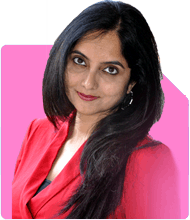
Reetika

Reetika Sharma  |417 Answers  |Ask -

Financial Planner, MF and Insurance Expert - Answered on Sep 18, 2025

Reetika Sharma is a certified financial planner and CEO of F-Secure Solutions.
She advises clients about investments, insurance, tax and estate planning and manages high net-worth individual’s portfolios.
Reetika has an MBA in finance from the Institute of Chartered Financial Analysts of India (ICFAI) and an engineer degree from NIT, Jalandhar.
She also holds certifications from the Financial Planning Standards Board India (FPSB), Association of Mutual Funds in India (AMFI) and Insurance Regulatory and Development Authority of India (IRDAI).... more
Rakesh Question by Rakesh on Aug 17, 2025Hindi
Money

Looking at current global political dynamics and economic scenarios for next 10-12 years please suggest a mutual funds portfolio to invest via sip of 25k per month.

Ans: Hi Rakesh,

To guide you better, need to know more details like your age, goals, income, expenses, current assets, liabilities, purpose of investment, risk appetite etc.

Although it is a very good time to start investing for long term. Your age matters a lot for me to suggest anything to you.

Hence you can consult a professional Certified Financial Planner - a CFP who can guide you with exact funds to invest in keeping in mind your age, requirements, financial goals and risk profile.

Best Regards,
Reetika Sharma, Certified Financial Planner
https://www.instagram.com/cfpreetika/
DISCLAIMER: The content of this post by the expert is the personal view of the rediffGURU. Users are advised to pursue the information provided by the rediffGURU only as a source of information to be as a point of reference and to rely on their own judgement when making a decision.
Money

You may like to see similar questions and answers below

Ramalingam

Ramalingam Kalirajan  |10870 Answers  |Ask -

Mutual Funds, Financial Planning Expert - Answered on May 09, 2024

Asked by Anonymous - Mar 04, 2024Hindi
Listen
Money
Hello Dev I am 22 years old. I want to invest 25k monthly in SIP. Could you suggest me some mutual funds for investing. Risk appetite: moderately agressive. No specific reason for investment.
Ans: It's fantastic to see your proactive approach to investing at such a young age. Let's explore suitable mutual funds for your monthly SIP investment of 25k:

Considering your moderately aggressive risk appetite, we'll focus on funds with a blend of growth potential and risk management.

Diversification is key to managing risk in your investment portfolio. We'll spread your investments across different asset classes and investment styles.

Equity funds offer the potential for high returns over the long term, but they come with higher volatility. We'll allocate a portion of your SIP towards diversified equity funds to capture growth opportunities.

To mitigate risk, we'll also consider allocating a portion of your SIP towards balanced funds or aggressive hybrid funds. These funds invest in a mix of equities and debt instruments, providing a balance between growth and stability.

Regular review and monitoring of your investment portfolio are essential to ensure it remains aligned with your risk tolerance and investment goals.

Keep in mind that investing is a journey, and it's essential to stay disciplined and patient, especially during market fluctuations.

Remember to review your investment strategy periodically and make adjustments as needed based on changing market conditions or personal circumstances.

In conclusion, by investing in a diversified portfolio of mutual funds, you can potentially achieve your long-term financial goals while managing risk effectively.

Best Regards,

K. Ramalingam, MBA, CFP,
Chief Financial Planner,
www.holisticinvestment.in

..Read more

Ramalingam

Ramalingam Kalirajan  |10870 Answers  |Ask -

Mutual Funds, Financial Planning Expert - Answered on May 20, 2024

Asked by Anonymous - May 11, 2024Hindi
Listen
Money
I wish to invest 30K per month via SIP IN MUTUAL Funds Can you kindly suggest some funds. My horizon is apund 5-8 yrs
Ans: Thank you for entrusting me with the responsibility of guiding your investment journey. Investing through a systematic investment plan (SIP) in mutual funds is an excellent way to achieve your financial goals. Let's explore suitable funds for your investment horizon of 5-8 years.

Understanding Your Investment Horizon
With a horizon of 5-8 years, you have the advantage of pursuing a balanced investment strategy that combines growth potential with risk mitigation. This timeframe allows for exposure to equity-oriented funds while maintaining a prudent approach to risk management.

Assessing Fund Categories
Given your investment horizon, a blend of equity and debt funds is advisable to strike the right balance between growth and stability. Equity funds offer the potential for higher returns over the long term, while debt funds provide stability and income generation.

Selecting Equity Funds
When selecting equity funds, consider diversified equity mutual funds that invest across various sectors and market capitalizations. These funds offer exposure to a wide range of stocks, reducing concentration risk and enhancing diversification. Additionally, thematic or sectoral funds may be considered for tactical allocation but should be approached with caution due to their higher risk profile.

Evaluating Debt Funds
Incorporating debt funds into your portfolio can help mitigate volatility and provide stability during market downturns. Opt for high-quality debt funds with a focus on safety and liquidity. Short to medium-term debt funds, such as liquid funds or short-term bond funds, can be suitable for your investment horizon.

Emphasizing Consistency and Performance
When evaluating mutual funds, prioritize consistency and long-term performance over short-term fluctuations. Look for funds with a track record of delivering competitive returns relative to their benchmark indices and peers. Additionally, consider factors such as fund manager expertise, investment philosophy, and risk management practices.

Monitoring and Reviewing Your Portfolio
Regular monitoring and review of your mutual fund portfolio are essential to ensure alignment with your financial goals and risk tolerance. As your circumstances evolve, adjustments may be necessary to optimize your portfolio's performance and mitigate potential risks.

Conclusion
In conclusion, investing through SIPs in mutual funds offers a disciplined and systematic approach to wealth creation over the long term. By diversifying across equity and debt funds and focusing on consistency and performance, you can build a resilient portfolio that is well-positioned to achieve your financial objectives.

Best Regards,

K. Ramalingam, MBA, CFP,

Chief Financial Planner,

www.holisticinvestment.in

..Read more

Ramalingam

Ramalingam Kalirajan  |10870 Answers  |Ask -

Mutual Funds, Financial Planning Expert - Answered on Sep 20, 2025

Money
Hello sir, please recommend mutual funds for the next 15 years, I am willing to shift as guided by you earlier. Average 50,000/- in SIP per month. Presently two sips inder progress, Quant small cap fund and SBI Contra.
Ans: You have shown great patience in continuing your SIPs for many years. Staying invested for 15 years will give you a strong chance of wealth creation. I will share a structured approach to use Rs.50,000 per month SIP wisely. I will also review your existing funds and guide how to balance risk and growth.

» Importance of structured allocation

A single or two funds are not enough for 15 years.

You need a mix of categories for balance.

Growth funds alone can be volatile.

Stability funds are also important.

Allocation must balance equity, hybrid, and debt categories.

» Review of current holdings

Quant Small Cap is very aggressive.

SBI Contra is thematic and style-based.

Both funds have higher risk.

Together, they lack stability.

You need large-cap, flexi-cap, and hybrid for balance.

» Suggested allocation approach

Large cap fund for stability

Invest part of SIP in a large-cap fund.

Large cap gives steady performance over time.

They fall less during market crash.

They also recover faster.

Flexi-cap fund for flexibility

Flexi-cap allows fund manager to shift across sizes.

It adjusts automatically with market condition.

It adds stability plus growth potential.

Mid-cap fund for growth

Mid-cap gives higher growth than large cap.

Risk is higher than large cap.

But lower than small cap.

It balances growth and volatility.

Hybrid aggressive fund for discipline

Hybrid funds give part equity, part debt.

They provide cushion during fall.

They reduce emotional stress during volatility.

Long-term returns remain healthy.

Debt or short-term fund for emergency

Keep a portion in debt mutual fund.

This helps in emergency needs.

Also acts as buffer during crisis.

You will avoid breaking equity funds.

» Example split for Rs.50,000 SIP

Rs.15,000 in large cap fund.

Rs.10,000 in flexi-cap fund.

Rs.10,000 in mid-cap fund.

Rs.10,000 in hybrid aggressive fund.

Rs.5,000 in debt or short-term fund.

This gives growth, balance, and liquidity.

» Why not depend only on small cap or contra

Small cap funds can give very high return.

But they can also fall 40–50% in a year.

Contra is theme-based.

It may work in some market cycle.

But it can underperform for long time.

Relying only on them will create imbalance.

» Importance of diversification

Diversification reduces risk.

It avoids over-dependence on one style.

It keeps long-term growth intact.

Balanced portfolio gives better peace of mind.

» Regular vs. direct plan

Many investors choose direct funds.

They think it saves expense ratio.

But direct investors miss expert guidance.

Wrong fund selection can wipe saved cost.

Regular plan with Certified Financial Planner support is safer.

You get review, rebalancing, and behavioural support.

That value is higher than saved cost.

» Why not index funds

Index funds are often promoted as low-cost.

But they copy the index without skill.

When index falls, they fall fully.

No fund manager expertise to protect downside.

Actively managed funds can beat index.

They can also reduce fall during crash.

For long-term wealth, active funds work better.

» Taxation aspects

Equity mutual funds have new tax rules.

Long-term capital gains above Rs.1.25 lakh taxed at 12.5%.

Short-term gains taxed at 20%.

Debt mutual funds gains are taxed at your slab rate.

Keep this in mind when redeeming in future.

» Review every three years

Mutual funds are dynamic.

Some funds shine, some fade.

You must review every three years.

Shift SIPs if fund quality drops.

A Certified Financial Planner can guide timely changes.

» Discipline in SIP

Never stop SIP during market fall.

Falling market gives more units.

That improves long-term return.

Keep SIP going without interruption.

» Use of lumpsum

If you get bonus or surplus, use lumpsum in hybrid or large cap.

Avoid lumpsum in small cap.

That reduces timing risk.

» Planning for children

You have children aged 18 and 10.

For daughter, education or marriage may need funds soon.

Shift part of equity to debt 2–3 years before the goal.

For son, still 10 years horizon.

Equity allocation can continue for longer.

» Protecting your family

Along with SIP, review insurance.

Adequate term cover is important.

Health insurance for family is also needed.

These protect SIP growth from sudden withdrawals.

» Emergency buffer

Keep at least 6–12 months of expenses in FD or debt funds.

Do not touch SIP for daily needs.

This creates safety and liquidity.

» Finally

Rs.50,000 monthly SIP for 15 years can create large wealth.

Right mix of funds will balance growth and safety.

Do not depend only on small cap and contra.

Spread across large cap, flexi-cap, mid cap, hybrid, and debt.

Review every few years with Certified Financial Planner.

Stay disciplined, stay invested, and goals will be achieved.

Best Regards,
K. Ramalingam, MBA, CFP,
Chief Financial Planner,
www.holisticinvestment.in

https://www.youtube.com/@HolisticInvestment

..Read more

Ramalingam

Ramalingam Kalirajan  |10870 Answers  |Ask -

Mutual Funds, Financial Planning Expert - Answered on Oct 24, 2025

Money
I want to create a mutual fund SIP portfolio for a 27,000 P.M. investment time period of 10 to 15 years. Suggest Me some funds for the portfolio?
Ans: You have made a very good decision by planning a long-term SIP portfolio. A monthly investment of Rs 27,000 with a 10–15 year horizon can help you create solid wealth. Your discipline and early start will give you a huge advantage. The compounding effect over 15 years can be powerful. You are building financial strength patiently and wisely. Let us build a well-balanced portfolio for you.

» Appreciation of your planning

It is very nice to see your focus on systematic investing. Many people wait for the “right time,” but you are already taking action. Your 10–15 year time frame shows maturity and patience. These two qualities make all the difference in wealth creation. SIP investing with clear goals helps you stay focused and disciplined.

By starting today, you are giving time to your money. Time is the biggest ally of compounding. Every monthly contribution will quietly grow and multiply over the years.

» Understanding your objective

Your goal is wealth creation over 10 to 15 years. This is a perfect time frame for equity-oriented mutual funds. Equity funds are volatile in short term but rewarding in long term. A 10–15 year horizon smoothens volatility and allows growth to shine.

Since you have a long horizon, you can afford to take moderate to high equity exposure. The right mix of large, mid, small, and diversified funds will help you achieve your target smoothly.

» Asset allocation strategy

For a 10–15 year plan, an equity-heavy portfolio is best. Around 80–85% in equity and 15–20% in debt or hybrid funds will balance growth and stability. This gives steady growth while controlling risk during market corrections.

Within equity, diversification across fund categories is key. Large cap funds bring stability. Flexicap or multi cap funds give balance. Mid and small cap funds add growth. A contra or value fund can improve returns during different market cycles.

The small portion in debt or hybrid funds ensures liquidity and safety for short-term needs.

» Suggested portfolio structure (category-wise)

30% – Flexicap or Multi Cap Fund (for balanced diversification)

20% – Large & Mid Cap Fund (for growth and stability)

20% – Mid Cap Fund (for higher returns potential)

15% – Small Cap Fund (for aggressive long-term compounding)

15% – Hybrid Aggressive or Balanced Advantage Fund (for cushion and rebalancing support)

This mix provides a strong balance between growth, value, and stability.

» Reason behind each category

The flexicap or multi cap category allows fund managers to shift across large, mid, and small caps based on opportunities. This flexibility helps you benefit in both bullish and bearish markets.

Large & mid cap funds combine the reliability of large companies and the growth potential of mid-sized businesses. This creates a steady base in your portfolio.

Mid cap funds focus on companies with expanding growth potential. They offer better returns than large caps but are more volatile.

Small cap funds can generate very high long-term returns but can also swing sharply. So, limiting exposure to around 15% keeps risk under control.

Hybrid or balanced advantage funds manage asset allocation dynamically. They reduce equity when markets rise and increase equity when markets fall. This cushions your portfolio naturally.

» Allocation of Rs 27,000 per month

You can divide your monthly SIP as follows:

Rs 8,000 – Flexicap or Multi Cap Fund

Rs 5,000 – Large & Mid Cap Fund

Rs 5,000 – Mid Cap Fund

Rs 4,000 – Small Cap Fund

Rs 5,000 – Hybrid Aggressive or Balanced Advantage Fund

This spread keeps your portfolio diversified across styles and capitalisations.

» Importance of regular monitoring

Once you start your SIPs, review your portfolio once every year. Compare each fund’s performance with its category average. If any fund consistently underperforms for more than 3 years, consider switching. But don’t change funds too often. Consistency is more important than constant action.

A Certified Financial Planner can monitor the portfolio performance and rebalance at the right time. It helps you avoid emotional decisions during volatile markets.

» Staying invested for the full term

Do not stop SIPs during market downturns. The real magic of SIP happens in bad markets when you buy more units cheaply. When the market recovers, your returns multiply.

Many investors panic and stop investing when markets fall. That is a big mistake. Your long-term horizon allows you to stay calm. Markets always recover, but only patient investors enjoy full benefit.

» Role of yearly SIP step-up

Every year, try to increase your SIP by 10–15%. If your income grows, your investments should also grow. This is called a step-up SIP. It helps you fight inflation and build a bigger corpus faster.

A Rs 27,000 SIP today, with 10% annual increase, can create far higher wealth in 15 years. This single habit adds immense power to your portfolio.

» Benefits of actively managed funds

Actively managed funds offer better potential than index funds. Index funds only copy the market index. They cannot outperform. They do not adapt when market trends or valuations change.

Actively managed funds, on the other hand, use research and fund manager expertise to pick quality stocks. They shift between sectors based on opportunities. This active approach can help you earn higher returns and manage risk better.

For long-term goals like yours, active funds provide flexibility and growth potential. Index funds may look simple, but they can lag behind during market volatility.

» Direct vs regular plan – a deeper insight

Many investors choose direct plans thinking of saving costs. But direct plans put all responsibility on your shoulders. You must track performance, understand fund strategies, rebalance portfolios, and handle tax implications yourself.

Regular plans, when managed through a Certified Financial Planner, give you professional guidance. The CFP tracks fund quality, makes necessary changes, and ensures goal alignment. The cost difference is very small compared to the benefits.

In fact, investors in regular plans often earn higher net returns because they avoid emotional mistakes and stay invested longer. Professional guidance builds discipline and confidence.

» Taxation and long-term impact

As per the latest tax rule, long-term capital gains (LTCG) above Rs 1.25 lakh are taxed at 12.5%. Short-term gains are taxed at 20%.

Since your investment horizon is 10–15 years, most of your gains will be long-term. You can manage withdrawals smartly to minimise tax. A Certified Financial Planner can help you plan this efficiently.

Avoid frequent redemptions or switches. That increases short-term taxation and reduces compounding power.

» Managing risk through diversification

Your SIP portfolio must balance risk and return. Having a mix of different fund types ensures that all funds do not move in the same direction. When one underperforms, another may do well.

This diversification across fund categories, sectors, and market caps reduces volatility and builds steady growth. You should not have more than 5 to 6 funds in total. Too many funds create duplication and confusion.

Your proposed allocation already achieves this balance well.

» Importance of defining financial goals

It is better to link your SIPs to specific goals. For example – retirement, child education, or buying a house after 15 years. Linking goals gives you purpose and emotional commitment.

Each goal can have a different time horizon and risk level. A Certified Financial Planner can map your SIPs with each goal and track progress. This gives more clarity and peace of mind.

» Reviewing fund managers and consistency

A good fund is not only about high past returns. It is also about consistent performance under different market conditions.

You should look for funds that perform steadily rather than those that just top charts occasionally. Fund manager experience and strategy consistency are important. Your planner can help you track such parameters.

Consistency in fund style helps you predict behaviour better and reduces surprises.

» Importance of emergency fund and insurance

Before starting SIPs, ensure you have an emergency fund equal to 6 months of expenses. This fund gives safety and prevents you from breaking SIPs during emergencies.

Also, buy a term life insurance policy to protect your family. Avoid ULIPs or investment-cum-insurance plans. They combine two different needs and give poor results. A simple term plan and mutual funds combination is best.

Health insurance is equally important. Medical emergencies can derail investments otherwise.

» Behavioural insights for long-term success

Wealth creation is not only about picking the right funds. It is about your behaviour as an investor. Avoid checking your NAVs daily. Markets rise and fall – that’s normal.

Stay focused on your 10–15 year horizon. Trust your process. Regular investing and patience will take care of the rest.

Avoid peer comparisons. Everyone’s financial journey is different. Focus only on your goals.

» Adjusting portfolio near maturity

When you reach around year 13 or 14, slowly start reducing equity exposure. Move around 20–25% of your corpus to hybrid or short-duration debt funds gradually.

This reduces the risk of a sudden market fall before your goal. A gradual shift over one or two years works best.

Never redeem everything at once. Use a systematic withdrawal approach for smoother experience.

» Value of professional guidance

A Certified Financial Planner brings 360-degree clarity to your portfolio. They assess your risk profile, suggest correct allocation, review performance, and ensure all investments stay aligned with your goals.

They also guide you during market corrections, helping you stay calm and continue SIPs. Their advice is unbiased and based on financial planning, not on product sales.

Working with a CFP through regular plans ensures discipline, monitoring, and timely corrections – all crucial for long-term wealth creation.

» Common mistakes to avoid

– Avoid stopping SIPs when markets fall.
– Don’t pick funds based only on past returns.
– Don’t invest in too many funds.
– Avoid investing in direct plans without expert support.
– Don’t redeem too early; give time for compounding.
– Never invest without a clear goal.

By avoiding these mistakes, you protect your growth path and achieve your goals smoothly.

» Finally

Your plan to invest Rs 27,000 monthly for 10–15 years is strong and realistic. With a well-diversified portfolio across equity and hybrid categories, you can create substantial wealth.

Stay invested, review once a year, and increase SIPs regularly. Use regular plans through a Certified Financial Planner for expert tracking and discipline.

You are already on the right road to financial independence. Keep patience, stay consistent, and watch your wealth grow steadily over time.

Best Regards,

K. Ramalingam, MBA, CFP,

Chief Financial Planner,

www.holisticinvestment.in

https://www.youtube.com/@HolisticInvestment

..Read more

Ramalingam

Ramalingam Kalirajan  |10870 Answers  |Ask -

Mutual Funds, Financial Planning Expert - Answered on Oct 24, 2025

Money
I want to create a mutual fund SIP portfolio for a 27,000 P.M. investment time period of 10 to 15 years. Suggest me some funds for the portfolio?
Ans: You are making a very thoughtful decision by planning a long-term SIP portfolio. Investing Rs 27,000 every month for 10 to 15 years is a solid step towards wealth creation. It shows your maturity, focus, and awareness about disciplined investing. Starting early and staying consistent will help you build a strong financial future. Your commitment today will surely pay off tomorrow. Let us look at how to build a strong, diversified portfolio to meet your long-term goals.

» Appreciation of your initiative

Your approach towards systematic investing deserves appreciation. You are not just saving but investing wisely. This is the right way to achieve financial independence. By planning for 10 to 15 years, you are giving your investments enough time to grow. Time is your biggest strength. Compounding works like magic when you give it time.

Also, starting an SIP builds financial discipline. It helps you invest regularly, without worrying about market levels. This habit itself is a great foundation for long-term success.

» Defining the objective clearly

You want to invest Rs 27,000 monthly for the next 10 to 15 years. This is a long-term wealth-building goal. For this time frame, equity mutual funds are the most suitable. They offer the best potential for inflation-beating returns.

A 10–15 year horizon helps you handle short-term volatility comfortably. Your focus should be on steady wealth creation, not short-term returns. A mix of diversified equity funds will give you stability, growth, and protection against inflation.

» Setting the right asset allocation

For a time horizon of 10 to 15 years, an ideal asset allocation would be:

Around 80–85% in equity-oriented funds for long-term growth

Around 15–20% in hybrid or debt-oriented funds for stability

This mix ensures good growth potential while controlling risk during market corrections. Equity funds will drive the returns, and hybrid or debt funds will cushion the volatility.

Within equity, diversification across different market caps and investment styles will balance the portfolio.

» Suggested mutual fund categories for your portfolio

You can create a simple and effective portfolio with 5 funds from different categories. Each category serves a purpose and together they build a strong foundation.

Flexicap or Multicap Fund – Brings balanced exposure across large, mid, and small companies. It adapts to market conditions.

Large & Mid Cap Fund – Combines the stability of large caps and the growth of mid caps.

Mid Cap Fund – Adds a strong growth element for long-term compounding.

Small Cap Fund – Offers higher growth potential over long periods.

Hybrid Aggressive or Balanced Advantage Fund – Provides stability and reduces risk through dynamic allocation.

This combination spreads your money across different segments and styles, reducing risk while maintaining good growth potential.

» Sample allocation of Rs 27,000 monthly investment

You may consider dividing your SIP amount like this:

Rs 8,000 – Flexicap or Multicap Fund

Rs 6,000 – Large & Mid Cap Fund

Rs 5,000 – Mid Cap Fund

Rs 4,000 – Small Cap Fund

Rs 4,000 – Hybrid or Balanced Advantage Fund

This allocation is well-diversified and suits a long-term investor with moderate-to-high risk tolerance. You can always fine-tune this in consultation with a Certified Financial Planner.

» Understanding the role of each category

Flexicap or Multicap Fund: These funds move freely between large, mid, and small companies. They help capture opportunities across segments. The fund manager can adjust allocations based on market conditions. This flexibility helps in both bull and bear markets.

Large & Mid Cap Fund: This category balances growth and stability. Large caps add safety and consistency, while mid caps bring higher growth potential. It ensures steady long-term wealth creation.

Mid Cap Fund: Mid cap companies are fast-growing businesses. They usually outperform large caps over long periods. But they can be volatile in the short term. Holding them for 10–15 years gives time to smooth out volatility.

Small Cap Fund: Small cap funds invest in emerging companies. They carry higher risk but reward long-term investors well. A small allocation, around 15%, adds strength and return potential.

Hybrid or Balanced Advantage Fund: This fund type dynamically adjusts between equity and debt based on market valuations. It provides stability and acts as a cushion during market corrections.

» Importance of diversification

Your portfolio should not depend on one type of fund or one market segment. By including large, mid, small, and hybrid funds, you spread risk. If one segment underperforms, others can balance it.

Diversification ensures smoother returns and reduces the impact of market volatility. It also helps you stay invested comfortably during tough market phases.

» Investing through regular plans

Many investors prefer direct plans thinking they save costs. But direct plans require constant monitoring and rebalancing. Without expert guidance, investors often make emotional decisions and redeem at wrong times.

Regular plans through a Certified Financial Planner provide professional advice, periodic reviews, and risk management. A CFP monitors market conditions and adjusts the portfolio when needed.

The small difference in expense ratio is worth the professional support, discipline, and peace of mind. In the long run, regular plans often deliver better actual returns due to consistent behaviour and timely guidance.

» Importance of professional guidance

A Certified Financial Planner (CFP) studies your goals, risk profile, and income pattern. They design a portfolio that fits your life stage and needs. They also review it regularly to ensure it stays on track.

A CFP also guides you on taxation, rebalancing, and goal alignment. This 360-degree approach helps you manage both growth and safety.

Without proper guidance, investors often chase high returns or make short-term decisions. A CFP ensures you stay focused and disciplined.

» Taxation aspects of mutual funds

As per the new tax rule, when selling equity mutual funds, long-term capital gains above Rs 1.25 lakh are taxed at 12.5%. Short-term gains are taxed at 20%.

For debt mutual funds, both long-term and short-term gains are taxed as per your income tax slab.

Since your investment horizon is 10–15 years, most of your gains will fall under long-term capital gains. You can plan redemptions smartly to reduce tax impact. Avoid frequent switching as that creates unnecessary taxable events.

» SIP step-up strategy

Every year, try to increase your SIP by 10–15%. This is called a step-up SIP. As your income grows, your investments should also grow.

This simple step helps you fight inflation and reach goals faster. It ensures your wealth grows in line with your lifestyle needs.

Even a small yearly increase in SIP amount can make a huge difference after 15 years.

» Reviewing your portfolio

It is important to review your portfolio at least once a year. Check if your funds are performing above their category average. If any fund underperforms consistently for 3 years or more, you can consider switching.

Do not change funds based on one year’s performance. Give time for funds to deliver. The key is to stay consistent. A Certified Financial Planner can help you analyse performance objectively.

» Managing risk and emotions

Equity markets move up and down. Short-term falls are normal. Do not panic or stop SIPs when markets fall. In fact, those are the best times to invest more.

SIPs work best during volatile periods. You buy more units at lower prices and build strong wealth when markets recover.

Avoid emotional decisions. Stay patient and trust your long-term plan. Consistency matters more than timing.

» Inflation and real growth

Inflation reduces the value of money over time. That is why equity funds are important. They provide inflation-beating returns over the long term.

Your SIP portfolio, with a 10–15 year horizon, will likely outperform inflation comfortably. Equity exposure ensures your purchasing power increases over time.

Keep your focus on real returns, not short-term market movements.

» Linking SIPs with goals

It is better to connect your SIPs with specific goals. For example – child’s education, retirement, or house purchase. When goals are defined, you get clarity and motivation to continue.

Goal-based investing keeps you disciplined and emotionally detached from market volatility. It also helps in reviewing progress properly.

Your Certified Financial Planner can map each SIP to a specific goal and track performance.

» Emergency fund and protection

Before starting SIPs, maintain an emergency fund equal to at least six months of expenses. This ensures financial safety in case of job loss or unexpected costs.

Also, have adequate term insurance and health insurance. Avoid ULIPs or investment-cum-insurance policies as they give poor returns and high costs. Term insurance plus mutual funds is a smarter and transparent combination.

This protection ensures your investments stay untouched during emergencies.

» Rebalancing near goal maturity

As your goal nears, around year 13 or 14, start reducing equity exposure gradually. Shift about 20–25% of your corpus to hybrid or short-term debt funds.

This helps protect your capital from sudden market drops before you need the money. A gradual shift is safer than a sudden exit.

A Certified Financial Planner can guide you with this transition smoothly.

» Avoiding common mistakes

– Do not stop SIPs when markets fall.
– Avoid adding too many funds to your portfolio.
– Don’t choose funds based only on past one-year returns.
– Avoid direct plans if you can’t track and review properly.
– Don’t invest in ULIPs or traditional insurance plans.
– Avoid timing the market or chasing short-term performance.

Following these simple principles will keep your portfolio healthy and stable.

» Finally

Your plan to invest Rs 27,000 every month for 10 to 15 years is a great step. With the right mix of equity and hybrid funds, disciplined SIPs, and yearly reviews, you can build significant wealth.

Stay consistent, increase SIPs gradually, and avoid emotional reactions to market movements. Investing through regular plans with a Certified Financial Planner ensures expert guidance, discipline, and goal alignment.

You are already on the right path. Keep investing patiently, and your financial dreams will surely come true.

Best Regards,

K. Ramalingam, MBA, CFP,

Chief Financial Planner,

www.holisticinvestment.in

https://www.youtube.com/@HolisticInvestment

..Read more

Latest Questions
Dr Dipankar

Dr Dipankar Dutta  |1837 Answers  |Ask -

Tech Careers and Skill Development Expert - Answered on Dec 05, 2025

Career
Dear Sir, I did my BTech from a normal engineering college not very famous. The teaching was not great and hence i did not study well. I tried my best to learn coding including all the technologies like html,css,javascript,react js,dba,php because i wanted to be a web developer But nothing seem to enter my head except html and css. I don't understand a language which has more complexities. Is it because of my lack of experience or not devoting enough time. I am not sure. I did many courses online and tried to do diplomas also abroad which i passed somehow. I recently joined android development course because i like apps but the teaching was so fast that i could not memorize anything. There was no time to even take notes down. During the course i did assignments and understood the code because i have to pass but after the course is over i tend to forget everything. I attempted a lot of interviews. Some of them i even got but could not perform well so they let me go. Now due to the AI booming and job markets in a bad shape i am re-thinking whether to keep studying or whether its just time waste. Since 3 years i am doing labour type of jobs which does not yield anything to me for survival and to pay my expenses. I have the quest to learn everything but as soon as i sit in front of the computer i listen to music or read something else. What should i do to stay more focused? What should i do to make myself believe confident. Is there still scope of IT in todays world? Kindly advise.
Ans: Your story does not show failure.
It shows persistence, effort, and desire to improve.

Most people give up.
You didn’t.
That means you will succeed — but with the right method, not the old one.

...Read more

Ravi

Ravi Mittal  |676 Answers  |Ask -

Dating, Relationships Expert - Answered on Dec 04, 2025

Asked by Anonymous - Dec 02, 2025Hindi
Relationship
My married ex still texts me for comfort. Because of him, I am unable to move on. He makes me feel guilty by saying he got married out of family pressure. His dad is a cardiac patient and mom is being treated for cancer. He comforts me by saying he will get separated soon and we will get married because he only loves me. We have been in a relationship for 14 years and despite everything we tried, his parents refused to accept me, so he chose to get married to someone who understands our situation. I don't know when he will separate from his wife. She knows about us too but she comes from a traditional family. She also confirmed there is no physical intimacy between them. I trust him, but is it worth losing my youth for him? Honestly, I am worried and very confused.
Ans: Dear Anonymous,
I understand how difficult it is to let go of a relationship you have built from scratch, but is it really how you want to continue? It really seems to be going nowhere. His parents are already in bad health and he married someone else for their happiness. Does it seem like he will be able to leave her? So many people’s happiness and lives depend on this one decision. I think it’s about time you and your BF have a clear conversation about the same. If he can’t give a proper timeline, please try to understand his situation. But also make sure he understands yours and maybe rethink this equation. It really isn’t healthy. You deserve a love you can have wholly, and not just in pieces, and in the shadows.

Hope this helps

...Read more

DISCLAIMER: The content of this post by the expert is the personal view of the rediffGURU. Investment in securities market are subject to market risks. Read all the related document carefully before investing. The securities quoted are for illustration only and are not recommendatory. Users are advised to pursue the information provided by the rediffGURU only as a source of information and as a point of reference and to rely on their own judgement when making a decision. RediffGURUS is an intermediary as per India's Information Technology Act.

Close  

You haven't logged in yet. To ask a question, Please Log in below
Login

A verification OTP will be sent to this
Mobile Number / Email

Enter OTP
A 6 digit code has been sent to

Resend OTP in120seconds

Dear User, You have not registered yet. Please register by filling the fields below to get expert answers from our Gurus
Sign up

By signing up, you agree to our
Terms & Conditions and Privacy Policy

Already have an account?

Enter OTP
A 6 digit code has been sent to Mobile

Resend OTP in120seconds

x