Home > Money > Question
Need Expert Advice?Our Gurus Can Help
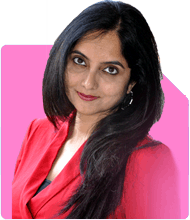
Reetika

Reetika Sharma  |417 Answers  |Ask -

Financial Planner, MF and Insurance Expert - Answered on Oct 11, 2025

Reetika Sharma is a certified financial planner and CEO of F-Secure Solutions.
She advises clients about investments, insurance, tax and estate planning and manages high net-worth individual’s portfolios.
Reetika has an MBA in finance from the Institute of Chartered Financial Analysts of India (ICFAI) and an engineer degree from NIT, Jalandhar.
She also holds certifications from the Financial Planning Standards Board India (FPSB), Association of Mutual Funds in India (AMFI) and Insurance Regulatory and Development Authority of India (IRDAI).... more

Dhaval Question by Dhaval on Oct 04, 2025Hindi

Money

Dear Sir, I have been investing in 11 different schemes of 6 different mutual funds since April, 2024 as per the following details through monthly SIPs: 1. Quant Momentum Fund Direct Growth, Rs.1,000 per month (pm) 2. Axis Multicap Direct Growth, Rs.3,500 pm 3. Mahindra Manulife Multi Cap Fund Direct Growth, Rs.5,000 pm 4. Nippon India Multi Cap Fund Direct Growth, Rs.5,000 pm 5. HDFC Manufacturing Fund Direct Growth, Rs.2,500 pm 6. JM Flexi Cap Fund Direct Plan Growth, 1,000 pm 7. Axis Mid Cap Fund Direct Growth, 5,000 pm 8. Quant Active Fund Direct Growth, Rs.2,500 pm 9. Parag Parikh Flexi Cap Fund Direct Growth, Rs.5,000 pm 10. Nippon India Flexi Cap Fund Direct Growth, Rs.2,500 pm 11. Quant Dynamic Asset Allocation Fund Direct Growth, Rs.2,000 pm i.e. monthly investment of Rs.35,000/- through SIPs. I have also invested a lump sum amount of Rs.15,000/- in Nippon India Banking and Financial Services Fund Growth Plan. I request you to please review my above-mentioned investment and advice so that I can stop / redeem investment from non-performing schemes and I can start investing in better mutual fund SIP schemes to be suggested by you. I will be happy to share any further information if required from your side. Look forward to your early positive response. Sincerely yours, Regards, Dhaval Joshi

Ans: Hi Dhaval,

It is really great for you to start investing and you are investing such a good amount. It will definitely secure your future, if done correctly.

Your portfolio is highly overlapped portfolio and this will not give you a good return in future. You need to follow a balanced approach.
I see all funds are direct funds and seem like a suggestion taken from a random online tip or a friend.

While direct funds are hyped due to their less expense ratio than regular funds (difference of 0.5%), but direct funds like these can really prove otherwise. Going for a regular fund portfolio with a professional's help is the only way going forward. As soon your invested value will cross 5 lakhs and it should be regulalry reviewed and monitored.

My suggestion to you would be to go for a mix of equity and hybrid funds. Choose 1 largecap fund, 1 midcap, 1 smallcap and 1 mutlicap. Avoid sectoral funds. Dividing 35k into these funds will depend upon your other details like age, financial goals, current assets/ liabilities, risk appetite and time horizon.

Hence do consult a a professional Certified Financial Planner - a CFP who can guide you with exact funds to invest in keeping in mind your age, requirements, financial goals and risk profile.

Let me know if you need more help.

Best Regards,
Reetika Sharma, Certified Financial Planner
https://www.instagram.com/cfpreetika/
DISCLAIMER: The content of this post by the expert is the personal view of the rediffGURU. Users are advised to pursue the information provided by the rediffGURU only as a source of information to be as a point of reference and to rely on their own judgement when making a decision.
Money

You may like to see similar questions and answers below

Ramalingam

Ramalingam Kalirajan  |10870 Answers  |Ask -

Mutual Funds, Financial Planning Expert - Answered on Oct 24, 2024

Asked by Anonymous - Oct 15, 2024Hindi
Money
Hi Ramalingam sir, I request you to kindly review my mutual fund investment : 1. Motilal Oswal Midcap Fund Rs 2500pm 2. Quant mid fund Rs 1500pm 3. ICICI prudential Bharat 22 fof Rs 1500pm 4. Nippon India large cap fund Rs 3000pm 5. JM flexi cap fund Rs 3000pm 6. Quant small cap fund Rs 3000pm 7. Tata nifty200 alpha30 index fund Rs 500pm All of them being direct plans Total amount invested Rs 15000pm
Ans: Your decision to invest Rs 15,000 per month in mutual funds is a great step toward building wealth. However, there are a few points to consider to ensure you are optimizing your investments and achieving your financial goals.

Let’s review your portfolio in detail:

Portfolio Overview
Motilal Oswal Midcap Fund – Rs 2,500 per month
Quant Mid Cap Fund – Rs 1,500 per month
ICICI Prudential Bharat 22 FOF – Rs 1,500 per month
Nippon India Large Cap Fund – Rs 3,000 per month
JM Flexi Cap Fund – Rs 3,000 per month
Quant Small Cap Fund – Rs 3,000 per month
Tata Nifty 200 Alpha 30 Index Fund – Rs 500 per month
These investments total Rs 15,000 per month, and it’s commendable that you have allocated funds across various categories, including large-cap, mid-cap, small-cap, and sector-specific funds. However, there are key areas to evaluate to help you optimize returns and manage risks.

Disadvantages of Direct Funds
Since you are investing in direct plans, it's important to be aware of a few limitations:

No Financial Guidance: Direct plans do not come with any personalized advice from a Certified Financial Planner. This could mean missing out on crucial insights and market trends that could boost your returns.

Lack of Market Knowledge: If you're not constantly tracking markets, you may miss out on strategic shifts. A professional fund distributor can guide you to take timely actions.

Overlooking Tax Efficiency: Direct plans do not provide any tax-efficient strategies. An expert's input can help minimize tax liabilities and maximize post-tax returns.

Given these limitations, I would recommend switching to regular funds through a Mutual Fund Distributor (MFD) with a Certified Financial Planner (CFP) credential. This will ensure professional guidance and better long-term returns.

Disadvantages of Index Funds
Your portfolio includes an index fund (Tata Nifty 200 Alpha 30 Index Fund). While index funds have low expense ratios, they come with their own set of challenges:

Lack of Flexibility: Index funds cannot adjust to changing market conditions. In a volatile market, this can result in lower returns compared to actively managed funds.

No Market Timing: An index fund simply follows the index, regardless of individual stock performance. Active funds, on the other hand, can exit underperforming stocks and reinvest in better opportunities.

For these reasons, I recommend focusing more on actively managed funds, where fund managers can provide better growth potential by actively selecting stocks and rebalancing portfolios based on market conditions.

Analysis of Your Current Mutual Funds
Now, let's analyze your specific fund choices and provide suggestions on how to refine your portfolio:

1. Motilal Oswal Midcap Fund – Rs 2,500 per month
Analysis: Midcap funds can offer higher returns than large-cap funds, but they also come with higher risk. Since you already have a significant allocation in midcaps, ensure that your risk appetite aligns with this investment.
2. Quant Mid Cap Fund – Rs 1,500 per month
Analysis: This is another midcap fund, and you are currently allocating Rs 4,000 in total toward midcaps (Motilal Oswal Midcap Fund and Quant Mid Cap Fund). While midcaps provide good growth potential, it’s essential to maintain a balanced portfolio by adding other asset classes.
3. ICICI Prudential Bharat 22 FOF – Rs 1,500 per month
Analysis: Bharat 22 FOF is a thematic fund that invests in public sector companies. While these funds can perform well during certain periods, they come with high concentration risk. If you are investing for long-term wealth creation, it might be wise to diversify your allocation rather than relying on sector-specific funds.
4. Nippon India Large Cap Fund – Rs 3,000 per month
Analysis: Large-cap funds provide stability and steady growth. Nippon India Large Cap Fund is a good choice for balancing your overall portfolio risk. Large-cap funds are essential for a well-rounded portfolio as they offer lower volatility than mid and small caps.
5. JM Flexi Cap Fund – Rs 3,000 per month
Analysis: Flexi-cap funds invest in large, mid, and small-cap companies, offering diversification. This fund could help reduce the risk in your portfolio, as it can invest across market capitalizations based on market conditions.
6. Quant Small Cap Fund – Rs 3,000 per month
Analysis: Small-cap funds can provide high returns, but they also come with the highest risk. While it's good to have some exposure to small caps, ensure you are not overly exposed to this segment.
7. Tata Nifty 200 Alpha 30 Index Fund – Rs 500 per month
Analysis: As discussed earlier, index funds have limitations, and I recommend shifting this amount to an actively managed fund for better growth potential and flexibility.
Areas of Improvement and Suggestions
Overlapping Funds: Your portfolio has an overlap in the midcap space (Motilal Oswal Midcap Fund and Quant Mid Cap Fund). While it's good to diversify, having too many funds from the same category can lead to duplication and reduce your overall returns. You could consolidate your midcap exposure into one well-performing fund.

Balanced Risk: You have allocated a significant portion of your portfolio to mid and small-cap funds, which are higher risk. To balance this, consider increasing your investment in large-cap or flexi-cap funds, which provide more stability and lower risk.

Reduce Sector-Specific Exposure: ICICI Prudential Bharat 22 FOF is a thematic fund with a high concentration in public sector companies. It might be a good idea to reduce your exposure to sector-specific funds and invest in diversified equity funds instead.

Increase Flexi Cap Allocation: Flexi-cap funds provide diversification across market capitalizations. By increasing your allocation to JM Flexi Cap Fund, you can better balance the risk and returns in your portfolio.

Reconsider Index Fund: Since index funds lack flexibility, I recommend shifting the Rs 500 currently allocated to Tata Nifty 200 Alpha 30 Index Fund to an actively managed large or flexi-cap fund. This will help you achieve better returns over the long term.

Tax Considerations
When selling equity mutual funds:

Long-Term Capital Gains (LTCG): Gains above Rs 1.25 lakh are taxed at 12.5%.

Short-Term Capital Gains (STCG): Gains made within three years are taxed at 20%.

Keep these tax rules in mind when planning to exit or rebalance your portfolio, as taxes can impact your overall returns.

Final Insights
Your mutual fund portfolio is a good start, but it requires some fine-tuning to optimize growth and manage risks better. Consolidating your midcap exposure, reducing sector-specific funds, and avoiding index funds can help you achieve more balanced growth. Shifting to regular funds through a Certified Financial Planner (CFP) can also provide expert guidance to further optimize your investments.

By following these adjustments and maintaining a disciplined investment approach, your portfolio can deliver strong returns over the long term.

Best Regards,

K. Ramalingam, MBA, CFP,

Chief Financial Planner,

www.holisticinvestment.in
https://www.youtube.com/@HolisticInvestment

..Read more

Ramalingam

Ramalingam Kalirajan  |10870 Answers  |Ask -

Mutual Funds, Financial Planning Expert - Answered on Jan 16, 2025

Money
Hi Myself Sanjeev Kumar from Himachal Pradesh, I am investing in mutual funds from last 3 years on below mutual funds through SIP 1. Aditya birla multicap fund (regular growth) ---- Rs 1000 monthly 2. Invesco India flexi Cap fund (Plan growth) ------ Rs 1000 monthly 3. Invesco India Multicap fund (regular growth) ---- Rs 1000 monthly 4. Kotak multicap fund (regular) ------------------------- Rs 1000 monthly 5. Kotak emerging equity fund (growth) --------------- Rs 1000 monthly 6. Kotak ELSS tax saver fund ------------------------------- Rs 500 monthly 7. Union tax saver fund (ELSS) ---------------------------- Rs 1500 monthly 8. Bandhan Nifty 200 momentum 30 index fund (regular plan) --- Rs 1000 9. Kotak multiasset fund ------------ Rs 1000 monthly (started a month ago) 10. UTI EFT Gold fund ------------------ Rs 1000 /- Apart from above, I am investing in below also 1. PPF ---------------- 1.5 lac annually 2. NPs ---------------- 0.5 lac annually 3. LIC ----------------- 0.5 lac annually Sir you are requested to review my portfolio, Is this portfolio good enough to produce at least 60- 70 lakhs return in next 10-12 years or some reshuffling is required. If yes kindly suggest some good funds. Hoping to hear from you soon Thanks
Ans: You have a fairly diversified portfolio with exposure across equity funds, tax-saving instruments, and fixed-income products. Let's evaluate your current portfolio:

Equity Exposure
Multicap and Flexi-cap Funds:

You have good exposure to multicap and flexi-cap funds. These funds are beneficial as they provide exposure across different market caps (large, mid, small), offering balanced risk and growth potential.
The fund choices are varied, but some of them overlap in terms of the equity segments they cover. This may lead to duplication, reducing the overall diversification.
Tax-saving ELSS Funds:

Both Kotak ELSS Tax Saver Fund and Union Tax Saver Fund provide tax benefits under Section 80C. This is an excellent strategy for reducing taxable income while simultaneously growing wealth over the long term. However, having two ELSS funds with similar objectives may not be necessary.
Consider reviewing the performance and making sure that your tax-saving investments are optimized for returns.
Nifty and Gold Exposure:

Your investment in the Bandhan Nifty 200 Momentum Index Fund introduces some exposure to index funds, but remember, index funds tend to track market performance and do not offer active management. While this can be a cost-effective option, you might miss out on higher growth opportunities that actively managed funds can offer.
Gold exposure via UTI Gold ETF is a good hedge against inflation, but it is a passive investment and does not generate income.
Fixed Income Exposure
PPF and NPS:

Your investment in PPF (Public Provident Fund) and NPS (National Pension Scheme) is a solid long-term savings strategy. These provide safety, tax benefits, and long-term growth.
PPF locks your funds for 15 years, but it offers guaranteed returns, which is an excellent option for conservative savings. NPS, however, provides exposure to equity and debt markets and is a good retirement planning tool.
LIC:

LIC investments are a combination of insurance and savings. However, considering the long-term performance and opportunity cost, it might be worth reviewing whether these investments align with your future goals or if reallocating these funds into mutual funds could offer better returns.
Investment Amount and Goals
Given your monthly SIP of Rs. 10,500 and annual investments of Rs. 2.5 lakh in PPF, NPS, and LIC, it is essential to have a clear vision of your financial goals over the next 10-12 years.

Expected Return of Rs. 60-70 Lakh:
Based on your goal of accumulating Rs. 60-70 lakh in the next 10-12 years, your current portfolio seems reasonable. However, there are areas where optimization can boost the chances of meeting your goal.
Suggested Portfolio Reshuffling
Reduce Fund Overlap:

You are holding multiple multicap funds with similar objectives. It might be wise to consolidate these into one or two strong performers to reduce duplication.
Evaluate whether the Nifty 200 index fund is in line with your preference for actively managed funds.
Focus on Actively Managed Funds:

Active Management: Actively managed funds tend to provide higher returns, especially in fluctuating markets. They also help mitigate risks, unlike index funds, which follow market movements and may not outperform during volatile periods.
Consider focusing on large-cap, mid-cap, and small-cap funds for equity growth while also ensuring there is exposure to sectoral funds and thematic funds for extra diversification.
Diversified Growth-Focused Funds:

Given your long-term horizon, including growth-oriented funds is crucial. You may consider adding more funds with a history of consistent outperformance in the equity space.
Tax Optimization:

Your tax-saving investments are well-distributed between ELSS, PPF, and NPS. However, reviewing your ELSS funds for performance is essential. Choose funds that consistently outperform their benchmark and offer strong long-term growth.
Gold Exposure:

Gold exposure via ETFs is beneficial, but consider limiting it to around 5-10% of the portfolio as a diversification hedge. You may also explore mutual funds that invest in gold.
Final Insights
Consolidate Funds: Reduce the number of funds to avoid overlap and improve focus on quality investments.
Increase Focus on Actively Managed Funds: Focus on actively managed equity funds to achieve better returns in the long run.
Evaluate Tax-Saving Instruments: Review your ELSS investments for their performance and align them with your risk profile.
Goal-Oriented Approach: Stay focused on your long-term goals and ensure that your asset allocation matches your risk tolerance and time horizon.
Finally, given your clear objective of growing wealth to reach Rs. 60-70 lakh over the next 10-12 years, restructuring your portfolio to optimize risk and returns will significantly help you achieve your financial goals.

Best Regards,

K. Ramalingam, MBA, CFP,

Chief Financial Planner,

www.holisticinvestment.in
https://www.youtube.com/@HolisticInvestment

..Read more

Ramalingam

Ramalingam Kalirajan  |10870 Answers  |Ask -

Mutual Funds, Financial Planning Expert - Answered on Nov 25, 2025

Money
I am having SIP of Rs 10000/per month n the following MFS Scheme as detailed below Sl no MUTUAL FUND MONTHLY SIP RETURN /NSDL CMENCE DT 1. ICICI PRU LARGE CAP Rs 10000/ 20.52% 20-07-2020 2.MIRAE ASST LARGE&MIDCAP Rs 2500+ LUMP 17.8% 29-09-2016 3.PARAGUE PARIK FLEXI CAP Rs 10000 14.92 % 09-08 -2015 4.SBI SMALL CAP Rs 10000 18,6% 15-07-2018 5.NIPPON INDIA SMALL CAP Rs 10000 7.92% 26-09-2023 6. MOTILAI OSWAL MID CAP Rs 10000 8.79% 12-10-2024 7.QUANT SMALL CAP RS 10000 3.75% 14-06-2024 8.INVESCO INDIA PSU FUND LUMP SUM 10.9% 15-09-2024 9. KOTAK FLEXI CAP LUMP SUM 12.82% 10-01-2022 10 CANARA ROECO EMERGIN LUMP SUM 15.78% As the returns from sl nos 5.6.7 are not to the satisfaction I feel the amount may be shifted to SL NOS 1,2,3,4. PLEASE ADVISE ME AND TAKE ME TO THE CORRECT DIRECTION. Please give me your valuable comment on sl nos 8,9 10 THANING YOU,SIR S.CHITHAMBARA KUTTALAM PILLAI
Ans: Your commitment to steady SIPs is very good.
You track your performance with care.
You show patience and long-term thinking.
This discipline builds strong wealth.
Your long journey also shows deep faith in equity.
That faith will reward you over time.

Your SIPs run across large cap, large and mid cap, flexi cap, mid cap and small cap.
You also hold three lump sum funds in different areas.
Your spread is wide.
Your base is strong.
You also ask valid concerns about low-return funds.
And you want to place money in better performing places.
I will cover all these points step by step.

» Your Current Portfolio Shape

Your SIP covers five categories.
That reduces risk.
This protects you during market swings.
Your mix also supports long-term growth.
You have long-running SIPs.
They create deep compounding.
You also started some new SIPs recently.
These new SIPs need time.

Your lump sum part sits in three equity areas.
These areas offer stable and cyclical growth.
So your portfolio works like a full basket.
Some parts grow fast.
Some parts grow slow.
But together they create balance.

Your idea to review poor-performing SIPs is normal.
Most investors feel this at some point.
But decisions need clear analysis.
Not emotion.
Not short-term fear.
Not short-term disappointment.

» Why Some SIPs Show Low Returns Today

Three SIPs are worrying you.
They are small cap and mid cap oriented.
These categories behave differently.
They run in cycles.
Their gains rise sharply in some cycles.
They fall sharply in others.
This is normal for these categories.

Your SIP start dates are also very recent.
Some are only a few months old.
One is just around one year.
One is around one and half years.
Such short periods don’t show true performance.
They only show temporary market mood.

Small caps need long periods.
At least five years.
Sometimes seven years.
Sometimes even more.
Mid caps need patience as well.
New SIPs don’t show real power early.

Your low returns now do not mean poor fund quality.
They show only market phase.
Phases change.
Returns shift fast.
Small and mid caps often jump after weak phases.

So please don’t judge these new SIPs now.
Give them more time.
They started in a volatile cycle.
And that is the only reason returns look low.

» Should You Shift These SIPs to Your Stronger Funds?

You are thinking to move these SIPs into your stable performers.
Your stable performers include large cap, long-running flexi cap, large and mid cap, and long-running small cap.
They show strong long-term returns.
They also have long histories with you.

But shifting now can break your asset mix.
If you move money away from mid and small caps, your portfolio will tilt heavy to large caps.
This reduces long-term return potential.
Large caps are stable but slow.
Small and mid caps add speed in long-term compounding.
If you remove them now, the future growth reduces.

Also, shifting at low returns locks your loss temporarily.
This reduces your recovery scope.
Equity demands patience.
Shifts should happen only for category change or goal change.
Not due to early low return.

Your existing stable funds are strong.
But your new SIPs are young.
They must complete a cycle.
Give them time.
Let them build track record.
Let them grow into their natural cycle.

So shifting is not needed now.
Holding is better.
This protects your asset spread.
This protects your future upside.

» What You Can Do Instead of Shifting

– Keep the SIP amounts running in all categories.
– Do not stop a SIP only because returns look low.
– Give new SIPs time to settle.
– Keep your existing strong funds as anchors.
– Let the new SIPs grow slowly with the cycle.

This approach keeps your long-term path strong.
Your risk stays balanced.
Your return potential stays high.
Your peace remains intact.

» Your Large Cap SIP

Your large cap SIP shows stable long-term return.
Large caps protect you during market shocks.
They give consistent strength.
This SIP can stay as it is.
Your amount here is healthy.

Large caps will never give small cap-style jumps.
But they give backbone strength.
You already enjoy that.
So no change needed here.

» Your Large and Mid Cap SIP

This category is good for balanced growth.
It gives both stability and speed.
Your return is strong due to long holding period.
This SIP is a pillar in your mix.
You can continue this SIP.

This category sometimes outperforms large caps.
Sometimes mid caps inside it push growth.
So it gives a smooth growth curve.

» Your Long-Term Flexi Cap SIP

A flexi cap fund adjusts allocation based on market cycles.
This gives natural balance.
Your return shows good long-term compounding.
This SIP is valuable for long-term wealth.
Keep this running as well.

Flexi cap gives freedom to move across market caps.
This helps during tough cycles.
This helps during opportunity cycles.

» Your Earlier Small Cap SIP With Good Return

Your long-running small cap SIP is solid.
The return shows full cycle benefit.
This proves that small caps need time.
You have seen both low and high phases.
And it rewarded you well.
This is the best example for your new SIPs.

This SIP also gives high long-term power.
Small caps grow faster when held long.
This SIP should continue.
It strengthens your return potential.

» Your Three New SIPs With Low Returns

These SIPs look weak now.
But they are too new.
They cannot show long-term truth yet.
Please wait.
Please continue.
They will settle.
They will show their cycle strength later.

Stopping now may disturb your mix.
Stopping now may cut your chance for higher future returns.

So I advise to continue them.
Let them complete three to five years.
Then review again.

» Your Lump Sum in PSU Theme

Your PSU-themed lump sum works like a cyclical idea.
It grows well during reform cycles.
It grows during strong government policy cycles.
You hold it for a short time now.

The return is decent for a short period.
But this category is not stable always.
It moves in waves.
So you must keep moderate expectations.
Don’t expect smooth returns here.
Hold it medium term.
Do not add more now.
Let it run on its own.

Review after three years.
Keep it as a satellite portion of your total.

» Your Lump Sum in Flexi Category

This fund gives broad market coverage.
Your return is good.
Flexi cap works well when markets shift directions.
Hold this for long term.
It suits broad-based wealth creation.

No need to redeem.
No need to shift.
Let it stay and grow steady.

» Your Lump Sum in Emerging Category

This category grows when domestic and global cycles favour growth-oriented companies.
Your return is strong.
This shows the category is working well.

Hold it for long term.
Do not disturb it.
Allow more compounding.
It can support high capital appreciation.

» Why Active Funds Give Better Scope Than Index Funds

Index funds track the market.
They cannot beat the market.
They cannot avoid weak companies inside the index.
They cannot manage risk actively.
They cannot adjust during market shocks.
They cannot shift between sectors based on cycle.

Active funds can do all these.
Active funds can remove weak stocks.
Active funds can allocate more to strong sectors.
Active funds can reduce risk quickly.
Active funds can capture opportunities early.
Active funds give better long-term power.
So your active fund choices are suitable.

» Why Regular Plans Are Better Than Direct Plans

Regular plans come with guidance.
They give you clarity.
You get support in reviews.
You get a Certified Financial Planner’s view.
You get timely corrections.
You get emotional support in volatile cycles.

Direct plans give no such support.
Direct plans leave you alone during tough times.
Direct plans become risky without guidance.

So regular plans are better for your long-term journey.

» Cash-Flow Comfort and Mental Comfort

Your SIP size is strong.
Ten thousand rupees across many categories builds big wealth.
But make sure it fits your cash flow.
You should not feel pressure.
Your SIP should feel natural.
Not heavy.
Not stressful.

Mental comfort is important.
If you worry too much about short-term returns, you may take wrong actions.
Please see equity as a long-term partner.
Short-term pain is normal.
But long-term gain is powerful.

» Risk Spread Across Your Portfolio

Your portfolio is spread well across five categories.
Large cap gives stability.
Flexi cap gives balance.
Large and mid cap gives smooth growth.
Mid cap gives speed.
Small cap gives high compounding.
PSU gives exposure to government-linked sectors.
Emerging category gives future growth trends.

This spread supports your long-term safety.
This gives you a full 360-degree structure.
This helps you handle all cycles.

» How to Review in Future

Review once a year.
Not every month.
Not every quarter.
One year gives clear signals.
Short periods give noise.

Check only category-level changes.
Do not react to short-term low returns.
Do not shift during weak phases.
Shift only when your goals or risk levels change.

» Finally

Your portfolio is strong.
Your commitment is strong.
Your categories are balanced.
Your lump sum part is fine.
Your weak SIPs only look weak because they are new.
They need time.
Do not shift them now.
Let all your SIPs continue.
This will build wealth in the long run.
You are on the right direction.
Stay steady.
Stay patient.
Stay invested.

Best Regards,
K. Ramalingam, MBA, CFP,
Chief Financial Planner,
www.holisticinvestment.in

https://www.youtube.com/@HolisticInvestment

..Read more

Latest Questions
Dr Dipankar

Dr Dipankar Dutta  |1837 Answers  |Ask -

Tech Careers and Skill Development Expert - Answered on Dec 05, 2025

Career
Dear Sir, I did my BTech from a normal engineering college not very famous. The teaching was not great and hence i did not study well. I tried my best to learn coding including all the technologies like html,css,javascript,react js,dba,php because i wanted to be a web developer But nothing seem to enter my head except html and css. I don't understand a language which has more complexities. Is it because of my lack of experience or not devoting enough time. I am not sure. I did many courses online and tried to do diplomas also abroad which i passed somehow. I recently joined android development course because i like apps but the teaching was so fast that i could not memorize anything. There was no time to even take notes down. During the course i did assignments and understood the code because i have to pass but after the course is over i tend to forget everything. I attempted a lot of interviews. Some of them i even got but could not perform well so they let me go. Now due to the AI booming and job markets in a bad shape i am re-thinking whether to keep studying or whether its just time waste. Since 3 years i am doing labour type of jobs which does not yield anything to me for survival and to pay my expenses. I have the quest to learn everything but as soon as i sit in front of the computer i listen to music or read something else. What should i do to stay more focused? What should i do to make myself believe confident. Is there still scope of IT in todays world? Kindly advise.
Ans: Your story does not show failure.
It shows persistence, effort, and desire to improve.

Most people give up.
You didn’t.
That means you will succeed — but with the right method, not the old one.

...Read more

Ravi

Ravi Mittal  |676 Answers  |Ask -

Dating, Relationships Expert - Answered on Dec 04, 2025

Asked by Anonymous - Dec 02, 2025Hindi
Relationship
My married ex still texts me for comfort. Because of him, I am unable to move on. He makes me feel guilty by saying he got married out of family pressure. His dad is a cardiac patient and mom is being treated for cancer. He comforts me by saying he will get separated soon and we will get married because he only loves me. We have been in a relationship for 14 years and despite everything we tried, his parents refused to accept me, so he chose to get married to someone who understands our situation. I don't know when he will separate from his wife. She knows about us too but she comes from a traditional family. She also confirmed there is no physical intimacy between them. I trust him, but is it worth losing my youth for him? Honestly, I am worried and very confused.
Ans: Dear Anonymous,
I understand how difficult it is to let go of a relationship you have built from scratch, but is it really how you want to continue? It really seems to be going nowhere. His parents are already in bad health and he married someone else for their happiness. Does it seem like he will be able to leave her? So many people’s happiness and lives depend on this one decision. I think it’s about time you and your BF have a clear conversation about the same. If he can’t give a proper timeline, please try to understand his situation. But also make sure he understands yours and maybe rethink this equation. It really isn’t healthy. You deserve a love you can have wholly, and not just in pieces, and in the shadows.

Hope this helps

...Read more

DISCLAIMER: The content of this post by the expert is the personal view of the rediffGURU. Investment in securities market are subject to market risks. Read all the related document carefully before investing. The securities quoted are for illustration only and are not recommendatory. Users are advised to pursue the information provided by the rediffGURU only as a source of information and as a point of reference and to rely on their own judgement when making a decision. RediffGURUS is an intermediary as per India's Information Technology Act.

Close  

You haven't logged in yet. To ask a question, Please Log in below
Login

A verification OTP will be sent to this
Mobile Number / Email

Enter OTP
A 6 digit code has been sent to

Resend OTP in120seconds

Dear User, You have not registered yet. Please register by filling the fields below to get expert answers from our Gurus
Sign up

By signing up, you agree to our
Terms & Conditions and Privacy Policy

Already have an account?

Enter OTP
A 6 digit code has been sent to Mobile

Resend OTP in120seconds

x