Home > Money > Question
Need Expert Advice?Our Gurus Can Help

Ramalingam

Ramalingam Kalirajan  |10874 Answers  |Ask -

Mutual Funds, Financial Planning Expert - Answered on Aug 11, 2025

Ramalingam Kalirajan has over 23 years of experience in mutual funds and financial planning.
He has an MBA in finance from the University of Madras and is a certified financial planner.
He is the director and chief financial planner at Holistic Investment, a Chennai-based firm that offers financial planning and wealth management advice.... more
Asked by Anonymous - Aug 10, 2025Hindi
Money

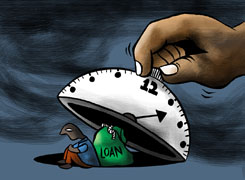
Hello. I am 30 years old and currently employed in a Public Sector Undertaking, earning a net monthly salary of approximately 75,000 rupees. I would like advice on reducing my monthly loan repayment burden. My current liabilities are: Personal loan with an outstanding balance of 380,000 rupees, monthly EMI of 7,191 rupees, interest rate of 12.5%, with 73 months remaining. Overdraft against my Provident Fund of 540,000 rupees, interest rate of 5.95%. Long-term personal loan with an outstanding balance of 480,000 rupees, monthly EMI of 6,600 rupees, interest rate of 7%. Consumer loan with an outstanding balance of 55,000 rupees, interest rate of 5.95%, monthly EMI of 1,800 rupees. My monthly expenses are approximately 20,000 rupees for household needs, 8,500 rupees for house rent, and 5,000 rupees for miscellaneous expenses.

Ans: You are already showing discipline by tracking your loans and expenses clearly.
You are also managing multiple liabilities without default.
This shows strong commitment towards financial stability.

» Understanding your income and liabilities
– Your net monthly salary is Rs. 75000.
– You have four active loans.
– Personal loan EMI is Rs. 7191 at 12.5% interest.
– Overdraft against PF is Rs. 540000 at 5.95% interest.
– Long-term personal loan EMI is Rs. 6600 at 7% interest.
– Consumer loan EMI is Rs. 1800 at 5.95% interest.
– Household needs take Rs. 20000 monthly.
– House rent is Rs. 8500.
– Miscellaneous costs are Rs. 5000.

» Assessing EMI burden
– EMI total is over Rs. 15000 monthly.
– EMI share of income is around 20%.
– This is manageable but can be improved.
– High-interest personal loan is the biggest cost burden.
– Overdraft and consumer loan have low interest but still add pressure.

» Strategy for reducing interest cost
– Focus first on highest interest loan.
– Prepay personal loan at 12.5% whenever surplus is available.
– Even small prepayments reduce interest over time.
– Avoid using fresh personal loans for any purpose.
– Do not prepay low-interest loans before closing high-interest ones.

» Role of overdraft against PF
– Overdraft rate is much lower than personal loan.
– If possible, increase PF overdraft slightly to close part of high-interest personal loan.
– This is beneficial only if repayment discipline is maintained.
– Once personal loan is closed, focus on reducing overdraft gradually.

» Handling the long-term personal loan
– This loan is at 7% interest, which is not high.
– Do not rush to close it before clearing costlier loans.
– Maintain regular EMI without delay.
– Prepay later only after high-interest loans are cleared.

» Clearing the consumer loan
– Consumer loan is small and low interest.
– Closing it early will free Rs. 1800 monthly.
– This extra can go to personal loan prepayment.
– This creates psychological relief as well.

» Balancing loan closure and savings
– Avoid using all savings for loan closure.
– Keep at least 3 to 4 months expenses as emergency fund.
– This ensures no fresh loans during sudden needs.
– Allocate surplus after this for aggressive loan prepayment.

» Creating a surplus for prepayment
– Your expenses are Rs. 33500 including rent and misc.
– After EMI and expenses, some surplus remains.
– Track this surplus and direct it towards high-interest loan closure.
– Avoid lifestyle spending until loans are reduced.

» Managing monthly cash flow
– Maintain a clear monthly budget sheet.
– Categorise expenses into essential and optional.
– Reduce optional spends for 12 to 18 months.
– Use savings from reduced spends for prepayments.

» Avoiding future debt build-up
– Do not take new consumer loans for non-essential purchases.
– Avoid buying on EMI unless unavoidable.
– Plan purchases with savings instead of credit.
– This prevents repeating current loan situation.

» Protecting yourself with insurance
– Ensure you have adequate term insurance cover.
– Cover should be at least 10 times your annual income.
– Have a good health insurance plan beyond employer cover.
– This avoids using loans for medical emergencies.

» Using investments wisely for debt management
– If you hold low-return deposits, consider using them to close high-interest loans.
– Avoid touching PF principal as it is for retirement.
– Only interest or overdraft from PF can be considered strategically.
– Do not break long-term high-growth investments unless debt cost is much higher.

» Long-term debt-free goal
– Set a clear target to be debt-free in 3 to 5 years.
– Focus on one loan at a time for faster results.
– Celebrate each closure to maintain motivation.
– After becoming debt-free, redirect EMI amount to investments.

» Maintaining credit score during repayments
– Always pay EMIs on time, even during prepayment phase.
– Do not miss payments to avoid credit score drop.
– High score will help if you ever need future low-cost loans.

» Psychological impact of loan reduction
– Reducing EMI burden improves peace of mind.
– Surplus cash gives flexibility for emergencies.
– You can focus on wealth creation sooner.
– Debt freedom increases confidence in financial decisions.

» Building financial discipline for future
– Follow strict budgeting until all high-cost loans are cleared.
– Save first, spend later every month.
– Keep track of all loan balances to monitor progress.
– Avoid emotional purchases that harm cash flow.

» Finally
– You are already handling your loans responsibly.
– Start by closing consumer loan and then high-interest personal loan.
– Use PF overdraft wisely only to replace higher interest debt.
– Maintain emergency fund before aggressive prepayments.
– Keep long-term personal loan for later closure as cost is low.
– After becoming debt-free, invest EMI savings into growth assets.
– This approach will steadily reduce your EMI burden while protecting financial stability.

Best Regards,

K. Ramalingam, MBA, CFP,

Chief Financial Planner,

www.holisticinvestment.in
https://www.youtube.com/@HolisticInvestment
DISCLAIMER: The content of this post by the expert is the personal view of the rediffGURU. Users are advised to pursue the information provided by the rediffGURU only as a source of information to be as a point of reference and to rely on their own judgement when making a decision.
Money

You may like to see similar questions and answers below
Janak

Janak Patel  |71 Answers  |Ask -

MF, PF Expert - Answered on May 26, 2025

Asked by Anonymous - May 24, 2025
Money
Dear Sir, I have 18 lakhs home loan for rest 27 years to pay the emi of 14.5k and the ROI is 8.8%, also I have personal overdraft loan 22 lakh where I am paying only interest of rupees 23k per month and the ROI is 12.5%. I have taken these loans for 4 story home construction where my family is residing and using rent money for their monthly expenditure. My monthly take home salary is 1.4 lakh per month, 2 lakhs in mutual, reduced now sip amount to 1k per month because focusing on monthly free money to pay overdraft principal amount to pay early. Also I have taken health insurance for my family and term insurance too. I am also taking care of my single mother sister and her son, next year we will have the engineering college admission for him. Please guide me to come out of this debt burden early and manage my situation wisely for financial freedom.
Ans: Hi,

Please continue the Home loan EMI payments without any default.

As your monthly expenses are managed by the rent received, you should focus on saving maximum from your salary to pay off the personal overdraft. If you can pay 1 lakh per month towards this, then in approx. 2 year or so, you can close this.
Also if your Mutual Fund investment is not giving you over 12.5% returns then use it to pay off the personal overdraft.
SIP reduced to 1k - again this you can use towards personal overdraft.

Having health and term life insurance is a good decision.

Once you close the personal overdraft, then focus on investment for the future. Mutual funds is a very good option to create wealth over a long period of time.

Thanks & Regards
Janak Patel
Certified Financial Planner.

..Read more

Ramalingam

Ramalingam Kalirajan  |10874 Answers  |Ask -

Mutual Funds, Financial Planning Expert - Answered on Jun 21, 2025

Asked by Anonymous - May 31, 2025Hindi
Money
Sir I am 29 year old with 65k salary per month ,I have four personal loan 1)15lacs at 12.3% remaining emi-60 2)3lacs at 12.3% remaining emi-55 3)2.4lac at 17% remaining emi-60 4)9lacs at 10% remaining emi-90 No investment is there . Please guide me to repay the loan efficiently. Thanks
Ans: You reached out early. That shows real courage.

Debt can feel heavy. A plan brings relief.

Clear steps now protect your future self.

Current Liability Snapshot

Personal loan one: Rs 15 lakh, rate 12.3%, 60 EMIs left.

Personal loan two: Rs 3 lakh, rate 12.3%, 55 EMIs left.

Personal loan three: Rs 2.4 lakh, rate 17%, 60 EMIs left.

Personal loan four: Rs 9 lakh, rate 10%, 90 EMIs left.

Combined outstanding stands near Rs 29.4 lakh today.

Weighted interest hovers around 12.5% each year.

Monthly salary equals Rs 65,000 after tax.

Current EMIs likely consume huge income share.

Cash Flow Diagnosis

List every rupee earned and spent this month.

Split spends into essential and flexible groups.

Essentials include food, rent, power, transport, school fees.

Flexible items include dining out, subscriptions, shopping, hobbies.

Aim to know actual monthly EMI outgo first.

Combine all EMIs; note exact bank debit date.

Add essential bills; note due dates too.

Subtract essentials and EMIs from salary.

Observe leftover cash or shortfall amount.

This visibility builds further action steps.

Expense Trim Strategy

Target flexible spends first; they respond fastest.

Cancel unused streaming and gym memberships now.

Shift eating out from weekly to monthly treat.

Cook bulk meals on weekends to save gas.

Carpool or use bus twice weekly.

Buy groceries during discount days only.

Bargain yearly insurance premium instead of monthly.

Shop generic brands for cleaning products.

Review mobile data plan; pick smaller pack.

Share kids’ sport equipment through community group.

Postpone smartphone upgrade by one year.

Use older clothes until fully worn.

Emergency Buffer Plan

Debt creates risk; buffer prevents panic.

Begin micro buffer before large repayments accelerate.

Set target Rs 50,000 within six months.

Park savings in bank sweep account.

Automate Rs 5,000 monthly to this buffer.

Use buffer only for real emergencies.

Refill buffer whenever you draw.

Increase target to three months expense once debt ends.

Debt Payoff Framework

Decide repayment order using clear logic.

Two classic routes exist: avalanche and snowball.

Avalanche clears costliest interest first.

Snowball clears smallest loan first.

Avalanche saves more interest overall.

Snowball builds faster confidence.

Choose route matching your temperament.

Remain disciplined whichever route chosen.

Allocate every extra rupee toward chosen focus loan.

Celebrate each closed loan quickly.

Do not relax contributions after success.

Roll freed EMI into next loan.

Avalanche Plan Steps

Focus extra payments on 17% loan.

Keep paying minimum on other loans.

Channel every savings from expense trim here.

Pay salary increments, bonus, gift money towards focus.

Your high rate loan will shrink quickest.

Interest saved then fuels later Paydowns.

Next switch to loan at 12.3% higher balance.

After that handle second 12.3% loan.

Finally clear 10% loan which is cheapest.

Maintain strict monthly tracker sheet.

Snowball Plan Comparison

Some people need quick wins.

Snowball gives that morale boost.

Here target Rs 2.4 lakh loan first.

Pay extra every month until closed.

Freed EMI adds to Rs 3 lakh loan.

Momentum builds while interest cost little higher.

Choose this only if motivation feels shaky.

Still track total interest difference each quarter.

Restructuring And Consolidation

Approach bank for single low rate top?up loan.

Seek unsecured loan below 11% if credit good.

Use proceeds to close 17% loan immediately.

Also close smaller 12.3% loan if possible.

Avoid longer tenure; choose shortest affordable.

Refrain from balance transfer charges that erase gains.

Do not borrow from informal lenders.

Never pledge gold for consumption needs.

Treat consolidation as one?time rescue, not habit.

Close old loan accounts and collect NOC.

Income Expansion Ideas

Request skill upgrade subsidy from employer.

Upskill in demand software to gain appraisal.

Apply for internal project incentives actively.

Offer weekend tutoring in your strong subject.

Convert hobby into paid micro gig online.

Sell unused gadgets on marketplace.

Claim legitimate reimbursements faster at office.

Use tax saving proofs to adjust TDS right.

Ask spouse to revive career if possible.

Direct every extra rupee to debt first.

Behavioural And Habit Tips

Set visual debt thermometer on fridge door.

Update outstanding figure every payday.

Discuss progress weekly with family support.

Avoid comparison with friends’ lifestyles.

Leave credit card at home often.

Delete shopping apps from phone.

Sleep over before impulse purchase decisions.

Practise gratitude journaling to reduce shopping urges.

Remind self that debt?free equals freedom.

Picture future self thanking today’s effort.

Risk Cover Check

Confirm employer medical policy coverage.

Supplement with personal Rs 10 lakh health cover later.

Term life cover now missing.

Buy pure term insurance for Rs 1 crore.

Choose level cover till age 60.

Premium fits budget if purchased early.

Future Investment Roadmap

Debt gone then buffer built.

Next channel surplus into wealth creators.

Prefer actively managed equity mutual funds.

Managers research companies and adjust weights.

They protect from sector concentration.

Index funds simply copy index composition.

They hold weak firms until removal.

That drags long term return.

Active funds may charge more, yet deliver alpha.

Invest through regular plans via CFP supervised MFD.

Distributor offers behaviour coaching and review.

Direct plan investors sometimes exit in panic.

That hurts CAGR badly.

Start SIP once debt ratio near zero.

Begin with Rs 5,000 monthly into balanced equity fund.

Increase SIP with yearly hike.

Set specific goals: house down payment, retirement, kids college.

Align each goal with dedicated fund folio.

Use systematic transfer from debt fund to equity for lumpsum.

Rebalance annually to maintain allocation.

Keep equity share high until age 45.

Shift gradually to short duration debt beforehand event.

Use new capital gains rules wisely.

Book gains below Rs 1.25 lakh each year.

That manages 12.5% tax cap.

Debt fund gains follow your slab rate.

Harvest losses when market dips to offset gains.

Tax Points

Claim 80C through EPF deduction.

After debt, open PPF for 15 years.

Use health premium for 80D benefit.

Keep loan interest certificates for 80E only if educational.

Pre?pay loans; interest not deductible on personal loans.

Finally

Face debt head?on using structured plan.

Track expenses daily, cut leaks quickly.

Build starter buffer against shocks.

Choose avalanche or snowball; commit without excuses.

Boost income and channel everything extra into debt.

Stay insured to avoid fresh borrowing after illness.

After freedom, automate disciplined investing via active funds.

Review progress yearly with Certified Financial Planner.

Remember each small step improves tomorrow’s peace.

Best Regards,

K. Ramalingam, MBA, CFP,

Chief Financial Planner,

www.holisticinvestment.in
https://www.youtube.com/@HolisticInvestment

..Read more

Ramalingam

Ramalingam Kalirajan  |10874 Answers  |Ask -

Mutual Funds, Financial Planning Expert - Answered on Aug 04, 2025

Asked by Anonymous - Aug 02, 2025Hindi
Money
I find myself in a challenging financial situation, as my monthly EMI payments have unfortunately doubled my salary. Despite my best efforts, I have been unable to find a solution, and I am reaching out in the hopes of receiving some guidance. I would be incredibly grateful for any assistance in resolving this matter. I currently have a home loan of 35 lakh with an EMI of 30,000, five outstanding personal loans totaling 18 lakh with a combined EMI of 50,000, and two credit card loans amounting to 2 lakh with an EMI of approximately 10,000. This results in a total monthly EMI of 90,000, while my in hand salary is only 45,000. I have attempted to secure a top-up loan from my bank, but they have declined my request due to the significant amount of outstanding personal loans. These personal loans were taken out to cover medical emergencies. I am unsure how to proceed in clearing these debts and would greatly appreciate any advice. If anyone is aware of a reputable debt consolidation loan provider that offers loans to consolidate high debts and allows for an extended repayment period, I would be thankful for the suggestion. Kindly help!
Ans: You have shown great courage by reaching out.
Handling debt stress with responsibility is not easy.
You’ve taken the first important step by seeking help.
And that deserves respect.

Now let’s analyse your situation completely and create a 360-degree plan.
The goal is to reduce monthly pressure and bring back control.
You need both emotional support and practical steps.
Let us now assess every angle and build a solution.

» Current EMI Burden vs. Salary – Not Sustainable

– Your salary is Rs.45,000 per month.
– Total EMI obligation is Rs.90,000.
– This is double your income.
– This is a very high-risk position.
– You cannot afford to continue like this for long.

This can lead to:

– Loan defaults
– Credit score damage
– Legal actions from lenders
– Mental and physical stress

The priority now is to reduce the EMI burden quickly.
Your focus must be on damage control and survival.
We will work step-by-step to build back your stability.

» Breakdown of Debt – Let’s Assess the Pieces

– Home loan: Rs.35 lakh, EMI Rs.30,000
– Five personal loans: Rs.18 lakh, EMI Rs.50,000
– Credit card dues: Rs.2 lakh, EMI Rs.10,000

Total monthly EMI: Rs.90,000
Net take home: Rs.45,000

This is a serious mismatch.
You are clearly in a debt trap.
Your salary is insufficient to pay minimum dues.

But do not worry.
There are structured steps that can help.

» Top-Up Loan Option Already Declined – So What’s Next?

– You applied for a top-up loan from the bank.
– It got rejected due to high existing debt.
– This is common in over-leveraged cases.

But it’s not the end of the road.
Other strategies are available.
You can still repair and recover over time.

» Start with Credit Card Loans – Treat Them as Emergency

– Credit card debt is the most expensive of all.
– Interest rates can go beyond 36% per year.
– Even EMI conversion keeps it high.

Action Plan:

– Prioritise credit card repayment over others.
– Stop using these cards immediately.
– Try to negotiate settlement or interest waiver.
– Speak to the bank’s collections or recovery team.
– Explain your medical emergency.
– Request a lower one-time payment.

Even if it impacts your credit score slightly,
it’s still better than interest eating your money endlessly.

» Debt Consolidation Loan – Be Very Cautious

You asked about consolidation loan providers.
Yes, these exist in the market.
But most are unsecured lenders.
Some may be fraudulent or aggressive.
Few will offer help when credit score is low.

If you find a legal NBFC or lender offering long-term personal loan:
– Check RBI registration
– Do not pay any fee before loan is given
– Read all fine print carefully
– Avoid if they ask for blank cheques or Aadhaar
– Take help from a Certified Financial Planner if unsure

That said, getting approval at this stage is tough.
So we need practical non-loan strategies too.

» Home Loan – Can You Pause or Restructure?

– Your home loan EMI is Rs.30,000
– This is the only secured loan in your portfolio
– Lenders are more flexible with secured loans

Talk to your home loan bank and ask:

– Can EMI be reduced temporarily?
– Can tenure be extended?
– Can moratorium be offered for few months?
– Can interest-only payment be done for 6-12 months?

Many banks have hardship options.
Explain your medical emergency.
Submit all documents and salary slips.
Be honest.
Ask for a temporary relief program.

Reducing EMI by even Rs.10,000 will help you breathe.

» Personal Loans – Consider One-Time Settlement Option

– You have five personal loans.
– EMI is Rs.50,000 per month.

Right now, continuing this is impossible.
You may soon default on multiple EMIs.
That will impact your CIBIL score and future chances.

Action Plan:

– Call each lender separately
– Tell them you are unable to pay due to medical reasons
– Request for a one-time settlement
– Ask for partial waiver of interest
– Some NBFCs accept 60-70% of balance to close
– You can pay that from any future bonus or help from family

Yes, it may impact your credit score.
But it is better than total default.
Credit score can be rebuilt later.
Right now, saving yourself is the top priority.

» Can You Liquidate Any Assets or Get Family Support?

– You haven’t mentioned if you have savings or gold.
– Even small assets can help in short term.

Suggestions:

– Check if gold can be pledged for a low-interest loan
– Liquidate any stocks or mutual funds, if any
– Speak to close family for a one-time help
– Avoid chit funds, new loans or apps for support

Don’t feel ashamed asking family.
This is a health-related debt.
People do come forward when they understand the real need.

» Legal Support – Use RBI Framework If Harassed

– If lenders threaten or misuse recovery agents, don’t panic.
– RBI has clear rules.
– You can file a complaint with the lender grievance cell.
– National Helpline and Banking Ombudsman are also available.

Don’t suffer silently.
If harassment starts, take legal support.
You can contact a Certified Financial Planner to guide you properly.

» Mental Health – Take Care of Yourself

– Financial stress can affect your sleep, energy and family life.
– Do not isolate yourself.
– Talk to someone you trust.
– Simple breathing or meditation helps in reducing anxiety.
– Prioritise mental peace over perfection.

A calm mind will help you take clear steps.
You are not alone in this.
Thousands face such problems every year and come out of it.

» Do Not Fall for Debt Traps or Fraud Apps

– Avoid payday loan apps or private lenders
– Never give Aadhaar, OTP or bank details to unknown agents
– Avoid people who ask for upfront money to get loans
– These are often fake

Stick to legal banks or NBFCs only.
If unsure, verify through RBI website.
Or ask a Certified Financial Planner to verify.

» Track and Rebuild Your Credit Score Over Time

– Once your cash flow improves, plan to rebuild score
– Repay at least one loan fully
– Don’t default again
– Avoid new cards or personal loans for next 2 years
– Track your credit score every 3 months

You will need good credit for future home, vehicle or education goals.
It can be rebuilt with patience.

» Build Emergency Fund Slowly Later

– Once this crisis is over, build a buffer fund
– Start with just Rs.500 or Rs.1000 per month
– Use a separate account or liquid mutual fund
– This helps avoid new debt in the future

Emergency fund is like a life jacket.
Without it, small shocks become big disasters.

» Finally

– You are facing real pressure now.
– But it can be reversed with right steps.
– Prioritise basic needs and credit card repayment
– Negotiate and settle personal loans where possible
– Ask home loan lender for temporary support
– Avoid fake lenders and illegal apps
– Speak to family for emergency support
– Don’t feel ashamed – this is temporary
– A Certified Financial Planner can help plan repayment strategy
– Rebuild your life one small step at a time

You have strength inside.
Just take one smart step today.
That’s enough for now.

Best Regards,
K. Ramalingam, MBA, CFP,
Chief Financial Planner,
www.holisticinvestment.in
https://www.youtube.com/@HolisticInvestment

..Read more

Ramalingam

Ramalingam Kalirajan  |10874 Answers  |Ask -

Mutual Funds, Financial Planning Expert - Answered on Aug 18, 2025

Asked by Anonymous - Aug 14, 2025Hindi
I am a 27 year old male seeking guidance on managing my current financial situation. I have a new monthly income of 1.3 lakh and I am concerned about my ability to save and prepare for my upcoming marriage, which is approximately one year away. My previous savings were depleted during a three month period of unemployment, and rebuilding them is now a priority. My current debt is comprised of three loans. The first is a 4 lakh education loan with a 7 year term and a nominal interest rate of 4 percent. Due to a period of unemployment and a lower salary, I was unable to make timely EMI payments, which has caused my monthly installment to increase from 5500 to 8500. Payments are scheduled to resume next month. In May 2025, I took out a personal loan of 3.5 lakh at an 11 percent interest rate for 5 years to purchase a second hand car. This loan also included 70000 to pay off my existing credit card debt. My third loan is a personal loan of 1.7 lakh at a 16 percent interest rate, taken over an 18 month term to furnish my house. My total monthly expenses, including loan EMIs, amount to 1.05 lakh. The most significant of these expenses is my house rent, which is 34000. My monthly credit card expenditure has recently been reduced to under 20000, and I am hopeful it will decrease further to around 10000. I am looking for advice on how to reduce my expenses and begin rebuilding my savings. Any suggestions on how to improve my financial outlook would be greatly appreciated.
Ans: You are asking this question at the right time in your life. At 27, you have high earning potential, and you still have many years to build wealth. You are also being honest about your debt and spending. That honesty itself is a strength. Most people avoid facing their money reality. You are already ahead by facing it. Your income of Rs.1.3 lakh per month is a good base. But your expenses and loan EMIs are consuming most of it. The gap is small, and this is creating stress. You can still take control with careful actions. Let us study step by step.

» Current Income and Expense Balance
– Income is Rs.1.3 lakh monthly.
– Expenses, including EMIs, are Rs.1.05 lakh.
– Surplus is only Rs.25,000.
– This surplus is too thin for savings and marriage planning.
– Loan EMIs form a big share of this pressure.

» Understanding the Loan Situation
– You have three loans.
– Education loan Rs.4 lakh at 4% for 7 years. EMI Rs.8,500.
– Car loan Rs.3.5 lakh at 11% for 5 years. EMI is heavy.
– Furniture loan Rs.1.7 lakh at 16% for 18 months. EMI is highest burden due to rate.
– Together, these loans are eating large monthly cash.
– Clearing loans in right order is key.

» Loan Repayment Priority
– The small loan of Rs.1.7 lakh at 16% must be cleared first.
– It has high interest and short tenure.
– Channel surplus Rs.25,000 towards prepayment.
– Clear this within one year.
– After that, free cash will increase each month.
– Then focus on 11% car loan.
– Education loan is lowest priority since rate is only 4%.

» Expense Review
– Rent is Rs.34,000 per month.
– This is almost 25% of your income.
– Ideally rent should be 15–20%.
– Consider shifting to a lower rent house after marriage.
– Or find a flatmate until then.
– Credit card spend is Rs.20,000.
– You are already reducing it, which is good.
– Target Rs.10,000 or less monthly.
– Eating out, subscriptions, and lifestyle buys must be cut now.

» Marriage Expense Planning
– Marriage in one year is a major event.
– Decide a realistic budget with family now.
– Do not overspend or take fresh loans for marriage.
– Allocate a fixed monthly savings only for this event.
– Even Rs.15,000 per month saved gives Rs.1.8 lakh in a year.
– Family support can also reduce pressure.
– Avoid using credit card or personal loan for marriage expenses.

» Building Emergency Fund
– Right now, you have no savings left.
– This makes you vulnerable to income shocks.
– Start building at least Rs.1.5–2 lakh as safety net.
– Use a liquid fund or recurring deposit.
– This fund is not to be touched for marriage.
– It is only for emergencies like job loss or medical needs.

» Insurance Protection
– You must have term life cover at least Rs.1 crore.
– This protects your spouse and future family.
– Health insurance is also vital, outside company cover.
– Medical costs can destroy savings otherwise.
– Premium is small compared to peace it gives.

» Improving Cash Flow
– Target to bring down total expenses from Rs.1.05 lakh to Rs.90,000.
– This will free Rs.40,000 surplus monthly.
– With Rs.40,000, you can repay faster and also save.
– Key areas to cut: rent, credit card, food, online shopping, travel.
– Keep car running cost controlled since EMI already takes much.

» Role of Mutual Funds in Your Case
– Once the high-cost loan is cleared, you must begin SIP.
– Actively managed equity mutual funds are best for long term.
– Index funds are weak because they only copy the market.
– They cannot give extra growth or protect downside.
– In India, markets are still inefficient.
– Actively managed funds can capture better opportunities.
– So, SIP in active funds gives stronger wealth growth.

» Direct Funds vs Regular Funds
– You may feel direct funds are cheaper.
– But direct funds demand self-monitoring.
– You must track fund performance, rebalance, and switch at right times.
– Most people fail here.
– Regular funds through a certified financial planner bring guidance.
– A CFP reviews your plan and ensures discipline.
– This value is greater than the small saving in expense ratio.
– Regular review is needed since your situation will change after marriage.

» Preparing for Married Life
– Marriage brings new expenses like family planning, vacations, and insurance.
– Your financial plan must absorb these smoothly.
– If your spouse is earning, combine incomes for goals.
– Discuss money openly with partner from beginning.
– Shared goals reduce stress and increase harmony.

» Long-Term Wealth Vision
– At 27, your main asset is time.
– Once loans are cleared, surplus can grow fast.
– A 20–25 year disciplined SIP can create massive wealth.
– By 40, you can aim for financial independence.
– But only if you control debt and lifestyle now.

» Behavioural Strengths to Develop
– You must avoid impulse spends.
– Always plan expenses before salary comes.
– Track every rupee for next six months.
– This will show hidden leaks in spending.
– Consistency and patience are your biggest wealth creators.
– Never stop saving even during tough months.

» Finally
– You are earning well at 27.
– Current pressure is mainly due to loans and high expenses.
– Focus first on clearing 16% loan.
– Control rent and credit card spends.
– Build an emergency fund side by side.
– Save for marriage monthly without using loans.
– Get proper life and health cover.
– Start SIP in actively managed funds after loan burden reduces.
– Prefer regular funds with certified financial planner support.
– This ensures guidance, rebalancing, and discipline.
– With these steps, your financial future will be safe and strong.

Best Regards,

K. Ramalingam, MBA, CFP,

Chief Financial Planner,

www.holisticinvestment.in
https://www.youtube.com/@HolisticInvestment

..Read more

Latest Questions
Anu

Anu Krishna  |1746 Answers  |Ask -

Relationships Expert, Mind Coach - Answered on Dec 08, 2025

Ramalingam

Ramalingam Kalirajan  |10874 Answers  |Ask -

Mutual Funds, Financial Planning Expert - Answered on Dec 08, 2025

Asked by Anonymous - Dec 08, 2025Hindi
Money
Hi i am 40M. would request your help to understand what should be the corpus required for retirement as i want to get retired in next 3-5yrs. currently my take home is 2.3L monthly & my wife also works but leaving the job in next 2-3 months. we have a daughter 10yrs, currently i stay on rent and total monthly expense is 1.1L month. once i will retire we will shift in our own parental flat, where hopefully there will be no rent. current Investments 1. 50L in REC bonds getting matured in 2029 2. 42L in stocks 3. 17L in MF 4. 16L FD 5. 15L in PPF 6. 1.3L SIP monthly i do My Wife Investments 1. 30L corpus 2. flat with current value 40L and we get rental of 10K monthly. Please guide what should be the retirement corpus required combined to retire, assuming i need 75L for my daughter post grad and marriage and we would be requiring 75K monthly for our expenses after retiring
Ans: You have explained your income, goals, current assets, and future plans with great clarity. Your early planning spirit is strong. This gives a very good base. You can reach a peaceful retirement with smart steps in the next few years.

» Your Current Position

You are 40 years old. You plan to retire in 3 to 5 years. You earn Rs 2.3 lakh per month. Your wife also works but will stop working soon. You have one daughter aged 10. Your current monthly cost is around Rs 1.1 lakh. This cost will reduce after retirement because you will shift to your parental flat.

Your investment base is already good. You have saved in bonds, stocks, mutual funds, PPF, FD, and SIP. Your wife also has her own savings and rental income from a flat. All these create a good starting point.

This early base helps you plan stronger. It also gives room for more shaping. You are on the right road.

» Your Family Goals

You need Rs 75 lakh for your daughter’s higher education and marriage.

You want Rs 75,000 per month for family living after retirement.

You want to retire in 3 to 5 years.

You will shift to your parental flat after retirement.

You will have rental income of Rs 10,000 from your wife’s flat.

These goals are clear. They give direction. They allow a strong plan.

» Your Present Investments

Your investments include:

Rs 50 lakh in REC bonds maturing in 2029.

Rs 42 lakh in stocks.

Rs 17 lakh in mutual funds.

Rs 16 lakh in fixed deposits.

Rs 15 lakh in PPF.

Rs 1.3 lakh as monthly SIP.

Your wife holds:

Rs 30 lakh corpus.

A flat worth Rs 40 lakh with rent of Rs 10,000 each month.

Your combined net worth is healthy. This gives good power to build your retirement fund in the coming years.

» Understanding Your Expense Need After Retirement

You expect Rs 75,000 per month after retirement. This includes all basic needs. You will not have rent. That reduces cost. This assumption looks fair today.

Your cost will rise with inflation. So you must plan for rising needs. A strong retirement corpus must support rising cost for 40 to 45 years because you are retiring early.

An early retirement needs a large buffer. So you need safety along with growth. Your plan must include growth assets and safety assets.

» How Much Monthly Income You Will Need Later

Rs 75,000 per month is Rs 9 lakh per year. In future years, this cost can rise. If we assume steady rise, your future cost will be much higher.

So the retirement corpus must be designed to:

Give monthly income.

Beat inflation.

Support you for 40 to 45 years.

Protect your family even in market down cycles.

Allow flexibility if your needs change.

A strong retirement fund must support both safety and long-term growth.

» How Much Corpus You Should Target

A safe target is a large and flexible corpus that can support long years without running out of money. For early retirement, the usual thumb rule suggests a very high number. This is because you need income for many decades.

You need a corpus big enough to produce rising income. You also need a cushion for unexpected health costs, lifestyle shocks, and inflation changes.

Your target retirement corpus should be in a strong range. For your needs of Rs 75,000 per month and for goals like daughter’s education and marriage, you should aim for a combined retirement readiness corpus in the higher bracket.

A safe range for your family would be a very large number crossing multiple crores. This large range gives you:

Income safety.

Inflation protection.

Peace during market cycles.

Comfort in long life.

Room for daughter’s future.

Strong backup for health.

You are already on the way due to your existing assets. You will reach close to this range with systematic building over the next 3 to 5 years.

» Why You Need This Larger Corpus

You will retire early. That means more years of living from your corpus. Your corpus must not fall early. It must grow even after retirement. It must give monthly income and long-term family protection.

This is only possible when the corpus is strong and well-structured. A weak corpus creates stress. A strong corpus creates freedom.

Also, your daughter’s future cost must be kept aside. This must be parked in a separate fund. This must not touch your retirement money.

A strong corpus makes these two worlds separate and safe.

» Your Existing Assets and Their Strength

You already have good diversification:

Bonds give safety.

Stocks give growth.

Mutual funds give managed growth.

FD gives stability.

PPF gives tax-free long-term savings.

This blend is already a good start. But you need to make the blend more structured for early retirement.

Your Rs 1.3 lakh monthly SIP is also strong. It builds your future fast. You should continue.

Your wife’s rental income is small but steady. This adds strength.

Your combined financial base can reach your retirement target if you refine your allocation now.

» Your Daughter’s Future Fund Need

You need Rs 75 lakh for your daughter’s education and marriage. You should keep this goal separate from your retirement goal.

Your current SIP and future allocations should create a dedicated fund for this goal. A long-term fund can grow well when managed actively.

Do not mix this fund with your retirement needs. Mixing leads to shortage in old age. Always keep this corpus ring-fenced.

» A Strong Asset Mix For Your Retirement Path

A balanced mix is needed. You need growth assets to beat inflation. You also need stable assets for income.

You must avoid index funds because they do not give flexibility. Index funds follow a fixed index. They cannot make active changes in different markets. They cannot move to better stocks when markets change. They force you to stay in weak sectors for long. They also do not help you in down cycles because they cannot protect you by shifting to safer options. This can hurt retirement planning.

Actively managed funds are better because:

They give active asset selection.

They give scope for better returns.

They give flexibility to change sectors.

They give downside management.

They give access to a skilled fund manager.

They support long-term planning more safely.

Direct plans also carry risk. Direct plans do not give guidance. They do not give behavioural support. They do not give market timing help. They do not give portfolio shaping. They leave all the judgement to you. One mistake can cost years of wealth.

Regular plans with guidance from a Certified Financial Planner help you shape decisions. They help you remain disciplined. They help you avoid panic. They help you decide allocation changes at the right time. This saves wealth in long-term.

» How Your Investment Journey Should Grow in the Next 3–5 Years

Continue your SIP.

Increase SIP when your income rises.

Shift part of your stock holding into planned long-term mutual funds to reduce concentration risk.

Build a defined daughter’s education fund.

Keep a part of your REC bond maturity amount for long-term.

Avoid locking too much into fixed deposits for long periods.

Build a safety fund for one year of expenses.

This will create a full structure.

» Your Rental Income Role

Your rental income of Rs 10,000 per month is small but steady. Over time it will rise. This income will support your monthly cash flow after retirement.

You can use this for utilities or health insurance premiums. This gives a cushion.

» Your Emergency Buffer

You should keep at least one year of essential cost in a safe place. This can be in a liquid account or short-term fund. This protects you in shocks.

Since you plan early retirement, a strong buffer is important. It gives peace even in low months.

» A Structured Retirement Approach

A complete retirement plan for you should include:

A clear monthly income plan after retirement.

A corpus that can grow and protect.

A rising income system that matches inflation.

A separate daughter’s future fund.

A health cover plan for your family.

A tax-efficient withdrawal plan.

A market cycle plan to protect you in tough times.

This holistic approach keeps your family strong for decades.

» What You Should Build by Retirement Year

Your aim should be to reach a strong multi-crore range in investments before retirement. You already hold a large amount. You will add more in the next 3 to 5 years through SIP, stock growth, bond maturity, and disciplined saving.

Once you reach your target range, you can start the shifting process:

Move a part to stable assets.

Keep a part in long-term growth assets.

Create a monthly income strategy.

Keep a reserve bucket.

Keep a child future bucket.

Keep a long-term growth bucket.

This structure protects you in all market conditions.

» Final Insights

Your financial journey is already strong. You have a good income. You have saved well. You have multiple asset types. You have a clear timeline. And you have clear goals. This foundation is solid.

In the next 3 to 5 years, your focus should be on growing your combined corpus to a strong multi-crore range, keeping a separate fund for your daughter, reducing risk in unplanned assets, and building a stable long-term structure.

With the present path and a disciplined structure, you can retire peacefully and support your family with confidence for many decades.

Best Regards,

K. Ramalingam, MBA, CFP,
Chief Financial Planner,
www.holisticinvestment.in

https://www.youtube.com/@HolisticInvestment

...Read more

Samraat

Samraat Jadhav  |2499 Answers  |Ask -

Stock Market Expert - Answered on Dec 08, 2025

DISCLAIMER: The content of this post by the expert is the personal view of the rediffGURU. Investment in securities market are subject to market risks. Read all the related document carefully before investing. The securities quoted are for illustration only and are not recommendatory. Users are advised to pursue the information provided by the rediffGURU only as a source of information and as a point of reference and to rely on their own judgement when making a decision. RediffGURUS is an intermediary as per India's Information Technology Act.

Close  

You haven't logged in yet. To ask a question, Please Log in below
Login

A verification OTP will be sent to this
Mobile Number / Email

Enter OTP
A 6 digit code has been sent to

Resend OTP in120seconds

Dear User, You have not registered yet. Please register by filling the fields below to get expert answers from our Gurus
Sign up

By signing up, you agree to our
Terms & Conditions and Privacy Policy

Already have an account?

Enter OTP
A 6 digit code has been sent to Mobile

Resend OTP in120seconds

x