Need Expert Advice?Our Gurus Can Help

Ramalingam Kalirajan |10871 Answers |Ask -Follow
Mutual Funds, Financial Planning Expert - Answered on Aug 04, 2025
Ramalingam Kalirajan has over 23 years of experience in mutual funds and financial planning.
He has an MBA in finance from the University of Madras and is a certified financial planner.
He is the director and chief financial planner at Holistic Investment, a Chennai-based firm that offers financial planning and wealth management advice.... more
He has an MBA in finance from the University of Madras and is a certified financial planner.
He is the director and chief financial planner at Holistic Investment, a Chennai-based firm that offers financial planning and wealth management advice.... more
Asked by Anonymous - Aug 02, 2025Hindi
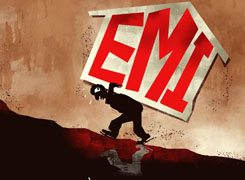
I find myself in a challenging financial situation, as my monthly EMI payments have unfortunately doubled my salary. Despite my best efforts, I have been unable to find a solution, and I am reaching out in the hopes of receiving some guidance. I would be incredibly grateful for any assistance in resolving this matter. I currently have a home loan of 35 lakh with an EMI of 30,000, five outstanding personal loans totaling 18 lakh with a combined EMI of 50,000, and two credit card loans amounting to 2 lakh with an EMI of approximately 10,000. This results in a total monthly EMI of 90,000, while my in hand salary is only 45,000. I have attempted to secure a top-up loan from my bank, but they have declined my request due to the significant amount of outstanding personal loans. These personal loans were taken out to cover medical emergencies. I am unsure how to proceed in clearing these debts and would greatly appreciate any advice. If anyone is aware of a reputable debt consolidation loan provider that offers loans to consolidate high debts and allows for an extended repayment period, I would be thankful for the suggestion. Kindly help!
Ans: You have shown great courage by reaching out.
Handling debt stress with responsibility is not easy.
You’ve taken the first important step by seeking help.
And that deserves respect.
Now let’s analyse your situation completely and create a 360-degree plan.
The goal is to reduce monthly pressure and bring back control.
You need both emotional support and practical steps.
Let us now assess every angle and build a solution.
» Current EMI Burden vs. Salary – Not Sustainable
– Your salary is Rs.45,000 per month.
– Total EMI obligation is Rs.90,000.
– This is double your income.
– This is a very high-risk position.
– You cannot afford to continue like this for long.
This can lead to:
– Loan defaults
– Credit score damage
– Legal actions from lenders
– Mental and physical stress
The priority now is to reduce the EMI burden quickly.
Your focus must be on damage control and survival.
We will work step-by-step to build back your stability.
» Breakdown of Debt – Let’s Assess the Pieces
– Home loan: Rs.35 lakh, EMI Rs.30,000
– Five personal loans: Rs.18 lakh, EMI Rs.50,000
– Credit card dues: Rs.2 lakh, EMI Rs.10,000
Total monthly EMI: Rs.90,000
Net take home: Rs.45,000
This is a serious mismatch.
You are clearly in a debt trap.
Your salary is insufficient to pay minimum dues.
But do not worry.
There are structured steps that can help.
» Top-Up Loan Option Already Declined – So What’s Next?
– You applied for a top-up loan from the bank.
– It got rejected due to high existing debt.
– This is common in over-leveraged cases.
But it’s not the end of the road.
Other strategies are available.
You can still repair and recover over time.
» Start with Credit Card Loans – Treat Them as Emergency
– Credit card debt is the most expensive of all.
– Interest rates can go beyond 36% per year.
– Even EMI conversion keeps it high.
Action Plan:
– Prioritise credit card repayment over others.
– Stop using these cards immediately.
– Try to negotiate settlement or interest waiver.
– Speak to the bank’s collections or recovery team.
– Explain your medical emergency.
– Request a lower one-time payment.
Even if it impacts your credit score slightly,
it’s still better than interest eating your money endlessly.
» Debt Consolidation Loan – Be Very Cautious
You asked about consolidation loan providers.
Yes, these exist in the market.
But most are unsecured lenders.
Some may be fraudulent or aggressive.
Few will offer help when credit score is low.
If you find a legal NBFC or lender offering long-term personal loan:
– Check RBI registration
– Do not pay any fee before loan is given
– Read all fine print carefully
– Avoid if they ask for blank cheques or Aadhaar
– Take help from a Certified Financial Planner if unsure
That said, getting approval at this stage is tough.
So we need practical non-loan strategies too.
» Home Loan – Can You Pause or Restructure?
– Your home loan EMI is Rs.30,000
– This is the only secured loan in your portfolio
– Lenders are more flexible with secured loans
Talk to your home loan bank and ask:
– Can EMI be reduced temporarily?
– Can tenure be extended?
– Can moratorium be offered for few months?
– Can interest-only payment be done for 6-12 months?
Many banks have hardship options.
Explain your medical emergency.
Submit all documents and salary slips.
Be honest.
Ask for a temporary relief program.
Reducing EMI by even Rs.10,000 will help you breathe.
» Personal Loans – Consider One-Time Settlement Option
– You have five personal loans.
– EMI is Rs.50,000 per month.
Right now, continuing this is impossible.
You may soon default on multiple EMIs.
That will impact your CIBIL score and future chances.
Action Plan:
– Call each lender separately
– Tell them you are unable to pay due to medical reasons
– Request for a one-time settlement
– Ask for partial waiver of interest
– Some NBFCs accept 60-70% of balance to close
– You can pay that from any future bonus or help from family
Yes, it may impact your credit score.
But it is better than total default.
Credit score can be rebuilt later.
Right now, saving yourself is the top priority.
» Can You Liquidate Any Assets or Get Family Support?
– You haven’t mentioned if you have savings or gold.
– Even small assets can help in short term.
Suggestions:
– Check if gold can be pledged for a low-interest loan
– Liquidate any stocks or mutual funds, if any
– Speak to close family for a one-time help
– Avoid chit funds, new loans or apps for support
Don’t feel ashamed asking family.
This is a health-related debt.
People do come forward when they understand the real need.
» Legal Support – Use RBI Framework If Harassed
– If lenders threaten or misuse recovery agents, don’t panic.
– RBI has clear rules.
– You can file a complaint with the lender grievance cell.
– National Helpline and Banking Ombudsman are also available.
Don’t suffer silently.
If harassment starts, take legal support.
You can contact a Certified Financial Planner to guide you properly.
» Mental Health – Take Care of Yourself
– Financial stress can affect your sleep, energy and family life.
– Do not isolate yourself.
– Talk to someone you trust.
– Simple breathing or meditation helps in reducing anxiety.
– Prioritise mental peace over perfection.
A calm mind will help you take clear steps.
You are not alone in this.
Thousands face such problems every year and come out of it.
» Do Not Fall for Debt Traps or Fraud Apps
– Avoid payday loan apps or private lenders
– Never give Aadhaar, OTP or bank details to unknown agents
– Avoid people who ask for upfront money to get loans
– These are often fake
Stick to legal banks or NBFCs only.
If unsure, verify through RBI website.
Or ask a Certified Financial Planner to verify.
» Track and Rebuild Your Credit Score Over Time
– Once your cash flow improves, plan to rebuild score
– Repay at least one loan fully
– Don’t default again
– Avoid new cards or personal loans for next 2 years
– Track your credit score every 3 months
You will need good credit for future home, vehicle or education goals.
It can be rebuilt with patience.
» Build Emergency Fund Slowly Later
– Once this crisis is over, build a buffer fund
– Start with just Rs.500 or Rs.1000 per month
– Use a separate account or liquid mutual fund
– This helps avoid new debt in the future
Emergency fund is like a life jacket.
Without it, small shocks become big disasters.
» Finally
– You are facing real pressure now.
– But it can be reversed with right steps.
– Prioritise basic needs and credit card repayment
– Negotiate and settle personal loans where possible
– Ask home loan lender for temporary support
– Avoid fake lenders and illegal apps
– Speak to family for emergency support
– Don’t feel ashamed – this is temporary
– A Certified Financial Planner can help plan repayment strategy
– Rebuild your life one small step at a time
You have strength inside.
Just take one smart step today.
That’s enough for now.
Best Regards,
K. Ramalingam, MBA, CFP,
Chief Financial Planner,
www.holisticinvestment.in
https://www.youtube.com/@HolisticInvestment
Handling debt stress with responsibility is not easy.
You’ve taken the first important step by seeking help.
And that deserves respect.
Now let’s analyse your situation completely and create a 360-degree plan.
The goal is to reduce monthly pressure and bring back control.
You need both emotional support and practical steps.
Let us now assess every angle and build a solution.
» Current EMI Burden vs. Salary – Not Sustainable
– Your salary is Rs.45,000 per month.
– Total EMI obligation is Rs.90,000.
– This is double your income.
– This is a very high-risk position.
– You cannot afford to continue like this for long.
This can lead to:
– Loan defaults
– Credit score damage
– Legal actions from lenders
– Mental and physical stress
The priority now is to reduce the EMI burden quickly.
Your focus must be on damage control and survival.
We will work step-by-step to build back your stability.
» Breakdown of Debt – Let’s Assess the Pieces
– Home loan: Rs.35 lakh, EMI Rs.30,000
– Five personal loans: Rs.18 lakh, EMI Rs.50,000
– Credit card dues: Rs.2 lakh, EMI Rs.10,000
Total monthly EMI: Rs.90,000
Net take home: Rs.45,000
This is a serious mismatch.
You are clearly in a debt trap.
Your salary is insufficient to pay minimum dues.
But do not worry.
There are structured steps that can help.
» Top-Up Loan Option Already Declined – So What’s Next?
– You applied for a top-up loan from the bank.
– It got rejected due to high existing debt.
– This is common in over-leveraged cases.
But it’s not the end of the road.
Other strategies are available.
You can still repair and recover over time.
» Start with Credit Card Loans – Treat Them as Emergency
– Credit card debt is the most expensive of all.
– Interest rates can go beyond 36% per year.
– Even EMI conversion keeps it high.
Action Plan:
– Prioritise credit card repayment over others.
– Stop using these cards immediately.
– Try to negotiate settlement or interest waiver.
– Speak to the bank’s collections or recovery team.
– Explain your medical emergency.
– Request a lower one-time payment.
Even if it impacts your credit score slightly,
it’s still better than interest eating your money endlessly.
» Debt Consolidation Loan – Be Very Cautious
You asked about consolidation loan providers.
Yes, these exist in the market.
But most are unsecured lenders.
Some may be fraudulent or aggressive.
Few will offer help when credit score is low.
If you find a legal NBFC or lender offering long-term personal loan:
– Check RBI registration
– Do not pay any fee before loan is given
– Read all fine print carefully
– Avoid if they ask for blank cheques or Aadhaar
– Take help from a Certified Financial Planner if unsure
That said, getting approval at this stage is tough.
So we need practical non-loan strategies too.
» Home Loan – Can You Pause or Restructure?
– Your home loan EMI is Rs.30,000
– This is the only secured loan in your portfolio
– Lenders are more flexible with secured loans
Talk to your home loan bank and ask:
– Can EMI be reduced temporarily?
– Can tenure be extended?
– Can moratorium be offered for few months?
– Can interest-only payment be done for 6-12 months?
Many banks have hardship options.
Explain your medical emergency.
Submit all documents and salary slips.
Be honest.
Ask for a temporary relief program.
Reducing EMI by even Rs.10,000 will help you breathe.
» Personal Loans – Consider One-Time Settlement Option
– You have five personal loans.
– EMI is Rs.50,000 per month.
Right now, continuing this is impossible.
You may soon default on multiple EMIs.
That will impact your CIBIL score and future chances.
Action Plan:
– Call each lender separately
– Tell them you are unable to pay due to medical reasons
– Request for a one-time settlement
– Ask for partial waiver of interest
– Some NBFCs accept 60-70% of balance to close
– You can pay that from any future bonus or help from family
Yes, it may impact your credit score.
But it is better than total default.
Credit score can be rebuilt later.
Right now, saving yourself is the top priority.
» Can You Liquidate Any Assets or Get Family Support?
– You haven’t mentioned if you have savings or gold.
– Even small assets can help in short term.
Suggestions:
– Check if gold can be pledged for a low-interest loan
– Liquidate any stocks or mutual funds, if any
– Speak to close family for a one-time help
– Avoid chit funds, new loans or apps for support
Don’t feel ashamed asking family.
This is a health-related debt.
People do come forward when they understand the real need.
» Legal Support – Use RBI Framework If Harassed
– If lenders threaten or misuse recovery agents, don’t panic.
– RBI has clear rules.
– You can file a complaint with the lender grievance cell.
– National Helpline and Banking Ombudsman are also available.
Don’t suffer silently.
If harassment starts, take legal support.
You can contact a Certified Financial Planner to guide you properly.
» Mental Health – Take Care of Yourself
– Financial stress can affect your sleep, energy and family life.
– Do not isolate yourself.
– Talk to someone you trust.
– Simple breathing or meditation helps in reducing anxiety.
– Prioritise mental peace over perfection.
A calm mind will help you take clear steps.
You are not alone in this.
Thousands face such problems every year and come out of it.
» Do Not Fall for Debt Traps or Fraud Apps
– Avoid payday loan apps or private lenders
– Never give Aadhaar, OTP or bank details to unknown agents
– Avoid people who ask for upfront money to get loans
– These are often fake
Stick to legal banks or NBFCs only.
If unsure, verify through RBI website.
Or ask a Certified Financial Planner to verify.
» Track and Rebuild Your Credit Score Over Time
– Once your cash flow improves, plan to rebuild score
– Repay at least one loan fully
– Don’t default again
– Avoid new cards or personal loans for next 2 years
– Track your credit score every 3 months
You will need good credit for future home, vehicle or education goals.
It can be rebuilt with patience.
» Build Emergency Fund Slowly Later
– Once this crisis is over, build a buffer fund
– Start with just Rs.500 or Rs.1000 per month
– Use a separate account or liquid mutual fund
– This helps avoid new debt in the future
Emergency fund is like a life jacket.
Without it, small shocks become big disasters.
» Finally
– You are facing real pressure now.
– But it can be reversed with right steps.
– Prioritise basic needs and credit card repayment
– Negotiate and settle personal loans where possible
– Ask home loan lender for temporary support
– Avoid fake lenders and illegal apps
– Speak to family for emergency support
– Don’t feel ashamed – this is temporary
– A Certified Financial Planner can help plan repayment strategy
– Rebuild your life one small step at a time
You have strength inside.
Just take one smart step today.
That’s enough for now.
Best Regards,
K. Ramalingam, MBA, CFP,
Chief Financial Planner,
www.holisticinvestment.in
https://www.youtube.com/@HolisticInvestment
DISCLAIMER: The content of this post by the expert is the personal view of the rediffGURU. Users are advised to pursue the information provided by the rediffGURU only as a source of information to be as a point of reference and to rely on their own judgement when making a decision.
MoneyReply


You may like to see similar questions and answers below
Ramalingam Kalirajan |10871 Answers |Ask -Follow
Mutual Funds, Financial Planning Expert - Answered on Jul 17, 2024

Ramalingam Kalirajan |10871 Answers |Ask -Follow
Mutual Funds, Financial Planning Expert - Answered on Jun 23, 2024


Reetika Sharma |417 Answers |Ask -Follow
Financial Planner, MF and Insurance Expert - Answered on Nov 24, 2025
Latest Questions

Mihir Tanna |1090 Answers |Ask -Follow
Tax Expert - Answered on Dec 06, 2025
Asked by Anonymous - Dec 04, 2025Hindi
Ramalingam Kalirajan |10871 Answers |Ask -Follow
Mutual Funds, Financial Planning Expert - Answered on Dec 06, 2025

Radheshyam Zanwar |6734 Answers |Ask -Follow
MHT-CET, IIT-JEE, NEET-UG Expert - Answered on Dec 06, 2025

Radheshyam Zanwar |6734 Answers |Ask -Follow
MHT-CET, IIT-JEE, NEET-UG Expert - Answered on Dec 06, 2025


Radheshyam Zanwar |6734 Answers |Ask -Follow
MHT-CET, IIT-JEE, NEET-UG Expert - Answered on Dec 06, 2025



Dr Dipankar Dutta |1837 Answers |Ask -Follow
Tech Careers and Skill Development Expert - Answered on Dec 05, 2025



Dr Shyam Jamalabad |108 Answers |Ask -Follow
Dentist - Answered on Dec 05, 2025

Dr Shyam Jamalabad |108 Answers |Ask -Follow
Dentist - Answered on Dec 05, 2025

Dr Shyam Jamalabad |108 Answers |Ask -Follow
Dentist - Answered on Dec 05, 2025
Dr Dipankar Dutta |1837 Answers |Ask -Follow
Tech Careers and Skill Development Expert - Answered on Dec 05, 2025