Home > Money > Question
Need Expert Advice?Our Gurus Can Help

Ramalingam

Ramalingam Kalirajan  |10872 Answers  |Ask -

Mutual Funds, Financial Planning Expert - Answered on Jul 31, 2025

Ramalingam Kalirajan has over 23 years of experience in mutual funds and financial planning.
He has an MBA in finance from the University of Madras and is a certified financial planner.
He is the director and chief financial planner at Holistic Investment, a Chennai-based firm that offers financial planning and wealth management advice.... more

Prashant Question by Prashant on Jul 31, 2025Hindi

Money

Hello sir I am a 19 years old boy. 6 months ago me and my friend started a business. We took a loan of 3 lakhs from personal people with 3% interest. It's been already 6 months and we can't repay his loan. And he have given us just now 2 days time. What should we do. We apply loan in the bank but they declined by saying that there are not sufficient documents and monthly income. If we can't repay our loan in 2 days then he will destroy our future . Please sir what should I do please guide me.

Ans: Starting a business at 19 is a brave step. You’ve shown courage and action. That is a strong quality. You’ve already done something many people only think about. So please take heart. Even though things are tough now, this is not the end. It can still turn around with the right actions. Let us approach the situation step by step.

Talk Openly and Calmly with the Lender

– Please meet the person who gave the loan.

– Be respectful, but explain your real situation.

– Tell him you want to repay but need time.

– Assure him of your commitment and honesty.

– You can request a revised timeline for repayment.

– Suggest small monthly payments till business picks up.

– If possible, make a part payment of Rs. 10,000 or Rs. 20,000 now.

– That small gesture will show your intention to repay.

– Many lenders become flexible when they see honesty and effort.

Do Not Run Away or Avoid the Lender

– Skipping communication makes the lender more angry.

– That can lead to threats or even complaints.

– It also damages your personal reputation.

– Please show up and take responsibility.

– You may feel pressure, but facing it is the brave step.

Explore Support from Family or Known Circles

– This is not the time for ego.

– Request help from family members or close relatives.

– Explain everything honestly. Don’t hide anything.

– They may not give full amount, but something is better than nothing.

– Even Rs. 50,000 can help you calm the lender temporarily.

– Friends or ex-colleagues can also offer temporary support.

– Offer to pay them back monthly with proper plan.

Try to Raise Funds from Business Customers

– Look at your business: Can you collect dues from any clients?

– Offer them discounts for early payments.

– Can you sell some stock at lower price to get quick cash?

– Even a quick sale at loss is better than loan damage.

– Cash flow matters now more than profits.

– Try all small ways to raise at least part of the amount.

Avoid Personal Loans or Credit Cards for Now

– You already got rejected by banks. That’s okay.

– Don’t go to loan apps or high-interest private lenders.

– Many charge more than 36% yearly. That’s dangerous.

– It will only increase your stress and ruin your credit score.

– Focus on real income, not more loans.

List Down All Personal Assets

– Do you have a scooter, phone, gadgets, or any asset?

– Can you sell or pledge it temporarily?

– Even Rs. 30,000 from old items can reduce lender pressure.

– This step may feel painful, but it buys you time and safety.

– Remember, assets can be bought again later.

Offer Work or Partnership to the Lender

– This may sound strange, but consider it.

– If the lender is business-minded, offer him a profit-sharing model.

– Show him your business plan and what you’re trying to build.

– Offer him part of future profits if he agrees to wait for repayment.

– He may agree if he sees potential and your honesty.

Keep the Business Alive, But Cut Costs

– Don’t shut the business out of fear. It can still work.

– Cut all expenses to bare minimum. Every rupee matters.

– Don’t take salary now. Keep focus on survival.

– Track every paisa. Treat it like gold.

– Make a short-term goal of breaking even monthly.

– Slowly you can repay all if the business becomes stable.

Build Credibility with Documentation

– Though banks denied loans, don’t lose hope.

– Start documenting your business from now.

– Keep income records, bills, client receipts.

– Register the business if not done already.

– Open a current account for the business.

– This builds a strong base to apply for loans later.

Learn from the Mistake, but Don’t Quit

– Taking unplanned loans without backup is risky. You now know that.

– This will teach you financial discipline.

– But don’t lose confidence. Many big business owners failed once.

– Learning early in life is a blessing.

– Success is not about avoiding failure, but learning fast from it.

Avoid Wrong Advice and Quick Fixes

– Some people may advise you to take another loan to repay this one.

– Or some may say run away or avoid the lender.

– These are temporary escapes. You will suffer more later.

– Stay on honest path. You are young and can rebuild quickly.

Start Personal Budgeting Immediately

– Track your personal expenses from today.

– Cut all luxuries or non-essentials.

– Save every rupee possible.

– Use savings to repay the lender slowly if he agrees.

– Start small SIP in mutual funds once your base is strong.

In Future, Build Emergency Fund First

– After recovery, keep at least 3 months’ expenses saved.

– This will protect you in business down periods.

– Never invest or start a venture without this safety net.

Don’t Mix Insurance with Investment

– If you ever bought ULIPs or LIC endowment policies, review them.

– They usually give low returns and high charges.

– If you have such policies, surrender them after checking terms.

– Invest that money in mutual funds through CFP-guided MFDs.

– Avoid investment-cum-insurance plans in future.

Avoid Direct Mutual Funds Without Guidance

– Direct plans may look cheaper but lack human guidance.

– As a beginner, wrong fund choice or wrong timing can hurt.

– Regular plans through MFDs guided by Certified Financial Planners give better handholding.

– They also track your progress and guide in tough times.

Why Actively Managed Funds Are Better

– Index funds just copy the market.

– They don’t adapt to market changes or risks.

– In falling markets, they give full downside.

– Actively managed funds have skilled managers.

– They can reduce risk and find better opportunities.

– Over time, they can give better returns if chosen wisely.

Think Long Term, but Act Fast Today

– Your immediate goal is to calm the lender.

– Next step is to cut business losses and build income.

– Then create a 1-year, 3-year and 5-year financial roadmap.

– You are only 19. You can bounce back better and stronger.

Finally

– Appreciate your courage to reach out and share the issue.

– Many stay silent and make it worse. You did the right thing.

– Take one step at a time. Start today.

– This challenge is just a chapter, not the end.

– You have time, energy and courage on your side.

– Use this moment to build financial maturity.

– One right action now can save your next 10 years.

Best Regards,
K. Ramalingam, MBA, CFP,
Chief Financial Planner,
www.holisticinvestment.in
https://www.youtube.com/@HolisticInvestment
DISCLAIMER: The content of this post by the expert is the personal view of the rediffGURU. Users are advised to pursue the information provided by the rediffGURU only as a source of information to be as a point of reference and to rely on their own judgement when making a decision.
Money

You may like to see similar questions and answers below

Kanchan

Kanchan Rai  |645 Answers  |Ask -

Relationships Expert, Mind Coach - Answered on Mar 21, 2024

Asked by Anonymous - Mar 20, 2024Hindi
Listen
Relationship
Hi Sir. I have a typical.problem here. I lend.money to one of.mynfriends for his bzness..I worked as a consultant for him. I made an agreement for the money given to him. Nevertheless he didn't return the money yet..I left him now some months back. Though I asked him to give bac money but he says he has lost lot in his bzness and also says he can't return the money. Sometimes indirectly he says that because of me he has landed in loss. I don't want to go.legally but it has been lot.ot.months that he has returned money. But now I can't wait. What should I do now..pls advise. Thanks
Ans: Navigating financial matters within friendships can be challenging, especially when agreements aren't upheld as expected.

Initiate an open and honest conversation with your friend about the loan. Express your concerns and feelings without blaming or accusing. Use "I" statements to convey how his actions have impacted you personally.
Give your friend an opportunity to explain his side of the story. Listen attentively to understand his perspective and the challenges he's facing with his business. Empathize with his situation while also emphasizing the importance of fulfilling financial commitments.
Instead of dwelling on past grievances, shift the conversation toward finding a solution that works for both of you. Explore options such as renegotiating the repayment terms, setting up a payment plan, or considering alternative forms of compensation if he's unable to repay the full amount immediately.
Validate your friend's feelings and concerns about the situation, but also assert the impact his actions have had on you. Help him understand the importance of honoring agreements and maintaining trust in the relationship.
Clearly communicate your expectations moving forward. If you're unable to reach a resolution or if your friend continues to disregard the agreement, be prepared to set boundaries to protect yourself financially and emotionally. This might involve seeking legal advice or taking further action if necessary.
While it's important to address the financial issue, prioritize preserving the friendship if possible. Reassure your friend that your intention is not to harm the relationship but to find a mutually beneficial solution. Emphasize the value you place on your friendship and your desire to work through this challenge together.
Use this experience as an opportunity for personal and relational growth. Reflect on what you've learned about trust, communication, and financial boundaries in friendships. Apply these lessons to future interactions to prevent similar issues from arising.
Ultimately, finding a resolution to financial disputes within friendships requires patience, empathy, and effective communication. By approaching the situation with understanding and a willingness to collaborate, you can work toward a solution that honors both your financial needs and the integrity of your relationship.

..Read more

Ramalingam

Ramalingam Kalirajan  |10872 Answers  |Ask -

Mutual Funds, Financial Planning Expert - Answered on Jul 27, 2024

Listen
Money
Hi sir i got 60000 rupees for the interest of 5 percentage in the year 2017 from my friend and i have paid interest 3000 for almost 8 years but i cannot able to pay principal amount. I have paid more than principal but still he is torturing for interest monthly. But my situation is very bad and Iam feeling very stressed. What can i do?
Ans: Assessing Your Financial Situation
You borrowed Rs. 60,000 at 5% interest in 2017. You've been paying Rs. 3,000 yearly for 8 years, totaling Rs. 24,000 in interest. You still owe the principal.

Your situation is causing stress. Let's explore solutions to relieve your financial burden.

Understanding the Loan Details
Principal Amount: Rs. 60,000
Annual Interest: 5%
Interest Paid: Rs. 3,000 yearly for 8 years
Total Interest Paid: Rs. 24,000
Remaining Principal: Rs. 60,000
Evaluating Your Options
Negotiating with the Lender
Discuss Terms: Talk to your friend. Explain your financial situation. Request to pause or reduce interest.

Propose Settlement: Offer a lump sum payment to clear the debt. This could be less than the total due, considering the interest paid.

Seeking Financial Assistance
Personal Loan: Consider taking a personal loan with a lower interest rate to pay off your friend. This could reduce monthly interest payments.

Family Help: Ask for temporary financial help from family members. Explain the stress and seek a loan with no or low interest.

Budgeting and Planning
Create a Budget: Assess your monthly income and expenses. Find areas to cut costs and save more towards the principal.

Set a Payment Plan: Allocate a fixed amount monthly to pay off the principal. Stick to this plan to reduce the debt gradually.

Exploring Additional Solutions
Legal Advice
Consult a Lawyer: If your friend continues to harass you, seek legal advice. Understand your rights and options for protection.

Debt Settlement Services: Consider consulting a debt settlement service to negotiate and settle the debt on your behalf.

Emotional Well-being
Stress Management: Financial stress can impact your health. Practice stress-relief techniques like meditation or exercise.

Support Network: Talk to friends or family about your situation. Emotional support can help you cope better.

Final Insights
Clearing your debt requires a strategic approach. Start with open communication with your lender. Explore financial assistance options and create a strict budget. Consider legal advice if needed. Managing financial stress is crucial for your well-being.

Best Regards,

K. Ramalingam, MBA, CFP,

Chief Financial Planner,

www.holisticinvestment.in

..Read more

Ramalingam

Ramalingam Kalirajan  |10872 Answers  |Ask -

Mutual Funds, Financial Planning Expert - Answered on Dec 02, 2024
Asked by Anonymous - Dec 01, 2024Hindi
Listen
Money
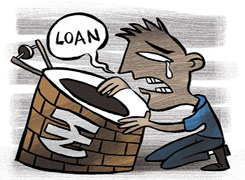
Hello sir, I'm 24 years old currently (student). I have took a loan of rupees 40000 rupees for my upsc coaching and now I'm not able to pay back, can't tell this to anyone whom i know, please give me some advice how to repay it urgently because of this i can't even study, sometimes i even think of suicide. I can do anything right now for money just to repay it. Please help me out!
Ans: Your situation is difficult, but it's solvable with proper guidance. You're taking the right step by reaching out. Recognize that your education and goals are important. This is a phase, not the end of your journey.

Practical Steps to Manage Debt
1. Pause and Reflect
Suicidal thoughts signal stress. Talk to a trusted friend or counselor. Your life is valuable.

Understand that debts can be repaid, but emotional health is harder to recover.

2. Part-Time Income Opportunities
Take up flexible part-time work that doesn't disturb your study schedule.

Consider online tutoring, freelancing, content writing, or data entry jobs.

Look for short-term opportunities in your locality like delivering food or part-time store assistance.

3. Speak with Your Loan Provider
Contact your lender and explain your situation. Many lenders offer revised payment options.

Request a temporary deferment or a restructuring of your repayment terms.

4. Leverage Your Skills
If you are skilled in areas like language, teaching, or digital tools, monetize them.

Start offering these services to peers or on online platforms.

5. Family Support Without Disclosure
If you cannot discuss the loan, ask for funds for a generic purpose. Frame it around educational needs.

Request small amounts rather than the entire sum to avoid suspicion.

6. Minimize Expenses
Avoid unnecessary expenses. Cut down on travel or leisure costs.

Create a budget that prioritizes loan repayment over all else.

Long-Term Financial Stability
1. Building a Better Relationship with Money
Once this loan is cleared, avoid taking loans without a solid repayment plan.

Begin saving even in small amounts for emergencies.

2. Future Earnings and Loan-Free Education
Focus on UPSC preparations. Success will transform your financial condition.

Avoid stressing about debts; instead, channel energy into productive activities.

3. Exploring Scholarships or Educational Grants
Check for available scholarships or grants. Many NGOs support deserving students.

Talk to your coaching institute about possible fee reductions or instalment plans.

Emotional Support and Self-Care
1. Seek Emotional Guidance
Approach a counselor for help. They provide strategies to manage stress effectively.

Surround yourself with supportive individuals who uplift you emotionally.

2. Maintain a Healthy Routine
Include physical activity like walking to keep stress at bay.

Break tasks into smaller, manageable pieces to reduce the feeling of being overwhelmed.

Finally
Your current challenge is temporary. Your resilience will shape your future. Debt repayment is possible with a focused plan and support. Prioritize health and long-term goals over temporary struggles. With determination, you can emerge stronger.

Best Regards,

K. Ramalingam, MBA, CFP,

Chief Financial Planner,

www.holisticinvestment.in
https://www.youtube.com/@HolisticInvestment

..Read more

Ramalingam

Ramalingam Kalirajan  |10872 Answers  |Ask -

Mutual Funds, Financial Planning Expert - Answered on Jul 11, 2025

Money
I Lost my job suring covid locksown. I have been taking personal loans from people and now it has totally amounted to nealy 60 lakhs.. they have given loan to me to get more interest... i am taking loans and paying interest to old lenders.. What should i do? There seams to bd only one option i dont know whether to take it up..
Ans: ? Understanding Your Current Situation

You lost your job during the Covid lockdown.
You took loans from people to survive.
Those loans have now added up to nearly Rs.60 lakhs.
You borrowed to pay interest to earlier lenders.
This is a classic debt trap.

First of all, thank you for sharing openly.
It is not easy to talk about debt.
But you have taken the first brave step.

This is a very serious situation.
But it is not hopeless.
You must take action now.

You may feel only one option is left.
But let us assess all sides.
Let’s explore your options carefully.

? Debt Trap: What It Really Means

A debt trap is when debt creates more debt.
You borrow to repay past dues.
This never-ending loop increases stress.

Interest keeps growing month after month.
Soon, even paying interest becomes hard.
This leads to mental, financial, and emotional stress.

It can feel like you’re drowning in loans.
But remember: this trap can be broken.

You must pause and not borrow again.
Stop the borrowing cycle immediately.

This may sound tough, but it is needed.

? Assessing the Type of Loans

These seem like informal loans.
Private lenders often charge very high interest.
This is sometimes unregulated and risky.

Unlike banks, these loans don’t follow RBI rules.
So they may use pressure or threats.

First step is to list each loan.
Write name of lender, amount, date, and interest.
Know exactly how much is owed and to whom.

This written clarity will help with planning.
You need a strategy now.

? Mental Clarity and Acceptance

Debt causes anxiety and panic.
But staying calm is very important now.

Understand that you are not alone.
Many people struggled post-Covid.

Your intention was never wrong.
You borrowed hoping to recover.

So don't feel guilty about the past.
Now it's time to fix the future.

Accept your current status with courage.
This mindset shift is very important.

? Don’t Rely on Borrowing Again

You may feel tempted to borrow again.
But that will only delay the problem.

New loans won’t solve old loans.
They will only increase total interest outflow.

Focus on solution, not on temporary relief.

Say a strict NO to new borrowing.

? Stop Paying Just Interest

If you keep paying only interest,
then principal never reduces at all.

Many private lenders prefer this situation.
They earn high returns forever.

So pause and think differently now.
You need to start reducing principal.
But before that, understand the full picture.

? Analyse All Your Income Options

You lost your job during Covid.
Can you start working again now?
Even a small earning can help.

Explore full-time or part-time jobs.
Use your skills for freelance work.

Can you teach online?
Can you drive or deliver?
Can you join a startup?

All income sources matter now.
Even Rs.5000 per month helps.

Don’t reject any work due to pride.
This is just a temporary phase.

Any income will increase your confidence.

? Lifestyle Audit and Expenses Check

Make a list of all your expenses.
Cut all non-essential spending immediately.

No eating out, no online shopping.
No premium OTT, no gadgets, no gold.

Use public transport wherever possible.

Reduce your mobile and internet bills.
Buy only essentials and basic food.

Start living very simply.

This sacrifice is temporary but necessary.

? Legal Way Out If Things Are Too Deep

If all lenders demand full repayment,
and you don’t have income,
then you can consider debt resolution legally.

There are legal options available in India.
You can approach an Insolvency Resolution Professional.
Under Indian law, individuals can declare insolvency.

It is not shameful.
It is a legal tool to rebuild.

But this should be a last option.
You must try negotiation first.

You may also consider a one-time settlement.
That means paying partial amount to close loan.

Many private lenders agree to this.
They recover part and write off rest.

But document everything with proof.

No verbal deals. Only written agreements.

? Try Personal Negotiation First

Talk to each lender personally.
Tell them your true situation.

Say you will repay in parts.
Show them a payment plan.

Say clearly that no new loans will be taken.
Assure them you want to repay.

Ask for interest reduction or waiver.

Most people appreciate honesty.
They may agree to small EMIs.

? Take Help from Certified Financial Planner

A Certified Financial Planner can guide you.
They have experience with debt cases.

They will not judge you.
They will plan repayment step by step.

They can help in budgeting and planning.

Avoid going to unregulated agents.
Only work with professionals with CFP credentials.

A planner can also help negotiate better.
They can help you track your goals again.

? Don’t Try to Recover Money by Investing Now

Many try to invest to cover loans.
That is a very dangerous idea.

No investment gives overnight returns.
Don’t fall for fake schemes or tips.

Avoid trading, crypto, lottery, or risky business.

Right now, your focus is reducing debt.

Don’t try to earn more from stock markets.
You may end up losing more money.

Investing can come later, not now.

? Mutual Funds Can Be Used Only Later

Once your debt is closed or manageable,
then you can begin investing slowly.

But never invest before clearing loans.

Avoid direct funds as they offer no guidance.

Direct funds may seem to save money.
But without expert help, mistakes happen.

Also, emotional decisions cause wrong fund choices.

Investing through regular funds via CFP-led MFD
gives guidance, support, and correction over time.

Regular funds are better for long-term goals.

They provide accountability, rebalancing, and behavioural coaching.

That is critical for someone recovering financially.

? Avoid Index Funds Right Now

Index funds may look low-cost.
But they are unmanaged and passive.

They mirror the market fully.
So, in downturns, they fall deeply.

They have no active protection or exit.
They don’t change based on market conditions.

Actively managed funds are safer for you.
They have fund managers taking decisions.

They give better support in volatile times.

? Don’t Depend on Friends for Help Again

Avoid taking loans from friends or relatives now.
That can spoil relationships and create pressure.

You may lose peace of mind.
Even if they offer help, say no.

This recovery has to be from within.

Relying on others again repeats old pattern.

? If You Hold Investment-Cum-Insurance Products

If you have any traditional policies or ULIPs,
then surrendering might help right now.

These plans give low return and high lock-in.

You can take the surrender value.
Use it to pay off urgent debt.

Later, switch to pure-term insurance
and invest in mutual funds via CFP-MFD route.

? Build Emergency Fund After Debt Is Cleared

Once your loans are over,
build a small emergency fund.

It should cover 3-6 months of needs.
Keep it in a liquid fund.

So, you don’t borrow again in crisis.

This small step avoids future debt trap.

? Emotional Strength and Family Support

You need inner strength right now.
Speak to family openly about everything.

Don’t hide anything from spouse or parents.
Ask for their mental support and patience.

Even emotional help makes a big difference.

Stay strong and stay grounded.

? Monitor and Track Every Month

Track your debt repayment monthly.
Write down each amount paid.

This creates hope and gives clarity.

Small progress gives mental peace.

Celebrate every loan closed, no matter how small.

Keep a simple spreadsheet or notebook.

? Finally

This situation looks hard right now.
But you have the power to overcome it.

Act fast and act clearly.

Don’t delay decisions due to fear.

No more borrowing.
No more interest payments blindly.

Focus on income, expenses, and planning.

Debt freedom is not far,
if you take steady action with support.

There is always a way forward.

Take the first step today.

Best Regards,
K. Ramalingam, MBA, CFP,
Chief Financial Planner,
www.holisticinvestment.in
https://www.youtube.com/@HolisticInvestment

..Read more

Latest Questions
Ramalingam

Ramalingam Kalirajan  |10872 Answers  |Ask -

Mutual Funds, Financial Planning Expert - Answered on Dec 06, 2025

Asked by Anonymous - Dec 06, 2025Hindi
Money
Dear Sir/Ma'am, I need some guidance and advice for continuing my mutual fund investments. I am a 36 year old male, married, no kids yet and no debts/liabilities as such. I have couple of savings in PPF, NPS, Emergency funds and long term investing in direct stocks. I recently started below mentioned SIPs for long term to grow wealth. Request you to review the same and let me know if I should continue with the SIPs or need to rationalize. Kindly also advice on how to invest a lumpsum amount of around 6lacs. invesco small cap 2000 motilal oswal midcap 2700 parag parikh flexicap 3000 HDFC flexicap 3100 ICICI prudential largecap 3100 HDFC large and midcap 3100 HDFC gold etf FOF 2000 ICICI Pru equity and debt fund 3000 HDFC balanced advantage fund 3000 nippon india silver etf FOF 2000
Ans: You already built a solid foundation. Many investors delay planning. But you started early at 36. That gives you a strong advantage. You have no liabilities. You have long term thinking. You also have diversified savings like PPF, NPS, Emergency funds and direct stocks. That shows clarity and discipline. This approach builds wealth with less stress over time.

You also started systematic investments in equity funds. That is a positive step. Your selection covers multiple categories like large cap, mid cap, small cap, flexi cap, hybrid and precious metals. So the intent is right. You are trying to create a broad portfolio. That gives balance.

» Your Portfolio Composition Understanding
Your current SIP list includes:

Small cap

Mid cap

Flexi cap

Large cap

Large and mid cap

Hybrid category

Gold and Silver FoF

Equity and Debt allocation fund

Dynamic hybrid fund

This shows you are trying to cover many segments. But too many categories can create overlap. When there is overlap, you get confusion during review. It also makes portfolio discipline difficult. You may think you are diversified. But the holdings inside may repeat. That reduces efficiency.

Your portfolio now looks like:

Equity dominant

Hybrid for stability

Metals for hedge

So the broad direction is fine. But simplifying helps in long-term habit building.

» Fund Category Duplication
You hold:

Two flexi cap funds

One large and mid cap fund

One pure large cap fund

One mid cap fund

One small cap fund

Flexi cap funds already invest across large, mid, small. Then large and mid also overlaps. So the large cap exposure gets repeated. That may not add extra benefit. But it increases monitoring complexity.

So I suggest rationalising. Keep one fund per category in core. Keep satellite space for only high conviction.

» Core and Satellite Strategy
A structured portfolio follows core and satellite method.

Core portfolio should be:

Simple

Long term

Stable

Satellite portfolio can be:

High growth

Concentrated

Based on your thinking level, you can structure like this:

Core funds:

One large cap

One flexi cap

One hybrid equity and debt fund

One balanced advantage type fund

Satellite funds:

One mid cap

One small cap

One metal allocation if needed

This division gives clarity. You can continue SIPs with review every year. No need to stop and restart often. That reduces behavioural mistakes.

» Your Current SIP List Review with Suggested Streamlining

You can consider continuing:

One flexi cap

One large cap

One mid cap

One small cap

One balanced advantage

One equity and debt hybrid

You may reconsider keeping both flexi caps and both gold silver funds. One of each category is enough. Because too many funds do not increase returns. It complicates tracking.

Precious metal funds should not be more than 5 to 7 percent in your portfolio. This is because metals are hedge assets. They do not create compounding like equity. They act as protection during cycles. So keep them small.

» How to Use the Rs 6 Lakh Lump Sum
You asked about lump sum investing. This is important. Lump sum should not go fully into equity at one time. Markets move in cycles. So use a staggered method. You can invest the lump sum through STP (Systematic Transfer Plan). You can keep the amount in a liquid fund and set STP toward your chosen growth funds over 6 to 12 months.

This reduces timing risk. It also creates discipline. So your Rs 6 lakh can be deployed gradually. You may use 50% towards core equity funds and 30% toward satellite growth category. The remaining 20% can go into hybrid category. This gives balance and comfort.

» Regular Funds Over Direct Funds
One important point many investors miss. Direct funds look cheaper. But they demand deep knowledge, discipline, and behaviour control. Most investors lose more through emotional selling and wrong timing than they save on expense ratio.

With regular funds through a Mutual Fund Distributor with Certified Financial Planner qualification, you get guidance, structure and correction. The advisory discipline protects you during market extremes. That is more valuable than a small saving in expense ratio.

A personalised planner also tracks portfolio drift, rebalancing need and category shifts. So regular fund investing gives long-term benefit and behaviour coaching.

» Actively Managed Funds over Index or ETF
Some investors choose index funds or ETF thinking they are simple and cheap. But they ignore drawbacks.

Index funds or ETF will not avoid weak companies in the index. They will invest whether the company grows or struggles. There is no fund manager decision making. So when markets are at peak, index funds continue aggressive exposure. In downturns also they fall fully. There is no cushion.

Actively managed funds work with research teams. They can avoid bad sectors. They can shift allocation based on market and economy. Over long term, this gives better alpha and stability. So continuing with actively managed funds creates better wealth compounding.

» SIP Continuation Strategy
Once the rationalisation is done, continue SIPs every month without interruption. Pause and restart behaviour damages compounding power. SIP works best when you go through all market cycles. You benefit more during corrections because cost averaging works.

So continue SIP amount. You can also review SIP increase every year based on income. Increasing SIP by 10 to 15 percent every year helps you reach large corpus faster.

» Asset Allocation Based Approach
One key point in wealth creation is having the right asset mix. Equity gives growth. Hybrid gives balance. Metals give hedge. Debt gives safety. Your asset allocation should stay aligned to your risk profile and time horizon.

Since you are young and have long term horizon, higher equity allocation is fine. But as time moves, rebalancing is important. Rebalancing protects gains and restores allocation.

So review your asset allocation every year or during major life events like child birth, home buying or retirement planning.

» Behaviour Management
Many portfolios fail not due to bad funds. They fail due to bad decisions. Selling during correction. Stopping SIP when market falls. Chasing past return performance. These mistakes reduce wealth.

Your discipline so far is good. Continue to stay patient during volatility. Equity rewards patience and time.

» Financial Goals Clarity
Since you have no children now, you can decide your long-term goals. Typical goals may include:

Retirement

Future child education

Dream lifestyle purchase

Health care reserves

When goals are clear, investment purpose becomes stronger. So you can map each fund category to goal horizon. Short-term goals should not use equity. Long-term goals should use equity with hybrid support.

» Role of Review and Monitoring
Review once in a year is enough. Frequent review can create anxiety. Annual review helps check:

Fund performance

Expense drift

Category relevance

Allocation balance

Then adjust only if needed. This progress helps you stay confident and aligned.

» Taxation Awareness
Equity mutual funds taxation rules are:

Short term (below one year holding) taxable at 20 percent

Long term (above one year holding) gains above Rs 1.25 lakh taxable at 12.5 percent

Debt mutual funds are taxed as per your income slab.

So always hold equity funds for long term. That reduces tax impact and gives better growth.

» SIP Increase Plan
You can create a simple plan to increase SIP over time. For example:

Increase SIP at every salary increment

Increase SIP during bonus time

Use rewards or extra income for investing

This habit accelerates wealth. So by the time you reach 45 to 50 years, your investments could reach a strong level.

» Insurance and Protection
Before investing large, ensure you have term insurance and health insurance. If not already done, it is important. Insurance protects wealth. Without insurance, even a small medical event can impact investment plan. So review this part also. Since you are married, cover both.

» Wealth Behaviour Mindset
You are already disciplined. Just keep these simple principles:

Invest without stopping

Review once a year

Avoid funds overlap

Follow asset allocation

Avoid reacting to media noise

This helps you reach long term milestones.

» Finally
You are on the right track. Only fine tuning and simplification is needed. Your discipline is visible. Your portfolio will grow well with structure, patience and periodic review. Use the Rs 6 lakh with STP approach. And continue SIP with rationalised categories.

With time and consistency, wealth creation becomes effortless and peaceful. You just need to stay committed and avoid overthinking during market movements.

Best Regards,
K. Ramalingam, MBA, CFP,

Chief Financial Planner,

www.holisticinvestment.in

https://www.youtube.com/@HolisticInvestment

...Read more

Dr Dipankar

Dr Dipankar Dutta  |1837 Answers  |Ask -

Tech Careers and Skill Development Expert - Answered on Dec 05, 2025

Career
Dear Sir, I did my BTech from a normal engineering college not very famous. The teaching was not great and hence i did not study well. I tried my best to learn coding including all the technologies like html,css,javascript,react js,dba,php because i wanted to be a web developer But nothing seem to enter my head except html and css. I don't understand a language which has more complexities. Is it because of my lack of experience or not devoting enough time. I am not sure. I did many courses online and tried to do diplomas also abroad which i passed somehow. I recently joined android development course because i like apps but the teaching was so fast that i could not memorize anything. There was no time to even take notes down. During the course i did assignments and understood the code because i have to pass but after the course is over i tend to forget everything. I attempted a lot of interviews. Some of them i even got but could not perform well so they let me go. Now due to the AI booming and job markets in a bad shape i am re-thinking whether to keep studying or whether its just time waste. Since 3 years i am doing labour type of jobs which does not yield anything to me for survival and to pay my expenses. I have the quest to learn everything but as soon as i sit in front of the computer i listen to music or read something else. What should i do to stay more focused? What should i do to make myself believe confident. Is there still scope of IT in todays world? Kindly advise.
Ans: Your story does not show failure.
It shows persistence, effort, and desire to improve.

Most people give up.
You didn’t.
That means you will succeed — but with the right method, not the old one.

...Read more

DISCLAIMER: The content of this post by the expert is the personal view of the rediffGURU. Investment in securities market are subject to market risks. Read all the related document carefully before investing. The securities quoted are for illustration only and are not recommendatory. Users are advised to pursue the information provided by the rediffGURU only as a source of information and as a point of reference and to rely on their own judgement when making a decision. RediffGURUS is an intermediary as per India's Information Technology Act.

Close  

You haven't logged in yet. To ask a question, Please Log in below
Login

A verification OTP will be sent to this
Mobile Number / Email

Enter OTP
A 6 digit code has been sent to

Resend OTP in120seconds

Dear User, You have not registered yet. Please register by filling the fields below to get expert answers from our Gurus
Sign up

By signing up, you agree to our
Terms & Conditions and Privacy Policy

Already have an account?

Enter OTP
A 6 digit code has been sent to Mobile

Resend OTP in120seconds

x