Home > Money > Question
Need Expert Advice?Our Gurus Can Help
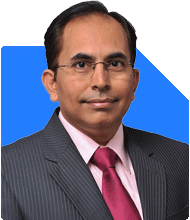
Janak

Janak Patel  |71 Answers  |Ask -

MF, PF Expert - Answered on Jul 07, 2025

Janak Patel is a certified financial planner accredited by the Financial Planning Standards Board, India.
He is the CEO and founder of InfiniumWealth, a firm that specialises in designing goal-specific financial plans tailored to help clients achieve their life goals.
Janak holds an MBA degree in finance from the Welingkar Institute of Management Development and Research, Mumbai, and has over 15 years of experience in the field of personal finance. ... more
Asked by Anonymous - Jul 04, 2025Hindi

Money

I am going to retire in about 6 months have 24 lacs corpus through SIPs expecting 45 lacs in pf and gratuity , income from rent 20000 which is sufficient for our expenses how to invest further safely

Ans: Hi,

As your expenses are managed by the rent you are receiving, your total corpus of 69 lacs can be invested to meet your retirement goals keeping safety and capital (value) protection in mind.

Retirement will mean that some benefits you may have got during your working status, mainly the health cover from employer will not be available. So I hope you have already got a health cover for self and spouse, if not, then do consider it asap.

The corpus you have accumulated needs protection and also a bit of growth to meet inflation at least.

The rent typically may not increase each year to cover inflation, and then you will feel the need to reach into the corpus you have.

Considering the post-retirement life expectancy of 20 years, its a long enough period to invest the corpus wisely to ensure you are well supported by it.

I recommend 3 bucket strategy -
1st bucket - funds to meet expenses for the next 2-3 years, this can also be your emergency fund if required. Amount of 5-7.5 lacs to be kept in a Nationalized bank as FD (make multiple 1 lac FDs). FDs can earn close to inflation returns.
2nd bucket - funds to earn a little above inflation and still be relatively safe, so expect to earn 1-2% above inflation. There are multiple options for this in - conservative hybrid mutual funds / equity savings mutual fund. Consider 20~25 lacs in this.
3rd bucket - funds to provide growth to your corpus. You can consider to take a little extra risk for a long term view (7+ years) and invest remaining amount in Balanced advantage mutual funds. Here you may be able to get double digit returns and over long term, the compounding can potentially grow this amount to meet and support your needs.

If you are not very comfortable with any type of risk then stick to the first 2 buckets, to at least counter the inflation.
Invest in the products you understand and with access to your money anytime.

Remember whatever option you select, keep your risk capacity in mind and invest. Do not invest where you money is locked/blocked for a long period as that will not serve any purpose for you (I have come across retirees investing/purchasing products from agents, they do not understand them and then getting their money blocked for 5-8 years with promise of regular income later, but this generates below inflation returns, beware of such agents/products).
The above mentioned options will provide access to your money whenever you require without blocking it. Mutual funds have emerged as one of the most regulated and transparent industry.

You can also consult an advisor to understand the products before proceeding with your investments.
Stay healthy and invest wisely.

Thanks & Regards
Janak Patel
Certified Financial Planner.
DISCLAIMER: The content of this post by the expert is the personal view of the rediffGURU. Users are advised to pursue the information provided by the rediffGURU only as a source of information to be as a point of reference and to rely on their own judgement when making a decision.
Money

You may like to see similar questions and answers below

Ramalingam

Ramalingam Kalirajan  |10870 Answers  |Ask -

Mutual Funds, Financial Planning Expert - Answered on May 11, 2024

Asked by Anonymous - Apr 24, 2024Hindi
Listen
Money
I will retire in 3 years ,in june 2027 & will have a corpus of around 3.5 Cr invested in PPF, EPF ,Supper Annuation Fund & MF . I live in my own flat ,currently market value of Rs 1.8 Cr . I also have an inherited flat from my parent valued at Rs80 lakhs . I need a monthly income of Rs 2.0 lacs after retirement . Please suggest way to invest
Ans: Congratulations on your impending retirement and the substantial corpus you've accumulated across various investment avenues. Planning for a comfortable post-retirement income is essential, and I'm here to offer guidance on how to achieve your financial goals.

With a corpus of around 3.5 crores invested in PPF, EPF, Superannuation Fund, and mutual funds, you have a solid foundation for retirement. Additionally, owning your own flat with a market value of Rs. 1.8 crores and an inherited flat valued at Rs. 80 lakhs provides further financial security.

To generate a monthly income of Rs. 2.0 lakhs after retirement, you'll need to ensure your investments are structured to provide a consistent stream of income while preserving capital for the long term.

Given your investment horizon of 3 years until retirement, it's crucial to adopt a balanced approach that combines both growth and income-generating assets. Here are some suggestions:

Dividend-Paying Mutual Funds: Allocate a portion of your corpus towards dividend-paying mutual funds, focusing on both equity and debt funds. These funds provide regular income through dividend payouts while also offering the potential for capital appreciation.

Systematic Withdrawal Plans (SWP): Consider setting up SWPs from your mutual fund investments to meet your monthly income requirement post-retirement. SWPs allow you to withdraw a fixed amount periodically, ensuring a steady stream of income while keeping your investments intact.

Rental Income: Utilize the rental income from your inherited flat to supplement your monthly income post-retirement. If feasible, you may also explore renting out a portion of your own flat to generate additional income.

Fixed Deposits and Bonds: Allocate a portion of your corpus towards fixed deposits and bonds to provide stability and ensure liquidity. Opt for instruments with varying maturities to create a ladder that aligns with your income needs.

Real Estate Investment Trusts (REITs): Consider investing in REITs, which offer exposure to income-generating commercial real estate properties. REITs provide regular dividends and the potential for capital appreciation, enhancing your overall income stream.

Regular Review and Adjustment: Regularly review your investment portfolio and make necessary adjustments to ensure it remains aligned with your financial goals and risk tolerance. Consider consulting with a Certified Financial Planner to optimize your investment strategy and navigate the complexities of retirement planning.

By diversifying your investment portfolio across multiple asset classes and implementing income-generating strategies, you can work towards achieving your goal of a monthly income of Rs. 2.0 lakhs post-retirement.

Best Regards,

K. Ramalingam, MBA, CFP,

Chief Financial Planner,

www.holisticinvestment.in

..Read more

Ramalingam

Ramalingam Kalirajan  |10870 Answers  |Ask -

Mutual Funds, Financial Planning Expert - Answered on Jun 09, 2024

Asked by Anonymous - Jun 09, 2024Hindi
Money
Hi I sir I a m 52 PSU bank employee. Planning to retire at 55 .Savings of 1 CR in FD .pension expected 60000.Retirement benefits arround 1 CR. Other savings in PLI 15 lacs NSC 10 lacs,LIC 5 lacs Planning to sell 1 property worth 1.5 CR.Daughter pursuing 2nd year . Aged mother and handicapped brother dependant on me. Housing loan 9 lacs outstanding.planning to avail 50 lacs for renovation of another property.Need monthly income if 2 lacs .Please advise investment avenues
Ans: Planning for a Comfortable Retirement: Steps to Achieve Your Goals
You are 52 years old, working in a PSU bank, planning to retire at 55. Your savings include Rs 1 crore in FDs, Rs 15 lakhs in PLI, Rs 10 lakhs in NSC, and Rs 5 lakhs in LIC. You expect a pension of Rs 60,000 and retirement benefits of around Rs 1 crore. You also plan to sell a property worth Rs 1.5 crore. Your dependents include your daughter in her second year of studies, an aged mother, and a handicapped brother. You have an outstanding housing loan of Rs 9 lakhs and plan to borrow Rs 50 lakhs for property renovation. You need a monthly income of Rs 2 lakhs. Here's how to plan your investments to achieve your goals.

Understanding Your Current Financial Position
You have significant assets and income streams, including:

Savings in FD: Rs 1 crore
Expected Pension: Rs 60,000 per month
Retirement Benefits: Rs 1 crore
Property Sale Proceeds: Rs 1.5 crore
Savings in PLI: Rs 15 lakhs
Savings in NSC: Rs 10 lakhs
Savings in LIC: Rs 5 lakhs
Evaluating Your Financial Goals
You aim to secure a monthly income of Rs 2 lakhs post-retirement. This requires careful planning and strategic investments.

Creating a Retirement Corpus
To achieve a monthly income of Rs 2 lakhs, you need to build a substantial corpus. Here’s how to calculate it:

Monthly Income Required: Rs 2,00,000
Annual Income Required: Rs 2,00,000 x 12 = Rs 24,00,000
Assumed Safe Withdrawal Rate: 4%
Required Retirement Corpus: Rs 24,00,000 / 4% = Rs 6 crores
Steps to Achieve the Retirement Corpus
Achieving Rs 6 crores by retirement requires a strategic approach. Here’s a step-by-step plan:

Systematic Investment Plans (SIPs)
SIPs in mutual funds can help build wealth over time. Here’s why:

Regular Investments: Investing monthly promotes disciplined saving.
Rupee Cost Averaging: It averages out the cost of investments, reducing market volatility impact.
Professional Management: Actively managed funds aim to outperform the market.
Building a Diversified Portfolio
Diversification reduces risk and maximizes returns. Here's how to create a balanced portfolio:

Equity Mutual Funds: Allocate a significant portion to equity funds for growth.
Debt Mutual Funds: Invest in debt funds for stability and predictable returns.
Balanced Funds: These funds offer a mix of equity and debt, balancing growth and stability.
Reviewing Existing Investments
You have investments in PLI, NSC, and LIC. These plans typically offer lower returns. Here’s what you can do:

Evaluate Returns: Check the returns on these plans.
Consider Surrendering: If returns are low, consider surrendering and reinvesting in mutual funds.
Utilizing the Proceeds from Property Sale
The sale of your property worth Rs 1.5 crore provides substantial capital. Here’s how to use it:

Pay Off Loans: Clear the Rs 9 lakhs housing loan to reduce liabilities.
Invest the Remaining Amount: Invest the remaining Rs 1.41 crore in a diversified portfolio for growth.
Setting Up a Systematic Investment Plan (SIP)
Determine Monthly Savings: Calculate how much you can invest monthly after expenses.
Select Actively Managed Funds: Choose funds with a strong performance history.
Start Early: The earlier you start, the more time your money has to grow.
Emergency Fund and Insurance
An emergency fund and proper insurance are crucial for financial security. Here’s what you need:

Emergency Fund: Keep 6-12 months' expenses in a liquid fund.
Health Insurance: Ensure you have adequate health coverage for yourself and your dependents.
Life Insurance: Review your life insurance to ensure sufficient coverage.
Benefits of Actively Managed Funds
Actively managed funds are managed by professionals aiming to outperform the market. Here’s why they are beneficial:

Expert Management: Fund managers make informed decisions based on market analysis.
Flexibility: They can adjust the portfolio to mitigate risks.
Potential for Higher Returns: Aiming to outperform the market, these funds often yield higher returns.
Disadvantages of Index Funds
While index funds offer low-cost diversification, they have drawbacks:

Lack of Flexibility: They strictly follow the index, missing opportunities to outperform.
Average Returns: Aim to match market performance, leading to average returns.
Full Market Exposure: They are fully exposed to market downturns without active management.
Disadvantages of Direct Funds
Direct funds have no commission costs but require more involvement. Here’s why regular funds with a CFP are better:

Professional Guidance: Regular funds come with expert advice and management.
Convenience: CFPs handle administrative tasks and provide tailored advice.
Performance Monitoring: Regular reviews by professionals ensure optimal performance.
Planning for Dependents
You have significant responsibilities, including your daughter’s education, and supporting your mother and brother. Here’s how to plan:

Education Fund: Allocate part of your savings for your daughter’s education.
Healthcare Fund: Ensure sufficient funds for your mother’s and brother’s healthcare needs.
Living Expenses: Plan for your brother’s living expenses, ensuring a stable future for him.
Renovation Loan and Its Impact
You plan to borrow Rs 50 lakhs for property renovation. Here’s how to manage it:

Evaluate Necessity: Ensure the renovation is essential and will add value.
Loan Repayment Plan: Create a clear repayment plan to manage the additional debt.
Impact on Savings: Assess how the loan will impact your overall savings and investments.
Creating a Withdrawal Strategy
Having a withdrawal strategy ensures you don’t outlive your savings. Here’s how to create one:

Systematic Withdrawal Plan (SWP): Set up SWPs in mutual funds to provide regular income.
Safe Withdrawal Rate: Withdraw at a safe rate (4%) to ensure the corpus lasts.
Adjust for Inflation: Increase withdrawals periodically to keep up with inflation.
Final Insights
Achieving a monthly income of Rs 2 lakhs post-retirement is challenging but possible. Start with SIPs in actively managed funds, diversify your portfolio, and regularly review and rebalance your investments. Utilize the proceeds from your property sale wisely and plan for dependents' future needs. Ensure you have adequate insurance and an emergency fund. With careful planning and disciplined investing, you can achieve your retirement goals.

Best Regards,

K. Ramalingam, MBA, CFP,

Chief Financial Planner,

www.holisticinvestment.in

..Read more

Ramalingam

Ramalingam Kalirajan  |10870 Answers  |Ask -

Mutual Funds, Financial Planning Expert - Answered on Jul 19, 2024

Listen
Money
Age 42 years currently draw 30 lac per annum have Sip in mutual fund 30000 month Shares sip 20000 month Gold sip 5000 month Current portfolio Mutual fund 30lac Shared 20 lac Gold bond 2 lac Fd 3lac Family of 4 and 2 kids 1 in 5th and other in kg Current expenses are 75000 and Want 1.5 lac per month post retirement at 55 years How to invest further
Ans: Current Financial Overview
You have a robust portfolio and consistent investments. Your annual income is Rs. 30 lakh, and your expenses are Rs. 75,000 per month. You are investing Rs. 30,000 in mutual fund SIPs, Rs. 20,000 in shares SIPs, and Rs. 5,000 in gold SIPs each month. Your portfolio includes Rs. 30 lakh in mutual funds, Rs. 20 lakh in shares, Rs. 2 lakh in gold bonds, and Rs. 3 lakh in fixed deposits.

Your goal is to retire at 55 with a monthly income of Rs. 1.5 lakh. Let's evaluate and plan for this goal.

Evaluating Current Investments
Mutual Funds:

You have Rs. 30 lakh in mutual funds.
Investing Rs. 30,000 per month in SIPs.
Mutual funds provide good returns over the long term.
Shares:

You have Rs. 20 lakh in shares.
Investing Rs. 20,000 per month in SIPs.
Shares can be volatile but offer high returns.
Gold:

You have Rs. 2 lakh in gold bonds.
Investing Rs. 5,000 per month in SIPs.
Gold is a safe investment but grows slowly.
Fixed Deposits:

You have Rs. 3 lakh in FDs.
FDs provide safety but lower returns.
Investment Strategy Moving Forward
Increase Mutual Fund Investments:

Mutual funds offer diversification and professional management.
Consider increasing your SIP in mutual funds for long-term growth.
Review Share Investments:

Ensure your share investments are in well-researched companies.
Regularly review and adjust your share portfolio for better returns.
Gold Investments:

Gold adds stability but has lower growth.
Keep your gold SIP but focus more on mutual funds and shares.
Fixed Deposits:

FDs are safe but offer low returns.
Limit your FD exposure and invest more in higher-return assets.
Planning for Retirement
Set Clear Goals:

Your target is Rs. 1.5 lakh per month post-retirement.
Break down this goal into smaller, achievable milestones.
Regular Review:

Review your portfolio every six months.
Adjust based on market conditions and personal goals.
Diversify Your Portfolio:

Continue diversifying across asset classes.
Balance risk and return according to your risk tolerance.
Emergency Fund:

Maintain an emergency fund for unexpected expenses.
Ensure this fund covers at least 6-12 months of expenses.
Insurance and Contingency:

Have adequate health and life insurance.
Review your policies to ensure sufficient coverage.
Education and Child Planning
Child Education Fund:

Start investing in a dedicated fund for your children’s education.
Consider child-specific mutual funds or balanced funds.
Systematic Withdrawal Plans:

Post-retirement, consider SWPs for regular income.
SWPs from mutual funds can provide tax-efficient regular income.
Final Insights
Your current investments are commendable. You have a diversified portfolio and a clear retirement goal.

To achieve your target, consider increasing your investments in mutual funds and shares. Review your portfolio regularly and adjust based on market conditions.

Ensure you have a robust emergency fund and adequate insurance coverage. Start a dedicated fund for your children’s education.

This balanced approach will help you achieve financial independence and a comfortable retirement.

Best Regards,

K. Ramalingam, MBA, CFP,

Chief Financial Planner,

www.holisticinvestment.in

..Read more

Ramalingam

Ramalingam Kalirajan  |10870 Answers  |Ask -

Mutual Funds, Financial Planning Expert - Answered on Jul 09, 2025

Asked by Anonymous - Jun 25, 2025Hindi
Money
Hi I am 40 years old and my monthly income hand income is 1.5 lacs. I don't nit have any debt and my expenditure is 50k per month. I invest 1.5 lacs in ppf and 2.5 lacs annually in pf. Please advise some good investment options so that I can retire early at 50 with a corpus of 3 cr. Currently my invested amount is 60 lacs
Ans: Your financial discipline is truly admirable. You are 40 years old with Rs. 1.5 lacs monthly income and no debt. Your expenses are well-controlled at Rs. 50,000 per month. You are already investing wisely in PPF and PF. Your current investments total Rs. 60 lacs. You aim to retire at 50 with Rs. 3 crore corpus. You are on the right track. With some refinements, you can reach your goal confidently.

Let’s look at this step-by-step from a 360-degree perspective.

Assessing Your Current Financial Position
You are saving Rs. 1 lac every month. That is 66% of your income. Very good.

Annual PPF investment of Rs. 1.5 lacs is the maximum limit. You are already utilizing it.

PF contribution of Rs. 2.5 lacs annually is a safe, long-term benefit.

You are living within your means and maintaining zero debt. That’s excellent.

Existing investment of Rs. 60 lacs shows that you have built a strong base.

You have already set yourself apart from most people your age.

Defining the Retirement Target Clearly
You aim to build Rs. 3 crore corpus by age 50.

You have 10 years to reach that goal.

With Rs. 60 lacs already invested and regular monthly surplus of Rs. 1 lac, you have the foundation ready.

Still, the right investment allocation is critical for achieving this.

Let’s look at where and how to deploy the Rs. 1 lac surplus monthly.

Continue With PF and PPF – But Know Their Role
PPF gives safe, tax-free returns. But the limit is Rs. 1.5 lacs annually.

PF is useful for long-term safety, not for aggressive growth.

Together they give stability, not high wealth creation.

Use them as the base, not the whole portfolio.

Do not expect PPF and PF alone to reach Rs. 3 crore corpus.

Asset Allocation is Key
At your age and profile, here’s a suggested mix:

70% into equity mutual funds (growth)

20% into debt mutual funds (stability)

10% in gold mutual funds (diversification)

This allocation balances safety and wealth creation.

You already have safe products like PF and PPF. Now, your new investments should aim for growth. Let equity mutual funds play that role.

Equity Mutual Funds – The Growth Engine
Invest in diversified, actively managed equity mutual funds.

These funds are run by experienced fund managers.

They aim to beat the market returns consistently.

They adjust the portfolio based on market trends and economic signals.

Why Not Index Funds?

Index funds follow the market blindly.

They do not protect against market crashes.

No flexibility to shift sectors or avoid risky stocks.

Returns are limited to the index. No alpha generation.

Actively managed funds aim to outperform the index.

You are aiming for Rs. 3 crore in 10 years. Index funds may fall short of this goal. Choose actively managed funds under a Certified Financial Planner.

Why You Should Avoid Direct Mutual Funds
Direct funds save small commissions but come with bigger risks.

There is no professional support or handholding.

Most investors make emotional, random decisions when markets move.

Regular plans with a Certified Financial Planner bring strategic advice.

You get portfolio reviews, rebalancing, and tax guidance.

Mistakes with direct funds may cost more than any savings on commission.

Go with regular plans through a trusted MFD with CFP credentials. It saves time and avoids costly errors.

How to Invest the Rs. 1 Lac Monthly Surplus
Here is a suggested plan:

Rs. 70,000 in equity mutual funds (diversified, multi-cap, mid-cap)

Rs. 20,000 in debt mutual funds (short-duration or low-duration)

Rs. 10,000 in gold mutual funds or sovereign gold bonds

This mix gives you stability, growth, and inflation protection.

Stick with SIPs monthly. Continue without stopping for the full 10 years.

Review and Rebalance Every Year
Don’t keep investing blindly.

Review your portfolio once a year.

Check if your funds are performing well.

Exit non-performing funds under guidance of a Certified Financial Planner.

Rebalance if equity grows more than 75% or falls below 60%.

Keep your asset mix stable. That reduces volatility.

A yearly review prevents surprises and keeps your plan on track.

Emergency Fund and Insurance Must Be In Place
Before investing fully, check if these two basics are done:

1. Emergency Fund:

Keep Rs. 3 to 6 lacs in liquid mutual funds or savings.

Use only in case of job loss, illness, or big expenses.

Don’t touch long-term funds for emergencies.

2. Life Insurance:

Buy only pure term insurance. No ULIP or endowment policies.

Cover amount should be 10 to 15 times of annual income.

For Rs. 18 lacs annual income, Rs. 2 crore cover is reasonable.

3. Health Insurance:

Keep family floater plan of at least Rs. 10 lacs.

Even if your employer gives insurance, keep your own plan.

These protect your investment plan from shocks.

Tax Planning with Mutual Funds
New rules are in effect now.

For Equity Mutual Funds:

Long-Term Capital Gains (after 1 year) above Rs. 1.25 lacs taxed at 12.5%.

Short-Term Capital Gains taxed at 20%.

For Debt Mutual Funds:

Both long and short-term gains are taxed as per income slab.

Choose funds based on risk, not only tax.

Use tax-loss harvesting and fund switching smartly with expert help.

Avoid These Common Mistakes
Don’t stop SIPs when market falls.

Don’t chase the highest-return fund always.

Don’t keep too many funds. Stick to 5–7 maximum.

Don’t fall for NFOs or one-time high flyers.

Don’t mix insurance with investment.

Keep your investment journey disciplined and guided.

When You Reach Age 48–50: Shift Slowly
Start moving part of your equity gains to debt funds after age 48.

By age 50, have 40% in equity and 60% in debt.

This protects your Rs. 3 crore goal from last-minute fall.

Don’t wait till age 50 to make all changes.

Do it gradually over the last 2 years.

Retirement Plan Needs Post-Retirement Cash Flow Planning Too
After age 50, you’ll stop working.

Your money must start working for you.

You must draw a fixed monthly income without touching the principal.

Invest retirement corpus in hybrid mutual funds or SWP from debt funds.

Plan tax-efficient withdrawal strategy using mutual funds, not FDs.

A Certified Financial Planner will help draw a step-by-step plan.

This ensures you don’t run out of money later.

Finally
Your goal is realistic and achievable with discipline.

You already have strong savings, no debt, and controlled expenses.

You are saving aggressively and thinking long-term.

Now, you must focus on:

Right asset allocation

Avoiding unsuitable products

Investing through expert-managed mutual funds

Yearly review with a Certified Financial Planner

Preparing for tax, risk, and future income needs

Stay focused on the goal. Avoid shortcuts. Stay invested for 10 full years.

This gives you a high chance of achieving the Rs. 3 crore retirement corpus.

Wishing you the best in your financial journey.

Best Regards,
K. Ramalingam, MBA, CFP,
Chief Financial Planner,
www.holisticinvestment.in
https://www.youtube.com/@HolisticInvestment

..Read more

Latest Questions
Ravi

Ravi Mittal  |676 Answers  |Ask -

Dating, Relationships Expert - Answered on Dec 04, 2025

Asked by Anonymous - Dec 02, 2025Hindi
Relationship
My married ex still texts me for comfort. Because of him, I am unable to move on. He makes me feel guilty by saying he got married out of family pressure. His dad is a cardiac patient and mom is being treated for cancer. He comforts me by saying he will get separated soon and we will get married because he only loves me. We have been in a relationship for 14 years and despite everything we tried, his parents refused to accept me, so he chose to get married to someone who understands our situation. I don't know when he will separate from his wife. She knows about us too but she comes from a traditional family. She also confirmed there is no physical intimacy between them. I trust him, but is it worth losing my youth for him? Honestly, I am worried and very confused.
Ans: Dear Anonymous,
I understand how difficult it is to let go of a relationship you have built from scratch, but is it really how you want to continue? It really seems to be going nowhere. His parents are already in bad health and he married someone else for their happiness. Does it seem like he will be able to leave her? So many people’s happiness and lives depend on this one decision. I think it’s about time you and your BF have a clear conversation about the same. If he can’t give a proper timeline, please try to understand his situation. But also make sure he understands yours and maybe rethink this equation. It really isn’t healthy. You deserve a love you can have wholly, and not just in pieces, and in the shadows.

Hope this helps

...Read more

Mayank

Mayank Chandel  |2562 Answers  |Ask -

IIT-JEE, NEET-UG, SAT, CLAT, CA, CS Exam Expert - Answered on Dec 04, 2025

Career
My son will be appearing for JEE Main & JEE Advanced 2026 and will participate in JoSAA Counselling 2026. I request clarification regarding the GEN-EWS certificate date requirement for next year. I have already applied for an EWS certificate for current year 2025, and the application is under process. However, I am unsure whether this certificate will be accepted during JoSAA 2026, or whether candidates will be required to submit a fresh certificate for FY 2026–27 (issued on or after 1 April 2026). My concern is that if JoSAA requires a certificate issued after 1 April 2026, students will have only 1–1.5 months to complete the entire procedure, which is difficult considering normal government processing timelines. Also, during current JEE form filling, students are asked to upload a GEN-EWS certificate issued on or after 1 April 2025, or an application acknowledgement. This has created confusion among parents regarding which year’s certificate will finally be valid at the time of counselling. I request your kind guidance on: Which GEN-EWS certificate will be accepted for JoSAA Counselling 2026 — a certificate for FY 2025–26 (issued after 1 April 2025), or a new certificate for FY 2026–27 (issued after 1 April 2026)?
Ans: Hi
You need not worry about the EWS certificate. Even if you apply for the next year's certificate on 1 Apr 2026, the second session of JEE MAINS will still be held, followed by JEE ADVANCED, which will be held in May. JOSAA starts in June. so you will have 2 months in hand for fresh EWS certificate.

...Read more

DISCLAIMER: The content of this post by the expert is the personal view of the rediffGURU. Investment in securities market are subject to market risks. Read all the related document carefully before investing. The securities quoted are for illustration only and are not recommendatory. Users are advised to pursue the information provided by the rediffGURU only as a source of information and as a point of reference and to rely on their own judgement when making a decision. RediffGURUS is an intermediary as per India's Information Technology Act.

Close  

You haven't logged in yet. To ask a question, Please Log in below
Login

A verification OTP will be sent to this
Mobile Number / Email

Enter OTP
A 6 digit code has been sent to

Resend OTP in120seconds

Dear User, You have not registered yet. Please register by filling the fields below to get expert answers from our Gurus
Sign up

By signing up, you agree to our
Terms & Conditions and Privacy Policy

Already have an account?

Enter OTP
A 6 digit code has been sent to Mobile

Resend OTP in120seconds

x