Home > Money > Question
Need Expert Advice?Our Gurus Can Help

How Much Profit Can I Expect From My 28 Lakh Mutual Fund Investment?
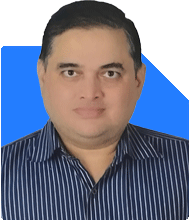
Milind

Milind Vadjikar  | Answer  |Ask -

Insurance, Stocks, MF, PF Expert - Answered on Feb 24, 2025

Milind Vadjikar is an independent MF distributor registered with Association of Mutual Funds in India (AMFI) and a retirement financial planning advisor registered with Pension Fund Regulatory and Development Authority (PFRDA).
He has a mechanical engineering degree from Government Engineering College, Sambhajinagar, and an MBA in international business from the Symbiosis Institute of Business Management, Pune.
With over 16 years of experience in stock investments, and over six year experience in investment guidance and support, he believes that balanced asset allocation and goal-focused disciplined investing is the key to achieving investor goals.... more
Asked by Anonymous - Feb 24, 2025Hindi
Listen

Hi Experts, I have 28L in mutual funds via mixture of monthly SIPs of 55000 rupees and lumpsums (10L in ELSS, 5L in conservative hybrid and 5L in aggresive hybrid) investments, also consisting of 1 small cap and 1 midcap fund. Please note the profit factor as shown on Coin (Zerodha) is close to zero after recent market downslides and bear markets, so the entire 28L is my own money (principal amount). Almost 2 months ago the profit was 4.5L and above (so the total value was ~33L). I am 34 years old. If I continue this investment discipline will there be any profit given market has turned out to be so unpredictable?

Ans: Hello;

What is your time horizon?

Also your risk profile?

Kindly provide these inputs to guide you suitably.

Thanks;
Asked on - Feb 24, 2025 | Answered on Feb 24, 2025
Listen
Risk profile: aggresive Time horizon: 15 to 20 years. Thank you, for prompt response.
Ans: Hello;

Considering your risk profile and time horizon you need not bother about this short to medium term volatility.

Also consider taking small cap and midcap exposure through multicap, flexicap and large & midcap fund types if possible just to temperate the risk.

Best wishes;
DISCLAIMER: The content of this post by the expert is the personal view of the rediffGURU. Users are advised to pursue the information provided by the rediffGURU only as a source of information to be as a point of reference and to rely on their own judgement when making a decision.
Money

You may like to see similar questions and answers below
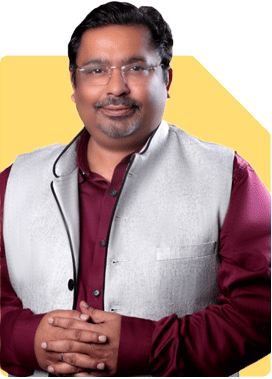
Omkeshwar

Omkeshwar Singh  | Answer  |Ask -

Head, Rank MF - Answered on May 13, 2022

Listen
Money
I am 37 years old. I have been investing in Mutual Funds since June 2017. I am an aggressive investor ready to take risks. My investment horizon is long term. I am investing for my Son's higher education which is 13 years away and also for my retirement which is 23 years away. My portfolio comprises of the following mutual funds. 1) HDFC Midcap Opportunities fund Regular growth - ₹4100/- per month with top up of 10% every year.  2) L&T hybrid equity fund Regular growth - ₹5000/- per month with top up of ₹500/- every year.  3) Aditya Birla Sun Life pure value fund Regular growth - ₹4500/- per month with top up of ₹500/- every year.  4) L&T Midcap Fund Regular growth -₹6000/- per month with top up of ₹500/- every year.  5) L&T Emerging Businesses Fund Regular growth -₹6000/- per month with top up of ₹500/- every year.  6) L&T Tax Advantage fund Regular growth -₹4500/- per month with top up of₹500/- every year.  7) Aditya Birla Sun Life Tax Relief '96 fund Regular growth - ₹5000/- per month with top up of ₹500/- every year.  8) UTI Flexi Cap fund Direct growth - ₹1000/- per month.  9) DSP Midcap fund Direct growth - ₹1000/- per month with top up of ₹500/- every year.  10) DSP Equity Opportunities fund Direct growth - ₹1000/- per month with top up of ₹500/- every year.  11) DSP Flexi Cap fund Direct growth - ₹1000/- per month with top up of ₹500/- every year.  12) Aditya Birla Sun Life Equity Advantage fund Direct growth - ₹1000/- per month with top up of ₹500/- every year.  13) Aditya Birla Sun Life Flexi Cap fund - Direct growth - ₹1000/- per month with top up of ₹1000/- every year.  14) ICICI Prudential Technology Plan Direct growth - ₹1000/- per month.  15) Nippon India Small Cap fund Direct growth - ₹1000/- per month with top up of ₹500/- every year.  16) Kotak Emerging Equity fund Direct growth plan - ₹1000/- per month with top up of ₹500/- every year.  17) L&T Flexi Cap fund Direct Growth plan - ₹1000/- per month.  Am I on the right track/path of investing? Please suggest necessary changes in the above portfolio if any or should I continue with the above mutual funds.Also suggest which funds should I Add/Remove from the above portfolio. 
Ans: Too many funds, keep 1 fund in same / similar category. No further addition please! 

..Read more

Ramalingam

Ramalingam Kalirajan  |11136 Answers  |Ask -

Mutual Funds, Financial Planning Expert - Answered on May 07, 2024

Asked by Anonymous - Apr 14, 2024Hindi
Listen
Money
Hi everyone, I have just started investing in mutual funds, I'm 21 years old currently studying And recently I came to know of mutual fund and share market hence I asked my family to invest all the money in Their savings account should be invested in mutual funds as they give all lot more return on investment than savings account. And hence I have invested near about 2,00,000 rupees which is about 20% of my whole families non EMERGENCY savings. I have invested inInvesco India mid cap fund direct plan( Rs. 35000), axis small cap fund direct growth (35000) , sbi small cap fund(18000), parag Parekh flexi cap direct growth (16000), Quant small cap direct fund (10000), Motilal Oswal midcap fund Direct plan (15000), Quant ELSS Tax saver direct plan (10000), kotak small cap Direct plan (5000) , Kotak emerging equity direct plan (5000), Quant flexi cap direct plan (20000), Quant infrastructure fund direct plan (5000), Quant mid cap fund (5000), Nippon India Growth fund (5000), [ All of them are one time payments bought in March 2024 and nifty is at all time high at 22800], and currently I have gained all total profit of 7,000 from investment of 2,00,000 Sirs, my first question is, i fear that if Markets go down will my mutual fund value will also go down, And if I should continue investing any further in mutual funds for a PERIOD OF TIME and wait for markets to go down to invest further. Or should I continue investing. And my second question is that, is ONE TIME INVESTMENT better or SIP, AND FOR FURTHER INVESTMENT should I continue with my one time INVESTMENT of 50,000 to 60,000 for the remaining 80% OF the savings in the next 2-3 months or should I go for SIP and spread this for over a span of 1-2. Years
Ans: It's great to see your enthusiasm for investing in mutual funds at a young age! Let's address your concerns and questions:

Market Volatility: It's natural to be concerned about market fluctuations, especially when you're new to investing. Yes, mutual fund values can indeed fluctuate with market movements. However, it's essential to remember that investing in mutual funds is a long-term endeavor. Market downturns are a normal part of the investing cycle, and they often present buying opportunities for long-term investors. Trying to time the market by waiting for a downturn to invest further can be challenging and may not always yield the desired results. Instead, focus on staying invested for the long term and maintaining a diversified portfolio that aligns with your financial goals and risk tolerance.
One-Time Investment vs. SIP: Both one-time investments and SIPs have their advantages. One-time investments offer the benefit of investing a lump sum amount upfront, which can potentially lead to higher returns over the long term, especially during bull markets. On the other hand, SIPs allow you to invest regularly over time, which can help in rupee cost averaging and reduce the impact of market volatility. Since you're just starting, you may consider continuing with your one-time investments for now and gradually explore SIPs as you gain more experience and confidence in investing.
Future Investment Strategy: Whether you choose to continue with one-time investments or switch to SIPs for your future investments depends on your preferences, financial goals, and cash flow considerations. Since you've already made one-time investments, you may continue with this approach if it aligns with your investment strategy. Alternatively, if you prefer a more systematic and disciplined approach, you can start SIPs for your future investments. Consider spreading your investments over time to take advantage of rupee cost averaging and reduce the impact of market volatility.
Remember, investing is a journey, and it's essential to stay patient, disciplined, and focused on your long-term goals. Consider seeking advice from a Certified Financial Planner (CFP) or financial advisor who can provide personalized guidance based on your individual circumstances and help you navigate the complexities of the financial markets. Keep learning and stay committed to your investment plan, and you'll be well-positioned to achieve your financial aspirations over time.

..Read more

Ramalingam

Ramalingam Kalirajan  |11136 Answers  |Ask -

Mutual Funds, Financial Planning Expert - Answered on Aug 02, 2024

Asked by Anonymous - Jul 16, 2024Hindi
Listen
Money
Hi sir, I am 29 years old and working in IT sector. My monthly income is 85K in hand. I am having a FD if 5 Lakhs, 9 Lakhs invested in Stocks, 3.35 Lakhs into mutual fund with 10k SIP monthly with is providing me 1.5Lakh as return at present. I mutual funds are Tata Digital Direct Fund, Quant Small Cap Fund, Quant Infrastructure Fund, HDFC Defence Fund, ICICI prudential Technology Fund. 1Lakh in NPS and 1Lakh in PPF. Please suggest if my investments are good for a better profit in future.
Ans: Investment Analysis

• Your investment approach shows promise. Good job!
• You've made a start in diversifying your portfolio.
• Let's look at ways to improve your financial strategy.


Emergency Fund

• Your 5 Lakh FD is a good emergency fund.
• It provides a safety net for unexpected expenses.
• Consider keeping 3-6 months of expenses in easily accessible accounts.


Equity Investments

• Your stock investments show you're open to market opportunities.
• However, your portfolio seems heavily focused on specific sectors.
• This approach can be risky in market downturns.


Mutual Funds

• Your mutual fund choices target high-growth sectors.
• This strategy can offer good returns but carries higher risk.
• Consider adding some large-cap or multi-cap funds for stability.


Systematic Investment Plan (SIP)

• Your monthly SIP of Rs. 10,000 is commendable.
• It helps in rupee cost averaging and long-term wealth building.
• Think about increasing this amount as your income grows.


Retirement Planning

• Your NPS and PPF investments are steps in the right direction.
• These offer tax benefits and long-term wealth creation.
• Consider maximizing your PPF contributions for better tax savings.


Suggestions for Improvement

• Diversify your portfolio further to spread risk.
• Add some debt funds to balance your equity-heavy portfolio.
• Review your asset allocation to match your risk tolerance.
• Ensure you have adequate life and health insurance coverage.
• Increase your retirement savings through NPS or other means.
• Regularly review and rebalance your portfolio for optimal performance.


Benefits of Regular Funds

• Regular funds offer professional management of your investments.
• They provide access to expert advice from qualified distributors.
• Regular funds can help you stay disciplined in your investment journey.
• They offer personalized solutions tailored to your financial goals.


Advantages of Actively Managed Funds

• Actively managed funds aim to outperform the market.
• They can adapt quickly to changing market conditions.
• These funds offer potential for higher returns than passive investing.
• They provide opportunities to invest in undiscovered market segments.


Final Insights

• Your investment approach shows promise but needs some tweaks.
• Focus on diversification and risk management for better results.
• Consider consulting a Certified Financial Planner for personalized advice.
• Remember, a well-balanced portfolio is key to long-term financial success.

Best Regards,
K. Ramalingam, MBA, CFP,
Chief Financial Planner,
www.holisticinvestment.in

..Read more

Ramalingam

Ramalingam Kalirajan  |11136 Answers  |Ask -

Mutual Funds, Financial Planning Expert - Answered on Apr 07, 2026

Money
Sir,I am investing in mutual funds through a monthly SIP (Systematic Investment Plan). I would like expert advice on whether continuing monthly investments in my selected mutual funds will provide good returns over a medium-term horizon of around 3–5 years. icici pru equity & Debt fund 5000 8th of every month, icici pru equituy and debt 5000 13th of every month, HDFC Mid cap Fund-Reg (G) 5000 17th of every month, icici pru equity & Debt fund 5000 23rd of every month, HDFC Mid cap Fund-Reg (G) 10000 25th of every month, HDFC Large cap G 5000 20th of every month. Kindly suggest...
Ans: You are doing a very disciplined job by investing regularly through SIP. Monthly investing across different categories shows strong commitment and planning. For a 3–5 year horizon, your selection mix is generally suitable, but some improvements can make your returns more stable and efficient.

» Understanding your present SIP structure

– You are investing about Rs 35,000 per month through SIP
– Your allocation is spread across large-cap, mid-cap and equity-plus-debt category funds
– This creates a balance between growth and stability
– Investing on different dates in the same month does not improve returns significantly. It only spreads timing risk slightly

Your approach already shows good diversification thinking.

» Suitablity for 3–5 year investment horizon

For a 3–5 year period:

– Large-cap category gives stability and moderate growth
– Mid-cap category gives higher growth but with higher volatility
– Equity-plus-debt category gives balance and downside protection

This combination is generally suitable for medium-term goals. However, mid-cap exposure should be controlled carefully because markets can move sharply in shorter periods like 3–5 years.

» Observation about repeated investment into same hybrid category

You are investing multiple SIPs into the same equity-plus-debt category fund across different dates.

– This does not increase diversification
– It only increases exposure to the same strategy
– Instead, keeping one SIP in that category is enough

Better category-level diversification improves risk control.

» Mid-cap allocation needs monitoring

Your mid-cap investment is Rs 15,000 per month.

– Mid-cap funds perform well in long-term wealth creation
– But they can be volatile in medium-term horizons
– For 3–5 years, slightly lower allocation may improve stability

A balanced exposure between large-cap and hybrid categories can reduce risk.

» Suggested improvement structure

You may consider a better category allocation approach like:

– Around 40% in large-cap category
– Around 25% in mid-cap category
– Around 35% in equity-plus-debt category

This improves stability without reducing growth potential.

» Importance of goal-based investing

Returns depend more on goal matching than fund selection alone.

Please check:

– Is this investment for retirement support?
– Children education?
– Wealth creation buffer?
– Major purchase after 5 years?

Matching category allocation with goal timeline improves success probability.

» Role of SIP continuation during market volatility

Continue SIP even if markets fluctuate.

– SIP works best when markets move up and down
– It averages purchase cost
– It builds long-term discipline
– Stopping SIP during corrections reduces benefits

Consistency is your biggest strength here.

» Tax awareness during redemption planning

If redeemed before one year:

– Gains taxed at 20%

If redeemed after one year:

– Gains above Rs 1.25 lakh taxed at 12.5%

Planning withdrawals carefully improves net return outcome.

» Finally

Your SIP portfolio structure is already strong and suitable for medium-term investing. Only small rebalancing between categories can improve risk control and return consistency. Continue your disciplined SIP approach. With proper allocation alignment and periodic review once a year, your 3–5 year outcome can remain healthy and predictable.

Best Regards,

K. Ramalingam, MBA, CFP,

Chief Financial Planner,

www.holisticinvestment.in

https://www.linkedin.com/in/ramalingamcfp/

..Read more

Latest Questions
Nayagam P

Nayagam P P  |11009 Answers  |Ask -

Career Counsellor - Answered on Apr 18, 2026

Career
Sir, My son has appeared in Class X ICSE Exam and results are awaited. So far , he has been an average performer academically. I believe he is capable and he can do great if he puts in the hard work. His performance in subjects like History/Geography etc has always been better than in Maths/science. I personally never wanted to force him to choose any stream for higher studies. He also is not sure about it. While discussing I suggested him to go for Commerce or humanities stream and then for MBA from a reputed institution. However, he is more concerned about job opportunities and wanted to go for science. Hence, after a lot of discussion, we have got him admitted in Science stream in Delhi and also got him enrolled in Allen for JEE Coaching. We thought if he adapts well and gets going, then may be he can achieve good result. Otherwise, we may decide to change stream after Class XII. What is your opinion? Request for your suggestion please
Ans: Shyam Sir, I have thoroughly reviewed your son’s background. You haven’t mentioned whether he is continuing with the ISC board or has enrolled in the CBSE board with Allen-JEE coaching for this 11th/12th Grade. Firstly, I recommend a psychometric test for your son to gain a rough idea of the most suitable career options for him.

Secondly, job opportunities exist across domains, but to be competitive, your son must have passion and interest in his chosen field and continuously upgrade both technical and soft skills relevant to that domain.

Thirdly, besides understanding suitable career options through the psychometric test, ask him what types of problems he is interested in solving in the future.

Fourthly, since you mentioned his performance is better in History and Geography than in Science and Maths, Allen-JEE coaching would be suitable only if he is truly interested in Maths and Science. If not, his performance may fall short of expectations, leading to demotivation.

My suggestion is to consider enrolling him in the Arts/Humanities stream with a focus on Geography-centric subjects. Later, he can pursue civil services, media, law, or management studies. Reassess his progress after about a year (by December 2026), focusing on his interest, mental health, and realistic performance rather than perceived job security alone.

Before he completes 11th grade (by February 2026), you both can collectively decide and start preparing for entrance exams in law, media, or management (CUET, CLAT, IPMAT, NPAT, SET etc.) based on his interests and future plans. ALL the BEST for Your Son's Prosperous Future!

Follow RediffGURUS to Know More on 'Careers | Money | Health | Relationships'.

...Read more

Nayagam P

Nayagam P P  |11009 Answers  |Ask -

Career Counsellor - Answered on Apr 18, 2026

Career
Sir my son is expected to score 90+% in 12th boards typically between 93-95% of board marks .. and 90% and above pcm cutoff .. is he now eligible with this met score of 125 marks and 12th score for admission in mit manipal mechanical? . . Also i need a guidance about aeee also . Since my son scored 90.3 percentile in aeee entrance phase . Is he eligible for slab 1 mechanical engineering in aeee ? Kindly support pl
Ans: Bala Sir, I have already addressed the first part of your question, confirming that the chances of him getting admission into the Mechanical branch at Manipal are higher. The official handbook of AMRITA states that seat allotment and scholarship consideration are done through CSAP allotment. Your son may secure a Mechanical seat, but Slab 1 cannot be guaranteed unless his final AEEE rank or JEE percentile is strong enough at the time of CSAP choice allotment. Slab 1 is based on merit ranking, not raw marks. His 125 AEEE marks will be converted into a rank relative to all candidates; if many score higher, the Slab 1 cutoff will rise. Therefore, raw marks alone do not guarantee Slab 1.

The chance of getting a Mechanical seat from Slab 2 is moderate at Amrita Coimbatore and highly probable at the Bengaluru campus. It’s advisable to have 2-3 backup options besides Manipal and Amrita. Mechanical Engineering is generally less competitive than CSE or ECE, but having backups is still wise. ALL the BEST for Your Son's Prosperous Future!

Follow RediffGURUS to Know More on 'Careers | Money | Health | Relationships'.

...Read more

DISCLAIMER: The content of this post by the expert is the personal view of the rediffGURU. Investment in securities market are subject to market risks. Read all the related document carefully before investing. The securities quoted are for illustration only and are not recommendatory. Users are advised to pursue the information provided by the rediffGURU only as a source of information and as a point of reference and to rely on their own judgement when making a decision. RediffGURUS is an intermediary as per India's Information Technology Act.

Close  

You haven't logged in yet. To ask a question, Please Log in below
Login

A verification OTP will be sent to this
Mobile Number / Email

Enter OTP
A 6 digit code has been sent to

Resend OTP in120seconds

Dear User, You have not registered yet. Please register by filling the fields below to get expert answers from our Gurus
Sign up

By signing up, you agree to our
Terms & Conditions and Privacy Policy

Already have an account?

Enter OTP
A 6 digit code has been sent to Mobile

Resend OTP in120seconds

x