Home > Money > Question
Need Expert Advice?Our Gurus Can Help

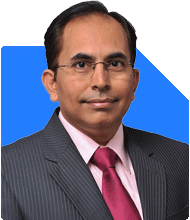
Ramalingam

Ramalingam Kalirajan  |10870 Answers  |Ask -

Mutual Funds, Financial Planning Expert - Answered on May 29, 2024

Ramalingam Kalirajan has over 23 years of experience in mutual funds and financial planning.
He has an MBA in finance from the University of Madras and is a certified financial planner.
He is the director and chief financial planner at Holistic Investment, a Chennai-based firm that offers financial planning and wealth management advice.... more
Rudranil Question by Rudranil on Dec 20, 2023Hindi

Listen
Money

Hi Dev, I want to retire with 50-60 Cr ball parked for future. I don't have any age but these in Excel calculated for me. My age is 26 and I have started with below investments: Term Insurance: 2Cr Health insurance: 25 lakh EPF + VPF : 20 K / month PPF: 50k / year NPS: 6000/ month Mutual fund Portfolio: 1. Axis small cap: 2000 2. Quant Small cap: 3000 3. Nippon 250 small cap fund: 7500 All of the above have little over lapping 4. Kotak emerging fund : 4000 5. Parag Active fund : 1000 7. Parag flexi fund : 1000 8. Nifty 50 index fund : 2000 9. Mirae asset : 1000 Total : 21,500 / monthly. I also have a home loan for which I am paying 30k / month. My current in-hand is about 80k / month. Please suggest how can I optimise for better returns.

Ans: You have taken a proactive approach towards your financial future. At 26, you have already started investing in multiple instruments, showing foresight and financial discipline.

Evaluating Current Investments
Term Insurance and Health Insurance:

Term Insurance: A Rs. 2 crore term insurance cover is a solid foundation for protecting your family's financial future.

Health Insurance: A Rs. 25 lakh health insurance policy ensures you are prepared for medical emergencies.

EPF and VPF:

EPF + VPF: Contributing Rs. 20,000 per month is a strong, tax-efficient way to build a retirement corpus. It provides safety and moderate returns.
PPF:

PPF: Investing Rs. 50,000 per year in PPF is wise for tax savings and risk-free returns.
NPS:

NPS: Contributing Rs. 6,000 per month to NPS is beneficial for retirement, providing tax benefits and a mix of equity and debt exposure.
Mutual Fund Portfolio Assessment
Overview of Current Portfolio:

Axis Small Cap: Rs. 2000
Quant Small Cap: Rs. 3000
Nippon 250 Small Cap Fund: Rs. 7500
Kotak Emerging Fund: Rs. 4000
Parag Active Fund: Rs. 1000
Parag Flexi Fund: Rs. 1000
Nifty 50 Index Fund: Rs. 2000
Mirae Asset: Rs. 1000
Assessment and Evaluation:

Your mutual fund portfolio is diversified but has significant exposure to small-cap funds. This can provide high returns but also comes with higher risk. Balancing this with more large-cap and mid-cap funds can provide stability.

Optimizing for Better Returns
Diversification and Risk Management:

Reduce Overlapping: Ensure your funds do not overlap significantly to avoid concentration risk.

Diversify: Include a mix of large-cap, mid-cap, and small-cap funds to balance risk and return.

Focus on Quality: Invest in funds with a consistent track record of performance.

Suggested Changes:

Reduce Small Cap Exposure: Limit the number of small-cap funds and increase investment in large-cap and balanced funds.

Increase Mid Cap Exposure: Adding mid-cap funds can provide a balance between risk and return.

Include Debt Funds: Adding debt funds can reduce portfolio volatility and provide stable returns.

Additional Investment Strategies
Automate Investments:

SIP (Systematic Investment Plan): Continue using SIPs for disciplined investing and rupee cost averaging.

STP (Systematic Transfer Plan): Use STP to transfer from debt to equity funds over time.

Emergency Fund:

Build an Emergency Fund: Ensure you have 6-12 months of expenses in a liquid fund or savings account for emergencies.
Planning for Future Goals
Marriage and Child Expenses:

Estimate Costs: Plan for upcoming marriage and future child expenses by estimating costs and setting aside specific investments.

Education and Marriage Funds: Start separate SIPs for these goals in balanced or hybrid funds for moderate growth with reduced risk.

Home Loan Management
Home Loan Repayment:

Continue EMI Payments: Your Rs. 30,000 monthly EMI is a significant expense. Continue paying on time to reduce debt burden.

Consider Prepayment: If possible, prepay part of your home loan to reduce interest costs.

Tax Efficiency
Tax-Saving Investments:

Utilize Section 80C: Maximize your investments under Section 80C for tax savings, including EPF, PPF, and ELSS funds.

Section 80D: Claim deductions on health insurance premiums under Section 80D.

Regular Review and Rebalancing
Review Portfolio Regularly:

Quarterly Review: Assess your portfolio quarterly to ensure it aligns with your financial goals.

Rebalance Annually: Rebalance your portfolio annually to maintain your desired asset allocation.

Conclusion
Empathy and Understanding:

You have made a commendable start towards achieving your financial goals. By diversifying your investments and regularly reviewing your portfolio, you can optimize returns and build a substantial corpus for retirement.

Best Regards,

K. Ramalingam, MBA, CFP,

Chief Financial Planner,

www.holisticinvestment.in
DISCLAIMER: The content of this post by the expert is the personal view of the rediffGURU. Users are advised to pursue the information provided by the rediffGURU only as a source of information to be as a point of reference and to rely on their own judgement when making a decision.
Money

You may like to see similar questions and answers below

Ramalingam

Ramalingam Kalirajan  |10870 Answers  |Ask -

Mutual Funds, Financial Planning Expert - Answered on May 29, 2024

Money
My current age is 49 Years. I have my own house worth Rs. 90 lakhs, one Flat worth Rs, 50 L, two small Bunglows at Bolkpur worth Rs. 25 L, and 12 katthas of Land worth Rs. 40 L. Having no loan in the market. Through mutual funds I have invested Rs. 50 L. Its market value is 1.25 Cr. Presently I am running (1) SIP of Rs. 4,80, 000 p.m., (2) PPF of Rs. 1,50,000 /- p.a. (3) LIC (Market Linked) Rs. 2.25,000/- p.a. and (4) SBI Life Rs. 6,00,000 p.a. LICs are going to be matured by 2027. Would like to make a total fund og 5 Cr by 2030. So that after retirement at my age of 55, I can earn at least Rs. 3 L p.m. SIPs are : (1) SBI Blue Chip Fund Regular Plan Growth Rs. 60,000 p.a. (2) SBI Focussed Equity Fund Regular Growth Rs. 60,000 p.a. (3) SBI Magnum Global Fund Regular Plan Growth Rs. 60,000 p.a. (4) SBI Magnum Midcap Fund Regular Plan Growth Rs. 60,000 p.a. (5) SBI Nifty 50 Equal Weight Index Fund Regular Plan Growth Rs. 1,00,000 p.a.
Ans: Thank you for sharing detailed information about your current financial situation and goals. You have done an excellent job in building a diversified portfolio. Your goal of achieving Rs. 5 crore by 2030 and earning Rs. 3 lakh per month after retirement is commendable. Let’s delve into how you can achieve this.

Assessing Your Current Financial Status
You own multiple properties worth Rs. 2.05 crore, and your mutual fund investments are valued at Rs. 1.25 crore. Additionally, you are actively investing through SIPs, PPF, LIC, and SBI Life Insurance. This diversified approach is sound and sets a strong foundation for your financial goals.

Understanding Your Investment Strategy
You have allocated Rs. 4.8 lakh per month in SIPs and are contributing to PPF and insurance policies. Your current investment strategy reflects a balanced approach, combining equity, debt, and insurance products.

Evaluating Your SIP Investments
You have invested in several mutual funds, which is a good strategy. Actively managed funds can provide better returns due to professional management. However, index funds, while stable, may not offer the same level of growth as actively managed funds.

Disadvantages of Index Funds
Index funds track a specific market index and lack active management. They may not outperform the market and have limited flexibility. Actively managed funds, on the other hand, can adapt to market conditions, aiming for higher returns.

Benefits of Actively Managed Funds
Actively managed funds have experienced fund managers who make strategic decisions. They aim to outperform the market by selecting high-potential stocks. This can lead to better returns compared to index funds.

Importance of Diversification
Diversification reduces risk and enhances returns. Your portfolio should include a mix of large-cap, mid-cap, and small-cap funds. This approach balances stability with growth potential, aligning with your risk tolerance.

Regular Monitoring and Rebalancing
Regularly monitoring your investments is crucial. Rebalancing your portfolio ensures it aligns with your financial goals and risk tolerance. This helps maintain the desired asset allocation and optimizes returns.

Maximizing PPF Contributions
Your PPF contributions offer tax benefits and secure returns. Maximizing contributions to PPF can enhance your overall returns while providing safety. The tax-free interest adds to the attractiveness of PPF as a long-term investment.

Reviewing Insurance Policies
Your LIC and SBI Life policies provide insurance coverage and investment growth. However, market-linked insurance plans may have higher costs and lower returns compared to mutual funds. Considering your investment goals, it might be beneficial to surrender these policies and reinvest the proceeds in mutual funds.

Benefits of Reinvesting in Mutual Funds
Reinvesting the surrender value from your insurance policies into mutual funds can potentially offer higher returns. Mutual funds provide greater flexibility and the potential for significant growth, aligning well with your long-term goals.

Achieving Your Goal of Rs. 5 Crore by 2030
To achieve your goal of Rs. 5 crore by 2030, you need to focus on high-growth investments. Continue your SIPs in actively managed funds, maximize PPF contributions, and consider reinvesting insurance policy proceeds into mutual funds. This combined strategy should help you reach your target.

Generating Rs. 3 Lakh per Month Post-Retirement
To generate Rs. 3 lakh per month after retirement, you need a diversified income stream. This can include withdrawals from mutual funds, interest from PPF, and income from other investments. A Certified Financial Planner can help design a withdrawal strategy to meet your income needs.

Importance of Professional Guidance
Consulting a Certified Financial Planner ensures personalized advice. They can help optimize your investment strategy, align it with your goals, and manage risk. Professional guidance is invaluable in achieving financial security.

Disadvantages of Direct Funds
Direct funds require you to manage investments without professional advice. This can be challenging and risky without market knowledge. Regular funds, advised by a CFP, offer better management and informed decision-making.

Conclusion
Your current financial plan is robust and well-diversified. By continuing your disciplined investment approach, considering the surrender of insurance policies for better investment opportunities, and seeking professional advice, you can achieve your goal of Rs. 5 crore by 2030. This will ensure a comfortable retirement with a steady income.

Best Regards,

K. Ramalingam, MBA, CFP,

Chief Financial Planner,

www.holisticinvestment.in

..Read more

Ramalingam

Ramalingam Kalirajan  |10870 Answers  |Ask -

Mutual Funds, Financial Planning Expert - Answered on Jul 10, 2024

Asked by Anonymous - Jul 04, 2024Hindi
Money
Hi. I am a 35 year old IT professional with a monthly combined salary of me and my wife close to 3 lakhs. I am investing close to 50k per month in MF sip, 7k in my only child education plan, 25k in my pf, 4k in an lic endorsement plan, 2lks in SBI smart retire per year, 5k per month each in ppf and nps. I have close to 1cr invested in real estate(plot and apartment)out of which 25k comes back as return. 25k combined accumulated in pf, 11 lks in MF, 20lks in physical gold. I want to retire in next 5 years with a monthly inflow of 60k per month. Please help me how to maximise my return and invest smartly.
Ans: You’re doing great with your finances, and it’s commendable that you are thinking about retiring early. Let’s dive into a detailed strategy to help you maximize your returns and invest smartly.


First, congratulations on maintaining a diversified portfolio and having a clear retirement goal. Balancing investments while managing a high combined salary is no small feat. Your proactive approach towards your financial future is admirable.

Understanding Your Current Situation
You are a 35-year-old IT professional, with a combined monthly salary of Rs. 3 lakhs. Here’s a breakdown of your current investments:

MF SIP: Rs. 50,000 per month
Child Education Plan: Rs. 7,000 per month
PF: Rs. 25,000 per month
LIC Endowment Plan: Rs. 4,000 per month
SBI Smart Retire: Rs. 2 lakhs per year
PPF: Rs. 5,000 per month
NPS: Rs. 5,000 per month
Real Estate: Investment worth Rs. 1 crore, generating Rs. 25,000 per month
PF Accumulated: Rs. 25,000
Mutual Funds: Rs. 11 lakhs
Physical Gold: Rs. 20 lakhs
Evaluating Your Goals
Your goal is to retire in 5 years with a monthly inflow of Rs. 60,000. Let’s evaluate and strategize how to achieve this.

Detailed Financial Assessment
1. Mutual Funds:

You’re investing Rs. 50,000 per month in SIPs, which is excellent. Mutual funds offer the potential for high returns and diversification.

2. Child Education Plan:

Investing Rs. 7,000 per month ensures your child’s education is well-funded. Continue this for security.

3. PF and VPF:

Your Rs. 25,000 per month contribution towards PF is great for retirement. It provides tax benefits and secure returns.

4. LIC Endowment Plan:

Endowment plans often have lower returns. Consider evaluating its performance and compare with other investment options.

5. SBI Smart Retire:

Investing Rs. 2 lakhs per year here indicates a focus on retirement. Ensure it aligns with your overall retirement strategy.

6. PPF:

Investing Rs. 5,000 per month in PPF is a secure option with tax benefits and decent returns over the long term.

7. NPS:

NPS contributions are good for retirement savings with tax benefits. Ensure optimal asset allocation within NPS.

8. Real Estate:

Your investment in real estate worth Rs. 1 crore generating Rs. 25,000 per month is a decent return. However, real estate lacks liquidity.

9. Physical Gold:

Gold worth Rs. 20 lakhs is a good hedge against inflation. However, it doesn’t generate regular income.

Strategic Recommendations
1. Increase SIP Investments:

Consider increasing your SIP investments gradually. Equity mutual funds can provide higher returns in the long run.

2. Evaluate LIC Endowment Plan:

Check the returns from your LIC endowment plan. If they are low, consider surrendering and redirecting to higher-return investments like mutual funds.

3. Optimize NPS Asset Allocation:

Review your NPS asset allocation. Ensure a good balance between equity and debt for optimal growth and stability.

4. Diversify Mutual Funds:

Diversify your mutual fund portfolio. Include a mix of large-cap, mid-cap, and small-cap funds for balanced growth.

5. Emergency Fund:

Ensure you have an emergency fund covering 6-12 months of expenses. This provides a financial cushion for unforeseen events.

6. Insurance Coverage:

Review your insurance coverage. Ensure you have adequate life and health insurance to protect your family.

Detailed Breakdown of Mutual Funds
1. Equity Mutual Funds:

Diversified Equity Funds: Invest in a mix of sectors. They offer balanced growth with reduced risk.
Large-Cap Funds: Invest in large companies. They are stable and provide steady returns.
Mid-Cap Funds: Invest in medium-sized companies. They have higher growth potential but come with increased risk.
Small-Cap Funds: Invest in small companies. They offer high returns but are volatile.
2. Debt Mutual Funds:

Liquid Funds: Ideal for short-term investments and emergencies. They offer quick access to money.
Income Funds: Invest in bonds and fixed-income securities. They provide regular income and stability.
3. Hybrid Mutual Funds:

Balanced Funds: Maintain a balanced allocation between equity and debt. They offer moderate growth and stability.
Dynamic Asset Allocation Funds: Adjust the allocation between equity and debt based on market conditions. They provide flexibility and balanced returns.
Power of Compounding
The power of compounding is crucial for long-term wealth creation. Here’s how it works:

1. Exponential Growth:

Compounding leads to exponential growth. The longer you stay invested, the more your money grows.

2. Reinvestment:

Mutual funds reinvest earnings, leading to compounding. This accelerates your wealth creation over time.

3. Time Horizon:

Start early and stay invested to maximize compounding benefits. Time is your greatest ally in wealth creation.

Regular Monitoring and Rebalancing
1. Performance Tracking:

Track the performance of your investments regularly. This helps you make informed decisions and adjustments.

2. Rebalancing:

Rebalance your portfolio periodically. This ensures your asset allocation remains aligned with your goals and risk tolerance.

3. Market Conditions:

Stay informed about market conditions. Adjust your investments to take advantage of opportunities and mitigate risks.

Financial Planning for Retirement
1. Calculate Retirement Corpus:

Estimate the corpus needed for a monthly inflow of Rs. 60,000. Consider inflation and future expenses in your calculation.

2. Increase SIP Investments:

To build a larger retirement corpus, increase your SIP investments. Equity mutual funds can provide higher returns in the long run.

3. Diversify Investments:

Diversify your investments across equity, debt, and hybrid funds. This balances risk and returns for a secure retirement.

4. Review Insurance Coverage:

Ensure you have adequate life and health insurance coverage. This protects you and your family from unforeseen events.

Exploring Additional Investment Options
1. Tax-Free Bonds:

Consider investing in tax-free bonds. They provide regular interest income and tax benefits.

2. Systematic Withdrawal Plan (SWP):

SWPs in mutual funds provide regular income by withdrawing a fixed amount periodically. This can be useful post-retirement.

3. Gold ETFs:

Instead of physical gold, consider Gold ETFs. They are more liquid and easier to manage.

Final Insights
Maximizing your returns and investing smartly requires a balanced and diversified approach. Increase your SIP investments and optimize your NPS asset allocation. Evaluate your LIC endowment plan and consider reallocating to higher-return investments. Ensure you have adequate insurance and an emergency fund. Regularly monitor and rebalance your portfolio to stay aligned with your goals. By following these strategies, you can achieve your retirement goal of a monthly inflow of Rs. 60,000. Your proactive approach and commitment to financial planning are commendable, and with the right strategy, you can secure a bright financial future.

Best Regards,

K. Ramalingam, MBA, CFP,

Chief Financial Planner,

www.holisticinvestment.in

..Read more

Janak

Janak Patel  |71 Answers  |Ask -

MF, PF Expert - Answered on May 14, 2025

Asked by Anonymous - May 12, 2025
Money
I am 33 and currently investing Rs.30000/- per month in SIP- Rs.4000/- each in Quant Flexicap Fund And Quant Smallcap Fund, Rs.3000/- each in SBI Smallcap Fund,Axis Growth Opportunities Fund,Motilal Oswal Midcap 150 Index Fund,Motilal Oswal Smallcap 250 Index Fund, Motilal Oswal Microcap 250 Index Fund, Rs.1000/- in SBI Infrastructure Fund and Rs.6000/- in Edelweiss Gold and Silver ETF FoF. I already have an existing portfolio of 17 Lakh in Mutual Funds and 16 Lakh in NPS. What tweaks should I apply so as to maximize my returns and retire in the next 20 years with a total corpus of 5 crores?
Ans: Hi,

I like the simplicity in your query. You have stated very clearly what you have accumulated so far and what your ongoing investment is.

Having said that I feel there is some information missing - your contribution to NPS every year as it will have a bearing on the NPS corpus you will accumulate. But as its not mentioned I will consider only the current amount of 16 lakhs. This amount has a potential to grow between 50 lakhs to over 1.25 crores in the next 20 years, depending on the option of risk and investment composition you have opted for.

The accumulated 17 lakhs in Mutual funds if we consider a rate of 12% return for 20 years, then this will grow to 1.6 crores in 20 years.

Your current SIP of Rs.30000 per month in MFs with assumed returns of 12% for 20years, can grow into a corpus of 2.99 crores.

So yes, you seem to be on your way to a corpus of over 5 crores in 20 years.

Your more important part of the query is what tweaks should you apply to your portfolio.
Remember, the portfolio of investments you have should be taken into consideration as a whole to analyze the risk, return and synergy (complimentary nature) of investments. we always suggest a good diversification and this can be achieved in many ways. For some investors, it can a couple of funds, while for some it may be a portfolio of more funds (recommended to keep under 10). But its important to not over diversify as it will dilute the returns of the portfolio.

As you have not mentioned the MF portfolio details of 17 lakhs, it becomes difficult to decide if the other funds are a good synergy / overdiversification for your combined portfolio.

But I can give you some pointers to help you review and make some updates.
I see the funds you have mentioned have overall - 3 small cap funds, a microcap fund - these funds will tap into the same universe of stocks classified as small cap. Having just 1 is enough.
When picking a thematic/sectorial fund, you need to again look at the fund portfolio as it may have a good amount of overlap with your remaining funds - the Infra fund.
Note - do not keep adding new funds into the portfolio as it not just dilutes your returns, but it also becomes difficult to manage them. With time, their less than desired performance will compel you to make changes more often or give you sleepless nights. So weigh your decision against your own personal behavior and try to keep the overall portfolio simple and manageable. In such a long period as 20 years, a lot of things get equated and hence small portfolio is also good.

Most important is to review the portfolio on yearly basis to see if the funds are performing as per your portfolio expectation. They need not be the best/no.1 funds in their category (as that changes each year), but they need to show consistency and stay above the benchmark and category average in performance. This will ensure that you are on track with your overall objective of the portfolio.
If you are comfortable to do this review by yourself then its great, but if you need help, I suggest you reach out and get a good adviser. For the portfolio you want to create, even a fee based adviser can be a worth the time and money you will eventually save and stay assured of reaching your goal.
I recommend a CFP who can help with this and also do a holistic planning for your retirement as it encompasses many aspects which you may or may not have covered.

Thanks & Regards
Janak Patel
Certified Financial Planner.

..Read more

Reetika

Reetika Sharma  |417 Answers  |Ask -

Financial Planner, MF and Insurance Expert - Answered on Oct 18, 2025

Asked by Anonymous - Oct 09, 2025Hindi
Money
My Goal is to retire in 40-45 age with 5 Crore. I’m 30 now. I invested in PPF (6.75 Lakh till now it’s been 4 years now) and I will continue till I complete 15 years (1.5 Lakh/ Year Plan) NPS- 3.2 Lakh till now FD- 25 Lakh ( All will mature in June 2026) Mutual Fund (Lumpsum & Sip includes 13.5 Lakhs till today. Doing SIP of ₹25500 per month which is below.. MidCap Funds-(HDFC -5k, Motilal Oswal- 5k) LargeCap-(ICICI Pru- 2K, Canara Robeco- 1k) SmallCap-( SBI - 5K, Quant- 1K, Nippon India -1K) Flexi cap- (Parag Parikh-3.5k, HDFC Flexi-1K) Value - ICICI Pru Value Direct Fund-1k Above were all my SIP’s and I have invested lumpsum funds below. ICICI Pru asset allocator -7 Lakh Business cycle fund- 1.14 Lakh SBI Gold Direct plan- 6k EPF- 1.75Lakh till now Physical gold worth-9 Lakh SBI Nifty 50 Gold ETF worth -1 Lakh I recently left my Job where my salary was 14 LPA. I will start looking for new opportunity in few days. I’m also planning to purchase a house since I’m staying in Rented home where my monthly expenses are 30k /Month. I don’t have any responsibilities of kids & family as such . Please suggest me how should I plan accordingly & achieve my targets?
Ans: Hi,

Good that you have invested in various diversified assets at such age. Your dedication shows the sincerity you have towards your goals. Let us have a look at your financials:

1. FD - 25 lakhs. You should keep maximum 10 lakhs in FD as your emergency and other unforeseen expense. Move the remaining amount in multicap funds.
2. Have a dedicated term and health insurance for yourself and family.
3. Your contribution to PPF is not required. Instead redirect it to Balanced Advantage Fund as PPF is locked for 15 years and provide only 7% where as BAF gives 10-11% and is not locked. Contribute minimum amount in PPF to keep it active.
4. Continue with NPS investments.
5. Currently there are no responsibilites but in future, you might get married. Hence you should also be prepared for other major expenses such as your marriage, future family and life post marriage.
6. Currently your expenses - 30k. Factor in future - maximum 60k. You can save and invest the rest amount wholly in equity mutual funds.
7. Current 25.5k monthly inflow in your retirement corpus.
8. Start another SIP of 30k per month for down payment of your house after 4-5 years. It will help with less burden and you not liquidating your other investments.
9. Save the remaining amount from salary for your marriage or other expenses in hybrid funds.

The funds you are investing in currently are very overdiversified and overlapped. Entire scheme selection needs to be worked upon thoroughly.
Although direct mutual funds are quite famous due to their less expense ratio, but maximum times a direct portfolio underperformsto a major expense. That is why a guided portfolio with regular funds in much needed. It is important for you to work with a professional for their expert guidance as it will help in the periodic review of portfolio and any change whenever required.

Hence do consult a professional Certified Financial Planner - a CFP who can guide you with exact funds to invest in keeping in mind your age, requirements, financial goals and risk profile.

Let me know if you need more help.

Best Regards,
Reetika Sharma, Certified Financial Planner
https://www.instagram.com/cfpreetika/

..Read more

Latest Questions
Dr Dipankar

Dr Dipankar Dutta  |1837 Answers  |Ask -

Tech Careers and Skill Development Expert - Answered on Dec 05, 2025

Career
Dear Sir, I did my BTech from a normal engineering college not very famous. The teaching was not great and hence i did not study well. I tried my best to learn coding including all the technologies like html,css,javascript,react js,dba,php because i wanted to be a web developer But nothing seem to enter my head except html and css. I don't understand a language which has more complexities. Is it because of my lack of experience or not devoting enough time. I am not sure. I did many courses online and tried to do diplomas also abroad which i passed somehow. I recently joined android development course because i like apps but the teaching was so fast that i could not memorize anything. There was no time to even take notes down. During the course i did assignments and understood the code because i have to pass but after the course is over i tend to forget everything. I attempted a lot of interviews. Some of them i even got but could not perform well so they let me go. Now due to the AI booming and job markets in a bad shape i am re-thinking whether to keep studying or whether its just time waste. Since 3 years i am doing labour type of jobs which does not yield anything to me for survival and to pay my expenses. I have the quest to learn everything but as soon as i sit in front of the computer i listen to music or read something else. What should i do to stay more focused? What should i do to make myself believe confident. Is there still scope of IT in todays world? Kindly advise.
Ans: Your story does not show failure.
It shows persistence, effort, and desire to improve.

Most people give up.
You didn’t.
That means you will succeed — but with the right method, not the old one.

...Read more

Ravi

Ravi Mittal  |676 Answers  |Ask -

Dating, Relationships Expert - Answered on Dec 04, 2025

Asked by Anonymous - Dec 02, 2025Hindi
Relationship
My married ex still texts me for comfort. Because of him, I am unable to move on. He makes me feel guilty by saying he got married out of family pressure. His dad is a cardiac patient and mom is being treated for cancer. He comforts me by saying he will get separated soon and we will get married because he only loves me. We have been in a relationship for 14 years and despite everything we tried, his parents refused to accept me, so he chose to get married to someone who understands our situation. I don't know when he will separate from his wife. She knows about us too but she comes from a traditional family. She also confirmed there is no physical intimacy between them. I trust him, but is it worth losing my youth for him? Honestly, I am worried and very confused.
Ans: Dear Anonymous,
I understand how difficult it is to let go of a relationship you have built from scratch, but is it really how you want to continue? It really seems to be going nowhere. His parents are already in bad health and he married someone else for their happiness. Does it seem like he will be able to leave her? So many people’s happiness and lives depend on this one decision. I think it’s about time you and your BF have a clear conversation about the same. If he can’t give a proper timeline, please try to understand his situation. But also make sure he understands yours and maybe rethink this equation. It really isn’t healthy. You deserve a love you can have wholly, and not just in pieces, and in the shadows.

Hope this helps

...Read more

DISCLAIMER: The content of this post by the expert is the personal view of the rediffGURU. Investment in securities market are subject to market risks. Read all the related document carefully before investing. The securities quoted are for illustration only and are not recommendatory. Users are advised to pursue the information provided by the rediffGURU only as a source of information and as a point of reference and to rely on their own judgement when making a decision. RediffGURUS is an intermediary as per India's Information Technology Act.

Close  

You haven't logged in yet. To ask a question, Please Log in below
Login

A verification OTP will be sent to this
Mobile Number / Email

Enter OTP
A 6 digit code has been sent to

Resend OTP in120seconds

Dear User, You have not registered yet. Please register by filling the fields below to get expert answers from our Gurus
Sign up

By signing up, you agree to our
Terms & Conditions and Privacy Policy

Already have an account?

Enter OTP
A 6 digit code has been sent to Mobile

Resend OTP in120seconds

x