Need Expert Advice?Our Gurus Can Help

Ramalingam Kalirajan |10876 Answers |Ask -Follow
Mutual Funds, Financial Planning Expert - Answered on Oct 03, 2025
Ramalingam Kalirajan has over 23 years of experience in mutual funds and financial planning.
He has an MBA in finance from the University of Madras and is a certified financial planner.
He is the director and chief financial planner at Holistic Investment, a Chennai-based firm that offers financial planning and wealth management advice.... more
He has an MBA in finance from the University of Madras and is a certified financial planner.
He is the director and chief financial planner at Holistic Investment, a Chennai-based firm that offers financial planning and wealth management advice.... more
 Question by Vivek on Oct 03, 2025Hindi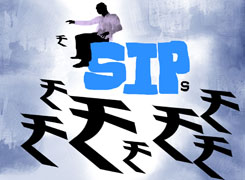
am 45 years old. I have a monthly salary of 1lac. I currently have 35lacs in mutual fund. 14 lacs in PF .30,000 every month goes for SIP's since last one year . as HSBC Multi CAP -3000,Mahindra Manulife Mid Cap Fund - Direct Plan - Growth -4000,Motilal oswal Mid cap-3000,Motilal Oswal Large and Midcap Fund - Direct Plan - Growth -3000,Nippon India Small Cap Fund - Direct Plan - Growth-7000,HDFC Defecnse fund -5000,ICICI Prudential PSU Equity Fund - Direct Plan - Growth -3000,Axis Value Fund-2500 . I have a monthly personal and family expense which includes travel to work, medical premiums and term insurance for (1CR coverage) premium and household expenses of around 40-45k. There are other liability or loans 6lac. Also invested in gold aprox 10lac .Also Having two kid one is compelting diploma and one is in 2nd std I plan to retire 3 years from now. Is there anything I should change or can plan or invest in to have a comfortable life& secure child education
Ans: You have already taken many right steps. At 45, building Rs.35 lacs in mutual funds, Rs.14 lacs in PF, Rs.10 lacs in gold, and keeping steady SIPs of Rs.30,000 shows good discipline. You also maintain insurance cover and manage family expenses within limits. This shows responsibility and vision. At the same time, planning retirement in just 3 years needs detailed thought. Below is a complete 360-degree assessment for you.
» Present Financial Position
– Your monthly salary of Rs.1 lac is stable.
– Monthly expenses are Rs.40-45k which is reasonable.
– You are investing Rs.30,000 monthly in SIPs.
– Mutual fund corpus is Rs.35 lacs.
– PF corpus is Rs.14 lacs.
– Gold investments worth Rs.10 lacs.
– A loan liability of Rs.6 lacs exists.
– You have two children, one nearing higher education and one still in school.
– You are covered with a Rs.1 crore term insurance.
This overall position is healthy. You have built assets but must align them with short retirement time.
» Retirement Horizon Assessment
– You plan to retire in 3 years at age 48.
– This is considered an early retirement.
– Early retirement requires large retirement assets because expenses will last longer.
– With present savings, corpus may not be enough for 40+ years of post-retirement life.
– Retirement at 48 may be risky unless corpus is significantly higher.
It is advisable to reassess retirement age. Working at least 7–10 more years can create better security. Even if you want less stressful work, some active income source after 3 years will help.
» Expense and Lifestyle Planning
– Your current family expense is Rs.40-45k per month.
– After retirement, expenses usually remain same or rise due to inflation.
– Inflation will double costs in 12–14 years.
– Medical and education costs will grow faster than inflation.
– So expense estimation must be realistic and not underestimated.
Cutting unwanted lifestyle spends and keeping surplus for children education will create safety.
» Loan and Liabilities
– You hold Rs.6 lacs liability.
– Before retirement, clearing this loan should be priority.
– Loan in retirement can disturb cash flow.
– Use surplus or bonus income to repay early.
» Mutual Fund Investments Assessment
– You are holding multiple midcap, smallcap, thematic, and sector funds.
– Portfolio is tilted towards high risk categories.
– Such allocation creates volatility, especially when nearing retirement.
– For retirement within 3 years, high allocation to smallcap and midcap is risky.
Portfolio restructuring is required.
Reduce exposure to smallcap and sectoral funds.
Add balanced allocation with largecap, multi asset, hybrid, and debt funds.
Keep equity for long term growth but reduce sharp risk.
This balance ensures stability and steady returns.
» On Direct Funds and Regular Funds
You are using direct plans. Direct funds may look low-cost but come with disadvantages. They give no personalised monitoring. Market cycles are difficult to track alone. Wrong timing may erase returns.
Regular funds through a Certified Financial Planner guided Mutual Fund Distributor give handholding. They track portfolio, rebalance, review, and align with goals. Long-term benefits of professional monitoring outweigh small expense ratio difference. In wealth building, process matters more than saving 0.5% expense.
» Importance of Active Management over Index Funds
Index funds are often presented as low-cost options. But they carry drawbacks. They invest in companies purely on market cap weightage, not on fundamentals. In downturns, index funds fall equally with no shield. Active funds with skilled managers can limit downside, adjust sectors, and beat average returns. For your short horizon and goals, active management is safer and better aligned.
» Child Education Planning
– Your elder child is completing diploma.
– Further studies may need lump sum in near term.
– For this, keep part of mutual fund corpus in short-term debt or hybrid funds.
– Avoid risking education fund in volatile smallcap or thematic schemes.
For younger child in 2nd standard, horizon is long. You can continue SIPs in diversified equity funds. But portfolio should be simplified and reviewed yearly.
» Emergency and Contingency Reserve
– You should set aside at least 6 months expense as emergency fund.
– This should be in liquid mutual fund or sweep FD.
– It provides safety in medical, job, or family needs.
– Never depend on gold or PF for emergencies.
Having this reserve gives confidence for retirement and education needs.
» Insurance Review
– You have Rs.1 crore term cover which is good.
– Continue this till your kids are financially independent.
– Review health insurance coverage. Ensure it covers your spouse and kids.
– Rising medical inflation can damage retirement corpus without proper cover.
Adequate health insurance is as important as investments.
» Gold Holding Review
– You hold Rs.10 lacs in gold.
– Gold is good for hedge but not for income.
– Keep it only as small diversification.
– Do not increase allocation further.
– Use other instruments for steady growth.
» Tax Planning Insight
– Be aware of capital gains taxation.
– For equity mutual funds, long-term capital gains above Rs.1.25 lakh are taxed at 12.5%.
– Short-term gains are taxed at 20%.
– For debt funds, gains are taxed as per slab.
– While rebalancing, consider tax impact and plan staggered withdrawals.
Tax planning should be integrated into retirement plan.
» Retirement Corpus Building
– At present, your total investments (MF + PF + Gold) are around Rs.59 lacs.
– With 3 more years of SIPs, corpus may grow but still short for early retirement.
– Ideally, you need corpus above Rs.3-4 crore for comfortable 40-year retirement.
– Your present assets are not sufficient for such early break.
Instead of complete retirement at 48, semi-retirement or second career can help. Building assets for next 7-10 years is recommended.
» Cash Flow in Retirement
– Monthly expense today is Rs.45k.
– With inflation, in 15 years it can reach Rs.1 lac per month.
– Post-retirement cash flow should come from systematic withdrawal plans in balanced funds, PF, and other assets.
– Withdrawal rate should be sustainable. High withdrawal may erode capital early.
Hence corpus must be adequate to support sustainable drawdown.
» Behavioural Aspects in Investing
– Avoid chasing high returns through sectoral or smallcap bets.
– Stay focused on goals like retirement and education.
– Discipline, patience, and review are more important than timing.
– Do not panic in volatility. Do not over diversify into too many funds.
Simplicity and discipline give long-term stability.
» Role of Certified Financial Planner
Direct investing without guidance can become risky. A Certified Financial Planner monitors asset allocation, rebalances portfolio, reviews tax efficiency, and aligns with family goals. They help in protecting capital during volatile times. Guidance is ongoing, not one-time. This ensures your retirement and education goals are not disturbed.
» Finally
You have shown great responsibility in savings and investments. However, planning to retire in 3 years may not match with present corpus. Realigning timeline or exploring alternate income streams after 3 years will be wise. Restructuring your portfolio towards balanced mix is necessary. Clearing loan and protecting family with insurance and health cover must be priority. Child education funds should be ring-fenced and not mixed with retirement corpus. Direct funds can be shifted to regular funds with Certified Financial Planner support for consistent monitoring.
By following disciplined and guided approach, you can create financial security for family, manage retirement confidently, and ensure education support for both children.
Best Regards,
K. Ramalingam, MBA, CFP,
Chief Financial Planner,
www.holisticinvestment.in
https://www.youtube.com/@HolisticInvestment
» Present Financial Position
– Your monthly salary of Rs.1 lac is stable.
– Monthly expenses are Rs.40-45k which is reasonable.
– You are investing Rs.30,000 monthly in SIPs.
– Mutual fund corpus is Rs.35 lacs.
– PF corpus is Rs.14 lacs.
– Gold investments worth Rs.10 lacs.
– A loan liability of Rs.6 lacs exists.
– You have two children, one nearing higher education and one still in school.
– You are covered with a Rs.1 crore term insurance.
This overall position is healthy. You have built assets but must align them with short retirement time.
» Retirement Horizon Assessment
– You plan to retire in 3 years at age 48.
– This is considered an early retirement.
– Early retirement requires large retirement assets because expenses will last longer.
– With present savings, corpus may not be enough for 40+ years of post-retirement life.
– Retirement at 48 may be risky unless corpus is significantly higher.
It is advisable to reassess retirement age. Working at least 7–10 more years can create better security. Even if you want less stressful work, some active income source after 3 years will help.
» Expense and Lifestyle Planning
– Your current family expense is Rs.40-45k per month.
– After retirement, expenses usually remain same or rise due to inflation.
– Inflation will double costs in 12–14 years.
– Medical and education costs will grow faster than inflation.
– So expense estimation must be realistic and not underestimated.
Cutting unwanted lifestyle spends and keeping surplus for children education will create safety.
» Loan and Liabilities
– You hold Rs.6 lacs liability.
– Before retirement, clearing this loan should be priority.
– Loan in retirement can disturb cash flow.
– Use surplus or bonus income to repay early.
» Mutual Fund Investments Assessment
– You are holding multiple midcap, smallcap, thematic, and sector funds.
– Portfolio is tilted towards high risk categories.
– Such allocation creates volatility, especially when nearing retirement.
– For retirement within 3 years, high allocation to smallcap and midcap is risky.
Portfolio restructuring is required.
Reduce exposure to smallcap and sectoral funds.
Add balanced allocation with largecap, multi asset, hybrid, and debt funds.
Keep equity for long term growth but reduce sharp risk.
This balance ensures stability and steady returns.
» On Direct Funds and Regular Funds
You are using direct plans. Direct funds may look low-cost but come with disadvantages. They give no personalised monitoring. Market cycles are difficult to track alone. Wrong timing may erase returns.
Regular funds through a Certified Financial Planner guided Mutual Fund Distributor give handholding. They track portfolio, rebalance, review, and align with goals. Long-term benefits of professional monitoring outweigh small expense ratio difference. In wealth building, process matters more than saving 0.5% expense.
» Importance of Active Management over Index Funds
Index funds are often presented as low-cost options. But they carry drawbacks. They invest in companies purely on market cap weightage, not on fundamentals. In downturns, index funds fall equally with no shield. Active funds with skilled managers can limit downside, adjust sectors, and beat average returns. For your short horizon and goals, active management is safer and better aligned.
» Child Education Planning
– Your elder child is completing diploma.
– Further studies may need lump sum in near term.
– For this, keep part of mutual fund corpus in short-term debt or hybrid funds.
– Avoid risking education fund in volatile smallcap or thematic schemes.
For younger child in 2nd standard, horizon is long. You can continue SIPs in diversified equity funds. But portfolio should be simplified and reviewed yearly.
» Emergency and Contingency Reserve
– You should set aside at least 6 months expense as emergency fund.
– This should be in liquid mutual fund or sweep FD.
– It provides safety in medical, job, or family needs.
– Never depend on gold or PF for emergencies.
Having this reserve gives confidence for retirement and education needs.
» Insurance Review
– You have Rs.1 crore term cover which is good.
– Continue this till your kids are financially independent.
– Review health insurance coverage. Ensure it covers your spouse and kids.
– Rising medical inflation can damage retirement corpus without proper cover.
Adequate health insurance is as important as investments.
» Gold Holding Review
– You hold Rs.10 lacs in gold.
– Gold is good for hedge but not for income.
– Keep it only as small diversification.
– Do not increase allocation further.
– Use other instruments for steady growth.
» Tax Planning Insight
– Be aware of capital gains taxation.
– For equity mutual funds, long-term capital gains above Rs.1.25 lakh are taxed at 12.5%.
– Short-term gains are taxed at 20%.
– For debt funds, gains are taxed as per slab.
– While rebalancing, consider tax impact and plan staggered withdrawals.
Tax planning should be integrated into retirement plan.
» Retirement Corpus Building
– At present, your total investments (MF + PF + Gold) are around Rs.59 lacs.
– With 3 more years of SIPs, corpus may grow but still short for early retirement.
– Ideally, you need corpus above Rs.3-4 crore for comfortable 40-year retirement.
– Your present assets are not sufficient for such early break.
Instead of complete retirement at 48, semi-retirement or second career can help. Building assets for next 7-10 years is recommended.
» Cash Flow in Retirement
– Monthly expense today is Rs.45k.
– With inflation, in 15 years it can reach Rs.1 lac per month.
– Post-retirement cash flow should come from systematic withdrawal plans in balanced funds, PF, and other assets.
– Withdrawal rate should be sustainable. High withdrawal may erode capital early.
Hence corpus must be adequate to support sustainable drawdown.
» Behavioural Aspects in Investing
– Avoid chasing high returns through sectoral or smallcap bets.
– Stay focused on goals like retirement and education.
– Discipline, patience, and review are more important than timing.
– Do not panic in volatility. Do not over diversify into too many funds.
Simplicity and discipline give long-term stability.
» Role of Certified Financial Planner
Direct investing without guidance can become risky. A Certified Financial Planner monitors asset allocation, rebalances portfolio, reviews tax efficiency, and aligns with family goals. They help in protecting capital during volatile times. Guidance is ongoing, not one-time. This ensures your retirement and education goals are not disturbed.
» Finally
You have shown great responsibility in savings and investments. However, planning to retire in 3 years may not match with present corpus. Realigning timeline or exploring alternate income streams after 3 years will be wise. Restructuring your portfolio towards balanced mix is necessary. Clearing loan and protecting family with insurance and health cover must be priority. Child education funds should be ring-fenced and not mixed with retirement corpus. Direct funds can be shifted to regular funds with Certified Financial Planner support for consistent monitoring.
By following disciplined and guided approach, you can create financial security for family, manage retirement confidently, and ensure education support for both children.
Best Regards,
K. Ramalingam, MBA, CFP,
Chief Financial Planner,
www.holisticinvestment.in
https://www.youtube.com/@HolisticInvestment
DISCLAIMER: The content of this post by the expert is the personal view of the rediffGURU. Users are advised to pursue the information provided by the rediffGURU only as a source of information to be as a point of reference and to rely on their own judgement when making a decision.
MoneyReply


You may like to see similar questions and answers below
Janak Patel |71 Answers |Ask -Follow
MF, PF Expert - Answered on Aug 05, 2025

Naveenn Kummar |233 Answers |Ask -Follow
Financial Planner, MF, Insurance Expert - Answered on Sep 04, 2025

Reetika Sharma |417 Answers |Ask -Follow
Financial Planner, MF and Insurance Expert - Answered on Oct 05, 2025

Latest Questions
Ramalingam Kalirajan |10876 Answers |Ask -Follow
Mutual Funds, Financial Planning Expert - Answered on Dec 09, 2025


Ramalingam Kalirajan |10876 Answers |Ask -Follow
Mutual Funds, Financial Planning Expert - Answered on Dec 09, 2025


Radheshyam Zanwar |6739 Answers |Ask -Follow
MHT-CET, IIT-JEE, NEET-UG Expert - Answered on Dec 09, 2025

Radheshyam Zanwar |6739 Answers |Ask -Follow
MHT-CET, IIT-JEE, NEET-UG Expert - Answered on Dec 09, 2025


Nayagam P P |10853 Answers |Ask -Follow
Career Counsellor - Answered on Dec 09, 2025


Mayank Chandel |2569 Answers |Ask -Follow
IIT-JEE, NEET-UG, SAT, CLAT, CA, CS Exam Expert - Answered on Dec 08, 2025

Mayank Chandel |2569 Answers |Ask -Follow
IIT-JEE, NEET-UG, SAT, CLAT, CA, CS Exam Expert - Answered on Dec 08, 2025
Asked by Anonymous - Nov 18, 2025Hindi

Sir I passed class 12th from Maharashtra board (PCMB + English) I scored 48 in chemistry 52 in physics and 46 in biology I have a marksheet from Nios board which consists only one subject biology in which I scored 58 marks , My question is am I eligible for admission in mbbs ( govt college ) if I score good in Neet 2026 ??? Can I combine state board (PCB)marksheet + Nios ( biology marksheet) to fullfill 50% PCB aggregate score ?? I am from general Ews category please resolve my query
Ans: I recommend appearing for all 5 subjects through NIOS
Asked on - Dec 08, 2025 | Answered on Dec 08, 2025
Am I ineligible for mbbs?? Will they reject me?
Ans: Might be as you gave PCMB already from MS board. There is not concrete answer in counselling brochure.
Mayank Chandel |2569 Answers |Ask -Follow
IIT-JEE, NEET-UG, SAT, CLAT, CA, CS Exam Expert - Answered on Dec 08, 2025

Mayank Chandel |2569 Answers |Ask -Follow
IIT-JEE, NEET-UG, SAT, CLAT, CA, CS Exam Expert - Answered on Dec 08, 2025

Mayank Chandel |2569 Answers |Ask -Follow
IIT-JEE, NEET-UG, SAT, CLAT, CA, CS Exam Expert - Answered on Dec 08, 2025