Home > Money > Question
Need Expert Advice?Our Gurus Can Help
Reetika

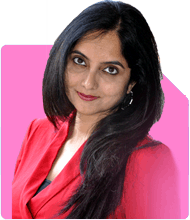
Reetika Sharma  |417 Answers  |Ask -

Financial Planner, MF and Insurance Expert - Answered on Nov 08, 2025

Reetika Sharma is a certified financial planner and CEO of F-Secure Solutions.
She advises clients about investments, insurance, tax and estate planning and manages high net-worth individual’s portfolios.
Reetika has an MBA in finance from the Institute of Chartered Financial Analysts of India (ICFAI) and an engineer degree from NIT, Jalandhar.
She also holds certifications from the Financial Planning Standards Board India (FPSB), Association of Mutual Funds in India (AMFI) and Insurance Regulatory and Development Authority of India (IRDAI).... more

Rajeev Question by Rajeev on Oct 18, 2025Hindi

Money

I am 42 years old working as Chief Manager with a public sector bank. I have recently completed 20 yrs of service and looking to take VRS after 5 years. My present assets are as follows: 1. One independent house worth Rs 1.5 cr with home loan of Rs 50 lacs outstanding 2. One flat worth Rs 1.10 cr with home loan of Rs 42 lacs. 3. Balance in PF Rs 50 lacs, MF value Rs 90 lacs and physical gold of approx 40 lacs. I am presently investing one lac Rs per month in different SIP. I assume that after 5 years, my total portfolio would be Rs 3.4 Cr approx including MF, PF and gratutity. I will close both home loans. I will keep aside 40 lacs Rs for my son's education who would have turned 17 yrs by then. I will create FD of Rs 30 lacs and Rs 10 lacs in debt based funds as an emergency fund. I would be left with around 1.8 cr in MF fund. My present monthly expenses are around 65k. My pension would be around 90k per month at the time of VRS which would be sufficient to take care of monthly expenses including health insurance yearly premium of Rs 25k for 25 lacs+ 25 lacs top up. I am recieving around 25k as rent from flat. I want to explore country and foreign land. For this purpose, I would start SWP of around 40k per month with 6% increase every year ( from MF corpus of 1.8 cr.). I want your advise whether considering all the factors, can I comfortably retire after 5 yrs. I have wife and one son only in my family.

Ans: Hi Rajeev,

Your plan and current investments seem very on the spot. Let us have a detailed look:
1. Your 2 real estates with outstanding loan - you will close loan in next 5 years. Seems easily doable. This will lessen your burden of home loan EMI.
2. PF - 50 lakhs and some gratuity as well. Collective approx. 85 lakhs. You can bifurcate this whole amount for your son's education as well as your emergency fund in FD and liquid funds. Planned right.
3. You will have around 2 crores in MFs. Well withdrawing 40k monthly to travel with 6% increase each year can be easily done. It will never exhaust your corpus. Just make sure that the MFs are invested so as to generate return of minimum 11-12% for you. You can work with a professional to design your MF assignments so that it works wrt your requirements.
4. Your monthly expenses and health insurance is taken care of by the pension post VRS.
5. Rental income from property can be invested in your mutualfund portfolio to grow it bigger.

You have covered major goals for yourself and are fully covered in terms of insurance as well. Can easily retire after 5 years.

The only thing that you can plan for is Long Term Medical Care for yourself and spouse which will take care of you in older age. Can have a dedicated 30 to 40 lakhs in aggressive mutual funds for this which will come handy post the age of 80.

Only suggestion - Kindly consult a professional Certified Financial Planner - a CFP who can guide you with exact funds to invest in keeping in mind your age, requirements, financial goals and risk profile.

Let me know if you need more help.

Best Regards,
Reetika Sharma, Certified Financial Planner
https://www.instagram.com/cfpreetika/
DISCLAIMER: The content of this post by the expert is the personal view of the rediffGURU. Users are advised to pursue the information provided by the rediffGURU only as a source of information to be as a point of reference and to rely on their own judgement when making a decision.
Money

You may like to see similar questions and answers below
Milind

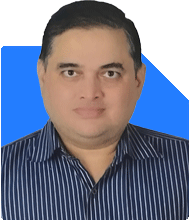
Milind Vadjikar  | Answer  |Ask -

Insurance, Stocks, MF, PF Expert - Answered on Nov 19, 2024

Asked by Anonymous - Nov 19, 2024Hindi
Listen
Money
I am 42 years old working as a Senior Manager with a public sector company. I have already completed 20 years of service and planning to take VRS after 6 years. I have a son who is 11 years of age and wife who is a homemaker. My net monthly income is around Rs 3 lacs . I have one home loan of Rs 140 lacs and car loan of Rs 10 lacs availed recently for 6 years. My monthly expenses are total Rs 154000/- ( Rs 133000 EMI and Rs 60000 household and education expenses). I am presently investing SIP of Rs 1.00 lac per month. My present portfolio is Rs 83 lacs in MF and Rs 50 lacs in Provident fund of employer. I have two house property and one of them is debt free. My wife have jewelry of around Rs 25 lacs. After VRS, I would receive monthly pension of around Rs 85k which would increase every year by around 5% due to dearness relief and would be sufficient to cover my monthly expenses. After 6 years I would receive around Rs 150 lacs as terminal benefit after retirement. My MF corpus would grow to around 250 lacs (assuming growth of 12% as all MF are in equity-based funds). The car loan would be closed by then and home loan outstanding would be around 120 lacs. I am planning to utilize total corpus of Rs 400 lacs in following manner: Fixed Deposit: Rs 80 lacs ( Rs 40 lacs for education of kid and Rs 40 lacs for emergency needs) Pre payment of Rs 40 lacs towards home loan Invest Rs 150 lacs in debt and hybrid MF and avail 6% yearly STP for repayment of home loan o/s Rs 80 lacs ( as EMI would reduce to around Rs 69k). I want to continue home loan to avail interest and 80C rebate. Invest Rs 20 lacs in renovation of another existing old home. Keep Rs 100 lacs invested in equity based mutual funds Saving Account: Rs 10 lacs for recurring and emergency fund I have one term insurance of Rs 3 cr and health insurance of Rs 20 lacs for my family. I want to know whether with this planning I would be able to retire comfortably. Thanking you in advance.
Ans: Hello;

You have mentioned STP but I believe it is SWP(6%) from a debt hybrid MF.

Conservative hybrid debt fund returns generally are in 8-9% range and if you do 6% SWP, your corpus will not be inflation proof and prone to significant decrease during negative or flat returns from funds. Pure equity funds should not be considered for SWP in retirement due to high risks.

Therefore I strongly recommend SWP rate should not go beyond 3% at any time.

So accordingly you may have to allocate 300 L in conservative hybrid debt funds and SWP at 3% can yield monthly income of around 67.5 K (post-tax).

You may invest balance 100 L as 40 L for kid's education, 40 L for partial home loan repayment, 10 L for old house renovation and 10 L for emergency.

Carrying home loan into retirement for some income tax deduction is not a good idea but it is ultimately your choice.

You have another option of buying a joint annuity for life for yourself and your spouse with return of purchase price to your nominee (250 L).

Considering 6% annuity rate you may expect post tax monthly income of 87.5 K. You may get a better annuity rate if you check with different life insurance companies.

This gives you scope for allocating funds as, 40 L for kid's education, 40 L for home loan repayment, 20 L for old house renovation, 10 L as emergency fund and balance 40 L invested in balanced advantage and muti asset allocation funds instead of pure equity mutual funds.(Relatively lower risk).

Best wishes;
X: @mars_invest

..Read more

Ramalingam

Ramalingam Kalirajan  |10870 Answers  |Ask -

Mutual Funds, Financial Planning Expert - Answered on Jul 10, 2025

Asked by Anonymous - Jun 28, 2025Hindi
Money
I am aged 38 years and working at PSU. I have over 18 years of work experience with another 22 years to go. I have planned for VRS in 3 years and I am under OPS with guaranteed pension. Assuming pension to be 20k-25k per month. My monthly income is 1.4 lakh and net income is 1.00 lakh. Below is my savings per month SIP 42k- present balance 22 lakh EPF 8k- present balance- 16 lakh VPF 12k- present balance- 6 lakh LIC-2700/- per month PPF - 1.50 lakh/ annum- present balance 13.50 lakh FD-2.30 lakh- emergency funds Health Insurance- Covered by employer. Term Insurance-20 lakh covered by employer. Spouse is homemaker- saved around 7-8 lakh in her name Son is 3 years- saved 3 lakh Daughter is 2 month- saved 50k Liability NIL No property either I want to settle in small town where good education exist. Pension would be enough for rent and monthly expenses. My aim is to reach 1 crore savings and take VRS... Suggest whether fund is enough or push my retirement further and build further corpus.....
Ans: ? Current Financial Snapshot
– You are 38 years old with 18 years in PSU under OPS.
– Monthly gross income is Rs.?1.4 lakh, net Rs.?1 lakh.
– You plan VRS in three years and expect pension of Rs.?20k–25k monthly.
– Present savings include:

SIPs: Rs.?42k pm (balance Rs.?22 lakh)

EPF: Rs.?8k pm (balance Rs.?16 lakh)

VPF: Rs.?12k pm (balance Rs.?6 lakh)

LIC: Rs.?2.7k pm

PPF: Rs.?1.5 lakh per annum (balance Rs.?13.5 lakh)

Emergency FD: Rs.?2.3 lakh

Spouse savings: Rs.?7–8 lakh

Children: Son has Rs.?3 lakh; daughter has Rs.?50k
– You have no liabilities or property.

This shows strong discipline in savings and debt-free status.

? Pension Security Under OPS
– OPS gives defined post-retirement pension.
– Pension of Rs.?20k–25k may cover basic expenses in small town.
– But it will not support lifestyle increases or children’s needs.
– Pension lacks inflation protection over time.
– Retirement corpus needs to generate additional income.

OPS is a strong base but not enough for family or education needs.

? Emergency Fund Strengthening
– Current FD of Rs.?2.3 lakh covers ~2 months’ expenses.
– Aim to increase emergency fund to 6 months’ expenses.
– That means raising it to Rs.?4.5–5 lakh.
– Use liquid or short-term debt funds to build it.
– Keep it separate from SIPs and long-term funds.

A cushion of six months ensures calm cash flow during emergencies or transition.

? Term and Health Insurance Assessment
– Employer provides term and health coverage.
– Term cover may end with VRS.
– Plan for private term insurance of at least Rs.?1 crore.
– Health cover should continue post-VRS.
– With children, family floater of Rs.?15–20 lakh is advisable.

Protection coverage must persist beyond employment for family safety.

? Insurance-Investment Mix Review
– LIC monthly premium shows you hold an investment-linked plan.
– Such plans offer low returns and long lock-in.
– Consider surrendering and move amount into mutual funds.
– Use term insurance for protection, not investment.
– This simplifies finances and improves returns.

Investment-linked insurance plans are inefficient; switching to mutual funds gives better clarity and growth.

? Retirement Corpus Goal Evaluation
– You desire Rs.?1 crore in three years.
– With current SIPs, EPF, VPF, and PPF, corpus might reach Rs.?70–80 lakh.
– This falls short of Rs.?1 crore.
– Combined with pension, it may suffice if timing is correct.
– But safe retirement demands higher corpus.

If comfort with VRS in 3 years is high, you may stay on track. Otherwise, consider extending career by 2–3 years.

? Should You Postpone VRS?
– Retiring in three years leaves minimal buffer.
– Children’s education and healthcare costs loom ahead.
– Pension may not keep pace with inflation.
– Extending working period builds more financial strength.
– Assess personal motivations, health, and family needs.

It may be safer to delay VRS until age 45 or after building Rs.?1.2 crore+ corpus.

? Asset Allocation Snapshot
Current steps:
– SIPs contribute 42%; EPF and VPF add another 20%.
– PPF adds further equity-like safety.
– FD acts as emergency buffer.

To build balanced corpus, ensure:
– Regular review of fund types to avoid overexposure to equity risk or underexposure to safety.

? Equity Mutual Fund Strategy
– Continue monthly SIPs of Rs.?42k in equity funds.
– Use actively managed funds only.
– Avoid index funds—they offer no buffer during downturns.
– Fund managers can reduce risk and enhance returns tactically.
– Ensure fund mix covers large-cap, flexi?cap, and small?cap.
– Review performance at least annually with CFP assistance.
– Step-up SIP yearly by 10–15%.

Active management will help protect corpus as retirement nears.

? Role of EPF & VPF in Retirement
– EPF balance of Rs.?16 lakh and VPF of Rs.?6 lakh are strong.
– These are low-risk but inflation-proof to some extent.
– They serve as core debt-like pillar for corpus.
– Continue current monthly contributions.

These pillars support corpus and provide essential stability.

? PPF for Long-Term Security
– PPF balance is Rs.?13.5 lakh.
– It offers safe, tax-free returns.
– Continue annual contributions of Rs.?1.5 lakh.
– It complements retirement income via OPS.
– Review yearly with rising interest rates.

PPF adds inflation-resilient pillar to your retirement planning.

? VRS Corpus Top-Up Strategy
– Your VRS corpus requirement depends on age and expenses.
– Pre-VRS withdrawal of EPF or VPF may affect tax and corpus.
– Build liquid, bankable buffer for post-VRS transition.
– Consider having Rs.?10–12 lakh in liquid/debt at retirement.
– This helps us bridge salary to pension period.

A buffer ensures stability during the employment-to-retirement transition.

? Children’s Education & Life Goals
– Your son (3 yrs) has Rs.?3 lakh; daughter (2 months) has Rs.?50k.
– These are good starts but need systematic growth.
– Start SIPs in children funds for both.
– Allocate based on education timelines of 12–15 years.
– Use hybrid or cautious equity funds for these goals.
– Consider opening minor PPF accounts under guardianship.

Goal based investing ensures purpose and control in reaching future needs.

? Emergency and Education Corpus
– Keep children’s money separately in goal-based accounts.
– Use liquid or short-term debt for near-term needs.
– Avoid dipping into retirement or OPS corpus prematurely.
– Allocate monthly for each child goal using SIPs.

Segregation of funds prevents confusion and misuse.

? Asset Diversification Updates
Your portfolio across instruments:
– Equity SIP: major growth driver
– EPF/VPF/PPF: core debt buffers
– FD: emergency buffer
– LIC: insurance-investment blend (to be surrendered)
– Children’s corpus: moderate risk
– Health and term cover under employer

You have no real estate, other debt, crypto, or speculative assets.

? Monthly Investment Plan Suggestion
Allocate surplus Rs.?58k (after SIP, EPF, VPF, LIC, expenses):
– Continue equity SIP Rs.?42k
– Continue EPF Rs.?8k and VPF Rs.?12k
– Top-up emergency fund by Rs.?10k monthly until Rs.?5 lakh
– Start child education SIPs: Rs.?5k per child
– Redirect LIC premium after surrender to gold or hybrid fund
– Monitor allocation yearly with CFP

Structured surplus ensures readiness for retirement, children, and emergencies.

? Retirement Asset Allocation at VRS
At age 41 (post-VRS):
– Pension Rs.?20–25k covers basics
– Corpus of Rs.?1 crore can generate additional income
– Allocate corpus at 60% equity, 30% debt, 10% hybrid/liquid
– Use SWP to withdraw a fixed amount monthly
– Keep buffer to handle market dips

This creates an investment?plus?pension approach for stability and growth.

? Debt vs Equity Rebalancing as You Age
– Reduce equity exposure as VRS nears
– At VRS, shift 10–15% to conservative/hybrid or debt
– By age 45, equity exposure should be around 50%
– This reduces volatility during withdrawal phase
– Use CFP to implement strategic rebalancing

Gradual risk reduction enhances safety without large shocks.

? Tax Strategies for Retirement
– EPF and PPF interest are tax-free
– VPF withdraws taxed if EPF locked less than 5 years
– Equity LTCG taxed at 12.5% above Rs.?1.25 lakh annually
– STCG taxed at 20% for short-term redemptions
– Debt gains taxed per income slab
– Plan redemption timing to reduce tax impact

Tax efficiency preserves more of your hard-earned gains.

? Health Cover Post-Retirement
– Employer health cover ends with VRS
– Buy individual/family floater of Rs.?15–20 lakh
– Children should be covered from birth
– Include maternity or critical illness riders if needed
– Review and renew annually

Keeping health cover constant ensures peace-of-mind and expense control.

? Children’s Education & Future Planning
– Education costs may escalate 10–12% annually
– Start goal-based SIPs for high school and college funds
– Consider small-cap exposure for high growth potential
– Use hybrid for mid-term stability
– Lock incremental savings as goals approach

This ensures children’s education is funded without stress or compromise.

? Estate Planning & Will Creation
– Draft a will reflecting all assets post-VRS
– Nominate spouse and children across accounts
– Keep guardianship decisions documented
– Store will and financial documents securely
– Updates may be done when significant life changes occur

This protects your legacy and family’s financial security.

? Passive Income Potential
Beyond pension or SWP, you can explore:
– Part-time consulting using PSU expertise
– Online teaching or content creation
– Homestay or online rental (if real estate is ever considered)
– Royalty from small digital products or tutorials
– Keep passive income small but helpful

Additional income reduces reliance on corpus and provides flexibility.

? Decision on VRS Timing
– If you retire in 3 years, you will have Rs.?60–80 lakh corpus + pension
– This may suffice if children’s and lifestyle costs are moderate
– However, with retirement age extended and delayed aspirations, Rs.?1 crore+ corpus is safer
– If finances feel tight at age 41, delaying VRS by 2–3 years builds more power
– Lifestyle comfort depends on age, destination, and future goals

Deciding on VRS must balance emotional readiness with financial readiness.

? Annual Review and Course Correction
– Meet a Certified Financial Planner each year
– Review fund allocation, risk exposure, and savings rate
– Revise goals for children, retirement, and health
– Adjust SIP amounts and fund types as needed
– Implement rebalancing to maintain target portfolio structure

Annual review ensures proactive progress and avoids last-minute shocks.

? Lifestyle Inflation Control
– Monitor household costs yearly
– Limit discretionary spending increases
– Larger purchases should come after review
– Allocate fixed % to future plans and children, not just consumption
– Share financial goals with spouse for mutual support

Shared awareness curbs lifestyle creep and protects savings goal.

? Final Insights
– Your current assets under management are a strong base.
– VRS in 3 years is okay, but delay if you need more cushions.
– Building Rs.?1 crore corpus plus pension gives flexibility.
– Continue disciplined SIP, EPF, VPF, PPF contributions.
– Improve emergency buffer and sell LIC for better returns.
– Start children’s education SIPs immediately.
– Plan health and term cover beyond employment.
– View retirement as phased financial transition.

Take advice, review annually, and progress steadily—then VRS will be a confident, thriving next chapter.

Best Regards,
K. Ramalingam, MBA, CFP,
Chief Financial Planner,
www.holisticinvestment.in
https://www.youtube.com/@HolisticInvestment

..Read more

Purshotam

Purshotam Lal  | Answer  |Ask -

Financial Planner, MF and Insurance Expert - Answered on Oct 25, 2025

Money
I am 42 years old working as Chief Manager with a public sector bank. I have recently completed 20 yrs of service and looking to take VRS after 5 years. My present assets are as follows: 1. One independent houseworth Rs 1.5 cr with home loan of Rs 50 lacs outstanding 2. One flat worth Rs 1.10 cr with home loan of Rs 42 lacs. 3. Balance in PF Rs 50 lacs, MF value Rs 90 lacs and physical gold of approx 40 lacs. I am presently investing one lac Rs per month in different SIP. I assume that after 5 years, my total portfolio would be Rs 3.4 Cr approx including MF, PF and gratutity. I will close both home loans. I will keep aside 40 lacs Rs for my son's education who would have turned 17 yrs by then. I will create FD of Rs 30 lacs and Rs 10 lacs in debt based funds as an emergency fund. I would be left with around 1.8 cr in MF fund. My present monthly expenses are around 65k. My pension would be around 90k per month at the time of VRS which would be sufficient to take care of monthly expenses including health insurance yearly premium of Rs 25k for 25 lacs+ 25 lacs top up. I am recieving around 25k as rent from flat. I want to explore country and foreign land. For this purpose, I would start SWP of around 40k per month with 6% increase every year ( from MF corpus of 1.8 cr.). I want your advise whether considering all the factors, can I comfortably retire after 5 yrs
Ans: Congratulations on being able to have such a wonderful financial discipline and very sound position you currently are in. As far as calculations are concerned for corpus after 5 years, I agree with the same. It is the decision to be taken by you as to how much is enough for your comfortable living after taking VRS after 5 Years. But again life is very uncertain and you shall still have long years ahead after your VRS age of 47. Good Luck to you.

Purshotam, CFP®, MBA, CAIIB, FIII
Certified Financial Planner
Insurance advisor
www.finphoenixinvest.com

..Read more

Ramalingam

Ramalingam Kalirajan  |10870 Answers  |Ask -

Mutual Funds, Financial Planning Expert - Answered on Oct 24, 2025

Money
I am 42 years old working as Chief Manager with a public sector bank. I have recently completed 20 yrs of service and looking to take VRS after 5 years. My present assets are as follows: 1. One independent houseworth Rs 1.5 cr with home loan of Rs 50 lacs outstanding 2. One flat worth Rs 1.10 cr with home loan of Rs 42 lacs. 3. Balance in PF Rs 50 lacs, MF value Rs 90 lacs and physical gold of approx 40 lacs. I am presently investing one lac Rs per month in different SIP. I assume that after 5 years, my total portfolio would be Rs 3.4 Cr approx including MF, PF and gratutity. I will close both home loans. I will keep aside 40 lacs Rs for my son's education who would have turned 17 yrs by then. I will create FD of Rs 30 lacs and Rs 10 lacs in debt based funds as an emergency fund. I would be left with around 1.8 cr in MF fund. My present monthly expenses are around 65k. My pension would be around 90k per month at the time of VRS which would be sufficient to take care of monthly expenses including health insurance yearly premium of Rs 25k for 25 lacs+ 25 lacs top up. I am recieving around 25k as rent from flat. I want to explore country and foreign land. For this purpose, I would start SWP of around 40k per month with 6% increase every year ( from MF corpus of 1.8 cr.). I want your advise whether considering all the factors, can I comfortably retire after 5 yrs.
Ans: Your planning attitude deserves strong appreciation. At 42, you have created a thoughtful, organised, and responsible structure for your retirement journey. You have combined discipline, vision, and practicality in every part of your plan. Your financial base is already strong, and your thinking about retiring after five years is realistic. You are not rushing, you are preparing carefully. Let’s evaluate your full situation in detail and see how comfortably you can retire and live the lifestyle you desire.

» Evaluating your present financial position

You have completed 20 years in a stable banking career and are planning for VRS after five more years. You already own two valuable real estate assets, have good savings in PF, a healthy mutual fund portfolio, and a meaningful amount of gold.

Your net asset position shows strong balance and maturity. The PF of Rs 50 lakhs, MF value of Rs 90 lakhs, and gold of Rs 40 lakhs already place you in a secure position. In addition, your disciplined SIP investment of Rs 1 lakh per month will further boost your retirement corpus.

Both houses are useful assets. However, since they carry outstanding loans, clearing them before retirement will be very important. Your plan to close both home loans before VRS is perfectly sound and must remain a top priority.

» Estimating your financial position after 5 years

You have estimated that your total investable portfolio — PF, MF, and gratuity — will reach around Rs 3.4 crore in the next five years. That projection seems logical and achievable with your present contributions and market expectations.

After allocating Rs 40 lakhs for your son’s education, Rs 30 lakhs for fixed deposits, and Rs 10 lakhs for debt funds as emergency reserve, you expect to have around Rs 1.8 crore in mutual funds for wealth generation.

This is a well-balanced plan because it secures both short-term and long-term requirements. You are keeping enough liquidity for emergencies, while ensuring that your larger portion remains in growth assets.

» Evaluating your income sources after VRS

Your plan includes multiple reliable income streams.

– You will receive a pension of about Rs 90,000 per month.
– You will get Rs 25,000 monthly rental income from your flat.
– You plan to start a Systematic Withdrawal Plan (SWP) of Rs 40,000 per month from mutual funds, with a 6% yearly increase.

This combination creates a diversified and dependable cash flow. Even if one source slows down, the others will support your expenses.

Your expected total inflow will be roughly Rs 1.55 lakh per month in the first year of retirement. Compared to your present expense level of Rs 65,000 per month, this income structure offers a wide safety margin.

» Evaluating sustainability of your retirement cash flow

Your plan for a Rs 40,000 monthly SWP with a 6% yearly increase appears reasonable. Assuming your MF corpus of Rs 1.8 crore continues to grow moderately, this withdrawal level should remain sustainable for the long term.

The increase of 6% each year will offset inflation and maintain your purchasing power. The key condition here is to keep your SWP limited to a safe withdrawal rate, not exceeding the long-term return from your MF portfolio.

You can allocate your MF corpus in a combination of equity and hybrid funds to ensure steady growth with moderate volatility. This will keep your corpus productive even as you draw a monthly income.

» Evaluating your expense structure

Your current expenses of Rs 65,000 per month are very reasonable. Even after including medical insurance premium and inflation adjustments, your total cost structure is well below your expected income during retirement.

You also have clear coverage for health through your Rs 25 lakh base policy and Rs 25 lakh top-up. This is a very strong health protection plan for a retired life.

Because you have no major liabilities after closing your home loans, your fixed monthly outflow will remain controlled. This ensures that your retirement income sources will be more than enough to cover lifestyle needs, emergencies, and travel plans.

» Analysing your home loan strategy

Clearing both home loans before your VRS is a wise move. It removes financial stress and increases cash flow flexibility.

However, while closing loans, ensure that you don’t liquidate growth assets too early. Continue the regular EMI schedule, and if possible, make small prepayments from bonuses or incentives.

By the time of VRS, once both loans are fully paid, your houses become complete assets. The rental income from one property becomes a stable monthly support, while the other gives you lifelong residential comfort.

» Evaluating your mutual fund portfolio structure

Your mutual fund value of Rs 90 lakh and SIP of Rs 1 lakh per month are major strengths. You are already maintaining a healthy habit that will continue compounding till your retirement.

After 5 years, your corpus of Rs 1.8 crore will become the engine for wealth creation even post-retirement. This corpus should not be invested in a single type of fund. You can maintain a mix of:
– Equity mutual funds for long-term growth.
– Balanced or hybrid funds for stability.
– Short-term debt or liquid funds for SWP management and emergency use.

By doing this, you ensure both safety and growth in your retirement phase.

» Importance of actively managed funds

You have already invested in mutual funds and are likely using actively managed ones. That is good. Many investors are drawn towards index funds thinking they are cheaper. But index funds only copy the market; they cannot adapt to economic or policy changes.

Actively managed funds, led by experienced fund managers, can shift allocations across sectors and protect your investments during volatile periods. Over long durations, they offer better risk-adjusted returns in India’s dynamic markets.

Hence, continue to stay with actively managed funds under the guidance of a Certified Financial Planner.

» Investing through regular plans versus direct plans

Some investors switch to direct plans thinking they save on costs. But direct plans remove expert guidance. Without a professional review, small mistakes can erode returns over time.

Regular plans through a Certified Financial Planner give you active monitoring, proper rebalancing, and regular performance assessment. The long-term advantage from expert intervention is far greater than the small cost difference.

Your portfolio of Rs 1.8 crore will need continuous supervision, especially during withdrawal years. Regular plan investments ensure that you get this professional support.

» Emergency and contingency planning

Your plan to create Rs 30 lakh FD and Rs 10 lakh in debt-based funds as an emergency reserve is excellent. It ensures instant liquidity and safety.

The FD amount can handle large one-time emergencies like medical or family requirements. The debt fund can be used for shorter-term liquidity without disturbing your main investments.

This separate emergency cushion will prevent panic withdrawals from your mutual fund corpus during market volatility. It keeps your SWP undisturbed and your retirement plan stable.

» Funding your son’s education

Setting aside Rs 40 lakh for your son’s higher education is a good and thoughtful move. You are ensuring that his future education is protected from market fluctuations or income interruptions.

Keep this education fund in a combination of short-duration debt funds and conservative hybrid funds as the goal is only five years away. Avoid equity exposure for this particular portion. This will ensure stability and guaranteed availability of funds when he starts his higher studies.

» Assessing your travel and lifestyle goals

You wish to explore both domestic and foreign destinations after VRS. That is a beautiful aspiration. It represents emotional and lifestyle fulfilment — which is equally important as financial comfort.

Your plan to fund these experiences from your SWP is absolutely fine. With Rs 40,000 per month withdrawal and 6% annual increase, you can easily meet such lifestyle goals without straining your overall financial structure.

If some years require higher travel expense, you can adjust temporarily by reducing SWP increments or using small portions of FD interest. Flexibility in cash flow is always key for smooth retired life.

» Inflation and longevity planning

At age 47, you will be retiring quite early with VRS. You may live another 35–40 years after that. So, inflation will play a strong role in your long-term cash flow.

Your plan to raise SWP every year by 6% is an excellent step against inflation. But in addition, continue to keep a part of your corpus in equity mutual funds even after retirement. That equity exposure will ensure that your overall wealth keeps growing faster than inflation over the long term.

A well-planned 60:40 ratio between equity and debt can provide both stability and growth through your retired years.

» Tax planning on withdrawals

When you start your SWP, the withdrawals from equity mutual funds will attract capital gains tax. Under the new rule, long-term capital gains above Rs 1.25 lakh in a year are taxed at 12.5%. Short-term gains are taxed at 20%.

To manage tax efficiently, plan your redemptions in such a way that you utilise the Rs 1.25 lakh annual exemption every financial year. Your Certified Financial Planner can guide you in structuring SWPs to minimise tax outflow and improve post-tax returns.

Also, the pension and rent will add to taxable income, so tax optimisation through proper structuring becomes important.

» Portfolio review and rebalancing

During the next five years, continue investing through SIPs and review once every 12 months. As you get closer to retirement, gradually shift 15–20% of your equity allocation into balanced funds or short-duration debt funds.

This phased shift will protect your accumulated corpus from sudden market drops near your VRS year. After retirement, review the portfolio every six months to ensure that growth and withdrawals remain balanced.

Do not make frequent fund changes based on short-term performance. Focus on consistency and discipline.

» Risk management through insurance

At this stage, you already have health insurance of Rs 25 lakh base + Rs 25 lakh top-up. That is excellent. Ensure that the policy continues seamlessly into retirement without any gap.

If your family depends on your income, maintain a term insurance cover until your major financial goals, like your son’s education, are fully completed. After that, you may not need large life insurance because your assets will already generate sufficient income.

» Evaluating emotional and lifestyle readiness

Financially you are almost ready for retirement. The other part is emotional readiness. Shifting from an active banking role to retired life needs mental adjustment. Your idea of exploring travel and new experiences will keep you mentally engaged and happy.

Consider learning a new hobby or a part-time passion activity post-retirement. It keeps your energy balanced and adds purpose to your free time.

» Finally

Your plan for retirement after five years looks very strong and achievable. You have a stable job, multiple income sources, disciplined investments, and clear goal-based allocation. By closing your loans, keeping emergency reserves, and maintaining proper insurance, you will secure your financial base completely.

Your pension and rent will cover regular living. Your SWP will fund your travel and lifestyle goals comfortably. You are already protecting your child’s education. With periodic reviews and proper rebalancing through a Certified Financial Planner, you can live peacefully without any financial pressure.

You are already on track to retire gracefully and explore the world with freedom and comfort. Maintain discipline, continue your SIPs, protect your corpus, and enjoy the journey ahead.

Best Regards,

K. Ramalingam, MBA, CFP,

Chief Financial Planner,

www.holisticinvestment.in

https://www.youtube.com/@HolisticInvestment

..Read more

Latest Questions
Ravi

Ravi Mittal  |676 Answers  |Ask -

Dating, Relationships Expert - Answered on Dec 04, 2025

Asked by Anonymous - Dec 02, 2025Hindi
Relationship
My married ex still texts me for comfort. Because of him, I am unable to move on. He makes me feel guilty by saying he got married out of family pressure. His dad is a cardiac patient and mom is being treated for cancer. He comforts me by saying he will get separated soon and we will get married because he only loves me. We have been in a relationship for 14 years and despite everything we tried, his parents refused to accept me, so he chose to get married to someone who understands our situation. I don't know when he will separate from his wife. She knows about us too but she comes from a traditional family. She also confirmed there is no physical intimacy between them. I trust him, but is it worth losing my youth for him? Honestly, I am worried and very confused.
Ans: Dear Anonymous,
I understand how difficult it is to let go of a relationship you have built from scratch, but is it really how you want to continue? It really seems to be going nowhere. His parents are already in bad health and he married someone else for their happiness. Does it seem like he will be able to leave her? So many people’s happiness and lives depend on this one decision. I think it’s about time you and your BF have a clear conversation about the same. If he can’t give a proper timeline, please try to understand his situation. But also make sure he understands yours and maybe rethink this equation. It really isn’t healthy. You deserve a love you can have wholly, and not just in pieces, and in the shadows.

Hope this helps

...Read more

Mayank

Mayank Chandel  |2562 Answers  |Ask -

IIT-JEE, NEET-UG, SAT, CLAT, CA, CS Exam Expert - Answered on Dec 04, 2025

Career
My son will be appearing for JEE Main & JEE Advanced 2026 and will participate in JoSAA Counselling 2026. I request clarification regarding the GEN-EWS certificate date requirement for next year. I have already applied for an EWS certificate for current year 2025, and the application is under process. However, I am unsure whether this certificate will be accepted during JoSAA 2026, or whether candidates will be required to submit a fresh certificate for FY 2026–27 (issued on or after 1 April 2026). My concern is that if JoSAA requires a certificate issued after 1 April 2026, students will have only 1–1.5 months to complete the entire procedure, which is difficult considering normal government processing timelines. Also, during current JEE form filling, students are asked to upload a GEN-EWS certificate issued on or after 1 April 2025, or an application acknowledgement. This has created confusion among parents regarding which year’s certificate will finally be valid at the time of counselling. I request your kind guidance on: Which GEN-EWS certificate will be accepted for JoSAA Counselling 2026 — a certificate for FY 2025–26 (issued after 1 April 2025), or a new certificate for FY 2026–27 (issued after 1 April 2026)?
Ans: Hi
You need not worry about the EWS certificate. Even if you apply for the next year's certificate on 1 Apr 2026, the second session of JEE MAINS will still be held, followed by JEE ADVANCED, which will be held in May. JOSAA starts in June. so you will have 2 months in hand for fresh EWS certificate.

...Read more

DISCLAIMER: The content of this post by the expert is the personal view of the rediffGURU. Investment in securities market are subject to market risks. Read all the related document carefully before investing. The securities quoted are for illustration only and are not recommendatory. Users are advised to pursue the information provided by the rediffGURU only as a source of information and as a point of reference and to rely on their own judgement when making a decision. RediffGURUS is an intermediary as per India's Information Technology Act.

Close  

You haven't logged in yet. To ask a question, Please Log in below
Login

A verification OTP will be sent to this
Mobile Number / Email

Enter OTP
A 6 digit code has been sent to

Resend OTP in120seconds

Dear User, You have not registered yet. Please register by filling the fields below to get expert answers from our Gurus
Sign up

By signing up, you agree to our
Terms & Conditions and Privacy Policy

Already have an account?

Enter OTP
A 6 digit code has been sent to Mobile

Resend OTP in120seconds

x