Home > Money > Question
Need Expert Advice?Our Gurus Can Help
Reetika

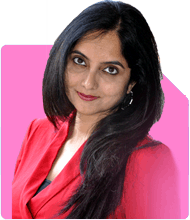
Reetika Sharma  |417 Answers  |Ask -

Financial Planner, MF and Insurance Expert - Answered on Oct 09, 2025

Reetika Sharma is a certified financial planner and CEO of F-Secure Solutions.
She advises clients about investments, insurance, tax and estate planning and manages high net-worth individual’s portfolios.
Reetika has an MBA in finance from the Institute of Chartered Financial Analysts of India (ICFAI) and an engineer degree from NIT, Jalandhar.
She also holds certifications from the Financial Planning Standards Board India (FPSB), Association of Mutual Funds in India (AMFI) and Insurance Regulatory and Development Authority of India (IRDAI).... more
Asked by Anonymous - Sep 20, 2025Hindi

Money

32 year old women employee in IT company.. getting around 1 lakh 10 thousand per month Have a home loan of 20 lakhs 15 lakh investment in Mutual funds and stock 11 lakh in epf Monthly investing 5k in MF and 2k in stock Paying 22k per month for Postal life insurance ( took for 6 years)...have completed 3 years in that I have 2 homes ( both around 50 lakhs) Getting monthly rent of 7.5 k Future plans:Need to extend home which may cost around ( 40 lakhs) I have kids one is in 3 rd standard and other is 2 years ( plan for kids education) Retirement plan (investing 2k per month in NPS) How to plan for all these

Ans: Hi,

You are doing right by diversifying in different asset classes.
- SIP & Stocks - good. Can increase your contribution by maximum capacity.
- Postal Life Insurance - good. continue for more 3 years and then do not take any such insurance.
- NPS - 2k can be continued.

Goal - 40L for home and kid's education.
You need to invest big for both the goals. Considering everything achieving both is kinda tough, try delaying one goal.
Focus on getting education fund for your kids and start investing for another post 2-3 years when your salary increases.

Invest at least 10k monthly for your kids higher education in equity mutual funds apart from existing savings.

Let me know if you need more help.

Best Regards,
Reetika Sharma, Certified Financial Planner
https://www.instagram.com/cfpreetika/
Asked on - Oct 10, 2025 | Answered on Oct 11, 2025
If I want to concentrate on my childs education....How much money I need to invest monthly as I have two daughters one is 2 years old and the other is in 3rd standard and plan for their marriage in future
Ans: Start investing for your kids education in equity oriented mutual funds. Start by investing a minimum amount of 15k or as per your maximum capacity.
Increase this contribution whenever your salary increases.

This strategy will build a dedicated education and marriage fund for your daughters.

Let me know if you need any other guidance.

Best Regards,
Reetika Sharma, Certified Financial Planner
https://www.instagram.com/cfpreetika/
Asked on - Oct 12, 2025 | Answered on Oct 12, 2025
Can you suggest some equity funds as well
Ans: Hi,

Go for Kotak Multicap fund - 5k, Axis Bluechip - 4k, Axis Small Cap - 1k.

Let me know if you need more help.

Best Regards,
Reetika Sharma, Certified Financial Planner
https://www.instagram.com/cfpreetika/
DISCLAIMER: The content of this post by the expert is the personal view of the rediffGURU. Users are advised to pursue the information provided by the rediffGURU only as a source of information to be as a point of reference and to rely on their own judgement when making a decision.
Money

You may like to see similar questions and answers below
Milind

Milind Vadjikar  | Answer  |Ask -

Insurance, Stocks, MF, PF Expert - Answered on Oct 08, 2024

Asked by Anonymous - Oct 07, 2024Hindi
Listen
Money
Hello Sir, i am 40 years old with 2 girls age 12,7.I earn 90k. i am investing in the following mutual funds - 1) axis bluechip - 2500 2) Franklin India prima - 1000 3) hdfc short term debt - 1000 4) kotak flexicap - 1500 5) mirae asset large & midcap - 1000 & 2500 6)Nippon India growth - 25,500 7) tata digital - 1000 Total 36k Total corpus valuation as of today is 10.8L. I have a Home loan with outstanding of 11.85L, with 80 months left at 10.5p.a.(emi - 20,360) I have place it on rent for 9.5k. I am living in a rented apt at for convenience of job travel(rent - 17.5k). House expense is 30k.(basics, needs,wants). My wife(house wife) receives 1.5L p.a as rent towards her property, which is joint with her sister.( which we use towards the rent) My elder daughter has received a property from her grandparent, but it is under construction with disputable builder,thus no rental from it yet. Please assist how can i plan towards my goals 1)girls education 2) marriage 3) our retirement 4) should i prepay loan and start with zero As there is no emergency fund other than the savings. I was planning to increase my MF investments and continue clearing loan via EMI itself. We are in mumbai. No insurance till date.
Ans: Hello;

I am sure you have some EPF corpus accumulated over the years.

It may be utilised to prepay the home loan because that is your biggest liability as of now. (High ROI). If EPF withdrawal is an issue please think about selling the under construction flat by disputed builder.

Home loan repayment has to be priority number 1.

Typically home loan lenders demand term life insurance as collateral security but I am bit surprised in your case it has not happened so.

Nevertheless you should buy pure term plan with adequate sum assured including riders for critical illness and accident benefit.

Once home loan is completely prepayed you may start 2 additional monthly SIPs as follows:
10 K PPFAS flexicap fund
10 K ICICI Pru equity and debt fund

The existing corpus should be earmarked against elder daughter's education.

10 K ppfas flexi cap sip will be for your marriage corpus for daughters.
(55.5 L corpus expected in 15 years)

10 K ICICI Pru equity and debt fund sip will be for education of younger daughter. (~ 25 L corpus expected in 10 years)

36 K sip continued for another 20 years will grow into a retirement corpus of 4.12 Cr.

A modest return of 13% considered for all workings.

Happy Investing!!

You may follow us on X at @mars_invest for updates.

*Investments in mutual funds are subject to market risks. Please read all scheme related documents carefully before investing.

..Read more

Ramalingam

Ramalingam Kalirajan  |10874 Answers  |Ask -

Mutual Funds, Financial Planning Expert - Answered on Aug 04, 2025

Asked by Anonymous - Aug 04, 2025Hindi
Money
Hi Sir, I am 38 years old working as IT professional, post tax I am getting 3.33 lakhs per month, company providing NPS option, I am investing 17000 towards NPS for tax benefit and retirement plan. I have 2 personal loans one is 25 lakhs with 10.5 ROE with emi 66000 for next 4 years, second is 15 lakhs with 10.75 ROE with emi 39000 for next 4 years. I have mutual funds holding 5 lakhs and direct stocks 3.6 lakhs, 3.7 lakhs in PPF and 12 lakhs EPF, 3 lic policy, one is money back policy yearly premium 6.2k( 2014 started -2031), jeevan anand 27k yearly (2016-2035), jeevan labh 5.5 lakh yearly it is 10 years premium payment, already paid 5 years, 5 payment left, by 2035 will get 1.2cr. I have agricultural land 2.72 acres which gives 65k per year. I am holding 2 plots for long term. I have already purchased villa (1.10 cr) and paid 20% down payment remaining will go for home loan. I doing chitti in my native place for 10 lakhs for 20 months, paid already 4 chitti. My monthly house hold amount comes under 90k including Rent 25.5k . I need your suggestion to plan my financial for my retirement and my kids education (9 years old and 3 years old) . I have health insurance coverage of 15 lakhs and my company provides with additional of 8 lakhs and my parents depends on me , they have 6 lakhs health insurance and I send them 17k every month.
Ans: You’ve shown amazing commitment and effort in your financial journey so far.
Balancing family needs, loans, investments, and responsibilities is never easy.
You’ve done it well and deserve appreciation.

Now let's assess your complete financial life in detail.
We will review each element and provide a 360-degree view.
Focus will be on strengthening your retirement and children's education goals.

» Income, Savings and Current Commitments

– Your monthly post-tax income is Rs.3.33 lakhs.
– Household expenses including rent are Rs.90,000.
– You support parents with Rs.17,000 monthly.
– Two personal loan EMIs total Rs.1.05 lakhs.
– Chit fund also takes outflows monthly.
– Remaining income is under pressure due to these fixed costs.

Even though income is strong, actual investible surplus is low.
This can impact long-term wealth building.
We need to create breathing room in monthly cash flow.

» Loan Strategy Needs Immediate Action

– You are paying EMIs of Rs.1.05 lakhs per month.
– Interest rates are above 10%.
– These are personal loans, not secured by assets.
– These are very expensive loans.
– They eat a big portion of your income every month.

Suggestions:

– Use surplus or bonuses to part-prepay these loans.
– Repay the costlier one first, or the one with smaller balance.
– Do not increase investments till at least one loan is cleared.
– Avoid parallel new loans for any purpose till these close.

Freeing up this EMI burden is the first big win for your future goals.

» NPS – Retirement Benefit, But With Limits

– You contribute Rs.17,000 monthly in NPS.
– This gives you tax benefit under Sec 80CCD(1B).
– It helps build long-term retirement fund.

However:

– NPS has lock-in till age 60.
– Partial withdrawal is restricted.
– 60% corpus is tax-free, rest must be used for pension.
– Pension from annuity is fully taxable.

NPS is helpful but should not be your only retirement plan.
You need more flexible and high-growth options like mutual funds.

» Mutual Funds – Increase Investment Over Time

– You currently hold Rs.5 lakhs in mutual funds.
– This is a good start but not enough for your goals.
– Especially with two children and long-term plans.

Recommendations:

– Avoid investing in direct plans.
– Direct plans do not offer professional guidance.
– Without a Certified Financial Planner, mistakes can reduce gains.
– Regular plans give expert advice, rebalancing, and support.
– Investing through CFP helps you align funds with goals.

Increase investments step-by-step as you clear your loans.
Start with child education goals, then retirement.

» Avoid Index Funds – You Need Better Risk Management

– Index funds invest blindly in the whole market.
– They do not filter bad companies or falling sectors.
– There is no fund manager to protect downside.
– In a market crash, index funds fall fully.
– They also don’t outperform – they just match the index.

Your goals need outperformance, not matching returns.
Actively managed funds offer:

– Smarter stock selection
– Risk control
– Fund manager experience
– Dynamic adjustment

Always go with actively managed funds via regular plan with Certified Financial Planner support.

» Direct Stocks – Keep It Limited

– You hold Rs.3.6 lakhs in direct equity.
– Equity investing needs deep research and regular tracking.
– You also need risk control and diversification.

If you don’t have time to track stocks:

– Reduce exposure over time.
– Shift to mutual funds with active management.
– Let professionals handle your equity allocation.

Don’t add more capital to direct stocks unless you are an experienced investor.

» PPF and EPF – Stable Support for Long-Term

– You have Rs.3.7 lakhs in PPF and Rs.12 lakhs in EPF.
– Both are safe, long-term, and tax-free options.
– EPF will grow through your salary contribution.
– PPF maturity can be aligned to your retirement or kid’s education.

These are low-risk parts of your portfolio.
But returns will be slower than mutual funds.
Don’t rely fully on them to meet large future goals.

» LIC Policies – Need to be Reviewed and Rationalised

You have three LIC policies:

– Money back policy – Rs.6.2k yearly
– Jeevan Anand – Rs.27k yearly
– Jeevan Labh – Rs.5.5 lakhs yearly premium, 10-year payment

LIC plans give:

– Very low returns, usually 4% to 5%
– Poor liquidity
– Poor goal alignment
– High premiums reduce investment capacity

Action Plan:

– You can continue money back and Jeevan Anand till maturity due to low premium.
– But Jeevan Labh is absorbing huge premium.
– Even though it says Rs.1.2 crore by 2035, the return is low.
– Surrender the Jeevan Labh policy now.
– Reinvest surrender amount into mutual funds via regular plan.
– Your Certified Financial Planner can guide you.

This change will boost your returns and improve liquidity.

» Agricultural Land and Plots – Treat Them as Passive Holdings

– Your land gives Rs.65,000 income yearly.
– Two plots are held for long term.

Please remember:

– Land and plots do not give regular cash flow.
– They need maintenance, records, and legal tracking.
– Selling them is not easy in emergencies.
– They don’t fit well into financial planning goals.

Don’t count land/plots for education or retirement goals.
Treat them as passive holdings.
Build your core financial strength around mutual funds.

» Villa Purchase and Home Loan – Balance It Carefully

– You have booked a villa worth Rs.1.10 crore.
– Paid 20% down payment.
– Remaining will be on home loan.

Suggestions:

– Keep EMI below 40% of your income.
– Include this EMI only after clearing personal loans.
– Home is a lifestyle decision, not an investment.
– Avoid overcommitting if other goals are pending.

Plan this with your Certified Financial Planner to ensure cash flow is balanced.

» Chit Fund – Limited Use Only

– You have joined a 10 lakh chit.
– Already paid 4 rounds.

Keep in mind:

– Chits are not regulated like mutual funds.
– Default risk is high if organiser is not trusted.
– Do not increase chit exposure in future.

Complete the current chit but don’t depend on it for long-term goals.

» Children’s Education Planning – Act Now

– Your children are 9 and 3 years old.
– You have around 9-15 years before they need college funds.

Steps to take:

– Start SIP in child-focused mutual fund via regular plan.
– Invest in actively managed equity-oriented funds.
– Use SIPs to build corpus over years.
– Avoid ULIPs and child plans from insurance companies.
– They give poor returns and lack flexibility.

A Certified Financial Planner can create a goal map for both kids.
This helps avoid future education loans.

» Retirement Planning – Build Your Corpus Slowly and Steadily

– You are 38 now.
– You have around 22 years to retire.
– EPF and NPS are good supports.
– But they are not enough.

You must create a parallel retirement fund using:

– Diversified mutual funds
– Regular contribution via SIP
– Proper asset allocation
– Tax-efficient withdrawal planning

Start small now and increase every year.
Don’t delay this till your 40s.
Your retirement must be independent of children or property.

» Insurance – Good Start, But Needs Layering

– You have Rs.15 lakh personal health insurance.
– Your company offers Rs.8 lakh coverage.
– Parents have Rs.6 lakh insurance.

Recommendations:

– Buy term life insurance if not already done.
– Ensure cover is 10-15 times your annual income.
– Don’t mix insurance with investment.
– Avoid ULIPs or endowment for new policies.
– Check if parent’s health cover is sufficient based on age.

A Certified Financial Planner can assess insurance adequacy for the whole family.

» Cash Flow and Emergency Fund – Strengthen Liquidity

– Monthly fixed outflows are very high.
– Limited buffer is visible.
– You must have at least 6 months of expenses saved.

Build emergency fund using:

– Liquid mutual funds
– Bank sweep-in account
– Recurring deposits (for short-term)

This will protect you in job loss or sudden expense.

» Tax Planning – Use All Allowed Sections But Avoid Over-Focus

– NPS gives benefit under 80CCD(1B).
– EPF and PPF cover 80C.
– Home loan will give deduction under 80C and 24(b).
– Health insurance premiums also reduce tax.

But don’t over-focus on tax-saving only.
Focus on wealth creation and goal fulfilment.
Don’t buy poor-return products for tax saving alone.

» Finally

– You have built a strong base.
– Income is good, and responsibilities are well managed.
– But you must shift focus from debt to wealth.
– Clear personal loans first.
– Surrender unproductive insurance plans.
– Increase mutual fund investments via regular plan and CFP.
– Protect family with right insurance.
– Avoid index funds, direct funds, and real estate overexposure.
– Track children’s education needs step by step.
– Balance villa loan carefully with other goals.
– Stay disciplined with long-term investing.

A Certified Financial Planner will guide you with goal tracking, fund selection, and review.
This approach will give peace of mind and wealth creation both.

Best Regards,
K. Ramalingam, MBA, CFP,
Chief Financial Planner,
www.holisticinvestment.in
https://www.youtube.com/@HolisticInvestment

..Read more

Ramalingam

Ramalingam Kalirajan  |10874 Answers  |Ask -

Mutual Funds, Financial Planning Expert - Answered on Sep 08, 2025

Money
39 year old, 82L in equity and MF. 37L EPF and Gratuity, 15L in FD, 10L In LIC but will mature by 2041 with some 20L., 5L in NPS. Wife too has some 20L in savings. Donot have a house yet and have to plan for that and for daughter studies currently 8 years old as well as her marriage. Planning to work till 46 years. How to plan for house , retirement pension and education as well as marriage. Currently doing sip of 1.6L monthly and investing in fixed instrument like fd, lic and gold for total around 2L/year and epf of 45k and nps of 10k monthly.
Ans: You have built an impressive base at 39. Your savings rate is very high and disciplined. Having Rs 82 lakh in equity and mutual funds plus strong EPF, FD, LIC, NPS, and your wife’s savings shows good financial commitment. Your current SIP of Rs 1.6 lakh monthly is outstanding. With such a strong flow, you can plan multiple goals together. Let us carefully review each aspect.

» Current Financial Position

Equity and MF corpus of Rs 82 lakh is strong at 39 years.

EPF and gratuity of Rs 37 lakh adds stability and safety.

FD of Rs 15 lakh provides liquidity, but returns are low.

LIC maturity value of Rs 20 lakh by 2041 is not efficient.

NPS of Rs 5 lakh adds some pension benefit but is still small.

Wife’s Rs 20 lakh savings also adds strength to household wealth.

SIP of Rs 1.6 lakh monthly is your greatest power.

Fixed instruments add Rs 2 lakh per year, giving safety.

EPF and NPS contributions also provide consistent growth.

» LIC and Traditional Policies

Your LIC policy gives very low returns.

It locks money till 2041 with only Rs 20 lakh maturity.

Inflation will reduce value heavily by then.

You should consider surrendering or making it paid-up.

Redirect money into mutual funds through a Certified Financial Planner.

Keep pure term insurance instead of investment-linked plans.

» Housing Goal Planning

You do not own a house yet.

Buying a house is more of a lifestyle decision than investment.

Your high savings rate allows you to build down payment soon.

But don’t disturb retirement and education funds for house purchase.

Use a mix of FD maturity, part SIP redirection, and wife’s savings.

Keep EMI below 30–35% of salary to maintain balance.

Avoid over-commitment to real estate. House should not kill liquidity.

Ensure enough continues into mutual funds for long-term growth.

» Daughter’s Education Planning

Your daughter is 8 years old.

Higher education costs will arise in 9–10 years.

Target separate corpus for education to avoid disturbing retirement fund.

Continue part of SIPs in long-term equity funds earmarked for education.

Step up SIPs yearly to match rising cost of education.

Avoid funding education goal through FD or LIC as returns are low.

Equity funds with 9–10 years horizon are better for education growth.

» Daughter’s Marriage Planning

Marriage is further away, at least 15–20 years.

This gives longer horizon, so equity allocation works best.

Dedicate small part of monthly SIP for this goal separately.

Gold can be used only in small amount for jewellery needs.

Major portion should still be in mutual funds for growth.

Marriage should not dilute your retirement funds.

» Retirement and Pension Planning

You plan to work only till 46 years.

This gives you 7 years of active income.

Very short working span compared to long retirement life.

Corpus must be built aggressively during these years.

Rs 1.6 lakh monthly SIP and EPF/NPS contributions will help.

But retiring at 46 is early, so expenses must be planned tightly.

NPS will give partial pension but corpus will not be very large.

Most retirement income must come from equity mutual funds.

Create a mix of equity and debt funds for post-retirement withdrawals.

Ensure emergency and medical cover is strong to protect corpus.

» Risk Balance in Portfolio

You already have large equity exposure of Rs 82 lakh.

This is healthy for growth, but risk must be managed.

Direct equity can be volatile.

Mutual funds with professional management reduce concentration risk.

Index funds look simple but lack professional risk management.

Actively managed funds give better downside protection.

They also adjust across sectors and opportunities.

Stick to diversified mutual funds instead of unmanaged direct equity.

» Role of FD and Fixed Instruments

FD of Rs 15 lakh is helpful for emergency buffer.

But too much in FD will reduce overall returns.

Keep only 6–9 months expenses in FD or liquid funds.

Rest can be shifted to debt mutual funds for better tax efficiency.

LIC policies and other fixed return products reduce growth.

Slowly reduce exposure and move towards equity-debt balanced allocation.

» Tax Efficiency

Equity mutual funds have LTCG tax above Rs 1.25 lakh at 12.5%.

STCG is taxed at 20%.

Debt mutual funds are taxed as per slab, but offer flexible withdrawals.

FD interest is fully taxable and reduces real return.

Planning withdrawals smartly will improve post-retirement income.

Review taxation strategy regularly with Certified Financial Planner.

» Insurance and Protection

Ensure strong term insurance coverage to protect family in case of risk.

Medical insurance must also be large enough for family needs.

Protection ensures that your wealth-building goals are not disturbed.

» Expense and Lifestyle Control

With Rs 1.6 lakh SIP, your discipline is very high.

Continue this lifestyle discipline without increasing unnecessary expenses.

Avoid upgrading lifestyle when income rises.

Each rise in income should increase SIP instead of EMI.

» Family Involvement

Since wife also has Rs 20 lakh savings, plan jointly.

Consolidate investments under one plan.

This reduces duplication and ensures both understand goals clearly.

Education, marriage, and retirement should be planned as family goals.

» Role of Professional Guidance

Direct investing in funds without expert review can create imbalances.

Regular funds through MFD with CFP guidance offer monitoring and rebalancing.

Direct funds may appear cheaper, but lack expert support.

Wrong fund selection or late reviews can damage wealth growth.

For large SIPs and multiple goals, professional review is essential.

» Estate Planning

Create nomination in all investments, EPF, and NPS.

Write a will for smooth asset transfer to wife and daughter.

Keep family informed about all accounts.

This ensures continuity and protection of wealth in your absence.

» Finally

You have very high income and savings power.

Current Rs 82 lakh in equity and Rs 1.6 lakh monthly SIP gives strength.

Retiring at 46 is tough, but partial financial freedom can be achieved.

Focus on building corpus for education and retirement first.

House purchase must not disturb these long-term goals.

Surrender LIC and reduce FD dependence to boost returns.

Stay disciplined with SIP, increase when income rises, and avoid lifestyle inflation.

With professional guidance and consistent effort, you can achieve education, marriage, retirement, and housing goals together.

Best Regards,
K. Ramalingam, MBA, CFP,
Chief Financial Planner,
www.holisticinvestment.in

https://www.youtube.com/@HolisticInvestment

..Read more

Latest Questions
Anu

Anu Krishna  |1746 Answers  |Ask -

Relationships Expert, Mind Coach - Answered on Dec 08, 2025

Ramalingam

Ramalingam Kalirajan  |10874 Answers  |Ask -

Mutual Funds, Financial Planning Expert - Answered on Dec 08, 2025

Asked by Anonymous - Dec 08, 2025Hindi
Money
Hi i am 40M. would request your help to understand what should be the corpus required for retirement as i want to get retired in next 3-5yrs. currently my take home is 2.3L monthly & my wife also works but leaving the job in next 2-3 months. we have a daughter 10yrs, currently i stay on rent and total monthly expense is 1.1L month. once i will retire we will shift in our own parental flat, where hopefully there will be no rent. current Investments 1. 50L in REC bonds getting matured in 2029 2. 42L in stocks 3. 17L in MF 4. 16L FD 5. 15L in PPF 6. 1.3L SIP monthly i do My Wife Investments 1. 30L corpus 2. flat with current value 40L and we get rental of 10K monthly. Please guide what should be the retirement corpus required combined to retire, assuming i need 75L for my daughter post grad and marriage and we would be requiring 75K monthly for our expenses after retiring
Ans: You have explained your income, goals, current assets, and future plans with great clarity. Your early planning spirit is strong. This gives a very good base. You can reach a peaceful retirement with smart steps in the next few years.

» Your Current Position

You are 40 years old. You plan to retire in 3 to 5 years. You earn Rs 2.3 lakh per month. Your wife also works but will stop working soon. You have one daughter aged 10. Your current monthly cost is around Rs 1.1 lakh. This cost will reduce after retirement because you will shift to your parental flat.

Your investment base is already good. You have saved in bonds, stocks, mutual funds, PPF, FD, and SIP. Your wife also has her own savings and rental income from a flat. All these create a good starting point.

This early base helps you plan stronger. It also gives room for more shaping. You are on the right road.

» Your Family Goals

You need Rs 75 lakh for your daughter’s higher education and marriage.

You want Rs 75,000 per month for family living after retirement.

You want to retire in 3 to 5 years.

You will shift to your parental flat after retirement.

You will have rental income of Rs 10,000 from your wife’s flat.

These goals are clear. They give direction. They allow a strong plan.

» Your Present Investments

Your investments include:

Rs 50 lakh in REC bonds maturing in 2029.

Rs 42 lakh in stocks.

Rs 17 lakh in mutual funds.

Rs 16 lakh in fixed deposits.

Rs 15 lakh in PPF.

Rs 1.3 lakh as monthly SIP.

Your wife holds:

Rs 30 lakh corpus.

A flat worth Rs 40 lakh with rent of Rs 10,000 each month.

Your combined net worth is healthy. This gives good power to build your retirement fund in the coming years.

» Understanding Your Expense Need After Retirement

You expect Rs 75,000 per month after retirement. This includes all basic needs. You will not have rent. That reduces cost. This assumption looks fair today.

Your cost will rise with inflation. So you must plan for rising needs. A strong retirement corpus must support rising cost for 40 to 45 years because you are retiring early.

An early retirement needs a large buffer. So you need safety along with growth. Your plan must include growth assets and safety assets.

» How Much Monthly Income You Will Need Later

Rs 75,000 per month is Rs 9 lakh per year. In future years, this cost can rise. If we assume steady rise, your future cost will be much higher.

So the retirement corpus must be designed to:

Give monthly income.

Beat inflation.

Support you for 40 to 45 years.

Protect your family even in market down cycles.

Allow flexibility if your needs change.

A strong retirement fund must support both safety and long-term growth.

» How Much Corpus You Should Target

A safe target is a large and flexible corpus that can support long years without running out of money. For early retirement, the usual thumb rule suggests a very high number. This is because you need income for many decades.

You need a corpus big enough to produce rising income. You also need a cushion for unexpected health costs, lifestyle shocks, and inflation changes.

Your target retirement corpus should be in a strong range. For your needs of Rs 75,000 per month and for goals like daughter’s education and marriage, you should aim for a combined retirement readiness corpus in the higher bracket.

A safe range for your family would be a very large number crossing multiple crores. This large range gives you:

Income safety.

Inflation protection.

Peace during market cycles.

Comfort in long life.

Room for daughter’s future.

Strong backup for health.

You are already on the way due to your existing assets. You will reach close to this range with systematic building over the next 3 to 5 years.

» Why You Need This Larger Corpus

You will retire early. That means more years of living from your corpus. Your corpus must not fall early. It must grow even after retirement. It must give monthly income and long-term family protection.

This is only possible when the corpus is strong and well-structured. A weak corpus creates stress. A strong corpus creates freedom.

Also, your daughter’s future cost must be kept aside. This must be parked in a separate fund. This must not touch your retirement money.

A strong corpus makes these two worlds separate and safe.

» Your Existing Assets and Their Strength

You already have good diversification:

Bonds give safety.

Stocks give growth.

Mutual funds give managed growth.

FD gives stability.

PPF gives tax-free long-term savings.

This blend is already a good start. But you need to make the blend more structured for early retirement.

Your Rs 1.3 lakh monthly SIP is also strong. It builds your future fast. You should continue.

Your wife’s rental income is small but steady. This adds strength.

Your combined financial base can reach your retirement target if you refine your allocation now.

» Your Daughter’s Future Fund Need

You need Rs 75 lakh for your daughter’s education and marriage. You should keep this goal separate from your retirement goal.

Your current SIP and future allocations should create a dedicated fund for this goal. A long-term fund can grow well when managed actively.

Do not mix this fund with your retirement needs. Mixing leads to shortage in old age. Always keep this corpus ring-fenced.

» A Strong Asset Mix For Your Retirement Path

A balanced mix is needed. You need growth assets to beat inflation. You also need stable assets for income.

You must avoid index funds because they do not give flexibility. Index funds follow a fixed index. They cannot make active changes in different markets. They cannot move to better stocks when markets change. They force you to stay in weak sectors for long. They also do not help you in down cycles because they cannot protect you by shifting to safer options. This can hurt retirement planning.

Actively managed funds are better because:

They give active asset selection.

They give scope for better returns.

They give flexibility to change sectors.

They give downside management.

They give access to a skilled fund manager.

They support long-term planning more safely.

Direct plans also carry risk. Direct plans do not give guidance. They do not give behavioural support. They do not give market timing help. They do not give portfolio shaping. They leave all the judgement to you. One mistake can cost years of wealth.

Regular plans with guidance from a Certified Financial Planner help you shape decisions. They help you remain disciplined. They help you avoid panic. They help you decide allocation changes at the right time. This saves wealth in long-term.

» How Your Investment Journey Should Grow in the Next 3–5 Years

Continue your SIP.

Increase SIP when your income rises.

Shift part of your stock holding into planned long-term mutual funds to reduce concentration risk.

Build a defined daughter’s education fund.

Keep a part of your REC bond maturity amount for long-term.

Avoid locking too much into fixed deposits for long periods.

Build a safety fund for one year of expenses.

This will create a full structure.

» Your Rental Income Role

Your rental income of Rs 10,000 per month is small but steady. Over time it will rise. This income will support your monthly cash flow after retirement.

You can use this for utilities or health insurance premiums. This gives a cushion.

» Your Emergency Buffer

You should keep at least one year of essential cost in a safe place. This can be in a liquid account or short-term fund. This protects you in shocks.

Since you plan early retirement, a strong buffer is important. It gives peace even in low months.

» A Structured Retirement Approach

A complete retirement plan for you should include:

A clear monthly income plan after retirement.

A corpus that can grow and protect.

A rising income system that matches inflation.

A separate daughter’s future fund.

A health cover plan for your family.

A tax-efficient withdrawal plan.

A market cycle plan to protect you in tough times.

This holistic approach keeps your family strong for decades.

» What You Should Build by Retirement Year

Your aim should be to reach a strong multi-crore range in investments before retirement. You already hold a large amount. You will add more in the next 3 to 5 years through SIP, stock growth, bond maturity, and disciplined saving.

Once you reach your target range, you can start the shifting process:

Move a part to stable assets.

Keep a part in long-term growth assets.

Create a monthly income strategy.

Keep a reserve bucket.

Keep a child future bucket.

Keep a long-term growth bucket.

This structure protects you in all market conditions.

» Final Insights

Your financial journey is already strong. You have a good income. You have saved well. You have multiple asset types. You have a clear timeline. And you have clear goals. This foundation is solid.

In the next 3 to 5 years, your focus should be on growing your combined corpus to a strong multi-crore range, keeping a separate fund for your daughter, reducing risk in unplanned assets, and building a stable long-term structure.

With the present path and a disciplined structure, you can retire peacefully and support your family with confidence for many decades.

Best Regards,

K. Ramalingam, MBA, CFP,
Chief Financial Planner,
www.holisticinvestment.in

https://www.youtube.com/@HolisticInvestment

...Read more

Samraat

Samraat Jadhav  |2499 Answers  |Ask -

Stock Market Expert - Answered on Dec 08, 2025

Ramalingam

Ramalingam Kalirajan  |10874 Answers  |Ask -

Mutual Funds, Financial Planning Expert - Answered on Dec 08, 2025

Money
Hello my name is saket, I monthly salary is 43k and my saving is zero. My Rent is 15 k and 10 k i send to my parents. How can i save money and investments.
Ans: 1. Your Current Monthly Numbers

Salary: Rs 43,000

Rent: Rs 15,000

Support to parents: Rs 10,000

Left with: Rs 18,000 for food, travel, bills, and savings

You have very little room, but saving is still possible if done smartly.

2. First Step: Build a Small Emergency Buffer

You must build Rs 10,000 to Rs 20,000 emergency money.
This protects you from taking loans for small issues.

How to build it:

Save Rs 3,000 to Rs 5,000 every month in a simple bank savings account

Do this for the next few months

Don’t touch it unless truly needed

3. Create a Mini Budget (Very Simple One)

Try this split from the remaining Rs 18,000:

Daily living (food + transport): Rs 10,000 – 11,000

Personal expenses (phone, internet, basics): Rs 3,000 – 4,000

Savings + investments: Rs 3,000 – 5,000

If this feels difficult, reduce food/transport costs by small adjustments.

4. Where to Invest Once You Have Emergency Money

(For minors: This is general education. For actual investing, get guidance from a trusted adult or family member.)

After you build emergency money, start small monthly investing.

You can begin with:

Rs 1,000 to Rs 2,000 SIP in a simple, diversified equity fund

Increase the SIP whenever salary increases or expenses reduce

Avoid complicated products.
Keep it simple.
Focus on consistency.

5. Easy Practical Ways to Increase Saving

These small moves help a lot:

Avoid food delivery

Use public transport as much as possible

Reduce subscriptions you don’t use

Fix a daily expense limit

Keep a separate bank account only for savings

Even Rs 200 saved daily = Rs 6,000 monthly.

6. Increase Income Slowly

Try small income boosters:

Weekend tutoring

Freelancing

Part-time projects

Selling old gadgets

Learning new skills for future salary growth

Even Rs 3,000 extra income changes your savings life.

7. Build the Habit First

The amount doesn’t matter in the beginning.
The habit matters more.

Even saving Rs 500 every month is better than zero.
Once salary grows, you will already know how to save.

Best Regards,

K. Ramalingam, MBA, CFP,

Chief Financial Planner,

www.holisticinvestment.in

https://www.youtube.com/@HolisticInvestment

...Read more

DISCLAIMER: The content of this post by the expert is the personal view of the rediffGURU. Investment in securities market are subject to market risks. Read all the related document carefully before investing. The securities quoted are for illustration only and are not recommendatory. Users are advised to pursue the information provided by the rediffGURU only as a source of information and as a point of reference and to rely on their own judgement when making a decision. RediffGURUS is an intermediary as per India's Information Technology Act.

Close  

You haven't logged in yet. To ask a question, Please Log in below
Login

A verification OTP will be sent to this
Mobile Number / Email

Enter OTP
A 6 digit code has been sent to

Resend OTP in120seconds

Dear User, You have not registered yet. Please register by filling the fields below to get expert answers from our Gurus
Sign up

By signing up, you agree to our
Terms & Conditions and Privacy Policy

Already have an account?

Enter OTP
A 6 digit code has been sent to Mobile

Resend OTP in120seconds

x