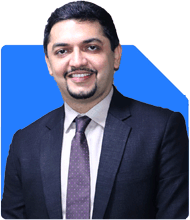
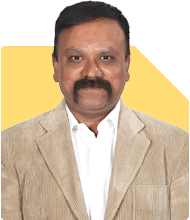
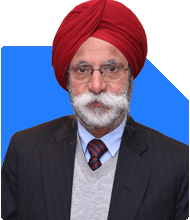
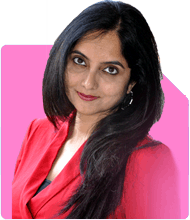
Need Expert Advice?Our Gurus Can Help
Patrick

Patrick Dsouza  |1501 Answers  |Ask -

CAT, XAT, CMAT, CET Expert - Answered on Apr 07, 2026

Patrick Dsouza is the founder of Patrick100.
Along with his wife, Rochelle, he trains students for competitive management entrance exams such as the Common Admission Test, the Xavier Aptitude Test, Common Management Admission Test and the Common Entrance Test.
They also train students for group discussions and interviews.
Patrick has scored in the 100 percentile six times in CAT. He achieved the first rank in XAT twice, in CET thrice and once in the Narsee Monjee Management Aptitude Test.
Apart from coaching students for MBA exams, Patrick and Rochelle have trained aspirants from the IIMs, the Jamnalal Bajaj Institute of Management Studies and the S P Jain Institute of Management Studies and Research for campus placements.
Patrick has been a panellist on the group discussion and panel interview rounds for some of the top management colleges in Mumbai.
He has graduated in mechanical engineering from the Motilal Nehru National Institute of Technology, Allahabad. He has completed his masters in management from the Jamnalal Bajaj Institute of Management Studies, Mumbai.... more
Soumy Question by Soumy on Apr 06, 2026Hindi
Career

Sir if i have pcb and maths as additional in my class 12 but it is not written as additional in my marksheet am i eligible for bitsat btech branches (cse) or i am not eligible as maths is not core

Ans: As long as you have taken Math as a subject you should be eligible
Career

You may like to see similar questions and answers below

Latest Questions
Radheshyam

Radheshyam Zanwar  |8530 Answers  |Ask -

MHT-CET, IIT-JEE, NEET-UG Expert - Answered on Jul 20, 2026

Career
One of my relatives from IIT said it's better to prefer govt over private institutions. They said go for nit or iiit if u get ciruital branches and don't prefer private.. what would u suggest sir ?
Ans: Your relative's advice is generally sound, but it isn't a universal rule. If you get a circuital branch (CSE, IT, ECE, EE) at a good NIT or IIIT, I'd usually recommend that over most private colleges because of the strong peer group, reputation, alumni network, and placement opportunities. That said, both the college and the branch matter. A top private institute like BITS Pilani or a few leading private universities can be a better choice than a lower-ranked NIT/IIIT in some situations, especially if you're getting a significantly better branch. Similarly, choosing a branch you're genuinely interested in is often better than taking a non-circuital branch at a government college just for the tag. So my suggestion would be: prioritize good NITs/IIITs if you can get a circuital branch. If your government options are much weaker, compare them carefully with the best private colleges rather than rejecting private institutions outright. The decision should be based on the specific college-branch combinations, not just "government vs private."

Good luck.
Follow me if you receive this reply.
Radheshyam

...Read more

Ramalingam

Ramalingam Kalirajan  |11345 Answers  |Ask -

Mutual Funds, Financial Planning Expert - Answered on Jul 20, 2026

Money
Please give details about specialized investment funds details and which are better
Ans: Specialized Investment Funds (SIFs) are a new category introduced between mutual funds and Portfolio Management Services.
They are designed for investors who want more advanced strategies.
They offer greater flexibility than regular mutual funds.
At the same time, they come with higher risk and complexity.

» What Makes Specialized Investment Funds Different?

Fund managers get more flexibility.
They can take concentrated positions.
They can use advanced investment strategies.
They can manage portfolios more actively.
Some strategies may aim to benefit from both rising and falling markets.
This flexibility can create opportunities.
But it can also increase risk.

» Who Should Consider Specialized Investment Funds?

Investors with a reasonably large portfolio.
Investors who understand market volatility.
Investors willing to stay invested for several years.
Investors looking beyond traditional mutual fund strategies.
New investors should first build a strong core portfolio through regular mutual funds.

» Main Advantages

Wider investment universe.
Greater portfolio flexibility.
Ability to use specialised strategies.
Potential for better risk-adjusted returns.
Professional portfolio management.
Good fund managers may get more room to generate alpha.

» Main Risks

Performance may vary widely between fund managers.
Strategies can be difficult to understand.
Higher volatility possible.
Some portfolios may become concentrated.
Investor expectations may not match actual results.
Therefore proper suitability assessment is important.

» Which Types May Be Better?

Diversified equity-oriented strategies may suit long-term investors.
Flexibility-based strategies may suit investors seeking growth with risk management.
Multi-asset oriented strategies may suit investors wanting diversification.
Dynamic allocation approaches may suit investors nearing major financial goals.
These categories generally offer a better balance between risk and reward.

» Which Types Need Extra Caution?

Highly concentrated strategies.
Sector-focused strategies.
Theme-based approaches.
Aggressive tactical strategies.
These can deliver strong returns in some periods.
But can also face deep corrections.

» How Much Allocation Is Reasonable?

Specialized Investment Funds should usually be a satellite allocation.
They should not become the entire portfolio.
Core wealth creation should still come from diversified mutual funds.
Stability and diversification remain important.
Many investors may consider allocating only a portion of their investible assets to such strategies.

» For Most Investors

Retirement goals.
Children's education goals.
Long-term wealth creation goals.
These can often be achieved through well-managed diversified mutual funds.
Specialized Investment Funds can be considered as an additional layer, not a replacement.

» Final Insights

Specialized Investment Funds are an interesting development in the investment space.
They offer more flexibility than traditional mutual funds.
The potential rewards may be higher.
The risks can also be higher.
There is no single "best" Specialized Investment Fund.
The right choice depends on your goals, risk appetite, investment horizon and existing portfolio.
For most investors, a strong mutual fund portfolio should come first.
Specialized Investment Funds can then be used selectively to enhance portfolio diversification and return potential.

Best Regards,

K. Ramalingam, MBA, CFP,

AMFI-Registered MFD – ARN 4188

www.holisticinvestment.in

https://www.linkedin.com/in/ramalingamcfp/
...Read more

Ramalingam

Ramalingam Kalirajan  |11345 Answers  |Ask -

Mutual Funds, Financial Planning Expert - Answered on Jul 20, 2026

Money
Sir My daughter investing 1.5 lakhs in ppf and mutual fund sip 30 thousands per month since 3 years. Her age is 33 years now. In additional to this avarage one lakh rupess she is investing every year in mutual fund . Could you please advise how many years approximately will take place to become her investment 5 crores rupees.
Ans: Your daughter has started investing at a young age.
Age 33 is a wonderful time for wealth creation.
Regular PPF contributions.
Monthly SIP of Rs.30,000.
Additional lump sum investment of around Rs.1 lakh every year.
This combination can create substantial wealth over time.

» Time Is More Important Than Amount

Many investors focus only on returns.
But wealth creation is largely driven by discipline and time.
Your daughter already has both.
Starting early gives compounding enough room to work.

» How Long May It Take To Reach Rs.5 Crore?

Based on the investments mentioned and assuming she continues investing consistently,
Reaching Rs.5 crore may typically take around 15 to 18 years from now.
It could happen earlier if investments are increased periodically.
It could take longer if markets go through extended weak phases.
Since market returns are never guaranteed, it is better to think in ranges rather than exact years.

» What Can Help Reach The Goal Faster?

Increasing SIP whenever salary increases.
Investing annual bonuses.
Continuing yearly lump sum investments.
Staying invested during market corrections.
Avoiding frequent switching between funds.
Even a small annual increase in SIP can make a huge difference over 15 to 20 years.

» One Important Observation

At age 33, retirement is still far away.
Therefore she can continue keeping a meaningful allocation towards equity-oriented mutual funds.
Long-term goals generally benefit from staying invested through market cycles.
Many investors stop investing when markets fall.
Those periods often create the best long-term opportunities.

» Other Areas To Review

Adequate health insurance.
Adequate term insurance if she has dependents.
Emergency fund covering several months of expenses.
Separate planning for children's education, if applicable.
Wealth creation works best when these foundations are already in place.

» Final Insights

Your daughter is already on a very good path.
Regular SIPs, yearly PPF investment and annual lump sums create a strong wealth-building engine.
Based on the current investment pattern, reaching Rs.5 crore is quite achievable.
A reasonable expectation may be around 15 to 18 years, subject to market performance.
If she increases investments regularly, the journey could become shorter.
The biggest advantage she has today is not the amount invested. It is her age and consistency.

Best Regards,

K. Ramalingam, MBA, CFP,

AMFI-Registered MFD – ARN 4188

www.holisticinvestment.in

https://www.linkedin.com/in/ramalingamcfp/

...Read more

Ramalingam

Ramalingam Kalirajan  |11345 Answers  |Ask -

Mutual Funds, Financial Planning Expert - Answered on Jul 20, 2026

Asked by Anonymous - Jul 04, 2026
Money
Hi, I am 37 years old working in a Public sector Bank earning 1.25 lacs in hand. I have a 8 year old child. My spouse is working in private sector earning 1 lac in hand. We have a flat worth 1.5 cr, total PF of 20 lacs, total PPF of 20 lacs, FD worth 25 lacs. We are investing Rs 2500 pm in Mirae bluechip mutual fund and Rs 10000 in Nippon India Mutual Fund. We have monthly expenses of Rs 1 lac a month which covers all sort of expenses. Please guide how much and where should we invest to build a reasonable corpus for our retirement as well as our child's future and education.
Ans: Combined monthly take-home income of about Rs.2.25 lakh is a big strength.
Own house already available.
Good PF balance.
Good PPF accumulation.
Healthy FD corpus.
Child is still only 8 years old, giving you enough time for education planning.
Overall, you have built a stable financial base.

» Current Gap I Notice

Monthly investment into mutual funds is around Rs.12,500.
Compared to your family income, this appears low.
Monthly expenses are around Rs.1 lakh.
Even after allowing for taxes, vacations and lifestyle spending, there appears room to invest more.
This is where the biggest opportunity lies.

» Child Education Planning

Your child has roughly 10 years before higher education.
This is a reasonably long investment horizon.
Equity-oriented mutual funds can play a major role.
Rather than keeping large future education money in FDs, gradual SIP investing can help create a larger corpus.
Time is still on your side.
Keep education corpus separate from retirement corpus.
Mixing both goals often creates confusion later.

» Retirement Planning

At age 37, retirement is still nearly two decades away.
This long time horizon is valuable.
Long-term wealth creation generally benefits from meaningful equity exposure.
PF and PPF already provide stability.
Therefore fresh investments can focus more on growth-oriented assets.

» How Much Should You Invest?

Based on the income and expense figures shared, I would try to steadily increase investments over the next few years.
The focus should not be only on current SIP amount.
The focus should be on yearly SIP increases.
Even small annual increases can create a significant difference over 20 years.
Salary increments should partly flow into investments and not entirely into lifestyle upgrades.

» Suggested Investment Structure

One diversified large cap oriented fund.
One flexi cap fund.
One mid cap fund.
One multi cap or value-oriented fund.
This can provide diversification across market segments.
Avoid accumulating too many schemes.
A simple portfolio is easier to track.

» About The FD Corpus

Rs.25 lakh in FDs provides comfort and stability.
Part of it can continue as emergency reserve.
Emergency funds should not be compromised.
However, future surplus money may not need to keep going entirely into FDs.
Long-term goals may require greater growth potential.

» Protection Planning

Ensure both spouses have adequate term insurance.
Ensure family floater health insurance is sufficient.
Do not depend only on employer-provided insurance.
These are critical parts of retirement planning.
One medical emergency should not disturb long-term wealth creation.

» Retirement Income Planning

The goal should not be only creating a large corpus.
The goal should be creating a corpus that can support inflation-adjusted income for decades.
Therefore growth and safety must work together.
PF, PPF and FDs provide stability.
Mutual funds can provide long-term growth.

» Finally

Your financial position is already stronger than many families in your age group.
The biggest improvement area is increasing monthly investments.
Your present SIP amount appears lower than what your income can comfortably support.
Keep retirement and child education as separate goals.
Increase SIPs regularly.
Maintain adequate insurance protection.
Continue building equity exposure for long-term goals while retaining PF, PPF and emergency reserves for stability.
If done consistently, you are well placed to build a meaningful retirement corpus and a strong education fund for your child.

Best Regards,

K. Ramalingam, MBA, CFP,

AMFI-Registered MFD – ARN 4188

www.holisticinvestment.in

https://www.linkedin.com/in/ramalingamcfp/

...Read more

Ramalingam

Ramalingam Kalirajan  |11345 Answers  |Ask -

Mutual Funds, Financial Planning Expert - Answered on Jul 20, 2026

Money
I am 34 years old. Salaried person Earning 60k per month and Also a making part time business.currenlty i my existing investment is as follows Mutual fund 1.10cr ,Stack market 25 Lakhs, FD 1.10 Cr, Real Estate 1.35 cr and Gold 20 Lakhs, i wants to quiet at age of 40 so i want suggestion for i want 1.50 Lakh per month earning,,I have no any Loans and I have own house and car so i have no any liability pls suggest for earning 1.5 or 2 lakh earning per month to i will enjoy remaining life with family
Ans: » You Have Built A Strong Base

At age 34, you have already created substantial wealth.
No home loan.
No car loan.
Own house available.
Multiple asset classes in place.
Part-time business income is an added strength.
Very few people reach this position at your age.
This gives you flexibility to think about financial freedom by 40.

» Current Position Assessment

Mutual Funds: Rs.1.10 Cr
Stocks: Rs.25 Lakhs
FD: Rs.1.10 Cr
Gold: Rs.20 Lakhs
Real Estate: Rs.1.35 Cr
Total net worth is already quite healthy.
The biggest positive is zero liabilities.
The second positive is your young age.

» About Retiring At 40

You are not planning retirement.
You are planning financial independence.
There is a difference.
At 40, you may still want to work.
But you want work to become optional.
That is a much better goal.
Since life expectancy can easily cross 80 years, your corpus may need to support you for 40+ years.
Hence the corpus should continue growing even after you stop active work.

» For Rs.1.5 To 2 Lakh Monthly Income

The income required today is one thing.
The income required at age 50, 60 and 70 will be much higher due to inflation.
Therefore, planning should focus on growing income over time.
Not on generating a fixed amount forever.
A retirement strategy based only on FDs may struggle against inflation.
Equity exposure will remain important even after age 40.

» What I Would Do Over The Next 6 Years

Continue aggressive SIP investments.
Invest a large portion of business surplus.
Increase SIP amount every year.
Avoid lifestyle inflation.
Build a larger mutual fund corpus.
Your FD allocation already looks substantial.
Future surplus can be directed more towards quality diversified equity funds.

» Asset Allocation Thoughts

Mutual fund allocation can become the growth engine.
FDs can act as stability capital.
Gold can remain as diversification.
Direct stocks should be limited to what you can actively track.
Too much dependence on individual stocks can increase risk.
Wealth preservation becomes important once the corpus becomes large.

» Emergency Planning

Keep at least 12 months expenses easily accessible.
Maintain adequate family health insurance.
Maintain sufficient term insurance till financial independence is fully achieved.
These are small costs compared to the protection they provide.

» About Income Generation After 40

Avoid trying to generate the entire income from interest alone.
A combination approach works better.
Growth assets continue compounding.
Part of the portfolio can provide periodic cash flow.
Periodic withdrawals can be adjusted for inflation.
This approach generally gives better long-term sustainability.

» One Area To Think About

Your part-time business can become a valuable retirement asset.
If it can generate even modest income after age 40, pressure on investments reduces significantly.
Many financially independent people continue consulting, freelancing or running small businesses.
Even a small active income can make a huge difference.

» Finally

Based on the information shared, financial independence by age 40 appears achievable.
You already have a strong foundation.
The next 6 years are critical.
Focus on increasing investments rather than increasing lifestyle expenses.
Continue building the mutual fund corpus aggressively.
Keep adequate equity exposure for long-term growth.
Maintain strong protection through insurance and emergency reserves.
If managed well, you can reach a stage where work becomes a choice and not a necessity.

Best Regards,

K. Ramalingam, MBA, CFP,

AMFI-Registered MFD – ARN 4188

www.holisticinvestment.in

https://www.linkedin.com/in/ramalingamcfp/

...Read more

Ramalingam

Ramalingam Kalirajan  |11345 Answers  |Ask -

Mutual Funds, Financial Planning Expert - Answered on Jul 20, 2026

Money
which is the best NFO to buy currently
Ans: Many investors get attracted to NFOs because they are available at Rs.10 NAV.
But the Rs.10 NAV has no special advantage.
A fund with Rs.10 NAV is not cheaper than a fund with Rs.100 NAV.
What matters is portfolio quality, fund strategy and future performance.

» My View On NFO Investing

I generally prefer proven funds over NFOs.
Existing funds have a track record.
You can study performance across bull and bear markets.
You can assess risk management.
You can compare consistency.
An NFO has no performance history.
The portfolio may not even be fully built initially.
Investors are taking a leap of faith.

» When An NFO Makes Sense

If it introduces a genuinely new investment strategy.
If it provides access to a segment not available earlier.
If the fund house has strong expertise in that segment.
If it fills a gap in your existing portfolio.
Otherwise, an established fund with a good track record is usually the better choice.

» Areas Worth Watching Currently

Active multi asset strategies.
Active equity savings strategies.
Specialised active equity strategies with a clear mandate.
Dynamic asset allocation approaches.
These categories may help investors manage market volatility better.
Particularly useful for investors nearing retirement.

» Areas I Would Be Careful About

Theme-based NFOs.
Sector-specific NFOs.
Momentum-based passive products.
International themes with limited history.
New passive products launched mainly to ride a market trend.
Many such launches happen after strong past performance.
Investors often enter after the biggest gains are already over.

» Since You Are 62

Capital protection is becoming more important.
Portfolio stability matters.
Risk-adjusted returns matter.
Chasing the latest NFO may not improve outcomes.
I would prefer strengthening allocation to proven categories rather than adding fresh NFO exposure.
A good existing fund often has a higher probability of success than a new launch.

» Finally

If you ask me which is the "best" NFO today, my answer would be that there is rarely a best NFO.
A good investment is not defined by being new.
It is defined by suitability, portfolio fit and long-term potential.
For most investors, especially those above 60, proven funds with established track records usually make more sense than chasing every new launch.
Focus on portfolio quality, not NFO excitement. That approach has worked far better over time.

Best Regards,

K. Ramalingam, MBA, CFP,

AMFI-Registered MFD – ARN 4188

www.holisticinvestment.in

https://www.linkedin.com/in/ramalingamcfp/

...Read more

Ramalingam

Ramalingam Kalirajan  |11345 Answers  |Ask -

Mutual Funds, Financial Planning Expert - Answered on Jul 20, 2026

Money
I am holding continuing SIP Nippon India large cap , ICIci large cap, bandhan nifty fifty Index fund, ICICI nifty next fifty Index fund , Paragh Parikh flexi cap fund , HDFC flexi cap fund , HDFC midcap fund , Invesco Midcap fund , NIppon small cap fund , bandhan small cap fund , Nippon small cap fund and Nippon multi asset fund all Rs. 25000 SIP . Invest horizone is 5 years and my age is 62 , moderate to little high risk taker . I want to replace Nippon india large cap to avoid fund house concentration . Suggest rebalancing and replacement for Nippon large cap SIP
Ans: » What Looks Good in Your Portfolio

You have diversified across large cap, flexi cap, mid cap, small cap and multi-asset categories.
SIP investing across categories helps reduce timing risk.
Having exposure to different fund houses is also a good risk management step.
At age 62, your willingness to review fund house concentration is a sensible move.

» One Area That Needs Attention

I notice exposure to two Nifty-based index funds.
I also see two large cap funds, two flexi cap funds, two mid cap funds and two small cap funds.
This creates overlap.
Many stocks may be getting repeated across multiple schemes.
More funds do not always mean better diversification.

» About Replacing The Large Cap SIP

Replacing the existing large cap SIP to reduce fund house concentration is a reasonable decision.
Instead of moving into another large cap fund from the same fund house, look at a well-managed large cap fund from a different AMC.
Focus on consistency across market cycles.
Look for a fund with a strong risk-adjusted track record.
Portfolio stability is more important than chasing recent returns.

» My View On The Index Funds

Since you hold Nifty 50 and Nifty Next 50 index funds, I would review whether both are needed.
Index funds simply follow the index.
They cannot avoid overvalued stocks.
They cannot increase allocation to attractive sectors.
They cannot reduce exposure to weak companies.
There is no fund manager's judgement involved.
In volatile markets, active fund managers can hold cash, change sector weights and improve stock selection.
Good active funds can provide downside protection.
They also have the potential to outperform the index over long periods.
This is one reason many investors nearing retirement prefer quality actively managed funds.

» Suggested Portfolio Simplification

One large cap fund.
One flexi cap fund.
One mid cap fund.
One small cap fund.
One multi-asset fund.

This itself can provide adequate diversification.

You may consider retaining the stronger performer in each category and gradually stopping the duplicate SIPs.
Fresh SIP allocation can be redirected towards categories where allocation is lower.

» Risk Assessment At Age 62

A 5-year horizon is not very long for heavy small cap exposure.
Small caps can deliver strong returns.
But they can also see deep corrections.
Moderate to slightly high risk is fine.
However, capital protection becomes equally important at this stage.
I would gradually reduce excessive small cap concentration.
Increase allocation towards flexi cap and multi-asset categories.
This may help improve portfolio stability.

» Possible Rebalancing Direction

Large Cap – Moderate allocation.
Flexi Cap – Higher allocation.
Mid Cap – Moderate allocation.
Small Cap – Limited allocation.
Multi Asset – Meaningful allocation.

This structure may provide a better balance between growth and risk control.

» Finally

Replacing the existing large cap SIP with another reputed actively managed large cap fund from a different AMC is a good move.
More importantly, I would focus on reducing duplication across categories.
Your portfolio currently has fund count risk rather than diversification benefit.
A simpler portfolio may be easier to monitor and may deliver better long-term outcomes.
At age 62, portfolio efficiency is becoming more important than adding more schemes.

Best Regards,

K. Ramalingam, MBA, CFP,

AMFI-Registered MFD – ARN 4188

www.holisticinvestment.in

https://www.linkedin.com/in/ramalingamcfp/

...Read more

Nayagam P

Nayagam P P  |12414 Answers  |Ask -

Career Counsellor - Answered on Jul 20, 2026

DISCLAIMER: The content of this post by the expert is the personal view of the rediffGURU. Investment in securities market are subject to market risks. Read all the related document carefully before investing. The securities quoted are for illustration only and are not recommendatory. Users are advised to pursue the information provided by the rediffGURU only as a source of information and as a point of reference and to rely on their own judgement when making a decision. RediffGURUS is an intermediary as per India's Information Technology Act.

Close  

You haven't logged in yet. To ask a question, Please Log in below
Login

A verification OTP will be sent to this
Mobile Number / Email

Enter OTP
A 6 digit code has been sent to

Resend OTP in120seconds

Dear User, You have not registered yet. Please register by filling the fields below to get expert answers from our Gurus
Sign up

By signing up, you agree to our
Terms & Conditions and Privacy Policy

Already have an account?

Enter OTP
A 6 digit code has been sent to Mobile

Resend OTP in120seconds

x