Need Expert Advice?Our Gurus Can Help
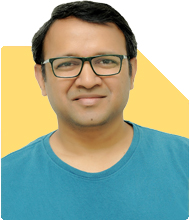
Patrick Dsouza |1429 Answers |Ask -Follow
CAT, XAT, CMAT, CET Expert - Answered on Jun 12, 2024
Patrick Dsouza is the founder of Patrick100.
Along with his wife, Rochelle, he trains students for competitive management entrance exams such as the Common Admission Test, the Xavier Aptitude Test, Common Management Admission Test and the Common Entrance Test.
They also train students for group discussions and interviews.
Patrick has scored in the 100 percentile six times in CAT. He achieved the first rank in XAT twice, in CET thrice and once in the Narsee Monjee Management Aptitude Test.
Apart from coaching students for MBA exams, Patrick and Rochelle have trained aspirants from the IIMs, the Jamnalal Bajaj Institute of Management Studies and the S P Jain Institute of Management Studies and Research for campus placements.
Patrick has been a panellist on the group discussion and panel interview rounds for some of the top management colleges in Mumbai.
He has graduated in mechanical engineering from the Motilal Nehru National Institute of Technology, Allahabad. He has completed his masters in management from the Jamnalal Bajaj Institute of Management Studies, Mumbai.... more
Along with his wife, Rochelle, he trains students for competitive management entrance exams such as the Common Admission Test, the Xavier Aptitude Test, Common Management Admission Test and the Common Entrance Test.
They also train students for group discussions and interviews.
Patrick has scored in the 100 percentile six times in CAT. He achieved the first rank in XAT twice, in CET thrice and once in the Narsee Monjee Management Aptitude Test.
Apart from coaching students for MBA exams, Patrick and Rochelle have trained aspirants from the IIMs, the Jamnalal Bajaj Institute of Management Studies and the S P Jain Institute of Management Studies and Research for campus placements.
Patrick has been a panellist on the group discussion and panel interview rounds for some of the top management colleges in Mumbai.
He has graduated in mechanical engineering from the Motilal Nehru National Institute of Technology, Allahabad. He has completed his masters in management from the Jamnalal Bajaj Institute of Management Studies, Mumbai.... more
 Question by Gutala on Jun 06, 2024Hindi
I have completed MBA Finance in the year 2024 as I am age of 23 years. After that what are the opportunities and easiet way to earn money and get a good job
Ans: If you do not have a job through campus placements, then search for one using your network. Apply to different finance companies directly. Upload your CV on various job websites. Contact recruitment agencies.
CareerReply


You may like to see similar questions and answers below
Patrick Dsouza |1429 Answers |Ask -Follow
CAT, XAT, CMAT, CET Expert - Answered on Apr 13, 2024



Career Coach | Answer |Ask -Follow
Workplace Expert - Answered on Apr 11, 2024

Patrick Dsouza |1429 Answers |Ask -Follow
CAT, XAT, CMAT, CET Expert - Answered on Apr 26, 2024


Patrick Dsouza |1429 Answers |Ask -Follow
CAT, XAT, CMAT, CET Expert - Answered on Jul 31, 2024


Nayagam P P |10858 Answers |Ask -Follow
Career Counsellor - Answered on Jul 29, 2025


Latest Questions

Anu Krishna |1749 Answers |Ask -Follow
Relationships Expert, Mind Coach - Answered on Dec 17, 2025


Anu Krishna |1749 Answers |Ask -Follow
Relationships Expert, Mind Coach - Answered on Dec 17, 2025


Radheshyam Zanwar |6748 Answers |Ask -Follow
MHT-CET, IIT-JEE, NEET-UG Expert - Answered on Dec 17, 2025

Anu Krishna |1749 Answers |Ask -Follow
Relationships Expert, Mind Coach - Answered on Dec 17, 2025


Dr Shakeeb Ahmed Khan |184 Answers |Ask -Follow
Physiotherapist - Answered on Dec 17, 2025


T S Khurana |538 Answers |Ask -Follow
Tax Expert - Answered on Dec 17, 2025


T S Khurana |538 Answers |Ask -Follow
Tax Expert - Answered on Dec 17, 2025


Janak Patel |72 Answers |Ask -Follow
MF, PF Expert - Answered on Dec 17, 2025



Ramalingam Kalirajan |10902 Answers |Ask -Follow
Mutual Funds, Financial Planning Expert - Answered on Dec 17, 2025


Samraat Jadhav |2511 Answers |Ask -Follow
Stock Market Expert - Answered on Dec 17, 2025