Home > Career > Question
Need Expert Advice?Our Gurus Can Help

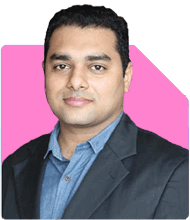
Nayagam P

Nayagam P P  |10882 Answers  |Ask -

Career Counsellor - Answered on Jul 29, 2025

Nayagam is a certified career counsellor and the founder of EduJob360.
He started his career as an HR professional and has over 10 years of experience in tutoring and mentoring students from Classes 8 to 12, helping them choose the right stream, course and college/university.
He also counsels students on how to prepare for entrance exams for getting admission into reputed universities /colleges for their graduate/postgraduate courses.
He has guided both fresh graduates and experienced professionals on how to write a resume, how to prepare for job interviews and how to negotiate their salary when joining a new job.
Nayagam has published an eBook, Professional Resume Writing Without Googling.
He has a postgraduate degree in human resources from Bhartiya Vidya Bhavan, Delhi, a postgraduate diploma in labour law from Madras University, a postgraduate diploma in school counselling from Symbiosis, Pune, and a certification in child psychology from Counsel India.
He has also completed his master’s degree in career counselling from ICCC-Mindler and Counsel, India.
... more

Deepthika Question by Deepthika on Jul 29, 2025Hindi

Career

I have completed b.e in ECE in 2015.i have worked as data entry in loyal super fabrics .I have also prepared for bank exams i didn't get any job.i would like to study mba in finance but my age is 30now.and I can't continue my studies.can I pursue my career in finance....what are the options...

Ans: Deepthika, Career entry into finance at 30 is entirely feasible because Indian regulators and universities impose no upper?age limits on their flagship qualifications: the CFA charter welcomes candidates of any age once they hold a degree or 4,000 hours of work experience, the NISM certifications that SEBI mandates for mutual-fund, equity-derivative or investment-adviser roles accept anyone above 18 with any academic background, and IGNOU’s AICTE-recognised two-year MBA in Financial Management admits graduates without age or work-experience restrictions and offers online or open-distance delivery that lets earners study flexibly while working. For women re-entering the workforce, part-time or online programmes at UGC-entitled, NAAC-accredited universities such as NMIMS Global, Symbiosis (SCDL), ICFAI and Manav Rachna provide semester-wise EMIs and recorded lectures; NMIMS, for instance, reports 96% overall MBA placements in 2024 with more than 500 BFSI and fintech recruiters tapping its distance-learning finance cohort. Executive MBAs at IIM Ahmedabad or other leading B-schools set a minimum age of 25–27 but no ceiling, require 3–5 years of experience and schedule weekend sessions, a format that suits working professionals like you. If full-scale study feels heavy, stackable, regulator-recognised micro-credentials such as the NISM Mutual Fund Distributor exam or NISM Investment Adviser Level I+II can be cleared within weeks and unlock entry-level analyst, relationship-manager or middle-office roles in mutual funds, broking houses and fintechs where diversity hiring has lifted female intake beyond 35% in the last three seasons. Complementary MOOCs in Excel modelling, Python or Power BI offered through NSE Academy or Coursera signal quantitative readiness to employers. Whichever pathway you pick, insist on five institutional essentials: statutory accreditation (UGC-DEB, AICTE, NAAC or CFA Institute charter), industry-aligned finance curriculum covering IFRS, fintech and analytics, experienced faculty with professional practice, digital infrastructure enabling asynchronous access, and audited placement or alumni career-services data that show at least 70% placement over three years. Begin by leveraging your BE-level numeracy and data-entry rigour to secure an accounts-assistant or operations post in an NBFC or R&T agent while you study, then move up into treasury support, credit analysis or wealth-management once you add the MBA-Finance or CFA Level I badge; employers value maturity, perseverance and gender diversity and rarely discriminate on the basis of graduation year when recent, certified skills are evident. RECOMMENDATION: Enrol in IGNOU’s flexible MBA-Finance immediately and parallel-track the NISM Mutual Fund Distributor or CFA Level I exam; this low-cost, UGC-approved route lets you work, earn and upskill simultaneously, provides industry credentials recognised nationwide and positions you for analyst or advisory roles without the time or financial strain of quitting your job. All the BEST for a Prosperous Future!

Follow RediffGURUS to Know More on 'Careers | Money | Health | Relationships'.
Career

You may like to see similar questions and answers below
Nayagam P

Nayagam P P  |10882 Answers  |Ask -

Career Counsellor - Answered on Sep 09, 2024

Asked by Anonymous - Sep 03, 2024Hindi
Listen
Career
I'm a 23-year-old still struggling to find a job. I graduated in 2023 with a BBA in Finance, but I made a big mistake by not taking a job opportunity and instead started preparing for banking exams, in which I failed miserably. Now, I’m unemployed with a gap year, while my friends have jobs and are happy. I’ve lost all interest in government jobs, so I’ve started applying to private companies, but so far, I’ve had no success. Nobody wants to hire an obsolete product like me. I’m a worthless person who destroyed his own career. I wanted to build a career in finance but now I don’t know what to do—please, I need guidance.
Ans: You did not waste your time during the last 1 year and had been preparing for Bank exam only which itself is an experience. NEVER get demotivated by temporary failures. To gain experience, try to join any small or medium-sized company to begin with. You have mentioned you have started applying for jobs, but have NOT mentioned through which sources. LinkedIn is the 1st best source. Having a professional resume is important to get shortlisted at least for the interview and also you should customize your Resume for each job you are applying, based on the JD (job description) advertised. If possible & your economic conditions permit, join MBA-Finance in any reputed Distance Learning University such as IGNOU and / or join online courses, related to your domain. After conducting a research for 3-months on 'Resume Building', I prepared an eBook, containing 24 pages, titled, "What if you could create your Professional Resume without Googling". Some of the Tips I have reproduced below. Please go through it and try to follow them. 12 QUALITIES Your Resume Should Have: (1) Uniqueness & Outstanding (2) Updated Snapshot of Your Career (Brief & Relevant) (3) Keysords of Job Description (4) Adept to Job Description Advertised
(5) Your Expertises Relevant to The Job (6) Focusing More on Achievements Quantitatively (7) Being Selective & include Only Relevant Information (8) Concise & Maximum 2-Pages. Less is More. (9) Easily Scannable to Look for Desired Characteristics,
and Draw Attention to Experiences, if applicable (10) Having Several Versions of Your Resume tailored for Certain Employers or Types of Positions (11) Impress Recruiters To Meet You in the Interview & (12) PROFESSIONAL Email / Webmail ID & Professional LinkedIn URL. Strategize your Job searching skills. All the BEST for Your Bright Future.

To know more on ‘ Careers | Education | Jobs’, ask / Follow Us here in RediffGURUS.

..Read more

Latest Questions
Ramalingam

Ramalingam Kalirajan  |10975 Answers  |Ask -

Mutual Funds, Financial Planning Expert - Answered on Jan 20, 2026

Money
Hello Sir, I am 41 years old and have been investing in mutual funds and stocks for the past one and a half years. I am currently making monthly SIPs of ₹1500 each in SBI Large & Midcap Fund Direct Plan and Quant Small Cap Fund Direct Plan Growth. In addition, I also made a lump-sum investment of ₹1,50,000 in Quant Small Cap Fund Direct Plan Growth in January 2025. However, my current investment in Quant Small Cap Fund Direct Plan Growth is showing a negative return of ₹12,000. Sir, please review my portfolio and provide appropriate guidance. Sincerely, Surya Prakash Bhatnagar, Awaiting your reply. Thank you.
Ans: You have shown good intent by starting investments early and by asking for guidance at the right time. Many investors wait until losses increase before reviewing. Your awareness at this stage itself protects long-term wealth. Temporary negatives are part of equity investing, but structure and discipline decide future results.

» Your age, time horizon, and investing phase
– At 41 years, you are still in a strong accumulation phase.
– You have enough time to recover from short-term volatility.
– Equity is suitable, but risk must be controlled.
– Your investing experience is still new at one and a half years.
– Early guidance matters more than product selection.

» Understanding your current SIP structure
– You are investing Rs.1500 each in two equity funds.
– One fund focuses on large and mid-sized companies.
– The other is fully into small-cap companies.
– SIP amount is modest, but discipline is good.
– Fund mix shows growth intent but high volatility exposure.

» Review of your lump sum investment decision
– You invested Rs.1.50 lakh lump sum into a small-cap oriented fund.
– Lump sum into small caps increases timing risk.
– Small caps move sharply up and down in short periods.
– January 2025 entry exposed you to market correction risk.
– The current negative of Rs.12,000 is not unusual.

» Why small-cap funds show quick negatives
– Small-cap stocks react strongly to market sentiment.
– When markets correct, small caps fall faster than large caps.
– Recovery also takes time and tests patience.
– Short-term returns are not a measure of fund quality.
– Five to seven years is the minimum horizon for such exposure.

» Emotional impact of seeing losses early
– Seeing negative returns creates doubt and fear.
– This is common for new investors.
– Panic actions at this stage can lock losses permanently.
– Staying invested with clarity is more important now.
– Behaviour decides outcome more than returns.

» Portfolio concentration risk
– Your portfolio is heavily tilted towards one high-risk category.
– Both SIP and lump sum are into the same small-cap style.
– This creates concentration risk.
– Diversification across strategies is limited.
– Balance is needed for smoother experience.

» Large and mid-cap exposure assessment
– Large and mid-cap funds offer relative stability.
– They reduce volatility compared to pure small caps.
– This exposure is good for core portfolio.
– However, allocation size is still small.
– Core should always be stronger than satellite bets.

» Direct plans – important concern you must know
– You are investing through direct plans.
– Direct plans do not provide guidance, review, or emotional support.
– When markets fall, investors feel lost and confused.
– Wrong exits usually happen in direct plans.
– Regular plans through an MFD guided by a CFP help discipline.

» Why regular plans add long-term value
– Regular plans include professional monitoring.
– Portfolio reviews happen during market changes.
– Rebalancing guidance reduces risk.
– Emotional decision-making is controlled.
– The cost difference is small compared to mistakes avoided.

» SIP versus lump sum in volatile funds
– SIP works well in volatile categories like small caps.
– Lump sum increases regret if timing is wrong.
– Your SIP approach is better than your lump sum choice.
– Future investments should focus on systematic discipline.
– Lump sum should be used cautiously and staggered.

» Tax awareness at an early stage
– Equity mutual fund gains above Rs.1.25 lakh attract 12.5% LTCG tax.
– Short-term gains attract 20% tax.
– Early exits increase tax impact.
– Holding patiently improves post-tax outcome.
– Tax should not drive panic decisions.

» What you should do with the current negative investment
– Do not exit based on short-term loss.
– Loss is not permanent until you sell.
– The fund needs time to recover.
– Review horizon, not recent return.
– Emotional patience is required.

» Corrections are part of wealth creation
– Every long-term investor sees temporary losses.
– Markets test conviction before rewarding patience.
– One and a half years is too short to judge equity.
– Equity rewards time, not speed.
– Staying invested builds maturity.

» How to improve portfolio quality going forward
– Reduce overdependence on small-cap exposure.
– Strengthen core diversified equity allocation.
– Keep high-risk funds limited.
– Increase SIP amount gradually as income grows.
– Align investments with goals, not market noise.

» Importance of goal-based planning
– Investments should have purpose like retirement or education.
– Goal clarity improves discipline.
– Random investing increases anxiety.
– Time horizon should guide fund choice.
– Planning reduces regret.

» Emergency and safety awareness
– Ensure emergency fund is in place outside equity.
– Avoid forced withdrawals during market falls.
– Job stability cannot be assumed always.
– Liquidity safety protects long-term investments.
– Peace of mind improves decisions.

» Role of periodic review
– Portfolio should be reviewed at least once a year.
– Review is different from reacting.
– Adjustments should be data-driven.
– Professional review avoids bias.
– This is where CFP guidance helps.

» Finally
– Your negative return is a normal market phase, not a failure.
– Your SIP habit is good and should continue.
– Small-cap exposure needs patience and balance.
– Avoid panic exits and emotional decisions.
– Shift towards guided, structured investing through a CFP-led MFD.
– With discipline, time, and proper allocation, your investments can grow steadily.

Best Regards,

K. Ramalingam, MBA, CFP,

Chief Financial Planner,

www.holisticinvestment.in

https://www.youtube.com/@HolisticInvestment

...Read more

Ramalingam

Ramalingam Kalirajan  |10975 Answers  |Ask -

Mutual Funds, Financial Planning Expert - Answered on Jan 20, 2026

Asked by Anonymous - Jan 20, 2026Hindi
Money
What is the best way to invest in silver?
Ans: You are asking a sensible question. Silver can support long-term wealth when used correctly. The method of investing matters more than the metal itself. A clear approach avoids disappointment and protects capital.

» Role of silver in a portfolio
– Silver should be treated as a support asset, not a core investment.
– It helps during inflation and uncertain economic phases.
– It adds diversification when equity markets are volatile.
– Allocation should be limited and goal-linked.
– Overexposure can increase stress due to price swings.

» Physical silver as an option
– Physical silver suits long-term holding and wealth preservation.
– It reduces behavioural mistakes as it is not traded frequently.
– It gives comfort to conservative investors.
– However, storage, safety, making charges, and liquidity issues exist.
– Best used only for small, long-term allocation.

» Silver ETFs and index-style products – key concerns
– Silver ETFs are passive products that only track prices.
– They offer no downside protection during corrections.
– Expense ratio and tracking error reduce returns over time.
– Daily price visibility increases emotional buying and selling.
– Passive exposure is risky when silver prices are already high.

» Why active decision-making matters
– Silver prices move in cycles and can stay flat for long periods.
– Actively managed strategies help control risk and timing.
– Active monitoring avoids heavy exposure at peak levels.
– This improves discipline and long-term experience.
– Passive products lack this flexibility.

» Practical way to approach silver
– Keep allocation small and intentional.
– Avoid lump sum buying at high prices.
– Use staggered investing to reduce timing risk.
– Review allocation periodically, not daily.
– Ensure silver supports your overall financial plan.

» Finally
– Silver works best as a hedge, not as a return engine.
– Method, discipline, and allocation decide success more than price.
– Balanced planning gives peace and stability.

Best Regards,

K. Ramalingam, MBA, CFP,

Chief Financial Planner,

www.holisticinvestment.in

https://www.youtube.com/@HolisticInvestment

...Read more

DISCLAIMER: The content of this post by the expert is the personal view of the rediffGURU. Investment in securities market are subject to market risks. Read all the related document carefully before investing. The securities quoted are for illustration only and are not recommendatory. Users are advised to pursue the information provided by the rediffGURU only as a source of information and as a point of reference and to rely on their own judgement when making a decision. RediffGURUS is an intermediary as per India's Information Technology Act.

Close  

You haven't logged in yet. To ask a question, Please Log in below
Login

A verification OTP will be sent to this
Mobile Number / Email

Enter OTP
A 6 digit code has been sent to

Resend OTP in120seconds

Dear User, You have not registered yet. Please register by filling the fields below to get expert answers from our Gurus
Sign up

By signing up, you agree to our
Terms & Conditions and Privacy Policy

Already have an account?

Enter OTP
A 6 digit code has been sent to Mobile

Resend OTP in120seconds

x