Home > Career > Question
Need Expert Advice?Our Gurus Can Help
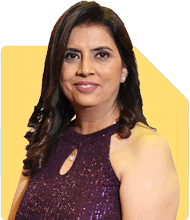
Sushil

Sushil Sukhwani  | Answer  |Ask -

Study Abroad Expert - Answered on Dec 19, 2023

Sushil Sukhwani is the founding director of the overseas education consultant firm, Edwise International. He has 31 years of experience in counselling students who have opted to study abroad in various countries, including the UK, USA, Canada and Australia. He is part of the board of directors at the American International Recruitment Council and an honorary committee member of the Australian Alumni Association. Sukhwani is an MBA graduate from Bond University, Australia. ... more
Asked by Anonymous - Dec 18, 2023Hindi

Listen
Career

My son is in 10th now, what are his options for studying abroad?

Ans: Hello,

To begin with, thank you for contacting us. I am glad to hear that your son is currently studying in the 10th grade. To answer your question first, I would like to tell you that studying overseas will offer your son access to a world of endless opportunities. Although certain programs are designed keeping secondary school students in mind, you would be glad to know that summer programs or pre-college programs designed specifically for younger students, in turn, offering them exposure to a variety of academic disciplines, cultural backgrounds, as well as various events in life, are offered by a number of colleges and institutions. I would recommend that your son looks into the language immersion classes, summer study programs, as well as the exchange programs that these academic institutions and universities have to offer. Not just that, remember that he can plan beforehand and also make sure that he adheres to the requirements for any programs he might be interested in taking up after he completes high school by conducting a study on the prerequisites for securing admission to foreign universities as soon as possible. Moreover, for students’ his age, aspiring to pursue education overseas, getting in touch with academic advisors or guidance counselors can also prove beneficial as they will be able to offer useful information pertaining to the myriad of possibilities available.

For more information, you can visit our website.
Career

You may like to see similar questions and answers below

Sushil

Sushil Sukhwani  | Answer  |Ask -

Study Abroad Expert - Answered on Oct 28, 2023

Listen
Career
My son is in 3rd AI Engg. If he wants to pursue higher education , what will be the best option outside India, with loan options.
Ans: Hello Anand,

First and foremost, thank you for getting in touch with us. I am happy to hear that your son is currently in the 3rd year of his Bachelor's degree in Artificial Intelligence Engineering. To answer your question first, I would like to tell you that if your son intends pursuing higher education overseas, he could consider studying at any of the below mentioned countries:

In the UK, your son could consider applying to the University of Cambridge, University College London, University of Oxford, and Imperial College London, regarded for their programs related to AI. The University of Melbourne, University of Sydney, and Australian National University in Australia are also known for robust Machine Learning and Artificial Intelligence courses. In the USA, Stanford University, Carnegie Mellon University, Massachusetts Institute of Technology (MIT), and UC Berkeley, are renowned for offering robust programs in Artificial Intelligence and Computer Science. Applying to the University of British Columbia, University of Toronto, and McGill University in Canada known for their outstanding Artificial Intelligence and Machine Learning programs could also be considered by your son. The Artificial Intelligence and Machine Learning programs at Nanyang Technological University (NTU), and National University of Singapore (NUS) in Singapore could also be factored in by your son. Additionally, your son could consider applying to universities in Netherlands viz., University of Amsterdam, Eindhoven University of Technology, and Delft University of Technology that are known for offering Artificial Intelligence programs in the English language. Top-notch German universities like University of Heidelberg, Technical University of Munich, and University of Stuttgart, also offer programs related to Artificial Intelligence that could be opted for by your son. Moreover, your son could also consider applying to universities in Sweden, Switzerland, and France.

When deciding on the finest choice for your son to pursue his higher education overseas, I would recommend that you take into account the cost, his hobbies, as well as his professional objectives. Additionally, investigate the prerequisites for admission as well as the application deadlines pertaining to each individual country and university of your choosing.

Regarding your query about loan options, I would suggest that you contact us and our team of expert counselors will be more than willing to provide you with further guidance. Thank you!

For more information, you can visit our website.

..Read more

Sushil

Sushil Sukhwani  | Answer  |Ask -

Study Abroad Expert - Answered on Apr 18, 2024

Asked by Anonymous - Apr 18, 2024Hindi
Listen
Career
My son is 24 years ,bcom and acca affiliate working for 18 months, wants to higher studies ,which country and course will be good for him
Ans: Hello,

First and foremost, thank you for getting in touch with us. I am happy to hear that your son has completed his BCom with ACCA and now wishes to pursue higher studies. To answer your question first, I would like to tell you that a number of variables viz., your son’s interests, the location of his choosing, his economic condition, as well as his professional objectives, play a key role in selecting the ideal country and course for his higher education. I would recommend that you take into account the following:

As an answer to your query pertaining to country, I would like to let you know that the UK, well-known for the robust accounting and finance programs it offers, provides a broad range of possibilities for further education, including prominent colleges and universities. Coming to Canada, the country is renowned for its top-tier educational system and friendly atmosphere for overseas students. It is home to a number of universities offering reputed business and accounting programs. Numerous elite universities offering outstanding business and finance programs are located in the USA, providing a myriad of opportunities for international students. For overseas students looking to pursue degrees in accounting and finance, Australia is another sought-after study abroad destination. The country has a robust economy as well as an outstanding educational system.

Concerning your query as to which course will be good for your son, I would like to let you know that he can choose among the courses mentioned below: He can choose to pursue a Master of Science (MSc) in Accounting and Finance: Concentrating on accounting and finance, a specialized master's degree can offer comprehensive knowledge and abilities that are pertinent to your son's professional objectives. Next, based on your son’s professional aspirations, he might choose to pursue professional qualifications viz., CFA (Chartered Financial Analyst), CPA (Certified Public Accountant), or ACCA (Association of Chartered Certified Accountants). Your son can also opt for a Master of Business Administration (MBA) degree. For students looking to further their financial and business professions, this is a preferred option. Specialized MBA programs in finance and accounting are offered by a number of universities.

I would suggest that your son conducts an extensive study on and takes into account variables viz., the program’s standing, accreditation, living expenses, post-graduation employment prospects, as well as the possibility of acquiring a work visa or immigration upon graduating. Moreover, in order to gain meaningful information and acquire guidance when making this crucial choice, I would recommend that your son gets in touch with educational counselors, employment consultants, as well as experts in the subject.

For more information, you can visit our website.

..Read more

Latest Questions
Dr Dipankar

Dr Dipankar Dutta  |1856 Answers  |Ask -

Tech Careers and Skill Development Expert - Answered on Feb 26, 2026

Ramalingam

Ramalingam Kalirajan  |11044 Answers  |Ask -

Mutual Funds, Financial Planning Expert - Answered on Feb 26, 2026

Money
Hi Ramalingam Sir, Very fond of your guidance. I`ve invested in ICICI Prudential Guranteed Income Plan with PPT of 10 Years & Policy Term is 11 Years. The Yearly Premium is 5 lakhs with Guaranteed Early Income i.e which started from 2nd year onwards is 1.19 Lacs. After 11th year Guaranteed Yearly Income will be 6.38 Lacs. I started this Policy in 2022. Very soon I realized that this is not worth of investing my money. I decided to stop Premium after 2 years which made my Policy as Paid up status which means all benefits are reduced but Policy is Active. I changed myself as I did mistakes in Past (by taking this policy) and now I read each clause very carefully. Now in this case If i surrender, the Surrender value is calculated based on Guaranteed factor X Total premium paid - Income already Paid. Now currently Surrender value is 2.9 Lacs as GV factor is 50%. This factor will improve Gradually with time and by 9th year it will went to 90%. I want to Surrender but now will incur heavy loss (approx. 4.8 lacs) ( to me while in 9th year at least I`ll get 90% of my Premiums back. So pl. advice what is right approach as when should i think for Surrender. As of now by God grace I`m not in any financial emergency. Further is my understanding correct that SV will rise with time. Thanks in advance for your guidance.
Ans: It is very good that you have started reading your policy papers so closely now. Most people do not take the time to understand the fine print, but you have already taken a big step by identifying that this plan does not match your long-term goals. Your ability to stop the premium early shows you are now in control of your money.

» Understanding your paid-up policy and surrender value

Your understanding of how the Surrender Value (SV) works is mostly right. In these types of plans, the Guaranteed Surrender Value factor does go up as the years pass. However, there is a catch. While the percentage factor increases, the insurance company also deducts the income they have already paid out to you from the final amount. Even if you wait until the 9th year to get 90% of your premiums back, you are losing out on the "time value" of that money. Money sitting in a low-yield environment for nine years loses its buying power because of inflation.

» The math behind surrendering now versus later

If you surrender today, you take a big loss of Rs. 4.8 lakhs. This feels painful. But if you keep the money locked in just to avoid the loss, you are essentially letting the company hold your remaining Rs. 2.9 lakhs for several more years at a very low return. A 360-degree view suggests that if you take the money out now and put it into a productive asset like a diversified portfolio of actively managed mutual funds, that money can work much harder for you. Actively managed funds are great because a professional fund manager chooses the best stocks to beat the market, unlike other options that just follow a fixed list.

» Why regular funds and expert guidance matter

Since you mentioned you want to be careful now, it is better to invest through regular plans with the help of a Certified Financial Planner. Many people think direct funds are better because of lower fees, but they often end up making emotional mistakes or picking the wrong funds without a guide. A regular plan gives you access to professional advice and periodic reviews, which ensures you stay on track. This expert support is worth much more than the small cost difference, especially when you are trying to recover from a past investment mistake.

» Opportunity cost and your next steps

Since you do not have a financial emergency, you have a great chance to build wealth. Instead of waiting years just to get your original 5 lakhs back, you can take what is left and start a Systematic Investment Plan (SIP). Over the next seven to eight years, a well-managed equity fund could potentially grow that small amount into something much larger than what the insurance policy would ever pay. The loss you take today is the "fees" for a valuable lesson, but staying in the plan is a continuous cost.

» Tax rules to keep in mind

When you move your money to equity mutual funds, remember the tax rules. If you hold your investment for more than a year, it is called Long Term Capital Gain (LTCG). Any profit above Rs. 1.25 lakh is taxed at 12.5%. If you sell before one year, the profit is taxed at 20%. This is still very efficient compared to many other products.

» Finally

The best approach is usually to exit such low-yield insurance-cum-investment plans as soon as possible. Since your policy is already paid-up, it is not eating new money, but it is wasting your old money. Surrendering now and moving the funds into actively managed mutual funds through a regular plan will likely put you in a much stronger position by the 11th year compared to waiting for the policy to mature.

Best Regards,

K. Ramalingam, MBA, CFP,

Chief Financial Planner,

www.holisticinvestment.in
https://www.youtube.com/@HolisticInvestment

...Read more

Ramalingam

Ramalingam Kalirajan  |11044 Answers  |Ask -

Mutual Funds, Financial Planning Expert - Answered on Feb 26, 2026

Money
Dear Sir, Wanted to know if Iam right in my thinking. I want to accumulate 3.5 cr in 15 years. For that , I am planning to start an SIP of 40 k in a small cap mutual fund which have easily beaten small cap index benchmarks last 15 yr/20 yr time frames and generated superior returns( Although I understand past performance may or may not replicate similar performance) However I have noticed that bigger compouding or multibagger return from Mutual funds have come largely only from small and mid caps. Large caps may not come closer to what small caps or a mid cap can generate. So by staying disciplined with sip of 40k everymonth in small cap and continue till 15 years be good plan to accumulate 3.5 cr. 15 years in a small cap fund i believe will be decent hold time for reaching such corpus riding various market cycles etc. risk can be largely minimized. Also if the target is nearing in the 14th yr, the entire corpus can be moved to a short term debt fund as a safer strategy then. Please advise. Thank you
Ans: It is great to see your clear vision for building a corpus of Rs. 3.5 cr over the next 15 years. Your decision to start a monthly SIP of Rs. 40,000 shows strong financial discipline. Planning for a 15-year horizon is a smart move because it gives your money enough time to grow and handle different market ups and downs.

» Assessing the small cap strategy

Choosing small cap funds for long-term growth is an interesting choice. You are right that small and mid-cap companies often have more room to grow compared to large-cap companies. This can lead to higher returns over a long period. However, small cap funds can be very volatile. This means the value of your investment might go up and down a lot more than a large-cap fund. Since you have a 15-year window, you have the time to stay invested through these cycles, which is a good way to manage that risk.

» The value of active management over index benchmarks

You mentioned that the funds you are looking at have beaten the small cap index benchmarks. This is a very important observation. In the Indian market, especially in the small cap space, index funds have many disadvantages. Index funds simply track a basket of stocks regardless of their quality. This means they include both good and bad companies.

Actively managed funds are much better because a professional fund manager carefully picks stocks. They can identify high-quality companies with strong growth potential and avoid those with poor governance or weak financials. This active selection is why many managed funds consistently outperform the index. By choosing active funds, you get the benefit of expert research which is crucial in the complex small cap segment.

» Portfolio structure and diversification

While small caps offer high growth, relying only on one category might be risky. A 360-degree financial solution usually suggests a bit more balance. Even though you want high returns, having some exposure to mid-cap or multicap funds could provide a smoother journey without sacrificing too much growth. This helps in staying disciplined because the portfolio won't swing as wildly during market corrections.

» Risk management and the exit strategy

Your plan to move the corpus to a short-term debt fund in the 14th year is a very wise strategy. As a Certified Financial Planner, I see this as a great way to protect your gains. When you are close to your goal, you do not want a sudden market drop to reduce your 15-year hard work. Shifting to safer debt instruments ensures that your Rs. 3.5 cr target is locked in and available when you need it.

» Taxation on your gains

When you eventually move your money or withdraw it, keep the tax rules in mind. For equity mutual funds, Long-Term Capital Gains (LTCG) above Rs. 1.25 lakh are taxed at 12.5%. If you sell any units before one year, the Short-Term Capital Gains (STCG) are taxed at 20%. For the debt funds you plan to use in the final year, the gains will be taxed according to your income tax slab.

» Final Insights

Your plan is solid and your goal is achievable with the discipline you are showing. By sticking to your Rs. 40,000 SIP and choosing actively managed funds, you are putting yourself in a strong position. Regularly reviewing the progress with a Certified Financial Planner will help ensure you stay on track and make any small changes needed along the way.

Best Regards,

K. Ramalingam, MBA, CFP,

Chief Financial Planner,

www.holisticinvestment.in
https://www.youtube.com/@HolisticInvestment

...Read more

Ramalingam

Ramalingam Kalirajan  |11044 Answers  |Ask -

Mutual Funds, Financial Planning Expert - Answered on Feb 26, 2026

Money
How much pension will I get from the SBI Saral Pension Yojana plan? I have a annual premium or investment of 150000 for the last 9 years; 1 more year to go the end of the premium. Can I withdraw money after maturity of this plan? Age at the entry was 43, and the sum assured is 1500000
Ans: You have done a great job saving Rs. 150000 every year for 9 years. Thinking about your retirement at the age of 43 shows a lot of maturity. I am very happy to see your strong commitment to saving money for your future.

» Review of your current insurance policy

This policy is a mix of insurance and investment. Usually, these plans give very low returns. You might only get 4 to 5 percent growth. You asked if you can take out all your money after maturity. The rules for these old pension plans do not allow you to withdraw the full cash. They force you to buy a fixed monthly payout plan with a big part of your money. As a Certified Financial Planner, I do not suggest these fixed payout plans. The monthly money you get is very low and it does not grow over time. When prices go up in the future, this fixed money will not be enough for your daily needs.

» Creating a 360 degree solution for your wealth

Since this is an investment combined with insurance, my advice is to surrender this policy now. After you surrender it, you can take the money and invest it in active equity mutual funds. Active mutual funds have experts who pick good companies for you. This helps your money grow much faster over a long time.

» Action steps to grow your retirement money

Stop paying the final premium for this old policy.

Ask the insurance company for your surrender amount.

Put that surrender money into good active mutual funds.

Keep investing your yearly Rs. 150000 into active mutual funds instead of this policy.

Please avoid buying physical land or houses. Property needs too much money at once and is very hard to sell when you need cash fast.

A good mutual fund portfolio will give you a better regular income in your retirement years.

» Final Insights

You already have a wonderful habit of saving money regularly. If you make a small change and pick smarter investments, your future will be very safe. Moving away from low-return insurance plans to active mutual funds makes your money work harder for you. This will bring you a happy and peaceful retirement.

Would you like me to help you find how to start your first active mutual fund investment?

Best Regards,

K. Ramalingam, MBA, CFP,

Chief Financial Planner,

www.holisticinvestment.in
https://www.youtube.com/@HolisticInvestment

...Read more

DISCLAIMER: The content of this post by the expert is the personal view of the rediffGURU. Investment in securities market are subject to market risks. Read all the related document carefully before investing. The securities quoted are for illustration only and are not recommendatory. Users are advised to pursue the information provided by the rediffGURU only as a source of information and as a point of reference and to rely on their own judgement when making a decision. RediffGURUS is an intermediary as per India's Information Technology Act.

Close  

You haven't logged in yet. To ask a question, Please Log in below
Login

A verification OTP will be sent to this
Mobile Number / Email

Enter OTP
A 6 digit code has been sent to

Resend OTP in120seconds

Dear User, You have not registered yet. Please register by filling the fields below to get expert answers from our Gurus
Sign up

By signing up, you agree to our
Terms & Conditions and Privacy Policy

Already have an account?

Enter OTP
A 6 digit code has been sent to Mobile

Resend OTP in120seconds

x