Need Expert Advice?Our Gurus Can Help
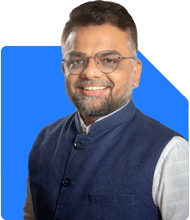
Vivek Shah | Answer |Ask -Follow
Financial Planner - Answered on Jun 19, 2023
Vivek Shah is a SEBI registered investment advisor and certified financial planner from FPSB India. He has over 18 years of experience in financial planning.
Shah founded Finrise, a financial planning and wealth management firm, in 2011. He believes that equity investment is the only way to generate long term wealth.
He has an MBA in finance, a degree in chartered accountancy and is a registered life planner from Kinder Institute of Life Planning, USA.... more
Shah founded Finrise, a financial planning and wealth management firm, in 2011. He believes that equity investment is the only way to generate long term wealth.
He has an MBA in finance, a degree in chartered accountancy and is a registered life planner from Kinder Institute of Life Planning, USA.... more
 Question by sk on Jun 11, 2023Hindi
ANY UPDATE ON GGAUTOMOTIVE
Ans: G.G Automotive Gears was incorporated in Feb.'74 as a private limited company, was converted into a public limited company in 1994. The company was promoted by the Gajra family of Bombay.
The company started manufacturing gear box housing and other type of housing for automobile vehicles in 1978. Subsequently, it started manufacturing precision gears for the Indian Railways, industrial gears for cooling towers and in various process industries like cement, steel and sugar. In 1993, it started manufacturing industrial gear boxes for oil extraction plant, gears for plastic extrusion machines and material handling equipment for Port Trusts.
A project for manufacturing locomotive gears and gear pumps with an installed capacity of 3000 Pa each has been completed during 1995.
BHEL, Indian Railways, Uranium Corporation, Jawaharlal Nehru Port Trust, etc, are some of its reputed customers. The company successfully entered the export market by securing a trial order from General Electric, US.
In 2000-01 the company has PPAP (Production Part & approval Process) milestone of General Motors Corporation, USA, This will facilitate the company to compete in the international market. The company had launched Hydraulic Gear Pumps for Loaders/Earthmovers on trial basis.
Positives:
Strong Annual EPS Growth
Effectively using its capital to generate profit - RoCE improving in last 2 years
Effectively using Shareholders fund - Return on equity (ROE) improving since last 2 year
Efficient in managing Assets to generate Profits - ROA improving since last 2 year
Growth in Quarterly Net Profit with increasing Profit Margin (YoY)
Increasing Revenue every Quarter for the past 4 Quarters
Strong cash generating ability from core business - Improving Cash Flow from operation for last 2 years
Increasing profits every quarter for the past 4 quarters
Promoters increasing shareholding QoQ
Negatives:
Stock is trading at 21.4 times its book value
Though the company is reporting repeated profits, it is not paying out dividend
Company has low interest coverage ratio.
Promoter holding is low: 32.2%
Company has a low return on equity of -0.16% over last 3 years.
Company might be capitalizing the interest cost
The company is NANO cap category with market cap of only 48 crores. If you dont understand the business and the risks involved in the same than its better to stay away and if you plan to invest than make sure you keep track of business and its perfomance on regualr basis to take informed decisions.
Hope this should help you. happy Investing
Disclaimer: Information provided is only for educational purpose. Please consult your investment adviosor before making any investment decisions
The company started manufacturing gear box housing and other type of housing for automobile vehicles in 1978. Subsequently, it started manufacturing precision gears for the Indian Railways, industrial gears for cooling towers and in various process industries like cement, steel and sugar. In 1993, it started manufacturing industrial gear boxes for oil extraction plant, gears for plastic extrusion machines and material handling equipment for Port Trusts.
A project for manufacturing locomotive gears and gear pumps with an installed capacity of 3000 Pa each has been completed during 1995.
BHEL, Indian Railways, Uranium Corporation, Jawaharlal Nehru Port Trust, etc, are some of its reputed customers. The company successfully entered the export market by securing a trial order from General Electric, US.
In 2000-01 the company has PPAP (Production Part & approval Process) milestone of General Motors Corporation, USA, This will facilitate the company to compete in the international market. The company had launched Hydraulic Gear Pumps for Loaders/Earthmovers on trial basis.
Positives:
Strong Annual EPS Growth
Effectively using its capital to generate profit - RoCE improving in last 2 years
Effectively using Shareholders fund - Return on equity (ROE) improving since last 2 year
Efficient in managing Assets to generate Profits - ROA improving since last 2 year
Growth in Quarterly Net Profit with increasing Profit Margin (YoY)
Increasing Revenue every Quarter for the past 4 Quarters
Strong cash generating ability from core business - Improving Cash Flow from operation for last 2 years
Increasing profits every quarter for the past 4 quarters
Promoters increasing shareholding QoQ
Negatives:
Stock is trading at 21.4 times its book value
Though the company is reporting repeated profits, it is not paying out dividend
Company has low interest coverage ratio.
Promoter holding is low: 32.2%
Company has a low return on equity of -0.16% over last 3 years.
Company might be capitalizing the interest cost
The company is NANO cap category with market cap of only 48 crores. If you dont understand the business and the risks involved in the same than its better to stay away and if you plan to invest than make sure you keep track of business and its perfomance on regualr basis to take informed decisions.
Hope this should help you. happy Investing
Disclaimer: Information provided is only for educational purpose. Please consult your investment adviosor before making any investment decisions
DISCLAIMER: The content of this post by the expert is the personal view of the rediffGURU. Users are advised to pursue the information provided by the rediffGURU only as a source of information to be as a point of reference and to rely on their own judgement when making a decision.
MoneyReply


You may like to see similar questions and answers below

Samraat Jadhav |2525 Answers |Ask -Follow
Stock Market Expert - Answered on Feb 08, 2024


Samraat Jadhav |2525 Answers |Ask -Follow
Stock Market Expert - Answered on Feb 16, 2024


Latest Questions

Radheshyam Zanwar |6758 Answers |Ask -Follow
MHT-CET, IIT-JEE, NEET-UG Expert - Answered on Jan 01, 2026


Dr Nagarajan J S K |2585 Answers |Ask -Follow
NEET, Medical, Pharmacy Careers - Answered on Jan 01, 2026



Reetika Sharma |463 Answers |Ask -Follow
Financial Planner, MF and Insurance Expert - Answered on Dec 31, 2025


Ramalingam Kalirajan |10934 Answers |Ask -Follow
Mutual Funds, Financial Planning Expert - Answered on Dec 31, 2025

Ramalingam Kalirajan |10934 Answers |Ask -Follow
Mutual Funds, Financial Planning Expert - Answered on Dec 31, 2025


Ramalingam Kalirajan |10934 Answers |Ask -Follow
Mutual Funds, Financial Planning Expert - Answered on Dec 31, 2025


Ravi Mittal | Answer |Ask -Follow
Dating, Relationships Expert - Answered on Dec 30, 2025


Ulhas Joshi |281 Answers |Ask -Follow
Mutual Fund Expert - Answered on Dec 30, 2025


Ravi Mittal | Answer |Ask -Follow
Dating, Relationships Expert - Answered on Dec 30, 2025


Patrick Dsouza |1434 Answers |Ask -Follow
CAT, XAT, CMAT, CET Expert - Answered on Dec 30, 2025