Home > Money > Question
Need Expert Advice?Our Gurus Can Help
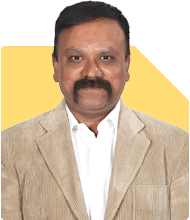
Ulhas

Ulhas Joshi  |284 Answers  |Ask -

Mutual Fund Expert - Answered on Dec 30, 2025

With over 16 years of experience in the mutual fund industry, Ulhas Joshi has helped numerous clients choose the right funds and create wealth.
Prior to joining RankMF as CEO, he was vice president (sales) at IDBI Asset Management Ltd.
Joshi holds an MBA in marketing from Barkatullah University, Bhopal.... more
B Question by B on Dec 28, 2025Hindi
Money

Sir is it advisable to shift from mutual funds to ETFs.If do pl guide which ETF is better.Is it good to put lumsum in silver ETF

Ans: Moving from mutual funds to ETFs isn’t about right or wrong. It’s simply about what suits you.
The main difference is active versus passive investing.

In actively managed mutual funds, a professional fund manager takes decisions (which stocks to buy or sell, when to increase or reduce exposure and how to manage risk). The goal is to beat the benchmark over the long term.

ETFs work differently. They are passive products that just track an index or a commodity. There’s no active decision-making. They aim to give market returns at a lower cost and are suitable for investors who are comfortable with market ups and downs and don’t expect returns higher than the index.

When it comes to silver ETFs specifically, timing becomes very important. There is a strong possibility that a large part of the silver bull run may already be behind us. Once the market starts correcting and prices stabilise, the value of the ETF can also decrease.

Because of this, it may not be wise to withdraw money from mutual funds and move entirely into silver ETFs just because silver is doing well currently.

A more balanced approach usually works better. Mutual funds can remain the core of your portfolio while ETFs are used in a limited and tactical way for diversification.

At the end of the day, it all comes down to your goals, your risk appetite and how comfortable you are with market volatility, not which product sounds better.
DISCLAIMER: The content of this post by the expert is the personal view of the rediffGURU. Users are advised to pursue the information provided by the rediffGURU only as a source of information to be as a point of reference and to rely on their own judgement when making a decision.
Money

You may like to see similar questions and answers below

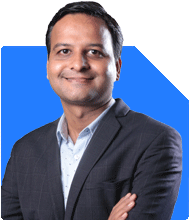
Ramalingam

Ramalingam Kalirajan  |11057 Answers  |Ask -

Mutual Funds, Financial Planning Expert - Answered on Dec 30, 2024

Listen
Money
Hi, My current holdings in Lumsum MFs are: ICICI Pru Infrastructure- G Rs. 50,000 Motilal Oswal Digital India Reg-G Rs. 40,000 Motilal Oswal Nifty Capital Market Index Reg-G Rs. 50,000 Quant Small Cap- G Rs. 70,000 Kindly asses my above investments and also, I wish to invest Rs. 50,000 per month in Lumsum MFs with a goal of achieving 1.15 Cr. corpus in next 5 years. Thank you.
Ans: Your current mutual fund portfolio includes investments in sectoral, index, and small-cap funds. Here's an analysis:

1. ICICI Pru Infrastructure Fund
This is a sectoral fund focusing on infrastructure.
Sectoral funds have concentrated risk and depend on specific sector performance.
Performance may be inconsistent if the sector underperforms.
Consider reducing exposure to avoid overdependence on a single sector.
2. Motilal Oswal Digital India Fund
This is another sectoral fund targeting technology.
The technology sector has high growth potential but can be volatile.
Limit exposure to 10-15% of your portfolio for stability.
3. Motilal Oswal Nifty Capital Market Index Fund
Index funds track the market but lack active management.
They do not outperform during volatile or changing market cycles.
Actively managed funds provide better potential for long-term wealth creation.
4. Quant Small Cap Fund
Small-cap funds offer high growth but carry high volatility.
They are suitable for long-term investors with higher risk tolerance.
Diversify with large and mid-cap funds to balance risk.
Recommendations for Current Portfolio
1. Rebalance Sectoral Exposure
Reduce the weight of sectoral funds like infrastructure and technology.
Invest in diversified funds for consistent performance.
2. Increase Large-Cap Allocation
Large-cap funds provide stability and steady growth.
They are ideal for achieving medium-term goals.
3. Consider Actively Managed Funds
Replace the index fund with actively managed funds.
Active funds perform better in dynamic and evolving market conditions.
4. Review Small-Cap Allocation
Retain the small-cap fund but cap allocation to 20%.
Balance this with large and mid-cap funds for smoother returns.
Planning for Rs. 1.15 Crore in 5 Years
You aim to invest Rs. 50,000 monthly in mutual funds. This target requires a systematic and disciplined approach.

Investment Strategies
Allocate funds across large-cap, mid-cap, and small-cap funds for diversification.
Use a mix of growth-oriented funds and stable funds for balanced growth.
Prioritise equity-heavy investments for higher returns.
Suggested Allocation
Large-Cap Funds: 40% for stability and consistent returns.
Mid-Cap Funds: 30% for moderate risk and growth potential.
Small-Cap Funds: 20% for aggressive growth opportunities.
Debt Funds: 10% to cushion market fluctuations.
Avoid Common Mistakes
Avoid overexposure to high-risk or thematic funds.
Avoid index funds due to their inability to beat the market.
Tax Implications
Long-term capital gains (LTCG) above Rs. 1.25 lakh are taxed at 12.5%.
Short-term capital gains (STCG) are taxed at 20%.
Plan redemptions strategically to minimise tax impact.
Execution and Monitoring
1. Invest Through SIP or Lumpsum
SIPs offer cost averaging and reduce timing risks.
Lumpsum investing is effective during market corrections.
2. Review Portfolio Regularly
Monitor fund performance every 6 months.
Adjust allocations based on market trends and goals.
3. Seek Professional Guidance
Consult a Certified Financial Planner for personalised advice.
They help align your investments with your goals and risk tolerance.
Final Insights
Your current portfolio has potential but needs better diversification. Avoid overdependence on sectoral and index funds. Focus on a balanced approach with large, mid, and small-cap funds. Your goal of Rs. 1.15 crore in 5 years is achievable with disciplined investing and proper guidance.

Best Regards,

K. Ramalingam, MBA, CFP,

Chief Financial Planner,

www.holisticinvestment.in
https://www.youtube.com/@HolisticInvestment

..Read more

Latest Questions
Radheshyam

Radheshyam Zanwar  |6844 Answers  |Ask -

MHT-CET, IIT-JEE, NEET-UG Expert - Answered on Mar 10, 2026

Asked by Anonymous - Mar 10, 2026Hindi
Career
Hi, I need honest career guidance based on my situation. I completed my HSC in 2024 with PCB stream (no Mathematics) and scored only 45%. I was preparing for medical entrance but it didn't work out, and due to personal reasons I couldn't appear for improvement exams either. It's now 2026 and I have a 2 year gap. I now want to pursue a career in IT or Computer Science. I'm confused between BSc IT, BSc CS, BCA, and Data Science — and keep getting mixed opinions from everyone. My specific questions are — 1. Since I don't have Maths in HSC, can I appear for the HSC Maths exam as an Isolated Candidate in July–August 2026? And if I clear it, will that result be valid for 2026–27 admissions? 2. With 45% and a 2 year gap, what are my realistic college options in Mumbai? Which good colleges have lower cutoffs for BSc IT / BSc CS / BCA? 3. Given that I'm coming from Biology with no Maths background — which degree would actually be the best fit for me for real career growth, not just for getting admission? 4. Does college name or tier matter a lot in the IT field with lower percentage, or do skills and portfolio matter more? 5. Honestly, what is the smartest move for someone in my exact situation right now? I don't want to waste more time and want to make the right decision. Please guide me."
Ans: Hey, here is the point-wise reply to your question:

(1) You can appear for the HSC Mathematics exam as an independent candidate through the Maharashtra State Board in July–August 2026, and if you pass, that Maths result will generally be accepted for admissions in 2026–27 for courses requiring Maths.

(2) With 45% and a two-year gap, gaining admission to top colleges may be difficult, but you can still try mid-/lower-cutoff colleges such as SIES College of Arts, Science and Commerce, Vivekanand Education Society's College of Arts, Science and Commerce, Tolani College of Commerce, and Guru Nanak Khalsa College, depending on seat availability, especially for BSc IT or BCA.

(3) Since you come from a Biology background without Maths, BCA is usually the easiest entry into IT (as the Maths requirements are lighter), whereas BSc CS/Data Science can be more challenging because they rely more heavily on mathematics and statistics.

(4) In the IT industry, skills, projects, internships, coding ability, and your portfolio matter far more than college ranking, although attending a better college can initially help with networking and placements.

(5) The practical pathway might be: complete HSC Maths in 2026 → apply for BCA or BSc IT at reputable Mumbai colleges → focus intensively on coding skills (Python, web development, projects) during your degree, as building real technical skills will be much more important for your career than your past percentage.

However, it is strongly advised to arrange a one-to-one session with a counsellor so they can suggest more options after discussing your profile. Do not rely solely on our advice. Take our advice as a guideline only.

Good luck.
Follow me if you receive this reply.
Radheshyam

...Read more

DISCLAIMER: The content of this post by the expert is the personal view of the rediffGURU. Investment in securities market are subject to market risks. Read all the related document carefully before investing. The securities quoted are for illustration only and are not recommendatory. Users are advised to pursue the information provided by the rediffGURU only as a source of information and as a point of reference and to rely on their own judgement when making a decision. RediffGURUS is an intermediary as per India's Information Technology Act.

Close  

You haven't logged in yet. To ask a question, Please Log in below
Login

A verification OTP will be sent to this
Mobile Number / Email

Enter OTP
A 6 digit code has been sent to

Resend OTP in120seconds

Dear User, You have not registered yet. Please register by filling the fields below to get expert answers from our Gurus
Sign up

By signing up, you agree to our
Terms & Conditions and Privacy Policy

Already have an account?

Enter OTP
A 6 digit code has been sent to Mobile

Resend OTP in120seconds

x