Home > Money > Question
Need Expert Advice?Our Gurus Can Help
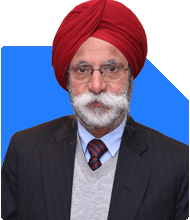
T S Khurana

T S Khurana   |536 Answers  |Ask -

Tax Expert - Answered on Dec 03, 2025

A certified management accountant since 1993, T S Khurana is a fellow member of The Institute of Cost Accountants of India. His areas of expertise are income tax, specifically litigation cases, and GST.

Since the last 21 years, he has also been providing expert advice on financial matters, including investments and diversification of funds, and wealth building in the long term to his clients.
He believes that investment in real estate is the safest way for better returns and wealth generation over a period of time.

A former chairman of the Chandigarh Chapter of Institute of Cost Accountants of India, T S Khurana has also served as member of its technical committee.... more

Jaspreet Question by Jaspreet on Nov 12, 2025Hindi

Money

Dear Mr. Khurana, I hope you are doing well. I am seeking your advice on how best to invest ₹5 lakh per month for the next five years, with the goal of purchasing a house at the end of this period. Given your expertise and experience, I would greatly appreciate your guidance on the most suitable investment options or strategy to ensure both safety and reasonable growth over this short-to-medium-term horizon. Looking forward to your valuable insights.

Ans: First of all create an Emergency Fund of Rs.15-20 lakhs, for any unforeseen situation you may face. Such situations could be loss of Job, Medical Emergency in the family/parents etc. This amount may be invested in Gold, which would offer you instant liquidity and reasonable return also.
Next step may be taken to Invest your saving in Mutual Funds adopting SIP route for a year.
After a year you may be having enough funds to invest in purchase of a house, as you want. At this stage, your MF Investment will serve the purpose of down payment & you can raise further funds through Housing Loan.
Hope this clarifies, what you wanted to ask. Most welcome for any further clarification on the subject. Thanks.
DISCLAIMER: The content of this post by the expert is the personal view of the rediffGURU. Users are advised to pursue the information provided by the rediffGURU only as a source of information to be as a point of reference and to rely on their own judgement when making a decision.
Money

You may like to see similar questions and answers below

Ramalingam

Ramalingam Kalirajan  |10870 Answers  |Ask -

Mutual Funds, Financial Planning Expert - Answered on May 15, 2024

Listen
Money
Dear Mr. Kalirajan, My name is Emir, a 20-year-old BCA student in India. I'm fortunate to have discovered a passion for a new field in IT, and thanks to God over the past 10 months, I've begun earning a steady income. In fact, I've managed to save approximately ?40 lakhs in the last 10 months, with a goal of reaching ?55-60 lakhs by December 2024. As I have minimal expenses and a supportive family, I'm eager to explore investment opportunities to grow my savings. I recently spoke with my bank manager, who suggested investing in HDFC Balanced Advanced Fund and SBI Magnum Low Duration Fund. While I've invested a total of ?12 lakhs in these funds and set up a SIP for SBI Small, Mid, Large Combination Fund, I recognize my knowledge gap in the investment landscape. Although trading seems enticing for faster growth, I lack the time to dedicate to it effectively. Having come across your impressive experience in financial planning, I'm reaching out for your guidance. I'm particularly interested in building a portfolio of mutual funds or other suitable options that can generate a passive income of at least ?1 lakh per month as soon as possible. Since I have no immediate need for this money, I'm comfortable with a short term as well as long-term investment horizon (5-10 years or more) and am willing to take calculated risks to achieve my goals. I understand the importance of a personalized approach to financial planning, and I'm eager to learn from your expertise. Could you please recommend suitable investment strategies? Thank you for your time and consideration. Sincerely, Emir
Ans: Emir, your proactive approach to financial planning at such a young age is commendable. Congratulations on your substantial savings and your commitment to reaching your financial goals. Let's chart a course to help you achieve your aspirations.

Understanding Your Goals:

Your goal of generating a passive income of at least ?1 lakh per month is ambitious yet achievable given your sizable savings and willingness to take calculated risks.

Crafting a Diversified Portfolio:

While the funds suggested by your bank manager are reputable, it's essential to diversify your portfolio further to spread risk and optimize returns. Considering your long-term horizon and income objectives, a blend of equity, debt, and hybrid funds might be suitable.

Embracing Equity for Growth:

Equity funds have the potential to deliver significant growth over the long term. Since you're comfortable with a longer investment horizon, allocating a portion of your portfolio (around 60-70%) to diversified equity funds can help capitalize on market opportunities.

Exploring Debt for Stability:

Debt funds offer stability and consistent returns, making them ideal for balancing the risk in your portfolio. Considering your income goals and risk tolerance, allocating around 20-30% of your portfolio to high-quality debt funds like short-term or dynamic bond funds can provide stability.

Emphasizing Hybrid Funds for Flexibility:

Hybrid funds combine the best of both worlds by blending equity and debt instruments. These funds can offer stability while still participating in equity market growth. Allocating 10-20% of your portfolio to balanced or aggressive hybrid funds can enhance diversification and mitigate risk.

Navigating SIPs for Consistent Growth:

Continuing your SIP in SBI Small, Mid, Large Combination Fund is a prudent move, providing you with a disciplined approach to investing and benefiting from rupee cost averaging over time.

Considering Future Opportunities:

As you accumulate additional savings, periodically reassess your portfolio and explore opportunities in real estate investment trusts (REITs), international funds, or thematic funds to further diversify and optimize returns.

Staying the Course with Patience:

While trading may seem tempting for quick gains, it often requires significant time and expertise. By sticking to a well-thought-out investment plan and staying invested for the long term, you can harness the power of compounding and achieve your financial objectives.

In Conclusion:

Emir, by following a strategic investment plan tailored to your goals and risk profile, you're on track to realize your aspirations. Remember, financial planning is a journey, and I'll be here to provide guidance and support every step of the way.

Best Regards,

K. Ramalingam, MBA, CFP,

Chief Financial Planner,

www.holisticinvestment.in

..Read more

Ramalingam

Ramalingam Kalirajan  |10870 Answers  |Ask -

Mutual Funds, Financial Planning Expert - Answered on Jul 17, 2024

Asked by Anonymous - Jun 19, 2024Hindi
Listen
Money
Hello Sir, I work in an IT firm, my monthly in hand salary is 1.6lakh, i have monthly EMI of car loan as 9542/-, LIC : 25750, SIP :10k and other house expenses like grocery, petrol and other miscellaneous around 15k. Total money left after all expenses : 110000/- Please let me know how should i invest this remaining money for maximum gains in 5 years
Ans: Your monthly in-hand salary is Rs. 1.6 lakh. You have a car loan EMI of Rs. 9,542 and LIC premiums of Rs. 25,750. Your SIP investments are Rs. 10,000, and household expenses total around Rs. 15,000. After these expenses, you are left with Rs. 1,10,000.

Investment Strategy for Maximum Gains
Emergency Fund
Firstly, create an emergency fund. This should cover at least 6 months of expenses. This fund should be in a liquid form. Consider a high-interest savings account or a liquid mutual fund.

Mutual Funds
Actively Managed Funds
Actively managed funds are a good choice. These funds have professional managers. They aim to outperform the market. This can provide higher returns over 5 years.

Balanced Funds
Balanced funds are another option. These funds invest in both equity and debt. They provide stability and growth. This can help balance risk and returns.

Recurring Deposits
Recurring deposits (RDs) offer fixed returns. They are a safe investment. You can invest a fixed amount monthly. This is suitable for systematic saving.

Systematic Investment Plan (SIP)
You already have an SIP of Rs. 10,000. Consider increasing this amount. SIPs in mutual funds provide disciplined investment. They average out market volatility.

Public Provident Fund (PPF)
PPF is a government-backed savings scheme. It offers tax benefits and safe returns. Though it has a 15-year lock-in, partial withdrawals are allowed after 5 years.

National Savings Certificate (NSC)
NSC is a fixed income investment scheme. It is safe and offers decent returns. The maturity period is 5 years. It also provides tax benefits under Section 80C.

Fixed Deposits
Fixed deposits (FDs) offer guaranteed returns. They are safe and easy to manage. Senior citizens often get higher interest rates. Consider FDs for part of your savings.

Risk Assessment and Diversification
Risk Tolerance
Assess your risk tolerance. If you prefer low risk, opt for more debt instruments. If you are comfortable with risk, invest more in equities.

Diversification
Diversify your investments. Spread your money across various instruments. This reduces risk and enhances returns. A mix of mutual funds, FDs, and government schemes can be effective.

Professional Guidance
Certified Financial Planner
Consider consulting a Certified Financial Planner. They can help create a customised investment plan. Their expertise ensures you make informed decisions. This can maximise your gains over 5 years.

Tax Planning
Section 80C
Investments like PPF, NSC, and ELSS qualify for deductions under Section 80C. This can help reduce your taxable income. Plan your investments to take full advantage of tax benefits.

Health Insurance
Consider taking health insurance if you don't have it. Premiums paid for health insurance qualify for deductions under Section 80D. This also provides financial protection in case of medical emergencies.

Monitoring and Review
Regular Review
Regularly review your investments. Ensure they align with your goals. Adjust your portfolio as needed. This helps in keeping your investments on track.

Market Trends
Keep an eye on market trends. Stay updated with financial news. This can help you make timely decisions. Adapting to market changes can enhance returns.

Final Insights
Investing Rs. 1,10,000 monthly can significantly grow your wealth. Start with creating an emergency fund. Diversify your investments in mutual funds, RDs, PPF, and FDs. Assess your risk tolerance and plan accordingly. Consult a Certified Financial Planner for a tailored strategy. Regularly review and adjust your investments to stay aligned with your goals.

Best Regards,

K. Ramalingam, MBA, CFP,

Chief Financial Planner,

www.holisticinvestment.in

..Read more

Ramalingam

Ramalingam Kalirajan  |10870 Answers  |Ask -

Mutual Funds, Financial Planning Expert - Answered on Aug 01, 2025

Asked by Anonymous - Jul 17, 2025Hindi
Money
Dear Sir, I am writing to you seek financial advice on how can I invest better. I am 34 old working in an MNC with 2.5L salary per month. We have around 2.5cr in real estate. Have own house in our hometown which would be of 1cr worth. 2.1cr in FD with 7% interest rate in the names of non earning family members to save tax. 2L in stock, 40L in company RSU, 2L in NPS with 16K per month flowing in. 20L in PF. I don't have any liabilities or loans. I have 1.5cr term insurance from TATA AIA. Our monthly expense is about 70K. Just started 20K SIP from last month. I would need your advice on how to invest better. Also I would like to know your suggestion on purchasing approx 1.5cr flat in hyderabad or Bangalore? If we purchase is it good to go for loan or pay from FDs? Thanks
Ans: You have built a solid financial base. A debt-free lifestyle, strong asset base, and regular income are great starting points. Your focus now should be on fine-tuning your investments for growth, flexibility, and future security.

Income and Expense Summary

You earn Rs 2.5 lakh per month.

Your monthly expenses are Rs 70,000.

This leaves a surplus of Rs 1.8 lakh monthly.

You have no loans or liabilities. That’s an excellent position.

This gives you both flexibility and room for long-term wealth creation.

Asset Summary and Asset Allocation Review

Rs 2.1 crore in FDs (in non-earning family members’ names)

Rs 2.5 crore in real estate, including your own house worth Rs 1 crore

Rs 40 lakh in company RSUs

Rs 2 lakh in stocks

Rs 20 lakh in EPF

Rs 2 lakh in NPS (with Rs 16,000/month contribution)

Rs 20,000 SIP started recently

This is a total of around Rs 5.34 crore in assets (excluding SIP’s future value). However, the allocation is highly skewed.

Concentration Risk in Real Estate and FDs

Around 80% of your portfolio is in real estate and fixed deposits.

These two assets are illiquid and less tax-efficient over time.

Real estate lacks flexibility and often underperforms inflation-adjusted equity growth.

Fixed Deposits offer stability but post-tax returns are low.

This reduces your ability to beat inflation in the long run.

Why Equity Allocation Should Be Increased

Long-term goals need inflation-beating returns.

Equity mutual funds are better suited for 7+ year horizons.

You are young and in your prime earning years.

With no debt burden, your risk-taking capacity is high.

Equity SIPs can generate long-term compounding returns with better tax-efficiency.

Suggestions on Improving Investment Strategy

Increase SIPs gradually from Rs 20,000 to Rs 75,000–1,00,000 per month

Start with Rs 20,000 additional SIP now.

Increase SIPs every 6 months by 10-15%.

Prioritise equity mutual funds based on your goals.

Avoid index funds or direct funds

Index funds lack fund manager expertise and may underperform in volatile markets.

Actively managed funds with a proven track record perform better in Indian conditions.

Direct funds may appear cheaper but lack guided review, goal linking, or personalisation.

Investing through a Certified Financial Planner using regular plans gives you review support, rebalancing, and behavioural guidance.

Use FDs more wisely

Rs 2.1 crore in FDs is excessive.

FDs do not provide growth or tax advantage.

Consider liquidating Rs 1 crore from FDs gradually.

Reallocate to SIPs in equity funds and hybrid funds.

Company RSUs – treat it as part of net worth, not core investment

Rs 40 lakh is in company RSUs.

Do not rely heavily on employer equity.

Periodically sell and diversify into mutual funds.

Don’t let employment and investment risk overlap.

Stock holdings of Rs 2 lakh

This is fine at your stage.

Keep individual stock exposure under 5% of total investments.

Prefer mutual funds over stocks for long-term goals.

Insurance Cover Review

Rs 1.5 crore term insurance is good for your age.

Check if it covers till retirement age or beyond.

Also assess future needs if you plan to marry or have dependents.

Ensure a good health insurance plan of at least Rs 10–15 lakh for self and family.

NPS and EPF – Fixed Income Component

EPF of Rs 20 lakh is a great tax-efficient retirement tool.

NPS contribution of Rs 16,000 per month is sufficient.

Together, they give a stable retirement base.

Do not increase allocation to NPS too much.

Keep it below 10–15% of your total investments.

NPS has annuity rules at maturity, which limit withdrawal flexibility.

Thoughts on Buying Rs 1.5 crore Flat

Real estate is not the most efficient investment.

If the flat is for end-use, proceed after careful review.

If for investment, avoid. Your real estate exposure is already very high.

If buying the flat for self-use, consider these:

Buying outright from FDs will reduce liquidity.

Taking a loan of Rs 50–70 lakh may help retain investment growth.

Use FDs for the down payment and initial years' EMI buffer.

Continue SIPs even after EMI begins.

If buying for investment, avoid the purchase

Rental yields are low, 2–3% typically.

High capital, low return.

You already own multiple properties.

Repeating real estate investments will increase risk, not return.

Future Financial Goals Planning

Start goal-based investment planning

Define goals: retirement, children’s education, lifestyle needs.

Create separate SIPs for each goal.

Use flexible mutual funds for each time horizon.

Build Emergency Fund (if not already)

6 months of expenses in liquid fund or FD.

This gives peace during job changes or emergencies.

Tax Efficiency and Portfolio Rebalancing

FDs in family names help reduce tax temporarily.

But interest is still taxable for them if income exceeds basic limit.

Mutual funds offer better post-tax returns.

Equity mutual funds: Long-term gains above Rs 1.25 lakh taxed at 12.5%.

Debt mutual funds taxed as per income slab now.

Periodic rebalancing every year ensures alignment to risk and return expectations.

Investment Options You Can Prioritise

Actively managed equity funds for long-term growth.

Hybrid funds for medium-term stability.

Conservative hybrid or ultra-short-term funds for 1–3 year goals.

Invest through a Certified Financial Planner to receive ongoing reviews and risk-based rebalancing.

What You Should Avoid

Do not buy more real estate.

Do not hold excess FDs unless for emergencies.

Avoid direct funds without advisory support.

Avoid over-exposure to company RSUs.

Do not depend only on NPS for retirement.

Do not rely on stock tips or short-term bets.

Final Insights

You are in a powerful financial position.

You can achieve long-term wealth and freedom by shifting strategy.

Reduce dependence on real estate and FDs.

Gradually build mutual fund SIPs with review-based investing.

Avoid emotional buying of property unless needed for living.

Keep investments flexible, diversified, and tax-optimised.

Work with a Certified Financial Planner for long-term clarity and monitoring.

You are very well placed to build long-term wealth. With small tweaks, you can build a future that is both secure and fulfilling.

Best Regards,
K. Ramalingam, MBA, CFP,
Chief Financial Planner,
www.holisticinvestment.in
https://www.youtube.com/@HolisticInvestment

..Read more

Latest Questions
Ravi

Ravi Mittal  |676 Answers  |Ask -

Dating, Relationships Expert - Answered on Dec 04, 2025

Asked by Anonymous - Dec 02, 2025Hindi
Relationship
My married ex still texts me for comfort. Because of him, I am unable to move on. He makes me feel guilty by saying he got married out of family pressure. His dad is a cardiac patient and mom is being treated for cancer. He comforts me by saying he will get separated soon and we will get married because he only loves me. We have been in a relationship for 14 years and despite everything we tried, his parents refused to accept me, so he chose to get married to someone who understands our situation. I don't know when he will separate from his wife. She knows about us too but she comes from a traditional family. She also confirmed there is no physical intimacy between them. I trust him, but is it worth losing my youth for him? Honestly, I am worried and very confused.
Ans: Dear Anonymous,
I understand how difficult it is to let go of a relationship you have built from scratch, but is it really how you want to continue? It really seems to be going nowhere. His parents are already in bad health and he married someone else for their happiness. Does it seem like he will be able to leave her? So many people’s happiness and lives depend on this one decision. I think it’s about time you and your BF have a clear conversation about the same. If he can’t give a proper timeline, please try to understand his situation. But also make sure he understands yours and maybe rethink this equation. It really isn’t healthy. You deserve a love you can have wholly, and not just in pieces, and in the shadows.

Hope this helps

...Read more

Mayank

Mayank Chandel  |2562 Answers  |Ask -

IIT-JEE, NEET-UG, SAT, CLAT, CA, CS Exam Expert - Answered on Dec 04, 2025

Career
My son will be appearing for JEE Main & JEE Advanced 2026 and will participate in JoSAA Counselling 2026. I request clarification regarding the GEN-EWS certificate date requirement for next year. I have already applied for an EWS certificate for current year 2025, and the application is under process. However, I am unsure whether this certificate will be accepted during JoSAA 2026, or whether candidates will be required to submit a fresh certificate for FY 2026–27 (issued on or after 1 April 2026). My concern is that if JoSAA requires a certificate issued after 1 April 2026, students will have only 1–1.5 months to complete the entire procedure, which is difficult considering normal government processing timelines. Also, during current JEE form filling, students are asked to upload a GEN-EWS certificate issued on or after 1 April 2025, or an application acknowledgement. This has created confusion among parents regarding which year’s certificate will finally be valid at the time of counselling. I request your kind guidance on: Which GEN-EWS certificate will be accepted for JoSAA Counselling 2026 — a certificate for FY 2025–26 (issued after 1 April 2025), or a new certificate for FY 2026–27 (issued after 1 April 2026)?
Ans: Hi
You need not worry about the EWS certificate. Even if you apply for the next year's certificate on 1 Apr 2026, the second session of JEE MAINS will still be held, followed by JEE ADVANCED, which will be held in May. JOSAA starts in June. so you will have 2 months in hand for fresh EWS certificate.

...Read more

DISCLAIMER: The content of this post by the expert is the personal view of the rediffGURU. Investment in securities market are subject to market risks. Read all the related document carefully before investing. The securities quoted are for illustration only and are not recommendatory. Users are advised to pursue the information provided by the rediffGURU only as a source of information and as a point of reference and to rely on their own judgement when making a decision. RediffGURUS is an intermediary as per India's Information Technology Act.

Close  

You haven't logged in yet. To ask a question, Please Log in below
Login

A verification OTP will be sent to this
Mobile Number / Email

Enter OTP
A 6 digit code has been sent to

Resend OTP in120seconds

Dear User, You have not registered yet. Please register by filling the fields below to get expert answers from our Gurus
Sign up

By signing up, you agree to our
Terms & Conditions and Privacy Policy

Already have an account?

Enter OTP
A 6 digit code has been sent to Mobile

Resend OTP in120seconds

x