Home > Money > Question
Need Expert Advice?Our Gurus Can Help

Ramalingam

Ramalingam Kalirajan  |10874 Answers  |Ask -

Mutual Funds, Financial Planning Expert - Answered on Aug 02, 2025

Ramalingam Kalirajan has over 23 years of experience in mutual funds and financial planning.
He has an MBA in finance from the University of Madras and is a certified financial planner.
He is the director and chief financial planner at Holistic Investment, a Chennai-based firm that offers financial planning and wealth management advice.... more
Asked by Anonymous - Jul 26, 2025Hindi
Money

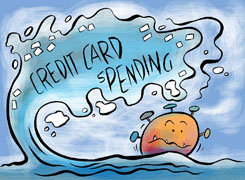
Hi sir I am having credit card due of 6.5 lakh and 2 emi of 20000 and 33000,. Pls confirm how can I close my credit card bill in next 6-7 months. As now I am paying only minimum amt which causing high interest. Is there any option to convert the bal of credit card in EMI. My Salary is 175000 per month

Ans: You have already taken the first strong step—acknowledging the credit burden and actively seeking a structured way out. That shows your commitment.

With a salary of Rs 1.75 lakh per month and a credit card outstanding of Rs 6.5 lakh, it is absolutely possible to close this liability in 6–7 months. Let us look at the most practical path from a 360-degree financial planning lens.

» Understanding the Severity of Credit Card Dues

You are currently paying only the minimum due. This is not sustainable.

Interest on credit cards is usually around 36% to 42% annually.

This compounds rapidly and can almost double the principal in 2 years.

Even Rs 6.5 lakh today can easily grow to over Rs 9 lakh in just 12 months.

So, early action is not optional—it is absolutely necessary.

» Analyse Your Net Surplus Every Month

Your take-home is Rs 1.75 lakh monthly.

Your two EMIs take away Rs 53,000.

Assuming Rs 50,000 for household and lifestyle expenses.

You are left with about Rs 72,000 net surplus every month.

This will be your key tool to fight off the credit card debt.

» Step 1: Stop All Non-Essential Investments Temporarily

Pause SIPs, RDs, or other discretionary investments for 6–7 months.

You are not losing returns; you are avoiding huge interest outflow.

Reinvesting can resume once you are debt-free.

Financial freedom is the priority now.

» Step 2: Check with Credit Card Provider for EMI Conversion

Most banks allow credit card balances to be converted to EMIs.

Interest rates for such EMI conversions are between 12% to 18%.

Compare this to 36%–42% on unpaid credit card balance.

Approach your bank and request to convert Rs 6.5 lakh to 6-month EMI.

If EMI is too large, ask for 9 months, but repay in 6 using prepayment.

Ensure you are not taking a new loan, just restructuring the same amount.

Ask if there is a processing fee or foreclosure charge.

» Step 3: Use a Personal Loan Option (Only if Card EMI Not Available)

A clean personal loan can be cheaper than credit card rollover.

Banks and NBFCs may offer loans at 11% to 15% if your credit score is good.

Apply only if you get lower interest than credit card EMI conversion.

Make sure it’s not a top-up or secured loan.

Avoid peer-to-peer or loan apps due to hidden charges and harassment risk.

» Step 4: Aggressively Prioritise Debt Repayment

Use your Rs 72,000 monthly surplus entirely for repayment.

If card is converted to EMI, pay that and no fresh swiping.

If not converted, pay Rs 60,000 monthly toward principal.

Use snowball method: focus repayment on one card if there are multiple.

Make sure minimum due is paid for the second one to avoid penalty.

» Step 5: Restructure or Prepay High EMI Loans if Needed

If one of your EMIs (Rs 33,000 or Rs 20,000) is personal loan or vehicle loan,
ask bank if tenure can be extended to lower EMI temporarily.

This frees more cash flow monthly.

Rechannel this freed amount toward the card repayment.

You can again prepay EMI loan after credit card is closed.

» Step 6: Avoid Further Credit Card Usage Entirely

Stop using credit card for all types of purchases.

Switch to debit card or cash for 6 months.

Remove credit cards from e-commerce and subscription sites.

If needed, temporarily block the card to avoid temptation.

Use UPI or net banking for digital convenience without further debt.

» Step 7: Use Bonus, Arrears or One-Time Income as Lump Sum

If you receive bonus, incentives, or tax refund, allocate 100% toward repayment.

Every Rs 1 lakh lump sum will cut down interest and tenure.

Sell low-return assets if needed (e.g., jewellery or idle bank deposits).

But don’t touch emergency fund below 3 months’ expenses.

» Step 8: Track Your Progress Weekly

Maintain a Google Sheet or diary.

Record all payments, balances, and EMIs.

Seeing the reducing balance will keep you motivated.

Mark 15th of every month as repayment review day.

» Step 9: Get Guidance From a Certified Financial Planner If Needed

In case you feel overwhelmed, consult a qualified CFP.

They will prioritise your needs over commissions.

Avoid generic online calculators or agents pushing more loans.

Avoid app-based consolidation tools which come with hidden risks.

» Step 10: Plan to Rebuild Once Credit Card Is Closed

Rebuild your emergency fund to cover 6 months’ expenses.

Restart SIPs toward retirement, children’s education, or any goal.

Keep one credit card with low limit for convenience—not credit.

Enable SMS alerts for transactions above Rs 500 for awareness.

Schedule weekly review of credit report every quarter.

» Final Insights

You have strong earning potential with Rs 1.75 lakh salary.

With disciplined steps, credit card debt can be closed within 6–7 months.

Avoid rotating balance or refinancing with high-interest options.

Prefer EMI conversion or personal loan route if offered at lower rate.

Focus on cash flow, cut waste, and be emotionally detached from credit cards.

Once free from this, you'll feel mentally and financially lighter.

Rebuild wisely to ensure this situation doesn’t repeat again.

Best Regards,
K. Ramalingam, MBA, CFP,
Chief Financial Planner,
www.holisticinvestment.in
https://www.youtube.com/@HolisticInvestment
DISCLAIMER: The content of this post by the expert is the personal view of the rediffGURU. Users are advised to pursue the information provided by the rediffGURU only as a source of information to be as a point of reference and to rely on their own judgement when making a decision.
Money

You may like to see similar questions and answers below

Ramalingam

Ramalingam Kalirajan  |10874 Answers  |Ask -

Mutual Funds, Financial Planning Expert - Answered on Mar 13, 2025

Asked by Anonymous - Mar 13, 2025Hindi
Listen
Money
Sir i have multiple loans and credit card bills which sums up 20 lakh and my monthly income is 30k i am not able to pay the emi anymore on time every month i am in deep stress in trying to pay the emi plz help
Ans: Your debt is high, and your income is low. Paying EMIs on time has become difficult. This situation needs an urgent plan.

You are not alone. Many people face similar financial struggles. With the right steps, you can come out of this stress.

Assess Your Debt Situation
Total loan and credit card debt: Rs 20 lakh.

Monthly income: Rs 30,000.

EMIs and credit card bills are unmanageable.

Stress is increasing due to financial burden.

The first step is to stop taking new loans or using credit cards.

Prioritise Your Debts
Credit card debt has the highest interest (30-40% per year).

Personal loans have high EMIs and penalties for delays.

Secured loans (home, car) should be managed to avoid asset loss.

Focus on clearing high-interest debts first.

Negotiate with Banks and Lenders
Contact your bank and request a loan restructuring.

Ask for a lower EMI with a longer repayment period.

Request a moratorium (temporary pause on EMI) if needed.

Convert credit card dues into an EMI loan with a lower interest rate.

Negotiate for a settlement if repayment is impossible.

Banks prefer to restructure loans rather than declare them as defaults.

Debt Consolidation Options
If you have a low-interest secured loan option (like a gold loan), consider using it to clear high-interest credit card debt.

Avoid taking another personal loan to clear old debts. It will worsen your situation.

Increase Your Income
Look for part-time or freelance work for extra income.

If possible, sell unused assets (bike, gadgets, jewelry) to reduce debt.

Discuss with family members for temporary financial help.

Cut Unnecessary Expenses
Reduce spending on non-essential items.

Stop using credit cards immediately.

Follow a strict budget and use cash or debit cards for expenses.

Seek Professional Help
A Certified Financial Planner (CFP) can help create a repayment plan.

If stress is overwhelming, consult a financial counselor or mental health professional.

Final Insights
Your situation is difficult, but a step-by-step plan will help.

Stop new loans and credit card usage immediately.

Contact banks to negotiate for lower EMIs or settlement options.

Increase income through extra work and reduce expenses.

Seek guidance from a Certified Financial Planner.

You are not alone. With the right approach, you can come out of this financial struggle.

Best Regards,

K. Ramalingam, MBA, CFP

Chief Financial Planner,

www.holisticinvestment.in
https://www.youtube.com/@HolisticInvestment

..Read more

Ramalingam

Ramalingam Kalirajan  |10874 Answers  |Ask -

Mutual Funds, Financial Planning Expert - Answered on Jul 15, 2025

Money
Hello Sir, I am 36 years old and my net take home income is 1.70 lakhs per month. I have a sweeping fd of Rs 5 lakhs and have an outstanding loan of rs 33 lakh approx apart from 5 lakh towards car loan. An amount of Rs 36000 and Rs 17000 is deducted every month towards emi. Please suggest me a suitable plan to close emi or any other way to invest wisely to reduce burden.
Ans: You are 36 years old with a steady monthly income of Rs 1.70 lakhs. You have Rs 5 lakhs in a sweeping FD. Your ongoing liabilities include Rs 33 lakhs as a loan and Rs 5 lakhs as car loan. Your current EMIs are Rs 36,000 and Rs 17,000 every month.

Let us understand how to reduce this EMI pressure and also make wise financial choices. A 360-degree view of your situation will help structure the best path forward.

? Current Financial Position

– Your monthly take-home is Rs 1.70 lakhs.
– Your EMI burden is Rs 53,000 per month.
– That is about 31% of your income.
– You have Rs 5 lakhs in a sweeping fixed deposit.

This shows your EMI load is slightly high but still under control. The FD acts as cushion.

? Household Cash Flow Understanding

– After EMIs, your balance is around Rs 1.17 lakhs monthly.
– Out of this, you meet all your living expenses.
– Balance amount, if any, is your investible surplus.

Tracking your monthly spending pattern will show saving potential. That gives room to plan better.

? Analyse Existing Loans

– Rs 36,000 EMI is likely your home or large personal loan.
– Rs 17,000 is probably the car loan.
– Car loan is usually high interest and short term.
– Home loans are long term and may offer tax benefits.

You must classify both properly. Each loan needs a separate repayment approach.

? Loan Prepayment Strategy

– Start by prepaying the car loan.
– It saves interest and finishes early.
– Once done, use that EMI to build a repayment fund.

Don’t break your FD immediately. Instead, create a disciplined EMI-reduction plan.

– Split your Rs 5 lakh FD into two parts.
– One part stays as emergency backup.
– The second part is used partly to prepay the car loan.

Partial prepayment is better than keeping idle funds.

? Emergency Fund Planning

– Always keep 4 to 6 months of expenses as emergency reserve.
– That comes to around Rs 5 to 7 lakhs.
– Since you already have Rs 5 lakhs in FD, this is in place.

Do not touch this fund fully. Keep it separate from investment or loan plans.

? Rebalancing Debt-to-Income Ratio

– With Rs 53,000 EMI on Rs 1.70 lakh income, your debt ratio is 31%.
– Target should be to bring this below 25% within next 12 months.
– This gives better savings and flexibility.

Each time you get bonus or surplus income, divert some to reduce loans.

? Wise Investment Vs. Loan Prepayment

– When loan rate is more than 9%, repayment is better.
– When loan is low interest (below 7.5%) and gives tax benefits, invest.

So car loan must be closed faster. Home loan can run if tax savings help.

But if EMI is mentally stressful, consider partial prepayments every year.

? Creating a Dedicated Loan Repayment Plan

– Fix an amount every month from balance income.
– Treat it like EMI towards “loan closure”.
– Use this money every quarter to prepay.

This builds habit and gives faster results. You don’t need large lump sum always.

? Do Not Ignore Investments While Repaying

– Continue monthly investments even if they are small.
– This gives balance between present and future goals.
– Use SIP route to invest in mutual funds every month.

Loans can’t eat your entire surplus. Wealth must still grow parallelly.

? Ideal Investment Pathway

– Choose a mix of equity and debt based on goals.
– Equity gives long-term growth.
– Debt gives stability and safety.

Use actively managed mutual funds only. Avoid passive index funds.

Index funds only copy the market. No strategy, no risk protection, no sector switching.

Active funds are handled by skilled managers. They move to right sectors. They manage volatility.

In uncertain times, that support matters.

? Disadvantages of Direct Funds

– Direct funds give zero personalised advice.
– They don’t suggest when to switch or stay.
– They don’t monitor your goals or emotions.

Investing through a Certified Financial Planner brings real value.

– CFP will help rebalance your mix.
– Guide you in scheme selection.
– Also plan goal tracking and tax planning.

Direct plans lack this complete support. Regular plans with CFP guidance are better.

? Monthly Budget Allocation Suggestion

– EMI: Rs 53,000
– Expenses: Rs 60,000 (as a general assumption)
– Surplus: Rs 57,000

From this surplus:

– Rs 25,000 can go for loan reduction
– Rs 20,000 into SIP in equity funds
– Rs 12,000 can go to short-term fund or liquid fund

This keeps repayment and investment going together.

? Tax Planning Advantage

– If your large loan is home loan, use full tax benefit.
– Under section 80C and 24(b), you get good deductions.

Plan investments in such a way that they also optimise tax.

? Short-Term Goals vs Long-Term

– For short term like travel or car upgrade, use short duration debt funds.
– For long term like child education, use equity-oriented funds.

Plan each investment goal by time horizon. This avoids panic withdrawals.

? Role of Sweeping FD

– It is a good tool to handle emergencies.
– But interest earned is taxable.
– So don’t keep too much idle there.

Shift some money into tax-efficient mutual funds for better growth.

? Financial Discipline is Key

– Use automatic ECS for SIPs.
– Avoid random spends.
– Review goals every 6 months.
– Avoid new loans unless very necessary.

This builds long-term confidence and financial independence.

? Avoid Real Estate as Investment

– Real estate locks capital for long.
– Has high transaction cost.
– Rental yield is low and liquidity is poor.

Focus more on financial assets which are flexible and tax-efficient.

? Review Insurance

– Ensure you have adequate term insurance for life cover.
– Health insurance for entire family is a must.
– These protect your loans and family in case of any emergency.

Don’t mix investment and insurance.

? Plan for Retirement Now Itself

– Age 36 is perfect time to start planning retirement.
– Create a separate SIP for that.
– Compounding works best when you start early.

Don’t wait till loans are fully over. Begin small, but begin now.

? Final Insights

– You are financially stable with steady income.
– EMI pressure is manageable with structured approach.
– Prioritise car loan closure using part of FD.
– Follow with disciplined partial prepayment of other loan.
– Simultaneously, start monthly SIP in mutual funds.
– Avoid direct and index funds. Go through CFP-managed regular plans.
– Maintain emergency fund at all times.
– Plan each investment with a goal.
– Avoid real estate, new loans, and random investments.
– Review every 6 months with a Certified Financial Planner.

This 360-degree path will give you less stress, better control, and long-term wealth.

Best Regards,
K. Ramalingam, MBA, CFP,

Chief Financial Planner,

www.holisticinvestment.in
https://www.youtube.com/@HolisticInvestment

..Read more

Ramalingam

Ramalingam Kalirajan  |10874 Answers  |Ask -

Mutual Funds, Financial Planning Expert - Answered on Aug 11, 2025

Asked by Anonymous - Aug 11, 2025Hindi
Money
I am 34 year old, i have total debt of 50 lakhs in personal loan which includes 1 lakh of credit card bill too. Emi monthly is 1 lakhs rs and my other fix expenses are 80k. Can you suggest ways to close the loan quicker and my monthly income is 2.1 lakh rs.
Ans: You have shown strength by sharing your full numbers clearly.
This is the first step to making a clear repayment plan.

» Understanding your present position
– You are 34 years old with Rs. 50 lakh total debt.
– Rs. 1 lakh of this is credit card dues.
– Monthly EMI is Rs. 1 lakh.
– Other fixed expenses are Rs. 80,000.
– Monthly income is Rs. 2.1 lakh.
– Surplus after EMI and expenses is around Rs. 30,000.

» Analysing the debt pressure
– EMI is nearly 48% of income, which is very high.
– High EMI ratio increases financial risk if income changes.
– Credit card debt has highest interest among your borrowings.
– Clearing costly debt first will save maximum interest.

» Step 1 – Tackle credit card dues immediately
– Credit card interest is extremely high, often 30–40% yearly.
– Paying minimum amount will not reduce principal fast.
– Use any available savings or bonus to close it fully.
– This will give instant interest savings and reduce stress.

» Step 2 – List all loans with interest rate and tenure
– Rank loans from highest interest to lowest interest.
– Target highest interest loan for prepayment first.
– Keep paying regular EMIs on all loans to avoid penalties.
– Direct surplus and windfalls only to the target loan.

» Step 3 – Increase surplus for prepayment
– Current surplus is about Rs. 30,000 monthly.
– Reduce non-essential spends for next 24–36 months.
– Postpone lifestyle upgrades, holidays, and big purchases.
– This extra can push surplus to Rs. 50,000 or more.

» Step 4 – Explore debt restructuring
– Check if multiple personal loans can be consolidated into one lower-rate loan.
– A single loan with longer tenure can reduce EMI pressure.
– Lower EMI frees up more surplus for targeted prepayment.
– Only restructure if interest rate is lower and costs are minimal.

» Step 5 – Use windfall income effectively
– Any annual bonus, incentives, or extra earnings should go fully into prepayment.
– Avoid spending windfalls on lifestyle expenses until debt is cleared.
– Even one or two large prepayments can cut years from loan tenure.

» Step 6 – Avoid new borrowing
– Do not use credit cards for non-essential expenses until debt is under control.
– Keep only one active card for emergencies.
– Stop any “buy now pay later” or EMI purchases.

» Step 7 – Build a small emergency fund
– Keep at least 2 months’ expenses in a liquid form.
– This prevents taking fresh loans for unexpected costs.
– Build it before doing large prepayments beyond credit card clearance.

» Step 8 – Track progress monthly
– Maintain a debt tracker with all balances and interest saved.
– Seeing numbers go down will keep you motivated.
– Review after every prepayment to adjust focus to next costliest loan.

» Step 9 – Plan for life after debt
– Once debt is cleared, redirect the entire EMI amount to investments.
– This creates strong wealth-building momentum.
– Protect income with term insurance and health cover.

» Psychological benefit of focus
– Closing the costliest loan first gives quick relief.
– Reduced EMI share improves mental comfort.
– Discipline now will free you faster from financial pressure.

» Finally
– Close credit card dues immediately with savings or windfall.
– List and attack highest interest loan next.
– Increase surplus by controlling expenses and avoiding new commitments.
– Use debt consolidation only if it reduces interest meaningfully.
– Keep a basic emergency fund to prevent fresh borrowing.
– Once debt-free, channel EMI money into long-term investments.
– This disciplined plan will help you close loans faster and regain financial stability.

Best Regards,

K. Ramalingam, MBA, CFP,

Chief Financial Planner,

www.holisticinvestment.in
https://www.youtube.com/@HolisticInvestment

..Read more

Latest Questions
Anu

Anu Krishna  |1746 Answers  |Ask -

Relationships Expert, Mind Coach - Answered on Dec 08, 2025

Ramalingam

Ramalingam Kalirajan  |10874 Answers  |Ask -

Mutual Funds, Financial Planning Expert - Answered on Dec 08, 2025

Asked by Anonymous - Dec 08, 2025Hindi
Money
Hi i am 40M. would request your help to understand what should be the corpus required for retirement as i want to get retired in next 3-5yrs. currently my take home is 2.3L monthly & my wife also works but leaving the job in next 2-3 months. we have a daughter 10yrs, currently i stay on rent and total monthly expense is 1.1L month. once i will retire we will shift in our own parental flat, where hopefully there will be no rent. current Investments 1. 50L in REC bonds getting matured in 2029 2. 42L in stocks 3. 17L in MF 4. 16L FD 5. 15L in PPF 6. 1.3L SIP monthly i do My Wife Investments 1. 30L corpus 2. flat with current value 40L and we get rental of 10K monthly. Please guide what should be the retirement corpus required combined to retire, assuming i need 75L for my daughter post grad and marriage and we would be requiring 75K monthly for our expenses after retiring
Ans: You have explained your income, goals, current assets, and future plans with great clarity. Your early planning spirit is strong. This gives a very good base. You can reach a peaceful retirement with smart steps in the next few years.

» Your Current Position

You are 40 years old. You plan to retire in 3 to 5 years. You earn Rs 2.3 lakh per month. Your wife also works but will stop working soon. You have one daughter aged 10. Your current monthly cost is around Rs 1.1 lakh. This cost will reduce after retirement because you will shift to your parental flat.

Your investment base is already good. You have saved in bonds, stocks, mutual funds, PPF, FD, and SIP. Your wife also has her own savings and rental income from a flat. All these create a good starting point.

This early base helps you plan stronger. It also gives room for more shaping. You are on the right road.

» Your Family Goals

You need Rs 75 lakh for your daughter’s higher education and marriage.

You want Rs 75,000 per month for family living after retirement.

You want to retire in 3 to 5 years.

You will shift to your parental flat after retirement.

You will have rental income of Rs 10,000 from your wife’s flat.

These goals are clear. They give direction. They allow a strong plan.

» Your Present Investments

Your investments include:

Rs 50 lakh in REC bonds maturing in 2029.

Rs 42 lakh in stocks.

Rs 17 lakh in mutual funds.

Rs 16 lakh in fixed deposits.

Rs 15 lakh in PPF.

Rs 1.3 lakh as monthly SIP.

Your wife holds:

Rs 30 lakh corpus.

A flat worth Rs 40 lakh with rent of Rs 10,000 each month.

Your combined net worth is healthy. This gives good power to build your retirement fund in the coming years.

» Understanding Your Expense Need After Retirement

You expect Rs 75,000 per month after retirement. This includes all basic needs. You will not have rent. That reduces cost. This assumption looks fair today.

Your cost will rise with inflation. So you must plan for rising needs. A strong retirement corpus must support rising cost for 40 to 45 years because you are retiring early.

An early retirement needs a large buffer. So you need safety along with growth. Your plan must include growth assets and safety assets.

» How Much Monthly Income You Will Need Later

Rs 75,000 per month is Rs 9 lakh per year. In future years, this cost can rise. If we assume steady rise, your future cost will be much higher.

So the retirement corpus must be designed to:

Give monthly income.

Beat inflation.

Support you for 40 to 45 years.

Protect your family even in market down cycles.

Allow flexibility if your needs change.

A strong retirement fund must support both safety and long-term growth.

» How Much Corpus You Should Target

A safe target is a large and flexible corpus that can support long years without running out of money. For early retirement, the usual thumb rule suggests a very high number. This is because you need income for many decades.

You need a corpus big enough to produce rising income. You also need a cushion for unexpected health costs, lifestyle shocks, and inflation changes.

Your target retirement corpus should be in a strong range. For your needs of Rs 75,000 per month and for goals like daughter’s education and marriage, you should aim for a combined retirement readiness corpus in the higher bracket.

A safe range for your family would be a very large number crossing multiple crores. This large range gives you:

Income safety.

Inflation protection.

Peace during market cycles.

Comfort in long life.

Room for daughter’s future.

Strong backup for health.

You are already on the way due to your existing assets. You will reach close to this range with systematic building over the next 3 to 5 years.

» Why You Need This Larger Corpus

You will retire early. That means more years of living from your corpus. Your corpus must not fall early. It must grow even after retirement. It must give monthly income and long-term family protection.

This is only possible when the corpus is strong and well-structured. A weak corpus creates stress. A strong corpus creates freedom.

Also, your daughter’s future cost must be kept aside. This must be parked in a separate fund. This must not touch your retirement money.

A strong corpus makes these two worlds separate and safe.

» Your Existing Assets and Their Strength

You already have good diversification:

Bonds give safety.

Stocks give growth.

Mutual funds give managed growth.

FD gives stability.

PPF gives tax-free long-term savings.

This blend is already a good start. But you need to make the blend more structured for early retirement.

Your Rs 1.3 lakh monthly SIP is also strong. It builds your future fast. You should continue.

Your wife’s rental income is small but steady. This adds strength.

Your combined financial base can reach your retirement target if you refine your allocation now.

» Your Daughter’s Future Fund Need

You need Rs 75 lakh for your daughter’s education and marriage. You should keep this goal separate from your retirement goal.

Your current SIP and future allocations should create a dedicated fund for this goal. A long-term fund can grow well when managed actively.

Do not mix this fund with your retirement needs. Mixing leads to shortage in old age. Always keep this corpus ring-fenced.

» A Strong Asset Mix For Your Retirement Path

A balanced mix is needed. You need growth assets to beat inflation. You also need stable assets for income.

You must avoid index funds because they do not give flexibility. Index funds follow a fixed index. They cannot make active changes in different markets. They cannot move to better stocks when markets change. They force you to stay in weak sectors for long. They also do not help you in down cycles because they cannot protect you by shifting to safer options. This can hurt retirement planning.

Actively managed funds are better because:

They give active asset selection.

They give scope for better returns.

They give flexibility to change sectors.

They give downside management.

They give access to a skilled fund manager.

They support long-term planning more safely.

Direct plans also carry risk. Direct plans do not give guidance. They do not give behavioural support. They do not give market timing help. They do not give portfolio shaping. They leave all the judgement to you. One mistake can cost years of wealth.

Regular plans with guidance from a Certified Financial Planner help you shape decisions. They help you remain disciplined. They help you avoid panic. They help you decide allocation changes at the right time. This saves wealth in long-term.

» How Your Investment Journey Should Grow in the Next 3–5 Years

Continue your SIP.

Increase SIP when your income rises.

Shift part of your stock holding into planned long-term mutual funds to reduce concentration risk.

Build a defined daughter’s education fund.

Keep a part of your REC bond maturity amount for long-term.

Avoid locking too much into fixed deposits for long periods.

Build a safety fund for one year of expenses.

This will create a full structure.

» Your Rental Income Role

Your rental income of Rs 10,000 per month is small but steady. Over time it will rise. This income will support your monthly cash flow after retirement.

You can use this for utilities or health insurance premiums. This gives a cushion.

» Your Emergency Buffer

You should keep at least one year of essential cost in a safe place. This can be in a liquid account or short-term fund. This protects you in shocks.

Since you plan early retirement, a strong buffer is important. It gives peace even in low months.

» A Structured Retirement Approach

A complete retirement plan for you should include:

A clear monthly income plan after retirement.

A corpus that can grow and protect.

A rising income system that matches inflation.

A separate daughter’s future fund.

A health cover plan for your family.

A tax-efficient withdrawal plan.

A market cycle plan to protect you in tough times.

This holistic approach keeps your family strong for decades.

» What You Should Build by Retirement Year

Your aim should be to reach a strong multi-crore range in investments before retirement. You already hold a large amount. You will add more in the next 3 to 5 years through SIP, stock growth, bond maturity, and disciplined saving.

Once you reach your target range, you can start the shifting process:

Move a part to stable assets.

Keep a part in long-term growth assets.

Create a monthly income strategy.

Keep a reserve bucket.

Keep a child future bucket.

Keep a long-term growth bucket.

This structure protects you in all market conditions.

» Final Insights

Your financial journey is already strong. You have a good income. You have saved well. You have multiple asset types. You have a clear timeline. And you have clear goals. This foundation is solid.

In the next 3 to 5 years, your focus should be on growing your combined corpus to a strong multi-crore range, keeping a separate fund for your daughter, reducing risk in unplanned assets, and building a stable long-term structure.

With the present path and a disciplined structure, you can retire peacefully and support your family with confidence for many decades.

Best Regards,

K. Ramalingam, MBA, CFP,
Chief Financial Planner,
www.holisticinvestment.in

https://www.youtube.com/@HolisticInvestment

...Read more

Samraat

Samraat Jadhav  |2499 Answers  |Ask -

Stock Market Expert - Answered on Dec 08, 2025

Ramalingam

Ramalingam Kalirajan  |10874 Answers  |Ask -

Mutual Funds, Financial Planning Expert - Answered on Dec 08, 2025

Money
Hello my name is saket, I monthly salary is 43k and my saving is zero. My Rent is 15 k and 10 k i send to my parents. How can i save money and investments.
Ans: 1. Your Current Monthly Numbers

Salary: Rs 43,000

Rent: Rs 15,000

Support to parents: Rs 10,000

Left with: Rs 18,000 for food, travel, bills, and savings

You have very little room, but saving is still possible if done smartly.

2. First Step: Build a Small Emergency Buffer

You must build Rs 10,000 to Rs 20,000 emergency money.
This protects you from taking loans for small issues.

How to build it:

Save Rs 3,000 to Rs 5,000 every month in a simple bank savings account

Do this for the next few months

Don’t touch it unless truly needed

3. Create a Mini Budget (Very Simple One)

Try this split from the remaining Rs 18,000:

Daily living (food + transport): Rs 10,000 – 11,000

Personal expenses (phone, internet, basics): Rs 3,000 – 4,000

Savings + investments: Rs 3,000 – 5,000

If this feels difficult, reduce food/transport costs by small adjustments.

4. Where to Invest Once You Have Emergency Money

(For minors: This is general education. For actual investing, get guidance from a trusted adult or family member.)

After you build emergency money, start small monthly investing.

You can begin with:

Rs 1,000 to Rs 2,000 SIP in a simple, diversified equity fund

Increase the SIP whenever salary increases or expenses reduce

Avoid complicated products.
Keep it simple.
Focus on consistency.

5. Easy Practical Ways to Increase Saving

These small moves help a lot:

Avoid food delivery

Use public transport as much as possible

Reduce subscriptions you don’t use

Fix a daily expense limit

Keep a separate bank account only for savings

Even Rs 200 saved daily = Rs 6,000 monthly.

6. Increase Income Slowly

Try small income boosters:

Weekend tutoring

Freelancing

Part-time projects

Selling old gadgets

Learning new skills for future salary growth

Even Rs 3,000 extra income changes your savings life.

7. Build the Habit First

The amount doesn’t matter in the beginning.
The habit matters more.

Even saving Rs 500 every month is better than zero.
Once salary grows, you will already know how to save.

Best Regards,

K. Ramalingam, MBA, CFP,

Chief Financial Planner,

www.holisticinvestment.in

https://www.youtube.com/@HolisticInvestment

...Read more

DISCLAIMER: The content of this post by the expert is the personal view of the rediffGURU. Investment in securities market are subject to market risks. Read all the related document carefully before investing. The securities quoted are for illustration only and are not recommendatory. Users are advised to pursue the information provided by the rediffGURU only as a source of information and as a point of reference and to rely on their own judgement when making a decision. RediffGURUS is an intermediary as per India's Information Technology Act.

Close  

You haven't logged in yet. To ask a question, Please Log in below
Login

A verification OTP will be sent to this
Mobile Number / Email

Enter OTP
A 6 digit code has been sent to

Resend OTP in120seconds

Dear User, You have not registered yet. Please register by filling the fields below to get expert answers from our Gurus
Sign up

By signing up, you agree to our
Terms & Conditions and Privacy Policy

Already have an account?

Enter OTP
A 6 digit code has been sent to Mobile

Resend OTP in120seconds

x