Home > Money > Question
Need Expert Advice?Our Gurus Can Help

Ramalingam

Ramalingam Kalirajan  |10870 Answers  |Ask -

Mutual Funds, Financial Planning Expert - Answered on Aug 28, 2025

Ramalingam Kalirajan has over 23 years of experience in mutual funds and financial planning.
He has an MBA in finance from the University of Madras and is a certified financial planner.
He is the director and chief financial planner at Holistic Investment, a Chennai-based firm that offers financial planning and wealth management advice.... more

Sagar Question by Sagar on Aug 03, 2025Hindi
Money

I have a emi of 59k per month for 64 Month..(interest rate 7.6) my salary is 95k Should I lower the emi or tenure by preparing? I have saving of 3L(emergency fund) I also want to start mutual fund sip please suggest a fund

Ans: You are thinking in the right direction. Managing EMI, savings, and investments together shows clarity. Keeping an emergency fund of Rs. 3 lakh is also wise. Many people ignore this step. You have taken care of it. That gives you safety during unexpected times.

» Understanding Your Current Situation
You earn Rs. 95,000 per month. Your EMI is Rs. 59,000. That is a big share of income. Your EMI tenure left is 64 months. Interest rate is 7.6%. You also want to start a mutual fund SIP. This is good because investing early matters. But you must balance EMI and investment well.

» Should You Lower EMI or Tenure?
You have two options: reduce EMI or reduce tenure. Reducing EMI will improve cash flow now. But it will increase interest paid in long term. Reducing tenure needs higher EMI or lump sum prepayment. This will save big on interest cost. So, if you can afford, prepay to reduce tenure, not EMI. Lower EMI should be last choice because it delays debt freedom.

» How Prepayment Helps You
Prepayment brings peace. It reduces outstanding faster. Your interest burden comes down. Even a small prepayment every year can save lakhs in interest. With your income, check if you can use yearly bonus or extra cash for prepayment. This keeps EMI same but tenure becomes shorter. That is the best way.

» Should You Start SIP Now?
Yes, SIP is important. But timing matters when EMI is high. First priority is to ensure cash flow is safe. You already have an emergency fund of Rs. 3 lakh. That is good. Do not use that for prepayment. It is your safety net. If after EMI and expenses you still save Rs. 10,000 or more, start SIP. Even Rs. 5,000 monthly SIP is good to begin. Later increase SIP when EMI is gone.

» Selecting the Right Type of Mutual Fund
You asked for fund suggestion. But let us first decide category. Your goal seems long term because EMI ends in 5 years. So, start with equity-oriented mutual funds. They give growth and beat inflation. For a balanced start, choose actively managed diversified funds. Avoid direct plans because they lack expert support. Regular plan through a Certified Financial Planner gives guidance and rebalancing.

» Why Not Direct Plans?
Direct plans look cheap on expense ratio. But they do not give personal advice. Investors make mistakes without expert review. Mistakes cost more than saved expense. Regular plans through CFP with MFD give handholding. They monitor portfolio and adjust when needed. This avoids panic in market falls.

» Why Not Index Funds?
Some people suggest index funds. But index funds just copy the index. They cannot control risk during falls. They do not beat the market. Actively managed funds can outperform and manage downside better. In retirement planning and wealth creation, this is helpful.

» SIP Allocation Strategy
Start small now. Focus on stability and growth. You can choose:

One large and mid-cap fund for steady growth.

One flexi-cap fund for allocation freedom.

One hybrid aggressive fund for balanced risk.
Avoid sector funds or thematic funds now. They are risky for beginners. Increase SIP after EMI ends. You can target Rs. 40,000 to Rs. 50,000 SIP then. That builds strong corpus.

» Emergency Fund Adequacy
Your Rs. 3 lakh emergency fund equals about 3 months’ expenses. That is okay. Try to increase it to 6 months gradually. Do this before you start high SIP. Safety first. Keep emergency money in liquid mutual fund or savings account, not in equity.

» Tax and Cash Flow Planning
Your EMI and SIP will run together for 64 months. Check if you get tax benefit on home loan under section 80C and 24(b). That reduces tax and increases savings. For SIP, choose growth option for long term compounding. Do not select dividend because it disturbs compounding.

» Risk Management for Next Few Years
Your main risk is high EMI share. So, keep investments flexible. Do not lock in money in long lock-in schemes like ELSS now unless you need tax benefit. Focus on liquidity and growth together. Avoid taking any new loans until EMI ends.

» Action Plan Step by Step

Continue EMI regularly.

Use bonus or extra income for prepayment to reduce tenure.

Keep emergency fund safe.

Start small SIP of Rs. 5,000 to Rs. 10,000 in equity mutual funds.

Increase SIP after EMI is cleared.

Review plan every year with Certified Financial Planner.

» Finally
You are already in a good position because you think smart. Do not lower EMI. Reduce tenure through prepayment when possible. Start SIP now but keep it small. Use equity funds for long-term growth. Keep emergency fund safe and sufficient. Stay disciplined and review yearly. This will help you become debt-free and build wealth together.

Best Regards,

K. Ramalingam, MBA, CFP,

Chief Financial Planner,

www.holisticinvestment.in

https://www.youtube.com/@HolisticInvestment
DISCLAIMER: The content of this post by the expert is the personal view of the rediffGURU. Users are advised to pursue the information provided by the rediffGURU only as a source of information to be as a point of reference and to rely on their own judgement when making a decision.
Money

You may like to see similar questions and answers below

Ramalingam

Ramalingam Kalirajan  |10870 Answers  |Ask -

Mutual Funds, Financial Planning Expert - Answered on Jul 11, 2024
Asked by Anonymous - Jul 01, 2024Hindi
Listen
Money
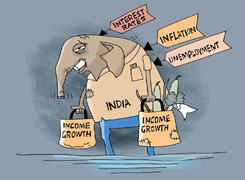
With income of 30k I am paying 50k emi monthly. I want to reduce the amount or extend tenure I spoke with lenders not working. So I want to reduce the emi burden and extend tenure. I have option but interest is higher I will have to pay more every month and finish it fast. I have loan offer of 1 lakh at 35% pa
Ans: Reducing EMI Burden and Extending Loan Tenure

Understanding Your Current Situation
Your income is Rs. 30,000, but your monthly EMI is Rs. 50,000.

That's a challenging situation. It’s understandable you want to reduce your EMI burden.

Evaluating Current Loan Options
You've spoken with lenders but have found no success.

The offered loan at 35% per annum is quite high.

Why Reducing EMI is Important
Reducing your EMI is crucial for financial stability. It allows you to manage your expenses better and avoid debt traps.

Extending Loan Tenure
Extending the tenure can lower your monthly EMI. But, it increases the overall interest paid.

Let’s evaluate if it’s beneficial for you.

Higher Interest Rate Concerns
A higher interest rate means paying more in the long run.

It can seem like a quick fix but might not be financially sound.

Assessing Loan Offers
Carefully assess any loan offers, especially those with high interest rates.

A 35% interest rate can lead to significant financial strain.

Certified Financial Planner's Insight
A Certified Financial Planner (CFP) can provide detailed advice.

They can help you understand the long-term impact of your decisions.


Evaluating Your Investment Goals
Define clear investment goals.

Short-term and long-term goals will help in choosing the right mutual funds.

Emergency Fund Creation
Create an emergency fund.

It acts as a financial cushion in case of unforeseen expenses.

Managing Monthly Expenses
Track your monthly expenses closely.

Cut down on unnecessary spending to manage your EMIs better.

Strategic Debt Management
Debt management strategies can help.

Prioritize high-interest loans and plan to pay them off first.

Using SIPs for Investment
Systematic Investment Plans (SIPs) in mutual funds are effective.

They promote disciplined investing and take advantage of rupee cost averaging.

Evaluating Loan Offers with a CFP
A CFP can help you evaluate loan offers.

They can guide you on whether extending tenure or opting for higher interest rates is beneficial.

Avoiding High-Interest Loans
Avoid high-interest loans if possible.

They can lead to more financial stress and debt accumulation.

Alternative Loan Restructuring Options
Discuss alternative restructuring options with your lender.

Sometimes, lenders may offer better terms when approached strategically.

Long-Term Financial Planning
Long-term financial planning is crucial.

A CFP can help you develop a sustainable plan to manage debt and invest wisely.

Understanding the Impact of High EMIs
High EMIs can impact your quality of life.

It’s essential to balance loan repayments with your daily needs.

Exploring Government Schemes
Check if any government schemes can assist with loan restructuring.

Some schemes offer lower interest rates or better terms.

Seeking Professional Advice
Always seek professional advice.

A CFP can provide tailored advice to fit your unique financial situation.

Final Insights
Managing high EMIs with a limited income is challenging.

Carefully assess all loan options, consider investing in mutual funds for better returns, and consult a Certified Financial Planner for personalized advice.

Prioritize creating an emergency fund and managing monthly expenses effectively.

Avoid high-interest loans and explore alternative restructuring options with your lender.

With strategic planning and professional guidance, you can achieve financial stability and reduce your EMI burden over time.

Best Regards,

K. Ramalingam, MBA, CFP,

Chief Financial Planner,

www.holisticinvestment.in

..Read more

Ramalingam

Ramalingam Kalirajan  |10870 Answers  |Ask -

Mutual Funds, Financial Planning Expert - Answered on Dec 23, 2024

Listen
Money
Hi I am 50 years now and presently I am working in a pharma sales. I need a corpus of 7 cr in next 5 years. I have 2 daughters ages 18 yrs and 11 yrs. I got a monthly salary after deductions 2.3laks per month. But every month my emi hors 1.65 laks. My overall property value now 3cr as per market value today. I am investing monthly SIP of Rs. 42000 and my total SIP invested value as on date is 23.85 laks since 2014 in different funds in midcap and small cap and the present value is 49 laks, also my PF is around 15 laks,.PPF is 3.5 laks and also I am investing ICICI signature growth which i have invested lumpsum amount of 7 lakhs for 3 yrs back and today the value is 14 lakhs. Also I am getting a monthly rental value in amount rs. 45000 per month. Plz suggest how I can reduce my emi and i would like to.plan for my retirement, my both the daughters education and marriage.
Ans: You have outlined a complex financial situation. You are working towards multiple goals, which require strategic planning. Your current financial position indicates significant strengths, but there is also a need for optimisation.

1. Evaluate Your EMI Burden
Your EMI of Rs. 1.65 lakh is consuming 72% of your monthly salary.

This is a high debt-to-income ratio. Reducing EMIs is essential for liquidity.

Contact your lender to restructure the loan. Extend the tenure to reduce monthly payments.

Use part of your liquid investments, like PPF or ICICI growth, to prepay a portion of the loan.

2. Planning for Retirement
You aim for Rs 7 crore in 5 years. This is an ambitious goal.

Start by maximising your SIP contributions. Increase your SIP gradually every year.

Allocate more to equity funds, especially large-cap and flexi-cap categories.

Balanced advantage funds can provide stability to your portfolio as you near retirement.

3. Education and Marriage Planning for Daughters
For Your Elder Daughter (18 years old):
Higher education expenses may arise soon.

Avoid withdrawing from equity investments for this need.

Use your monthly rental income or fixed income instruments like PPF.

For Your Younger Daughter (11 years old):
Invest in equity mutual funds for her education and marriage.

Set aside a portion of your rental income for her future needs.

Review the investments periodically to ensure they align with her goals.

4. Review Your Current Investments
Your SIP investments have grown significantly. Continue investing in mid-cap and small-cap funds.

Add large-cap and flexi-cap funds for diversification and stability.

Your ICICI signature growth plan has performed well. Assess the exit charges and tax implications if you plan to redeem.

Your PPF and PF are safe investments. Continue contributing to them for fixed returns.

5. Build an Emergency Fund
Maintain an emergency fund equal to 6 months of expenses.

Use liquid mutual funds or fixed deposits for this purpose.

This fund will help avoid financial strain during unexpected situations.

6. Tax Planning
Your rental income and mutual fund gains are taxable.

Long-term capital gains (LTCG) on equity funds above Rs 1.25 lakh are taxed at 12.5%.

Short-term capital gains (STCG) are taxed at 20%.

Debt mutual funds are taxed as per your income tax slab.

Consult with a Certified Financial Planner to optimise tax savings.

7. Insurance Planning
Ensure you have adequate life and health insurance.

Term insurance should cover at least 10 times your annual income.

Health insurance is essential for your family’s security.

8. Strategic Use of Property
Your property value of Rs 3 crore is a significant asset.

Avoid selling the property unless it is the only option to reduce debt.

Consider generating additional rental income if possible.

9. Set Clear Financial Goals
Prioritise your goals: retirement, education, and marriage.

Assign specific timelines and amounts for each goal.

Review and adjust your financial plan annually.

Finally
You are in a challenging yet promising financial situation. Focus on reducing debt, increasing investments, and planning systematically for your goals. Seek professional guidance to optimise your portfolio and achieve financial stability.

Best Regards,

K. Ramalingam, MBA, CFP,

Chief Financial Planner,

www.holisticinvestment.in
https://www.youtube.com/@HolisticInvestment

..Read more

Ramalingam

Ramalingam Kalirajan  |10870 Answers  |Ask -

Mutual Funds, Financial Planning Expert - Answered on May 14, 2025

Asked by Anonymous - May 13, 2025
Money
Namaste sir, I am 38 years old and having monthly salary of around 1.5 lakhs, I took home loan of 6869000 from Bank of Baroda with ROI at 8.45% in 2024 for 250 months, which leads to EMI of 59480. I did a pre payment of 2 lakhs within first 6 months, I am planning to do an extra EMI every year. I have around 25k SIP towards MF(spread across large cap, midcap and small cap) I have FD of around 8L as emergency fund. Please suggest me any changes required in my approach. I have monthly expenses of around 60k(house maintenance, parents and self health insurance)
Ans: You are 38 years old, with Rs. 1.5 lakh monthly income.
You have a home loan of Rs. 68.69 lakh at 8.45% interest.
You are paying Rs. 59,480 as EMI for 250 months.
You did a prepayment of Rs. 2 lakh in the first 6 months.
You are planning to make one extra EMI every year.
You are investing Rs. 25,000 monthly in mutual funds.
Your SIP is diversified across large, mid, and small-cap.
You have Rs. 8 lakh in FD as an emergency fund.
Your monthly expenses are around Rs. 60,000.

Your approach is strong and structured. Let us now assess in detail.

1. Loan Management Strategy

You started prepayment in the first year itself. That is a very wise decision.

Your idea to pay an extra EMI each year is a great discipline.

This reduces your interest cost significantly over the long term.

Continue this pattern without breaking the cycle.

If possible, increase the prepayment amount as your salary grows.

Ensure you inform the bank clearly to adjust this as principal reduction.

Do not extend tenure while doing prepayments. Always reduce tenure.

Track interest statements yearly to measure progress of repayment.

Avoid taking any fresh loans during this tenure.

Any bonus or arrears should go towards prepayment first.

2. Emergency Fund Evaluation

Rs. 8 lakh FD as an emergency fund is a very strong cushion.

Your expenses are Rs. 60,000 per month. So you have over 12 months of coverage.

That is sufficient and a sign of thoughtful planning.

Keep this FD linked to a savings account for liquidity.

Prefer sweep-in FDs or flexi-FDs if your bank allows.

Keep emergency corpus untouched unless actual emergency happens.

Replenish the FD immediately after any withdrawal.

3. Mutual Fund Investment Approach

SIP of Rs. 25,000 monthly is a strong habit. Keep continuing.

You have spread investments across large, mid, and small-cap. Good diversification.

Avoid direct funds. They seem cheaper but carry hidden behavioural costs.

Regular plans through a qualified Mutual Fund Distributor (with CFP) are better.

A Certified Financial Planner guides portfolio changes during market cycles.

This helps prevent panic redemption or poor fund switches.

Active funds managed by professionals can beat market returns.

Index funds lack active risk management. They mirror the market blindly.

Active funds have better downside protection and consistent alpha generation.

Always invest based on financial goals. Don't choose funds just by past returns.

Review your mutual fund portfolio once every 6 months.

Ensure proper allocation between equity and hybrid funds.

You can add hybrid funds to manage volatility.

If your goals are within 5 years, avoid small-cap funds.

For retirement or long-term goals, continue with equity allocation.

Increase SIP amount yearly based on salary hike.

4. Insurance Protection for Family

You mentioned expenses include health insurance. That’s good to note.

Ensure you have at least Rs. 10 lakh family floater plan.

Add Rs. 5 lakh top-up or super top-up plans if budget permits.

Maintain separate health cover for parents, not combined.

If your parents are above 60, choose senior citizen health policies.

Ensure you have term insurance of at least 15 to 20 times your yearly income.

Term insurance is low-cost and provides high coverage.

Do not mix insurance with investment.

Avoid ULIPs, money-back or endowment policies.

If you already have any such policies, assess the surrender value.

Consider moving to mutual funds instead for wealth creation.

Health and life cover must be reviewed yearly.

5. Budgeting and Cash Flow Management

You save over Rs. 30,000 monthly after EMI and expenses.

Keep part of that for planned home improvement or maintenance.

Maintain a separate bank account only for investments and prepayments.

Avoid impulsive spending from savings account.

If any other loan exists, try to close them first.

Avoid spending on credit cards unless you pay full amount.

Use mobile apps to track monthly cash flows.

Check credit score every year to stay informed.

Reassess spending patterns yearly with inflation.

6. Goal Based Planning

Define short, mid, and long-term goals.

For example, children’s education, car replacement, retirement, travel.

Assign timelines and expected cost for each goal.

Align mutual funds to each goal based on horizon.

Short-term goals need low-risk funds like hybrid or debt-oriented funds.

Long-term goals can use equity or multi-cap funds.

Use SIPs for long-term goals and lumpsum for short-term needs.

If you have children, plan for their college fund from now.

Education inflation is very high in India.

Use goal calculators with guidance from a Certified Financial Planner.

Don’t delay setting up each goal’s investment.

7. Tax Planning Assessment

Use Section 80C limit of Rs. 1.5 lakh smartly.

Avoid PPF unless needed. Mutual fund ELSS can be better for wealth creation.

ELSS has a lock-in of 3 years, shortest among tax-saving options.

Claim home loan principal under 80C and interest under Section 24(b).

File ITR every year on time with proper declaration.

Maintain investment proofs, premium receipts, loan statements.

For mutual fund gains, understand taxation properly.

Equity funds have 12.5% tax on LTCG above Rs. 1.25 lakh.

Short-term gains on equity taxed at 20%.

Debt fund gains taxed as per your income slab.

Plan redemptions and switch timing to manage taxes efficiently.

8. Retirement Preparedness Check

You are 38 now. You still have over 20 years to retire.

Your SIPs and loan prepayments are helping your retirement indirectly.

But consider setting up a separate retirement fund now.

Use diversified equity funds and hybrid funds for this.

Increase SIPs yearly to match your retirement target.

Estimate your post-retirement monthly need today.

Account for inflation and rising medical expenses.

Avoid delaying retirement planning further. Time is more valuable than money.

Your consistent investment can give compounding benefits.

9. Avoid Common Mistakes

Don’t stop SIPs during market corrections.

Don’t switch funds frequently chasing performance.

Don’t rely only on employer health cover.

Don’t mix insurance and investment.

Don’t withdraw from emergency fund for planned goals.

Don’t invest in real estate for rental income or tax saving.

Don’t invest based on friend or social media advice.

10. Additional Recommendations

Create a Will or nomination for all accounts.

Ensure all your investments are properly documented.

Keep your spouse informed about investments and loans.

Review loan insurance if taken during home loan process.

Use a single consolidated app or platform for investment tracking.

Store important documents in cloud-based vault.

Maintain a checklist for annual financial review.

Finally

Your financial foundation is very strong.

You are doing SIPs regularly, repaying loan smartly, and saving consistently.

You have health insurance and emergency fund in place.

These are great financial habits to maintain.

Now focus on goal planning and better fund alignment.

Keep increasing SIPs, continue prepayment, and avoid distractions.

Use a Certified Financial Planner to review your plan every year.

Your goals can be achieved with patience and consistency.

Make small improvements every year. They bring big results.

Best Regards,

K. Ramalingam, MBA, CFP,

Chief Financial Planner,

www.holisticinvestment.in
https://www.youtube.com/@HolisticInvestment

..Read more

Latest Questions
Ravi

Ravi Mittal  |676 Answers  |Ask -

Dating, Relationships Expert - Answered on Dec 04, 2025

Asked by Anonymous - Dec 02, 2025Hindi
Relationship
My married ex still texts me for comfort. Because of him, I am unable to move on. He makes me feel guilty by saying he got married out of family pressure. His dad is a cardiac patient and mom is being treated for cancer. He comforts me by saying he will get separated soon and we will get married because he only loves me. We have been in a relationship for 14 years and despite everything we tried, his parents refused to accept me, so he chose to get married to someone who understands our situation. I don't know when he will separate from his wife. She knows about us too but she comes from a traditional family. She also confirmed there is no physical intimacy between them. I trust him, but is it worth losing my youth for him? Honestly, I am worried and very confused.
Ans: Dear Anonymous,
I understand how difficult it is to let go of a relationship you have built from scratch, but is it really how you want to continue? It really seems to be going nowhere. His parents are already in bad health and he married someone else for their happiness. Does it seem like he will be able to leave her? So many people’s happiness and lives depend on this one decision. I think it’s about time you and your BF have a clear conversation about the same. If he can’t give a proper timeline, please try to understand his situation. But also make sure he understands yours and maybe rethink this equation. It really isn’t healthy. You deserve a love you can have wholly, and not just in pieces, and in the shadows.

Hope this helps

...Read more

Mayank

Mayank Chandel  |2562 Answers  |Ask -

IIT-JEE, NEET-UG, SAT, CLAT, CA, CS Exam Expert - Answered on Dec 04, 2025

Career
My son will be appearing for JEE Main & JEE Advanced 2026 and will participate in JoSAA Counselling 2026. I request clarification regarding the GEN-EWS certificate date requirement for next year. I have already applied for an EWS certificate for current year 2025, and the application is under process. However, I am unsure whether this certificate will be accepted during JoSAA 2026, or whether candidates will be required to submit a fresh certificate for FY 2026–27 (issued on or after 1 April 2026). My concern is that if JoSAA requires a certificate issued after 1 April 2026, students will have only 1–1.5 months to complete the entire procedure, which is difficult considering normal government processing timelines. Also, during current JEE form filling, students are asked to upload a GEN-EWS certificate issued on or after 1 April 2025, or an application acknowledgement. This has created confusion among parents regarding which year’s certificate will finally be valid at the time of counselling. I request your kind guidance on: Which GEN-EWS certificate will be accepted for JoSAA Counselling 2026 — a certificate for FY 2025–26 (issued after 1 April 2025), or a new certificate for FY 2026–27 (issued after 1 April 2026)?
Ans: Hi
You need not worry about the EWS certificate. Even if you apply for the next year's certificate on 1 Apr 2026, the second session of JEE MAINS will still be held, followed by JEE ADVANCED, which will be held in May. JOSAA starts in June. so you will have 2 months in hand for fresh EWS certificate.

...Read more

DISCLAIMER: The content of this post by the expert is the personal view of the rediffGURU. Investment in securities market are subject to market risks. Read all the related document carefully before investing. The securities quoted are for illustration only and are not recommendatory. Users are advised to pursue the information provided by the rediffGURU only as a source of information and as a point of reference and to rely on their own judgement when making a decision. RediffGURUS is an intermediary as per India's Information Technology Act.

Close  

You haven't logged in yet. To ask a question, Please Log in below
Login

A verification OTP will be sent to this
Mobile Number / Email

Enter OTP
A 6 digit code has been sent to

Resend OTP in120seconds

Dear User, You have not registered yet. Please register by filling the fields below to get expert answers from our Gurus
Sign up

By signing up, you agree to our
Terms & Conditions and Privacy Policy

Already have an account?

Enter OTP
A 6 digit code has been sent to Mobile

Resend OTP in120seconds

x