Home > Money > Question
Need Expert Advice?Our Gurus Can Help

Ramalingam

Ramalingam Kalirajan  |10874 Answers  |Ask -

Mutual Funds, Financial Planning Expert - Answered on May 20, 2024

Ramalingam Kalirajan has over 23 years of experience in mutual funds and financial planning.
He has an MBA in finance from the University of Madras and is a certified financial planner.
He is the director and chief financial planner at Holistic Investment, a Chennai-based firm that offers financial planning and wealth management advice.... more
Asked by Anonymous - May 19, 2024Hindi

Listen
Money

I am a bank employee earning net income after NPS deduction 7.68 LPA. I am living in a semi urban area. But after all the expenses I can only manage to save 1lakh per year. Please suggest me some investing option.

Ans: As a bank employee with a net annual income of ?7.68 lakhs, you are managing to save ?1 lakh per year despite living in a semi-urban area with various expenses. Your ability to save is commendable, and focusing on strategic investments will help grow your wealth effectively.

Assessing Your Savings and Investment Goals
First, let's understand your financial goals and risk tolerance. You want to ensure that your savings grow over time and provide financial security. Since you save ?1 lakh annually, investing this amount wisely can significantly enhance your financial position.

Building an Investment Strategy
Start with a Solid Foundation
Emergency Fund: Ensure you have an emergency fund covering at least six months of living expenses. This should be kept in a liquid fund or a high-interest savings account for easy access.

Insurance: Adequate life and health insurance are crucial. Ensure you have sufficient coverage to protect yourself and your family from unexpected events.

Systematic Investment Plans (SIPs)
Equity Mutual Funds: Investing in actively managed equity mutual funds through SIPs can provide good returns over the long term. Equity funds are managed by professionals who actively select stocks, potentially outperforming the market.

Advantages over Index Funds: Unlike index funds that passively track an index, actively managed funds can adapt to market changes. This flexibility can lead to better performance, especially in volatile markets.

Diversify with Debt Investments
Debt Mutual Funds: Include debt mutual funds in your portfolio for stability. These funds invest in fixed-income securities, offering lower risk and steady returns.

Public Provident Fund (PPF): Continue or start investing in PPF. It offers tax benefits, and the interest earned is tax-free. The lock-in period ensures disciplined long-term savings.

Regular vs. Direct Funds
Regular Funds through a CFP: Regular mutual funds, managed by a Certified Financial Planner (CFP), provide professional oversight and strategic management. This helps optimize your portfolio and align investments with your goals.

Disadvantages of Direct Funds: Direct funds have lower expense ratios but require more active management and market knowledge. Investing through a CFP ensures professional guidance, reducing the burden on you.

Review and Adjust Your Investments
Regular Reviews: Periodically review your investment portfolio with a CFP. This ensures your investments are aligned with your goals and market conditions.

Adjust Contributions: As your income grows, increase your SIP contributions. Even a small increase can significantly impact your long-term savings.

Implementing Your Investment Plan
Step-by-Step Approach
Establish Emergency Fund: Prioritize building an emergency fund if you don't already have one.

Start SIPs: Begin with equity and debt mutual fund SIPs. Allocate a portion of your ?1 lakh annual savings to each based on your risk tolerance and goals.

Utilize PPF: Continue contributing to PPF for its tax benefits and secure returns.

Professional Guidance: Engage with a CFP to manage your investments, ensuring they are optimized and aligned with your financial goals.

Monitoring and Flexibility
Stay Informed: Keep yourself informed about market trends and financial news. This helps you understand the context of your investments.

Be Flexible: Be prepared to adjust your investment strategy as needed. Life circumstances and market conditions can change, requiring a flexible approach.

Conclusion
By strategically investing your ?1 lakh annual savings in a mix of equity and debt mutual funds, PPF, and through professional guidance, you can grow your wealth and achieve financial security. Regular reviews and adjustments ensure your investments stay on track with your goals.

Best Regards,

K. Ramalingam, MBA, CFP,

Chief Financial Planner,

www.holisticinvestment.in
DISCLAIMER: The content of this post by the expert is the personal view of the rediffGURU. Users are advised to pursue the information provided by the rediffGURU only as a source of information to be as a point of reference and to rely on their own judgement when making a decision.
Money

You may like to see similar questions and answers below
Anil

Anil Rego  | Answer  |Ask -

Financial Planner - Answered on Nov 03, 2021

Ramalingam

Ramalingam Kalirajan  |10874 Answers  |Ask -

Mutual Funds, Financial Planning Expert - Answered on Apr 02, 2024
Asked by Anonymous - Mar 06, 2024Hindi
Listen
Money
I am a 38 year old working woman with a toddler and aged mom to look after. Current income is around 15lac per annum and m living in metro city. Currently I have around 10lac as savings. I want to invest the same for the future of my kid and myself.I have started SSY child, PPF and NPS too. plz suggest good way of investing the above said amount.
Ans: Given your current situation and financial goals, here's a suggested approach to investing your savings:

Emergency Fund: Ensure you have a sufficient emergency fund equivalent to at least 6-12 months of your expenses. This fund should be easily accessible in case of unexpected expenses or emergencies.

Child's Future: Continue contributing to the Sukanya Samriddhi Yojana (SSY) for your child's future education and other needs. Additionally, consider investing in other child-specific investment options like education savings plans or mutual funds.

Retirement Planning: Continue contributing to the Public Provident Fund (PPF) and National Pension System (NPS) for your retirement. Both provide tax benefits and long-term savings opportunities. Ensure you are allocating appropriate amounts to these accounts based on your retirement goals and risk tolerance.

Wealth Creation: With the remaining savings, consider investing in a diversified portfolio of mutual funds. Allocate funds across various categories like large-cap, mid-cap, small-cap, and balanced funds based on your risk tolerance and investment horizon. Regularly review and adjust your portfolio as needed to stay aligned with your financial goals.

Insurance: Ensure you have adequate life and health insurance coverage for yourself and your family members to provide financial security in case of unforeseen circumstances.

Estate Planning: Consider consulting with a financial advisor or estate planner to create a comprehensive estate plan that addresses your specific needs and ensures the smooth transfer of assets to your beneficiaries.

Remember to regularly review your financial plan and make adjustments as needed based on changes in your life circumstances, financial goals, and market conditions. It's also advisable to seek professional financial advice to optimize your investment strategy and achieve your long-term financial objectives.

..Read more

Ramalingam

Ramalingam Kalirajan  |10874 Answers  |Ask -

Mutual Funds, Financial Planning Expert - Answered on Jan 30, 2025

Asked by Anonymous - Jan 30, 2025Hindi
Listen
Money
Hi Sir, I am 39 years old earning 25k monthly and i don't have any savings i am staying with my wife and son and my monthly expenses are 16k including houserent having 12 lakh mediclaim and 50lakh term plan i want to save money to my son education and for future kindly suggest any investment plan.
Ans: Your monthly income is Rs. 25,000, which gives you Rs. 3 lakhs per year.

Your monthly expenses are Rs. 16,000, leaving a monthly surplus of Rs. 9,000.

You have no savings or investments at present.

You live with your wife and son in a rented house.

You have a term insurance cover of Rs. 50 lakhs.

You have a mediclaim policy of Rs. 12 lakhs.

You want to save for your son’s education and your future.

Key Challenges to Address
Limited savings despite a positive cash flow.

No investments currently, which delays wealth creation.

Need to balance short-term and long-term financial goals.

Dependence on a single income source.

Inflation will reduce the value of future savings.

No retirement corpus built yet.

Strengthening Your Financial Foundation
Start by setting aside at least Rs. 50,000 as an emergency fund.

Keep this in a high-liquidity investment like a savings account or liquid fund.

Avoid taking unnecessary loans or debt to manage cash flow.

Continue paying your rent on time, but try to negotiate for lower rent if possible.

Avoid spending on non-essential items to increase savings.

Enhancing Your Insurance Coverage
Your term insurance of Rs. 50 lakhs is good.

Consider increasing coverage as your financial responsibilities grow.

Your Rs. 12 lakh mediclaim is sufficient for now.

Ensure it covers your family members adequately.

Keep reviewing your policy benefits periodically.

Investing for Your Son’s Education
Estimate the future cost of your son's education based on inflation.

Invest a fixed amount every month towards this goal.

Choose actively managed mutual funds through a Certified Financial Planner.

Invest in a combination of large-cap, mid-cap, and flexi-cap funds.

Avoid index funds as they offer average returns and lack active management.

Increase SIP contributions as your income grows.

Saving for Your Future Needs
Start investing for long-term financial independence.

Allocate funds to equity-based investments for wealth creation.

SIP in actively managed mutual funds is the best option.

Increase investments whenever you get salary hikes or bonuses.

Keep your money growing instead of leaving it idle in a savings account.

Avoid investment-cum-insurance policies as they offer poor returns.

Managing Risks and Unexpected Situations
Keep your emergency fund accessible at all times.

Avoid withdrawing from long-term investments for short-term needs.

Always have a backup income plan in case of job loss.

Upskill and improve your career prospects to increase income.

Ensure your spouse is financially aware of your investments.

Planning for Retirement Early
You should start planning for retirement now.

The sooner you invest, the less you need to save later.

Invest aggressively in equity-based mutual funds initially.

As you approach retirement, shift some funds to debt instruments.

Keep reinvesting returns to generate compounding growth.

Tax Planning for Maximum Savings
Invest in tax-saving instruments under Section 80C.

Choose ELSS funds for better returns and tax benefits.

Take advantage of home rent deduction under Section 10(13A) if applicable.

Use deductions for medical insurance under Section 80D.

File taxes on time to avoid penalties and unnecessary stress.

Finally
Your financial situation has potential for growth.

Start saving and investing immediately.

Plan for both short-term and long-term needs.

Stay disciplined and review investments regularly.

Seek advice from a Certified Financial Planner for personalised strategies.

Secure your family's future by making smart financial decisions today.

Best Regards,

K. Ramalingam, MBA, CFP,

Chief Financial Planner,

www.holisticinvestment.in

https://www.youtube.com/@HolisticInvestment

..Read more

Ramalingam

Ramalingam Kalirajan  |10874 Answers  |Ask -

Mutual Funds, Financial Planning Expert - Answered on Jun 02, 2025

Asked by Anonymous - May 14, 2025Hindi
Money
Hi , my monthly income is 1lac rupees, pls suggest an investment plan so that I can secure my future. I am 36 yrs old.
Ans: You have taken the first step towards a secure future. With your monthly income of Rs 1 lakh and age of 36 years, you can build a solid foundation for the future. Here is a detailed investment plan, explained simply for you. Let’s get started.

?

Assessing Your Financial Position

At 36 years, you have many working years ahead. This is a good sign.

?

Your income of Rs 1 lakh is good. It allows you to save well.

?

Look at your expenses. See how much you can save every month.

?

Aim to save at least 30% of your income. That is around Rs 30,000 monthly.

?

If you have loans, pay them on time. Reduce high-interest loans first.

?

Keep an emergency fund. It should be 6 to 12 months of expenses.

?

Emergency fund should be in a safe place. A liquid fund or savings account is good.

?

Setting Clear Goals

Write down your life goals. List them clearly.

?

Short-term goals are for 1-3 years. Like buying a car or a trip.

?

Medium-term goals are for 3-7 years. Like buying a house or children’s education.

?

Long-term goals are for 10 years or more. Like retirement or children’s marriage.

?

This will help you see how much money you need for each goal.

?

Protecting Your Family First

First step is to have health insurance. This keeps you safe from medical costs.

?

Health insurance for yourself and family is very important. Choose a good sum assured.

?

You must also have life insurance. Use only term insurance for this.

?

Term insurance covers your family if something happens to you.

?

Avoid plans like ULIPs, endowment, or money-back. They mix insurance and investment.

?

Mixing insurance and investment reduces returns. It is not good for long term.

?

Building an Emergency Fund

An emergency fund is very important. Keep 6-12 months of expenses.

?

This money should be easy to take out. Use liquid mutual funds or savings account.

?

It helps in job loss, medical need, or big expenses.

?

Retirement Planning

Retirement is a big goal. Start saving early for it.

?

Use mutual funds for retirement. They grow well over time.

?

Start SIPs in good equity mutual funds. SIPs are monthly investments.

?

SIPs help you invest small amounts every month. They also reduce market ups and downs.

?

When you start early, you use the power of compounding. Money grows faster.

?

Investing in Equity Mutual Funds

Equity mutual funds invest in companies. They help you grow your money.

?

Choose funds that are well-managed. Good fund managers do better research.

?

Equity mutual funds can be risky in short term. But they give good returns in long term.

?

If you invest for 7-10 years or more, you will see better results.

?

Why Not Index Funds

Index funds follow the market index. They do not have active fund managers.

?

Index funds copy the index. They do not adjust to market changes.

?

When markets fall, index funds also fall. No manager to reduce losses.

?

Actively managed funds have expert fund managers. They find good stocks.

?

Actively managed funds try to give better returns than index funds.

?

Debt Mutual Funds for Stability

Debt mutual funds invest in safe bonds. They give stable returns.

?

Use them for short-term and medium-term goals. Less risk than equity funds.

?

Debt mutual funds are good for 1-3 years needs.

?

They are better than bank FDs for short term. But they have some market risks.

?

Taxation on debt funds is based on your income tax slab.

?

Asset Allocation Strategy

Don’t put all money in equity. Mix with debt funds for balance.

?

For long term, more money can go to equity mutual funds. Around 60-70% of your savings.

?

For medium term, mix of 40-60% equity and 40-60% debt is better.

?

For short term, more debt funds. Keep equity at 20% or less.

?

This mix helps to reduce risk. Also, gives good growth.

?

SIP – The Best Way to Invest

SIP is Systematic Investment Plan. You invest a fixed amount every month.

?

SIP is easy. No need to worry about market ups and downs.

?

SIP brings discipline. It is a habit of saving and investing.

?

It helps you average out the cost of investment.

?

Reviewing Your Investments

Review your investments once every year. Not every month.

?

See if you are moving towards your goals.

?

If needed, change your SIP amount. Or change the asset mix.

?

Stay invested for long term. Do not stop SIPs when markets fall.

?

Tax Planning

Mutual funds have different taxes. Know them to plan well.

?

For equity funds, if you sell after 1 year, gains above Rs 1.25 lakh are taxed at 12.5%.

?

If you sell before 1 year, gains are taxed at 20%.

?

For debt mutual funds, gains are taxed as per your income slab.

?

Use ELSS funds to save tax under 80C. They are equity funds with 3 years lock-in.

?

Do not invest in tax-saving just for saving tax. See if it matches your goals.

?

Disadvantages of Direct Mutual Funds

Direct mutual funds have no advisor to guide you.

?

Without advice, you may choose wrong funds. Or wrong asset mix.

?

A Certified Financial Planner can guide you. They suggest funds for your needs.

?

They help you with tax planning and reviews.

?

Investing through a mutual fund distributor with a CFP can be better.

?

Investment Through Regular Plans

Regular plans have a small cost. But give you expert advice.

?

They help you avoid mistakes. This saves you more money in long term.

?

Your Certified Financial Planner also helps with paperwork and claims.

?

Avoiding Common Mistakes

Many people stop investing when markets fall. This is a mistake.

?

Some people invest in too many funds. This creates confusion.

?

Keep 4-5 good funds for your goals. No need for more.

?

Do not invest because someone else does. Your needs are different.

?

Avoid insurance plans that promise returns. They give low returns and high costs.

?

Regular Tracking of Progress

Once a year, meet your Certified Financial Planner.

?

Discuss if your goals have changed. Like new child, or new house.

?

Adjust your plan if needed. Keep it updated.

?

Financial Discipline

Keep track of your expenses. Reduce unnecessary costs.

?

Avoid loans for wants. Use loans only for needs.

?

Increase your SIP when your income grows.

?

Keep investing even when markets fall. This brings good returns in future.

?

Final Insights

At 36 years, you have time on your side. This is your biggest asset.

?

Keep a good balance of equity and debt. Do not put all money in one place.

?

Protect your family with term insurance and health insurance.

?

Use SIPs in well-managed mutual funds. This gives you growth and peace of mind.

?

Work with a Certified Financial Planner. They can help you at every step.

?

Avoid mixing insurance and investments. Keep them separate.

?

Review your investments regularly. Adjust as your life changes.

?

Keep your mind calm. Do not panic when markets go down.

?

Follow these steps with discipline. You will see a secure future.

?

Stay patient and consistent. Your efforts will reward you.

?

Best Regards,

?

K. Ramalingam, MBA, CFP,

Chief Financial Planner,

www.holisticinvestment.in

https://www.youtube.com/@HolisticInvestment

..Read more

Ramalingam

Ramalingam Kalirajan  |10874 Answers  |Ask -

Mutual Funds, Financial Planning Expert - Answered on Jul 03, 2025

Asked by Anonymous - Jul 02, 2025Hindi
Money
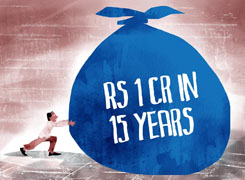
Dear FA, I am 35 years old lady and single parent of a 5 years old kid. My take home salary is 75k and a widow pension 3k, so total my income is 78k monthly. I have a home loan of 10Lacs of 3 years Expenditure: 1) Spending 30k/month as EMI 2) 90k School fee/year 3) 60k/ year maintainance of my flat FD savings has 45Lac in SBI, another 4 Lacs in FD, 2 lacs in liquid fund and one RD of Rs.2500 per month in Post Office and recently started investing in two SIPs, 10k each. Each month i can save hardly 15k after all expenditure. Sir, please guide me how i can save more and where i should invest so that after 10- 15 years i can reach 1 crore. Your suggestion will be highly appreciated. Thank You
Ans: At 35 years old, your focus on saving towards a corpus of Rs. 1 crore in the next 10–15 years is both practical and achievable. Let us go through a structured, 360-degree plan to increase your savings, optimise investments, and create a clear path to your goal.

Understanding Your Current Financial Position
Here is a concise breakdown of your current finances:

Monthly Income: Rs. 75,000 (salary) + Rs. 3,000 (widow pension) = Rs. 78,000

Home Loan: Rs. 10 lakh remaining, EMIs of Rs. 30,000 per month for 3 years

Annual School Fee: Rs. 90,000

Flat Maintenance: Rs. 60,000 per year

Fixed Deposits: Rs. 45 lakh in SBI FD + Rs. 4 lakh in another FD

Liquid Fund: Rs. 2 lakh

Recurring Deposit: Rs. 2,500 per month at Post Office

SIPs: Started two SIPs of Rs. 10,000 each per month

Monthly Savings Surplus: About Rs. 15,000 after expenses

You have commendable investments and savings in place. You have loan, insurance, corpus, and savings clarity. Now, we will focus on improving savings by optimising these assets, curbing expenses where possible, and ensuring every rupee works for your Rs. 1 crore target.

Building a Healthy Budget and Cash Flow Plan
Breakdown of monthly outflow

EMI: Rs. 30,000

Flat maintenance + school fees average out to Rs. 12,500/month

Household expenses take up the remaining Rs. 20,500 approximately

This leaves you with Rs. 15,000 in savings

Look for expense savings

Can school and flat expenses be crunched? Evaluate each line item

Is there scope to reduce utilities, groceries, or subscriptions?

Even saving Rs. 3,000–5,000 monthly helps boost investible amount

Accelerating current SIP setup

You are investing Rs. 20,000 monthly in mutual funds

Aim to increase this to Rs. 30,000 by gently reducing less productive instruments

Optimising FD and liquid investments

FDs earn low interest and lack tax efficiency

TDS is deducted regularly, reducing liquidity

Liquid and short-term funds can give better post-tax returns

Instead of immediately breaking all FDs, start by allocating future maturing FD amounts smartly

You are already saving; now let us direct savings more efficiently toward your Rs. 1 crore target.

Short-Term Goal: Clear the Home Loan Smartly
The home loan EMI of Rs. 30,000 per month occupies a large space. You will complete it in 3 years, but you can accelerate and free this cash flow.

Use part of your large SBI FD corpus to prepay the loan if it is cost-effective

A reduction in loan principal shortens tenure and interest outflow

Even a small prepayment annually reduces burden and interest

Once EMI ends, redirect freed-up funds toward your mutual fund goals

By clearing the loan earlier, you free up cash flow that can dramatically speed up reaching Rs. 1 crore.

Emergency Fund and Liquidity Safety
Your deposit of Rs. 2 lakh in a liquid fund is a good start. Post-Office RD can also act as reserve.

Maintain an emergency buffer equal to 6–9 months of expenses including EMI

That means Rs. 2.5–3 lakh should be accessible quickly

Keep this amount in liquid or ultra-short-term funds

Avoid locking this money in FDs or instruments with penalties

This buffer ensures you can handle crises without derailing your investment plan.

Reallocating Existing Fixed Deposits More Productively
You currently hold over Rs. 49 lakh in FDs.
This amount is generating low interest and losing purchasing power due to inflation and tax.

Here is how to phase it out efficiently:

Do not break all FDs at once
Sudden breakup triggers liquidity loss or breakup penalties

Review maturity dates
Let smaller FDs mature in next 1-2 years

Upon maturity, allocate sums into:

Low-cost liquid/ultra-short-term funds (for emergencies and short-term needs)

Short/mid-duration debt funds (for medium-term security)

Balanced/hybrid equity mutual funds (for longer-term wealth building)

Tax advantage
Liquid and debt funds incur gains taxed at slab rates, but shifting earlier begins compounding

This gradual reallocation reduces risk and improves returns over time.

Validating Your Insurance Coverage
You said all insurance needs are met. Let us ensure in detail:

Life Insurance: Term cover should be at least 10–12 times your current income

Health Insurance: Cover yourself and your child adequately

Loan Insurance: Already in place for the home loan—good

At age 35 and as a single parent, you must ensure multipliers are sufficient. Revisit cover every few years.

Educating Investment Allocation for Rs. 1 Crore Target
You aim to build Rs. 1 crore in 10–15 years. This is an achievable goal with disciplined investing.

Why mutual funds are ideal:
Equity mutual funds offer inflation-beating returns in long term

Active funds adjust strategy with market cycles, protecting you in downturns

Index funds simply copy market performance and don’t guard in declines

Direct plan investing may reduce costs, but lacks behavioural guidance

You already have two SIPs of Rs. 10,000 each. Increase them to Rs. 30,000 monthly within the next few months.

Suggested Investment Architecture:
Rs. 30,000 per month for 10–12 years

70% in diversified equity mutual funds

30% in hybrid equity-oriented funds

Staggered top-up from exiting FD

Add Rs. 20,000–30,000 monthly once FDs mature

Rebalance every year to maintain equity-debt mix

RD continued

Rs. 2,500 per month is fine, acts as reserve

Consider swapping RD to mutual fund SIP after emergency buffer is secure

Use Systematic Investment Plans through regular mutual funds to spread risk and improve discipline.

Aligning Investment Strategy with Your Time Horizon
You seek Rs. 1 crore in 10–15 years. Investment strategy should suit timeline:

First 5 years: High equity exposure (75–80%) to grow corpus

Years 5–10: Maintain equity, add hybrid funds to reduce volatility

Last 2–3 years: Shift gradually to debt/hybrid to protect capital

This dynamic allocation secures growth and reduces potential loss as the target nears.

Systematic Rebalancing and Monitoring
Review your portfolio annually

If equity component grows beyond 75%, shift excess to hybrid or debt

This controls risk and smooths returns

Your CFP will help with tracking and analysis

Regular plans make rebalancing easier through consistent guidance

Without discipline, portfolio could drift too risky or too safe. Regular oversight is key.

Optimising Tax Efficiency
You will face capital gains taxes along the journey:

Equity funds: LTCG above Rs. 1.25 lakh taxed at 12.5%

Short-term gains aggregate taxed at 20%

Debt and hybrid taxed as per normal slabs

Keep investments long-term to minimise tax. Avoid frequent switching. CFP can optimise redemption timing and tax liability.

Potent Supplement: Increasing Income Streams
Your monthly savings capacity is limited by your income. With time and planning, you can increase capacity:

Boost salary savings

Any salary increment should go into investment

Tax-free components and EPF contributions can help

Monetise unused skills

Freelancing or tutoring could bring Rs. 5–10k/month

This directly strengthens SIP capacity

Use rent or asset income (if applicable)

Reallocate bonus or any irregular income to investment

These boosts may accelerate your path to Rs. 1 crore.

Managing Risks and Contingencies
Keep home and term insurance valid through the period

Extend health insurance to your child

Update beneficiary nominations

Maintain liquidity buffer so you don’t withdraw during market crashes

Avoid investing in unregulated schemes, gold, or cryptocurrencies

Your CFP will help you stay disciplined during emotional market swings and sudden life changes.

Tracking Your Progress Over Time
Maintain a goals tracker with details:

SIP contributions, NAV history, and fund performance

Total corpus accumulated vs goal amount

Time remaining and required monthly investment

Adjust SIP contributions annually based on performance and income changes

This transparency helps you stay confident and focused on your target.

Final Insights
You are on strong footing with clear goals, disciplined saving, and safety covers. Now, redirect FD savings gradually into equity and hybrid mutual funds. Boost monthly SIP to Rs. 30,000 and plan to increase further as income grows or home loan ends. Keep a robust emergency buffer, maintain insurance coverage, and re-balance annually. By staying goal-oriented and maintaining discipline, you can build a corpus of Rs. 1 crore in 10–15 years.

Act-driven steps today will yield peace and security tomorrow for both you and your child.

Best Regards,
K. Ramalingam, MBA, CFP,
Chief Financial Planner,
www.holisticinvestment.in
https://www.youtube.com/@HolisticInvestment

..Read more

Latest Questions
Anu

Anu Krishna  |1746 Answers  |Ask -

Relationships Expert, Mind Coach - Answered on Dec 08, 2025

Ramalingam

Ramalingam Kalirajan  |10874 Answers  |Ask -

Mutual Funds, Financial Planning Expert - Answered on Dec 08, 2025

Asked by Anonymous - Dec 08, 2025Hindi
Money
Hi i am 40M. would request your help to understand what should be the corpus required for retirement as i want to get retired in next 3-5yrs. currently my take home is 2.3L monthly & my wife also works but leaving the job in next 2-3 months. we have a daughter 10yrs, currently i stay on rent and total monthly expense is 1.1L month. once i will retire we will shift in our own parental flat, where hopefully there will be no rent. current Investments 1. 50L in REC bonds getting matured in 2029 2. 42L in stocks 3. 17L in MF 4. 16L FD 5. 15L in PPF 6. 1.3L SIP monthly i do My Wife Investments 1. 30L corpus 2. flat with current value 40L and we get rental of 10K monthly. Please guide what should be the retirement corpus required combined to retire, assuming i need 75L for my daughter post grad and marriage and we would be requiring 75K monthly for our expenses after retiring
Ans: You have explained your income, goals, current assets, and future plans with great clarity. Your early planning spirit is strong. This gives a very good base. You can reach a peaceful retirement with smart steps in the next few years.

» Your Current Position

You are 40 years old. You plan to retire in 3 to 5 years. You earn Rs 2.3 lakh per month. Your wife also works but will stop working soon. You have one daughter aged 10. Your current monthly cost is around Rs 1.1 lakh. This cost will reduce after retirement because you will shift to your parental flat.

Your investment base is already good. You have saved in bonds, stocks, mutual funds, PPF, FD, and SIP. Your wife also has her own savings and rental income from a flat. All these create a good starting point.

This early base helps you plan stronger. It also gives room for more shaping. You are on the right road.

» Your Family Goals

You need Rs 75 lakh for your daughter’s higher education and marriage.

You want Rs 75,000 per month for family living after retirement.

You want to retire in 3 to 5 years.

You will shift to your parental flat after retirement.

You will have rental income of Rs 10,000 from your wife’s flat.

These goals are clear. They give direction. They allow a strong plan.

» Your Present Investments

Your investments include:

Rs 50 lakh in REC bonds maturing in 2029.

Rs 42 lakh in stocks.

Rs 17 lakh in mutual funds.

Rs 16 lakh in fixed deposits.

Rs 15 lakh in PPF.

Rs 1.3 lakh as monthly SIP.

Your wife holds:

Rs 30 lakh corpus.

A flat worth Rs 40 lakh with rent of Rs 10,000 each month.

Your combined net worth is healthy. This gives good power to build your retirement fund in the coming years.

» Understanding Your Expense Need After Retirement

You expect Rs 75,000 per month after retirement. This includes all basic needs. You will not have rent. That reduces cost. This assumption looks fair today.

Your cost will rise with inflation. So you must plan for rising needs. A strong retirement corpus must support rising cost for 40 to 45 years because you are retiring early.

An early retirement needs a large buffer. So you need safety along with growth. Your plan must include growth assets and safety assets.

» How Much Monthly Income You Will Need Later

Rs 75,000 per month is Rs 9 lakh per year. In future years, this cost can rise. If we assume steady rise, your future cost will be much higher.

So the retirement corpus must be designed to:

Give monthly income.

Beat inflation.

Support you for 40 to 45 years.

Protect your family even in market down cycles.

Allow flexibility if your needs change.

A strong retirement fund must support both safety and long-term growth.

» How Much Corpus You Should Target

A safe target is a large and flexible corpus that can support long years without running out of money. For early retirement, the usual thumb rule suggests a very high number. This is because you need income for many decades.

You need a corpus big enough to produce rising income. You also need a cushion for unexpected health costs, lifestyle shocks, and inflation changes.

Your target retirement corpus should be in a strong range. For your needs of Rs 75,000 per month and for goals like daughter’s education and marriage, you should aim for a combined retirement readiness corpus in the higher bracket.

A safe range for your family would be a very large number crossing multiple crores. This large range gives you:

Income safety.

Inflation protection.

Peace during market cycles.

Comfort in long life.

Room for daughter’s future.

Strong backup for health.

You are already on the way due to your existing assets. You will reach close to this range with systematic building over the next 3 to 5 years.

» Why You Need This Larger Corpus

You will retire early. That means more years of living from your corpus. Your corpus must not fall early. It must grow even after retirement. It must give monthly income and long-term family protection.

This is only possible when the corpus is strong and well-structured. A weak corpus creates stress. A strong corpus creates freedom.

Also, your daughter’s future cost must be kept aside. This must be parked in a separate fund. This must not touch your retirement money.

A strong corpus makes these two worlds separate and safe.

» Your Existing Assets and Their Strength

You already have good diversification:

Bonds give safety.

Stocks give growth.

Mutual funds give managed growth.

FD gives stability.

PPF gives tax-free long-term savings.

This blend is already a good start. But you need to make the blend more structured for early retirement.

Your Rs 1.3 lakh monthly SIP is also strong. It builds your future fast. You should continue.

Your wife’s rental income is small but steady. This adds strength.

Your combined financial base can reach your retirement target if you refine your allocation now.

» Your Daughter’s Future Fund Need

You need Rs 75 lakh for your daughter’s education and marriage. You should keep this goal separate from your retirement goal.

Your current SIP and future allocations should create a dedicated fund for this goal. A long-term fund can grow well when managed actively.

Do not mix this fund with your retirement needs. Mixing leads to shortage in old age. Always keep this corpus ring-fenced.

» A Strong Asset Mix For Your Retirement Path

A balanced mix is needed. You need growth assets to beat inflation. You also need stable assets for income.

You must avoid index funds because they do not give flexibility. Index funds follow a fixed index. They cannot make active changes in different markets. They cannot move to better stocks when markets change. They force you to stay in weak sectors for long. They also do not help you in down cycles because they cannot protect you by shifting to safer options. This can hurt retirement planning.

Actively managed funds are better because:

They give active asset selection.

They give scope for better returns.

They give flexibility to change sectors.

They give downside management.

They give access to a skilled fund manager.

They support long-term planning more safely.

Direct plans also carry risk. Direct plans do not give guidance. They do not give behavioural support. They do not give market timing help. They do not give portfolio shaping. They leave all the judgement to you. One mistake can cost years of wealth.

Regular plans with guidance from a Certified Financial Planner help you shape decisions. They help you remain disciplined. They help you avoid panic. They help you decide allocation changes at the right time. This saves wealth in long-term.

» How Your Investment Journey Should Grow in the Next 3–5 Years

Continue your SIP.

Increase SIP when your income rises.

Shift part of your stock holding into planned long-term mutual funds to reduce concentration risk.

Build a defined daughter’s education fund.

Keep a part of your REC bond maturity amount for long-term.

Avoid locking too much into fixed deposits for long periods.

Build a safety fund for one year of expenses.

This will create a full structure.

» Your Rental Income Role

Your rental income of Rs 10,000 per month is small but steady. Over time it will rise. This income will support your monthly cash flow after retirement.

You can use this for utilities or health insurance premiums. This gives a cushion.

» Your Emergency Buffer

You should keep at least one year of essential cost in a safe place. This can be in a liquid account or short-term fund. This protects you in shocks.

Since you plan early retirement, a strong buffer is important. It gives peace even in low months.

» A Structured Retirement Approach

A complete retirement plan for you should include:

A clear monthly income plan after retirement.

A corpus that can grow and protect.

A rising income system that matches inflation.

A separate daughter’s future fund.

A health cover plan for your family.

A tax-efficient withdrawal plan.

A market cycle plan to protect you in tough times.

This holistic approach keeps your family strong for decades.

» What You Should Build by Retirement Year

Your aim should be to reach a strong multi-crore range in investments before retirement. You already hold a large amount. You will add more in the next 3 to 5 years through SIP, stock growth, bond maturity, and disciplined saving.

Once you reach your target range, you can start the shifting process:

Move a part to stable assets.

Keep a part in long-term growth assets.

Create a monthly income strategy.

Keep a reserve bucket.

Keep a child future bucket.

Keep a long-term growth bucket.

This structure protects you in all market conditions.

» Final Insights

Your financial journey is already strong. You have a good income. You have saved well. You have multiple asset types. You have a clear timeline. And you have clear goals. This foundation is solid.

In the next 3 to 5 years, your focus should be on growing your combined corpus to a strong multi-crore range, keeping a separate fund for your daughter, reducing risk in unplanned assets, and building a stable long-term structure.

With the present path and a disciplined structure, you can retire peacefully and support your family with confidence for many decades.

Best Regards,

K. Ramalingam, MBA, CFP,
Chief Financial Planner,
www.holisticinvestment.in

https://www.youtube.com/@HolisticInvestment

...Read more

Samraat

Samraat Jadhav  |2499 Answers  |Ask -

Stock Market Expert - Answered on Dec 08, 2025

Ramalingam

Ramalingam Kalirajan  |10874 Answers  |Ask -

Mutual Funds, Financial Planning Expert - Answered on Dec 08, 2025

Money
Hello my name is saket, I monthly salary is 43k and my saving is zero. My Rent is 15 k and 10 k i send to my parents. How can i save money and investments.
Ans: 1. Your Current Monthly Numbers

Salary: Rs 43,000

Rent: Rs 15,000

Support to parents: Rs 10,000

Left with: Rs 18,000 for food, travel, bills, and savings

You have very little room, but saving is still possible if done smartly.

2. First Step: Build a Small Emergency Buffer

You must build Rs 10,000 to Rs 20,000 emergency money.
This protects you from taking loans for small issues.

How to build it:

Save Rs 3,000 to Rs 5,000 every month in a simple bank savings account

Do this for the next few months

Don’t touch it unless truly needed

3. Create a Mini Budget (Very Simple One)

Try this split from the remaining Rs 18,000:

Daily living (food + transport): Rs 10,000 – 11,000

Personal expenses (phone, internet, basics): Rs 3,000 – 4,000

Savings + investments: Rs 3,000 – 5,000

If this feels difficult, reduce food/transport costs by small adjustments.

4. Where to Invest Once You Have Emergency Money

(For minors: This is general education. For actual investing, get guidance from a trusted adult or family member.)

After you build emergency money, start small monthly investing.

You can begin with:

Rs 1,000 to Rs 2,000 SIP in a simple, diversified equity fund

Increase the SIP whenever salary increases or expenses reduce

Avoid complicated products.
Keep it simple.
Focus on consistency.

5. Easy Practical Ways to Increase Saving

These small moves help a lot:

Avoid food delivery

Use public transport as much as possible

Reduce subscriptions you don’t use

Fix a daily expense limit

Keep a separate bank account only for savings

Even Rs 200 saved daily = Rs 6,000 monthly.

6. Increase Income Slowly

Try small income boosters:

Weekend tutoring

Freelancing

Part-time projects

Selling old gadgets

Learning new skills for future salary growth

Even Rs 3,000 extra income changes your savings life.

7. Build the Habit First

The amount doesn’t matter in the beginning.
The habit matters more.

Even saving Rs 500 every month is better than zero.
Once salary grows, you will already know how to save.

Best Regards,

K. Ramalingam, MBA, CFP,

Chief Financial Planner,

www.holisticinvestment.in

https://www.youtube.com/@HolisticInvestment

...Read more

DISCLAIMER: The content of this post by the expert is the personal view of the rediffGURU. Investment in securities market are subject to market risks. Read all the related document carefully before investing. The securities quoted are for illustration only and are not recommendatory. Users are advised to pursue the information provided by the rediffGURU only as a source of information and as a point of reference and to rely on their own judgement when making a decision. RediffGURUS is an intermediary as per India's Information Technology Act.

Close  

You haven't logged in yet. To ask a question, Please Log in below
Login

A verification OTP will be sent to this
Mobile Number / Email

Enter OTP
A 6 digit code has been sent to

Resend OTP in120seconds

Dear User, You have not registered yet. Please register by filling the fields below to get expert answers from our Gurus
Sign up

By signing up, you agree to our
Terms & Conditions and Privacy Policy

Already have an account?

Enter OTP
A 6 digit code has been sent to Mobile

Resend OTP in120seconds

x