Home > Money > Question
Need Expert Advice?Our Gurus Can Help
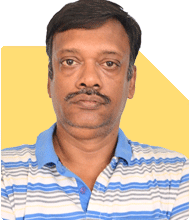
Naveenn

Naveenn Kummar  |233 Answers  |Ask -

Financial Planner, MF, Insurance Expert - Answered on Sep 23, 2025

Naveenn Kummar has over 16 years of experience in banking and financial services.
He is an Association of Mutual Funds in India (AMFI)-registered mutual fund distributor, an Insurance Regulatory and Development Authority of India (IRDAI)-licensed insurance advisor and a qualified personal finance professional (QPFP) certified by Network FP.
An engineering graduate with an MBA in management, he leads Alenova Financial Services under Vadula Consultancy Services, offering solutions in mutual funds, insurance, retirement planning and wealth management.... more
Amit Question by Amit on Sep 18, 2025Hindi
Money

I am Amit Kumar 25 years old investing 5k in PPF and 10k sip in mutual fund and want to retire in 2050 and require 1 lakh per month in 2050 for monthly expenditure Mutual fund are Parag Parikh flexi cap fund 5k,SBI small cap fund 2k, Motilal Oswal midcap fund 500, icici prudential growth fund 2500 Sir suggest me for better financial planning

Ans: Dear sir /madam ,

lot of details required for planning your current earning and expense and loan obligation , monthly expenses
Consult a professional planner for structured cash flow and goal-based allocation.

Please consult a QPFP / MFD for detailed cash flow planning, SWP structuring, and risk assessment.

Mutual Fund investments are subject to market risks. Read all scheme related documents carefully before investing.

Best regards,
Naveenn Kummar, BE, MBA, QPFP
Chief Financial Planner | AMFI Registered MFD
https://members.networkfp.com/member/naveenkumarreddy-vadula-chennai
DISCLAIMER: The content of this post by the expert is the personal view of the rediffGURU. Users are advised to pursue the information provided by the rediffGURU only as a source of information to be as a point of reference and to rely on their own judgement when making a decision.
Money

You may like to see similar questions and answers below

Ramalingam

Ramalingam Kalirajan  |10870 Answers  |Ask -

Mutual Funds, Financial Planning Expert - Answered on Jul 27, 2024

Asked by Anonymous - Jul 20, 2024Hindi
Listen
Money
Hi I am 40 years old and have 18 lakh in ppf. 3.5 lakh in pf and fd of 21 lakh with mf portfolio as 4.2 lakh 80 thousand in share market and 4 lakh as emergency fund with monthly income as 65k . I want to retire at 45 and still want same monthly income so what should be my investment plan for it.
Ans: Your disciplined savings and investment strategy are commendable. Let's structure a plan to achieve your goal of retiring at 45 while maintaining your current monthly income.

Current Financial Snapshot
Investments and Savings:

Rs 18 lakh in PPF
Rs 3.5 lakh in PF
Rs 21 lakh in FD
Rs 4.2 lakh in mutual funds
Rs 80 thousand in share market
Rs 4 lakh as an emergency fund
Monthly Income:

Rs 65,000
Retirement Planning Goals
Goal:

Retire at 45 with a monthly income of Rs 65,000
Analysis and Insights
Current Situation:

Your existing investments are good but need strategic alignment.
A focused approach is essential for achieving your retirement goal.
Investment Plan
Increase Equity Exposure:

Equity investments offer higher returns over the long term.
Allocate a portion of your FD and emergency fund to equity mutual funds.
Gradually increase your mutual fund portfolio.
Balanced Funds:

Invest in balanced or hybrid funds for stability.
These funds provide a mix of equity and debt.
Debt Funds:

Include debt funds for safe and steady returns.
This ensures a balance between growth and safety.
Systematic Investment Plans (SIPs):

Increase your SIP contributions regularly.
A disciplined approach ensures consistent growth.
Diversify Investments:

Spread your investments across different asset classes.
This reduces risk and maximizes returns.
Recommended Asset Allocation
Equity:

Increase equity mutual fund investments.
Aim for 60-70% of your portfolio in equity.
Debt:

Maintain 20-30% in debt funds and fixed deposits.
This ensures stability and regular income.
Gold:

Consider investing in gold funds or ETFs.
Gold acts as a hedge against inflation.
Retirement Corpus Calculation
Estimated Corpus Required:

You need a corpus that generates Rs 65,000 monthly.
Assuming a 5% withdrawal rate, you need around Rs 1.56 crore.
Steps to Achieve Retirement Goal
1. Increase Investments:

Enhance your SIPs and lump-sum investments in mutual funds.
Aim to save and invest aggressively for the next 5 years.
2. Reduce Expenses:

Minimize unnecessary expenses.
Save more towards your retirement goal.
3. Regular Review:

Review your investments quarterly.
Adjust based on performance and market conditions.
4. Professional Guidance:

Consult a Certified Financial Planner.
Personalized advice ensures optimal investment strategies.
Final Insights
Disciplined Investing: Stay committed to your investment plan.
Diversified Portfolio: Spread investments across equity, debt, and gold.
Regular Monitoring: Adjust and rebalance your portfolio as needed.
Focus on Growth: Prioritize equity investments for higher returns.
Best Regards,

K. Ramalingam, MBA, CFP,

Chief Financial Planner,

www.holisticinvestment.in

..Read more

Ramalingam

Ramalingam Kalirajan  |10870 Answers  |Ask -

Mutual Funds, Financial Planning Expert - Answered on Jul 26, 2024

Listen
Money
Hi Ramalingam Sir, Hope you doing great and healthy. Sir, I am 34 year old and having 2 daughter 7 year old and 6 months old. My house hold (me and spouse) income is 1 lakh 30k in hand. My monthly expenses are around 35000 and school expenses are 20000 quarterly. I have monthly EMI of 50000 which will be ending on July-25. I have a land worth 31 lakh, and investing 5k monthly in PPF. I have term insurance of 1cr. I want to plan my financial in systematic way. I have surplus of 10k more monthly which I have to invest, please suggest any Mutual Fund in 60% equity and 40% debt. I have a future goal in 2026 of building my own home on land I purchased with construction loan. Also I want to build some corpus for both daughters education. Please help me how I can plan to meet a good financial life.
Ans: Current Financial Overview
You have a stable household income of Rs. 1,30,000 per month. Your monthly expenses are Rs. 35,000, with quarterly school expenses of Rs. 20,000. You have a significant EMI of Rs. 50,000, which will end in July 2025. You invest Rs. 5,000 in PPF monthly and have a term insurance of Rs. 1 crore. You own land worth Rs. 31 lakhs and have an additional Rs. 10,000 monthly for investment.

Financial Goals
Build a home on your land by 2026.
Create a corpus for your daughters' education.
Systematically invest the surplus Rs. 10,000.
Expense Management
Your expenses are well-managed, but optimizing them can provide more room for savings. Review your expenses periodically and adjust where possible. Consider small lifestyle changes that can help reduce costs without impacting your quality of life.

Investment Strategy
Public Provident Fund (PPF)
You are already investing in PPF, which is a good long-term, tax-saving investment. Continue this as it provides a secure and tax-efficient growth for your funds.

Mutual Funds: Equity and Debt Allocation
For your surplus Rs. 10,000, investing in a balanced mutual fund with a 60% equity and 40% debt allocation is wise. This provides growth potential with moderate risk.

Equity Component (60%):

Invest in diversified equity mutual funds.
Focus on funds with a track record of consistent performance.
This portion will help in wealth creation over the long term.
Debt Component (40%):

Invest in debt mutual funds for stability and regular income.
These funds have lower risk and provide steady returns.
They will balance the volatility of the equity portion.
Home Construction Goal
You aim to build a home by 2026. Start planning for the construction loan early. Ensure you have a clear budget and timeline. Keep a portion of your savings in liquid assets for this purpose, so you can access funds quickly when needed.

Children's Education Fund
To build a corpus for your daughters' education, start a dedicated investment plan.

Systematic Investment Plans (SIPs):
Allocate a portion of your surplus to equity mutual funds via SIPs.
SIPs provide the benefit of rupee cost averaging and disciplined investing.
Consider child-specific mutual funds with a mix of equity and debt.
Insurance Coverage
Your term insurance of Rs. 1 crore is a good safety net. Review your insurance needs periodically to ensure it covers your growing responsibilities.

Emergency Fund
Maintain an emergency fund to cover at least 6 months of your household expenses. This fund should be easily accessible and kept in a savings account or liquid fund.

Regular Monitoring and Review
Track Your Investments:

Regularly review your investment portfolio.
Ensure your investments align with your financial goals.
Financial Health Check:

Conduct an annual financial health check.
Adjust your investments based on market conditions and personal circumstances.
Tax Planning
Leverage tax-saving instruments like PPF, ELSS (Equity Linked Savings Scheme), and National Pension System (NPS) to reduce your taxable income. Proper tax planning can enhance your savings and investments.

Final Insights
Your financial foundation is strong. By strategically investing your surplus and planning for future goals, you can achieve financial security and growth. Regularly monitor and adjust your plan to stay on track.

Best Regards,

K. Ramalingam, MBA, CFP,

Chief Financial Planner,

www.holisticinvestment.in

..Read more

Ramalingam

Ramalingam Kalirajan  |10870 Answers  |Ask -

Mutual Funds, Financial Planning Expert - Answered on Jul 18, 2025
Asked by Anonymous - Jul 14, 2025Hindi
Money
I am 38 years old and having 2L per month Take home salary. My wife works as freelancer and earns 1L per month. Have one 3 years kid and also elderly mother(with nonpension). Have home loan with emi 21k but am paying 31k. Left principal in home loan is 15L which we are planning to close this financial year till March 2026. I am having term insurance worth 1.75 cr. Having health insurance for 20L for myself spouse and kid. Also having 5L health insurance from company which includes mother as well. I am investing 42k as SIP in mutual funds for large cap, mid cap, small, debt and gold funds and index funds. I have 7-9 months emergency fund in debt funds and some in savings account. Also am investing in NPS 7k per month from corporate and 50k yearly myself. My wife also invest in NPS 5k per month. 15k in SIP as same bifurcation. Also I have one ULIP plan for 1 lac per year which I have for 4 years and 3 years left. One ULIP plan we bought for kid as 50k yearly till 18 years of his age. Also some traditional insurance policies running for 50k yearly which I have to pay till 2032 and mature in same year. Pleae suggest if any modifications in financial planning to retire with good corpus.
Ans: You are 38 and have strong dual income. You also support your 3?year?old child and elderly mother. You already have several investments and insurance. Your goal is to retire with a good corpus. Let’s craft a 360?degree plan with clarity and action.

? Income and Cash Flow Assessment
– Your take?home pay is Rs?2?lakh per month.
– Wife contributes Rs?1?lakh monthly.
– Combined take?home is Rs?3?lakh per month.
– You have home loan EMI Rs?21?k but you pay Rs?31?k.
– You plan to repay this year by March 2026.
– This acceleration will save interest and free up funds.
– Post?loan, that Rs?10?k extra payment becomes investible.
– Your expenses, child care, and mother’s support fill the rest.
– Make sure your current fixed expenses are tracked monthly.

? Insurance and Risk Cover
– You hold term insurance of Rs?1.75?cr.
– This is strong cover for family protection.
– Health cover is Rs?20?lakh for family.
– Employer provides Rs?5?lakh more, covering your mother too.
– Combined Rs?25?lakh health cover is adequate for now.
– Continue these without interruption.
– Add top?up cover if costs rise or mother’s age increases.
– And review health cover plans regularly, especially before retirement.

? Emergency Fund Strength
– You have 7–9 months' buffer in debt funds/savings.
– That meets financial prudence guidelines.
– Keep this intact even after loan closure.
– Do not use for investments or expenses.
– If your child grows or mother’s expenses increase, revisit this buffer.
– A robust emergency fund safeguards your entire plan.

? ULIP and Traditional Policies Review
– You pay Rs?1?lac/year premium for one ULIP with 3 years left.
– You also have ULIP for child (Rs?50?k annually till 18).
– Plus traditional policies costing Rs?50?k/year till 2032.
– ULIPs and traditional policies mix insurance and investment.
– They typically have high charges and low transparency.
– For retirement income, they are inefficient.

Recommendation:
– Surrender the ULIP (your) fully now.
– Surrender ULIP (child) pending cost?benefit review.
– Surrender traditional policy once possible without loss.
– Use the funds to boost mutual funds.

Benefit:
– You will gain flexibility, higher return, lower cost.
– Move funds to active mutual funds via regular plans.
– Continue child's savings via straightforward mutual funds for education.

? Mutual Fund Allocation and Index Funds
– You invest Rs?42?k SIP across large, mid, small, debt, gold, and index funds.
– Also, wife invests Rs?15?k via SIP in same allocation.
– You also invest in NPS: Rs?7?k per month employer, plus Rs?50?k per year yourself.
– Combined investment is strong and diversified.

However:
– You use index funds.
– Index funds simply copy market indices, including weak stocks.
– They fall heavily in crises and offer no risk management.
– Actively managed funds are better for risk control.
– They allow fund managers to exit underperforming stocks.
– They can rebalance sectoral exposure effectively.

So:
– Gradually shift index fund exposure into actively managed equity funds.
– Do this via STP over a 6?month horizon to average entry.
– Maintain debt, gold, and hybrid exposure to balance risk.

? NPS Allocation
– NPS provides retirement benefits with tax advantage.
– It offers limited but steady equity exposure.
– Your joint contribution is approx. Rs?1.34?lakh per year (employer + yours + wife).
– That supports your retirement corpus significantly.

Note:
– At retirement, NPS allows 60% lump withdrawal.
– Remaining 40% must go into annuity.
– But annuity purchase post retirement is flexible.
– You can choose to invest lump sum into mutual funds instead.

Keep your NPS contributions unchanged as a core retirement pillar.

? Home Loan Closure Impact
– You plan to close the remaining Rs?15?lakh principal by Mar 2026.
– EMI saving will be Rs?25–30?k per month.
– That will add to your investible surplus.
– This should be redirected into financial assets post?closure.
– That will accelerate corpus growth.

? Portfolio Rebalancing Post?Loan
– After loan closure, revisit your asset allocation.
– Increase SIPs gradually by Rs?25–30?k.
– Allocate towards equity mutual funds.
– Keep gold and debt funds intact for diversification.
– Set target allocation: Equity 60%, Debt/Hybrid 30%, Gold 10%.
– Within equity, split across large?cap, mid?cap, multicap, and small?cap.
– Use actively managed funds across categories.

? Corpus Target for Comfortable Retirement
Your retirement goal is “good corpus.”
Let’s quantify:
– At retirement, you may need Rs?2–2.5 lakh per month.
– That equals Rs?24–30 lakh per year.
– To support that sustainably, you need approximately Rs?6–7 crore corpus.

You have 22 more working years (age 38 to 60).
Your growing annual investment plus compounding can target this.

However, do not rely on one asset.
Keep building NPS, mutual funds, EPF etc.
Maintain regular monitoring to ensure progress.

? Child’s Future and Education Goals
– You have a 3?year?old child.
– Education and possibly marriage need long?term planning.
– Currently ULIP savings cover these but inefficiently.
– Better to restructure child’s fund into goal?based mutual funds.
– Use child?specific multi?cap and hybrid funds.
– Target education and marriage separately from retirement funds.

? Investment Vehicles: Focus on Mutual Funds and NPS
– Mutual funds should be central for your wealth creation.
– Actively managed equity and hybrid funds compound faster.
– Avoid index and direct funds due to lack of advisory support.
– NPS provides special tax benefits and structured retirement saving.
– Your current mix (SIP’s plus NPS) is a good foundation.
– ULIP and traditional policies, once surrendered, will free up better use of capital.

? Systematic Withdrawal Plan After Retirement
– At retirement, avoid lump?sum withdrawals.
– Instead use SWP from mutual funds.
– Choose hybrid/debt funds for regular monthly income.
– Continue equity SWP slowly to avoid depletion.
– This balances return and capital preservation.
– It is more tax?efficient than fixed deposits or annuity.

? Tax Awareness and Capital Gains
– Equity fund LTCG over Rs?1.25?lakh is taxed at 12.5%.
– STCG (under 1 year) is taxed at 20%.
– Debt fund gains are taxed as per your slab.
– Use long?term holds to reduce tax.
– Use SWP to withdraw gradually below taxable thresholds.
– NPS also offers tax benefits and partial withdrawal rules.

? Health and Lifestyle Provisions
– Living in a village helps reduce cost of living.
– But medical and emergency travel may still be needed.
– Maintain high cash buffer in debt/liquid funds.
– Keep medical insurance for all family members updated.
– Update elder mother’s insurance as she ages.
– Plan visits to larger hospitals as necessary.

? Periodic Reviews and Discipline
– Review portfolio and goals every 6 months.
– Track progress, performance, fund updates, and life changes.
– Adjust asset allocation based on progress and risk tolerance.
– Increase SIPs annually with salary hikes or surplus fund.
– Consider goal reviews for children and retirement periodically.

? Behavioural Support through CFP + MFD
– You have many moving parts.
– A Certified Financial Planner with Mutual Fund Distributor helps.
– They provide emotion management during market cycles.
– They steer allocations, tax moves, and progress.
– This shared discipline ensures long?term success.

Direct mutual funds platforms won’t provide this support.
Index funds likewise have no personal advice.
Actively managed funds with advisory add real value.

? Final Insights
You are on a strong financial path already.
Your dual income and family support structure help a lot.
Loan repayment, emergency fund, insurance, and SIP habit are strong.
Surrender ULIPs and traditional policies to free capital.
Continue high SIPs post?loan.
Avoid index and direct funds.
Focus on actively managed mutual funds and NPS.
Invest for children and retirement separately.
Use SWP post?retirement for sustainable income.
Maintain insurance and emergency buffer.
Review regularly and stay disciplined.
With steady execution, you can build a substantial retirement corpus.

Best Regards,
K. Ramalingam, MBA, CFP,
Chief Financial Planner,
www.holisticinvestment.in
https://www.youtube.com/@HolisticInvestment

..Read more

Janak

Janak Patel  |71 Answers  |Ask -

MF, PF Expert - Answered on Jul 31, 2025

Asked by Anonymous - Jul 28, 2025Hindi
Money
I am 45yr old and my take home salary is 1.75L. I have 30L investment in mutual fund and 50L investment in stock market. My monthly SIP in MF is 50K. I am also planning to buy a property valued 1CR. I am planning to pay 40% of the amount using my PF withdrawal and rest of the amount I am planning to take bank loan and pay EMI monthly. Kindly advise how can I improve my financial planning.
Ans: Hi,

You are currently invested in Stocks and Mutual funds and you also have your PF. Assuming your MF investment is also more equity based, you have 80L invested towards Equity.
Your PF balance is not mentioned but as maximum limit of withdrawal is 90% for house purchase, I assume you have 50 lakhs or more in PF.
Your Equity to Debt allocation is approx. 60:40 favoring Equity. Even in this allocation, direct stock market investment which is 40% has the maximum risk exposure. MF are managed by professionals and they are risky but relatively less.

For a 1 Cr property, home loan would be 60 lakhs, which amounts to approx. 57K of EMI (depends on interest rate and tenure, assumed 15 years for now). So it may impact your monthly saving capacity to start with.
With 40% withdrawn from PF, your Equity Debt ration would change to 90:10. Thus increasing your risk exposure.
Your PF balance is considerably reduced.

So the first question you should ask yourself is - How much RISK am I willing to take at this time ?
With time, as you approach retirement age, will this RISK level be the same, chances are - no. At that time would you feel more secure with safer investment options. If yes, then PF balance needs to be much higher than what you would probably accumulate over 15 years.

Typically, for your profile (based on age alone), I would recommend you use the direct investments in Stock market to supplement the house purchase plan. You can of course keep some stock investments in good quality companies as a long term investment.
Also evaluate your Mutual Funds to see if they are providing you good returns of above 12%. If you find any scheme that is underperforming, it would be prudent to exit it and use those funds also towards the house purchase.

Beyond the above if you still fall short for the 40% part of house purchase, then you can consider PF withdrawal.
Note PF has a purpose its primarily to provide for retirement. Hence it is prudent to withdraw at the right time and get the benefit of not paying any tax on it. So even at 8% assured returns, its quite attractive considering most other investments will attract tax on withdrawal.

Equity on the other hand has risks associated but also reward those who can stay disciplined with their investments. But it will attract taxes.

So - The question you need to ask is how much Risk to take and what would be preferred asset allocation you can keep without losing sleep for the next 15 years until retirement.

Thanks & Regards
Janak Patel
Certified Financial Planner.

..Read more

Ramalingam

Ramalingam Kalirajan  |10870 Answers  |Ask -

Mutual Funds, Financial Planning Expert - Answered on Sep 23, 2025

Asked by Anonymous - Sep 22, 2025Hindi
Money
I am Amit Kumar 25 years old investing 5k in PPF and 10k sip in mutual fund and want to retire in 2050 and require 1 lakh per month in 2050 for monthly expenditure
Ans: You have begun very early, Amit. That is the biggest strength. At 25, with steady investing, retirement goals get powerful support. Your clarity about year, corpus needs, and disciplined investment habit is appreciable. Now, let us structure your future in a complete 360-degree way.

» Retirement Goal

Your retirement year is 2050. That is 25 years from today. You want Rs.1 lakh per month in 2050. This is your future living expense. The real value today will be lower because inflation increases every year. Planning with inflation-adjusted corpus is critical. If ignored, money value will fall badly. So we must aim bigger than today's equivalent of 1 lakh. It must be made inflation proof.

» Current Investment Efforts

You put Rs.5000 in PPF monthly. That comes to Rs.60,000 per year. You add Rs.10,000 SIP monthly into mutual funds. That is Rs.1.2 lakh per year. Together, yearly contribution is Rs.1.8 lakh. At 25, these steps are really appreciable. Building habit from start is more important than amount. Amount will grow steadily as your income grows. PPF ensures safety. Mutual funds ensure growth potential. You have built balance.

» Why Starting Early Helps

Investing at 25 gives the longest compounding window. Compounding is strongest when given time. Money multiplies exponentially when years are more. Even modest monthly investments turn into big wealth over decades. People starting late miss out on this magic. You are safe from that mistake. Discipline plus time gives wealth far bigger than occasional lump sum.

» Role of PPF in Retirement

PPF brings safety, predictability, and tax benefit under section 80C. It is government-backed and safe. It gives sound stable corpus after 15 years. But its returns are limited and often below inflation. PPF is not wealth-creating. It is wealth protecting. It keeps value stable with moderate growth. So your reliance should be partly on this. It is good as foundation but not as growth driver.

» Role of Mutual Funds in Retirement

Your SIP in mutual funds builds growth and wealth. Actively managed funds help in market capturing. They provide researched strategies by professionals to outperform inflation. Unlike index funds, they are more flexible. Index funds simply copy the market. That means if market stagnates, you also stagnate. In falling times, no one manages downside. Hence risk control is less. Actively managed funds bring expertise and discipline. They focus on sectors, valuation, and timely allocation. SIP in such funds over long time will build corpus faster than PPF. Keep increasing SIP when income rises. This is the powerful driver of your wealth.

» Inflation and Real Corpus

The target is Rs.1 lakh per month in 2050. But inflation will multiply this cost. For example, if yearly inflation runs at 6%, then cost in 2050 will not be Rs.1 lakh. It will be much higher, maybe four or five times bigger. Many investors miss this. They plan with nominal numbers. But real numbers become shock later. So investing more each year is essential. Growing SIPs ensures inflation cannot erode wealth.

» Asset Allocation

For now, at 25, equity-oriented allocation must be high. Growth focus in earlier years brings big returns in long term. Debt part like PPF brings balance and stability. Too much debt at young age limits wealth creation. Too much equity near retirement brings risk. So allocation must shift with age. In youth, higher equity portion is acceptable. Near retirement, debt portion must grow. That will protect your wealth from sudden market falls.

» Insurance Check

Before planning wealth, protection is mandatory. If not, family goal can collapse in emergencies. Buy pure term insurance suited to your income. Stay away from insurance-cum-investment policies. They give low return and high cost. Instead, invest difference separately in mutual funds. Pure term plan ensures family security. Take medical insurance too. Health cost is rising every year faster than inflation. Safeguard early for peace later.

» Need to Review and Increase Investments

Rs.1.8 lakh yearly investment is good today. But over 25 years, this amount is small. You should increase SIP with income growth. Every time your salary rises, raise contribution. Even a 5-10% raise in SIP yearly builds a huge corpus. Do not keep SIP amount fixed for long years. Growth must be stepwise. Your early investments will compound powerfully. Fresh contributions will add further lift. Both together create confidence in achieving retirement target.

» Emergency Fund

Keep one emergency fund in bank or liquid mutual fund. This is for sudden expenses, like job loss or hospitalisation. Without this, you may break PPF or SIP in emergency. That will disturb compounding. Emergency fund must cover 6 to 12 months of expense. This brings peace and prevents panic withdrawals.

» Behavioural Discipline

Long term investing needs patience. Markets may rise and fall. Do not stop SIPs in falling market. Fall periods are best to accumulate cheap units. Continuing SIP at such times multiplies wealth when market recovers. Many investors stop SIP when fall happens. That kills benefit of averaging. The disciplined investor always wins over the impatient one.

» Tax Rules Awareness

Equity mutual funds under new rules are taxed differently. Long-term gains above Rs.1.25 lakh are taxed at 12.5%. Short-term gains are taxed at 20%. Debt mutual funds are taxed according to your tax slab, for both long and short term. Hence, choose mix wisely. Tax impact cannot be avoided, but can be planned. Holding period and choice of funds matter greatly. PPF remains tax free at maturity. But growth part there is weaker. Mutual funds require careful balancing with taxation.

» Around Mid-Career Strategy

By age 35 or 40, you must increase investment size. PPF yearly limit is already small. Hence focus more on mutual funds. High income years must be captured for maximum investment capacity. This ensures by 50 you already have strong corpus. Nearer to 2050, you must shift from pure growth to protection. Do not rely late on only equity. Structured SIPs and later staggered withdrawals protect your life corpus.

» Retirement Income Distribution

When you retire in 2050, you need monthly cash flow. For that, systematised withdrawal plan in mutual funds can be safer. You can withdraw in stages instead of lump sum. This keeps money still compounding while you use part of it. This helps your money last longer. If all is withdrawn at once, reinvestment risk arises. So systematic retirement expense planning is sharper than direct withdrawal.

» Wealth Growth Checkpoints

Do yearly review of portfolio. Check if you are growing towards planned target. See allocation ratio between PPF and equity funds. Adjust where needed. Do not wander into untested products. Many investors get distracted by trends. Stick to tested, systematic methods. Reliable compounding is better than chasing sudden fancy options.

» Finally

Amit, your early start is the strongest step. Retirement planning is about time, discipline, and growth. You have aligned all three early. Increase SIP contribution step by step with income. Balance PPF for safety but give growth focus to mutual funds. Safeguard with insurance and emergency fund. Review yearly and adjust asset mix with age. You can surely achieve your future income target confidently. Your roadmap is already strong. With consistent upgrading, retirement in 2050 will be peaceful.

Best Regards,

K. Ramalingam, MBA, CFP,

Chief Financial Planner,

www.holisticinvestment.in
https://www.youtube.com/@HolisticInvestment

..Read more

Latest Questions
Ravi

Ravi Mittal  |676 Answers  |Ask -

Dating, Relationships Expert - Answered on Dec 04, 2025

Asked by Anonymous - Dec 02, 2025Hindi
Relationship
My married ex still texts me for comfort. Because of him, I am unable to move on. He makes me feel guilty by saying he got married out of family pressure. His dad is a cardiac patient and mom is being treated for cancer. He comforts me by saying he will get separated soon and we will get married because he only loves me. We have been in a relationship for 14 years and despite everything we tried, his parents refused to accept me, so he chose to get married to someone who understands our situation. I don't know when he will separate from his wife. She knows about us too but she comes from a traditional family. She also confirmed there is no physical intimacy between them. I trust him, but is it worth losing my youth for him? Honestly, I am worried and very confused.
Ans: Dear Anonymous,
I understand how difficult it is to let go of a relationship you have built from scratch, but is it really how you want to continue? It really seems to be going nowhere. His parents are already in bad health and he married someone else for their happiness. Does it seem like he will be able to leave her? So many people’s happiness and lives depend on this one decision. I think it’s about time you and your BF have a clear conversation about the same. If he can’t give a proper timeline, please try to understand his situation. But also make sure he understands yours and maybe rethink this equation. It really isn’t healthy. You deserve a love you can have wholly, and not just in pieces, and in the shadows.

Hope this helps

...Read more

Mayank

Mayank Chandel  |2562 Answers  |Ask -

IIT-JEE, NEET-UG, SAT, CLAT, CA, CS Exam Expert - Answered on Dec 04, 2025

Career
My son will be appearing for JEE Main & JEE Advanced 2026 and will participate in JoSAA Counselling 2026. I request clarification regarding the GEN-EWS certificate date requirement for next year. I have already applied for an EWS certificate for current year 2025, and the application is under process. However, I am unsure whether this certificate will be accepted during JoSAA 2026, or whether candidates will be required to submit a fresh certificate for FY 2026–27 (issued on or after 1 April 2026). My concern is that if JoSAA requires a certificate issued after 1 April 2026, students will have only 1–1.5 months to complete the entire procedure, which is difficult considering normal government processing timelines. Also, during current JEE form filling, students are asked to upload a GEN-EWS certificate issued on or after 1 April 2025, or an application acknowledgement. This has created confusion among parents regarding which year’s certificate will finally be valid at the time of counselling. I request your kind guidance on: Which GEN-EWS certificate will be accepted for JoSAA Counselling 2026 — a certificate for FY 2025–26 (issued after 1 April 2025), or a new certificate for FY 2026–27 (issued after 1 April 2026)?
Ans: Hi
You need not worry about the EWS certificate. Even if you apply for the next year's certificate on 1 Apr 2026, the second session of JEE MAINS will still be held, followed by JEE ADVANCED, which will be held in May. JOSAA starts in June. so you will have 2 months in hand for fresh EWS certificate.

...Read more

DISCLAIMER: The content of this post by the expert is the personal view of the rediffGURU. Investment in securities market are subject to market risks. Read all the related document carefully before investing. The securities quoted are for illustration only and are not recommendatory. Users are advised to pursue the information provided by the rediffGURU only as a source of information and as a point of reference and to rely on their own judgement when making a decision. RediffGURUS is an intermediary as per India's Information Technology Act.

Close  

You haven't logged in yet. To ask a question, Please Log in below
Login

A verification OTP will be sent to this
Mobile Number / Email

Enter OTP
A 6 digit code has been sent to

Resend OTP in120seconds

Dear User, You have not registered yet. Please register by filling the fields below to get expert answers from our Gurus
Sign up

By signing up, you agree to our
Terms & Conditions and Privacy Policy

Already have an account?

Enter OTP
A 6 digit code has been sent to Mobile

Resend OTP in120seconds

x