Home > Money > Question
Need Expert Advice?Our Gurus Can Help
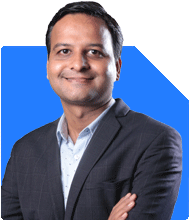
Naveenn

Naveenn Kummar  |233 Answers  |Ask -

Financial Planner, MF, Insurance Expert - Answered on Sep 09, 2025

Naveenn Kummar has over 16 years of experience in banking and financial services.
He is an Association of Mutual Funds in India (AMFI)-registered mutual fund distributor, an Insurance Regulatory and Development Authority of India (IRDAI)-licensed insurance advisor and a qualified personal finance professional (QPFP) certified by Network FP.
An engineering graduate with an MBA in management, he leads Alenova Financial Services under Vadula Consultancy Services, offering solutions in mutual funds, insurance, retirement planning and wealth management.... more
Asked by Anonymous - Aug 05, 2025

Money

Dear Sir, I am 45-year-old and planning to create a fund for retirment till 2032. My take home salary is 2.5L after paying Taxes. I am having 16.5L in PF and contributing 18k per month in it. I am also having 3.6L in NPS and contributing 50k per year. 1k per month on Atal pension scheme 2010. I am having a family health insurance of 10L personnel and 6L from office. Term insurance 1.25Cr personnel and 3Cr office. I am also having 2 home loans of 65L and 6.5 Lakh. current value of houses is 1.5Cr and 55L. apart from this I am having a car loan of 5L and study loan of child of 6.24L. I am getting a rent of 14k from one of the houses. I am investing in mutual funds as details mentioned below (current value is 21.4L):- 1. HDFC Dividend Yield Fund Reg (G) - SIP of 2.5k started on 1.2.2022 and current value is -142.5k(CAGR17.42%) 2. HDFC Hybrid Equity Fund (G) -SIP of 2.5k started on 10.11.2017 and added 2.5k SIP on 10.2.2022 current value is -529.9k(CAGR14.96%) 3. Aditya Birla SL Large & Mid Cap Fund Reg (G)- SIP of 2.0k started on 15.12.2017 and current value is -298.4k (CAGR14.6%) 4. ICICI Pru Equity & Debt Fund (G)- SIP of 5.0k started on 11.12.2017 and added 2.5k SIP on 10.2.2022 current value is -1113.2k (CAGR21.85%) 5. HDFC Multi Asset Fund (G)- SIP of 5.0k started on 28.8.2024 and current value is -62.6k(CAGR9.32%) I have discussed rebalancing of funds with my advisor, and he suggested to stop the fund mentioned in point 3 (Aditya birla) and 5 ( HDFC multi asset) and rest are continued. He has created SWP of 10k from Aditya Birla and started new SIPs now as mentioned below: 1. Bandhan Small cap fund regular plan- Growth- SIP of 5K 2. DSP multiasset allocation fund regular growth- SIP 5k 3. SBI flexicap fund growth- SIP 2k 4. Mirae Asset multicap fund regular plan growth- SIP 5k Just want to check have I got the appropriate return on my portfolio? Was the expense ratio Ok for my fund? and the rebalancing is correct ? Plz guide. Am I doing my overall assets/ investment management correctly or you suggest any changes. Plz guide

Ans: Dear Sir,

Thanks for sharing detailed inputs. You’re doing many things right already ???? but there are some important points to tighten.

???? Retirement Outlook

With just 7 years left (till 2032), your focus should be on maximising corpus build-up.

Today’s expenses (~?40k) will inflate to ~?70k/month by 2032 (assuming 6% inflation). For 20–25 years of retirement, you’ll need ~?4–5 Cr.

???? Observations

Investments are well structured – Your CAGR of 14–21% shows good fund choices and rebalancing is broadly correct.

Loans are eating into cashflow – Multiple small loans (car ?5L, edu ?6.24L, small home loan ?6.5L) can be closed faster.

Expenses not fully mapped – Retirement planning starts with exact expense tracking; do this first.

Insurance cover is decent – Term insurance is strong, family floater is good.

? Action Plan

Close Small Loans First

Knock off car loan, education loan, and small home loan.

Redirect these EMIs fully into SIPs for retirement.

Continue MF SIPs & Rebalancing

The switch your advisor did is fine. Returns are healthy, stick with equity-heavy allocation for next 5 years.

From 2028, start moving some gains systematically into safer debt funds.

Health Insurance Top-up

Your current ?10L personal + ?6L office is good, but medical inflation is high.

Take a Top-up health cover of ?25–50L (very cost-effective) to avoid dipping into retirement corpus for future medical needs.

NPS & PF

Continue PF + NPS contributions. They’ll add stability to your retirement kitty.

???? Summary

Returns & fund choices ?

Need to close small loans and channel EMIs into SIPs ?

Take a top-up health insurance cover to safeguard corpus ?

Expenses tracking must be priority to validate adequacy ?

You’re well placed, just sharpen the cashflow redirection and insurance shield.

Best regards,
Naveenn Kummar, BE, MBA, QPFP
Chief Financial Planner | AMFI Registered MFD
www.alenova.in
DISCLAIMER: The content of this post by the expert is the personal view of the rediffGURU. Users are advised to pursue the information provided by the rediffGURU only as a source of information to be as a point of reference and to rely on their own judgement when making a decision.
Money

You may like to see similar questions and answers below

Ramalingam

Ramalingam Kalirajan  |10870 Answers  |Ask -

Mutual Funds, Financial Planning Expert - Answered on Oct 08, 2024

Asked by Anonymous - Oct 08, 2024Hindi
Money
I'm 47 yrs old PSU Employee. Presently having corpus of 1.20 cr in PF, around 50 lakhs in NPS, Two PPFs of 22 lakhs , mutual fund around 20 lakhs, savings account deposit around 7 lakhs . apartment cost 60 lakhs is in rent (receiving monthly rental Rs.12000 ) , Two lands. Contribution at present 1. PF around Rs.26600 2. NPS around Rs.23600 3. PPF yearly contribution Rs.300000 (will take care education of my two sons of 12yrs age) 4. Mutual fund Rs. 19000 Take Home salary : Rs.135000 Present monthly expenses : Rs. 55000 to 65000 Goals: 1.May think up new apartment disposing present property after 10yrs 2. Child (Twin son of 12yrs) education will be taken care by PPF 3. Marriage of children after 13/14 yrs 4. Retirement corpus >6 crs to generate monthly income at least 3 Lakhs (adjusted inflation) Risk :Considering 13 yrs to retire, I'm redy to take ample risk Mutual fund Portfolio SBI bLuechip fund -Rs.6000 , Kotak emerging equity - Rs.5000, Nippon Small cap fund -Rs.5000, Parag parikh flexi cap fund -Rs.5000, Franklin smaller companies fund- Rs. 1000, ICICI pru value discovery fund- Rs.1000 , HDFC hybrid fund - Rs.1000 Want to invest Rs.45000 in mutual fund SIP with 10% step up , Rs,5000 in ETFs. Kindly suggest how to proceed and suggest changes in my portfolio
Ans: At 47, you have a solid base with Rs 1.20 crore in PF, Rs 50 lakhs in NPS, and Rs 22 lakhs in PPF. Your goal of Rs 6 crore by retirement and generating Rs 3 lakhs monthly income post-retirement is achievable, given a 13-year investment horizon. However, it will require discipline, proper asset allocation, and regular contributions.

Let's break down how you can approach it.

Existing Portfolio Overview
Your current portfolio has a mix of Provident Fund (PF), National Pension System (NPS), Public Provident Fund (PPF), and Mutual Funds. This diversified approach is commendable and provides stability for long-term growth.

Provident Fund (PF): You are contributing Rs 26,600 per month. This ensures safety and steady growth but might not beat inflation over time.

NPS: Your Rs 23,600 monthly contribution will also support retirement needs, with tax benefits. NPS invests in a mix of equity and debt, providing moderate growth.

PPF: Rs 3 lakh yearly contribution helps in building a tax-free corpus, especially for your children's education.

Mutual Funds: You currently have Rs 20 lakhs in mutual funds with a monthly SIP of Rs 19,000. This part of your portfolio has growth potential, but it needs some adjustment for better returns.

Current Mutual Fund Portfolio Analysis
Your mutual fund portfolio has a good mix of large-cap, mid-cap, and small-cap funds. However, your contribution to some schemes is too small (Rs 1,000 per fund) to make a significant impact. Also, having too many small SIPs can dilute the returns.

Large-Cap Fund: This is essential for stability. But avoid over-exposure here, as large caps grow slower than mid and small caps.

Mid and Small-Cap Funds: You have exposure to mid and small-cap funds, which are essential for long-term growth. These funds provide higher returns but come with higher volatility.

Hybrid Fund: Your hybrid fund offers a balanced approach, but the allocation is very low (Rs 1,000). It may not be impactful.

Suggested Changes to Mutual Fund Portfolio
Focus on High Growth Funds:

You should concentrate more on mid-cap and small-cap funds for aggressive growth.
Reduce Underperforming SIPs:

Some of your small investments (Rs 1,000) in certain funds won't significantly impact your portfolio. You can stop or reduce SIPs in underperforming funds and reallocate this amount to better-performing funds.
Avoid too Many Funds:

Stick to a few funds with larger SIPs. This will help compound your investments better. Simplify your portfolio by reducing the number of funds to 5 or 6.
Increase SIP Amounts Gradually:

Your plan to invest Rs 45,000 per month with a 10% step-up is good. Gradually increasing the SIP amount helps in achieving the Rs 6 crore retirement goal faster.
Focus on Actively Managed Funds:

Actively managed funds can outperform passive funds like ETFs, especially in the Indian market, where there's still scope for fund managers to generate alpha.
Avoid Over-Allocation to ETFs:

While ETFs provide low-cost investment options, they are passive and can underperform in an emerging market like India, where active fund managers can identify better opportunities. Your allocation to ETFs can be kept low or even avoided.
Systematic Investment Plan (SIP) Strategy
Your plan to invest Rs 45,000 in SIPs with a 10% yearly step-up is excellent. This strategy ensures that you increase your contributions to match your income growth. SIPs are an ideal way to accumulate wealth gradually, especially when aligned with long-term goals like retirement.

Suggested Allocation:

Large-Cap Funds: 20% (Stability and lower risk)

Mid-Cap Funds: 40% (Moderate risk and high growth potential)

Small-Cap Funds: 30% (High risk but highest growth potential)

Flexi-Cap Funds: 10% (Allows dynamic allocation across large, mid, and small caps)

This mix will provide a good balance between risk and reward, helping you build the desired corpus over the next 13 years.

National Pension System (NPS)
You already contribute Rs 23,600 to NPS monthly. This amount is sufficient to generate a healthy corpus for your retirement. The NPS’s equity allocation helps with growth, while the debt portion provides stability. Given your risk appetite, you can increase the equity exposure in your NPS to maximize growth potential.

Remember, upon retirement, a portion of the NPS will need to be converted into an annuity, which may not generate high returns. Therefore, having a robust mutual fund portfolio as well is crucial.

Real Estate Consideration
Although you’re considering selling your current apartment and buying a new one in 10 years, I suggest thinking carefully before relying heavily on real estate as an investment. Real estate requires maintenance, can have low liquidity, and returns are not guaranteed. Moreover, rental yields are generally low in India (around 2-3%).

Instead, if you continue building your mutual fund portfolio, you will have more liquidity and better returns over time.

Children’s Education
You have wisely allocated your PPF funds towards your children’s education. PPF is safe, and its tax-free nature makes it ideal for funding future education expenses. Given your children are 12 years old, you have around 5 to 6 years before higher education costs kick in. Continue your PPF contributions, but also consider creating a separate mutual fund portfolio specifically for their education to account for rising costs.

You can allocate a part of your existing SIPs towards an education goal to complement the PPF. Equity mutual funds can help you beat inflation over the long term and provide a larger corpus when the time comes.

Retirement Planning and Corpus Goal
You have set a goal of Rs 6 crore for your retirement corpus. This will allow you to generate a monthly income of Rs 3 lakhs post-retirement. To achieve this, your existing investments and SIPs, along with a 10% step-up, should be enough, provided the market performs well.

Suggested Steps for Retirement:
Continue PF and NPS Contributions:

These will form a substantial part of your retirement corpus.
Increase Mutual Fund SIPs:

The plan to step up your SIPs by 10% annually is sound. This will allow you to accumulate the desired corpus.
Systematic Withdrawal Plan (SWP) in Retirement:

Once you retire, an SWP from your mutual fund corpus can generate a regular monthly income. It’s a tax-efficient way to withdraw money while your investments continue to grow. Unlike real estate, mutual funds provide better liquidity and growth. An SWP will not deplete your corpus rapidly if planned well.
Tax Planning:

Keep in mind the tax implications when selling mutual funds. The new LTCG tax on equity mutual funds is 12.5% beyond Rs 1.25 lakh of gains. Debt funds are taxed as per your income tax slab. Plan your withdrawals accordingly.
Final Insights
You’re on the right track with your investments and goals. With a 13-year horizon, focusing on equity mutual funds for growth will help you achieve your retirement goal. Avoid over-reliance on real estate for rental income, as mutual funds offer better liquidity and returns.

Simplify your mutual fund portfolio by reducing underperforming funds.

Concentrate on high-growth funds and step up your SIPs regularly.

Keep your NPS and PF contributions going for retirement stability.

Use SWP as a retirement income tool instead of depending on real estate.

Your children’s education can be secured through your PPF and a separate education-focused portfolio. Continue building your investments with discipline, and you’ll be well-prepared for a comfortable retirement.

Best Regards,

K. Ramalingam, MBA, CFP,

Chief Financial Planner,

www.holisticinvestment.in
https://www.youtube.com/@HolisticInvestment

..Read more

Ramalingam

Ramalingam Kalirajan  |10870 Answers  |Ask -

Mutual Funds, Financial Planning Expert - Answered on Oct 08, 2024

Asked by Anonymous - Oct 08, 2024Hindi
Money
I am Working as central government employee. I am married and have no children. My wife is a home maker. I am sharing comprehensive details about my investments in various mutual funds for your review. In addition to the mutual funds, here is a summary of my current financial situation: Recurring Deposits: I have bank recurring deposits totaling approximately ?8 lakhs. Income and Expenditure: Monthly Net Income: ?95,000 (after TDS, NPS and other deductions) Monthly Expenditure: My monthly expenses range from ?45,000 to ?50,000. This amount does not include the EMI for my land investment. NPS Contribution: Monthly Contribution: ?22,000 (This includes both employee and employer contributions.) Current NPS Holdings: ?21 lakhs I have recently transitioned my NPS fund management to HDFC Pension Management Company which has following allocation: Equity: 49.64% Corporate Debts: 30.21% Government Securities: 20.15% Real Estate: Co-own a land for which I have availed loan from bank with EMI of Rs. ?19,000 per month Insurance: Have term insurance of Rs. 1cr, (I am planning increase cover to 2 Cr.) Family is covered under Central Government Health Scheme (CGHS) which is reimbursement type facility (not cashless). MUTUAL FUND PORTFOLIO MFs where SIPs are discontinued 1. Axis ELSS Tax Saver Fund- Invested lump sum Rs. 75,000/- in Feb & March 2020 2. Canara Rebeco ELSS Tax Saver Fund- Currently invested Rs. 53,000-/- 3. Mirrae Asset ELLS Tax Saver Fund- Invested lump sum Rs. 75,000/- in Feb & March 2021 4. Parag Parekh ELSS: - Currently invested Rs. 1,05,000/- 5. Canara Rebeco Bluechip Equity Fund- Currently invested Rs. 87,000/- (due lack of knowledge and chasing top performer, I have ended up in investing various ELSS fund) MFs where SIPs are continued 1. Quant ELSS- Rs. 5,000/- PM 2. Parag Parikh Flexi Cap- Rs. 3,000/- PM (chose this fund as better alternative of Large cap fund) 3. Quant Small Cap- Rs. 3,000/- PM- (started SIP for exposure to Small Cap) 4. Kotak Emerging Equity- Rs. 3,000/- PM (started SIP for exposure to Mid Cap) 5. Tata Nifty Midcap 150 Momentum 50 – Rs. 3,000/- PM (started SIP for exposure to Mid Cap) As on date, portfolio distribution as Debt- 5.17 % Other- 3.80% Equity- 90.98 % (of total equity 69.80 % in L-Cap, 16.53 in M-Cap and 13.66 in S-Cap) I would appreciate your detailed review of my portfolio and financial condition. Specifically, I am looking for insights into the following areas: • Should I redeem my funds in which SIPs are discontinued which would attract LTCG or should I just continue to hold them? • I have now started to rebalance my portfolio and aim to have distribution of my equity as 50-55% in Large CAP, 35-30% in Mid Cap and 15-20% in Small Cap. Is this a good approach to achieve good return? • I haven’t invested in any debt fund because I have RDs of 8 lakh, which I think, act like both fixed income asset and emergency fund. Is my understanding correct? Or should I invest in some debt fund (pure debt fund or hybrid fund)? • Should I take exposure to international funds and gold funds? • Any recommendations for optimizing my mutual fund portfolio for better performance. Thanks.
Ans: You have done well in diversifying your investments. Your portfolio has a good balance between equity, fixed income (recurring deposits), and NPS contributions. Let's discuss specific aspects of your situation to further optimize your portfolio.

Mutual Fund Portfolio Review
Discontinued SIPs: ELSS Funds

You have several discontinued SIPs in ELSS funds. ELSS funds offer tax benefits but come with a three-year lock-in period. Since these funds are no longer in your active SIP portfolio, consider the following:
Tax Impact: Redeeming these funds will attract long-term capital gains (LTCG) tax. For gains above Rs 1.25 lakh, LTCG is taxed at 12.5%. You should evaluate the taxable impact before redeeming. If the LTCG is substantial, staggering withdrawals across financial years could help minimize tax liabilities.
Performance Monitoring: Review the performance of these funds. If they’re underperforming compared to other ELSS or diversified funds, it might be better to exit. On the other hand, if these funds are delivering good returns, you could hold them for more growth.
Redemption Timing: Since these are tax-saving funds, check the lock-in period status. If the lock-in period is over and the fund’s performance isn’t aligned with your goals, you can consider redeeming them.
Active SIPs: Small, Mid, and Flexi Cap Funds

You have active SIPs in small-cap, mid-cap, and flexi-cap funds. Your strategy to diversify across different market caps is sound, but it's important to monitor:
Market Volatility: Small and mid-cap funds tend to be more volatile. While they can offer higher returns, they are also riskier. Having a balanced exposure across large, mid, and small caps helps manage risks.
Fund Performance: Keep an eye on the performance of your small and mid-cap funds. Ensure that they are consistently performing well against their respective benchmarks.
Review Flexi-Cap Allocation: Flexi-cap funds provide the flexibility to invest across market caps. It’s good that you have exposure to a flexi-cap fund as it adds diversification. Make sure your flexi-cap fund has a strong track record of managing market volatility.
Portfolio Rebalancing: Target Allocation Review
You aim to have a portfolio distribution of 50-55% in large-cap, 30-35% in mid-cap, and 15-20% in small-cap. This is a prudent strategy, especially for wealth accumulation over the long term. Here’s an assessment:
Large-Cap Focus: Large-cap stocks provide stability and lower risk. Targeting 50-55% in large-cap will help cushion the volatility from mid and small-cap investments.
Mid and Small-Cap Allocation: Your exposure to mid and small caps is within a reasonable range. Mid-cap funds can offer a balance of growth and risk, while small-cap funds, though riskier, have the potential for higher returns in the long run.
Ongoing Rebalancing: It’s important to rebalance your portfolio periodically to maintain this allocation, especially during market movements. You can do this by adjusting your SIP amounts or making lump-sum investments in under-allocated segments.
Debt Investment: Role of Recurring Deposits
You have Rs 8 lakhs in recurring deposits (RDs), which act as your fixed-income investment. While RDs are safe, they may not offer the best returns over time. Here’s a detailed view:
Fixed-Income Component: RDs are a good tool for regular savings but may not keep up with inflation. They are better suited for short-term goals or an emergency fund. The return on RDs is usually lower compared to debt mutual funds.
Debt Fund vs RD: A well-diversified portfolio should have some allocation to debt mutual funds, as they tend to offer better post-tax returns than RDs, especially in higher tax brackets. You can consider allocating a portion of your RDs into debt funds, which provide liquidity, tax efficiency, and better returns over the long term.
Hybrid Funds: You could also consider hybrid funds if you want a mix of equity and debt exposure. These funds offer a balance between growth (through equity) and stability (through debt).
International and Gold Fund Exposure
International Funds: Diversifying into international markets can be beneficial, especially for long-term investors. International funds give you exposure to global companies that may not be available in the Indian market. Moreover, they act as a hedge against rupee depreciation. Allocating 5-10% of your portfolio to international funds can enhance diversification.

Currency Risk: Keep in mind that international funds are exposed to currency fluctuations. However, over a long investment horizon, the benefits usually outweigh the risks.
Fund Selection: If you decide to invest in international funds, focus on regions or countries that have strong growth potential or sectors like technology, which are underrepresented in Indian markets.
Gold Funds: Gold is traditionally seen as a safe haven during economic uncertainties. It can serve as a hedge against inflation and market volatility.

Gold Allocation: You could allocate around 5-10% of your portfolio to gold. However, avoid over-exposure, as gold doesn’t generate income and its returns are typically lower over the long term compared to equities.
Investment Routes: Instead of gold mutual funds, you might also consider Sovereign Gold Bonds (SGBs) which offer the benefit of interest payments and tax-free capital gains if held till maturity.
NPS Contribution and Pension Management
You are contributing Rs 22,000 per month to NPS, with a current corpus of Rs 21 lakhs. Your asset allocation within NPS is spread across equity, corporate debt, and government securities.
Equity Allocation: At 49.64%, your equity exposure within NPS is well-placed for growth. As a long-term investor, equity will help build your corpus.
Debt Allocation: The combined 50.36% allocation in corporate debt and government securities provides stability and reduces risk. This balanced allocation ensures that your retirement savings are protected from market volatility.
HDFC Pension Management: Keep reviewing the performance of your pension fund manager. NPS allows you to switch fund managers once a year if needed, so ensure that your chosen manager is delivering competitive returns compared to peers.
Insurance Coverage: Term Plan
Your current term insurance of Rs 1 crore is good, but you’re planning to increase it to Rs 2 crore. This is a wise move as it will better protect your family’s financial future.
Life Cover Adequacy: As a rule of thumb, your term insurance cover should be at least 10-12 times your annual income. Given your monthly income of Rs 95,000, a Rs 2 crore cover will provide ample security for your family in case of an untimely event.
Health Insurance: Since you’re covered under the Central Government Health Scheme (CGHS), which is a reimbursement type facility, it provides a reliable safety net for medical expenses.
Recommendations for Portfolio Optimization
Simplify ELSS Exposure: You have invested in multiple ELSS funds. To optimize your portfolio, consider consolidating your ELSS investments into one or two high-performing funds. This will make your portfolio easier to manage and track.

Continue with Mid and Small Cap Allocation: Your current allocation to mid-cap and small-cap funds seems balanced. Ensure that these funds are delivering competitive returns compared to their benchmarks.

Debt Fund Introduction: Consider introducing a debt mutual fund for better tax efficiency and returns compared to recurring deposits. You can start with a conservative or dynamic bond fund, depending on your risk appetite.

Monitor Regularly: Keep reviewing your mutual funds’ performance. Look at how they perform against their benchmarks and peer funds. If a fund consistently underperforms, consider switching.

Diversify Globally: Allocating 5-10% of your portfolio to international funds will add global diversification and reduce geographical risk. Stick to markets or sectors with strong growth potential.

Gold as a Hedge: Add 5-10% of gold exposure for portfolio stability. Sovereign Gold Bonds (SGBs) are a tax-efficient and reliable option.

Final Insights
Your overall financial situation is sound with a good mix of equity, fixed-income, and real estate investments.

Consider consolidating your ELSS portfolio and introducing debt funds for better returns and risk management.

Adding international funds and a small allocation to gold will enhance diversification and protect against currency fluctuations and inflation.

Continue monitoring and rebalancing your portfolio periodically to ensure you stay on track with your financial goals.

Best Regards,

K. Ramalingam, MBA, CFP,

Chief Financial Planner,

www.holisticinvestment.in
https://www.youtube.com/@HolisticInvestment

..Read more

Latest Questions
Dr Dipankar

Dr Dipankar Dutta  |1837 Answers  |Ask -

Tech Careers and Skill Development Expert - Answered on Dec 05, 2025

Career
Dear Sir, I did my BTech from a normal engineering college not very famous. The teaching was not great and hence i did not study well. I tried my best to learn coding including all the technologies like html,css,javascript,react js,dba,php because i wanted to be a web developer But nothing seem to enter my head except html and css. I don't understand a language which has more complexities. Is it because of my lack of experience or not devoting enough time. I am not sure. I did many courses online and tried to do diplomas also abroad which i passed somehow. I recently joined android development course because i like apps but the teaching was so fast that i could not memorize anything. There was no time to even take notes down. During the course i did assignments and understood the code because i have to pass but after the course is over i tend to forget everything. I attempted a lot of interviews. Some of them i even got but could not perform well so they let me go. Now due to the AI booming and job markets in a bad shape i am re-thinking whether to keep studying or whether its just time waste. Since 3 years i am doing labour type of jobs which does not yield anything to me for survival and to pay my expenses. I have the quest to learn everything but as soon as i sit in front of the computer i listen to music or read something else. What should i do to stay more focused? What should i do to make myself believe confident. Is there still scope of IT in todays world? Kindly advise.
Ans: Your story does not show failure.
It shows persistence, effort, and desire to improve.

Most people give up.
You didn’t.
That means you will succeed — but with the right method, not the old one.

...Read more

Ravi

Ravi Mittal  |676 Answers  |Ask -

Dating, Relationships Expert - Answered on Dec 04, 2025

Asked by Anonymous - Dec 02, 2025Hindi
Relationship
My married ex still texts me for comfort. Because of him, I am unable to move on. He makes me feel guilty by saying he got married out of family pressure. His dad is a cardiac patient and mom is being treated for cancer. He comforts me by saying he will get separated soon and we will get married because he only loves me. We have been in a relationship for 14 years and despite everything we tried, his parents refused to accept me, so he chose to get married to someone who understands our situation. I don't know when he will separate from his wife. She knows about us too but she comes from a traditional family. She also confirmed there is no physical intimacy between them. I trust him, but is it worth losing my youth for him? Honestly, I am worried and very confused.
Ans: Dear Anonymous,
I understand how difficult it is to let go of a relationship you have built from scratch, but is it really how you want to continue? It really seems to be going nowhere. His parents are already in bad health and he married someone else for their happiness. Does it seem like he will be able to leave her? So many people’s happiness and lives depend on this one decision. I think it’s about time you and your BF have a clear conversation about the same. If he can’t give a proper timeline, please try to understand his situation. But also make sure he understands yours and maybe rethink this equation. It really isn’t healthy. You deserve a love you can have wholly, and not just in pieces, and in the shadows.

Hope this helps

...Read more

DISCLAIMER: The content of this post by the expert is the personal view of the rediffGURU. Investment in securities market are subject to market risks. Read all the related document carefully before investing. The securities quoted are for illustration only and are not recommendatory. Users are advised to pursue the information provided by the rediffGURU only as a source of information and as a point of reference and to rely on their own judgement when making a decision. RediffGURUS is an intermediary as per India's Information Technology Act.

Close  

You haven't logged in yet. To ask a question, Please Log in below
Login

A verification OTP will be sent to this
Mobile Number / Email

Enter OTP
A 6 digit code has been sent to

Resend OTP in120seconds

Dear User, You have not registered yet. Please register by filling the fields below to get expert answers from our Gurus
Sign up

By signing up, you agree to our
Terms & Conditions and Privacy Policy

Already have an account?

Enter OTP
A 6 digit code has been sent to Mobile

Resend OTP in120seconds

x