Need Expert Advice?Our Gurus Can Help
45-Year-Old with 1.6 Crore Savings: How to Retire and Educate 2 Kids in 10 Years?

Ramalingam Kalirajan |10874 Answers |Ask -Follow
Mutual Funds, Financial Planning Expert - Answered on Aug 29, 2024
Ramalingam Kalirajan has over 23 years of experience in mutual funds and financial planning.
He has an MBA in finance from the University of Madras and is a certified financial planner.
He is the director and chief financial planner at Holistic Investment, a Chennai-based firm that offers financial planning and wealth management advice.... more
He has an MBA in finance from the University of Madras and is a certified financial planner.
He is the director and chief financial planner at Holistic Investment, a Chennai-based firm that offers financial planning and wealth management advice.... more
Asked by Anonymous - Aug 26, 2024Hindi
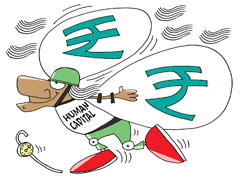
I am 45 years old and I have FD: Rs. 80 Lacs, PPF: Rs. 30 Lacs, Mutual Funds: 8 Lacs, NPS: 15 Lacs and EPF: 25 lacs. My job situation beyond 50 is difficult. My current salary is 18 lacs p.a. I have two kids aged 13 and 10 and I have a flat on which there is no loan. Please suggest how to optimally save for retirement/Kids education 10 years away.
Ans: Evaluating Your Current Financial Situation
Sir, you are at a crucial stage of life where planning for retirement and your children's education becomes top priority. Your existing assets indicate that you have been diligent in saving and investing. Let’s assess your current financial status.
FDs: Rs 80 Lacs in Fixed Deposits shows that you prioritise safety. However, returns from FDs are generally low, barely beating inflation.
PPF: Rs 30 Lacs in PPF is a wise decision for tax-saving and long-term growth. However, PPF has a lock-in period and a cap on annual contributions.
Mutual Funds: Rs 8 Lacs in mutual funds indicates a start towards equity exposure, but the amount is relatively low.
NPS and EPF: Rs 15 Lacs in NPS and Rs 25 Lacs in EPF are strong pillars for retirement. Both are tax-efficient and provide long-term growth.
Flat with No Loan: Owning a flat without any loan is a significant achievement. It secures your living situation, freeing up more resources for investment.
Your current salary of Rs 18 Lacs per annum gives you room to invest further, but the concern about job stability post-50 requires strategic planning.
Assessing Retirement Goals
Retirement planning is essential, especially when you foresee uncertainties in your job situation beyond 50. You have 10 to 15 years to build a corpus that can sustain your lifestyle post-retirement.
Retirement Corpus: Based on your lifestyle and expenses, you need a corpus that can provide a steady income without depleting too quickly.
Inflation Consideration: Remember that inflation will erode the purchasing power of your retirement corpus. Your investments should grow faster than inflation.
Diversification: Diversify your portfolio to include a mix of equity, debt, and fixed income to balance risk and returns.
Children's Education Planning
Your children’s education is just a decade away. It’s essential to start investing more aggressively now to ensure you have enough funds when they need it.
Higher Education Costs: Education costs are rising, and you should plan for both tuition fees and living expenses.
Investment Horizon: Since you have 10 years, you can take on slightly higher risk to achieve better returns.
Systematic Investment: Regular investments through SIPs in mutual funds can help you build a substantial corpus for education.
Enhancing Mutual Fund Investments
Your current investment in mutual funds is Rs 8 Lacs, which is relatively low considering your goals. Increasing your exposure to equity can help you achieve higher growth.
Actively Managed Funds: These funds have the potential to outperform the market, especially in the long term. They can help you bridge the gap between your current corpus and future needs.
Diversified Portfolio: Invest in a mix of large-cap, mid-cap, and multi-cap funds to spread risk while capturing growth opportunities.
Regular Monitoring: Periodically review and rebalance your portfolio to stay aligned with your financial goals.
Reallocating Fixed Deposits
While FDs offer safety, they also provide lower returns. You might consider reallocating a portion of your FD holdings to higher-growth assets.
Equity Exposure: Shift some of your FD investments to equity mutual funds. This will help in increasing the overall returns on your investments.
Debt Funds: If you prefer safety, consider debt mutual funds. They provide better returns than FDs with relatively low risk.
Balanced Approach: Maintain a balance between safety and growth by investing in a combination of debt and equity.
Optimising PPF and NPS Contributions
Your PPF and NPS investments are strong, but there’s room to optimise them further.
PPF Contributions: Max out your PPF contributions each year. This will ensure you benefit fully from the tax savings and long-term compounding.
NPS Contributions: Continue contributing to NPS, especially for the additional tax benefits under Section 80CCD(1B). The NPS is a low-cost option that can provide a steady income post-retirement.
Tax Efficiency: Both PPF and NPS are tax-efficient, which means they will grow more effectively without the burden of taxes eating into your returns.
Building an Emergency Fund
Given the uncertainty about your job situation, having an emergency fund is crucial. This fund will ensure you have enough liquidity to cover unexpected expenses.
Liquidity: Keep this fund in liquid assets like savings accounts or liquid mutual funds. This ensures quick access to cash when needed.
Size of the Fund: Ideally, your emergency fund should cover 6 to 12 months of living expenses.
Replenish Regularly: If you ever use your emergency fund, make it a priority to replenish it as soon as possible.
Planning for Healthcare
Healthcare costs are rising, and planning for medical emergencies is crucial, especially as you approach retirement.
Health Insurance: Ensure you have adequate health insurance coverage for yourself and your family. This will protect your savings from getting depleted by medical expenses.
Critical Illness Cover: Consider adding a critical illness cover to your health insurance. This provides an additional layer of financial protection in case of severe health conditions.
Regular Health Check-ups: Regular check-ups can help in early detection of health issues, potentially saving you from higher costs later.
Final Insights
Sir, to secure your retirement and fund your children's education, a strategic reallocation of your existing assets is essential. Increasing your equity exposure through mutual funds, optimising your contributions to PPF and NPS, and setting up a robust emergency fund will set you on the right path.
Additionally, regular review and rebalancing of your portfolio will ensure that you stay on track to meet your financial goals. By making these adjustments now, you can confidently approach retirement and your children’s education with a solid financial foundation.
Best Regards,
K. Ramalingam, MBA, CFP
Chief Financial Planner,
www.holisticinvestment.in
Sir, you are at a crucial stage of life where planning for retirement and your children's education becomes top priority. Your existing assets indicate that you have been diligent in saving and investing. Let’s assess your current financial status.
FDs: Rs 80 Lacs in Fixed Deposits shows that you prioritise safety. However, returns from FDs are generally low, barely beating inflation.
PPF: Rs 30 Lacs in PPF is a wise decision for tax-saving and long-term growth. However, PPF has a lock-in period and a cap on annual contributions.
Mutual Funds: Rs 8 Lacs in mutual funds indicates a start towards equity exposure, but the amount is relatively low.
NPS and EPF: Rs 15 Lacs in NPS and Rs 25 Lacs in EPF are strong pillars for retirement. Both are tax-efficient and provide long-term growth.
Flat with No Loan: Owning a flat without any loan is a significant achievement. It secures your living situation, freeing up more resources for investment.
Your current salary of Rs 18 Lacs per annum gives you room to invest further, but the concern about job stability post-50 requires strategic planning.
Assessing Retirement Goals
Retirement planning is essential, especially when you foresee uncertainties in your job situation beyond 50. You have 10 to 15 years to build a corpus that can sustain your lifestyle post-retirement.
Retirement Corpus: Based on your lifestyle and expenses, you need a corpus that can provide a steady income without depleting too quickly.
Inflation Consideration: Remember that inflation will erode the purchasing power of your retirement corpus. Your investments should grow faster than inflation.
Diversification: Diversify your portfolio to include a mix of equity, debt, and fixed income to balance risk and returns.
Children's Education Planning
Your children’s education is just a decade away. It’s essential to start investing more aggressively now to ensure you have enough funds when they need it.
Higher Education Costs: Education costs are rising, and you should plan for both tuition fees and living expenses.
Investment Horizon: Since you have 10 years, you can take on slightly higher risk to achieve better returns.
Systematic Investment: Regular investments through SIPs in mutual funds can help you build a substantial corpus for education.
Enhancing Mutual Fund Investments
Your current investment in mutual funds is Rs 8 Lacs, which is relatively low considering your goals. Increasing your exposure to equity can help you achieve higher growth.
Actively Managed Funds: These funds have the potential to outperform the market, especially in the long term. They can help you bridge the gap between your current corpus and future needs.
Diversified Portfolio: Invest in a mix of large-cap, mid-cap, and multi-cap funds to spread risk while capturing growth opportunities.
Regular Monitoring: Periodically review and rebalance your portfolio to stay aligned with your financial goals.
Reallocating Fixed Deposits
While FDs offer safety, they also provide lower returns. You might consider reallocating a portion of your FD holdings to higher-growth assets.
Equity Exposure: Shift some of your FD investments to equity mutual funds. This will help in increasing the overall returns on your investments.
Debt Funds: If you prefer safety, consider debt mutual funds. They provide better returns than FDs with relatively low risk.
Balanced Approach: Maintain a balance between safety and growth by investing in a combination of debt and equity.
Optimising PPF and NPS Contributions
Your PPF and NPS investments are strong, but there’s room to optimise them further.
PPF Contributions: Max out your PPF contributions each year. This will ensure you benefit fully from the tax savings and long-term compounding.
NPS Contributions: Continue contributing to NPS, especially for the additional tax benefits under Section 80CCD(1B). The NPS is a low-cost option that can provide a steady income post-retirement.
Tax Efficiency: Both PPF and NPS are tax-efficient, which means they will grow more effectively without the burden of taxes eating into your returns.
Building an Emergency Fund
Given the uncertainty about your job situation, having an emergency fund is crucial. This fund will ensure you have enough liquidity to cover unexpected expenses.
Liquidity: Keep this fund in liquid assets like savings accounts or liquid mutual funds. This ensures quick access to cash when needed.
Size of the Fund: Ideally, your emergency fund should cover 6 to 12 months of living expenses.
Replenish Regularly: If you ever use your emergency fund, make it a priority to replenish it as soon as possible.
Planning for Healthcare
Healthcare costs are rising, and planning for medical emergencies is crucial, especially as you approach retirement.
Health Insurance: Ensure you have adequate health insurance coverage for yourself and your family. This will protect your savings from getting depleted by medical expenses.
Critical Illness Cover: Consider adding a critical illness cover to your health insurance. This provides an additional layer of financial protection in case of severe health conditions.
Regular Health Check-ups: Regular check-ups can help in early detection of health issues, potentially saving you from higher costs later.
Final Insights
Sir, to secure your retirement and fund your children's education, a strategic reallocation of your existing assets is essential. Increasing your equity exposure through mutual funds, optimising your contributions to PPF and NPS, and setting up a robust emergency fund will set you on the right path.
Additionally, regular review and rebalancing of your portfolio will ensure that you stay on track to meet your financial goals. By making these adjustments now, you can confidently approach retirement and your children’s education with a solid financial foundation.
Best Regards,
K. Ramalingam, MBA, CFP
Chief Financial Planner,
www.holisticinvestment.in
DISCLAIMER: The content of this post by the expert is the personal view of the rediffGURU. Users are advised to pursue the information provided by the rediffGURU only as a source of information to be as a point of reference and to rely on their own judgement when making a decision.
MoneyReply


You may like to see similar questions and answers below
Ramalingam Kalirajan |10874 Answers |Ask -Follow
Mutual Funds, Financial Planning Expert - Answered on Jul 23, 2024
.jpg "investments-o (2).jpg")
Milind Vadjikar | Answer |Ask -Follow
Insurance, Stocks, MF, PF Expert - Answered on Nov 02, 2024

Milind Vadjikar | Answer |Ask -Follow
Insurance, Stocks, MF, PF Expert - Answered on Oct 31, 2024


Naveenn Kummar |233 Answers |Ask -Follow
Financial Planner, MF, Insurance Expert - Answered on Sep 18, 2025

Latest Questions

Mayank Chandel |2569 Answers |Ask -Follow
IIT-JEE, NEET-UG, SAT, CLAT, CA, CS Exam Expert - Answered on Dec 08, 2025

Mayank Chandel |2569 Answers |Ask -Follow
IIT-JEE, NEET-UG, SAT, CLAT, CA, CS Exam Expert - Answered on Dec 08, 2025
Asked by Anonymous - Nov 18, 2025Hindi

Sir I passed class 12th from Maharashtra board (PCMB + English) I scored 48 in chemistry 52 in physics and 46 in biology I have a marksheet from Nios board which consists only one subject biology in which I scored 58 marks , My question is am I eligible for admission in mbbs ( govt college ) if I score good in Neet 2026 ??? Can I combine state board (PCB)marksheet + Nios ( biology marksheet) to fullfill 50% PCB aggregate score ?? I am from general Ews category please resolve my query
Ans: I recommend appearing for all 5 subjects through NIOS
Asked on - Dec 08, 2025 | Answered on Dec 08, 2025
Am I ineligible for mbbs?? Will they reject me?
Ans: Might be as you gave PCMB already from MS board. There is not concrete answer in counselling brochure.
Mayank Chandel |2569 Answers |Ask -Follow
IIT-JEE, NEET-UG, SAT, CLAT, CA, CS Exam Expert - Answered on Dec 08, 2025

Mayank Chandel |2569 Answers |Ask -Follow
IIT-JEE, NEET-UG, SAT, CLAT, CA, CS Exam Expert - Answered on Dec 08, 2025

Mayank Chandel |2569 Answers |Ask -Follow
IIT-JEE, NEET-UG, SAT, CLAT, CA, CS Exam Expert - Answered on Dec 08, 2025


Anu Krishna |1746 Answers |Ask -Follow
Relationships Expert, Mind Coach - Answered on Dec 08, 2025


Ramalingam Kalirajan |10874 Answers |Ask -Follow
Mutual Funds, Financial Planning Expert - Answered on Dec 08, 2025


Samraat Jadhav |2499 Answers |Ask -Follow
Stock Market Expert - Answered on Dec 08, 2025

Ramalingam Kalirajan |10874 Answers |Ask -Follow
Mutual Funds, Financial Planning Expert - Answered on Dec 08, 2025



Radheshyam Zanwar |6737 Answers |Ask -Follow
MHT-CET, IIT-JEE, NEET-UG Expert - Answered on Dec 08, 2025