Home > Money > Question
Need Expert Advice?Our Gurus Can Help

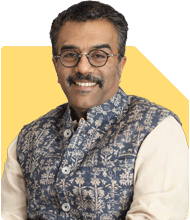
Ramalingam

Ramalingam Kalirajan  |11044 Answers  |Ask -

Mutual Funds, Financial Planning Expert - Answered on Feb 24, 2026

Ramalingam Kalirajan has over 23 years of experience in mutual funds and financial planning.
He has an MBA in finance from the University of Madras and is a certified financial planner.
He is the director and chief financial planner at Holistic Investment, a Chennai-based firm that offers financial planning and wealth management advice.... more

sarvothama Question by sarvothama on Feb 23, 2026Hindi

Money

Dear Sir, My son is 29 year old Software Engineer having 14L package. He has started MF investments since 2021, 14.06 L invested through SIP and the present corpus is 14.06 @ 8.43 XIRR. Presently He is presently investing 60K monthly SIP in the following MF. 1. ICICI Prud. NASDAQ - 3K 2. P.P.Flexi Cap - 10K 3. Quant ELSS - 7K 4. HDFC Retirement Saving, Equity Plan - 10K 5. Kotak Midcap - 6K 6. SBI Focused Equity - 8K 7. Bandhan Small Cap - 8K 8. Nippon Multi Asset - 8K His investment period is 20+ years for Children's higher education / Retirement. His wife is also a Software Engineer. They can take market fluctuation risks. Please review the portfolio and suggest changes if any. With Thanks & Regards S.Salvankar

Ans: It is wonderful to see your son’s dedication to building a solid financial future at such a young age. Starting a systematic investment plan in 2021 and building a corpus of Rs. 14.06 lakh is a great achievement. With both he and his wife working in the software industry, they have a strong combined income potential and the ability to stay invested for a long 20-year horizon. This discipline will surely help them meet their goals for children's education and retirement.

» Evaluating the current portfolio structure

Your son has a very wide range of funds. While he is investing Rs. 60,000 every month, this amount is spread across eight different schemes. In the world of investing, having too many funds can sometimes lead to "over-diversification." This means he might be owning the same stocks through different schemes, which does not really help in reducing risk. A more focused portfolio with fewer, high-quality schemes often performs better over 20 years.

» Analysis of asset allocation and risk

The portfolio has a good mix of large, mid, and small-cap exposure. However, some categories like "focused" and "multi-asset" might be overlapping with his "flexi-cap" and "mid-cap" choices. Since the couple can handle market ups and downs, staying tilted toward equity is a smart move. The small and mid-cap segments are great for long-term growth, but they need to be balanced so the portfolio doesn't become too shaky during market corrections.

» Insights on international and sectoral exposure

Investing in foreign markets and specific sectors like "retirement" or "tax-saving" (ELSS) has its pros and cons. ELSS is only necessary if he needs to save tax under the old tax regime. If he has moved to the new tax regime, that money could be put into more aggressive growth funds. International exposure is good for diversification, but he must ensure the Indian equity portion remains the primary engine for his wealth creation.

» Benefits of active management over passive options

I noticed an investment in a fund that tracks a specific foreign index. It is important to know that index funds simply follow a list of stocks. They cannot move out of bad companies or pick winners before they become big. On the other hand, active funds have professional fund managers who use their skills to pick the best stocks. These managers can protect the portfolio during bad times and try to give higher returns than the market average during good times. For a 20-year goal, having an expert choose the right stocks is much better than just following a fixed list.

» The value of regular funds and professional guidance

If your son is investing in "direct" plans to save a small amount on fees, he might be missing out on much bigger benefits. Investing is not just about picking a fund; it is about staying calm when markets fall and rebalancing the portfolio at the right time. A Certified Financial Planner provides a 360-degree solution by looking at taxes, goals, and risk. By investing in "regular" plans through a distributor who is also a Certified Financial Planner, your son gets expert advice that can help him avoid costly mistakes. The small fee paid is often recovered through better decision-making and higher long-term wealth.

» Tax implications on equity gains

When he eventually sells his equity investments after many years, he should be aware of the tax rules. Long-term capital gains (LTCG) above Rs. 1.25 lakh are taxed at 12.5%. If he sells any equity investment before one year, the short-term capital gains (STCG) are taxed at 20%. Keeping these rules in mind helps in better exit planning when the goals are near.

» Finally

Your son is on a very good path. To make the plan even stronger, he should consider reducing the number of schemes to avoid overlap. Focusing on a few well-managed active funds will make tracking easier and likely improve results. He should also ensure he has a separate term insurance policy and a health cover, so his investments stay protected even during emergencies.

Best Regards,

K. Ramalingam, MBA, CFP,

Chief Financial Planner,

www.holisticinvestment.in
https://www.youtube.com/@HolisticInvestment
DISCLAIMER: The content of this post by the expert is the personal view of the rediffGURU. Users are advised to pursue the information provided by the rediffGURU only as a source of information to be as a point of reference and to rely on their own judgement when making a decision.
Money

You may like to see similar questions and answers below

Ramalingam

Ramalingam Kalirajan  |11044 Answers  |Ask -

Mutual Funds, Financial Planning Expert - Answered on Mar 25, 2025

Money
Please review my MF portfolio. My monthly SIP is 18000/- per month. Current portfolio value is 1.5 Lakh. 1. ICICI Prudential Bluechip Fund - 4000 2. Parag Parikh Flexi Cap Fund - 4000 3. Nippon India small cap - 4000 4. HDFC balanced advantage fund- 2000 5. Motilal oswal Midcap fund - 2000 6. JM Aggressive Hybrid Fund - 1000 7. Bandhan Nifty Alpha Low Volatility 30 Index - 1000 (NFO) Traditional investments are as follows, and the current value is 15 Lakh. 1. EPF - 44000/- per month 2. NPS - 22000/- per month 3. RD - 20000/- Per month to build an emergency fund. I am planning to increase my SIP from 18000 to 60000 every month. Please let me know if I need any changes in my portfolio. I am planning to build a portfolio of 5 crore in the next 15 years. Currently, I am 35 years and planning to retire by the age of 50 years.
Ans: Your financial plan is well-structured, and your investment discipline is strong. You have a clear retirement goal and an aggressive investment approach. However, there are areas where you can optimize your portfolio for better returns and lower risk.

Let’s analyze your portfolio from a 360-degree perspective.

1. Strengths of Your Current Portfolio
Your investment approach is well-planned. Here’s what you are doing right:

Disciplined SIP investment – You have a regular SIP plan in equity mutual funds.

Diversified portfolio – You have exposure to large-cap, mid-cap, small-cap, flexi-cap, and hybrid funds.

Strong traditional investments – EPF and NPS provide stability in retirement.

Emergency fund planning – Your recurring deposit ensures liquidity for unexpected expenses.

Increasing SIPs – Scaling up SIPs from Rs 18,000 to Rs 60,000 will help wealth creation.

Your financial discipline will help you reach your Rs 5 crore target.

2. Issues in Your Mutual Fund Portfolio
While your portfolio is diversified, some adjustments can improve performance.

Over-Diversification
You have too many funds across categories.

Too many funds dilute returns and make tracking difficult.

Having 4-5 well-chosen funds is better than 7-8 average funds.

Index Fund Exposure
One of your funds is an index fund.

Index funds cannot beat the market, while actively managed funds can.

A Certified Financial Planner (CFP) helps select the best actively managed funds.

Hybrid Funds and Overlapping Categories
You hold two hybrid funds, which can limit aggressive growth.

These funds are not necessary when you have EPF and NPS.

Adjusting these issues will enhance your returns.

3. Optimizing Your Mutual Fund Portfolio
Here’s how you can make your portfolio more efficient:

Reduce the Number of Funds
Keep 4-5 funds for focused wealth creation.

Large-cap, flexi-cap, mid-cap, and small-cap funds provide balanced exposure.

Avoid hybrid funds as EPF and NPS already offer stability.

Exit Index Fund
Actively managed funds provide better long-term returns.

Fund managers adjust portfolios based on market conditions.

An index fund will not protect during market corrections.

Adjust Your Portfolio Allocation
Large-cap fund – 30% allocation for stability.

Flexi-cap fund – 30% allocation for fund manager flexibility.

Mid-cap fund – 20% allocation for higher growth potential.

Small-cap fund – 20% allocation for aggressive wealth creation.

This will balance risk and return effectively.

4. Optimizing Traditional Investments
Your traditional investments are strong, but they can be more efficient.

EPF Contribution
EPF is a safe investment with tax benefits.

However, it provides lower returns compared to equity.

Consider redirecting a small portion towards equity SIPs for higher growth.

NPS Contribution
NPS is a good tax-saving tool but has withdrawal restrictions.

You can keep investing but ensure a higher allocation in equity within NPS.

Recurring Deposit for Emergency Fund
RDs are good for liquidity but offer low returns.

Instead, keep emergency funds in a liquid mutual fund for better returns.

A balanced approach between safety and growth is necessary.

5. Increasing SIPs from Rs 18,000 to Rs 60,000
Your plan to increase SIPs is excellent. However, proper allocation is required.

Large-cap fund – Increase SIP from Rs 4,000 to Rs 15,000.

Flexi-cap fund – Increase SIP from Rs 4,000 to Rs 15,000.

Mid-cap fund – Increase SIP from Rs 2,000 to Rs 10,000.

Small-cap fund – Increase SIP from Rs 4,000 to Rs 10,000.

Liquid fund – Allocate Rs 10,000 for short-term needs.

This ensures strong wealth creation while maintaining liquidity.

6. Expected Growth and Retirement Planning
With disciplined investing, you can achieve your Rs 5 crore goal.

Equity SIPs – Higher allocation ensures compounding benefits.

Traditional investments – EPF and NPS provide stability.

Emergency fund – Ensures liquidity for unexpected needs.

Your current path is excellent. Minor adjustments will enhance your wealth creation journey.

Finally
You are on the right track towards financial freedom. Your disciplined investment approach is commendable. However, some refinements will optimize your returns.

Reduce over-diversification and exit underperforming funds.

Replace index funds with actively managed funds for better returns.

Allocate SIPs strategically for better risk-reward balance.

Re-evaluate traditional investments to maximize efficiency.

Ensure liquidity through a liquid fund instead of an RD.

With these adjustments, you can achieve your Rs 5 crore target confidently.

Best Regards,

K. Ramalingam, MBA, CFP,

Chief Financial Planner,

www.holisticinvestment.in
https://www.youtube.com/@HolisticInvestment

..Read more

Ramalingam

Ramalingam Kalirajan  |11044 Answers  |Ask -

Mutual Funds, Financial Planning Expert - Answered on Jun 03, 2025

Money
Dear Sir, I am 62 years old retired person investing MF since 2010. and my MF investments are as follows: Total Investments: 20.58L, Corpus- 41.78, XIRR-14.41%. Details of Investment: 1. SBI Contra Regular: Investments from 2010 to 2024, presently suspended. Invest. amount- 4.83L, Corpus-19.02L, XIRR-17.3%. Present SIP- 50K since 3-4 years 1. Parag Parikh Flexi cap, direct - 10K 2. HDFC Balanced Advantage, direct- 20K 3. HDFC Retirement Saving, direct - 5K 4. Navi Nifty 50 Index, direct - 5K 5. Kotak Nifty Next 50 Index- 5K 6. Motilal Oswal Nifty 500 Momentum 50, direct -5K, Time horizon- my whole life I am planning to withdraw 10% of corpus from SBI Contra Regular and invest in Flexi Cap/ Balance advantage Funds. I have sufficient amount in FD, Post Office SCCS, PO MIS, LIC Ret. Pension, SBI Life Pension, NPS and EPF Higher Pension which will take care of my expenses. Also have health insurance. My children are married and working. My investment objective is to gift these investments to my son and daughter. Please suggest your views on portfolios. With Thanks & Regards, S. Salvankar
Ans: I appreciate your dedication to investing since 2010 and your clear goal to gift these investments to your children. Let’s assess your portfolio and offer a 360-degree review.

Your Current Investment Picture

You have Rs 20.58 lakhs invested in mutual funds.

Your corpus is Rs 41.78 lakhs now.

Your overall XIRR is 14.41%, which is very good.

You have a good mix of SIPs and lumpsum investments.

You have also diversified across different mutual fund types.

Your regular SIP of Rs 50,000 shows your disciplined approach.

Your Other Savings and Financial Security

You have enough in FD, Post Office SCCS, PO MIS, LIC Pension, SBI Life Pension, NPS, and EPF Higher Pension.

These sources will cover your living expenses and medical needs.

You have health insurance to take care of future health costs.

Your children are settled and financially secure.

This lets you take a long-term view for your mutual fund investments.

Portfolio Evaluation and Insights

Your portfolio has grown steadily over the years.

Your best-performing investment is in SBI Contra Regular, with 17.3% XIRR.

You are considering withdrawing 10% of SBI Contra Regular to invest in Flexi Cap / Balanced Advantage Funds.

You also have direct mutual fund schemes in your portfolio.

Let’s now analyse these areas in detail.

Direct Mutual Funds vs Regular Funds

You hold direct mutual funds.

Direct funds need your own time and knowledge to manage well.

They don’t give you personal guidance or review of your portfolio.

Market situations change, and rebalancing needs to be done.

If you invest through regular funds via a Mutual Fund Distributor (MFD) with a Certified Financial Planner (CFP) credential, you get continuous help and monitoring.

The CFP’s insights will help you with tax planning, rebalancing, and goal-based investing.

Direct funds don’t give you this personal, professional support.

Hence, I suggest you consider switching your direct funds to regular funds with the support of an MFD and a CFP.

Disadvantages of Index Funds

Your portfolio has index funds like Navi Nifty 50 Index, Kotak Nifty Next 50 Index, and Motilal Oswal Nifty 500 Momentum 50.

Index funds just copy the index.

They do not beat the market. They only match it.

During market crashes, index funds fall without protection.

Actively managed funds have a professional fund manager.

They use in-depth research to try to outperform the market.

These funds can manage risk better in bad markets.

Actively managed funds also use tactical asset allocation to protect your money.

For your long-term family gifting goals, actively managed funds are better.

Your Withdrawal Plan

You plan to withdraw 10% of SBI Contra Regular and invest in Flexi Cap / Balanced Advantage Funds.

This is a good plan as you are taking out some profit and putting it in diversified funds.

Flexi Cap Funds and Balanced Advantage Funds are managed actively.

They will give you better risk management.

This will also help you reduce concentration risk in your portfolio.

Keep this 10% withdrawal as a staggered plan.

Don’t do it all at once.

Spread it over a few months to average out market ups and downs.

Suggested Approach for Your Portfolio

Keep your core portfolio in actively managed diversified funds.

Continue your SIP in actively managed funds for long-term growth.

Slowly reduce your exposure to index funds over time.

Move money from index funds to actively managed funds.

Balanced Advantage Funds are good to balance equity and debt.

Flexi Cap Funds are good for flexibility across large, mid, and small caps.

You can keep a mix of Flexi Cap Funds and Balanced Advantage Funds.

They will help reduce risk and improve returns.

Asset Allocation Review

Even though you are financially secure, asset allocation is still key.

Maintain a healthy balance between equity and debt.

This ensures that if the market goes down, you are protected.

If your equity allocation is above 60%, bring it down to around 50-55% gradually.

Keep the rest in balanced advantage or conservative hybrid funds.

This keeps your investments stable and growing.

Tax Planning for Mutual Funds

You are likely to withdraw some money from SBI Contra Fund.

Remember, as per the new rules, for equity mutual funds, LTCG above Rs 1.25 lakh is taxed at 12.5%.

Short-term capital gains are taxed at 20%.

You may want to stagger your withdrawals to keep gains below Rs 1.25 lakh each financial year.

This will help reduce your tax liability.

A CFP can help you plan these staggered withdrawals better.

Estate and Gifting Planning

You want to gift your investments to your children.

This is a thoughtful and loving gesture.

For gifting, you can keep your investments in your own name.

When you pass away, the investments will go to your children as per your nomination.

It’s good to update your mutual fund nominations.

Also, create a simple Will to say who will get which investment.

This will make it easy for your children to claim them later.

If you want, you can make joint holding in mutual funds with your children.

Joint holding makes the transition smoother.

Discuss this with a lawyer or CFP if you need guidance.

Review of Other Investments

Your FD, Post Office SCCS, PO MIS, LIC Pension, SBI Life Pension, NPS and EPF Higher Pension give you a strong foundation.

They ensure you don’t need to worry about regular cash flow.

You can keep them as they are for safety and steady income.

They will also help in emergencies.

Health Insurance and Emergency Corpus

You already have health insurance, which is very good.

Keep reviewing your health cover every 2-3 years.

If medical costs go up, top up your health cover.

Keep an emergency fund equal to at least 12 months of your expenses in a safe place.

This gives you peace of mind and stability.

Periodic Portfolio Review

Even if you don’t need this money, it is good to review your portfolio every year.

See if your funds are doing well.

If any fund is not performing well for 2-3 years, consider moving to a better fund.

Don’t chase short-term performance.

Focus on steady and consistent growth.

Role of a Certified Financial Planner

Your investments are for your children’s future.

A CFP will help you plan this carefully.

A CFP will guide you on estate planning, nomination, and taxes.

A CFP will give you an unbiased view and ongoing monitoring.

This personal guidance is very valuable as market and rules keep changing.

Avoid Insurance-Cum-Investment Products

You mentioned LIC Retirement Pension, SBI Life Pension, NPS.

These are fine for basic retirement security.

But in future, avoid investing in insurance-cum-investment products like ULIPs.

They have high charges and low returns.

Mutual funds are more transparent and flexible.

Finally

Your portfolio is strong and well planned.

Your disciplined SIP approach is very good.

Switching direct funds to regular funds with CFP support will give you better management.

Reducing index funds and focusing on active funds will improve your returns.

Keep your estate planning up to date with nominations and a Will.

Don’t worry about short-term market changes.

Your children will benefit from your patient and thoughtful investing.

Keep learning and reviewing your investments with a CFP to keep them future-ready.

If you need help with switching your direct funds or making an estate plan, let me know.

Best Regards,

K. Ramalingam, MBA, CFP,

Chief Financial Planner,

www.holisticinvestment.in
https://www.youtube.com/@HolisticInvestment

..Read more

Reetika

Reetika Sharma  |590 Answers  |Ask -

Financial Planner, MF and Insurance Expert - Answered on Feb 03, 2026

Money
sir, I am 28 year old Engineer working in IT field for 6 years. Recently married and my wife is also working in a IT Company. I have started investment in MF since my first salary and at present total the corpus is 15 L and my present SIP amount is 60K. In addition I am having 6L in PPF, 8L in Bank FD, 15L PLI and 5L Health Policy. My parents are well settled. My portfolio is as given below. 1. ICICI Prud. NASDAQ - 3K 2. Parag Parikh Flexi Cap - 10K 3. Quant ELSS - 7K 4. HDFC Retirement Saving - 10K 5. Kotak Mid Cap - 6K 6. SBI Focused Equity - 8K 7. Bandhan Small Cap - 8K 8. Nippon India Multi Asset - 8K My investment time horizon is 20+ years. Please review and suggest changes required if any. With Thanks & Regards, S. Salvankar
Ans: Hi Sarvothama,

You are doing great with your iverall investments at such age. Early investment really helps you in the long run. Let us analyse everything in detail:
1. Make sure to have ample emrgency fund in FD or liquid funds.
2. You should have proper term insurance and health insurance for yourself and family. As your spouse is working, she should also have an independent term insurance.
3. 8 lakhs in FD - can be treated as your emergency fund.
4. 6 lakhs in PPF - not recommended as a=you must have your EPF being an IT Professional. PPF is just like EPF, hence make minimum contributions to keep the account active and close it when 15 years tenure is over.
5. Health policy - 5 lakhs >> insufficient keeping in mind rising medical costs. Increase it to a minimum of 25 lakhs family floater for yourself and spouse.
6. 15 lakhs PLI - continue.
7. 15 lakhs + 60k monthly SIP in mutual funds. Very good and you should continue. However, the funds chosen are not exactly great. Entire allocation needs a proper plan in alignment to your profile and long term goal. It is better to work with a professional to choose better funds for your 20+ years goal.
I will not recommend continuing your SIPs in - Quant ELSS, HDFC Retirement Savings, Nippon multi asset and Focused Equity fund.

Hence overall reallocation and distribution in required here.
Do consult a professional Certified Financial Planner - a CFP who can guide you with exact funds to invest in keeping in mind your age, requirements, financial goals and risk profile. A CFP periodically reviews your portfolio and suggest any amendments to be made, if required.

Let me know if you need more help.

Best Regards,
Reetika Sharma, Certified Financial Planner
https://www.instagram.com/cfpreetika/

..Read more

Latest Questions
Dr Dipankar

Dr Dipankar Dutta  |1856 Answers  |Ask -

Tech Careers and Skill Development Expert - Answered on Feb 26, 2026

Ramalingam

Ramalingam Kalirajan  |11044 Answers  |Ask -

Mutual Funds, Financial Planning Expert - Answered on Feb 26, 2026

Money
Hi Ramalingam Sir, Very fond of your guidance. I`ve invested in ICICI Prudential Guranteed Income Plan with PPT of 10 Years & Policy Term is 11 Years. The Yearly Premium is 5 lakhs with Guaranteed Early Income i.e which started from 2nd year onwards is 1.19 Lacs. After 11th year Guaranteed Yearly Income will be 6.38 Lacs. I started this Policy in 2022. Very soon I realized that this is not worth of investing my money. I decided to stop Premium after 2 years which made my Policy as Paid up status which means all benefits are reduced but Policy is Active. I changed myself as I did mistakes in Past (by taking this policy) and now I read each clause very carefully. Now in this case If i surrender, the Surrender value is calculated based on Guaranteed factor X Total premium paid - Income already Paid. Now currently Surrender value is 2.9 Lacs as GV factor is 50%. This factor will improve Gradually with time and by 9th year it will went to 90%. I want to Surrender but now will incur heavy loss (approx. 4.8 lacs) ( to me while in 9th year at least I`ll get 90% of my Premiums back. So pl. advice what is right approach as when should i think for Surrender. As of now by God grace I`m not in any financial emergency. Further is my understanding correct that SV will rise with time. Thanks in advance for your guidance.
Ans: It is very good that you have started reading your policy papers so closely now. Most people do not take the time to understand the fine print, but you have already taken a big step by identifying that this plan does not match your long-term goals. Your ability to stop the premium early shows you are now in control of your money.

» Understanding your paid-up policy and surrender value

Your understanding of how the Surrender Value (SV) works is mostly right. In these types of plans, the Guaranteed Surrender Value factor does go up as the years pass. However, there is a catch. While the percentage factor increases, the insurance company also deducts the income they have already paid out to you from the final amount. Even if you wait until the 9th year to get 90% of your premiums back, you are losing out on the "time value" of that money. Money sitting in a low-yield environment for nine years loses its buying power because of inflation.

» The math behind surrendering now versus later

If you surrender today, you take a big loss of Rs. 4.8 lakhs. This feels painful. But if you keep the money locked in just to avoid the loss, you are essentially letting the company hold your remaining Rs. 2.9 lakhs for several more years at a very low return. A 360-degree view suggests that if you take the money out now and put it into a productive asset like a diversified portfolio of actively managed mutual funds, that money can work much harder for you. Actively managed funds are great because a professional fund manager chooses the best stocks to beat the market, unlike other options that just follow a fixed list.

» Why regular funds and expert guidance matter

Since you mentioned you want to be careful now, it is better to invest through regular plans with the help of a Certified Financial Planner. Many people think direct funds are better because of lower fees, but they often end up making emotional mistakes or picking the wrong funds without a guide. A regular plan gives you access to professional advice and periodic reviews, which ensures you stay on track. This expert support is worth much more than the small cost difference, especially when you are trying to recover from a past investment mistake.

» Opportunity cost and your next steps

Since you do not have a financial emergency, you have a great chance to build wealth. Instead of waiting years just to get your original 5 lakhs back, you can take what is left and start a Systematic Investment Plan (SIP). Over the next seven to eight years, a well-managed equity fund could potentially grow that small amount into something much larger than what the insurance policy would ever pay. The loss you take today is the "fees" for a valuable lesson, but staying in the plan is a continuous cost.

» Tax rules to keep in mind

When you move your money to equity mutual funds, remember the tax rules. If you hold your investment for more than a year, it is called Long Term Capital Gain (LTCG). Any profit above Rs. 1.25 lakh is taxed at 12.5%. If you sell before one year, the profit is taxed at 20%. This is still very efficient compared to many other products.

» Finally

The best approach is usually to exit such low-yield insurance-cum-investment plans as soon as possible. Since your policy is already paid-up, it is not eating new money, but it is wasting your old money. Surrendering now and moving the funds into actively managed mutual funds through a regular plan will likely put you in a much stronger position by the 11th year compared to waiting for the policy to mature.

Best Regards,

K. Ramalingam, MBA, CFP,

Chief Financial Planner,

www.holisticinvestment.in
https://www.youtube.com/@HolisticInvestment

...Read more

Ramalingam

Ramalingam Kalirajan  |11044 Answers  |Ask -

Mutual Funds, Financial Planning Expert - Answered on Feb 26, 2026

Money
Dear Sir, Wanted to know if Iam right in my thinking. I want to accumulate 3.5 cr in 15 years. For that , I am planning to start an SIP of 40 k in a small cap mutual fund which have easily beaten small cap index benchmarks last 15 yr/20 yr time frames and generated superior returns( Although I understand past performance may or may not replicate similar performance) However I have noticed that bigger compouding or multibagger return from Mutual funds have come largely only from small and mid caps. Large caps may not come closer to what small caps or a mid cap can generate. So by staying disciplined with sip of 40k everymonth in small cap and continue till 15 years be good plan to accumulate 3.5 cr. 15 years in a small cap fund i believe will be decent hold time for reaching such corpus riding various market cycles etc. risk can be largely minimized. Also if the target is nearing in the 14th yr, the entire corpus can be moved to a short term debt fund as a safer strategy then. Please advise. Thank you
Ans: It is great to see your clear vision for building a corpus of Rs. 3.5 cr over the next 15 years. Your decision to start a monthly SIP of Rs. 40,000 shows strong financial discipline. Planning for a 15-year horizon is a smart move because it gives your money enough time to grow and handle different market ups and downs.

» Assessing the small cap strategy

Choosing small cap funds for long-term growth is an interesting choice. You are right that small and mid-cap companies often have more room to grow compared to large-cap companies. This can lead to higher returns over a long period. However, small cap funds can be very volatile. This means the value of your investment might go up and down a lot more than a large-cap fund. Since you have a 15-year window, you have the time to stay invested through these cycles, which is a good way to manage that risk.

» The value of active management over index benchmarks

You mentioned that the funds you are looking at have beaten the small cap index benchmarks. This is a very important observation. In the Indian market, especially in the small cap space, index funds have many disadvantages. Index funds simply track a basket of stocks regardless of their quality. This means they include both good and bad companies.

Actively managed funds are much better because a professional fund manager carefully picks stocks. They can identify high-quality companies with strong growth potential and avoid those with poor governance or weak financials. This active selection is why many managed funds consistently outperform the index. By choosing active funds, you get the benefit of expert research which is crucial in the complex small cap segment.

» Portfolio structure and diversification

While small caps offer high growth, relying only on one category might be risky. A 360-degree financial solution usually suggests a bit more balance. Even though you want high returns, having some exposure to mid-cap or multicap funds could provide a smoother journey without sacrificing too much growth. This helps in staying disciplined because the portfolio won't swing as wildly during market corrections.

» Risk management and the exit strategy

Your plan to move the corpus to a short-term debt fund in the 14th year is a very wise strategy. As a Certified Financial Planner, I see this as a great way to protect your gains. When you are close to your goal, you do not want a sudden market drop to reduce your 15-year hard work. Shifting to safer debt instruments ensures that your Rs. 3.5 cr target is locked in and available when you need it.

» Taxation on your gains

When you eventually move your money or withdraw it, keep the tax rules in mind. For equity mutual funds, Long-Term Capital Gains (LTCG) above Rs. 1.25 lakh are taxed at 12.5%. If you sell any units before one year, the Short-Term Capital Gains (STCG) are taxed at 20%. For the debt funds you plan to use in the final year, the gains will be taxed according to your income tax slab.

» Final Insights

Your plan is solid and your goal is achievable with the discipline you are showing. By sticking to your Rs. 40,000 SIP and choosing actively managed funds, you are putting yourself in a strong position. Regularly reviewing the progress with a Certified Financial Planner will help ensure you stay on track and make any small changes needed along the way.

Best Regards,

K. Ramalingam, MBA, CFP,

Chief Financial Planner,

www.holisticinvestment.in
https://www.youtube.com/@HolisticInvestment

...Read more

Ramalingam

Ramalingam Kalirajan  |11044 Answers  |Ask -

Mutual Funds, Financial Planning Expert - Answered on Feb 26, 2026

Money
How much pension will I get from the SBI Saral Pension Yojana plan? I have a annual premium or investment of 150000 for the last 9 years; 1 more year to go the end of the premium. Can I withdraw money after maturity of this plan? Age at the entry was 43, and the sum assured is 1500000
Ans: You have done a great job saving Rs. 150000 every year for 9 years. Thinking about your retirement at the age of 43 shows a lot of maturity. I am very happy to see your strong commitment to saving money for your future.

» Review of your current insurance policy

This policy is a mix of insurance and investment. Usually, these plans give very low returns. You might only get 4 to 5 percent growth. You asked if you can take out all your money after maturity. The rules for these old pension plans do not allow you to withdraw the full cash. They force you to buy a fixed monthly payout plan with a big part of your money. As a Certified Financial Planner, I do not suggest these fixed payout plans. The monthly money you get is very low and it does not grow over time. When prices go up in the future, this fixed money will not be enough for your daily needs.

» Creating a 360 degree solution for your wealth

Since this is an investment combined with insurance, my advice is to surrender this policy now. After you surrender it, you can take the money and invest it in active equity mutual funds. Active mutual funds have experts who pick good companies for you. This helps your money grow much faster over a long time.

» Action steps to grow your retirement money

Stop paying the final premium for this old policy.

Ask the insurance company for your surrender amount.

Put that surrender money into good active mutual funds.

Keep investing your yearly Rs. 150000 into active mutual funds instead of this policy.

Please avoid buying physical land or houses. Property needs too much money at once and is very hard to sell when you need cash fast.

A good mutual fund portfolio will give you a better regular income in your retirement years.

» Final Insights

You already have a wonderful habit of saving money regularly. If you make a small change and pick smarter investments, your future will be very safe. Moving away from low-return insurance plans to active mutual funds makes your money work harder for you. This will bring you a happy and peaceful retirement.

Would you like me to help you find how to start your first active mutual fund investment?

Best Regards,

K. Ramalingam, MBA, CFP,

Chief Financial Planner,

www.holisticinvestment.in
https://www.youtube.com/@HolisticInvestment

...Read more

DISCLAIMER: The content of this post by the expert is the personal view of the rediffGURU. Investment in securities market are subject to market risks. Read all the related document carefully before investing. The securities quoted are for illustration only and are not recommendatory. Users are advised to pursue the information provided by the rediffGURU only as a source of information and as a point of reference and to rely on their own judgement when making a decision. RediffGURUS is an intermediary as per India's Information Technology Act.

Close  

You haven't logged in yet. To ask a question, Please Log in below
Login

A verification OTP will be sent to this
Mobile Number / Email

Enter OTP
A 6 digit code has been sent to

Resend OTP in120seconds

Dear User, You have not registered yet. Please register by filling the fields below to get expert answers from our Gurus
Sign up

By signing up, you agree to our
Terms & Conditions and Privacy Policy

Already have an account?

Enter OTP
A 6 digit code has been sent to Mobile

Resend OTP in120seconds

x