


Need Expert Advice?Our Gurus Can Help
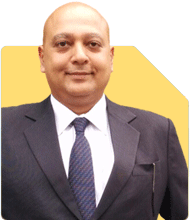
Sushil Sukhwani | Answer |Ask -Follow
Study Abroad Expert - Answered on Jul 02, 2025
Sushil Sukhwani is the founding director of the overseas education consultant firm, Edwise International. He has 31 years of experience in counselling students who have opted to study abroad in various countries, including the UK, USA, Canada and Australia. He is part of the board of directors at the American International Recruitment Council and an honorary committee member of the Australian Alumni Association. Sukhwani is an MBA graduate from Bond University, Australia. ... more
Asked by Anonymous - Jul 02, 2025Hindi

I am looking forward to send my son for Masters abroad. He is presently pursuing BPharm in SRM KTR campus 3rd year, 7th semester. I would like to have a few suggestions about some universities, specially Europe their admission procedures, place to contact in India and expected costs. Thanking you
Ans: Hello,
To begin with, thank you for contacting us. I am happy to hear that your son is currently pursuing his 7th semester of BPharm at SRM KTR. I would like to let you know that he has excellent choices for obtaining a Master’s in Europe. You would be glad to know that outstanding programs in Pharmacy, Pharmaceutical Sciences, and associated life sciences fields are offered in countries such as Germany, the Netherlands, Sweden, the UK, and Ireland. Germany is home to leading universities such as LMU Munich and Heidelberg University that offer minimal to no tuition fees, although proficiency in Germany may be required by certain programs. The monthly cost of living is approximately €850. Outstanding English-taught programs are offered in the Netherlands and Sweden (e.g., Utrecht, Lund University), with tuition fees ranging from €10,000–€17,000 and similar costs of living. With tuition fees costing between €13,000 to £28,000 and higher living expenses, countries like the UK (UCL, King’s) and Ireland (Trinity Dublin) are more expensive. To secure admission, students typically need to have secured a good BPharm score, submit scores of the IELTS or TOEFL, as well as documents such as Statement of Purpose (SOPs) and letters of recommendation. Bear in mind that the application deadlines and prerequisites for each country is different, thus, I would suggest that you begin planning a year in advance.
For more information, you can visit our website: www.edwiseinternational.com
You can also follow us on our Instagram page: edwiseint
To begin with, thank you for contacting us. I am happy to hear that your son is currently pursuing his 7th semester of BPharm at SRM KTR. I would like to let you know that he has excellent choices for obtaining a Master’s in Europe. You would be glad to know that outstanding programs in Pharmacy, Pharmaceutical Sciences, and associated life sciences fields are offered in countries such as Germany, the Netherlands, Sweden, the UK, and Ireland. Germany is home to leading universities such as LMU Munich and Heidelberg University that offer minimal to no tuition fees, although proficiency in Germany may be required by certain programs. The monthly cost of living is approximately €850. Outstanding English-taught programs are offered in the Netherlands and Sweden (e.g., Utrecht, Lund University), with tuition fees ranging from €10,000–€17,000 and similar costs of living. With tuition fees costing between €13,000 to £28,000 and higher living expenses, countries like the UK (UCL, King’s) and Ireland (Trinity Dublin) are more expensive. To secure admission, students typically need to have secured a good BPharm score, submit scores of the IELTS or TOEFL, as well as documents such as Statement of Purpose (SOPs) and letters of recommendation. Bear in mind that the application deadlines and prerequisites for each country is different, thus, I would suggest that you begin planning a year in advance.
For more information, you can visit our website: www.edwiseinternational.com
You can also follow us on our Instagram page: edwiseint
CareerReply


You may like to see similar questions and answers below

Geeta Ratra | Answer |Ask -Follow
Visas, Study Abroad Expert - Answered on Mar 06, 2023


Sushil Sukhwani | Answer |Ask -Follow
Study Abroad Expert - Answered on May 16, 2024

Dr Pananjay K Tiwari | Answer |Ask -Follow
Study Abroad Expert - Answered on Aug 26, 2024


Sushil Sukhwani | Answer |Ask -Follow
Study Abroad Expert - Answered on Dec 09, 2024

Sushil Sukhwani | Answer |Ask -Follow
Study Abroad Expert - Answered on Jun 13, 2025

Latest Questions

Pradeep Pramanik |278 Answers |Ask -Follow
Career And Placement Consultant - Answered on Apr 29, 2026
Pradeep Pramanik |278 Answers |Ask -Follow
Career And Placement Consultant - Answered on Apr 29, 2026


Pradeep Pramanik |278 Answers |Ask -Follow
Career And Placement Consultant - Answered on Apr 29, 2026


Pradeep Pramanik |278 Answers |Ask -Follow
Career And Placement Consultant - Answered on Apr 29, 2026


Pradeep Pramanik |278 Answers |Ask -Follow
Career And Placement Consultant - Answered on Apr 29, 2026


Pradeep Pramanik |278 Answers |Ask -Follow
Career And Placement Consultant - Answered on Apr 29, 2026
Pradeep Pramanik |278 Answers |Ask -Follow
Career And Placement Consultant - Answered on Apr 29, 2026
Pradeep Pramanik |278 Answers |Ask -Follow
Career And Placement Consultant - Answered on Apr 29, 2026
Pradeep Pramanik |278 Answers |Ask -Follow
Career And Placement Consultant - Answered on Apr 29, 2026


Pradeep Pramanik |278 Answers |Ask -Follow
Career And Placement Consultant - Answered on Apr 29, 2026
