Home > Career > Question
Need Expert Advice?Our Gurus Can Help
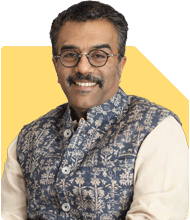
Chocko

Chocko Valliappa  |544 Answers  |Ask -

Tech Entrepreneur, Educationist - Answered on May 09, 2024

Chocko Valliappa is the founder and CEO of Vee Technologies, a global IT services company; HireMee, a talent assessment and talent management start-up; and vice chairman of The Sona Group of education institutions.
A fourth-generation entrepreneur, Valliappa is a member of Confederation of Indian Industry, Nasscom, Entrepreneurs Organization and Young Presidents’ Organization.
He was honoured by the YPO with their Global Social Impact award in 2018.
An alumnus of Christ College, Bangalore, Valliappa holds a degree in textile technology and management from the South India Textile Research Association. His advanced research in the Czech Republic led to the creation of innovative polyester spinning machinery.... more

Rahul Question by Rahul on May 09, 2024Hindi
Listen
Career

I did B. Tech in Civil Engineering in 2012 and M. Tech in Earthquake Engineering from IIT Roorkee in 2015. Due to some personal problems, I qualified and joined Government Polytechnic college in Uttar Pradesh, which is considered equivalent to intermediate, as Lecturer. This work experience did not benefit me at all whenever I applied for any sort of job, be it in central government or any private sector. It has been 8 years since, I am trying to qualify other reputed Government Examinations but couldn't. I am married, age 33 and have a child. Could you kindly suggest now what should I do to change my career from this?

Ans: My suggestion is to be optimistic about future and keep looking for opportunities that will help you chart a new course in your career. Look for emerging areas where your knowledge gained in Masters of Earthquake Engineering can be used. Connect with large engineering and infrastructure companies and consulting firms and explore areas where you could add value.
Career

You may like to see similar questions and answers below
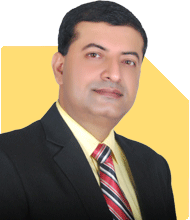
Shekhar

Shekhar Kumar  | Answer  |Ask -

Leadership, HR Expert - Answered on Apr 16, 2024

Listen
Career
I completed my m. Tech in design engineering from mnit jaipur in 2015. After that i worked as asst. Professor in mechanical engg. for 6yrs after that preparing for government exams because in teaching no growth for mechanical & till date not selected. Now gap in my career is of more than 2 yrs what should I proceed in my career now?
Ans: Thank you for contacting me. It's good that you are seeking guidance on your career path after facing challenges with government exams and experiencing a gap in your career. When addressing the resume gap, focus on highlighting the skills, experiences, and accomplishments gained during your tenure as an assistant professor and your preparation for government exams. Emphasize any relevant projects, publications, or contributions that demonstrate your expertise and commitment to your field. You should also consider exploring alternative career paths beyond teaching and government exams now. Your background in design engineering and mechanical engineering opens up various opportunities in industries such as manufacturing, automotive, aerospace, consulting, research, and development. Develop a targeted job search strategy tailored to your career goals and preferences. Utilize jobsites, company websites, recruitment agencies, and professional networks to explore job opportunities that match your skills and interests. Trust in your abilities, stay resilient, and remain open to new opportunities as you continue to pursue your career goals in design engineering and mechanical engineering. Best of luck! Feel free to contact me on Rediff Gurus if you need further assistance or help.

..Read more

Latest Questions
Ramalingam

Ramalingam Kalirajan  |11000 Answers  |Ask -

Mutual Funds, Financial Planning Expert - Answered on Jan 30, 2026

Money
Is it advisable to invest in Midcap and Smallcap ETFs in India compared to Midcap and Smallcap mutual funds? While I understand that Midcap and Smallcap mutual funds may offer higher percentage returns compared to ETFs, the main issue is that no mutual fund consistently remains at the top in terms of returns. The best-performing mutual funds can change over time, making it necessary to monitor and switch from underperforming funds to top-performing ones regularly – a process that can be quite cumbersome and also incurs capital gains tax when exiting a fund. On the other hand, since ETFs track their respective indices, their percentage returns closely mirror those indices, eliminating the need for frequent switching or selling like in the case of mutual funds. However, I am uncertain whether keeping investments in ETFs over the long term (10 years or more) will yield returns comparable to mutual funds once capital gains tax is factored in during fund switches. Could you provide some insight into this?
Ans: I appreciate your thoughtful comparison of ETFs versus mutual funds. You are asking a very practical question and it shows good financial awareness. Let’s look at this carefully so you get clarity without confusion.

» What ETFs and index-linked products really do
– ETFs that track midcap and smallcap indices simply mirror the performance of those market benchmarks.
– There is no active management or stock picking to protect you during weak markets.
– When indices fall sharply, ETFs will fall by almost the same percentage. There is no defensive action.
– Index-linked products may seem low maintenance, but they do not adapt to market changes.

» Why actively managed midcap and smallcap mutual funds are different
– Actively managed funds have professional managers who choose stocks based on research, valuation and risk.
– They can adjust exposure to sectors and companies depending on market conditions.
– This means that in volatile phases, they can protect capital better than index trackers.
– Over long periods, learning to stay invested in well-managed funds often leads to better risk-adjusted outcomes.

» The challenge of “top performing” funds changing over time
– It is true that past performance ranking changes every year. No mutual fund stays number one forever.
– This is why selection should be based on long-term consistency, process, risk management and quality of management. Returns alone should not be the only criterion.
– A Certified Financial Planner helps you choose funds with good fundamentals, not just recent high returns.

» About monitoring and switching funds
– Frequent switching based only on short term performance is not a strong investment habit.
– Every switch can trigger capital gains tax for equity funds if sold within one year at higher short term tax rate, or after one year you still need to consider LTCG above Rs 1.25 lakh at 12.5%.
– Good investing means giving time for your chosen strategy to work unless there is a clear reason to change.

» Why ETFs are not always better for long-term goals
– Just because ETFs avoid switching does not mean they give better returns after tax. They still rise and fall strictly with the index.
– In falling markets, index trackers cannot reduce risk, but actively managed funds can.
– Even though ETFs may look simple, they can lead to larger drawdowns when markets are weak since they cannot adapt.
– In the long term, protecting capital during weak phases is as important as chasing returns.

» When actively managed funds make sense in midcap and smallcap space
– If you have a long-term horizon (10 years or more), actively managed funds can add value through stock research and risk calibration.
– They aim for better risk-adjusted returns over full market cycles, not just bull phases.
– With a CFP’s guidance, you can build a diversified portfolio that balances midcap, smallcap and broader equity exposure without frequent tax-triggering switches.

» Practical investor behaviour perspective
– ETFs can make investing easy, but easy does not always mean better outcomes.
– Investors often buy ETFs and then fail to rebalance or adjust when markets change.
– With actively managed funds, the fund manager’s decisions complement your long term holding discipline and take some burden off you.

» Final Insights
– Avoid choosing investments just by how they are labelled (ETF or mutual fund). Look at what they actually do in markets.
– For midcap and smallcap exposure over 10 years, actively managed funds tend to offer better alignment with long-term goals and risk control than index ETFs.
– The idea that ETFs avoid switching costs is true, but it is not a strong enough reason to ignore the flexibility and risk management that active funds provide.
– Tax impact matters, and with wise planning you can manage gains efficiently without frequent switches.

Best Regards,

K. Ramalingam, MBA, CFP,

Chief Financial Planner,

www.holisticinvestment.in

https://www.youtube.com/@HolisticInvestment

...Read more

DISCLAIMER: The content of this post by the expert is the personal view of the rediffGURU. Investment in securities market are subject to market risks. Read all the related document carefully before investing. The securities quoted are for illustration only and are not recommendatory. Users are advised to pursue the information provided by the rediffGURU only as a source of information and as a point of reference and to rely on their own judgement when making a decision. RediffGURUS is an intermediary as per India's Information Technology Act.

Close  

You haven't logged in yet. To ask a question, Please Log in below
Login

A verification OTP will be sent to this
Mobile Number / Email

Enter OTP
A 6 digit code has been sent to

Resend OTP in120seconds

Dear User, You have not registered yet. Please register by filling the fields below to get expert answers from our Gurus
Sign up

By signing up, you agree to our
Terms & Conditions and Privacy Policy

Already have an account?

Enter OTP
A 6 digit code has been sent to Mobile

Resend OTP in120seconds

x