विशेषज्ञ की सलाह चाहिए?हमारे गुरु मदद कर सकते हैं
Chocko

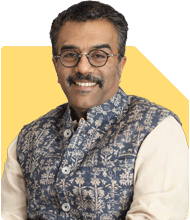
Chocko Valliappa  |592 Answers  |Ask -

Tech Entrepreneur, Educationist - Answered on Jun 21, 2025

Chocko Valliappa is the founder and CEO of Vee Technologies, a global IT services company; HireMee, a talent assessment and talent management start-up; and vice chairman of The Sona Group of education institutions.
A fourth-generation entrepreneur, Valliappa is a member of Confederation of Indian Industry, Nasscom, Entrepreneurs Organization and Young Presidents’ Organization.
He was honoured by the YPO with their Global Social Impact award in 2018.
An alumnus of Christ College, Bangalore, Valliappa holds a degree in textile technology and management from the South India Textile Research Association. His advanced research in the Czech Republic led to the creation of innovative polyester spinning machinery.... more
Asked by Anonymous - Jun 17, 2025English
Career

नमस्ते सर क्या मुझे SOA ITER में CS और IT जॉइन करना चाहिए?

Ans: शाखा, पाठ्यक्रम और संस्थान का चयन कैसे करें, इस बारे में मैं आपको Rediff में मेरा लेख https://bit.ly/4cZ1pA7 पढ़ने के लिए प्रोत्साहित करता हूँ। शुभकामनाएँ!
Career

आप नीचे ऐसेही प्रश्न और उत्तर देखना पसंद कर सकते हैं

Nayagam P

Nayagam P P  |12501 Answers  |Ask -

Career Counsellor - Answered on Jul 14, 2025

Asked by Anonymous - Jul 14, 2025English
Career
मुझे ITER(SOA) में CSE(AI & ML) मिला है.... क्या मुझे इसके लिए जाना चाहिए???
Ans: शिक्षा 'ओ' अनुसंधान डीम्ड यूनिवर्सिटी के तहत आईटीईआर में कंप्यूटर साइंस एंड इंजीनियरिंग (आर्टिफिशियल इंटेलिजेंस और मशीन लर्निंग) में बी.टेक, एनएएसी ए++ स्टेटस के साथ चार साल का एनबीए-मान्यता प्राप्त कार्यक्रम है, जिसमें प्रति वर्ष 120 छात्रों को प्रवेश दिया जाता है। पाठ्यक्रम में कोर एआई/एमएल, डेटा स्ट्रक्चर, गणित और प्रोजेक्ट वर्क में 162 क्रेडिट एकीकृत हैं, जो विशेष एआई, डेटा-साइंस और क्लाउड-कंप्यूटिंग लैब द्वारा समर्थित हैं। हालाँकि, कृपया ध्यान दें, आईटीईआर (एसओए) में बी.टेक सीएसई (एआई और एमएल) विशेषज्ञता 2020-21 शैक्षणिक सत्र में अपने पहले समूह के साथ शुरू हुई, जो 2024 में स्नातक होगी। उस उद्घाटन एआई और एमएल बैच के आधिकारिक, शाखावार प्लेसमेंट आँकड़े अभी तक संस्थान के प्लेसमेंट सेल या एसओए विश्वविद्यालय की वेबसाइट पर अलग से प्रकाशित नहीं किए गए हैं। सीएसई कार्यक्रम में 2025 में 96.38% प्लेसमेंट दर दर्ज की गई, जिसका औसत पैकेज ₹6 लाख प्रति वर्ष और उच्चतम ऑफर ₹46 लाख प्रति वर्ष तक था, लेकिन एआई और एमएल स्ट्रीम के पहले बैच के विशिष्ट आंकड़े उपलब्ध नहीं हैं। यदि आपके पास कोई अन्य विकल्प नहीं है, तो भी आप कैंपस प्लेसमेंट के दौरान अन्य छात्रों के साथ प्रतिस्पर्धा करने के लिए चौथे वर्ष तक अपने कौशल को निखारने के लिए इसमें शामिल हो सकते हैं। प्रवेश और एक समृद्ध भविष्य के लिए शुभकामनाएँ!

"करियर | पैसा | स्वास्थ्य | रिश्ते" के बारे में अधिक जानने के लिए RediffGURUS को फ़ॉलो करें।

..Read more

नवीनतम प्रश्न
Ramalingam

Ramalingam Kalirajan  |11385 Answers  |Ask -

Mutual Funds, Financial Planning Expert - Answered on Aug 11, 2026

Money
When our money invested is managed by the experts of AMCs, why should we aim to diversify the portfolios? Also why to aim for something else when the goal of any investment is only to get best vslue? Mukhtar Ahmad, Lucknow
Ans: Professional fund managers do manage portfolios carefully. But diversification is still important for investors.

» Why AMC Expertise Is Not Enough

An AMC manages money within a particular investment mandate.

The fund manager cannot freely invest everywhere.

Each fund has its own:

– Investment objective.
– Asset allocation.
– Market-cap exposure.
– Risk level.
– Investment limits.

So, one fund manager cannot control every risk in your complete portfolio.

» Diversification Has A Different Purpose

Diversification is not about finding more funds.

It is about reducing dependence on one investment style.

Even an excellent fund manager can face:

– Wrong sector allocation.
– Temporary investment mistakes.
– Market cycles.
– Valuation problems.
– Changes in economic conditions.

A diversified portfolio reduces the impact of any one mistake.

» Why Not Simply Chase Best Value?

The phrase "best value" sounds simple.

But value can mean different things.

An investment can be cheap today and remain cheap for many years.

Another investment can look expensive but continue growing strongly.

Therefore, chasing only the cheapest opportunity can create concentration risk.

The better objective is risk-adjusted wealth creation.

» Return Is Not The Only Goal

Two investors may earn the same return.

But their experience can be very different.

One may face large temporary losses.

Another may experience smaller fluctuations.

The second investor may stay invested more comfortably.

This behaviour can improve long-term investment results.

» Diversification Does Not Mean Diluting Returns

This is an important point.

Good diversification does not mean buying 15–20 mutual funds.

It means combining suitable investment categories.

For example:

– Large companies for stability.
– Mid-sized companies for growth.
– Some smaller companies for additional growth potential.
– Suitable fixed-income assets for stability.

The exact mix depends on the investor's goal and risk capacity.

» Fund Manager Versus Investor

The fund manager manages the fund.

The investor manages the overall wealth plan.

These are two different responsibilities.

A fund manager cannot know:

– When you need the money.
– Your retirement date.
– Your child's education requirement.
– Your emergency needs.
– Your other investments.
– Your ability to tolerate losses.

This is why portfolio-level diversification remains important.

» A Simple Example

Suppose one excellent fund manager invests heavily in technology companies.

The manager may be doing everything correctly.

But if technology goes through a long weak cycle, that fund can suffer.

Another fund with a different investment approach may perform better.

Having both can make the overall portfolio more balanced.

» Final Insights

The goal should certainly be wealth creation.

But "best value" should not mean chasing the highest possible return.

The better goal is sustainable wealth creation with controlled risk.

AMC expertise helps manage individual funds.

Diversification helps manage the investor's complete portfolio.

Both have an important role.

A well-designed portfolio should be simple, diversified and aligned with your goals.

Best Regards,

K. Ramalingam, MBA, CFP,

AMFI-Registered MFD – ARN 4188

www.holisticinvestment.in

https://www.linkedin.com/in/ramalingamcfp/

...Read more

Ramalingam

Ramalingam Kalirajan  |11385 Answers  |Ask -

Mutual Funds, Financial Planning Expert - Answered on Aug 11, 2026

Asked by Anonymous - Aug 02, 2026
Money
I am a govt employee , current take away salary is 225000/ month.Age is 53 yrs ,due to retire in year 34. My investments are- 3 LIC with sum assured 2 lacs,5 lacs,4 lacs ,all maturing in year 2032. PLI with sum assured 10 lacs maturing in 2032 ,all plans are for 21 years. Current value GPF is 44 lacs with another 7 years of service . At retirement will get GPF , Gratuity of around 30 lacs,leave encashment equal to 10 month salary at tha time which will be around 40 lacs considering payment commission hike and GIS and will also have pension of about 2 lac per month ,can also sell portion of pension. Family health insurance of 20 lacs which will increase by 25 percent every year for next 4 year and will be 40 lac after 4 year I have wife and a daughter in class 9. Home loan of 50 lacs in which remaining today is 23 lacs SIP for last 2.5 years of 33000 per month current value is 10 lac SBI life and investment plan paying 1 lac yearly for 7 years ,first year installment paid 6 remaining,last installment in 2032 ,can hold beyond 7 years till 15 years New PPF started in wife name,annually deposit about 70 thousand,starting year 2025 FD of 30 lac and continuing SBI magnum child plan SIP 10000 per month , current value 1.5 lacs. SSY depositing 1.5 lac per year current value is 10 lac, will get maturity of around 67 lac in year 2040 when daughter will be about 27 years. Have ancestral home also and agriculture land about 20 bigha with cost of about 10 lac per bigha,currently doing farming Rental income from ancestral shops is about 30 thousand as of now. One time SIP of 3.5 lac since June 26 , current value is 3.8 lac Have one apartment apartment from ancestral house and another plot 1800 sq foot Have about 6 lac as emergency fund in Savings account. How is my investments and what more can I do ,as I want to buy one pent house as soon as possible,
Ans: You have built a strong financial base by age 53. GPF, pension, property, FD and investments give you good stability. The main issue now is proper prioritisation.

» Your Overall Position

Your retirement foundation looks strong.

– GPF: around Rs.44 Lakhs
– Gratuity: around Rs.30 Lakhs expected
– Leave encashment: around Rs.40 Lakhs expected
– Pension: around Rs.2 Lakhs monthly
– FD: Rs.30 Lakhs
– Mutual funds: around Rs.13–14 Lakhs
– PPF: ongoing
– SSY: around Rs.10 Lakhs
– Insurance savings: multiple policies
– Rental income: around Rs.30,000 monthly
– Agriculture and ancestral assets: substantial

You also have a home loan balance of Rs.23 Lakhs.

Overall, your retirement position is quite comfortable.

» Penthouse Purchase

This is the most important decision now.

Do not use your retirement corpus heavily for the penthouse.

Your GPF, gratuity and leave benefits should primarily support retirement security.

The Rs.30 Lakhs FD can be considered for the purchase only after keeping sufficient emergency funds.

Ideally, create a separate penthouse fund.

Do not disturb your daughter's education corpus for this purchase.

» Home Loan

Your home loan balance is Rs.23 Lakhs.

Before taking another large property loan, review this carefully.

A second large EMI can reduce your financial flexibility.

Try to reduce the existing loan before taking a major new liability.

Your pension will be an important future income source.

Still, avoiding excessive debt at retirement is better.

» Emergency Fund

Your current emergency fund is only Rs.6 Lakhs.

For your income and family responsibilities, I would increase this.

Keep at least 9–12 months of essential expenses separately.

Do not count FD earmarked for the penthouse as emergency money.

» Mutual Fund Portfolio

Your SIP of Rs.33,000 monthly is a good habit.

The additional Rs.3.5 Lakhs investment is also positive.

However, your mutual fund corpus is still modest compared with your total assets.

Continue SIPs for long-term growth.

Use diversified actively managed equity funds.

Avoid too many funds and avoid highly concentrated themes.

Your equity portfolio should support inflation protection after retirement.

» LIC And Other Insurance Plans

You have several traditional insurance policies.

Since these are investment-cum-insurance products, review their future premiums and maturity benefits.

Do not surrender them blindly.

Compare the surrender value with the remaining premiums and maturity amount.

If any policy is inefficient, surrendering can be considered after proper review.

The same applies to your savings-linked life policy.

Do not add more insurance investment products now.

» GPF And Retirement Benefits

Your GPF is one of your strongest retirement assets.

Continue it as per government rules.

Your expected gratuity and leave encashment will further strengthen your position.

The pension of around Rs.2 Lakhs monthly is a major advantage.

Therefore, your retirement risk is much lower than many private-sector employees.

» Daughter's Education

Your daughter is currently in Class 9.

Her higher education is approaching quickly.

Keep her education corpus separate from your penthouse plan.

The SSY is already a good dedicated savings component.

Do not depend entirely on the expected Rs.67 Lakhs maturity value.

Higher education costs can change significantly over time.

Keep additional education savings available.

» PPF And SSY

Continue the PPF in your wife's name.

It provides a stable component in your overall portfolio.

Continue SSY for your daughter as per the scheme rules.

These investments should be treated as goal-based assets.

Avoid disturbing them for discretionary purchases.

» Pension Selling

You mentioned that a portion of pension can be sold.

I would be cautious here.

Your pension is one of your strongest lifetime income sources.

Do not reduce it unless there is a clear need.

A permanent reduction in pension should not be taken lightly.

» Agriculture And Property Assets

You already have substantial exposure to property and agricultural land.

Therefore, I would not add more property only for investment.

Your penthouse should be treated as a lifestyle decision.

Do not justify it as an investment.

The purchase should fit comfortably within your retirement cash flow.

» Penthouse Decision

Before buying the penthouse, check five things:

– Existing home loan burden.
– New loan EMI.
– Daughter's education requirement.
– Retirement corpus after purchase.
– Emergency fund after purchase.

If the purchase significantly reduces your liquid financial assets, postpone it.

A penthouse is worthwhile only if it does not disturb retirement security.

» Investment Priorities

For the next few years, I would follow this order:

– Protect emergency reserves.
– Reduce expensive debt.
– Secure daughter's education.
– Continue retirement investments.
– Maintain adequate insurance.
– Build the penthouse fund separately.
– Avoid unnecessary new investments.

This order will keep your plan balanced.

» Final Insights

Your financial position is strong because of your pension and GPF.

You do not need to take excessive investment risk.

Your biggest concern is not wealth creation alone.

It is avoiding excessive concentration in property and unnecessary debt.

You can plan for the penthouse, but do it without disturbing retirement and education goals.

Before purchasing, prepare a separate penthouse affordability plan.

That will clearly show how much can be spent without affecting your future lifestyle.

Best Regards,

K. Ramalingam, MBA, CFP,

AMFI-Registered MFD – ARN 4188

www.holisticinvestment.in

https://www.linkedin.com/in/ramalingamcfp/

...Read more

Ramalingam

Ramalingam Kalirajan  |11385 Answers  |Ask -

Mutual Funds, Financial Planning Expert - Answered on Aug 11, 2026

Money
have 20 lakh to invest
Ans: You have a good amount of Rs.20 Lakhs to deploy. The right allocation depends on your goal and time period.

» Suggested Allocation

If this money is for long-term wealth creation, I would consider:

– Rs.10 Lakhs in diversified equity mutual funds.
– Rs.4 Lakhs in mid-cap oriented mutual funds.
– Rs.2 Lakhs in small-cap oriented mutual funds.
– Rs.3 Lakhs in high-quality fixed-income investments.
– Rs.1 Lakh in liquid or emergency reserve.

This gives a balance between growth, stability and liquidity.

» Equity Allocation

Equity should be the main growth engine for long-term goals.

Use diversified actively managed funds across different market segments.

Avoid putting the entire Rs.20 Lakhs into one fund or one category.

Also avoid excessive exposure to sector or thematic funds.

» Fixed-Income Allocation

The Rs.3 Lakhs fixed-income portion provides stability.

It can also be useful during market corrections.

This reduces the need to sell equity when markets are weak.

» Liquidity Reserve

Keep around Rs.1 Lakh easily accessible.

If you already have a separate emergency fund, this amount can instead be added to your investment portfolio.

» Investment Method

If you are uncomfortable investing Rs.20 Lakhs at one time, stagger the equity portion over several months.

This can reduce timing risk.

Do not keep waiting indefinitely for a market correction.

» Important Point

The above allocation suits a long-term investor.

If you need this money within 3–5 years, equity exposure should be much lower.

If your goal is 10+ years, equity allocation can be higher.

Your age, existing investments, loans and monthly expenses also matter.

» Final Insights

Do not select an asset only because it has delivered high returns recently.

A good portfolio should have growth, stability and liquidity.

For a long-term investor, diversified actively managed equity mutual funds can form the core.

The exact allocation should be adjusted after reviewing your existing investments and financial goals.

Best Regards,

K. Ramalingam, MBA, CFP,

AMFI-Registered MFD – ARN 4188

www.holisticinvestment.in

https://www.linkedin.com/in/ramalingamcfp/

...Read more

Ramalingam

Ramalingam Kalirajan  |11385 Answers  |Ask -

Mutual Funds, Financial Planning Expert - Answered on Aug 11, 2026

Money
i have 20 lakh to invest. please advice me in which asset class and how much i must bifurcate this 20 lakh for better returns
Ans: You have a good amount of Rs.20 Lakhs to deploy. The right allocation depends on your goal and time period.

» Suggested Allocation

If this money is for long-term wealth creation, I would consider:

– Rs.10 Lakhs in diversified equity mutual funds.
– Rs.4 Lakhs in mid-cap oriented mutual funds.
– Rs.2 Lakhs in small-cap oriented mutual funds.
– Rs.3 Lakhs in high-quality fixed-income investments.
– Rs.1 Lakh in liquid or emergency reserve.

This gives a balance between growth, stability and liquidity.

» Equity Allocation

Equity should be the main growth engine for long-term goals.

Use diversified actively managed funds across different market segments.

Avoid putting the entire Rs.20 Lakhs into one fund or one category.

Also avoid excessive exposure to sector or thematic funds.

» Fixed-Income Allocation

The Rs.3 Lakhs fixed-income portion provides stability.

It can also be useful during market corrections.

This reduces the need to sell equity when markets are weak.

» Liquidity Reserve

Keep around Rs.1 Lakh easily accessible.

If you already have a separate emergency fund, this amount can instead be added to your investment portfolio.

» Investment Method

If you are uncomfortable investing Rs.20 Lakhs at one time, stagger the equity portion over several months.

This can reduce timing risk.

Do not keep waiting indefinitely for a market correction.

» Important Point

The above allocation suits a long-term investor.

If you need this money within 3–5 years, equity exposure should be much lower.

If your goal is 10+ years, equity allocation can be higher.

Your age, existing investments, loans and monthly expenses also matter.

» Final Insights

Do not select an asset only because it has delivered high returns recently.

A good portfolio should have growth, stability and liquidity.

For a long-term investor, diversified actively managed equity mutual funds can form the core.

The exact allocation should be adjusted after reviewing your existing investments and financial goals.

Best Regards,

K. Ramalingam, MBA, CFP,

AMFI-Registered MFD – ARN 4188

www.holisticinvestment.in

https://www.linkedin.com/in/ramalingamcfp/

...Read more

Ramalingam

Ramalingam Kalirajan  |11385 Answers  |Ask -

Mutual Funds, Financial Planning Expert - Answered on Aug 11, 2026

Money
When our money invested is managed by the experts of AMCs, why should we aim to diversify the portfolios? Also why to aim for something else when the goal of any investment is only to get best vslue? Mukhtar Ahmad, Lucknow
Ans: Your question is very valid. Professional fund managers do manage portfolios carefully. But diversification is still important for investors.

» Why AMC Expertise Is Not Enough

An AMC manages money within a particular investment mandate.

The fund manager cannot freely invest everywhere.

Each fund has its own:

– Investment objective.
– Asset allocation.
– Market-cap exposure.
– Risk level.
– Investment limits.

So, one fund manager cannot control every risk in your complete portfolio.

» Diversification Has A Different Purpose

Diversification is not about finding more funds.

It is about reducing dependence on one investment style.

Even an excellent fund manager can face:

– Wrong sector allocation.
– Temporary investment mistakes.
– Market cycles.
– Valuation problems.
– Changes in economic conditions.

A diversified portfolio reduces the impact of any one mistake.

» Why Not Simply Chase Best Value?

The phrase "best value" sounds simple.

But value can mean different things.

An investment can be cheap today and remain cheap for many years.

Another investment can look expensive but continue growing strongly.

Therefore, chasing only the cheapest opportunity can create concentration risk.

The better objective is risk-adjusted wealth creation.

» Return Is Not The Only Goal

Two investors may earn the same return.

But their experience can be very different.

One may face large temporary losses.

Another may experience smaller fluctuations.

The second investor may stay invested more comfortably.

This behaviour can improve long-term investment results.

» Diversification Does Not Mean Diluting Returns

This is an important point.

Good diversification does not mean buying 15–20 mutual funds.

It means combining suitable investment categories.

For example:

– Large companies for stability.
– Mid-sized companies for growth.
– Some smaller companies for additional growth potential.
– Suitable fixed-income assets for stability.

The exact mix depends on the investor's goal and risk capacity.

» Fund Manager Versus Investor

The fund manager manages the fund.

The investor manages the overall wealth plan.

These are two different responsibilities.

A fund manager cannot know:

– When you need the money.
– Your retirement date.
– Your child's education requirement.
– Your emergency needs.
– Your other investments.
– Your ability to tolerate losses.

This is why portfolio-level diversification remains important.

» A Simple Example

Suppose one excellent fund manager invests heavily in technology companies.

The manager may be doing everything correctly.

But if technology goes through a long weak cycle, that fund can suffer.

Another fund with a different investment approach may perform better.

Having both can make the overall portfolio more balanced.

» Final Insights

The goal should certainly be wealth creation.

But "best value" should not mean chasing the highest possible return.

The better goal is sustainable wealth creation with controlled risk.

AMC expertise helps manage individual funds.

Diversification helps manage the investor's complete portfolio.

Both have an important role.

A well-designed portfolio should be simple, diversified and aligned with your goals.

Best Regards,

K. Ramalingam, MBA, CFP,

AMFI-Registered MFD – ARN 4188

www.holisticinvestment.in

https://www.linkedin.com/in/ramalingamcfp/

...Read more

Ramalingam

Ramalingam Kalirajan  |11385 Answers  |Ask -

Mutual Funds, Financial Planning Expert - Answered on Aug 11, 2026

Money
Dear Janak Patel Sir, I hope you are doing well. I am 43 years old and have two children—a daughter (8 years old) and a son (5 years old). I work in the private software industry, and with the current uncertainty in the IT sector, I have become increasingly concerned about job stability. Many people advise building a second source of income to reduce dependency on a salaried job. However, I am struggling to identify a practical path. I do not have sufficient capital to start a business or invest in real estate, and I am unsure what other income opportunities would be suitable for me. This uncertainty about my family's future has been causing me considerable anxiety, so I am sincerely seeking your guidance. Below are my current financial details: Personal Details Age:43 years Monthly Salary: ₹1.9 lakhs Family:Wife and two children (Daughter – 8 years, Son – 5 years) Investments & Savings * **Employees' Provident Fund (EPF):** ₹25 lakhs * **National Pension System (NPS):** ₹13 lakhs * **Mutual Funds:** ₹3 lakhs * **Public Provident Fund (PPF):** ₹8 lakhs (account opened around 12 years ago) * **Sukanya Samriddhi Account:** ₹2 lakhs ### Insurance * One **Pure Term Insurance** policy * One **Savings-linked Life Insurance** policy * **Family Health Insurance** (Annual Premium: ₹25,000) ### Loans * **Home Loan:** ₹43 lakhs (joint loan with my brother), 15-year tenure, EMI of ₹25,000 per month * **Gold Loan:** ₹9 lakhs * **Overdraft (OD) Loan:** ₹1.5 lakhs I make every effort to save and invest consistently. Around **40–45% of my monthly income** goes toward savings and investments, and I also participate in chit funds. Despite maintaining financial discipline, I remain dependent on a single source of income. My biggest concern is that if I were to lose my job, my regular savings and investments would eventually stop, making it difficult to meet my family's long-term financial goals. This is the reason I am actively looking for ways to build an additional, sustainable source of income. I also have a specific question regarding my **PPF account**. Since it has completed more than 12 years and the returns are relatively modest compared to some other investment options, would it be advisable to withdraw or utilize the PPF amount to invest in opportunities that could potentially generate higher returns or help create a second source of income? Or would you recommend continuing with the PPF and exploring other alternatives instead? I would be deeply grateful for your guidance on: * Building a reliable second source of income. * Improving my overall financial planning. * Managing my investments more effectively. * Any changes you would recommend based on my current financial situation. Your practical advice and experience would be invaluable in helping me make informed decisions for my family's future. Thank you very much for your time and valuable guidance. Regards, Rajesh
Ans: You are already saving 40–45% of your income. That discipline is a strong foundation. Your concern about job stability is also practical, especially with two young children.

» Your Current Position

Your financial base is reasonably good.

– EPF: Rs.25 Lakhs
– NPS: Rs.13 Lakhs
– Mutual Funds: Rs.3 Lakhs
– PPF: Rs.8 Lakhs
– Sukanya: Rs.2 Lakhs

Your financial assets are around Rs.51 Lakhs.

You also have a home loan, gold loan and OD loan.

The main weakness is not lack of investments.

The bigger issue is your dependence on one salary.

» First Build Job-Loss Protection

Before searching for a second income, create a strong emergency reserve.

Keep around 9–12 months of essential family expenses separately.

This money should not be invested for high returns.

It should be easily available during a job break.

Your emergency fund should also cover EMIs, school fees and insurance premiums.

This will give you much better confidence if employment changes.

» Clear Expensive Loans

The gold loan and OD loan need priority.

These loans usually carry higher interest costs.

Use part of your surplus to reduce them quickly.

Do not invest aggressively while expensive debt is outstanding.

The home loan can be handled separately based on its interest rate.

Also confirm your actual liability under the joint home loan.

» About Creating Second Income

I would not suggest starting a capital-heavy business.

You have two children and important future education goals.

Your best second-income opportunity may actually come from your existing skills.

As a software professional, consider building a small side income around:

– Freelance technical consulting.
– Training junior software professionals.
– Weekend online teaching.
– Corporate technology training.
– Technical content creation.
– Mentoring for interviews and career growth.
– Small project-based consulting.

Start very small.

Do not leave your job to start this.

The first target should be Rs.10,000–20,000 monthly.

Later, you can try to grow it gradually.

» Important Point About Second Income

Do not move your investment corpus into a business just to create income.

A second income should not create a second major financial risk.

Your salary is currently your strongest income-generating asset.

Protect it while slowly developing another skill-based income.

» Your Mutual Fund Portfolio

Your mutual fund corpus of Rs.3 Lakhs is still small.

Given your age, this should become a larger retirement and wealth-creation bucket.

You have around 15–20 years for retirement planning.

Continue systematic investments.

Increase the SIP whenever your salary increases.

Use diversified actively managed equity funds for long-term growth.

Avoid too many funds and avoid chasing recent performers.

» PPF Assessment

I would not withdraw the entire Rs.8 Lakhs simply because returns appear modest.

PPF provides stability and a safe debt component in your portfolio.

This is useful because most of your future wealth creation can come from equity-oriented investments.

Your PPF can act as part of your retirement safety bucket.

You can continue it while building your equity investments separately.

There is no need to use PPF money to create a second income.

» Why Not Move PPF Into Equity?

Equity can provide higher long-term growth.

But it also carries market risk.

Your PPF gives stability when your equity portfolio falls.

This balance becomes important during a job loss.

Therefore, I would keep the PPF and build your growth portfolio separately.

» Insurance Review

You already have pure term insurance.

Check whether the existing cover is enough for your family.

Your two children are still young.

Your home loan and education goals also need protection.

Also review the policy period and nominee details.

Your family health insurance is good to have.

But do not depend only on employer-provided health insurance.

A personal health cover and suitable super top-up can improve protection.

» Savings-Linked Life Insurance

You mentioned a savings-linked life insurance policy.

Since this is an investment-cum-insurance product, review it carefully.

Check the current surrender value, maturity benefit and future premiums.

If the policy is not suitable, surrendering and moving the money into suitable mutual funds can be considered.

Do not surrender without checking the policy terms and tax impact.

» Children's Education Planning

Your daughter is 8 and your son is 5.

Their education goals have enough time.

But the amounts required can become substantial.

Create separate education buckets for each child.

Do not mix education money with retirement money.

For long-term goals, equity-oriented investments can play an important role.

As each goal comes closer, gradually reduce market exposure.

» Chit Funds

You mentioned that you participate in chit funds.

Treat this as a separate financial activity.

Do not count the expected chit return as guaranteed income.

Also avoid committing large amounts only because of promised returns.

Your core wealth should remain in regulated and diversified investments.

» Retirement Planning

Your EPF, NPS and PPF are already creating a retirement foundation.

But Rs.3 Lakhs in mutual funds is currently low for your age.

The next stage should be stronger equity accumulation.

Continue EPF and suitable NPS contributions.

Build mutual fund SIPs alongside them.

Your retirement portfolio should eventually have both growth and stability.

» If Job Loss Happens

Your financial plan should work even during a temporary job loss.

The order should be:

– Use emergency reserves first.
– Reduce discretionary expenses.
– Protect insurance premiums.
– Continue essential education payments.
– Avoid selling equity during a market fall.
– Restart investments after income becomes stable.

This is why your emergency fund is so important.

» 360-Degree Action Plan

For the next 12 months, I would focus on these priorities:

– Build a 9–12 month emergency reserve.
– Clear the gold loan.
– Clear the OD loan.
– Review the home-loan liability.
– Review term insurance adequacy.
– Strengthen personal health insurance.
– Continue PPF.
– Continue EPF and NPS.
– Increase mutual fund SIP gradually.
– Review the savings-linked insurance policy.
– Start a small skill-based side income.
– Create separate education goals for both children.

» Final Insights

You do not need a large second business to become financially secure.

Your first goal should be reducing your dependency on one salary.

Build an emergency fund and remove expensive debt.

Then grow your mutual fund investments steadily.

At the same time, use your software experience to create a small side income.

Your PPF should not be withdrawn merely for chasing higher returns.

Keep it as a stable part of your overall portfolio.

With your savings discipline, you have a good base to build from.

The key now is proper allocation and consistent execution.

Best Regards,

K. Ramalingam, MBA, CFP,

AMFI-Registered MFD – ARN 4188

www.holisticinvestment.in

https://www.linkedin.com/in/ramalingamcfp/

...Read more

Ramalingam

Ramalingam Kalirajan  |11385 Answers  |Ask -

Mutual Funds, Financial Planning Expert - Answered on Aug 11, 2026

Money
i have 5 lakhs to invest in mutual funds which can give me average XIRR of 12 to 15%, can you suggest me in which MF should i invest and in what quantity, i want to invest for atlest 5 years
Ans: Your 5-year horizon is reasonable for equity investing. A Rs.5 Lakhs lump sum can be diversified well across categories.

» Return Expectation

A 12–15% average return cannot be guaranteed.

Equity markets can deliver good returns over 5 years.

However, some periods can give negative or low returns.

Therefore, plan around a reasonable long-term return expectation.

» Suggested Allocation

For Rs.5 Lakhs, I would prefer a simple diversified portfolio.

– Rs.2 Lakhs in a flexi-cap category.
– Rs.1.25 Lakhs in a large and mid-cap category.
– Rs.1 Lakh in a mid-cap category.
– Rs.50,000 in a balanced advantage category.
– Rs.25,000 in a small-cap category.

This gives exposure across large, mid and smaller companies.

The balanced allocation can reduce portfolio volatility.

» Investment Method

Since this is a lump sum, avoid investing everything based on one market level.

You can stagger the investment over a few months.

This reduces the risk of entering at an unfavourable market level.

Use regular mutual fund plans if investing through an MFD.

Regular plans also provide ongoing portfolio review and service support.

» Five-Year Review

Five years is the minimum period I would consider for this portfolio.

If the money is required exactly after five years, reduce equity exposure earlier.

Start shifting the required amount towards safer investments around 12–18 months before the goal.

This protects the corpus from a sudden market correction.

» What I Would Avoid

– Too many mutual fund schemes.
– Sector-specific funds.
– Thematic funds.
– Very high small-cap allocation.
– Chasing recent top performers.
– Frequent switching based on market news.

Keep the portfolio simple and diversified.

» Final Insights

Your Rs.5 Lakhs can be invested effectively with 4–5 diversified categories.

Do not select funds only because they delivered 15% earlier.

Fund quality, consistency, portfolio management and risk control matter more.

For a 5-year goal, disciplined monitoring is equally important.

Best Regards,

K. Ramalingam, MBA, CFP,

AMFI-Registered MFD – ARN 4188

www.holisticinvestment.in

https://www.linkedin.com/in/ramalingamcfp/

...Read more

Ramalingam

Ramalingam Kalirajan  |11385 Answers  |Ask -

Mutual Funds, Financial Planning Expert - Answered on Aug 11, 2026

Asked by Anonymous - Apr 16, 2026
Money
I am 44 years old, working in MNC, my annual taxable income is 10lacs, liability of 3 lacs (personal loan), investment made past 10 years in LIC children's plan, endowment plan for monthly premium 12k, past two years mutual fund SIP started 5k, past 10years 1 cr term insurance, family health insurance provided by my co., lives in ancestral house, no pension or retirement plan accept EPF deducted from salary. Please suggest secondary income schemes. Please advise whether should I opt for NPS or some other good plan where there is not long lockin periods and food returns, less risk,
Ans: » First Priority

You have started investing already, which is a good base. At age 44, you still have enough time to build a strong retirement corpus.

» Your Immediate Priorities

Your Rs.3 Lakhs personal loan should be handled first.

– Avoid taking fresh personal loans.
– Build an emergency fund covering 6 months expenses.
– Keep health insurance outside your employer cover.
– Employer health cover may stop after job change or retirement.

» Insurance Review

Your Rs.1 Cr term cover needs review.

The required cover depends on income, liabilities and family needs.

You have children and retirement responsibilities.

Therefore, check whether the existing cover is still adequate.

Keep insurance and investment objectives separate.

» Existing LIC Policies

You have children's and endowment policies.

Since these are investment-cum-insurance products, review them carefully.

Check surrender value, maturity value and future premiums.

If returns are weak, surrendering can be considered.

The proceeds can then be redirected towards mutual funds.

Do this only after checking surrender charges and tax impact.

» Mutual Fund SIP

Your current SIP of Rs.5,000 is quite low for retirement planning.

Increase this after clearing the personal loan.

Your retirement corpus needs regular investment.

A yearly SIP increase can also help as your salary grows.

» NPS Assessment

NPS can be considered as one part of your retirement plan.

It provides retirement-focused investing and tax benefits.

However, NPS should not become your only retirement investment.

Your main concern is liquidity.

NPS Tier-I has retirement-oriented withdrawal conditions.

Therefore, do not put all retirement savings into NPS.

» Better Investment Structure

I would use three separate buckets.

– Emergency bucket for unexpected expenses.
– Retirement growth bucket for long-term wealth creation.
– Retirement safety bucket for stability and near-term needs.

Diversified actively managed mutual funds can form the growth bucket.

Suitable fixed-income investments can form the safety bucket.

NPS can remain an additional retirement component.

This gives better flexibility than depending only on NPS.

» Creating Secondary Income

At age 44, focus on creating future income first.

Trying to create large passive income immediately can reduce growth.

Future secondary income can come from:

– Systematic withdrawals from mutual funds.
– Interest income from suitable fixed-income investments.
– NPS corpus.
– EPF corpus.
– Other retirement assets.

The objective should be a growing income stream.

Not simply the highest possible current income.

» Retirement Planning

You have around 15 years before age 60.

This is still a valuable wealth-building period.

Your EPF is already supporting your retirement.

But you need a separate retirement investment strategy.

Increase your SIP after clearing the personal loan.

Increase it further whenever your salary increases.

» Risk Management

You want good returns with less risk.

There is no investment offering high returns with very low risk.

Some market exposure is necessary at your age.

Otherwise inflation can reduce your future purchasing power.

The right approach is controlled risk through diversification.

» 360-Degree Action Plan

Over the next 12 months:

– Clear the personal loan.
– Build an emergency reserve.
– Review both LIC policies.
– Review term insurance adequacy.
– Consider personal health insurance.
– Increase mutual fund SIP substantially.
– Consider NPS for retirement and tax planning.
– Continue EPF accumulation.
– Avoid unnecessary new insurance-investment products.

After that, review the complete portfolio every year.

» Final Insights

NPS is useful, but it should not be your only choice.

For your need for flexibility, mutual funds provide better liquidity.

NPS can complement your retirement portfolio.

Your biggest opportunity is increasing the Rs.5,000 SIP.

At 44, disciplined investing for 15 years can make a major difference.

Best Regards,

K. Ramalingam, MBA, CFP,

AMFI-Registered MFD – ARN 4188

www.holisticinvestment.in

https://www.linkedin.com/in/ramalingamcfp/

...Read more

Ramalingam

Ramalingam Kalirajan  |11385 Answers  |Ask -

Mutual Funds, Financial Planning Expert - Answered on Aug 11, 2026

Asked by Anonymous - Jul 26, 2026
Money
I am 52 year old with Wife and 2 Kids. Elder one is Doctor and 26 Years old doing his PG in USA and independent now. Younger one is 16 Years and in 11th Std, wanted to pursue Engineering followed by MS in USA or MBA in India. I am working as Global manager in Multinational company in Bangalore. My Saving and investments are as below, Having Term Insurance for Self for 2 CR. ULIP for about 5 Lakh and PF accumulation of 1.3CR. Also own house in Bangalore worth 3 CR , House in Ahmedabad worth 1.5CR. Has invested in Office Space work 30 laks in GIFT City, Gandhinagar. Also actively trading in market and has Share portfolio of about 80 Laks and in Mutual Fund (SIP) worth 6 Laks. Has Family Floater Health Insurance cover up to 10 Lakh. Have NPS investment of 27 Laks with SIP of 16K. Has PPF saving of 12Laks. Home loan pending of about 18 Laks. On Wife Name I have ICICI Prudential GIFT plan which will give me 2 Laks PA from 2028 with all Instalment paid for next 20 Years. Question : Wanted to take retirement after 2 years how should I plan Investment to achieve a fixed return of 1.5 laks for rest of my life.
Ans: You have built a strong asset base by age 52. Your retirement goal is possible, but planning needs more structure.

» Current Financial Position

Your major financial assets are already sizeable.

– PF: Rs.1.30 Cr
– Shares: Rs.80 Lakhs
– Mutual Funds: Rs.6 Lakhs
– NPS: Rs.27 Lakhs
– PPF: Rs.12 Lakhs
– ULIP: Rs.5 Lakhs
– GIFT City office: Rs.30 Lakhs

You also have two houses worth around Rs.4.50 Cr.

The Rs.18 Lakhs home loan should be handled before retirement.

» Retirement Income Requirement

Your target is Rs.1.50 Lakhs monthly income for life.

This means your retirement plan must handle three risks.

– Regular monthly income.
– Inflation over the next 25–30 years.
– Market volatility after retirement.

A fixed Rs.1.50 Lakhs may not be enough after 10 years.

Therefore, your income should increase gradually with inflation.

» Two-Year Retirement Preparation

The next two years are very important.

I would focus on building a retirement corpus first.

– Avoid taking fresh high-risk investments.
– Reduce active trading gradually.
– Build a separate retirement income bucket.
– Maintain sufficient emergency money.
– Review your equity concentration.
– Plan the home-loan repayment.
– Continue NPS and PPF based on tax benefits and liquidity needs.

Your existing share portfolio is quite large.

Active trading should not become the source of retirement income.

» Suggested Retirement Portfolio

Your retirement corpus should have three broad buckets.

– Income bucket: safer fixed-income investments.
– Growth bucket: diversified actively managed equity mutual funds.
– Liquidity bucket: money for emergencies and near-term expenses.

The income bucket should support several years of withdrawals.

The growth bucket should remain invested for long-term inflation protection.

This structure reduces the need to sell equity during market corrections.

» Your Existing Shares

Rs.80 Lakhs in shares is significant for someone retiring soon.

Individual shares can create high concentration risk.

I would gradually reduce unsuitable or highly concentrated holdings.

The money can move towards a diversified retirement portfolio.

Do this in a planned manner, considering capital gains and market conditions.

» Mutual Fund Portfolio

Your current mutual fund holding is only Rs.6 Lakhs.

This is relatively small compared with your overall assets.

For retirement, diversified actively managed mutual funds can become an important growth component.

Avoid having too many sector or thematic exposures.

The portfolio should focus on quality, diversification and long-term growth.

» ULIP

You mentioned a ULIP of around Rs.5 Lakhs.

Since this is an investment-linked insurance product, review its current surrender value.

Compare the benefits, charges and remaining policy period.

If the policy does not serve your insurance needs, surrendering can be considered.

The proceeds can be redirected towards your retirement portfolio.

Do not surrender blindly. Review the policy terms first.

» Wife's Guaranteed Income Plan

You mentioned Rs.2 Lakhs annual income from 2028.

This is useful for retirement cash flow.

However, it should be treated as one income source.

Your retirement should not depend on this alone.

The remaining requirement can come through a planned mutual fund withdrawal strategy.

» Health Insurance

Your Rs.10 Lakhs family floater is useful.

But retirement increases the importance of medical protection.

Review whether the current cover is sufficient for both spouses.

Consider a suitable super top-up after checking policy conditions.

Keep health insurance separate from your investment strategy.

» Younger Child's Education

This is your biggest near-term financial responsibility.

Your younger child is 16 and may need substantial funding.

Engineering followed by MS in USA can require a large corpus.

Do not keep this money fully in equity now.

Create a separate education corpus with a safer allocation.

As the education date comes closer, gradually reduce market exposure.

This money should not be mixed with retirement money.

» Elder Child

Your elder child is already independent.

This reduces your future financial burden significantly.

That is a positive factor for your retirement planning.

Avoid allocating retirement assets for unnecessary future support.

» Home Loan

The Rs.18 Lakhs outstanding loan deserves attention.

Before retirement, I would prefer substantially reducing this liability.

You should compare the loan interest cost with your safe investment returns.

Retiring with a large EMI can put pressure on monthly cash flow.

» Retirement Income Structure

I would not target Rs.1.50 Lakhs entirely from interest.

Instead, use a combination of:

– Guaranteed income already available.
– Fixed-income portfolio income.
– Systematic withdrawals from mutual funds.
– Growth from the equity portion.

This provides better flexibility.

Your withdrawal amount can also be reviewed every year.

» Inflation Protection

This is one of the most important points.

Rs.1.50 Lakhs today will not have the same purchasing power later.

Therefore, your retirement income should ideally increase periodically.

Your equity allocation is needed for this reason.

Keeping everything in fixed-income products can create inflation risk.

» Retirement Corpus Assessment

Based on the assets you have listed, you already have a good foundation.

However, I would not retire immediately based only on the current figures.

The next two years should be used to strengthen the retirement corpus.

Your property assets should not be treated as the main source of retirement income.

Your financial assets should carry the retirement responsibility.

» Final Insights

Your retirement goal is achievable with disciplined restructuring.

The biggest risks are excessive equity concentration and active trading.

The education goal must also be separated from retirement money.

Your next two years should focus on creating a stable retirement income system.

A detailed retirement plan should consider your monthly expenses, expected retirement income, loan EMI and daughter's education cost.

With these numbers, the retirement date and monthly withdrawal can be planned much more accurately.

Best Regards,

K. Ramalingam, MBA, CFP,

AMFI-Registered MFD – ARN 4188

www.holisticinvestment.in

https://www.linkedin.com/in/ramalingamcfp/

...Read more

Ramalingam

Ramalingam Kalirajan  |11385 Answers  |Ask -

Mutual Funds, Financial Planning Expert - Answered on Aug 11, 2026

Money
I have a total 1.5 cr corpus invested in MF and SIP. I am at 60 yr of age, what should be my wealth plan so that i can get a monthly income as well as my corpus should grow
Ans: You have built a good Rs.1.5 Cr corpus by age 60. The next focus should be income, safety, and controlled growth.

» Your Main Objective

At 60, the portfolio should not depend only on equity growth.

A balanced approach can provide regular income while protecting your long-term corpus.

– Keep a meaningful portion in equity-oriented mutual funds.
– Keep another portion in high-quality fixed-income investments.
– Maintain a separate emergency reserve.
– Start a systematic withdrawal plan for monthly income.
– Review the portfolio once or twice every year.

» Suggested Asset Allocation

For your age, I would consider a moderate allocation.

– Around 45–50% in equity-oriented mutual funds.
– Around 40–45% in fixed-income investments.
– Around 5–10% as liquid or emergency reserve.

The exact allocation depends on your monthly expenses and other income.

If you already receive pension or rental income, equity allocation can be slightly higher.

» Monthly Income Strategy

Avoid withdrawing randomly whenever money is required.

Instead, create a planned monthly withdrawal from the portfolio.

The withdrawal should be reasonable compared with the total corpus.

You can review the withdrawal every year based on inflation and portfolio performance.

During strong market years, you may withdraw normally.

During weak market years, reduce discretionary withdrawals if possible.

This helps reduce pressure on the equity portion.

» Protecting Your Corpus

Do not keep the entire Rs.1.5 Cr in equity.

At age 60, a major market fall can affect your monthly income.

Keep several years of planned withdrawals in safer assets.

This gives your equity investments time to recover during market corrections.

» Growing The Corpus

Your goal should not be maximum returns.

Your goal should be sustainable returns with controlled risk.

Use diversified actively managed mutual funds for the equity portion.

Avoid excessive exposure to small-cap or sector-focused investments.

Quality and diversification become more important at this stage.

» SIP Strategy

If you have regular surplus income, you can continue SIPs.

However, SIPs should not increase equity exposure beyond your planned allocation.

Existing SIPs should also be reviewed along with your Rs.1.5 Cr corpus.

The entire portfolio matters, not individual SIP amounts.

» Tax Planning

Withdrawals from mutual funds can have capital-gains tax implications.

Equity mutual fund taxation should be planned before large withdrawals.

You can also spread withdrawals across financial years when suitable.

This may help manage your taxable gains more efficiently.

» Health And Emergency Reserve

At 60, medical expenses can become a major financial risk.

Keep adequate health insurance for yourself and your spouse.

Maintain a separate emergency reserve outside the investment portfolio.

This prevents forced mutual fund withdrawals during emergencies.

» 360-Degree Review

Your wealth plan should also consider:

– Monthly household expenses.
– Pension and other regular income.
– Health insurance.
– Outstanding loans, if any.
– Spouse requirements.
– Children's financial independence.
– Estate planning and nominations.
– Emergency fund.
– Tax impact of withdrawals.

» Final Insights

Rs.1.5 Cr can support both income and long-term growth.

The key is disciplined withdrawals and proper asset allocation.

Do not chase high returns at this stage.

A well-managed portfolio can provide income while retaining growth potential.

For a more precise plan, your monthly expense and other income are important.

Best Regards,

K. Ramalingam, MBA, CFP,

AMFI-Registered MFD – ARN 4188

www.holisticinvestment.in

https://www.linkedin.com/in/ramalingamcfp/

...Read more

DISCLAIMER: The content of this post by the expert is the personal view of the rediffGURU. Investment in securities market are subject to market risks. Read all the related document carefully before investing. The securities quoted are for illustration only and are not recommendatory. Users are advised to pursue the information provided by the rediffGURU only as a source of information and as a point of reference and to rely on their own judgement when making a decision. RediffGURUS is an intermediary as per India's Information Technology Act.

Close  

You haven't logged in yet. To ask a question, Please Log in below
Login

A verification OTP will be sent to this
Mobile Number / Email

Enter OTP
A 6 digit code has been sent to

Resend OTP in120seconds

Dear User, You have not registered yet. Please register by filling the fields below to get expert answers from our Gurus
Sign up

By signing up, you agree to our
Terms & Conditions and Privacy Policy

Already have an account?

Enter OTP
A 6 digit code has been sent to Mobile

Resend OTP in120seconds

x