Need Expert Advice?Our Gurus Can Help
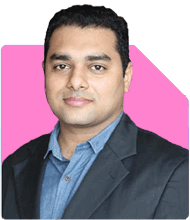
Mohit

Mohit Arora  | Answer  |Ask -

Dating Coach - Answered on Mar 03, 2024

Mohit Arora is a relationship coach, image consultant, soft skills trainer and the founder of Real Dating School. He has a BTech degree in computer science from the Rayat & Bahra Institute of Engineering and Biotechnology, Mohali, Punjab. He has been conducting customised skilling and communication workshops since 2014.... more
RAVINDER Question by RAVINDER on Feb 26, 2024Hindi
Listen
Relationship

online dating help on apps

Ans: Meet girls in real life. Online dating apps is not the solution

You may like to see similar questions and answers below

Latest Questions
Ramalingam

Ramalingam Kalirajan  |11449 Answers  |Ask -

Mutual Funds, Financial Planning Expert - Answered on Aug 31, 2026

Asked by Anonymous - Aug 29, 2026
Money
Dear Sir, I have investments in the following mutual funds. I am planning to continue for the next 10 years. Please advise whether I can continue with them or should change to any other plan. 1 Nippon India Small Cap Fund - 10/2/2018 - 1000 2 Nippon India Large Cap Fund - 8/11/2017 - 1000 3 SBI Blue Chip Fund - 8/8/2018 - 2000 4 SBI Small Cap Fund - 8/2/2021 - 1000 5 Canara Robeco Large Cap Fund - 6/4/2023 - 3000 6 Mirae Asset Emerging Bluechip Fund - 8/5/2021 - 2000 7 Axis Small Cap Fund - 8/5/2021 - 2000 8 MIRAE ASSET ELSS TAX SAVER FUND 10/8/2022 - 2000 9. Parag Parikh Flexi Cap Fund - 7/6/2021 - 5000 Also I am planning to start a SIP of Rs 20000 in MF(FLEXI+LARGE+MID) for long run. I would appreciate your brilliant advice on the same.
Ans: Your existing SIP discipline is very good. You have also stayed invested for several years. That long-term approach is a strong positive.

» Current portfolio assessment

Your present SIP is around Rs.19,000 per month.
You have exposure to large-cap, mid-cap, small-cap and flexi-cap categories.
The main issue is not fund quality.
The bigger issue is significant overlap between categories and schemes.
You have three separate small-cap schemes.
You also have multiple large-cap oriented schemes.
This makes the portfolio more complicated than necessary.

» Small-cap allocation

You currently have three small-cap schemes.
This is more than required for most investors.
Small-cap funds can give strong long-term growth.
However, they can also fall sharply during weak markets.
Holding three small-cap schemes does not reduce this basic risk much.
I would prefer keeping only one small-cap fund.
The other small-cap SIPs can gradually be redirected.

» Large-cap allocation

You have exposure through multiple large-cap oriented schemes.
Holding several large-cap schemes creates considerable duplication.
One good large-cap allocation is generally enough.
I would consolidate this part of the portfolio.
This will make future monitoring much easier.

» Mid-cap allocation

Your existing emerging-blue-chip type exposure provides mid-cap exposure.
You can continue this allocation if its performance remains consistent.
However, adding another mid-cap fund may not be necessary.
One quality mid-cap fund is sufficient for your portfolio.

» Flexi-cap allocation

Your flexi-cap allocation is currently Rs.5,000 monthly.
This is a useful core holding for your long-term portfolio.
It provides flexibility across large, mid and small companies.
I would retain this allocation for the long term.
It can become one of your main portfolio components.

» ELSS allocation

Your tax-saving fund is also equity-oriented.
Continue it if you still need tax-saving investments.
If the tax benefit is no longer required, fresh SIPs can stop.
Existing investments can remain invested after their applicable lock-in.
Do not redeem only because the lock-in has ended.

» Proposed additional Rs.20,000 SIP

Your proposed Rs.20,000 SIP is a good step.

I would avoid splitting it equally between three categories.

A more balanced approach can be:

Flexi-cap: Rs.10,000
Large-cap: Rs.5,000
Mid-cap: Rs.5,000

This gives your new money a stronger core.

You already have enough small-cap exposure.

Therefore, I would not add another small-cap SIP now.

» Suggested portfolio structure

For the next ten years, I would aim for a simpler structure.

Flexi-cap: 35% to 40%
Large-cap: 25% to 30%
Mid-cap: 20% to 25%
Small-cap: 10% to 15%

Your exact allocation should depend on your age and financial goals.

If you are close to retirement, equity exposure needs more caution.

If your ten-year goal is genuinely long term, equity can remain meaningful.

» What I would change

Continue the existing flexi-cap SIP.
Continue one suitable large-cap allocation.
Continue one suitable mid-cap allocation.
Continue one suitable small-cap allocation.
Avoid adding more schemes unnecessarily.
Gradually redirect duplicate SIPs into your chosen core funds.
Review the portfolio once every year.
Avoid frequent switching based on one-year returns.

» Important point about old investments

Some of your investments are quite old.

That is actually a positive point.

Do not sell old investments merely to make the portfolio look neat.

First check their current value, capital gains and fund performance.

Then decide whether consolidation is worthwhile.

Unnecessary redemption can also create capital gains taxation.

For equity mutual funds, current taxation needs to be considered.

LTCG above Rs.1.25 lakh is taxed at 12.5%.

STCG is taxed at 20%.

» Ten-year investment approach

Ten years is a good investment horizon for equity mutual funds.

But the journey will not be smooth.

There can be periods of major market corrections.

During such periods, continuing SIPs is usually more useful than stopping them.

Your biggest advantage is your long investment horizon.

Use it properly.

» 360-degree review

Keep the number of equity schemes limited.
Avoid having multiple schemes in the same category.
Focus more on asset allocation than fund count.
Keep an emergency fund separately.
Maintain adequate health insurance.
Consider suitable life protection based on family dependency.
Keep short-term goals away from equity funds.
Gradually reduce equity risk as major goals approach.
Review fund performance, portfolio quality and consistency annually.
Do not chase last years top-performing funds.

» My overall view

Your portfolio has a good foundation.

The main improvement required is simplification.

I would not recommend adding many new schemes for the Rs.20,000 SIP.

Use the additional SIP to strengthen your core allocation.

Your existing portfolio can then be gradually consolidated.

With disciplined investing for ten years, your plan has good potential.

The key is consistency, proper allocation and annual review.

» Final Insights

Your portfolio does not require a complete overhaul.

It needs better consolidation and allocation.

The proposed Rs.20,000 SIP is a positive decision.

I would give priority to flexi-cap, large-cap and mid-cap.

Keep small-cap exposure limited to one suitable scheme.

This approach should make your portfolio easier to manage.

It should also reduce unnecessary duplication and concentration.

Best Regards,

K. Ramalingam, MBA, CFP,
AMFI-Registered MFD – ARN 4188

www.holisticinvestment.in/

https://www.linkedin.com/in/ramalingamcfp/

...Read more

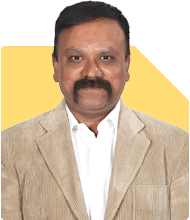
Nayagam P

Nayagam P P  |12536 Answers  |Ask -

Career Counsellor - Answered on Aug 31, 2026

Asked by Anonymous - Aug 30, 2026
Career
Sir,does a hybrid bs program from an IIT(like IIT patna) is better or a tier 3 govt college cse(on campus placement is not good),providing that in future companies don't reject based on hybrid issue,please guide sir
Ans: The IIT Patna hybrid BS programme may be a good option, provided the degree is properly recognised and you are disciplined, self-motivated, and willing to take responsibility for developing your skills independently. While a recognised hybrid/online degree can offer strong academic and career value, remember that **employer eligibility criteria may vary from one organisation to another**.

Compared with a Tier-3 CSE college where on-campus placement opportunities are relatively limited, an IIT programme can potentially provide greater advantages through its institutional brand, academic environment, peer learning, alumni network and broader exposure to career opportunities. However, the long-term value of the programme will largely depend on how effectively you utilise these opportunities.

Alongside your degree, continuously strengthening your technical and non-technical skills should remain a priority. Building a strong profile through quality projects, internships, certifications and relevant extracurricular activities can significantly enhance your employability. Developing a professional network on LinkedIn with your peers, faculty members, seniors, alumni and professionals working in your areas of interest can also provide valuable industry exposure and career insights.

It is equally important to regularly monitor industry trends, emerging technologies, job-market requirements and recruiter expectations. Following relevant job postings and setting up appropriate LinkedIn job alerts can help you understand the skills and qualifications frequently sought by employers. This market awareness will help you align your learning, projects and career preparation with actual industry requirements well before you reach your final year. All The Best for Your Prosperous Future!

Follow RediffGURUS to Know More on 'Careers | Money | Health | Relationships'.

...Read more

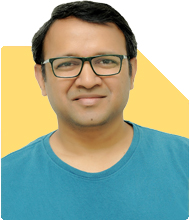
Ramalingam

Ramalingam Kalirajan  |11449 Answers  |Ask -

Mutual Funds, Financial Planning Expert - Answered on Aug 29, 2026

Money
i am having happy family floater policy from oriental insurance company for medical insurance.The policy amount is Rs.8,00,000/-This policy covers my family .In my family,myself(AGE 66years),my wife (Age 51 years) And my son (AGE 21 years).Since 8 lakhs is not sufficient amount now a days for health coverage,I want to enhance the mediclaim policy amount.Since I am 66 years old,including my self in the same policy may increase premium amount.Please suggest me a good policy giving direction whether I should take 3 different policies individually for each one of us,or shall I make my wife and son a separate group.suggest me if I have take any separate policy for any type of critical illness like cancer?I was a smoke from my 22nd year to 50th year,i.e. from 1982 t0 2010.Since then I stopped smoking.But I was a heavy smoker smoking on average 20 cigarettes a day.If Iincrease our coverages to 15 lakhs rupees,is it sufficient.or any other suggestion.Similarly suggest a good policy and from whom I should take these policies.I can not enhance the existing policy as oriental insurance is not interested to enhance the policy amount because of certain claims which were there in this year and previous year. Thanks and Regards.
Ans: » Current position

Your concern is valid. At age 66, medical costs can rise sharply.

Your existing Rs.8 lakh cover should not be discontinued casually.

It has valuable continuity benefits.

Keep the existing Oriental Insurance policy active for now.
Do not cancel it before securing alternative coverage.
Your wife and son need not remain in the same floater.
Your age can significantly increase the floater premium.

» My preferred structure

I would consider a two-layer arrangement.

You: separate individual health policy.
Wife and son: separate family floater policy.
Existing Oriental policy: retain as an additional layer initially.

This structure gives better control over future premiums.

Your son is only 21, so his medical risk is relatively lower.

Your wife is 51, so a family floater can still work well.

For you, an individual policy is more suitable at age 66.

» Is Rs.15 lakh enough?

Rs.15 lakh is a reasonable minimum target today.

However, I would prefer higher overall protection.

Hospitalisation costs can become very high for major surgeries.

Cancer and prolonged treatment can also create large bills.

A practical structure could be:

Existing Rs.8 lakh policy as the base.
Separate individual cover for you.
Additional super top-up protection for the family.
Suitable cover for your wife and son through a floater.

This can provide stronger protection without a very high base premium.

» Why super top-up can help

A super top-up can provide additional protection above a chosen deductible.

It can be more economical than buying a very large base policy.

But please check the deductible carefully.

Also check whether the deductible works on annual aggregate claims.

This point is very important.

Do not buy a super top-up only because its premium looks cheap.

» Should you take separate policies?

For you, yes, I would seriously consider an individual policy.

For your wife and son, a floater can still work well.

There is no strong need to create three separate policies immediately.

The better structure depends on age and medical risk.

» About your previous smoking

You smoked heavily from age 22 to 50.

You have now stopped smoking for around 16 years.

That is a positive factor.

However, disclose your complete smoking history.

Do not hide it while purchasing a new policy.

The insurer may ask about smoking and previous medical conditions.

Your previous claims must also be disclosed correctly.

Non-disclosure can create problems during a future claim.

» Do you need a separate cancer policy?

I would not make a standalone critical illness policy your first priority.

First secure strong comprehensive health insurance.

Then consider critical illness protection if suitable.

Critical illness insurance generally pays a fixed amount after covered diagnosis.

It is different from regular health insurance.

Regular health insurance mainly covers eligible medical expenses.

Therefore, critical illness cover should be supplementary protection.

» Important conditions to check

Before selecting another policy, carefully check these points:

Room rent restrictions.
ICU restrictions.
Disease-wise sub-limits.
Co-payment requirements.
Pre-existing disease waiting period.
Specific disease waiting periods.
Maximum entry age.
Lifetime renewal availability.
Restoration benefit.
Day-care treatment coverage.
Non-medical expense coverage.
Claim settlement process.
Cashless hospital network.
Premium increases with age.

Avoid policies with heavy sub-limits.

Also be careful with compulsory co-payment at your age.

A lower premium may come with higher out-of-pocket expenses.

» What about portability?

Your existing policy has considerable value because of its continuity.

Health insurance portability can preserve certain accrued continuity benefits.

However, the new insurer will still perform medical underwriting.

Additional coverage can also have applicable waiting periods.

Therefore, do not surrender your existing policy casually.

» One important strategy

Since Oriental Insurance has declined enhancement, do not focus only on enhancement.

Instead, explore a fresh policy alongside the existing policy.

Your existing Rs.8 lakh cover can remain useful.

The new policy can provide additional protection.

This may be better than replacing the existing policy completely.

» What I would do in your case

My preference would be:

Continue the existing Rs.8 lakh Oriental policy.
Take a separate individual policy for yourself.
Take a separate family floater for your wife and son.
Add a suitable super top-up after checking conditions.
Consider critical illness protection separately.
Review the complete structure every year.

At age 66, continuity is extremely valuable.

Therefore, replacement should happen only after careful underwriting.

» One more important point

Because you mentioned previous claims, insurers may scrutinise your medical history.

Please obtain your complete claim history and current policy wording.

Also collect your recent medical reports.

This will help in getting accurate underwriting decisions.

Do not make decisions only from premium quotations.

» Final Insights

Your Rs.8 lakh cover should not be considered useless.

It is an important foundation because of its continuity.

Your next objective should be additional protection.

I would consider Rs.15 lakh as the minimum overall base protection.

However, I would prefer larger total protection through a super top-up.

For your age, policy conditions matter more than the cheapest premium.

For your wife and son, a floater can remain practical.

For yourself, an individual cover deserves serious consideration.

The final insurer should be selected after comparing policy wording.

Also compare exclusions, co-pay, waiting periods and underwriting.

Best Regards,

K. Ramalingam, MBA, CFP,

AMFI-Registered MFD – ARN 4188

www.holisticinvestment.in/

https://www.linkedin.com/in/ramalingamcfp/

...Read more

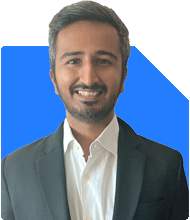
Vivek

Vivek Lala  |326 Answers  |Ask -

Tax, MF Expert - Answered on Aug 29, 2026

Money
Hi, Myself Raj Banerjee aged 49 years. I am single. I work as IT professional and currently facing some challenges in job. My current annual expense in approximately 12L. I have small house and do not plan / aspire for any more real estate. Till now I have been able to accumulate 7.8cr all in Bank FD/savings, 90L in PF, 20L in PPF (still 7 years to mature), 25L in stocks and gold (50:50 split). I do not have any Life Insurance but have medical insurance for myself (5L retail policy + 8L corporate policy). Recently, I have started moving money from Bank to Mutual Fund monthly as below: ABSL MediumTerm Debt Direct Growth: 1L Parag Parikh Flexi Cap Direct Growth : 25K HDFC Flexi Cap Direct Growth: 25K Quant Multi Asset Direct Growth: 25K Nippon Multi Asset Direct Growth: 25K I plan to follow this till Bank FD falls to 2 cr, then in such case my tax out flow will be negligible in case of job loss and I can have expenses covered from interest. I am requesting help that assuming if I lose / leave job immediately is my approach looks okay or suggest better option so that I can generate income from investment and plan for living till 90 years.
Ans: Hello,

I’m glad to see that you understand the importance of personal finance and have built a strong financial position at the age of 49. Having said that, after reviewing the information shared, I believe there are a few important changes that can significantly improve the efficiency of your portfolio.

My observations:

1. Term Insurance
Based on your current financial position and the corpus you have already accumulated, I don’t believe term insurance is essential purely from a financial dependency perspective, provided your existing investments are sufficient to meet your family’s long-term requirements and there are no significant outstanding liabilities.

2. Current Asset Allocation
Your total liquid net worth is approximately ?9.15 crore, of which nearly 97% is invested in debt/liquid assets.

3. The biggest concern : excessive allocation to debt.
At your age and with your investment horizon, I believe the current debt allocation is too conservative.

A debt portfolio may reasonably generate around 7% over the long term, while your personal/real-life inflation could be closer to 8% or more, despite the official CPI inflation number being lower. This means that after adjusting for inflation, your purchasing power could actually decline over time.

The objective shouldn’t simply be preservation of the ?9.15 crore corpus, it should be preserving and growing its purchasing power for the next 30–40 years.

4. Retirement Readiness
Based on the numbers shared, your current annual withdrawal requirement is only around 1.3% of your total portfolio.

That is an extremely comfortable withdrawal rate. Subject to your future goals, liabilities and lifestyle requirements, I believe you are financially well positioned to consider retirement even today.

Changes I would recommend:

1. Maintain an emergency/liquidity corpus of approximately ?1 crore
Keep this in liquid/debt-oriented instruments for emergencies, near-term requirements and peace of mind.

The remaining corpus can be gradually moved towards a well-diversified portfolio of equity-oriented investments, including Mutual Funds, PMS and AIFs, depending on your risk appetite and suitability.

2. Re-evaluate your existing Mutual Fund portfolio
From the information shared, several of the funds appear to have been selected based on recommendations commonly seen on social media platforms.

There is nothing inherently wrong with that, but I would strongly recommend evaluating each fund based on portfolio quality, consistency, downside protection, fund manager track record, valuation, risk-adjusted returns and its role within the overall portfolio, rather than simply looking at past returns or popularity.

Appropriate changes can then be made wherever required.

3. Suggested allocation for the 7 crore Mutual Fund portfolio

As a starting framework, I would consider:

15% — Large & Mid Cap
15% — Multi Cap
15% — Mid Cap
15% — Small Cap
15% — Value
15% — Flexi/Value-oriented strategies
10% — Select thematic opportunities

The exact funds and final allocation should, of course, be decided after understanding your risk tolerance, investment horizon, cash-flow requirements and specific financial goals.

My overall view

You have already done the difficult part is building a substantial corpus.

The next stage is not about taking unnecessary risk. It is about putting the corpus to work efficiently while ensuring that it continues to grow faster than inflation.

With a 9.15 crore liquid corpus and a withdrawal requirement of only around 1.3%, I believe your financial position is extremely strong. The focus now should be on asset allocation, portfolio quality and long-term wealth preservation, rather than simply accumulating more money.

These are my preliminary observations based on the information shared. A detailed recommendation would require a deeper understanding of your goals, liabilities, risk profile, family requirements and existing investments.

Would be happy to hear your views and discuss the same further.

Do let me know your views on this on my website or on my LinkedIn profile, attaching the link :
https://www.slwealthsolutions.com/
- CA VIVEK LALA

...Read more

DISCLAIMER: The content of this post by the expert is the personal view of the rediffGURU. Investment in securities market are subject to market risks. Read all the related document carefully before investing. The securities quoted are for illustration only and are not recommendatory. Users are advised to pursue the information provided by the rediffGURU only as a source of information and as a point of reference and to rely on their own judgement when making a decision. RediffGURUS is an intermediary as per India's Information Technology Act.

Close  

You haven't logged in yet. To ask a question, Please Log in below
Login

A verification OTP will be sent to this
Mobile Number / Email

Enter OTP
A 6 digit code has been sent to

Resend OTP in120seconds

Dear User, You have not registered yet. Please register by filling the fields below to get expert answers from our Gurus
Sign up

By signing up, you agree to our
Terms & Conditions and Privacy Policy

Already have an account?

Enter OTP
A 6 digit code has been sent to Mobile

Resend OTP in120seconds

x