Home > Money > Question
Need Expert Advice?Our Gurus Can Help

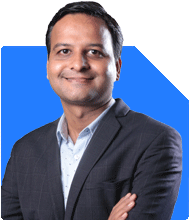
Milind

Milind Vadjikar  | Answer  |Ask -

Insurance, Stocks, MF, PF Expert - Answered on May 12, 2025

Milind Vadjikar is an independent MF distributor registered with Association of Mutual Funds in India (AMFI) and a retirement financial planning advisor registered with Pension Fund Regulatory and Development Authority (PFRDA).
He has a mechanical engineering degree from Government Engineering College, Sambhajinagar, and an MBA in international business from the Symbiosis Institute of Business Management, Pune.
With over 16 years of experience in stock investments, and over six year experience in investment guidance and support, he believes that balanced asset allocation and goal-focused disciplined investing is the key to achieving investor goals.... more
Asked by Anonymous - May 12, 2025

Money

Dear Sir, I have taken an LIC policy jeevan shree on 31st Jan' 2002 with sum assured of 5 lacs and yearly premium of 24520. What maturity proceed can I expect in 2027. It had a premium paying term of 16 years and maturity of 25 years.

Ans: Hello;

You may expect to receive a sum of 10-12 L at maturity from this endowment policy.

Best wishes;
Asked on - May 15, 2025 | Answered on May 15, 2025
Sir, Sum assured is 5 lacs and GA is 75 per thousand of SA, it is showing bonus, GA as 9 lacs as of today, Can you recheck your calculation?
Ans: Hello;

Please confirm with your insurance advisor for the exact payout expected.

Thanks;
DISCLAIMER: The content of this post by the expert is the personal view of the rediffGURU. Users are advised to pursue the information provided by the rediffGURU only as a source of information to be as a point of reference and to rely on their own judgement when making a decision.
Money

You may like to see similar questions and answers below

Ramalingam

Ramalingam Kalirajan  |11062 Answers  |Ask -

Mutual Funds, Financial Planning Expert - Answered on May 20, 2024

Listen
Money
I am having LIC of a 14 lakhs policy of Jeevan Anand paying premium of 71000. It's going to mature or complete it's 21years term. How much should I expect the maturity amount? Will I be be life covered post maturity amount withdrawal? Where should I invest this maturity amount?
Ans: Assessing Your LIC Jeevan Anand Policy
Understanding Maturity Amount
Your LIC Jeevan Anand policy is nearing the end of its 21-year term. Given a policy sum assured of ?14 lakhs and an annual premium of ?71,000, the maturity amount will include the sum assured along with any applicable bonuses. However, without specific bonus rates, an exact figure is challenging to determine. Generally, LIC policies like Jeevan Anand accrue bonuses over the years, which can significantly enhance the maturity amount.

Life Coverage Post Maturity
One key feature of the LIC Jeevan Anand policy is the continuation of life cover even after the maturity amount is paid out. This means you will still have a life cover equal to the sum assured (?14 lakhs) after the policy matures, providing continued financial security for your beneficiaries.

Investment Recommendations for Maturity Amount
Risk Assessment and Goals
Before deciding where to invest the maturity amount, consider your risk tolerance, financial goals, and investment horizon. Since the maturity amount is likely to be substantial, diversifying across various investment options is prudent.

Investment Options
1. Mutual Funds
Equity Mutual Funds: If you have a high-risk tolerance and a long-term investment horizon, consider equity mutual funds. They offer high growth potential but come with higher volatility.

Balanced or Hybrid Funds: For a moderate risk appetite, balanced funds invest in a mix of equities and debt, providing a balance of growth and stability.

Debt Mutual Funds: If you prefer low risk, debt funds are safer and provide regular income, suitable for short to medium-term goals.

2. Systematic Investment Plan (SIP)
Consider investing a portion of the maturity amount in mutual funds through SIPs. This helps in averaging the purchase cost and reduces the impact of market volatility.

3. Public Provident Fund (PPF)
For long-term, risk-free investments, PPF is a good option. It offers attractive tax-free returns and has a lock-in period of 15 years, making it suitable for retirement planning.

4. National Pension System (NPS)
NPS is another long-term investment option, especially beneficial for retirement planning. It offers a mix of equity, corporate bonds, and government securities with tax benefits.

5. Fixed Deposits (FD)
If you seek safety and assured returns, consider investing a portion in fixed deposits. Although returns are lower compared to equity, FDs provide guaranteed income.

6. Gold
Investing in gold through Gold ETFs or Sovereign Gold Bonds can provide a hedge against inflation and add stability to your portfolio.

Diversified Portfolio Approach
High-Risk Investments: Allocate around 40-50% in equity mutual funds or direct stocks for high growth potential.

Moderate-Risk Investments: Allocate 20-30% in balanced funds or hybrid funds for balanced growth and stability.

Low-Risk Investments: Allocate 20-30% in debt funds, PPF, or FDs for assured returns and safety.

Alternative Investments: Allocate a small portion, around 5-10%, in gold or other alternative assets for diversification.

Conclusion
Upon maturity of your LIC Jeevan Anand policy, you will receive a significant lump sum. Continue benefiting from life coverage even after maturity. To optimize this maturity amount, diversify your investments across equity, debt, and alternative options based on your risk profile and financial goals. Regularly review and adjust your portfolio to stay aligned with your objectives.

Best Regards,

K. Ramalingam, MBA, CFP,

Chief Financial Planner,

www.holisticinvestment.in

..Read more

Ramalingam

Ramalingam Kalirajan  |11062 Answers  |Ask -

Mutual Funds, Financial Planning Expert - Answered on Jan 13, 2026

Asked by Anonymous - Jan 11, 2026Hindi
Money
have lic jeevan saral policy plan 165 from June 2011 for 15 years with life coverage of Rs50000/- . Age at the time of policy 51 and Yearly premium Rs 24260/ Please inform maturity value at June 2026
Ans: I appreciate your patience in holding this policy for many years.
Many people continue such policies without clarity.
You are doing the right thing by seeking understanding now.
This shows maturity and financial awareness.

» Basic Understanding of Your Policy
– You started the policy in June 2011.
– Policy term is 15 years.
– Maturity is due in June 2026.
– Entry age was 51 years.
– Yearly premium is Rs 24,260.
– Life cover is only Rs 50,000.

This policy is insurance plus savings combined.
Such policies focus more on forced savings.
Protection element is very small.

» Total Premium Paid Over Policy Term
– You pay premium for full 15 years.
– Yearly premium remains constant.
– Premium payment ends before maturity.

By maturity, total premium paid will be substantial.
This is important for comparison.

» How Maturity Value Is Decided
– This policy does not give bonus like others.
– It works on a maturity value factor system.
– Maturity value depends on age and term.
– Loyalty additions may be added at maturity.

Returns are pre-declared, not market linked.

» Expected Maturity Value Range
– For your age and premium, returns are modest.
– Such policies generally give low annual growth.
– Growth is closer to traditional savings products.

Based on past experience with similar cases:
– Maturity value is usually between Rs 4.5 lakh to Rs 5.2 lakh.

This is an approximate range.
Exact figure depends on final loyalty addition.

» Why Maturity Value Feels Low
– Large part of premium goes toward costs.
– Mortality charges are high due to entry age.
– Returns are not linked to equity growth.

These factors reduce wealth creation potential.

» Life Cover Assessment
– Life cover is only Rs 50,000.
– This amount is too small today.
– It does not protect family needs.

Insurance objective is not fulfilled properly.

» Investment Assessment
– Policy forces discipline, not growth.
– Returns do not beat long-term inflation.
– Purchasing power reduces over time.

This impacts real wealth.

» Liquidity Aspect
– Money is locked for long term.
– Exit before maturity causes loss.
– Flexibility is limited.

This restricts financial freedom.

» Risk Versus Reward Balance
– Risk is low.
– Reward is also low.
– Long holding period gives limited benefit.

Such balance does not suit wealth creation.

» Tax Aspect at Maturity
– Maturity proceeds are usually tax free.
– This is a positive aspect.
– But tax benefit alone is not enough.

Net outcome still remains weak.

» Emotional Attachment Factor
– Long association builds emotional comfort.
– Familiarity creates false security.
– Numbers should guide decisions.

Money decisions must be practical.

» Opportunity Cost Over 15 Years
– Same premium invested differently grows better.
– Time value of money is lost here.
– Compounding opportunity is underused.

This is the hidden cost.

» Should You Continue Till Maturity
– You are very close to maturity now.
– Only limited premiums remain.
– Exit now may reduce value.

From pure practicality, holding till maturity makes sense.

» What To Do After Maturity
– Do not reinvest maturity money here again.
– Do not buy similar policies.
– Separate insurance and investment clearly.

This improves clarity and control.

» Insurance Requirement Going Forward
– Insurance should be pure protection.
– Cover amount should be meaningful.
– Premium should be affordable.

This protects family properly.

» Investment Requirement Going Forward
– Investments should focus on growth.
– Long-term horizon suits market-linked options.
– Discipline should be maintained separately.

This builds real wealth.

» Why Such Policies Are Not Ideal
– They mix two different objectives.
– They dilute both protection and growth.
– Transparency is low.

Clarity always wins financially.

» Should You Surrender Similar Policies
– Yes, for long-term underperforming policies.
– Especially investment-cum-insurance types.
– Evaluate surrender versus paid-up carefully.

Each policy needs separate review.

» If You Hold Any Other LIC Policies
– Check premium versus life cover ratio.
– Review maturity value realistically.
– Assess opportunity cost honestly.

Do not assume all LIC policies are safe wealth tools.

» Behavioural Lesson From This Policy
– Forced savings feels comfortable.
– Comfort does not equal efficiency.
– Awareness changes future outcomes.

This lesson is valuable.

» 360 Degree View of Your Policy
– Protection is inadequate.
– Returns are low.
– Liquidity is poor.
– Tax benefit is limited advantage.

Overall outcome is average at best.

» Positive Side You Should Acknowledge
– You maintained long-term discipline.
– You honoured commitments regularly.
– You avoided policy lapsation.

This discipline is powerful.

» How To Use This Discipline Better
– Channel it into transparent investments.
– Keep insurance purely for protection.
– Review annually with clarity.

Discipline plus right structure creates wealth.

» Finally
– Expected maturity value is around Rs 4.5 to 5.2 lakh.
– Exact amount will be known near June 2026.
– Holding till maturity is sensible now.
– Avoid repeating similar products later.

You are in a position to improve future outcomes.
This awareness itself is progress.

Best Regards,

K. Ramalingam, MBA, CFP,

Chief Financial Planner,

www.holisticinvestment.in

https://www.youtube.com/@HolisticInvestment

..Read more

Latest Questions
Ramalingam

Ramalingam Kalirajan  |11062 Answers  |Ask -

Mutual Funds, Financial Planning Expert - Answered on Mar 14, 2026

Money
I am 61, minimalist with no bad habits in the life style of NO PILL; NO ILL. Now, the market is down and NAV falls down. my investments are comfortably positive even in the negative market. becuase the investment started very early and unis purchased at very low price. Now, the question is should I withdraw the funds; a portion of profit and invest in the downward trend so that I will get more units and i will not loose the capital because I am planning to withdraw only the portion of the profits. Please guide me should I need to reshuffle by withdrawing and re investing ..!!
Ans: Your disciplined lifestyle and long investing journey are truly inspiring. Starting early and holding investments patiently has created a comfortable cushion for you. Even when the market is falling, your portfolio remains positive. That itself shows the power of long-term investing.

Now your question is about withdrawing profit and reinvesting during the market fall. Let us examine this carefully.

» Understanding What You Are Trying To Do

Your idea is:

– Withdraw only the profit portion
– Reinvest when NAV is lower
– Get more units
– Protect original capital

This approach looks logical on the surface. But in practice it becomes very difficult to execute consistently.

» The Challenge of Timing the Market

To succeed in this strategy two things must happen correctly.

– You must sell at the right time
– You must reinvest at the correct lower level

Predicting market movement precisely is extremely difficult. Even experienced investors struggle with this.

If markets suddenly recover after you redeem, you may lose the opportunity of further growth.

» Impact of Taxes on Withdrawal

Whenever you redeem equity mutual funds:

– Long term capital gains above Rs 1.25 lakh are taxed at 12.5%
– Short term capital gains are taxed at 20%

So withdrawing profit may trigger tax liability. This reduces the benefit of trying to buy more units.

Frequent reshuffling can quietly reduce long-term wealth.

» Your Age and Investment Objective

At 61, your goal should shift slightly.

Earlier the focus was:

– Maximum growth

Now the focus should be:

– Capital protection
– Controlled growth
– Income stability

So instead of frequent buying and selling, gradual portfolio balance is more suitable.

» A Better Approach for Your Situation

Rather than timing the market, consider this approach:

– Keep the core long-term equity investments untouched
– If equity allocation has grown very large, slowly shift small portion into safer assets
– Continue enjoying compounding from existing units purchased at low prices

This maintains growth while protecting accumulated wealth.

» Systematic Withdrawal Planning

If you need regular income later:

– You can withdraw small amounts periodically
– This reduces market timing risk
– Portfolio continues to grow while providing income

This is usually more comfortable for retired investors.

» Emotional Discipline

Your biggest strength so far has been patience.

The temptation to reshuffle during market movements often disturbs long-term success.

Many investors lose wealth not because of bad investments but because of unnecessary switching.

» Finally

Since your investments were made early and units were bought at very low prices, the best strategy is usually to stay invested and allow compounding to continue.

Avoid frequent profit booking and reinvestment based on market movements.

Instead:

– Maintain a balanced asset allocation
– Protect capital gradually
– Allow long-term equity investments to keep growing

Your disciplined journey has already created strong financial security. Preserving that strength is now more important than trying to capture short-term opportunities.

Best Regards,

K. Ramalingam, MBA, CFP,

Chief Financial Planner,

www.holisticinvestment.in

https://www.youtube.com/@HolisticInvestment

...Read more

Ramalingam

Ramalingam Kalirajan  |11062 Answers  |Ask -

Mutual Funds, Financial Planning Expert - Answered on Mar 14, 2026

Money
I am a retired doctor with 1lac pension kindly suggest to invest 30000per month
Ans: Your disciplined habit of investing even after retirement is very encouraging. With a pension of Rs 1 lakh per month, planning to invest Rs 30,000 shows that you are thinking about preserving and growing your wealth in a structured manner.

At this stage of life, the focus should be balanced between safety, regular growth, and liquidity.

» Understanding Your Financial Stage

You are a retired professional receiving steady pension income.

This means:

– Your regular expenses are already supported
– Investment goal is wealth preservation and moderate growth
– Liquidity for health and family needs is important

So the investment approach should be balanced and not aggressive.

» Emergency and Medical Reserve

Before starting monthly investment, ensure:

– At least 12 months of expenses kept in safe liquid instruments
– Adequate health insurance coverage

Medical expenses increase with age. Having a dedicated medical reserve prevents disturbance to investments.

» Balanced Investment Approach

For a retired person, full equity exposure is not suitable. But avoiding equity completely also reduces growth.

A balanced structure is ideal.

For the Rs 30,000 monthly investment:

– Around Rs 15,000 in actively managed diversified equity mutual funds
– Around Rs 10,000 in short duration or conservative debt mutual funds
– Around Rs 5,000 in gold allocation for diversification

This structure provides growth with stability.

» Importance of Actively Managed Funds

Actively managed mutual funds are suitable because:

– Fund managers actively select strong companies
– They adjust portfolio when market conditions change
– Aim to generate better returns than the market

This professional management helps investors who prefer not to monitor markets regularly.

» Investment Horizon and Liquidity

Even after retirement, investments can continue for 10 to 15 years.

So:

– Continue SIP regularly
– Review portfolio once every year
– Keep sufficient liquidity for emergencies

Avoid locking large amounts into instruments with long lock-in periods.

» Tax Awareness

If you redeem equity mutual funds:

– Long term capital gains above Rs 1.25 lakh taxed at 12.5%
– Short term gains taxed at 20%

Debt mutual fund gains are taxed as per your income tax slab.

Planning withdrawals carefully can reduce tax impact.

» Finally

Your plan to invest Rs 30,000 monthly is a strong step toward maintaining financial independence.

A balanced portfolio with equity, debt, and gold can help:

– Preserve your wealth
– Provide moderate growth
– Maintain liquidity for future needs

Regular review with a Certified Financial Planner can ensure that your investments remain aligned with your lifestyle and health needs during retirement.

Best Regards,

K. Ramalingam, MBA, CFP,

Chief Financial Planner,

www.holisticinvestment.in

https://www.youtube.com/@HolisticInvestment

...Read more

DISCLAIMER: The content of this post by the expert is the personal view of the rediffGURU. Investment in securities market are subject to market risks. Read all the related document carefully before investing. The securities quoted are for illustration only and are not recommendatory. Users are advised to pursue the information provided by the rediffGURU only as a source of information and as a point of reference and to rely on their own judgement when making a decision. RediffGURUS is an intermediary as per India's Information Technology Act.

Close  

You haven't logged in yet. To ask a question, Please Log in below
Login

A verification OTP will be sent to this
Mobile Number / Email

Enter OTP
A 6 digit code has been sent to

Resend OTP in120seconds

Dear User, You have not registered yet. Please register by filling the fields below to get expert answers from our Gurus
Sign up

By signing up, you agree to our
Terms & Conditions and Privacy Policy

Already have an account?

Enter OTP
A 6 digit code has been sent to Mobile

Resend OTP in120seconds

x