Home > Career > Question
Need Expert Advice?Our Gurus Can Help

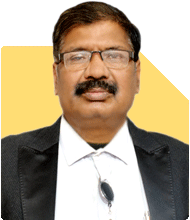
Dr Dipankar

Dr Dipankar Dutta  |1850 Answers  |Ask -

Tech Careers and Skill Development Expert - Answered on Jul 15, 2025

Dr Dipankar Dutta is an associate professor in the computer science and engineering department at the University Institute of Technology, the University of Burdwan, West Bengal.
He has 27 years of experience and his interests include AI, data science, machine learning, pattern recognition, deep learning and evolutionary computation.
Aside from his responsibilities at the college, he also delivers lectures and conducts webinars.
Dr Dipankar has published 25 papers in international journals, written book chapters, attended conferences, served as a board observer for WBJEE (West Bengal Joint Entrance Examination) exams and as a counsellor for engineering college admissions in West Bengal. He helps students choose the right college and stream for undergraduate, masters and PhD programmes.
A senior member of the Institute of Electrical and Electronics Engineers (SMIEEE), he holds a bachelor's degree in engineering from the Jalpaiguri Government Engineering College and a an MTech degree in computer technology from Jadavpur University.
He completed his PhD in engineering from IIEST, Shibpur (formerly BE College).... more
Asked by Anonymous - Jul 11, 2025Hindi

Career

Actually i want to ask about tech role right now i am working in abinitio which i find easier but i want more high job demand skill i heard doing dsa and system design get a good job but now i am confuse i find it hard but my friend persist me doing that as it is more deman being from civil engineering what catrer path should i take should i move to different field or what

Ans: Stick to Data Engineering, upskill in cloud + big data tools, skip DSA grind unless you're passionate — this path offers high demand, high salary, and growth, especially with your current experience.
Career

You may like to see similar questions and answers below

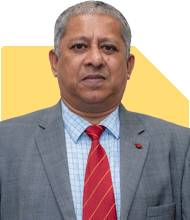
Prof Suvasish

Prof Suvasish Mukhopadhyay  | Answer  |Ask -

Career Counsellor - Answered on May 15, 2025

Career
Dear Sir, My age is 33 year now. I was working in financial sector for 5year as a recovery agent. I have done intermediate in Arts and Diploma in mechanical engineering. Passed out in 2012. Now i want to change my job sector to technical line. I have no experience before in technical line. Please guide me which technical job will be best suitable for me And What Salary Range Should i expect?.
Ans: For you AMIE ( Mechanical) will be the best option. You will be equivalent to B.E./B.Tech Mechanical. The details are given below.
The AMIE (Associate Member of the Institution of Engineers) exam is a professional qualification in engineering, equivalent to a B.E./B.Tech. degree. It's conducted by the Institution of Engineers (India) (IEI) and is offered as a distance learning program. The exam is held twice a year, in June and December.
Exam Structure:
Stage I (Section A): Focuses on fundamental engineering subjects.
Stage II (Section B): Covers a specific branch of engineering like Civil, Electrical, or Mechanical.
Eligibility:
Educational Qualification:
Candidates must have completed a recognized course of study in engineering or technology.
Age:
No upper age limit, but candidates must be at least 18 years old on the first day of the examination.
Other:
Indian citizens or foreign nationals with at least two years of residence in India.
Exam Pattern:
The exam is based on multiple-choice questions (MCQs).
It can be taken online (CBT) or offline (PBT).
Benefits:
Becoming a graduate engineer with the same qualification as a B.E./B.Tech. degree.
Recognized by government and private sectors.
Least expensive compared to traditional degree programs.
Application Process:
Download the application form from the IEI website.
Fill out the form and attach the required documents.
Pay the application fee.
Submit the application form along with the fee.

But since you did the recovery work in Finance sector you are totally detached from Mechanical Engineering. So it is not possible to say what kind of job you will get and what will be your salary.

..Read more

Latest Questions
Ramalingam

Ramalingam Kalirajan  |11023 Answers  |Ask -

Mutual Funds, Financial Planning Expert - Answered on Feb 09, 2026

Asked by Anonymous - Feb 08, 2026Hindi
Money
Hi, Am a regular reader of 'Money' section, and wanted to start by thanking you for sharing valuable insights and guidance. A common comment at the end of most of these suggestions is a recommendation to connect with a Certified Financial Planner, which is where my questions are: a) Do these CFPs charge basis a % of portfolio or hourly rate or any other basis? b) Could you please advise on a criteria for selection - is there a rating or grading information that can be viewed to decide on a particular planner? Could you share a few tips on how to make an educated choice? c) Is there a repository / directory that provides CFPs by area [e.g., I went to "FPSB India", and it did provide me with area based options, but only as a list of names. Not sure if it provides any further credentials. Are there any more such sites that helps with a brief Introduction / write-ups for CFPs before connecting with them? Thank you.
Ans: Thank you for reading the ‘Money’ section regularly and for your kind words. It is encouraging to see readers thinking deeply about advice quality and not just products. Your questions are very relevant and show a mature approach to personal finance.

» How Certified Financial Planners usually charge
– A Certified Financial Planner can operate under different models
– If the CFP is also registered as an Investment Adviser (RIA):

They may charge a fixed annual fee

Or an hourly / project-based fee

Or a combination of fixed fee plus a small percentage of assets under advice
– If the CFP is also a Mutual Fund Distributor (MFD):

They do not charge fees directly to the client

They earn performance-linked commissions from mutual funds

This commission is built into the product cost and paid by the fund house
– The key point is transparency: a good CFP clearly explains how they are compensated before engagement

» How to choose the right Certified Financial Planner
– Start with credentials, not popularity
– Check that the person is an active CFP professional and not just using the term loosely
– Important selection criteria to consider:

Years of experience in comprehensive financial planning, not just selling products

Ability to cover all areas like goal planning, tax, insurance, retirement, estate basics

Process-driven approach rather than product-driven conversations

Willingness to understand your full financial picture before suggesting solutions
– During the first interaction, observe:

Are they asking more questions than giving quick answers?

Are they explaining concepts in simple language?

Are they comfortable saying “this is not suitable for you”?
– Comfort and trust matter; financial planning is a long-term relationship

» Ratings, reviews, and public information – practical view
– Unlike doctors or hotels, CFPs do not have a universal rating or grading system
– Online reviews can help, but should not be the only filter
– Consistency of thought, clarity of communication, and ethical positioning are more important than star ratings

» Directories and where to find CFPs
– FPSB India is the primary and official body that lists Certified Financial Planners
– Their directory helps you find CFPs city-wise, which is a good starting point
– The limitation, as you noticed, is that it mainly provides names and basic details
– Beyond this:

Many CFPs maintain their own websites, blogs, or YouTube channels where their thinking is visible

Articles, interviews, and long-form content give a better sense of philosophy than a simple profile
– There is no single platform today that provides detailed write-ups and comparisons of CFPs
– Hence, shortlisting 2–3 CFPs and having an introductory discussion is often the most practical method

» How to make an educated final choice
– Prefer planners who focus on planning before products
– Avoid those who push for immediate switches or drastic actions in the first meeting
– Ask clearly:

How will my progress be reviewed year after year?

How do you handle market ups and downs with clients?
– A good CFP aims for long-term discipline and peace of mind, not short-term excitement

» Final Insights
– Your approach of understanding the advisory ecosystem before engaging is wise
– There is no “perfect” charging model; clarity, alignment, and ethics matter more
– Spend time evaluating the planner, just as they evaluate your finances
– The right Certified Financial Planner adds value not only through returns, but through structure, clarity, and confidence

Best Regards,

K. Ramalingam, MBA, CFP,

Chief Financial Planner,

www.holisticinvestment.in

https://www.youtube.com/@HolisticInvestment

...Read more

Vivek

Vivek Lala  |324 Answers  |Ask -

Tax, MF Expert - Answered on Feb 08, 2026

DISCLAIMER: The content of this post by the expert is the personal view of the rediffGURU. Investment in securities market are subject to market risks. Read all the related document carefully before investing. The securities quoted are for illustration only and are not recommendatory. Users are advised to pursue the information provided by the rediffGURU only as a source of information and as a point of reference and to rely on their own judgement when making a decision. RediffGURUS is an intermediary as per India's Information Technology Act.

Close  

You haven't logged in yet. To ask a question, Please Log in below
Login

A verification OTP will be sent to this
Mobile Number / Email

Enter OTP
A 6 digit code has been sent to

Resend OTP in120seconds

Dear User, You have not registered yet. Please register by filling the fields below to get expert answers from our Gurus
Sign up

By signing up, you agree to our
Terms & Conditions and Privacy Policy

Already have an account?

Enter OTP
A 6 digit code has been sent to Mobile

Resend OTP in120seconds

x