


Need Expert Advice?Our Gurus Can Help

Ramalingam Kalirajan |10876 Answers |Ask -Follow
Mutual Funds, Financial Planning Expert - Answered on Jun 23, 2025
Ramalingam Kalirajan has over 23 years of experience in mutual funds and financial planning.
He has an MBA in finance from the University of Madras and is a certified financial planner.
He is the director and chief financial planner at Holistic Investment, a Chennai-based firm that offers financial planning and wealth management advice.... more
He has an MBA in finance from the University of Madras and is a certified financial planner.
He is the director and chief financial planner at Holistic Investment, a Chennai-based firm that offers financial planning and wealth management advice.... more
Asked by Anonymous - Jun 20, 2025Hindi
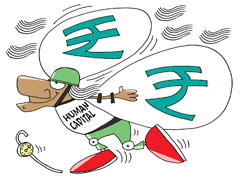
I am from a single child famil now at 31 years, having 50 lacs retirement corpus in equity and flexi cap funds and giving solid returns of 12% on an average. I am unmarried bachelor and lead celibacy and being a very minimalist continue to hold unmarried bachelor. I am at staturation, planning to retire from profession being employed at MNC and planning to join as voluteer in non-profit and social organisation for rest and relax. I understand that I will not get the remuneration or Honororium, which will not be equal to the amount of the salary I am getting now. but the amount of Honororium is enough alongside my passive income of Rs.3 lacs pa. Above all, I will be getting 1.5 Cr corpus from family share in next 5 years. I have life cover of 1.5 cr in term plan and Rs.10 lacs in traditional plan. The health Insurance cover is Rs.40 lacs. The premium of which will be taken care by TDS (other than salary) refund, without pinching my pocket. I am stable and healthy with no bad habits and lead a disciplined and conservative minimalist life style. I have no EMI commitments or financial debt or family commitments except the routine chores, which are taken care by my passive income. Since I am planning to retire in next 2-3 years; my accrued gratuity and provident fund corpus will be appx Rs.20 lacs. Is my decision to retire in 2-3 years is correct? will all this available corpus, estimated legacy and accrued corpus is enough along side honororium from voluteering and passive income is enough to take the bold decision. !! please guide and advise.
Ans: Reviewing Your Current Situation
You are 31 years old and a bachelor from a single?child family.
You have Rs?50 lakh invested in equity and flexi?cap funds, yielding ~12% annualized returns.
You also have passive income of Rs?3 lakh per annum.
You expect to receive Rs?1.5 crore legacy from family in about 5 years.
Health insurance cover is Rs?40 lakh, funded by TDS refund.
You have life cover of Rs?1.5 crore (term) and Rs?10 lakh (traditional).
You plan to retire in 2–3 years and volunteer with minimal honorarium.
You expect gratuity and provident fund of ~Rs?20 lakh upon retirement.
You have no debt, liabilities, or EMI commitments.
You lead a minimalist and disciplined lifestyle; healthy with no bad habits.
This shows a stable financial base and clear planning ahead.
Clarifying Your Retirement Life Vision
Your core plan is to retire, rest, relax, and volunteer.
You seek peace and purpose over salary.
Honorarium, passive income, and corpus support your lifestyle.
You aim for professional freedom and community service.
Your life requires modest income, but meaningful impact.
Estimating Your Comprehensive Income Sources
Let us tally your future income and corpus for clarity:
1. Passive Income
Rs?3 lakh per annum from investments
2. Honorarium from Volunteering
Estimate comfortable Honorarium (variable)
3. Corpus Withdrawals
Rs?50 lakh equity corpus
Rs?20 lakh gratuity/ provident fund
Rs?1.5 crore inheritance arriving over 5 years
Total current and future assets: ~Rs?2.2 crore (excluding returns).
Understanding Your Expenses and Budget
What is your current annual expense?
Likely Rs?3–4 lakh per annum based on passive income need.
Factor annual inflation at conservative estimate of 5–6%.
In 20–30 years, Rs?3 lakh becomes Rs?12 lakh at 6% inflation.
Expense modelling steps:
Define current annual budget post?retirement.
Project inflation adjusted needs over time.
Add health?care buffer, travel, contingency costs.
Identify buffer for rising life costs in later years.
Aligning Your Portfolio with Retirement Needs
You aim for growth, preservation, and withdrawal flexibility. Here is a proposed investment structure post?retirement:
1. Equity and Flexi-cap (~50%)
Equity is your growth engine; preserves corpus in long term.
Flexi?cap allows dynamic allocation across market caps.
Manage volatility with passive income covering shortfalls.
2. Hybrid or Multi-Asset Funds (~20%)
These funds contain equity and debt for smoother returns.
They support portfolio reduction errors and retirement phasing.
Hybrid funds act as bridge between equity and debt.
3. Debt and Short-term Bonds (~20%)
Income funds, short-term bond funds for safety.
Buffer for near-term expenses, reducing equity withdrawals.
Lower risk helps during market downturns.
4. Liquid and Ultra-Short Funds (~5%)
For immediate emergency cash or ad-hoc needs.
Can be parked for upcoming volunteer travel or medical needs.
5. Gold Allocation (~5%)
Gold cushions inflation and equity volatility.
You already hold ~Rs?50 lakh in equity; maintain gold hedge.
Total portfolio is ~100% of corpus + future inheritance. Each asset class supports different needs.
Cashflow Planning and Withdrawal Strategy
Use the 4% safe withdrawal rule as starting point.
From Rs?2.2 crore, 4% gives Rs?8.8 lakh per year.
Combine that with Rs?3 lakh passive income plus honorarium.
This totals Rs?11.8 lakh per year—higher than estimated expenses.
If withdraw is too high, reduce withdrawal rate or shift allocation.
Phased withdrawal approach:
Use more equity in early retirement (first 10 years).
Gradually shift to debt/hybrid as corpus depletes.
Dividend-generating hybrid and debt funds provide stable income.
Handling the Rs?1.5 Crore Inheritance
Since the legacy arrives over 5 years:
Do not invest large lumps immediately—use systematic plan.
Employ staggered investment yearly or semi-annually.
Helps reduce timing risk and build allocation gradually.
Align investments with asset allocation above.
Evaluating Life and Health Insurance Needs
Your Rs?1.5 crore term cover safeguards dependents.
You have no dependents currently; term cover may be rebalanced.
Traditional plan of Rs?10 lakh carries poor return and costs.
Consider surrendering traditional plan and redeploy funds to mutual funds.
Health insurance Rs?40 lakh seems adequate given usage pattern.
Continue cover, renew annually to avoid issues.
Reviewing Retirement Corpus Adequacy
Your corpus (equity + inheritance) is strong. Using the given allocation:
4–5% withdrawal provides comfortable net income.
Low expenses help stabilize long-term sustainability.
Passive income adds cushion during market dips.
Hybrid/debt allocation provides cashflow stability.
Inflation-adjusted increases will come from equity growth.
This supports early retirement plan, provided discipline is maintained.
Risks and Contingencies to Mitigate
Market Volatility
Equity returns fluctuate; buffer cash reduces impact.
Healthcare Inflation
Keep emergency medical fund separate.
Increase health cover as age increases.
Longevity Risk
If lifespan exceeds 90+, corpus must last.
Plan partial fixed income or annuity to cover long maturity risk.
Lifestyle Changes
Respect your minimalist preference—avoid lifestyle creep.
Unexpected Expenses
Maintain a buffer of 1–2 years’ expenses in liquid funds.
Why Active Funds Suit Your Plan
Active funds are managed dynamically; they adapt to market cycles.
They can exit sectors before downturns or take advantage of trends.
In retirement, downside protection becomes important.
Your equity and flexi?cap funds already benefit from active management.
Avoid index funds—they don’t protect in downturns.
Retaining Professional Fund Management Support
Direct funds lack advisory oversight and behavioural guidance.
Regular plans via CFP?backed MFD offer monitoring, rebalancing and tax planning.
At retirement, asset allocation needs careful tweaks.
CFP?supported MFD can help with periodical reviews and changing needs.
Tax Planning in Retirement
Equity LTCG above Rs?1.25 lakh taxed at 12.5%; STCG taxed at 20%.
Debt fund gains and withdrawals taxed at slab rate.
Hybrid fund taxation depends on equity component.
Dividends from mutual funds are taxable in your hands.
Use strategic selling—harvest LTCG quota smartly each year.
CFP assistance aides in optimizing redemption schedules and tax planning.
Tracking and Governing Your Portfolio
Set your annual review schedule with your CFP.
Track asset allocation drift—rebalance using fresh funds or switches.
Monitor passive income cover and withdrawal rate.
Check health cover renewals and inflationary pressures.
Adjust investments for life changes, travel, volunteer abroad, etc.
Transitioning to Volunteer and Legacy Phase
As you prepare to join NGO work, plan liquidity timelines.
Keep hybrid or liquid funds for initial 2–3 years of volunteering.
Build up cash for relocation, training, or travel costs.
Honorarium plus passive income may fluctuate—review yearly.
As corpus matures, shift more to bonds for stability.
Final Insights
Your plan shows clarity, stability, and financial strength.
The projected corpus, passive income, honorarium and inheritance support early retirement.
Asset allocation balance across equity, hybrid, debt and gold aligns with risk and need.
You should refine portfolio by:
Adding hybrid and debt envelopes for stability,
Surrending low?yield traditional plan,
Using phased inheritance investment,
Proper health cover,
Strategic tax planning,
Annual reviews for rebalancing.
With disciplined execution, your early retirement and volunteer life can be financially secure and fulfilling.
You have crafted a well-thought-out lifestyle plan. Your financial system can support this path admirably.
Best Regards,
K. Ramalingam, MBA, CFP,
Chief Financial Planner,
www.holisticinvestment.in
https://www.youtube.com/@HolisticInvestment
You are 31 years old and a bachelor from a single?child family.
You have Rs?50 lakh invested in equity and flexi?cap funds, yielding ~12% annualized returns.
You also have passive income of Rs?3 lakh per annum.
You expect to receive Rs?1.5 crore legacy from family in about 5 years.
Health insurance cover is Rs?40 lakh, funded by TDS refund.
You have life cover of Rs?1.5 crore (term) and Rs?10 lakh (traditional).
You plan to retire in 2–3 years and volunteer with minimal honorarium.
You expect gratuity and provident fund of ~Rs?20 lakh upon retirement.
You have no debt, liabilities, or EMI commitments.
You lead a minimalist and disciplined lifestyle; healthy with no bad habits.
This shows a stable financial base and clear planning ahead.
Clarifying Your Retirement Life Vision
Your core plan is to retire, rest, relax, and volunteer.
You seek peace and purpose over salary.
Honorarium, passive income, and corpus support your lifestyle.
You aim for professional freedom and community service.
Your life requires modest income, but meaningful impact.
Estimating Your Comprehensive Income Sources
Let us tally your future income and corpus for clarity:
1. Passive Income
Rs?3 lakh per annum from investments
2. Honorarium from Volunteering
Estimate comfortable Honorarium (variable)
3. Corpus Withdrawals
Rs?50 lakh equity corpus
Rs?20 lakh gratuity/ provident fund
Rs?1.5 crore inheritance arriving over 5 years
Total current and future assets: ~Rs?2.2 crore (excluding returns).
Understanding Your Expenses and Budget
What is your current annual expense?
Likely Rs?3–4 lakh per annum based on passive income need.
Factor annual inflation at conservative estimate of 5–6%.
In 20–30 years, Rs?3 lakh becomes Rs?12 lakh at 6% inflation.
Expense modelling steps:
Define current annual budget post?retirement.
Project inflation adjusted needs over time.
Add health?care buffer, travel, contingency costs.
Identify buffer for rising life costs in later years.
Aligning Your Portfolio with Retirement Needs
You aim for growth, preservation, and withdrawal flexibility. Here is a proposed investment structure post?retirement:
1. Equity and Flexi-cap (~50%)
Equity is your growth engine; preserves corpus in long term.
Flexi?cap allows dynamic allocation across market caps.
Manage volatility with passive income covering shortfalls.
2. Hybrid or Multi-Asset Funds (~20%)
These funds contain equity and debt for smoother returns.
They support portfolio reduction errors and retirement phasing.
Hybrid funds act as bridge between equity and debt.
3. Debt and Short-term Bonds (~20%)
Income funds, short-term bond funds for safety.
Buffer for near-term expenses, reducing equity withdrawals.
Lower risk helps during market downturns.
4. Liquid and Ultra-Short Funds (~5%)
For immediate emergency cash or ad-hoc needs.
Can be parked for upcoming volunteer travel or medical needs.
5. Gold Allocation (~5%)
Gold cushions inflation and equity volatility.
You already hold ~Rs?50 lakh in equity; maintain gold hedge.
Total portfolio is ~100% of corpus + future inheritance. Each asset class supports different needs.
Cashflow Planning and Withdrawal Strategy
Use the 4% safe withdrawal rule as starting point.
From Rs?2.2 crore, 4% gives Rs?8.8 lakh per year.
Combine that with Rs?3 lakh passive income plus honorarium.
This totals Rs?11.8 lakh per year—higher than estimated expenses.
If withdraw is too high, reduce withdrawal rate or shift allocation.
Phased withdrawal approach:
Use more equity in early retirement (first 10 years).
Gradually shift to debt/hybrid as corpus depletes.
Dividend-generating hybrid and debt funds provide stable income.
Handling the Rs?1.5 Crore Inheritance
Since the legacy arrives over 5 years:
Do not invest large lumps immediately—use systematic plan.
Employ staggered investment yearly or semi-annually.
Helps reduce timing risk and build allocation gradually.
Align investments with asset allocation above.
Evaluating Life and Health Insurance Needs
Your Rs?1.5 crore term cover safeguards dependents.
You have no dependents currently; term cover may be rebalanced.
Traditional plan of Rs?10 lakh carries poor return and costs.
Consider surrendering traditional plan and redeploy funds to mutual funds.
Health insurance Rs?40 lakh seems adequate given usage pattern.
Continue cover, renew annually to avoid issues.
Reviewing Retirement Corpus Adequacy
Your corpus (equity + inheritance) is strong. Using the given allocation:
4–5% withdrawal provides comfortable net income.
Low expenses help stabilize long-term sustainability.
Passive income adds cushion during market dips.
Hybrid/debt allocation provides cashflow stability.
Inflation-adjusted increases will come from equity growth.
This supports early retirement plan, provided discipline is maintained.
Risks and Contingencies to Mitigate
Market Volatility
Equity returns fluctuate; buffer cash reduces impact.
Healthcare Inflation
Keep emergency medical fund separate.
Increase health cover as age increases.
Longevity Risk
If lifespan exceeds 90+, corpus must last.
Plan partial fixed income or annuity to cover long maturity risk.
Lifestyle Changes
Respect your minimalist preference—avoid lifestyle creep.
Unexpected Expenses
Maintain a buffer of 1–2 years’ expenses in liquid funds.
Why Active Funds Suit Your Plan
Active funds are managed dynamically; they adapt to market cycles.
They can exit sectors before downturns or take advantage of trends.
In retirement, downside protection becomes important.
Your equity and flexi?cap funds already benefit from active management.
Avoid index funds—they don’t protect in downturns.
Retaining Professional Fund Management Support
Direct funds lack advisory oversight and behavioural guidance.
Regular plans via CFP?backed MFD offer monitoring, rebalancing and tax planning.
At retirement, asset allocation needs careful tweaks.
CFP?supported MFD can help with periodical reviews and changing needs.
Tax Planning in Retirement
Equity LTCG above Rs?1.25 lakh taxed at 12.5%; STCG taxed at 20%.
Debt fund gains and withdrawals taxed at slab rate.
Hybrid fund taxation depends on equity component.
Dividends from mutual funds are taxable in your hands.
Use strategic selling—harvest LTCG quota smartly each year.
CFP assistance aides in optimizing redemption schedules and tax planning.
Tracking and Governing Your Portfolio
Set your annual review schedule with your CFP.
Track asset allocation drift—rebalance using fresh funds or switches.
Monitor passive income cover and withdrawal rate.
Check health cover renewals and inflationary pressures.
Adjust investments for life changes, travel, volunteer abroad, etc.
Transitioning to Volunteer and Legacy Phase
As you prepare to join NGO work, plan liquidity timelines.
Keep hybrid or liquid funds for initial 2–3 years of volunteering.
Build up cash for relocation, training, or travel costs.
Honorarium plus passive income may fluctuate—review yearly.
As corpus matures, shift more to bonds for stability.
Final Insights
Your plan shows clarity, stability, and financial strength.
The projected corpus, passive income, honorarium and inheritance support early retirement.
Asset allocation balance across equity, hybrid, debt and gold aligns with risk and need.
You should refine portfolio by:
Adding hybrid and debt envelopes for stability,
Surrending low?yield traditional plan,
Using phased inheritance investment,
Proper health cover,
Strategic tax planning,
Annual reviews for rebalancing.
With disciplined execution, your early retirement and volunteer life can be financially secure and fulfilling.
You have crafted a well-thought-out lifestyle plan. Your financial system can support this path admirably.
Best Regards,
K. Ramalingam, MBA, CFP,
Chief Financial Planner,
www.holisticinvestment.in
https://www.youtube.com/@HolisticInvestment
DISCLAIMER: The content of this post by the expert is the personal view of the rediffGURU. Users are advised to pursue the information provided by the rediffGURU only as a source of information to be as a point of reference and to rely on their own judgement when making a decision.
MoneyReply


You may like to see similar questions and answers below
Ramalingam Kalirajan |10876 Answers |Ask -Follow
Mutual Funds, Financial Planning Expert - Answered on Aug 29, 2024


Milind Vadjikar | Answer |Ask -Follow
Insurance, Stocks, MF, PF Expert - Answered on Nov 16, 2024


Ramalingam Kalirajan |10876 Answers |Ask -Follow
Mutual Funds, Financial Planning Expert - Answered on Jan 13, 2025

Ramalingam Kalirajan |10876 Answers |Ask -Follow
Mutual Funds, Financial Planning Expert - Answered on Apr 04, 2025

Latest Questions

Samraat Jadhav |2502 Answers |Ask -Follow
Stock Market Expert - Answered on Dec 10, 2025


Samraat Jadhav |2502 Answers |Ask -Follow
Stock Market Expert - Answered on Dec 10, 2025


Samraat Jadhav |2502 Answers |Ask -Follow
Stock Market Expert - Answered on Dec 10, 2025
Asked by Anonymous - Dec 10, 2025Hindi

Shalini Singh |180 Answers |Ask -Follow
Dating Coach - Answered on Dec 10, 2025


Radheshyam Zanwar |6740 Answers |Ask -Follow
MHT-CET, IIT-JEE, NEET-UG Expert - Answered on Dec 09, 2025


Naveenn Kummar |234 Answers |Ask -Follow
Financial Planner, MF, Insurance Expert - Answered on Dec 09, 2025


Ramalingam Kalirajan |10876 Answers |Ask -Follow
Mutual Funds, Financial Planning Expert - Answered on Dec 09, 2025


Ramalingam Kalirajan |10876 Answers |Ask -Follow
Mutual Funds, Financial Planning Expert - Answered on Dec 09, 2025

Radheshyam Zanwar |6740 Answers |Ask -Follow
MHT-CET, IIT-JEE, NEET-UG Expert - Answered on Dec 09, 2025

Radheshyam Zanwar |6740 Answers |Ask -Follow
MHT-CET, IIT-JEE, NEET-UG Expert - Answered on Dec 09, 2025